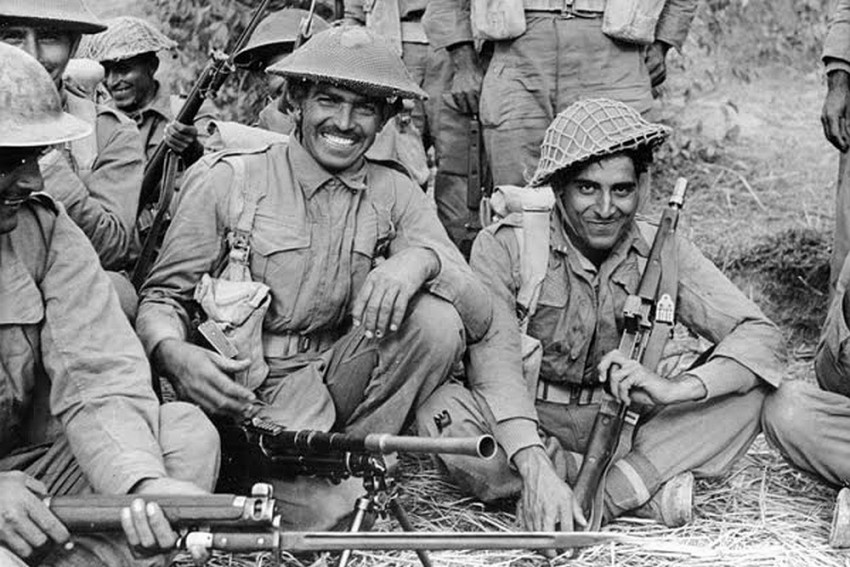




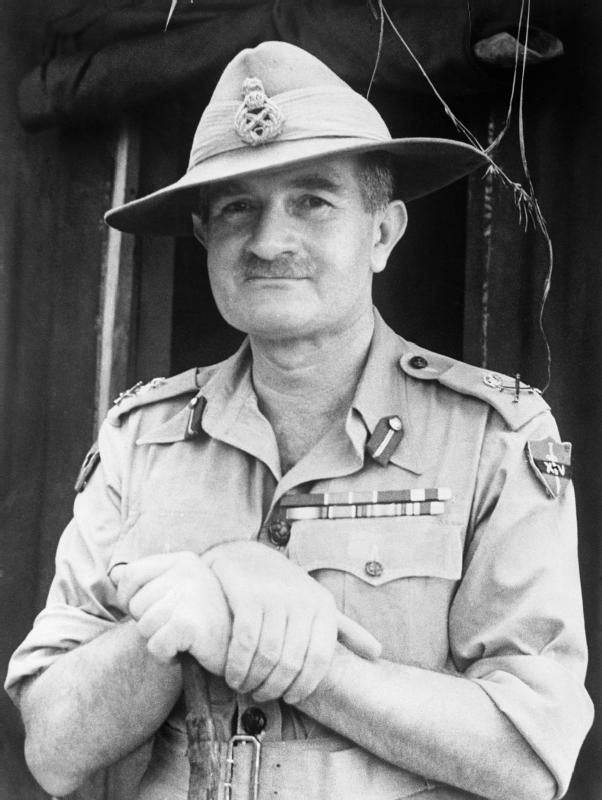
 The men of the Second Rifle of the Nepalese contingent garrisoned in India had already shown their discontent to the British, with the issue of allowance. However, the efforts to lure the Gurkhas remained unsuccessful. On the other hand, the Japanese broadcasted a propaganda message to inflict psychological effects on the Gurkha units. Parts of a message from Radio Rangoon ran on May 2, 1944, like all free nations you should join your hand with the Indo-Japanese forces to combat the evils of British Colonialism, however, neither the propaganda invasion ignited by the Japanese worked.(185) The Gurkhas remained loyal and untouched, instead; providing strong force against the Quit India civil disorder.
Gen Slim had to deploy 57 battalions on the internal security instead of giving them urgent training for jungle warfare. (186) In such conditions, native Indian units were not the choice of the authorities. Crucially, the substantial portion of these battalions was British nationals or Gurkhas rather than Indians. (187)
 Thus, on top of fighting wars, the Gurkhas’ were once again fully involved in the internal security policy of the empire, as always, and still preferred by the authorities. Nevertheless, the extensive use of the Gurkhas for internal security did not stop the demand for the Gurkhas on the operational front; which, a senior Gurkha commander profoundly claimed as a drain of manpower.
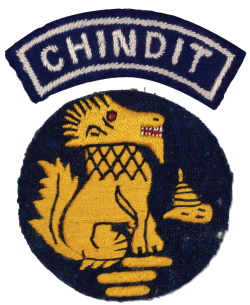
Men of the 3/2 Gurkhas were chosen for the Chindits role, as Wingate preferred young Gurkhas arguing that, a newly raised unit could be easily molded to his ideas. (188) To his decision, Rooney claims, the 3/2 Gurkhas; Made up of untried recruits and inexperienced officers who could not speak Gurkhalithus was to have serious consequences. (189) Operation Longcloth failed from the tactical point of view; the 3/2 Gurkhas alone lost more than four hundred-forty-six men. The performance of the Gurkhas was in Wingate words; a disgraceful exhibition of panic, and were gravely criticized for being mentally unsuitable for this kind of role. (190)
Gurkha Officers have counter-criticized the Wingate’s opinions. Adjutant of 2nd Gurkhas, Phillip Panton declares, I do not think the battalion was adequately led, properly trained, correctively instructed, or imbued with the right spirit. (191) In another case, according to Major Calvert, the 3rd Column commander; the open-warfare style training given to soldiers was not right for the Chindits’ role. He made the argument that specialized training is needed for this kind of operation. In post-assessment, Calvert reports, this was a fault in training, which had said that enemy fire must be answered by silence. (192)
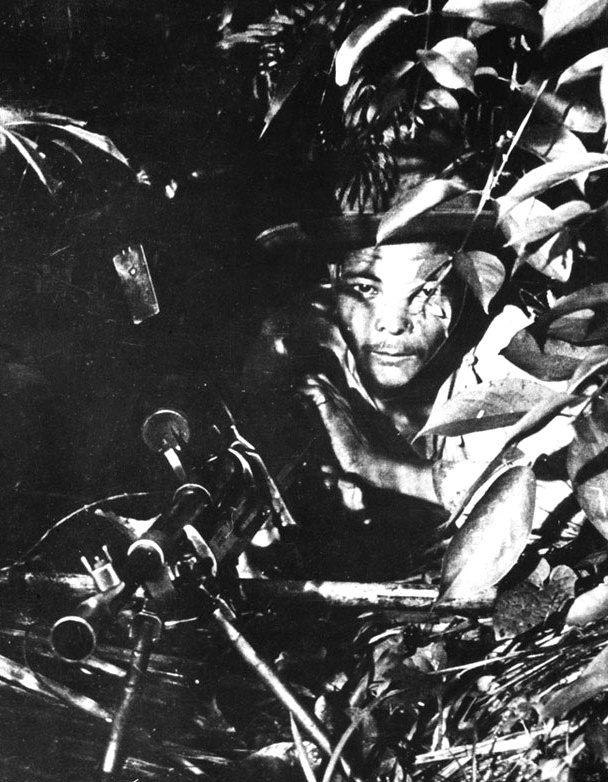
Most importantly, mixing units caused dissatisfaction among the Gurkhas. British soldiers may have been motivated to fight for democracy and Indian for their independence; however, the cause of fighting for the Gurkhas was not common to others. As previously argued in chapter two; Gurkhas from similar tribes and areas in Nepal are mostly recruited in the same regiments, and they treated the regimental environment as natively friendly. The practice of milking reduced combat efficiency, as a Gurkha rifleman is peculiarly the creature of his regiment, and bravery is due to his loyalty to his regiment. (193) In this case, Smith argues by splitting the men up, mixing units, and, quite simply, not understanding that Gurkha soldiers need a different type of leadership to the British, Wingate failed to exploit their best qualities. (194).
 (185) Uprety, Nepal, p 276. (186) Rooney D, Burma Victory, Imphal, and Kohima March 1944 to May 1945, (Cassell Military Classics, 1992, London), p 19. (187) Marston, Forgotten, p 249. (188) Smith, Brigade, p 125. (189) Rooney D, Wingate, and the Chindits: Redressing the Balance, (Cassell Military Paperbacks, 2000, London), p 77-78. (190) Rooney, Wingate, p 84. (191) An unpublished letter sent from ex. Adjutant of 2nd Gurkhas Philip Panton to Chindit brigade commander Gen Bernard Fergusson (Gurkha Museum Archive). (192) An unpublished report on ‘Morale of the Gurkhas’ by 3rd Column OC Major Michael Calvert, (Gurkha Museum Archive). (193) Gould, Imperial, p 252. (194) Smith, Brigade, p 126
Despite this futile operation, Bayly and Harper claimed; the First Chindit expedition, which penetrated far behind enemy lines in north Burma, was about to give morale a significant upward blip. (195) Those who had the fear that the Japanese soldier was invincible in the jungles were now obliged to revise their ideas. (196) The increasing air power of the Allied now seemed more practicable in the jungle. Year of reformation and, the moral strength bestowed by the Wingate’s expedition proved encouraging in the Indian army. Entirely resupplied by air, the 4/8 Gurkhas as part of the 7th Division continued to defend the Admin Box in the Second Arakan. Once troops formed a defense after the initial withdrawal, the continuous Japanese suicidal attacks were repulsed, and then, recaptured the previously lost Ngakyedauk Pass.

In this case, the Gurkhas adopted a series of different roles from withdrawing to offensive operations in the Second Arakan. This model of maneuver was going to be used once again to a great extent in 1944, against the major Japanese offensive. Tuker claims, since 1943, a Gurkha: who is a born jungle fighter, was beginning to grasp what it was all about, and from that time onwards he asserted his absolute superiority over the Japanese soldiers, man for man, patrol for patrol and ambush for ambush. (197)
Wingate harbored misgiving about the Gurkhas following the first Chindits Expedition, however, three further Gurkha battalions were added for the Second Chindits operation. (198) In this operation, the 77th Brigade under Calvert blocked the rail line leading to Myitkyina, to disrupt the communication lines of the Japanese 18th Army, fighting against the Chinese of Gen Stilwell’s army. What Tuker termed patrolling and ambushing as small affairs; in this, the Gurkhas excelled and carried this out routinely, many times taking the Japanese by complete surprise.
On one occasion, a Gurkha platoon surprised thirty-five enemies in a patrol group, killing nineteen of them by khukuri and bayonet, for the loss of only two. Tuker claims by patrols and ambushes, the tables were completely turned on the Japanese. (199) Not only in North Africa had the tactics used in the Frontiers become useful; the credibility of patrol and ambush exercised, against the tribes became useful in the jungle.

As a result of damages inflicted on their communication lines, Chhabe Thapa claims, by now the Japanese knew we were in the area. (200) Upon realizing the danger imposed by the 77th Brigade, a two-thousand strong Japanese force attacked the stronghold position Broadway, later named White City. The harshest fighting raged around OP Hill, the highest point where a platoon from the 3/6 Gurkhas holds for fifteen days against the repetitive Japanese assault. Rooney argues, because of strong repel demonstrated that the Japanese never again threatened ‘White City’ – indeed, the 24 Independent Mixed Brigade ceased to exist as a fighting unit. (201)
Despite this irregular warfare and defensive role in Broadway, the 3/6 and the 3/9 Gurkhas fought an offensive operation in Mogaung. Strategically, it was an important town fortified by four thousand Japanese; its possession would lead to the direct fall of Myitkyina. A company under Capt Michael Almand, of the 3/6 Gurkhas, captured the first objective bridge, however, himself now seriously injured, allowed his company to advance to their next objective Red House. Under intense fire, Rifleman Tulbahadur Pun ‘seized the Bren Gun, and firing from the hip as he went, continued the charge on this heavily bunkered position alone, in the face of the most shattering concentration of automatic fire, directed straight at him. (202) These two individual actions immensely helped the attacking force to win a victory against the Japanese in Mogaung. This victory subsequently helped Stilwell’s Chinese troops in capturing Myitkyina.
 (195) Bayly and Harper, Forgotten, p 269. (196) Bullock, Britain’s, p 147. (197) Tuker, Gorkha, p 221. (198) Bullock, Britain’s, p 149. (199) Tuker, Gorkha, p 222. (200) Cross and Gurung, a battle account of Chhabe Thapa, in Gurkhas at War, p 108. (201) Rooney, Wingate, p 130 (202)
The London Gazette’s announcement of VC recipient, dated on 9th November 1944, compared to the first operation, the Chindits had inflicted a significant scale of damage to the Japanese in the second operation. It caused the Japanese to divert large numbers of troops to try to contain their activities and clear their lines of communication. (203) Additionally, twenty-five percent of the Japanese air force was diverted against the Chindits. Rooney claims, they had a decisive effect on these operations, and they drew off the whole of the 53rd Division and part of 15th Division, one a regiment of which would have turned the scales, against the British garrison units in Imphal and Kohima. (204) In this case, the damage the Chindits inflicted on the Japanese had a tremendous effect on their major offensive in 1944.
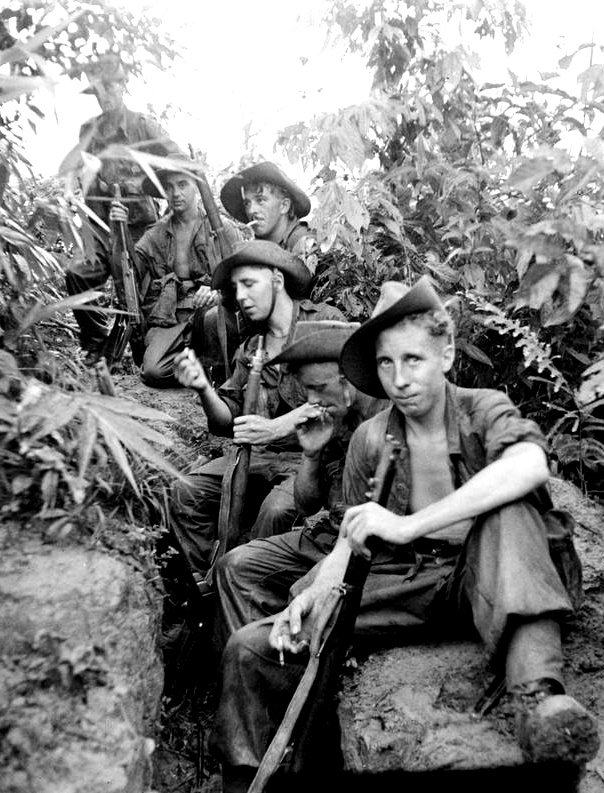
Aware of the Japanese operation Ha-Go and U-Go, Gen Slim planned to withdraw the forward units of the 14th Army to the Imphal Plain where he could make good use of his armor and receive supplied by airdrop; at the same time, it stretched the Japanese supply lines. (205) However, Marston argues, orders for the 17th Indian Division were given too late. (206) To this argument proposed by Marston, Rooney supports, the Japanese 33rd Division under Gen Yanagida had come very close to destroying the 17th Division during its withdrawal from Tiddim and had been prevented by the stout fighting qualities of the Gurkhas. (207)
 To the stout fighting qualities performed by Indian units, Bayly and Harper claimed; It was Punjabis and Gurkhas, in particular, the men of the 2nd, 17th, and 23rd Indian Divisions, who came to the rescue of the embattled garrisons. (208) The 153rd Gurkha Parachute Battalion, formed from the Gurkha volunteers fought a defensive battle in Kohima, along with regular 1/4 Gurkhas. Santa Tamang asserts, that the battle against the invading Japanese was waged so seriously that the 153rd Parachute Battalion ceased to exist as a parachute battalion, as only 20 men had survived at the end of the combats. (209) As a result, Bullock claims, this resolute defense, which delayed the Japanese sufficiently long to allow the 5th Indian Division to be redeployed from the Arakan, saved the garrison units from complete collapse. (210)

Nevertheless, the delay in the order caused the 17th Division one of the complex withdrawals. According to a Gurkha rifleman, , mostly the tactics of a platoon was to block the roads, to prevent the closely following Japanese from cutting off our troops. (211) In this sense, the Gurkha regiments once again fought as rear guard units, the same as they did in the 1942 withdrawal. Elliott claims that the Gurkhas not only refused to give up what they had gained: they refused to accept enemy dictation. (212) After that, a battle raged for several days and nights as the Japanese poured themselves repeatedly.
Japs (Machine Gun Battalion) was nearly overrun by the Japanese on the Tiddim road; however, it was saved by the 3/5 Gurkhas, after a fierce battle. Had the Gurkhas arrived a few hours later, the Japs would have been eliminated, and the road cut beyond breaching except by a major operation. (213)
(203) Bullock, Britain’s, p 153. (204) Rooney, Wingate, p 231. (205) James and Sheil-Small, Gurkhas, p 215. (206) Marston, Phoenix, p 138. (207) Rooney, Burma, p 37. (208) Bayly and Harper, Forgotten, p 381. (209) Interview with Santa Tamang, 153rd Gurkha Parachute Battalion. (210) Bullock, Britain’s, p 155. (211) Interview with a Gurkha soldier from the 2/3 Gurkhas from Major Beven’s interviews series. (212) Elliott, Roll of Honour, p 301. (213) ibid, p 300
The battle for the defense of India, in the Imphal plain, was the place where the most significant numbers of the Gurkha regiments fought than in any other theatres of war. Fighting also varied in numbers and tactics ditto the tasks. In relieving the 7/10 Baluch Regiment, a platoon of the 2/5 Gurkhas under Subedar Netrabahadur Thapa, faced a company size Japanese assault, in Mortar Bluff Hill. Tuker argues, for eight hours on a pitch-dark night he and his handful of men held the Bluff against overwhelming odds, often in hand-to-hand battle. (214)
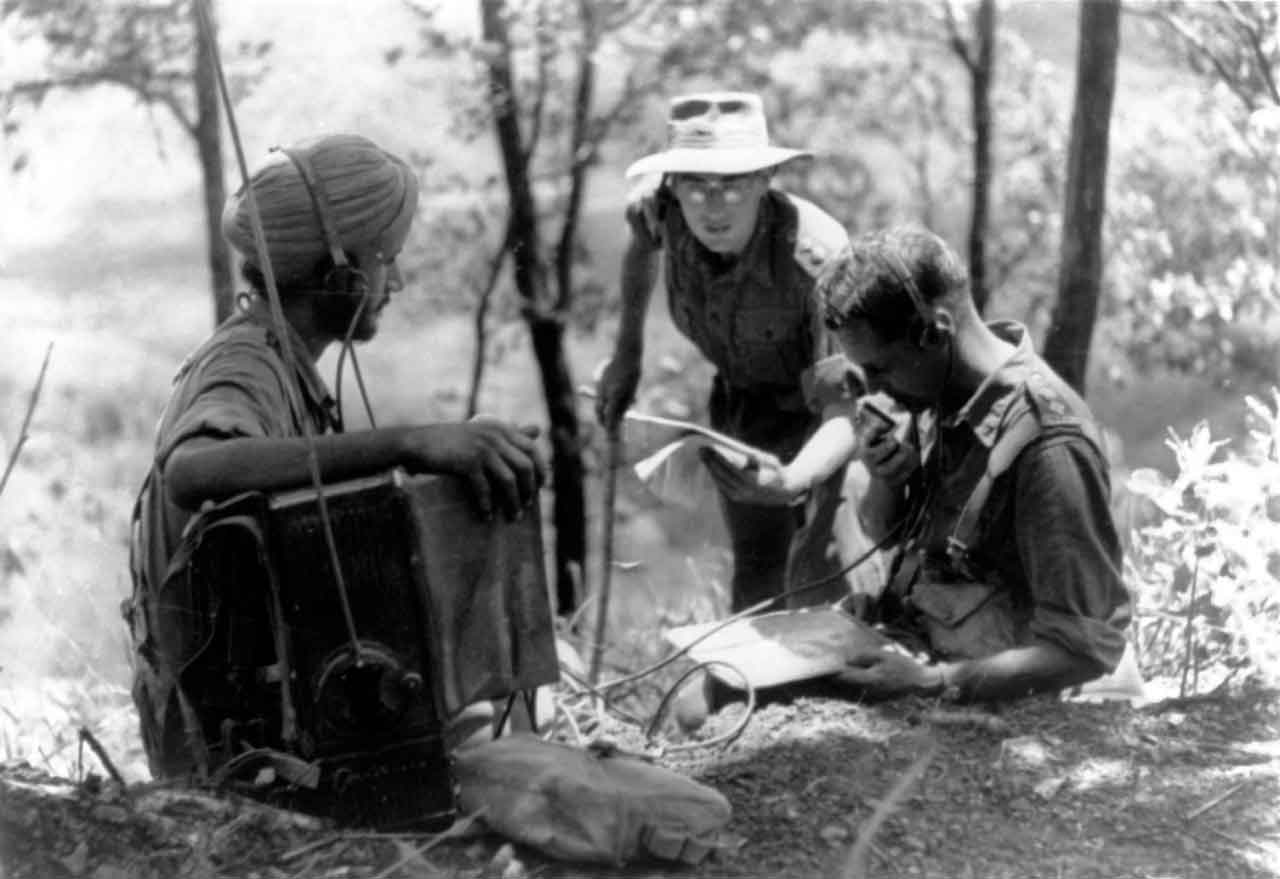
Inferior in manpower and firepower, Subedar fought with hand grenades in a desperate fight, only six men survived out of forty-one. It proves that the Japanese offensive died away, as the Imperial Indian army took every opportunity to keep the defense intact. In this case, Smith claims, as June ended it was clear to Slim and his staff that the Japanese offensive had failed. (215) Bullock claims, Gen Slim’s tactics now changed into a series of hooks designed to get behind the retreating Japanese and hold them up. (216)
Despite the recent defeats, the weary war Japanese retained their morale by any alternative means. Frantic attacks of drunken Japanese were faced by the 1/6 Gurkhas at the Irrawaddy River crossing. Staunch defense in Mandalay meant that the Japanese intended to defend their last defense line before Rangoon, to the last man and the last round. (218)
The key objective of Mandalay was the Monastery, on Mandalay Hill. Two-thirds of the hill was captured by the 4/4 Gurkhas and the Royal Berkshire Regiment after a bitterly consisted struggle, and the rest by the 1/6 Gurkhas, ended the battle of Mandalay. The fall of Mandalay, subsequently led to a victory in Meiktila, by a joint operation of the 1/7 and the 1/10 Gurkhas, with tanks from Deccan Horse. As Lunt claimed, the capture of Mandalay and the Japanese defeat at Meiktila marked a watershed in the 1944-45 Burma campaign. (219)
In this case, the humiliating retreat of 1942 cost many lives, through no fault of their own, but due to the fault of the strategic planner. During a lull in the war, the Indian Army adopted a complete reform of their Army. Conversely, the Gurkhas’ were extensively busy with operations. The condemnation over Gurkhas’ performance was criticized by Wingate but overshadowed by the superb performance in the Second Chindits and Arakan. All against enormous odds, the major Japanese offensive of 1944 was beaten off, and the fall of Rangoon ensured Japanese defeat by the Indian Army.
(213) ibid, p 300. (214) Tuker, Gorkha, p 225. (215) Smith, Brigade, p 136. (216) Bullocks, Britain’s, p 163. (217) Interview with Captain (Retd.) Balkrishna, 1/6th Gurkhas. (218) Lunt, Jai Sixth, p 52. (219) ibid, p 53