

Reviewed by Doc Snafu on April 19, 2026.
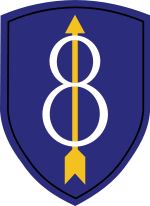
HEADQUARTERS EIGHTH INFANTRY DIVISION
UNITED STATES ARMY
OFFICE OF THE COMMANDING GENERAL
To the Officers and Men of the 8th Infantry Division:
The proud record of the 8th Division in battle and service is unsurpassed. You won your battles in the recent war by courage and by devotion; by the bravery of the men, and by the peerless example of the leaders.
With great pride in your accomplishments and with humility before the heroic self-sacrifice of the officers and men of this great Division, I subscribe myself.
Yours very respectfully,
Fort Leonard Wood, Montana
September 24, 1945
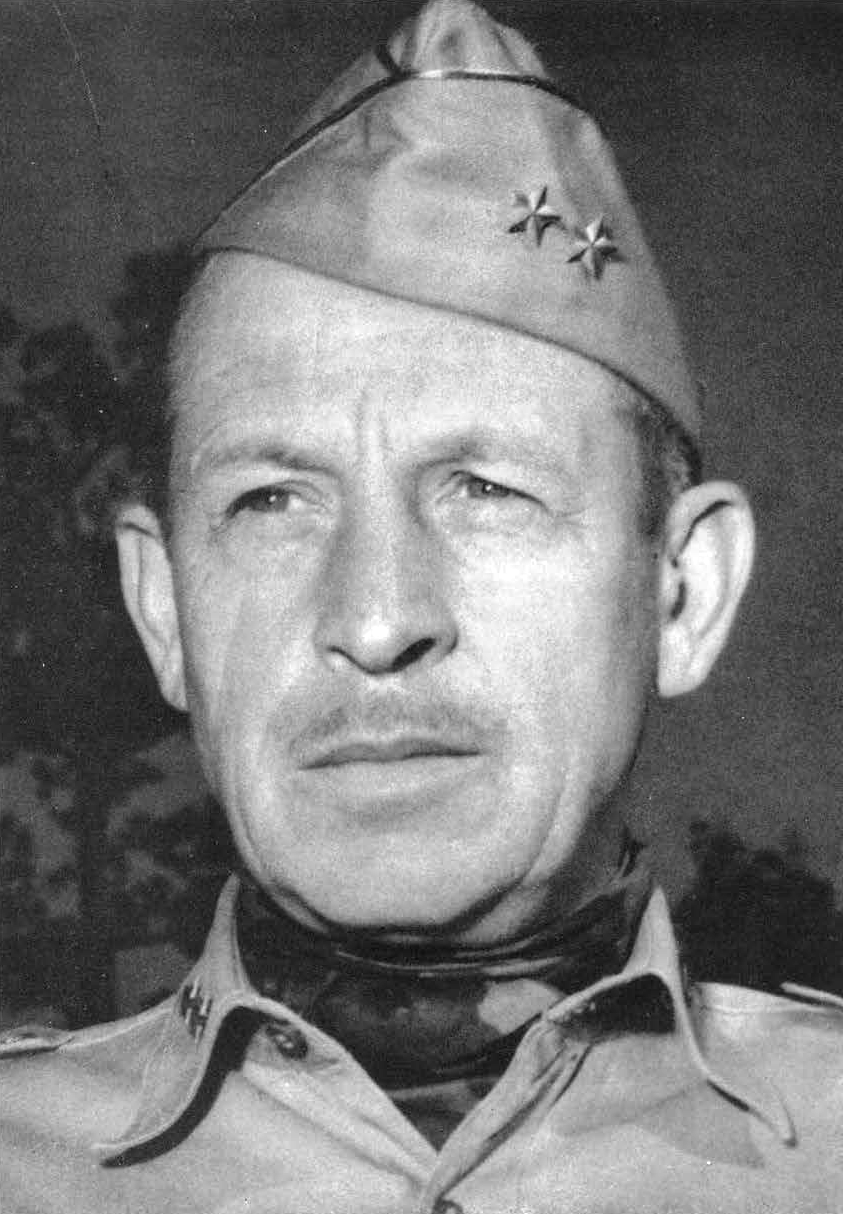
Bryant E. Moore
Major General, US Army
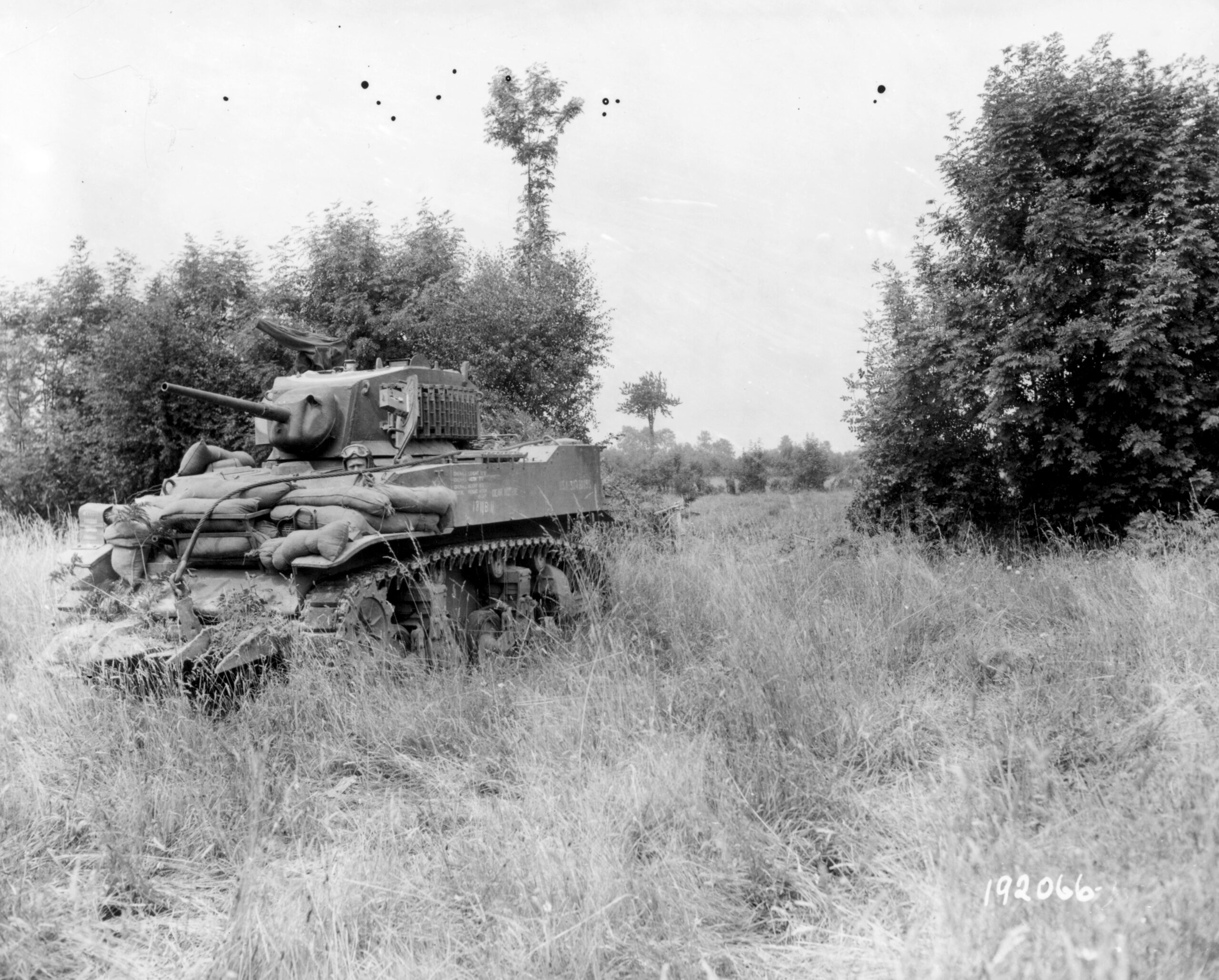
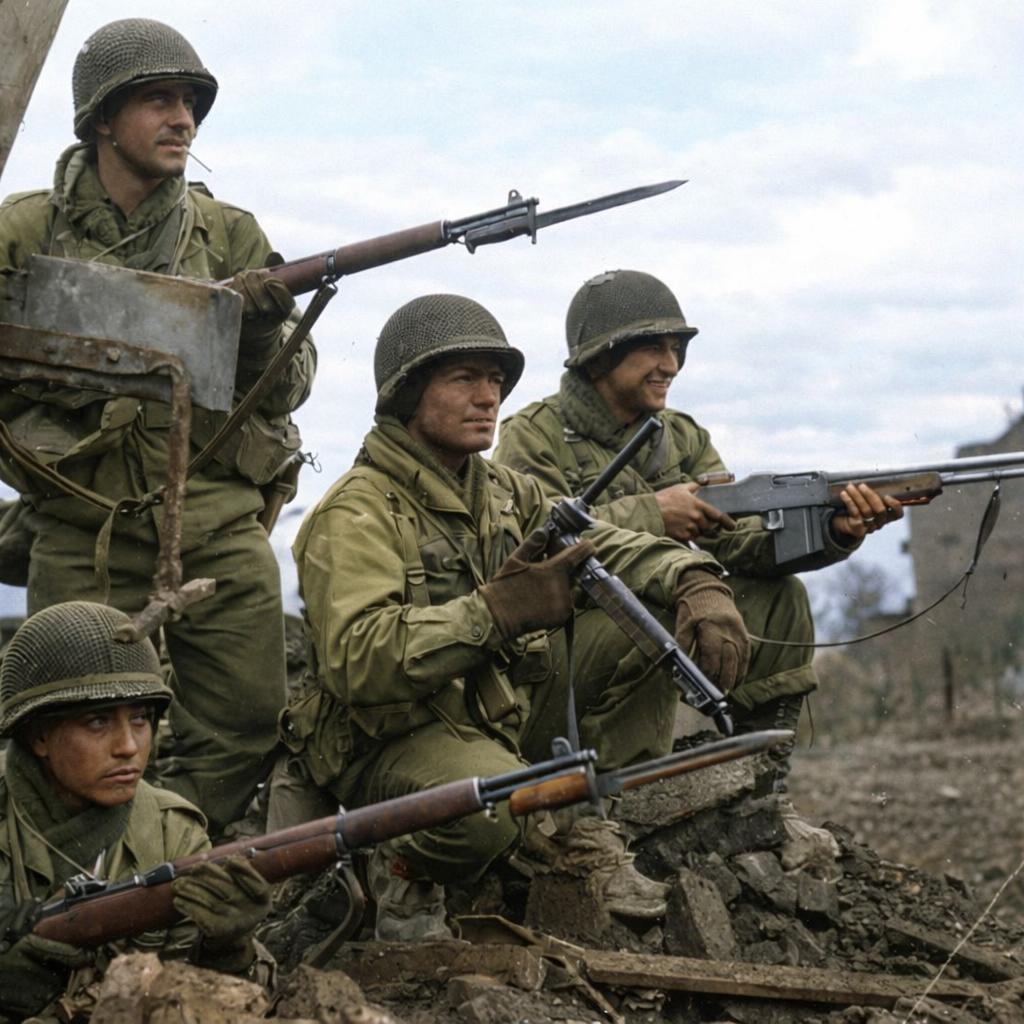
Failure to get into action during World War I was no fault of the Eighth Infantry Division. It was simply a question of being beaten to the punch by the arrival of the Armistice. As a consequence, the Eighth Division was, prior to Normandy D-Day, young in both experience and point of service. It was young in service for it had been activated first in January 1918. It was young in point of experience because it was just preparing to move out of its training camps in France and up to the front lines when that November morning in 1918 occurred. To offset this dual handicap, the Eighth took into its re-activated organization, I July 1940, units which had impressive histories of long and meritorious service.
In some cases this service dated as far back as the beginnings of our constitutional government. None of the units which now comprise the Eighth Division was to be found in the original organization: 13th Infantry Regiment, 28th Infantry Regiment and 121st Infantry Regiment, Special Troops Units and Division Artillery Battalions. So it was that, although the Division, as such, was untried, it hit Omaha Beach, Normandy, France, on July 4, 1944, with units of highly colorful tradition.
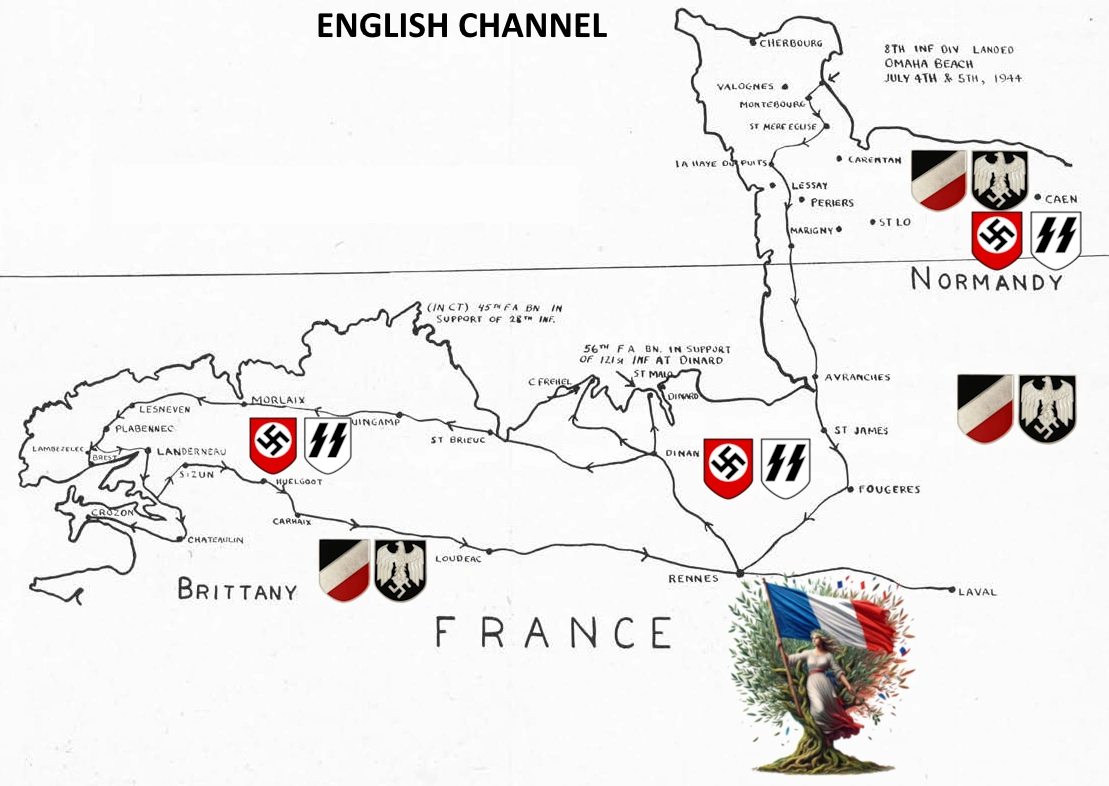
 Here, as a member of the VIII Corps, which had gained the barest of footholds on the enemy’s shore, the Eighth Division had only to wait four days before attacking to the south in the La Haye du Puits sector. For the first five gruelling days of combat experience for the young, untried Division, it advanced rapidly against stiff, well-organized resistance, until, on July 13, it reached the hard-earned north bank of the Ay River. The Division dug in and held on until July 26, when it effected a difficult crossing of the Ay to establish the bridgehead which was to enable the remaining units of the VIII Corps and the 4th Armored Division as well as the 6th Armored Division to rupture the wall of resistance and spill over into Brittany and Northern France.
 Racing closely behind these pile-driving units, the 8th Infantry Division rolled up impressive advances, moving rapidly through Coutances, Granville and Avranches, against a Germany Army which was showing the strain by becoming increasingly disorganized. Driving relentlessly south from Avranches, the Division had seized the key communications city of Rennes by nightfall of August 3. Here, for the next ten days, the Division dug in for the valiant defense of this nerve center which was so vitally important to the success of the Allied offensive. While they were still carrying out this tremendous mission, the Division’s 121st Infantry Regiment was temporarily attached to the 83rd Infantry Division to take part in the fiercely bitter fighting then going on in the St Malo area.
In the course of this fighting, the 121-IR took Dinard by storm on August 14, sweeping aside the stubbornly resisting German garrison. From Rennes, the Division, preceded by a task force of the 28-IR, then made another rapid move to Brest, this time by motor. Shortly after noon of August 25, the 8-ID, together with other chosen units of the VIII Corps, began the battle for this iron-bound, seemingly impregnable French port which, with its excellent harbor and docking facilities, was to prove to be one of the strongest links in the chain that was ultimately to bind the muscles of the arrogant monster, Germany. It was among the bitterest of fighting the Division was to experience. And the Division gave an exemplary account of itself, trading blow for blow with the German garrison of 50.000 until just a week before the port finally fell.
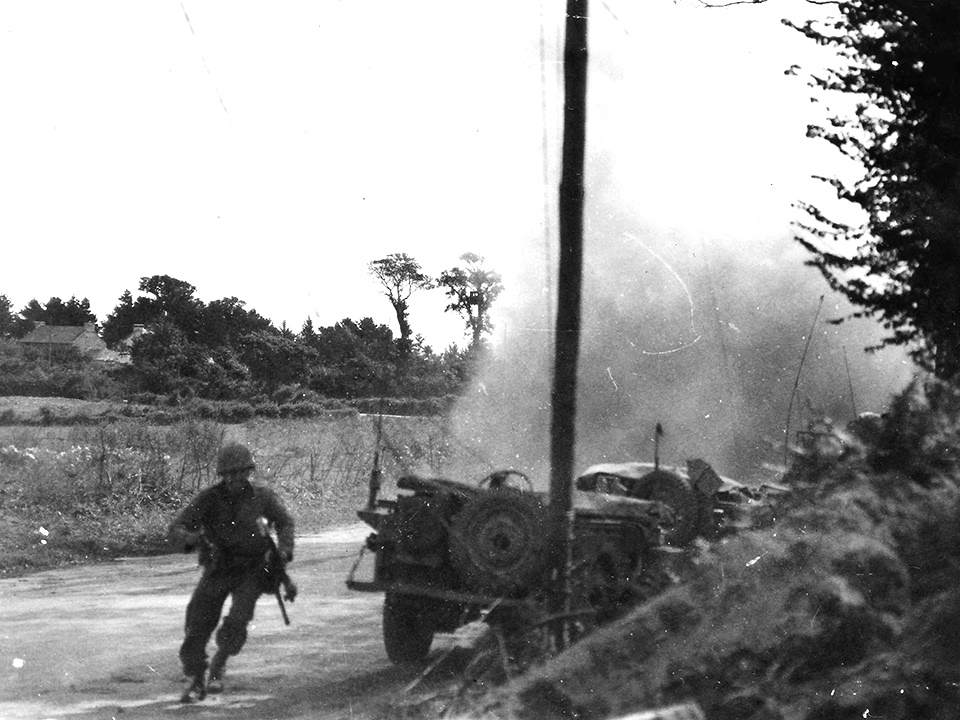
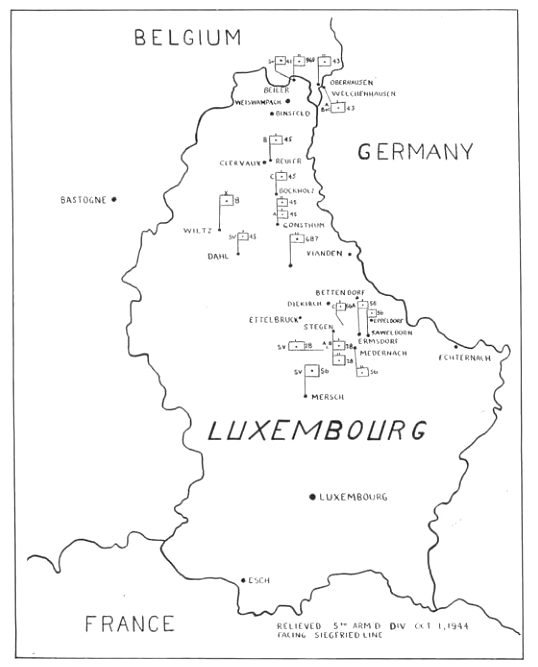 Ordered out of its positions around Brest, the Division now moved to the Crozon Peninsula, a strongly-fortified finger of war-pocked land that continued to menace Brest from the south. In one of its most sparkling engagements, the Division over-ran the rugged enemy defenses in short time, completely routing the de-moralized and disorganized Germans. In just four days of brilliant in-fighting and team-work, the Division cleared the stubborn peninsula, bagging a total of more than 7000 prisoners. Dusting off its hands, the Division moved on September 30, on to the Duchy of Luxembourg, where it assumed the task of holding a 23-mile sector of the Our River front.
 Several weeks later, on November 16, certain elements of the Division began to relieve comparable units of the 28th Infantry Division in the sector southeast of Aachen – Germany. From here, on November 21, the Division began a hard drive through dense, forbidding forests, clinging mud and ever-present mines to seize the town of Hürtgen. Many casualties and exhausting difficulties were suffered in the Hürtgen Forest, for seven difficult days.
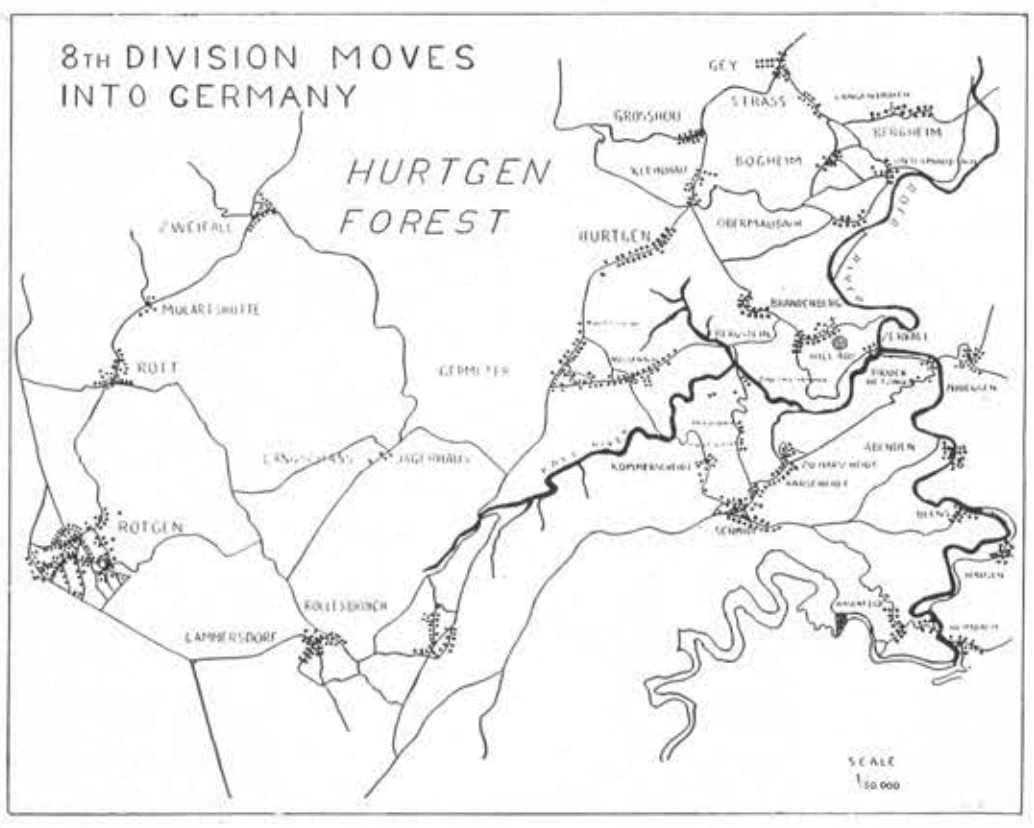 After one more day of slow, bloody and torturous street fighting, the town was captured on November 28, paving the way for the next offensive against the town of Kleinhau, which was summarily taken the next day. In rapid succession, Brandenberg fell on December 3, and Bergstein on December 5. Other foot troops of the Division fought their way through heavily mined woods and dug-in bunkers of concrete and logs to reach the Roer River along a six mile stretch, east of Bergstein. Building efficient all-around defenses, the Division held its positions firmly during the powerful German counter-drive in mid-December. On December 21, with a bleak Christmas in the offing, elements of the Division began a limited offensive, seizing the Roer River town of Obermaubach and the remaining enemy-held territory in the Division sector west of the Roer.
 Well after a New Year’s that had been as bleak as Christmas, the Division continued to hold. Not until early February did it move slightly north to take over a Roer River front opposite Düren and Niederau, on February 23, the Division crossed the flood-swollen Roer, at the south flank of the great US 1st Army and the US 9th Army combined offensive. Troops of the Eighth Division cleared the stubborn south half of Düren on February 25, and drove to the Rhine River in a brief ten days,
  taking approximately 50 German towns, more than 10.000 prisoners; and destroying tons of equipment that the enemy could ill afford to lose. The Division’s 13th Infantry Regiment was attached to the 3rd Armored Division, cutting another wide, bleeding swath to the Rhine, and seizing the northern third of the key city of Koln.
 Still involved in the Koln offensive, the Division, after six days in Corps Reserve, took over the Koln and Bonn sector of the west bank of the Rhine, where it fought and held until the early days of the Remagen bridgehead. Then, on March 28, troops of the Division began the move across the Rhine in the Remagen area. On the following day, the entire Division began its attack north of the Siegen area. As a result of this, Division elements crossed the Sieg River on April 1. After three days of fierce, determined enemy resistance, the city of Siegen fell. Two days later, the Division, now integrated into the team of the XVIII Corps, began the drive which was to result in the entrapment or annihilation of more than 350.000 German troops.
In a mere ten days, the Division rolled up a satisfying advance of more than sixty miles, seizing a total of nearly 200 towns and villages and capturing well over 48.000 completely beaten Wehrmacht veterans. With this outstanding successful completion of its mission, the Division next received orders to occupy and govern the Düsseldorf – Wuppertal– Wissen – Mülheim area.
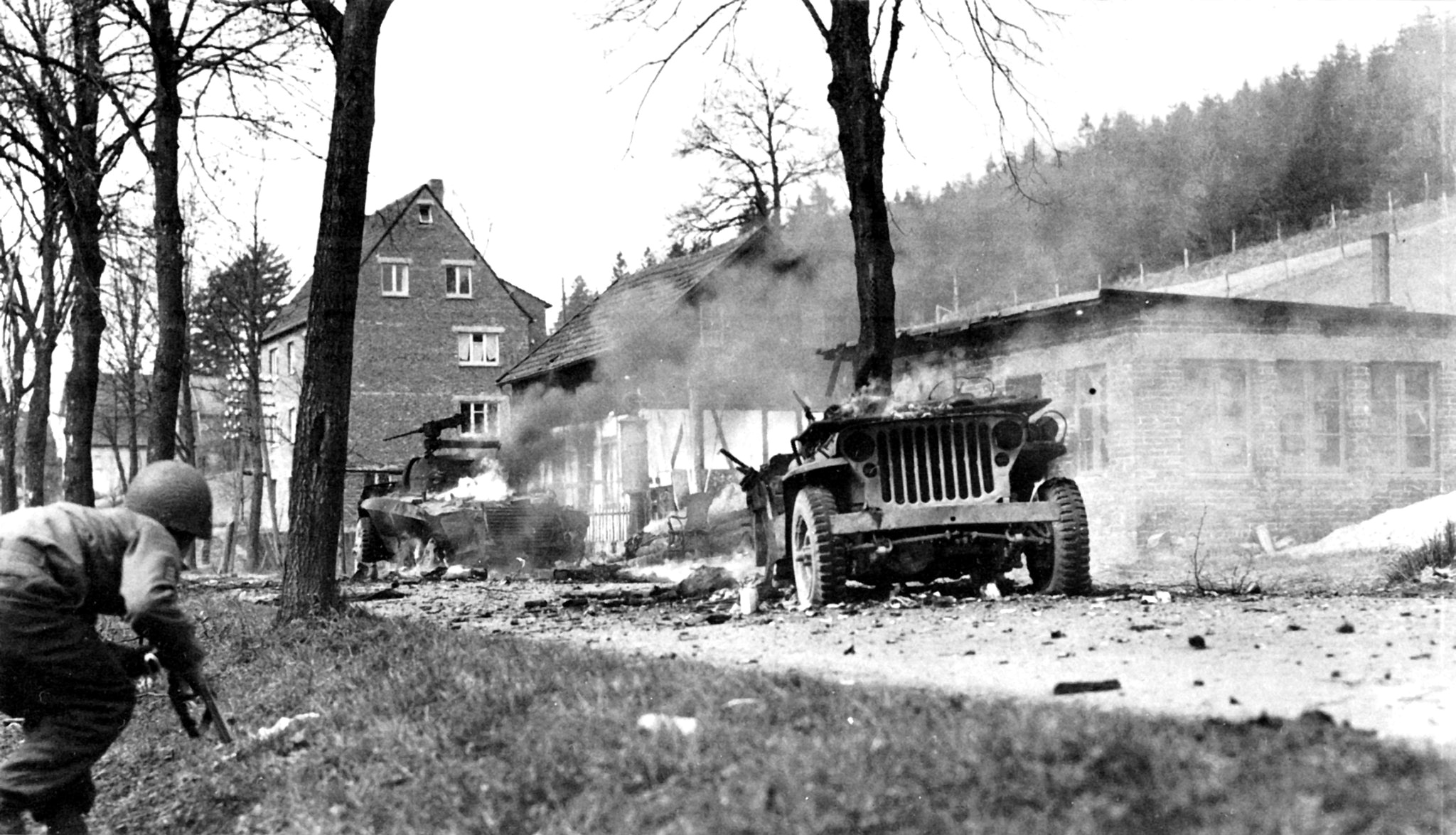
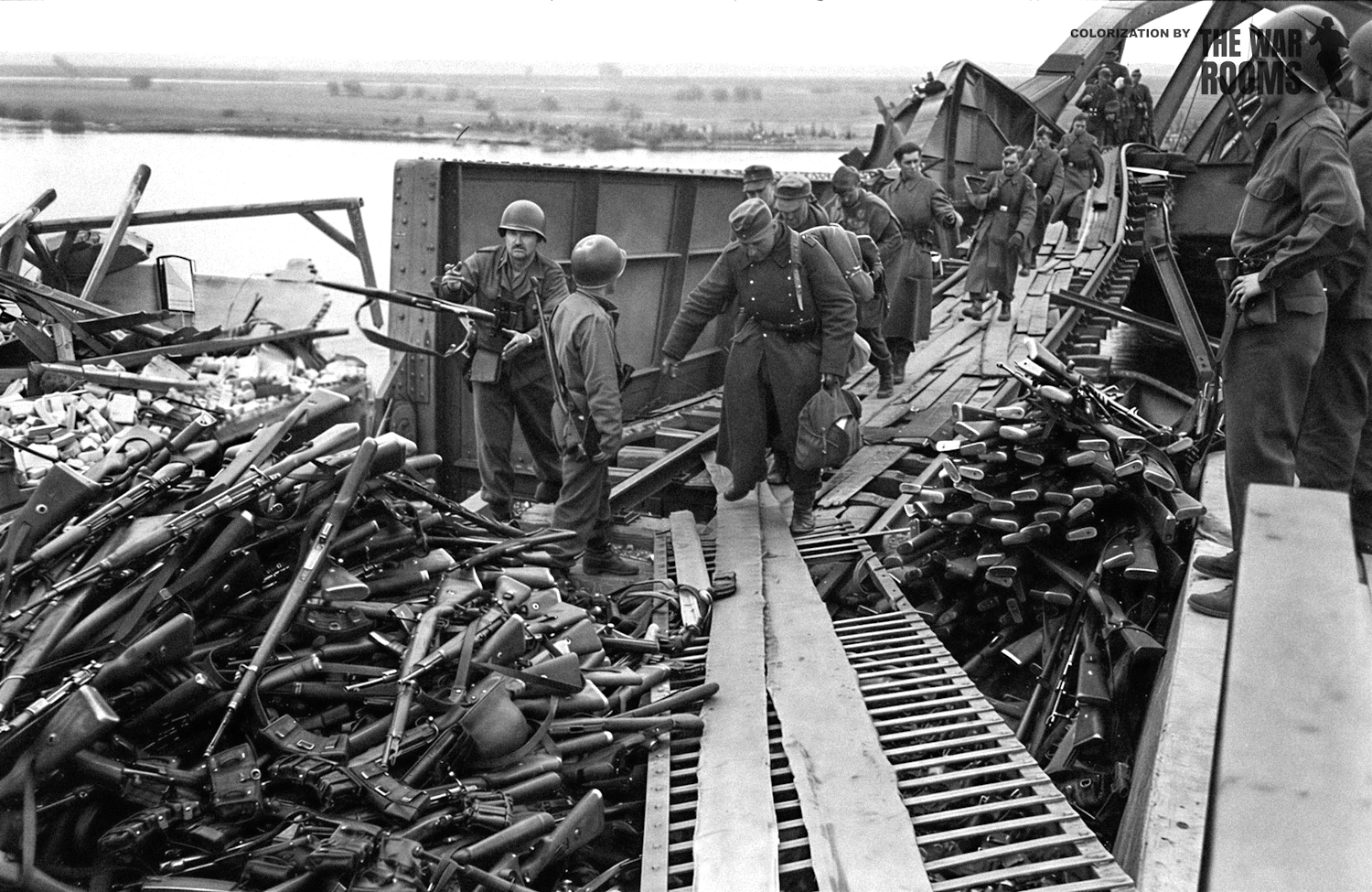
Once again shifting to new commanders, the Division was ordered under the control of the British Second Army, with which organization it crossed the Elbe River, early on the morning of May 1, at Bleckede, which then marked the extreme northeast sector of the Allied front. A lightning stab toward the Baltic Sea netted more than a hundred German towns before the Division reached Schwerin at noon of May 2. Here, at the capital city of the province of Mecklenburg-Vorpommern, the Division halted and stepped aside to permit the British troops to sweep on to the Baltic. By now, the disorganization and demoralization of the enemy were rushing toward a feverish climax, as was evidenced by the large bodies of German troops which marched up to surrender all along the roads of advance. So great was the enemy’s desire to capitulate that, by May 4, when the final announcement of the surrender of all German troops in the north came, the division’s bag of prisoners reached a grand total in excess of a quarter of a million men. By May 3, elements of the Division had made triumphant and joyous contact with the Russians, thus marking the end of the long and arduous struggle to convince the hard-headed adversary that he was beaten. And so, with the complete and ignominious capitulation of all German land, air and sea forces, the combat record of the Division in World War II was completed. The Eighth Infantry Division had come of age in service and experience.
BREAKDOWN OF CASUALTIES
4 July 1944 – 12 May 1945
| Unit | KIA Off | KIA Enl | MIA Off | MIA Enl | WIA Off | WIA Enl | Total Off | Total Enl | NBC Off | NBC Enl |
| Headquarters Company | 0 | 2 | 0 | 17 | 1 | 20 | 4 | 23 | – | – |
| Service Company | 2 | 2 | 0 | 0 | 1 | 14 | 3 | 16 | 6 | 28 |
| Cannon Company | 0 | 1 | 0 | 0 | 2 | 15 | 2 | 16 | 5 | 32 |
| Anti-Tank Company | 1 | 8 | 0 | 8 | 6 | 24 | 7 | 40 | 2 | 62 |
| Medical Detachment | 0 | 17 | 1 | 9 | 0 | 77 | 1 | 103 | 2 | 99 |
| 1st Battalion | ||||||||||
| Headquarters 1st Battalion | 2 | 12 | 0 | 0 | 4 | 32 | 6 | 44 | 6 | 63 |
| Company A | 5 | 94 | 2 | 30 | 13 | 299 | 20 | 423 | 4 | 111 |
| Company B | 2 | 73 | 2 | 47 | 6 | 223 | 9 | 343 | 3 | 267 |
| Company C | 4 | 92 | 4 | 55 | 22 | 342 | 30 | 489 | 3 | 206 |
| Company D | 1 | 41 | 0 | 0 | 9 | 128 | 10 | 169 | 6 | 92 |
| 2nd Battalion | ||||||||||
| Headquarters 2nd Battalion | 0 | 8 | 0 | 1 | 4 | 34 | 4 | 43 | 2 | 40 |
| Company E | 3 | 60 | 1 | 46 | 15 | 320 | 19 | 426 | – | 176 |
| Company F | 0 | 60 | 0 | 17 | 10 | 251 | 13 | 328 | 3 | 181 |
| Company G | 1 | 83 | 1 | 19 | 9 | 282 | 11 | 384 | 10 | 173 |
| Company H | 0 | 17 | 1 | 11 | 6 | 93 | 7 | 121 | 1 | 79 |
| 3rd Battalion | ||||||||||
| Headquarters 3rd Battalion | 1 | 7 | 0 | 4 | 5 | 44 | 6 | 55 | 3 | 40 |
| Company I | 2 | 65 | 1 | 83 | 12 | 194 | 15 | 342 | 8 | 175 |
| Company K | 4 | 65 | 0 | 20 | 10 | 260 | 14 | 345 | 2 | 216 |
| Company L | 7 | 69 | 0 | 43 | 15 | 231 | 22 | 343 | 3 | 188 |
| Company M | 2 | 31 | 1 | 9 | 3 | 102 | 6 | 142 | 3 | 112 |
| TOTALS | 807 | 403 | 2982 | 4192 | 2363 | |||||
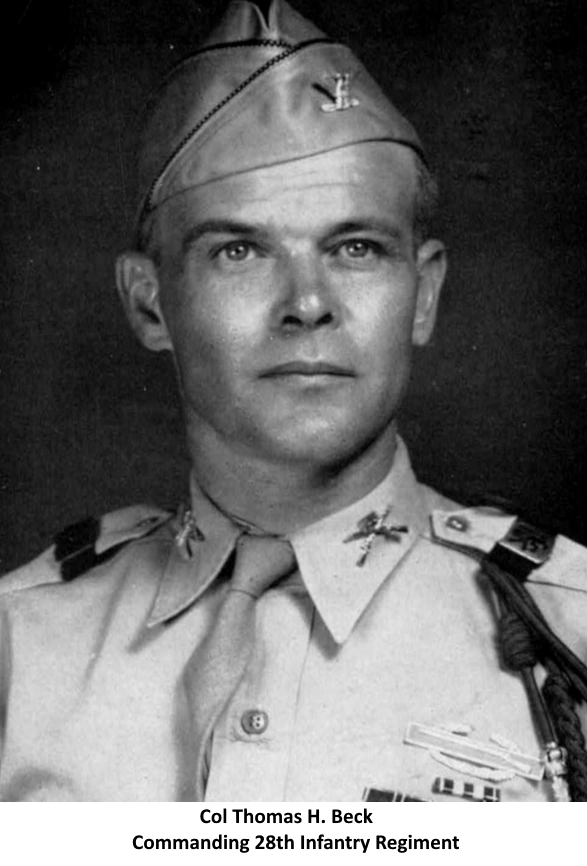 History of the 28th Infantry Regiment
 The 28th Infantry Regiment was organized in 1901 at
Vancouver Barracks, Wash., it earned its spurs in the Philippine jungles of Mindanao and added to its laurels during World War I in the Cantigny Forst (France). Shortly after its organization, the regiment was sent to the Philippines. For two years it remained on the Mindanao Island, building military roads through the dense jungles and suppressing the Moros, savage inhabitants of that Island. Raids and ambushes by these treacherous headhunters were a constant danger. Moros with their bolos, crept up on lone sentinels and small groups of soldiers in the blackness of night, and at dawn slashed bodies of the victims would be found.
Disease followed the men of the 28-IR from camp to camp of the malaria infested swamps. In spite of the hardships, they continued on their mission. Through Jolo, Pantar, and Marahui, the road was rushed to completion. The Moros conquered, pacified, or killed, the 28-IR returned to the United States. For the next ten years the regiment performed ordinary garrison duties. It was stationed for a time at Fort Snelling, Minnesota, and later in Texas. Little information is available of this period. Then in 1913, there were serious outbreaks along the Mexican Border. President Taft ordered the Regiment to patrol the Rio Grande River. The city of Vera Cruz was seized by the United States Navy in April 1914, and later taken over by the Army. The 28-IR was a member of this expedition, until November 1914, patrolling the streets and guarding Public Utilities.
Rumbling of the war that was soon to engulf most of the world were already being heard from Europe. Then came Sarajevo, and the mistaken notion that America could stay out of the European War. Finally when the Lusitania had been sunk, President Wilson’s watchful waiting came to an end, and Congress declared war on Germany. Hardly had the nation entered the war before the 28-IR, as a member of the US 1-D in Gen Pershing’s American Expeditionary Force, was on the way to France. On June 28, 1917, the regiment arrived at the port of St Nazaire, and early the next morning, the men of King Co became the first American combat unit to set foot on European soil.
Immediately the Regiment entrained for the province of Lorraine, where it began a program of rigorous training under the famous French ‘Blue Devils’, the 52nd Battalion of Chasseurs. All through the following winter the 28-IR was in training, and when spring came it had been moulded into a rugged, hard-hitting combat team. The Regiment had occupied the trenches before the city of Toul when the Germans drove a powerful salient between the British and French forces in the vicinity of Montdidier. To the American 1-D was given the task of overcoming this dangerous drive which was aimed at the all-important Channel ports. The first American offensive of the war began near Cantigny on May 28, 1918. Fighting was vicious, and the battle lasted three days; but after counterattacking five times the Germans withdrew. The American forces had gained their objective. No longer was there any doubt in the minds of the British and French as to the fighting ability of the Americans. Not only was their victory a great military success, the psychological effect upon the Allied armies was tremendous.
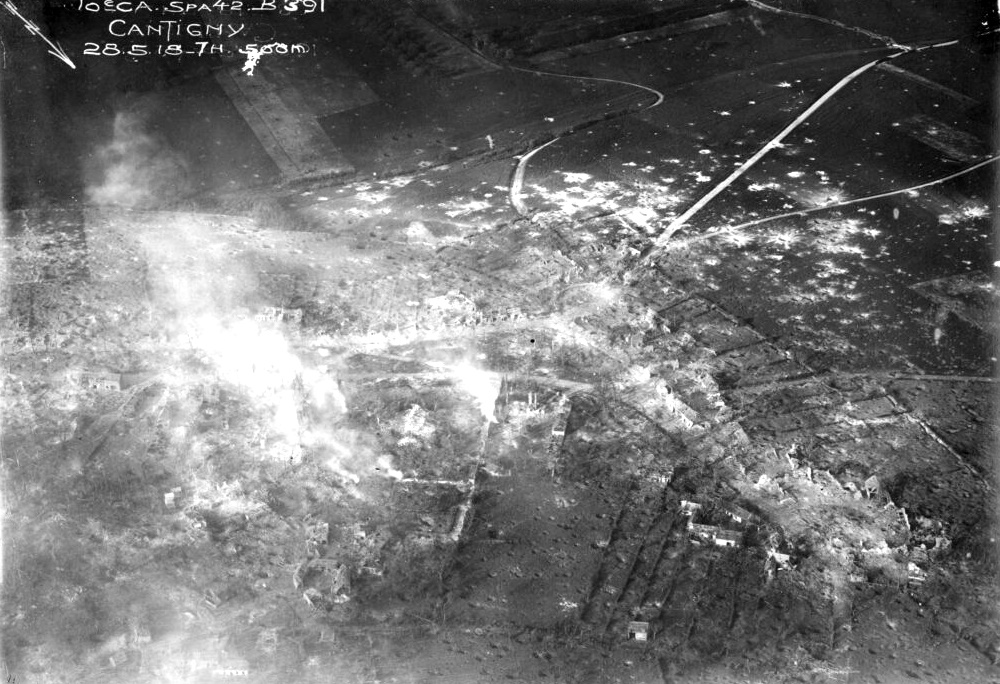
On that day the tide of battle turned in favor of the Allies. The regiment was cited for gallantry in action by Marshal Petain, and Colonel Ely, its commander, was promoted to the rank of Brigadier General. The 28-IR had already made an important contribution to the complete victory that was destined to come. There were more victories for the American forces-and the 28-IR. On July 18, 1918, the 28-IR, despite terrific artillery bombardment and heavy resistance, succeeded in cutting the German line of communication in the Battle of Soissons. Despite severe casualties (56 officers and 1760 enlisted men) the regiment’s spirit remained unbroken. For three years the Germans had maintained this wedge deep within the Allied lines, the enemy’s tenacity, and in the face of bitter cold and rain, the Americans smashed through. Then came the Battle of the Argonne, a month of steady slugging in the tangled underbrush and dense thicket against a stubborn enemy. Again the Germans were driven back. There was more bloody fighting before heavily fortified Sedan; and when the Americans had fought their way into position to take the city, they stepped aside and allowed the French to march in and reclaim the prize which they had lost to the Germans in 1871.
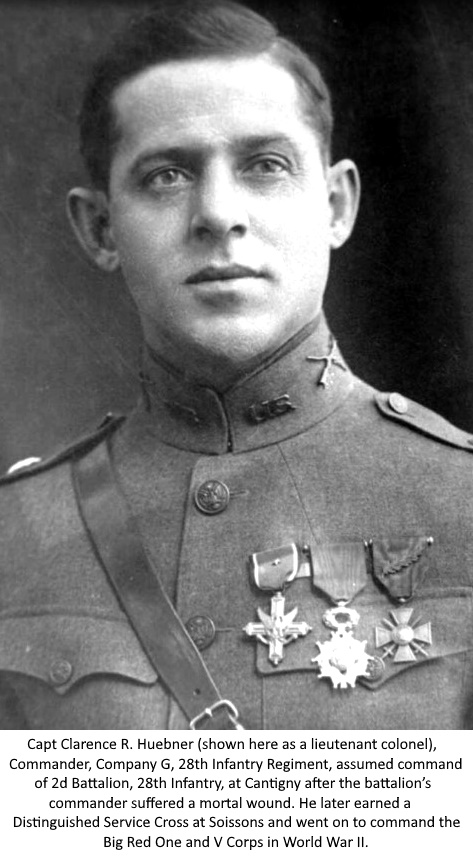 The war had been won, and the 28-IR had played no small part in the victory. To the French, no display of gratitude seemed too great, as they decorated the members of the Regiment with the Fourragère. Great, too, were the casualties suffered by the men of the unit in battle. More than 5000 officers and enlisted men had been killed or wounded. After the Armistice was signed, the 28-IR began its triumphant entry into Germany. Marching through the Duchy of Luxembourg, the regiment crossed the Rhine and on December 13 entered the American bridgehead area. There it kept the ‘Watch on the Rhine’ until the treaty of peace was signed.
Returning to the United States in September, 1919, the 28-IR paraded in New York and Washington DC, and then took up its station in Camp Zachary Taylor, Kentucky. In 1920, the regiment was transferred to Fort Dix, New Jersey, and in June, 1922, it was moved to the State of New York. There, one battalion was stationed at Fort Niagara, another at Fort Ontario. The First Battalion garrisoned Fort Porter until it reverted to inactive status in 1933.
The 28-IR remained a member of the First Division until October, 1939, when the Army was reorganized, and Divisions became triangular. During 1939-1940, the regiment underwent a period of Winter training in northern New York, testing skis, snowshoes and other equipment for use in cold climates. In the summer of 1940, the 1/28-IR was re-activated at Fort Niagara, and the entire regiment was brought to peace-time strength. It then proceeded to Fort Jackson where, on July 1, 1944, it was assigned to the 8th Infantry Division.
To recount all the events in the four years from the day the 28-IR joined the 8-ID to D-Day, July 4, 1944, would be simply to list the innumerable steps in the training routine of an American Infantry Regiment through all its phases. There are however, the highlights and a number of unusual incidents during this long period of training and preparations, and these form an essential part of the history of the 28-IR. Beginning in September 1941, the 8-ID already well through its preliminary stages of training, took part in the Carolina Maneuvers. For more than three months, a large proportion of the Nation’s armed forces was engaged in extensive operations throughout the Carolinas, and the men of the 28-IR took a major part in them. Then came Pearl Harbor. The Japanese had crippled the American Navy, and with packs of German submarines roaming the Atlantic, there was the constant threat of an attack against the American mainland. For two weeks after December 7, the 28-IR patrolled all vital installations in South Carolina. On March 26, the 28-IR went on patrol along the Atlantic Seaboard, the Regimental Headquarters was moved to Atlanta, Georgia, and remained there until June 5, when the regiment was relieved and returned to Fort Jackson to rejoin the Division.
During this time the Division had become motorized. In September 1942, the 28-IR as a unit of the 8-ID began a Motor March to the area of the Tennessee Maneuvers. Two more months of war games further hardened the troops of the 28-IR. Then, after a brief stay in tents at Camp Forrest Tennessee, the Division set out for its new station, Fort Leonard Wood Missouri. From December 1942, to March 1943, there was another period of comparative calm. In March 1943, the 8-ID moved to Camp Laguna Arizona, for six strenuous months of desert training. During the latter part of this period the Division was de-motorized, reverting to its original status as a standard infantry division. It was also during this period of desert training that the band of the 28-IR was transferred to the 65th Infantry Division at Camp Shelby, Mississippi. Upon completion of desert training, the Division returned briefly to Camp Forrest. Preparations were begun immediately for an overseas movement. Late in November, the 8-ID arrived at the staging area at Camp Kilmer New Jersey. Then, on December 5, 1943, a convoy bearing the 8-ID sailed from New York Harbor. Ten days later, after a crossing uneventful except for the severe winter storms, the Division arrived at Belfast Northern Ireland.
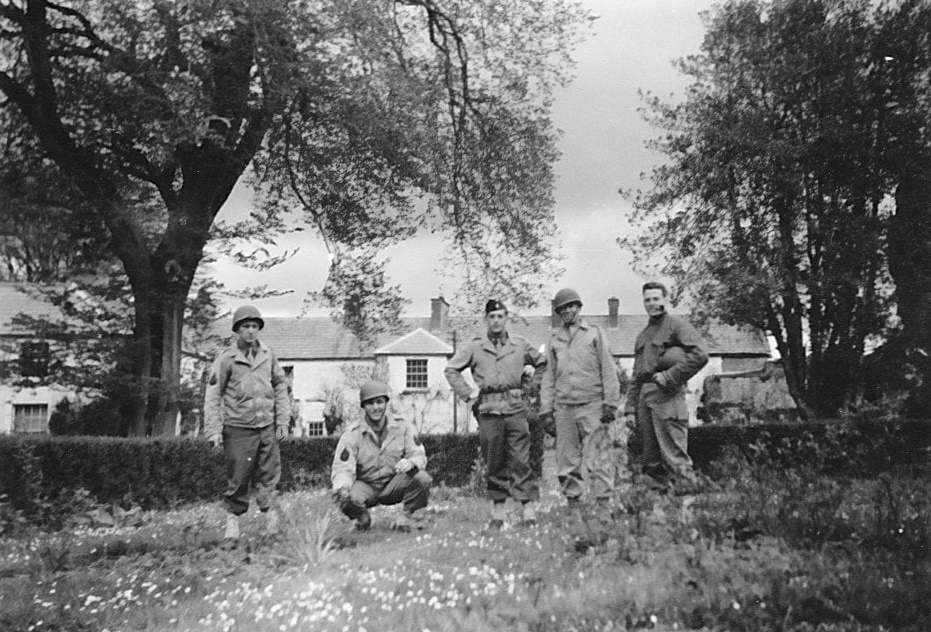
Headquarters for the Regiment were established at Enniskillen County Fermanagh. The 1st Bn was located at Camp Breandrum, Enniskillen. The 2nd Bn at Castle Coole, also in Enniskillen, and the 3rd Bn was at Crom Castle outside of Newton-Butler. Training in Northern Ireland was as varied as the limited terrain permitted. Greatest emphasis was placed on small unit tactics. There was an abundance of scouting and
patrolling, with one-third of all training conducted at night. A rigorous physical conditioning program was put in effect. Firing of all types of infantry weapons throughout the entire period. Gen Dwight D. Eisenhower visited Enniskillen in April, during one of his tours of inspection of Allied troops. The Supreme commander witnessed a number of small unit problems, and later a Regimental Review by the 28-IR. Gen George S. Patton, Third Army Commander, also inspected the troops while in Northern Ireland. The Regiment also participated in a Division assembly for him.
Every two weeks during the period in Northern Ireland, the Regiment sent three officers and fifteen enlisted men to a British training camp and received an equal number of United Kingdom troops. This was in accordance with an exchange plan worked out by Military authorities of the two nations.
It proved beneficial from a training standpoint, and helped to promote a better understanding among Allied soldiers. As the time for the invasion of Europe drew near, the training program was expanded to include battalion and regimental combat exercises, command post exercises, and the study of German tactics. Elementary amphibious training was given to all troops, and some units began language classes in French and German.
Then on July 1, 1944, a convoy of four troop ships and twelve motor transports steamed out of Belfast Harbor carrying the 8-ID to the continent of Europe. On July 4, twenty-eight days after D-Day of the Allied invasion of Normandy, the Regiment began debarking at Utah Beach on the Cherbourg Peninsula. Next day it had assembled in the vicinity of Montebourg where final preparations for battle were completed. Allied invasion armies at this time held only a few square miles of the territory of France. The city of Cherbourg had recently been taken, and the Germans had been driven from the northern tip of the peninsula to a point just north of La Haye du Puits. From there the enemy line extended through Carentan and St Lo eastward to Caen and the Orne River Estuary. German resistance in most sectors was heavy even against already achieved air superiority. On July 6, the Regiment moved to an assembly area near the town of St Sauveur Le Vicomte, the following morning orders were received to take over a section of the line, one kilometer south of La Haye du Puits. The plan for the Division, was to attack to the south, passing through the 82nd Airborne Division, taking over the center of the Corps front. The main effort of the drive was to be made in this sector.
At daylight on the morning of the July 8, the 1/28-IR moved through a concealed sunken trail to the line of departure, the enemy anticipating action in this sector had laid down a heavy concentration of mortar and artillery fire, killing four and wounding nine, this was prior to reaching the line of departure and was the first taste of combat for these men who were badly shaken up. Only aggressive leadership pulled the men through. The advance forward was extremely difficult, and casualties were severe, the slow advance was reported to the Regimental Commander and orders came back to push forward and ask for artillery fire. The artillery forward observers reported that the fires could not be observed, because of the wooded hedgerows.