





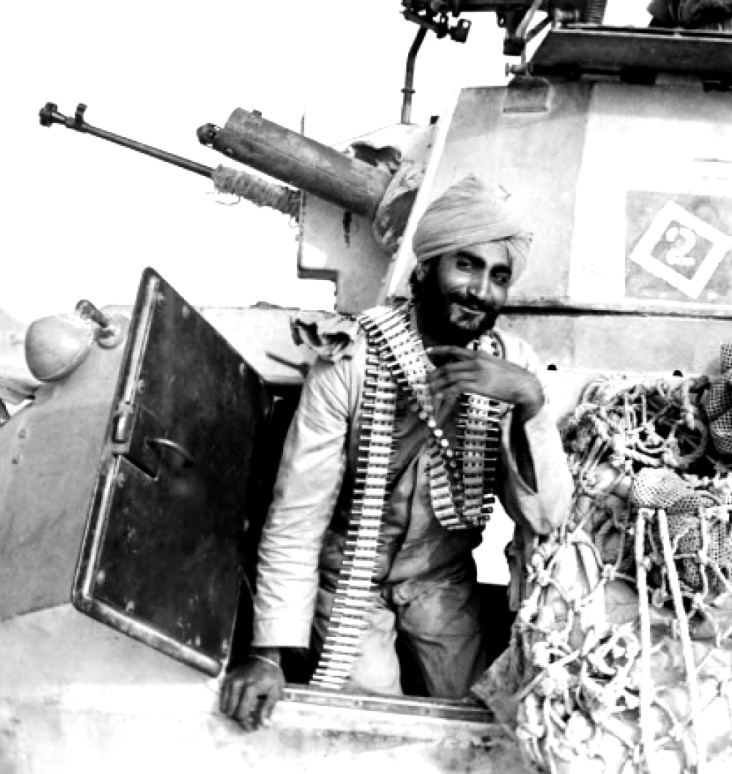
Despite the previous mountainous operations, North Italy was relatively flat. The tanks and infantry combined tactics were seen to be more effective. On top of that, moving from one town of a stronghold to another ensured heavy urban fighting. In such conditions, the battle for Medicina along with the 14/20 King’s Hussars in Apr 1945, was the last battle the Gurkhas fought in Italy. Tanks were heavily used in this street-to-street battle. Despite the successful attacks by Gurkha units, few men lost their lives unnecessarily, in what is now termed as a Blue on Blue situation.
The 6th Gurkhas war diary claims that one man has been overrun and killed by a Kangaroo. One man was crushed to death under a Kangaroo (tank) which overturned. (152) In such complex urban fighting, the chaos of battle was rife, even methodical; thoughtful fighting men can be affected by sudden panic. Nevertheless, victory over the Axis forces had been won in Italy. Despite the Gurkhas’ long and successful campaigns in the Middle East, the Gurkhas’ major fighting only started to take place during the Second Battle of El Alamein; in which, they demonstrated their prowess as mountainous soldiers. Many years of soldiering in the Northwest Frontiers served as the training ground for this kind of mountain warfare.
 The victory of the Mareth Line was a turning point in the reputation of the Indian Army, in that it overshadowed the humiliating defeats of Burma, and importantly, swayed senior commanders on the fighting capacity of the Gurkhas. However, the lessons learned from the desert could not be effective in the jungles of Burma, as the nature of warfare varied tremendously.
(139) Ibid, p 100. (140) Fraser, And we shall, p 285. (141) Tuker, Gorkha, p 227. (142) Smith, The Brigade, p 102-103. (143) Fraser, And we shall, p 285. (144) Marston, A force transformed, in a history of India and South Asia, p 115. (145) Cross and Gurung, Battle account of Gangabahadur Thapa, IDSM, 1/9th Gurkhas, in Gurkhas at War, p 135. (146) Gould, Imperial, p 250. (147) Bullock, Britain’s, p 121. (148) Marston, A force transformed, in a history of India and South Asia, p 116. (149) Interview with Gurkha Officer, Army No. 16216, 2/10th Gurkhas. (150) Lunt, Jai, p 78. (151) Interview with Gurkha Officer, Army No. 16216, 2/10th Gurkhas. (152) 6th Gurkha Rifles’ war diary.

The Gurkhas in Burma
The war against the Japanese Army provided a threatening challenge, as it mostly involved fighting in the Jungle. At the initial stage of the war, they were ahead of the British in jungle warfare. Harper claims, the dismal situation within Burma was made gloomier by the fall of Singapore on Feb 15, 1942, . (153) Using the neutral Siam, the Japanese army quickly entered Burma from the south. After the Billin River defense had been broken, units of the 17th Indian Division hastily began to withdraw towards the strategically important Sittang Bridge. Surrender of this bridge intact would lead to the complete annihilation of the 17th Division. To hold the line of the Sittang and deny the bridge to the enemy was the responsibility of the 17th Indian Division, commanded by Gen J. G. Smyth.(154)
 Five Gurkha battalions, as part of 48th and 46th Brigade, were caught up in bitter fighting, with the cut off Japanese groups. Both the battalions of the 7th Gurkhas, the 1st and the 3rd, were continually attacked by the Japanese and were unable to join up with the bridgehead force. (155) Most units have already crossed the bridge. However, the 48th Brigade under Gen Hugh-Jones struggled to block the Japanese approach to the bridge. Owing to someone’s blunder, the Brigade as it marched was subjected to the most vicious attacks by both, the Royal Air Force and the Flying Tiger of the American Volunteer Group’s planes that unfortunately killed many rear-group Gurkhas needlessly. (156)
Jemadar Krishna Gurung claims, the attack caused many unnecessary casualties; more importantly, the mules of the Gurkha battalions stampeded into the jungle, losing all the equipment, including a wireless set which was the only means of communication. (157) The 5th Gurkhas’ regimental history claims, the situation was very confused and, owing to the virtual lack of all means of communication other than by a liaison officer, orders took a long time to get through. (158) Having no contact at all, the rest of the division assumed that the Gurkhas had been eliminated by the Japanese, however research shows, they were still tenably holding the ground, refusing to give up an inch.
The Division CG Smyth speculated the destruction of units on the east side, as all attempts to establish communication failed. The decision made by Gen Smyth to blow the bridge while many units were still on the wrong side had provoked debates.
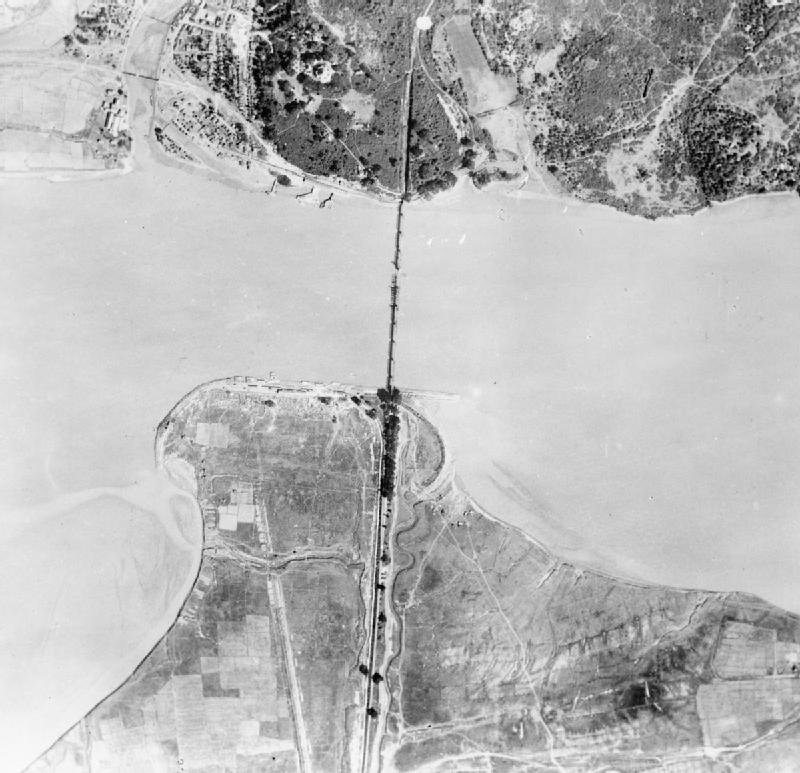
Traditionalist historians claim that a timely decision allowed the retreating troops just enough time to enter India; which saved many lives. On the other hand, contemporary historians argue that the demolition of the bridge was premature. The battalions on the east side had continuously repelled the Japanese attacks. Their argument is; that most of the men could have made it to the west side of the river, saving many lives.
The 5th Gurkha’s regimental history claims, throughout the day on Feb 22, Pagoda Hill and the bridge had been held by our troops. (159) To which, Bailey and Harper’s research shows the bridge was blown prematurely. (160) The official historian Kirby attempts to remain neutral. He claims, Gen Cowan from Divisional HQ, reported the conversation to Smyth who, thinking that most of the division was on the western bank, gave authority to the brigade commander to destroy the bridge. (161) In this debate, the recent publication of Bullock supports the official history, as part of the cause of this tragic occurrence was poor signal communications. (162) It prevented the exact, correct situational awareness of the troops to the decision-making by higher command.
(153) Bayle C and Harper T, Forgotten Armies: The Fall of British Asia, 1941-1945, (Penguin Group, 2004, London), p 159. (154) Trench, Indian Army, p 200. (155) Smith, Brigade, p 121. (156) Trench, Indian Army, p 202. (157) Interview with Jemadar Krishna Gurung, 1/3rd Gurkhas. (158) 5th Gurkha Rifles’ regimental history, V II, p 163. (159) ibid, p 168. (160) Bayly and Harper, Forgotten, p 159. (161) Kirby S. W, The war against Japan, V. II, (Her Majesty’s stationery office, 1958, London), p 72. (162) Bullock, Britain’s, p 139
One could contemplate the possibilities of this event and argue for, or against the decision. However, to the British and Indian troops still on the eastern side of the river the explosion was a shattering announcement. (163) The Commanding Officer of the 1/3 Gurkhas ordered his men to cross the river on their own. Many Gurkhas drowned while crossing the river, as most could not swim.
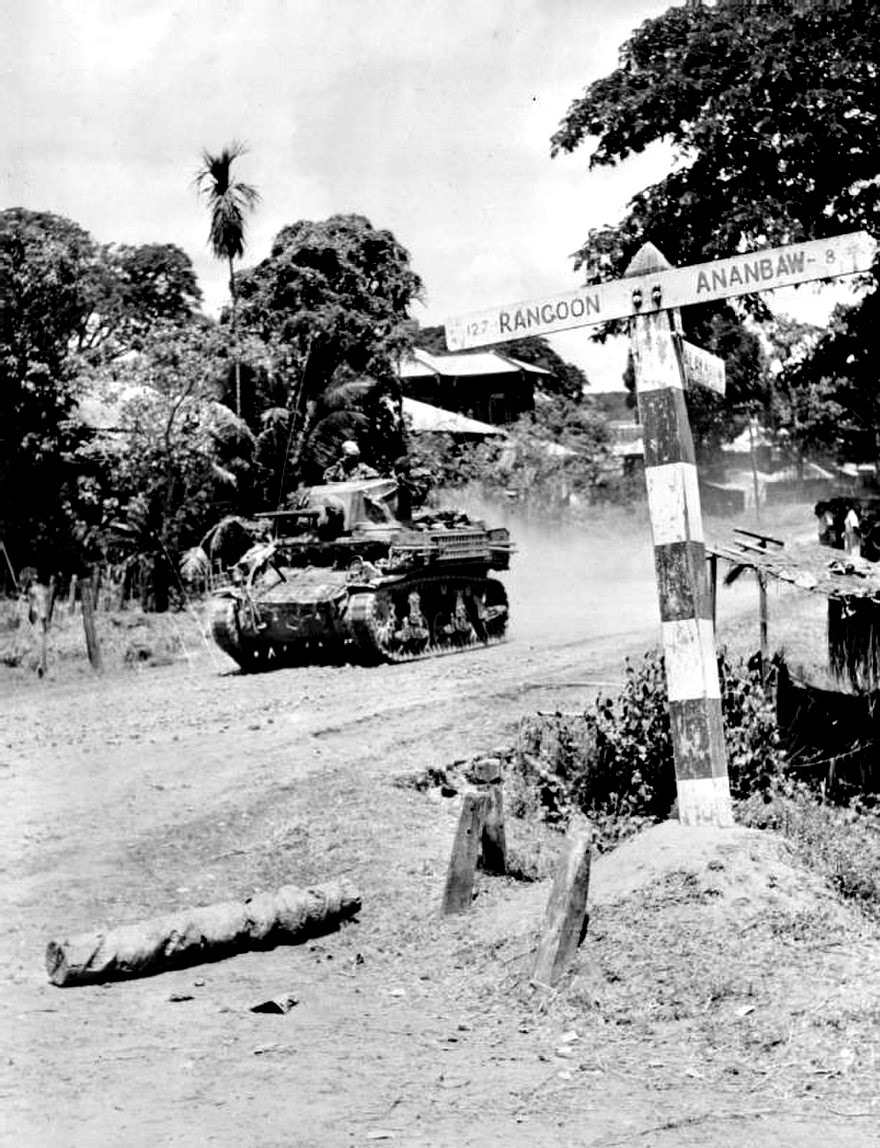
Non-swimmer Jemadar Krishna Gurung asserts, the river was unbelievably big that they stayed overnight for the arrival of the Japanese as they could not cross. (164) The fatality rate of the Gurkhas was high that within two-thousand-five-hundred troops were lost; two-thirds were Gurkhas. It was a heavy blow to the manpower of the Gurkhas to meet the Target 43, at a time of decreasing potential recruits. The 17th Indian Division itself was left to only forty percent of strength, finally evacuated from Rangoon to the Northeast border of India. To which; Marston claims, the strategic situation in Burma changed with the abandonment of Rangoon. (165)
The fall of Rangoon was another great loss to the Indian Army. The Japanese army sought every opportunity to cut off the demoralized retreating army. Initially, the Chinese troops advancing from the North provided some hope, but they never succeeded in blocking the Japanese advance. The arrival of the 7th Armored Brigade from North Africa helped to ease the chaos and boosted the morale of troops to some extent. In this chaotic withdrawal, the Gurkhas acted as a rearguard, life seemed to be one constant retreat punctuated by occasional vicious battles to remove Japanese roadblocks, or counter-attack when the situation had to be restored urgently. (166)
Trench argues, the Gurkhas showed up outstandingly well in this retreat, on two occasions demonstrating that the Japanese were not superman. (167) The 48th Brigade, supported by the 7th Hussars, faced an intense Japanese attack on the defense of the Kyaukse Village, in central Burma. The 1/7 Gurkhas, acting as a rearguard, held fire until the Japanese approached close to one-hundred-and-fifty yards, then released a ‘mad minute’ of simultaneous fire with Bren guns, followed up with the khukuri. It halted the Japanese advance temporarily, losing a hundred heads for the loss of one Gurkha killed and three wounded. The fighting spirit performed by the Gurkhas successfully repelled the desperate Japanese intention of cutting off the 17th Indian Division, before crossing the Irrawaddy River. In this battle, the 48th Brigade fought a sharp action and severely handled the newly arrived 18th Japanese Division in its first big battle. (168)
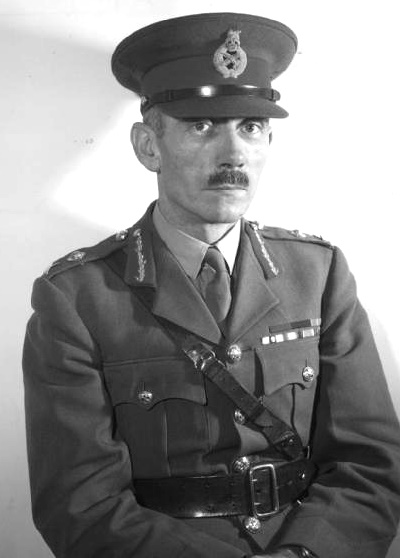 As a result, Slim claims it not only enabled the last of the Chinese to cross the Ava Bridge without molestation and gave us all a breathing space. (169). In supporting the claim made by Slim, Kirby argues that the 48th Brigade had fought a most successful rearguard action and temporarily brought the Japanese advance to a halt. (170) On the top of robust fighting spirit performed by the retreating force, the outset of the monsoon proved difficult for any further efforts of the Japanese, to annihilate the 17th Indian Division.
Gen Kirby asserts his view behind the defeat of 1942, that; The entry of Japan into the war caused us to make certain adjustments, but on the whole, we did not alter the position very much. (171) In support of Kirby’s opinion, Marston argues, many of the reasons for the defeat were beyond the control of the troops themselves, and in many cases, they rested on decisions made by strategic planners in the 1920s and 1930s. (172) The Japanese attack against the British forces was not initially predicted, as the US base in Pearl Harbour was viewed as a deterrent. This theory primarily brought a set back mind-set to the GHQ India. Slim agrees with Marston in his book, declaring that, intelligence was extremely bad, we were ill-trained and ill-equipped for jungle warfare. (173) It ensured senior commanders that the Indian Army had to undertake a well-planned reformation, to overcome all the existing problems.

Meticulous attention was paid to administrative troops, as the experience of 1942 taught that, every soldier needs to be capable of fighting against the encircling tactics of the Japanese. The doctrinal and training lessons learned from the war in the Western Desert – two keys to battlefield success – were passed on. (174) Additionally, the survivors’ experiences and knowledge from the retreat of 1942, were given priority. Havildar Jash Bahadur Rai claims that the; Japanese were very clever in the jungle but the Gurkhas learned many jungle tactics from them and applied them against them. (175) Initially, however, senior GHQ commanders gave more priority to training the successes of desert warfare, than to jungle tactics. Despite the initial reformation and the training, the 14th Indian Division’s attack in Arakan (1942) failed. This defeat produced another major blow to the morale of troops. In this case, Moreman blames GHQ India for its handling of training. He argues that the poor combat capability of the Indian Army formations demonstrated in the jungles of Malaya and Burma was largely blamed on their inappropriate organization, equipment, and training for desert warfare. (176) Consequently, Marston argues, the defeat in the Arakan finally convinced the GHQ India to confront the Indian Army’s tactical limitations in the terrain of the Far East. (177) It proved that much preparation and training would be necessary before the attack. As a result, the centralized training center was established, and training started to assimilate primarily concentrating on jungle warfare from mid-1943.
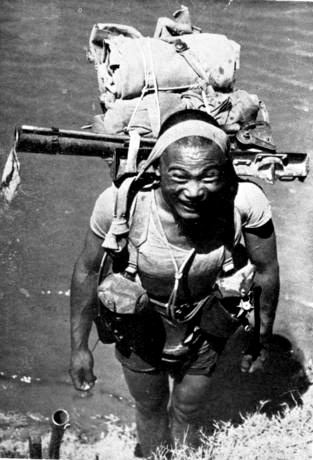 (163) Kirby, Japan, V II, p 72. (164) Interview with Jemadar Krishna Gurung, 1/3rd Gurkhas. (165) Marston, Phoenix, p 66. (166) Bullock, Britain’s, p 141. (167) Trench, Indian Army, p 213. (168) Smith, Brigade, p 123. (169) Slim W, Defeat into Victory, (Pan Military Classic Series, 2009, London), P 99. (170) Kirby, Japan, p 183. (171) Expansion, L/WS/1/968, (IOR). (172) Marston, A Force transformed, in Military history of India, ed. by Marston and Sundaram, p 108-109. (173) Slim, Defeat, p 35-37. (174) Moreman T, From the desert to sand to the Burmese jungle: The Indian Army and the lessons of North Africa, September 1939-November 1942, ed. by Roy K. in The Indian Army in the Two World Wars, (Brill, 2012, Boston), p 224. (175) Interview with Havildar Jash Bahadur Rai, 3/5 Gurkhas. (176) Moreman, lessons of North Africa, ed. by Roy K. in The Indian Army, p 251. (177) Marston, A force in India, p 111
 Patrolling and gathering information from the enemy movements and action was seen as a vital contributing factor to the potential success of an attack. Thus each Indian Infantry Brigade planned to have an individual recon battalion. However, this task did not fall on the Gurkhas. According to Marston, consensus was that the Gurkhas would not make good mounted infantry, so they were exempt from the recon battalion duties. (178) Thus, the Gurkha battalions paid extra details on the light infantry training program. On top of the centralized training program, each commanding officer (CO) trained his battalion with his version of the program.

Especially, the disaster during the Sittang River crossing ensured that swimming training was a paramount priority to the Gurkhas. Indrajit claims, swimming training lasted for a month, and it was tough to pass as the involved training swimming in fighting gear, on top of that; heavy bricks had to be carried. (179)
In this case, the Gurkha battalions faced a further burden of more training programs than any other British and Indian battalions. Despite the intense training for jungle warfare in 1943, two other important factors occupied the Gurkhas during the period of reformation. Externally the First Chindits and Second Arakan operation. Internally the Quit India movement. Sundaram argues, the substantial portion of the nearly 40.000 jawans who joined the INA in 1942 did so to gain better treatment from the Japanese. (180) However, the Gurkhas’ rejection to join the INA caused them to be a victim of brutal Japanese treatment resulting in many deaths.
In such conditions, Craig argues, Of the Rifleman only a tiny number from amongst the youngest joined but did so to escape and rejoin their troops. (181) Rifleman Dhan Bahadur Rana was amongst the twenty-seven Gurkha riflemen, who joined the Japanese propaganda unit fifth column. The following year, in reaching the border with India, they reported to a local garrison unit with information regarding the Japanese Army’s location. (182)
All escaping soldiers were viewed with suspicion, as they were potentially Japanese agents. Jemadar Krishna Gurung faced a series of inquiries and interrogation for four months, upon his return to India from the jail in Rangoon. (183) In this case, the loyalty of the Gurkhas was tested at a critical stage of the war. Their rejection of the INA resulted in the extensive use of the Gurkha units against the independence movement in India. The establishment of the INA under Subash Chandra had already shown consensus, to the nationalist movement in India.
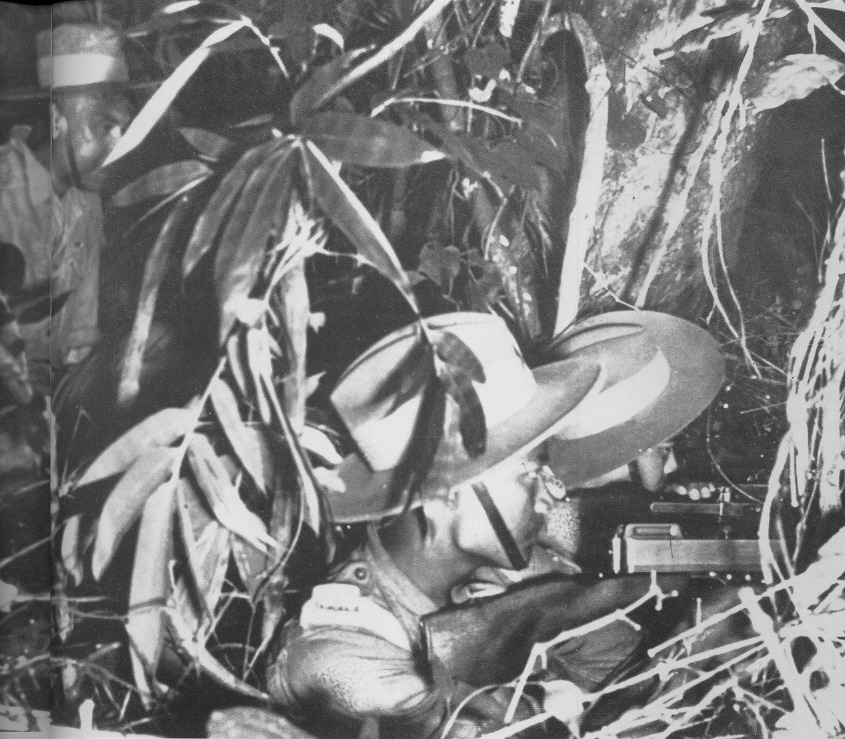
The GHQ India feared shakedown on the morale of the Indian troops, but Churchill had predicted the second mutiny if the situation is not handled correctly. Callahan claims, on the eve of August 1942 upheaval, the Director of the Military Intelligent at the Army Headquarters admitted in a ‘most secret’ memorandum that most soldiers looked forward to post-war independence, but, not to waging mutiny that Churchill had predicted. (184) In this case, the Quit India political movement by the Indian National Congress had caused considerable disruptions to reformation.
(178) Marston, Phoenix, p 84. (179) Interview with Indrajit, 3rd Gurkhas. (180) Sundaram C.S, The Indian National Army, 1942-1946: A Circumstantial Force, ed. by Marston D.P and Sundaram C.S, in A Military History of India and South Asia,), p 123. (181) Craig J, The Gurkhas in the Burma Campaign, (Gurkha Museum Publication, 1991, Winchester). (182) Unpublished account of PoW Rifleman Dhan Bahadur Rana (Gurkha Museum Archive). (183) Interview with Jemadar Krishna Gurung, 1/3rd Gurkhas. (184) Callahan R, Did Winston matter? Churchill and the Indian Army, 1940-1945, ed. by Jeffreys A and Rose Patrick, in The Indian Army, 1939-1945 experience and development, (Ashgate Publishing Limited, 2012, Surrey) p 64 As covered in the previous chapter, the autocratic rule of the House of Rana had caused great dissatisfaction among the Nepalese people. The early successes of the Axis forces managed to affect the confidence of the Nepalese students living in India. To overrule the Rana dynasty, the students aligned with the mission of free India by collaborating with INA.