



Reviewed by Doc Snafu on August 18, 2026.
The German opposite VII Corps in September 1944. Part of a Study of the German Side Undertaken in Support of The Siegfried Line by Charles B. MacDonald (OCMH: In Progress). Based Entirely on German Records, This Chapter is Intended to Complement Charter III of The Siegfried Line: VII Corps Penetrates the Line. By Lucian Heichler, Research Section, Office of the Chief of Military History, Washington, DC, December 1952
 Introduction
In the early years of World War II the German Army amply demonstrated its ability to exploit victory to the fullest. After the tide had turned against the Germans, it became apparent that they also possessed the more outstanding ability to quickly recover from a defeat before their opponents could thoroughly exploit their success.
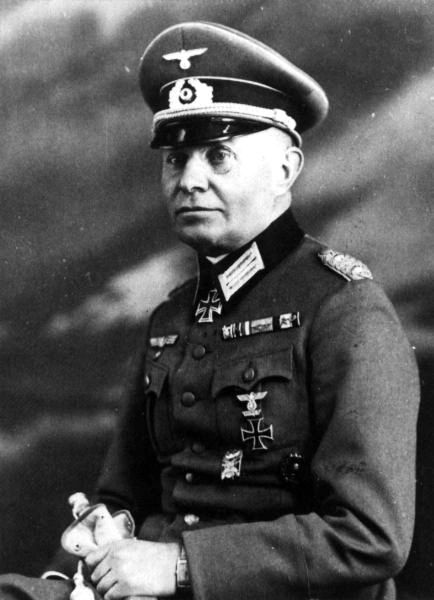
The German Seventh Army exemplified this faculty late in the summer of 1944. Less than a month after suffering an apparently decisive defeat in which it was crushed and battered beyond recognition, Seventh Army established a coherent front line from the Maas River to the Schnee Eifel Range in September 1944. Committed in this wide are and supported by a motley conglomeration of last-ditch reserves, the army’s remaining elements successfully defended the approaches to the Reich. During its withdrawal from Falaise to the West Wall, Seventh Army passed through three distinct phases. In the first stage — the rout following narowly averted annihilation in the Falaise Pocket — Seventh Army ceased to exist as an independent organization. Its shattered remnants were attached to Fifth Panzer Army until September 4, 1944. On that date Seventh Army was apparently reconstituted under the command of Gen der Panzertruppen Erich Brandenberger. The army then passed through the phase of delaying action while it reorganized its forces and reestablished the semblance of a front line. Despite persistent orders from above to defend every foot of ground, Gen Brandenberger realized that a fairly rapid withdrawal was called for, if his forces were to reach the West Wall ahead of American spearheads.
Message # B-730 (Branderberg).
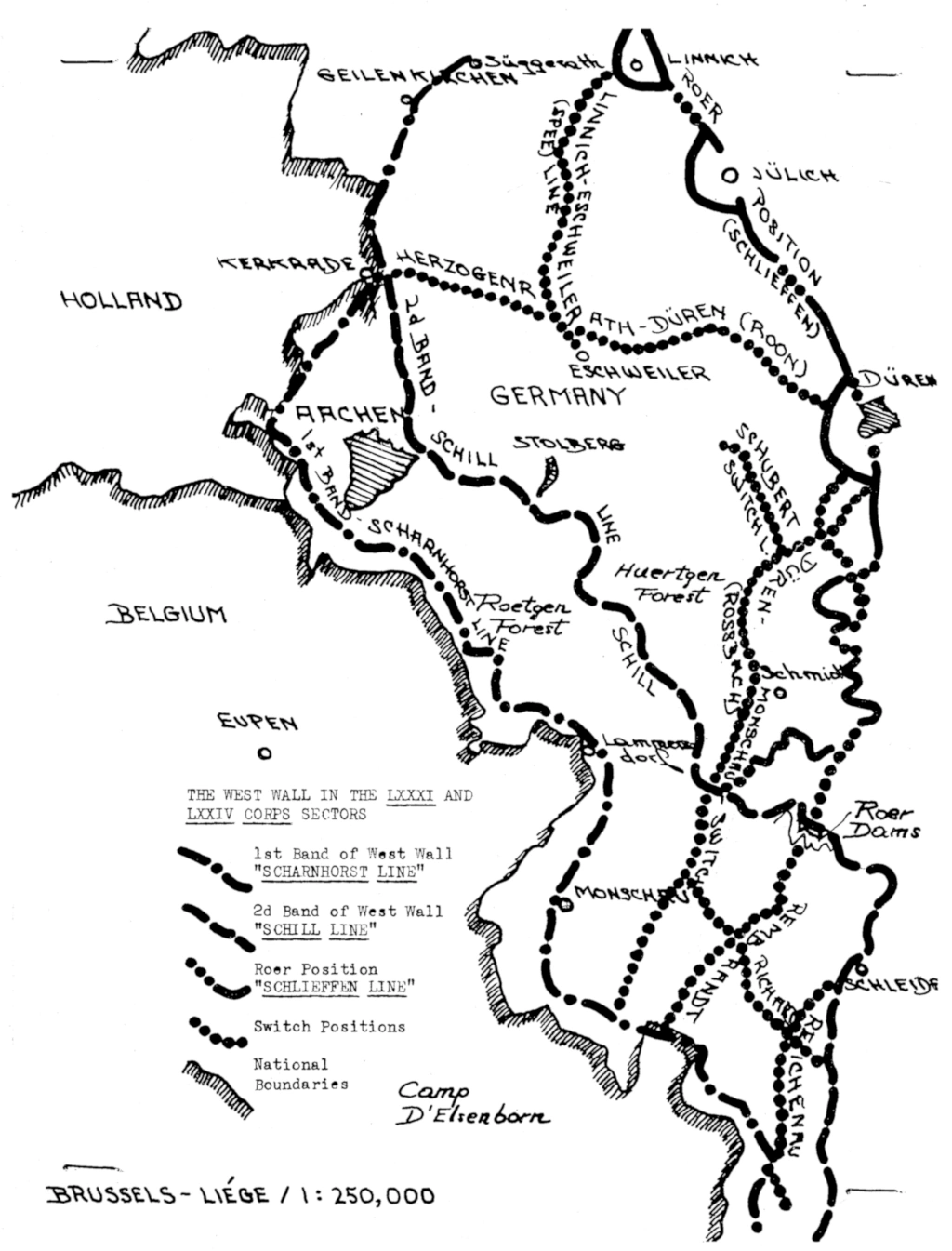
The delaying action ended officially on September 9, 1944 when Seventh Army was charged with the defense of the West Wall in the Maastricht – Aachen – Bitburg sectors. Along with the fortifications the army took over all headquarters and troops stationed in this area. Of Seventh Army’s three corps, LXXXI Corps was assigned the northern sector of the West Wall, from the Herzogenrath – Düren switch position to the Rollesbroich – Huertgen Forest sector. LXXIV Corps was committed in the center, from Roetgen to Ormont, and I.SS-Panzer-Corps was to defend the West Wall in the Schnee Eifel sector, from Ormont to the boundary with First Army at Diekirch.
Order, Seventh Army to all corps, September 9, 1944, LXXI Corps KTB, Anlagen, Befehle: Heeresgruppe, Armee, usw. [Orders: Army Group, Army, etc.], 5.VIII. – 21.X.44. Referred to hereafter as LXXXI Corps KTB, Befehle: Heeresgruppe, Armee, usw.
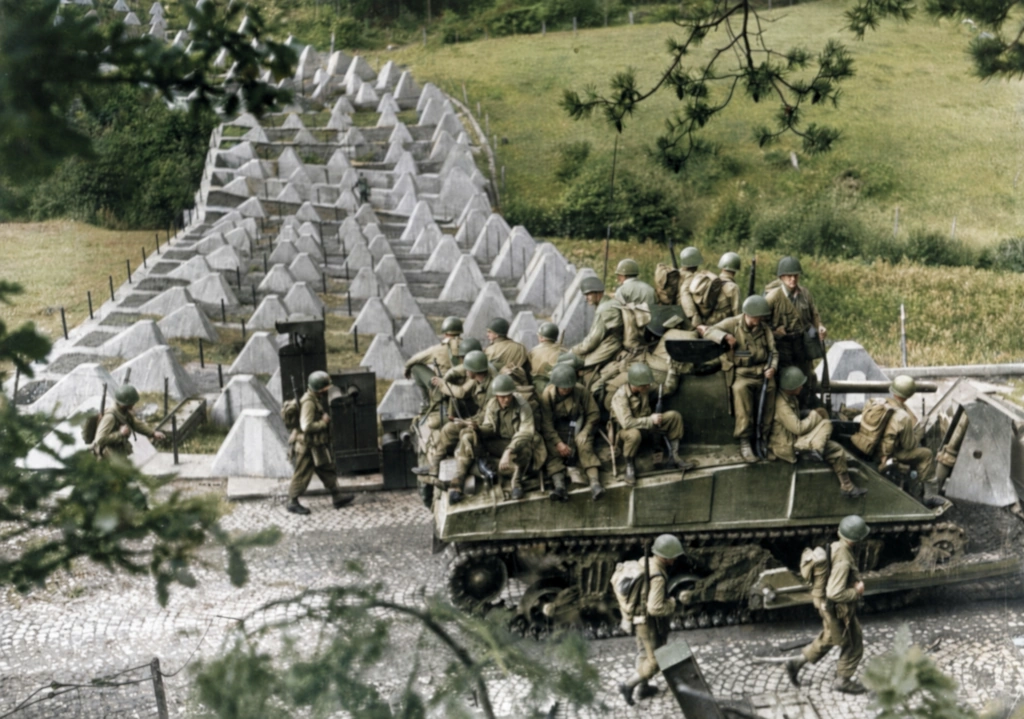
With this transition from the second to the third phase of operations — from delaying action to firm resistance based on the fortified positions of the West Wall — the withdrawal from France came to an end, and the defense of Germany began. When US VII Corps launched its reconnaissance in force on September 12, 1944, Seventh Army was in the midst of this process of transition. While some of its elements had already occupied their assigned West Wall sectors, others were still fighting a delaying action well forward of the bunker line.
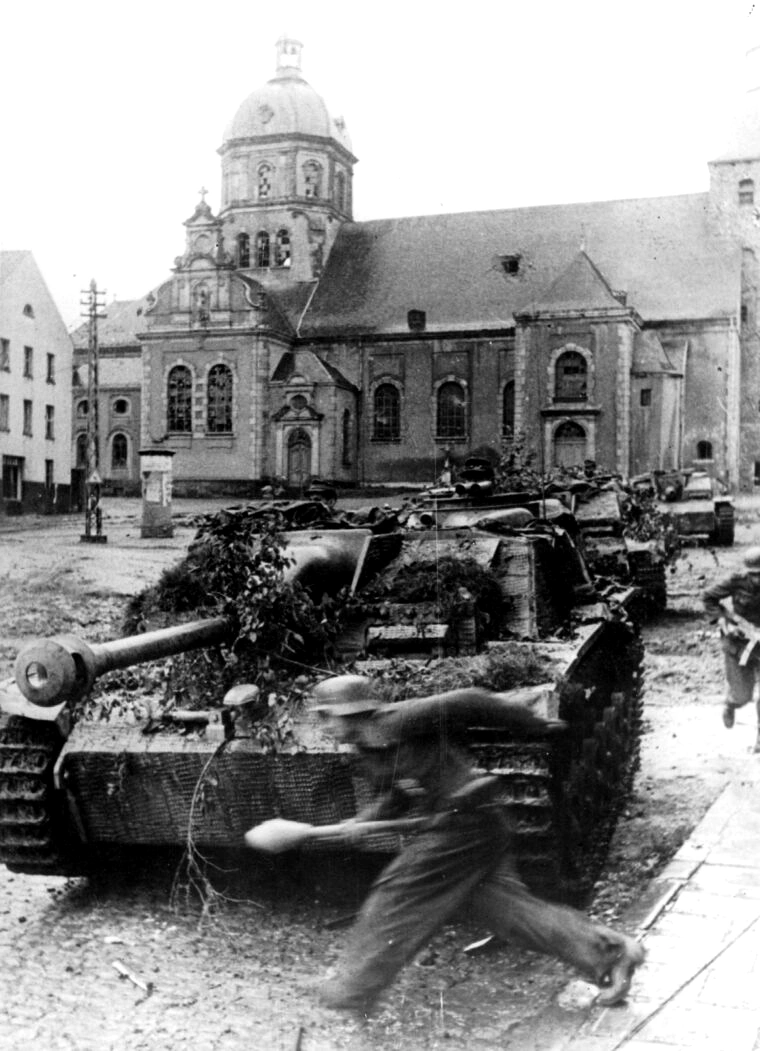
 Defense of Aachen and the Stolberg Corridor
On September 12, 1944, the forces of LXXXI Corps, under the command of Gen Friedrich-August Schack, were committed from Breust on the Maas River eastward to Hombourg and Moresnet, thence south along the West Wall to the boundary with LXXIV Corps (Eupen – Roetgen – Zuelpich – Bonn).
Noon Sitrep, LXXXI Corps, Sep 12, 44, LXXXI Corps KTB, Anlagen, Tagesmeldungen [Daily Sitreps], 6.VIII. – 21.X.44. Referred to hereafter as LXXXI Corps KTB, Tagesmeldungen.
Four badly mauled, understrength divisions were committed in the LXXXI Corps front line. In the northwestern sector, between the Maas River and the Aachen Area, 275.Infantry-Division, and the 49.Infantry-Division held the line against the US XIX Corps. In the southeastern half of the LXXXI Corps Zone, opposite US VII Corps, 116.Panzer-Division, and the 9.Panzer-Division faced the US 1st Infantry Division and the US 3d Armored Divisions. The sector of 116.Panzer-Division was defined in the northwest by the boundary with 49.Infantry-Division: Hombourg – Schneeberg Hill – along the West Wall to Bardenberg. In the southeast the boundary with the 9.Panzer-Division extended from Welkenraedt via Hauset and Brand to Stolberg.
Order, LXXXI Corps to all divs, 2230 on Sep 12 44, LXXXI Corps KTB, Anlagen, Befehle an Div, [Orders to Divs], 3.VIII. – 21.X.44. Referred to hereafter as LXXXI Corps KTB, Befehle an Div.
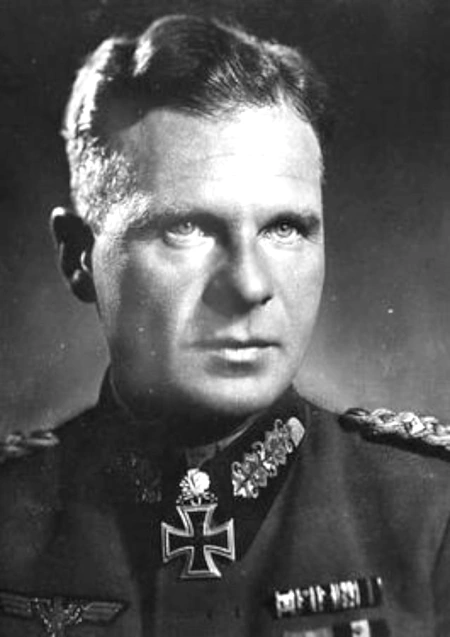 The organic strength of 116.Panzer-Division, under the command of Gen Graf Gerhard von Schwerin, was organized in two armored regiments — 60.Panzer-Grenadier-Regiment and the 156.Panzer-Grenadier-Regiment — the 116.Panzer-Recon-Battalion, and the 116.Panzer-Artillery-Regiment.
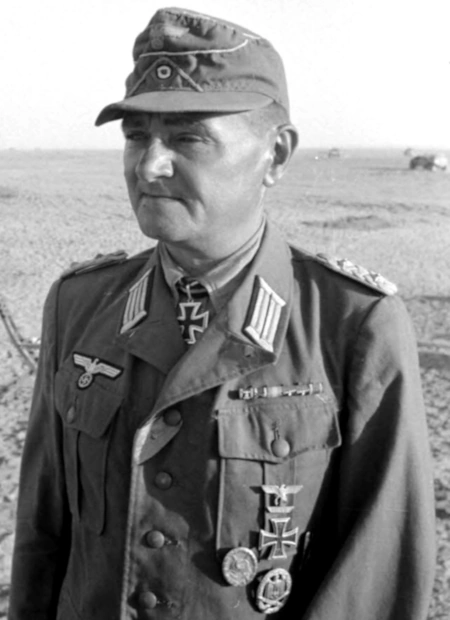 Commanded by Gen Gerhard Mueller, 9.Panzer-Division had only arrived in the LXXXI Corps zone on September 11, 1944. Its sector extended from the boundary with 116.Panzer-Division to the boundary with LXXIV Corps. According to Gen Brandenberger its first wave had consisted of but three companies of panzer grenadiers (advance detachment of either 10.Panzer-Grenadier-Regiment, or 11.Panzer-Grenadier-Regiment), an engineer company, and two batteries of artillery.
Gen Schack amalgamated these elements with the remaining forces of 105.Panzer-Brigade (Maj Heinrich Volker). Since its attachment to LXXXI Corps on September 3, 1944 this tank brigade had lost most of its armored infantry battalion and all but ten of its tanks. Instead of committing the weak elements of the 9.Panzer-Division in the West Wall, LXXXI Corps had found it necessary to send these forces into the front line. Badly mauled on their first day of action — as was to be expected — the remaining elements of 9.Panzer-Division Kampfgruppe had assembled in Eynatten during the night from September 11, to September 12. They were to fight a delaying action back to their West Wall sector while all other elements of the division still enroute from their assembly area at Kaiserslautern were to be committed immediately in the West Wall upon arrival.
MS # B-730 (Brandenberger)
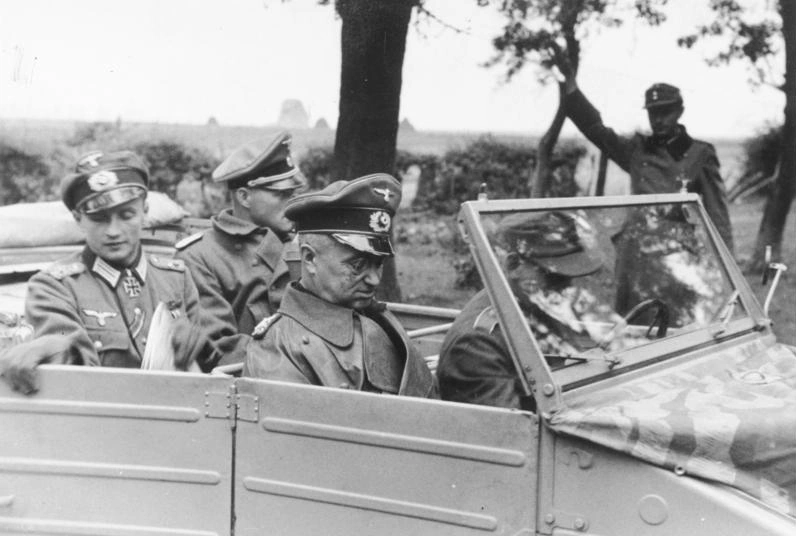
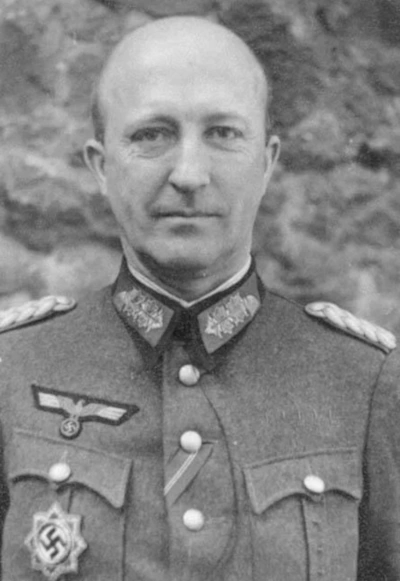 In addition to the units enumerated above, LXXXI Corps also commanded 353.Infantry-Division (Gen Paul Mahlmann). This division was exhausted and possessed very few organic contingents. Far too weak to be committed in a front line sector, its headquarters and remaining elements were moved to the assigned West Wall sectors of 116.Panzer-Division and the 9.Panzer-Division to establish liaison with the various headquarters and local defense units in the rear of the LXXXI Corps. On September 9, 1944, Seventh Army had attached to the LXXXI Corps the Wehrmachtbefehlshaber [Military Governor] for Belgium and Northern France with his staff and troops, the Kampfkommandant of Aachen (Col von Osterroth), the 253.Grenadier-Training-Regiment of the 526.Reserve-Division, and a strange assortment of independent battalions representing the proverbial bottom of the barrel. Some of these were Luftwaffe Fortress Battalions; others were called Landesschuetzen Battalions (the terme is vaguely equivalent to home guard) which were quite inadequately armed, without heavy weapons, and composed of men as old as the hills.
A term which is difficult to translate. Literally, it means ‘combat commander’ but is used to describe a military officer appointed to organize the defense of a city or rear area.
The other two regiments of the 526.Reserve-Division, 416.Grenadier Training Regiment, and the 536.Grenadier Training Regiment, were attached to the LXXIV Corps while the division headquarters at Euskirchen remained directly subordinated to Seventh Army.
Order, Seventh Army to all corps, September 9, 1944, LXXXI Corps KTB, Befehle: Heeresgruppe, Armee, usw.; Quotation from ETHINT 18 (Schwerin).
Landesschuetzen Battalions were usually composed of men fifty to sixty years old.
The situation in the LXXXI Corps area was complicated further by the presence of police and Hitler Youth detachments who attempted to make themselves useful by doing such work on the West Wall fortifications as they saw fit, but refused to co-operate with the military. The various independent battalions described above were subordinated to 353.Infantry-Division prior to their commitment with the front line divisions. By order of FM Model (Commander in Chief, Army Group B) the newly arrived 8.Fortress-Battalion, the 12.Fortress-Battalion, and the 19.Fortress Battalion were attached to the 353.Infantry-Division on condition that they would be employed only in defense of the West Wall. The division reported that by 1800 on September 12, 1944, the Schill Line — eastern and more strongly fortified bunker belt of the West Wall — would be occupied by the 19.Luftwaffe-Fortress-Battalion, committed in the area northwest of Wuerselen (northeast of Aachen), 3.Landesschuetzen-Battalion in the area northwest of Stolberg, the 12.Luftwaffe-Fortress-Battalion in the vicinity of Stolberg, and the 2.Landesschuetzen-Battalion south of Stolberg. The 8.Luftwaffe-Fortress-Battalion was designated 353.Infantry-Division reserve.
Tel Conv, Seventh Army to LXXXI Corps, 0110 on 12 Sep 44, and Mng Sitrep, 353d Inf Div, 12 Sep 44, LXXXI Corps KTB, Anlagen, Kampfverlauf (Operations), 2.VIII. – 21.X.44. Referred to hereafter as LXXXI Corps KTB, Kampfverlauf; Tabulation of Troop Trains Arrived 9 Sep – 31 Oct 44, Seventh Army KTB, Anlagen, Semi-Annual Report of Seventh Army Transport Officer, 1.VII. – 31.XII.44.
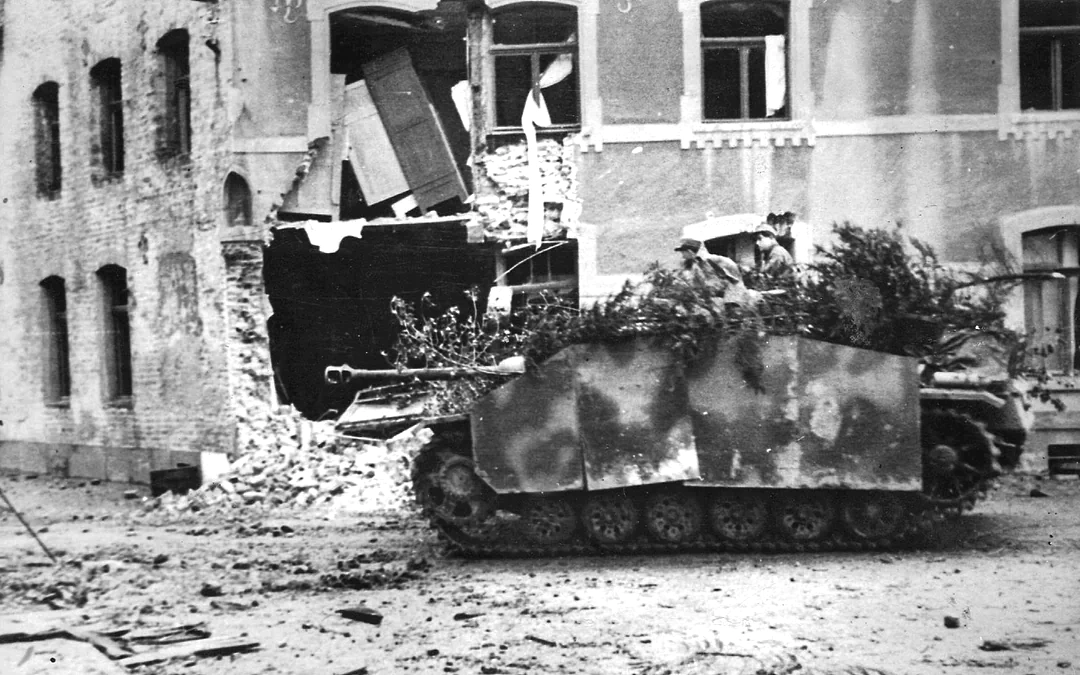
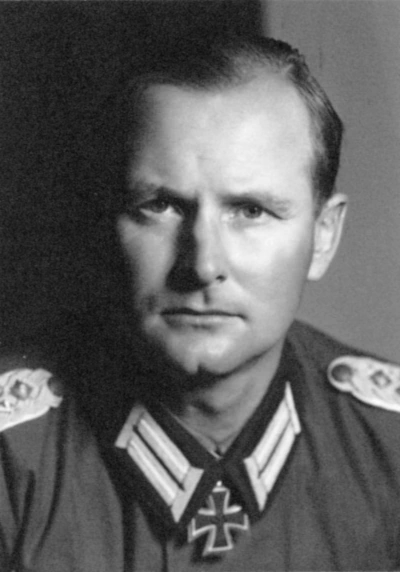 Gen Schack learned on September 12, that the first of three full-strength divisions, the 12.Infantry-Division, the 183.Volks-Grenadier-Division and the 246.Volks-Grenadier-Division destined to reinforce the Aachen Area during September 1944 would arrive in the LXXXI Corps sector in a few days. Hitler had ordered the 12.Infantry-Division (Col Gerhard Engel), just rehabilitated in East Prussia after service on the Eastern Front, to begin entraining for the Aachen Sector at 0001 on September 14.
Mng Sitrep, A Gp B, 12 Sep 44, OB WEST KTB (Text), 1.IX. – 30.IX.44. Referred to hereafter as OB WEST KTB.
For additional order of battle data, such as strength information, see LXXXI Corps Situation in Mid-September 1944, pp.41ff.
Southwest of Aachen the forces of the 116.Panzer-Division enjoyed an uneventful night from September 11, to September 12, 1944. This enabled them at 0800 on September 12, to occupy positions along the railroad from Hombourg to Moresnet, and from Moresnet along the Gueule Creek via Hergenrath to Hauset.
Eng Sitrep, 116 Pz Div, 12 Sep 44, and Daily – Sitrep, 116 Pz Div, 1900 on 12 Sep 44, LXXXI Corps KTB, Kampfverlauf.
The object was to establish a coherent defense line which, based on a railway tunnel and a creek, would facilitate antitank defense. The division committed the 156.Panzer-Grenadier-Regiment on the right, between Hombourg and Moresnet, and the 60.Panzer-Grenadier-Regiment on the left along the Gueule River. The 116.Panzer-Recon-Battalion was disengaged and recommitted at daybreak north of the Gueule River with the mission to establish contact with the 9.Panzer-Division at Eynatten.
Tel Conv, LXXXI Corps to 116 Pz Div, 0810 on 12 Sep 44, LXXXI Corps KTB, Kampfverlauf.
The forces of the 116.Panzer-Division found their mobility greatly restricted by the work of over-eager German demolition engineers who had destroyed all Gueule Creek Crossings from Moresnet to north of Eynatten and had blocked all roads leading to the West Wall with the exception of the Moresnet – Gemmenich – Aachen Road.
TWX, 116 Pz Div to LXXXI Corps, 0155 on 12 Sep 44, LXXXI Corps KTB, Anlagen, Meldungen der Divisionen [Division Sitreps], 25.VIII. – 1.X.44. Referred to hereafter as LXXXI Corps KTB, Meldungen der Div.; Tel Conv, LXXXI Corps to 116 Pz Div, 0810 on 12 Sep 44, LXXXI Corps KTB, Kampfverlauf.
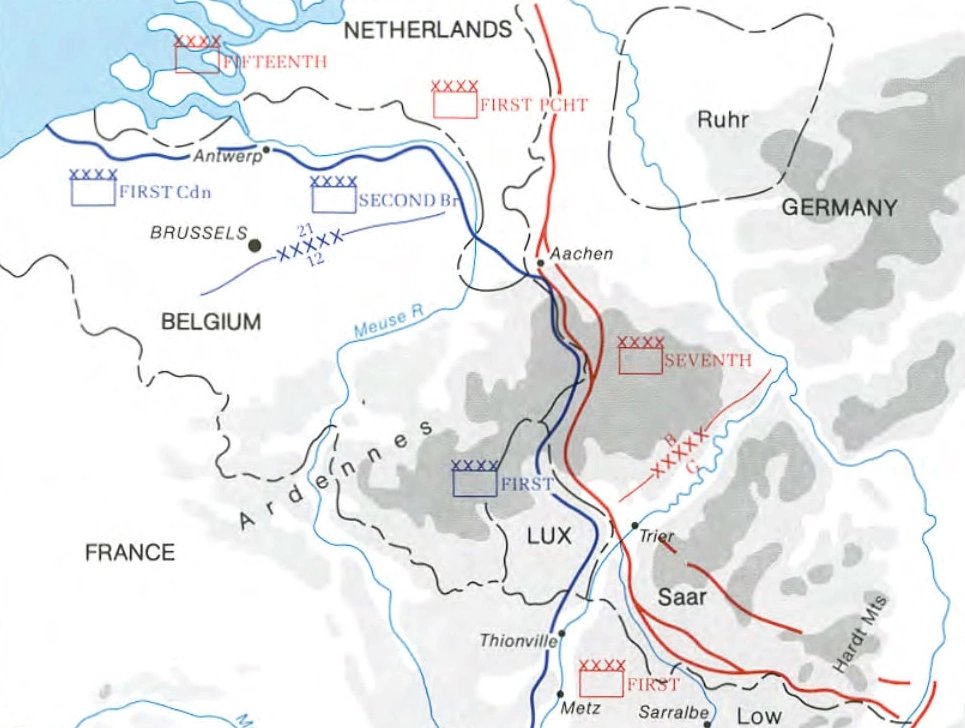
These obstacles seriously interfered with Gen von Schwerin‘s intention to withdraw to the West Wall on September 12. But during the morning Gen Schack ordered von Schwerin not to occupy his West Wall sector before receiving special orders from LXXXI Corps, and to hold out in front of the West Wall generally as long as possible.
Tel Conv, LXXXI Corps to 116 Pz Div, 1000 on 12 Sep 44, LXXXI Corps KTB, Kampfverlauf.
The lull enjoyed by 116.Panzer-Division was shattered at noon on September 12, when American tanks probed German defenses north of Montzen and Hombourg. Shortly thereafter the storm broke over the heads of the Germans. The American reconnaissance was followed up by a tank attack toward Hombourg. At the same time American armor crossed the railway between Hombourg and Moresnet.
Rad, 116 Pz Div to LXXXI Corps, 1155 on 12 Sep 44, LXXXI Corps KTB, Meldungen der Div
Sitrep, 116 Pz Div to LXXXI Corps, 1200 on 12 Sep 44, LXXXI Corps KTB, Kampfverlauf.
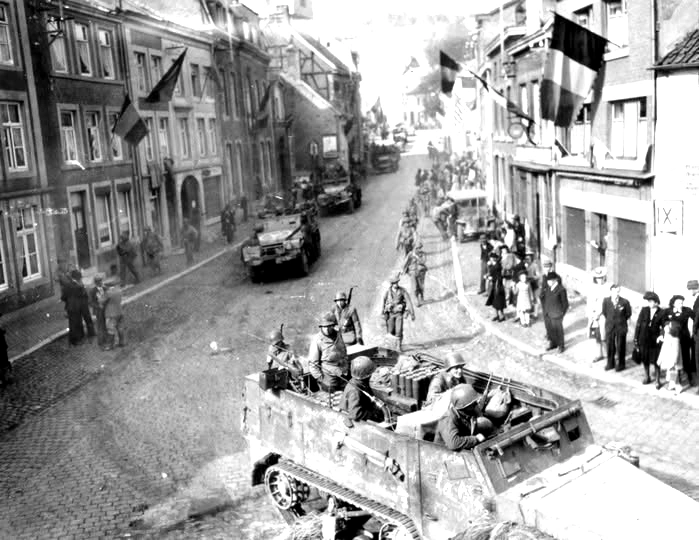
American infantry pushed up the road from Hombourg to Voelkerich and Bleyberg. While the 156.Panzer-Grenadier-Regiment fell back before these attacks, American troops crossed the Gueule River Creek between Moresnet and Hergenrath in the early afternoon and infiltrated the lines of the 60.Panzer-Grenadier-Regiment. Gen von Schwerin was forced to withdraw about 1530 in a northwesterly direction from Moresnet along the Gueule Creek. The peculiar direction of this withdrawal was probably necessitated by the fact that German engineers had blocked the roads leading northeast. While the US 1st Infantry Division launched its drive on Aachen and broke through the lines of the 116.Panzer-Division, the US 3rd Armored Division jumped off from Eupen toward Eynatten and Roetgen in the sector of the 9.Panzer-Division. West of the Eupen – Aachen road the Americans took Lontzen and Walhorn; east of the road they pushed into Raeren. From Walhorn they launched a tank attack toward Eynatten, which fell into American hands at 1345. Elements of Kampfgruppe of the 9.Panzer-Division there withdrew northeastward.
These elements and the local defense units under the command of the 353.Infantry-Division were unable to interfere seriously with American operations. Later in the afternoon, Gen Schack was disturbed by a civilian report that American forces had occupied Rott at 1800, conveying the impression that they had broken through the West Wall south of Rott. The rumor that the Americans were just south of Rott caused panic among the men of a Luftwaffe anti-aircraft artillery unit committed at Rott. The 3rd Bat (889.Regiment) of the 7.Flak-Division smashed the optical equipment of their three 20-MM antiaircraft guns, abandoned their positions, guns, equipment, and belongings, and fled. The cause of the false alarm seems to have been an American armored reconnaissance patrol on the Aachen – Monschau Road.
Daily Sitrep, 116 Pz Div, 1900 on 12 Sep 44, LT; I Corps KTB, Kampfverlauf.
Sitrep, 353 Inf Div to LXXXI Corps, 1200 on 12 Sep 44, LXXXI Corps KTB, Kampfverlauf.
TWX, 9 Pz Div (105 Pz Brig) to LXXXI Corps, 1417 on 12 Sep 44, LXXXI Corps KTB, Meldungen der Div.; Sitrep, 9 Pz Div to LXXII Corps, 1425 on 12 Sep 44, LXXXI Corps KTB, Kampfverlauf.
KTB Entry, 1800 on 12 Sep 44, TLXI Corps KTB, Kampfverlauf.
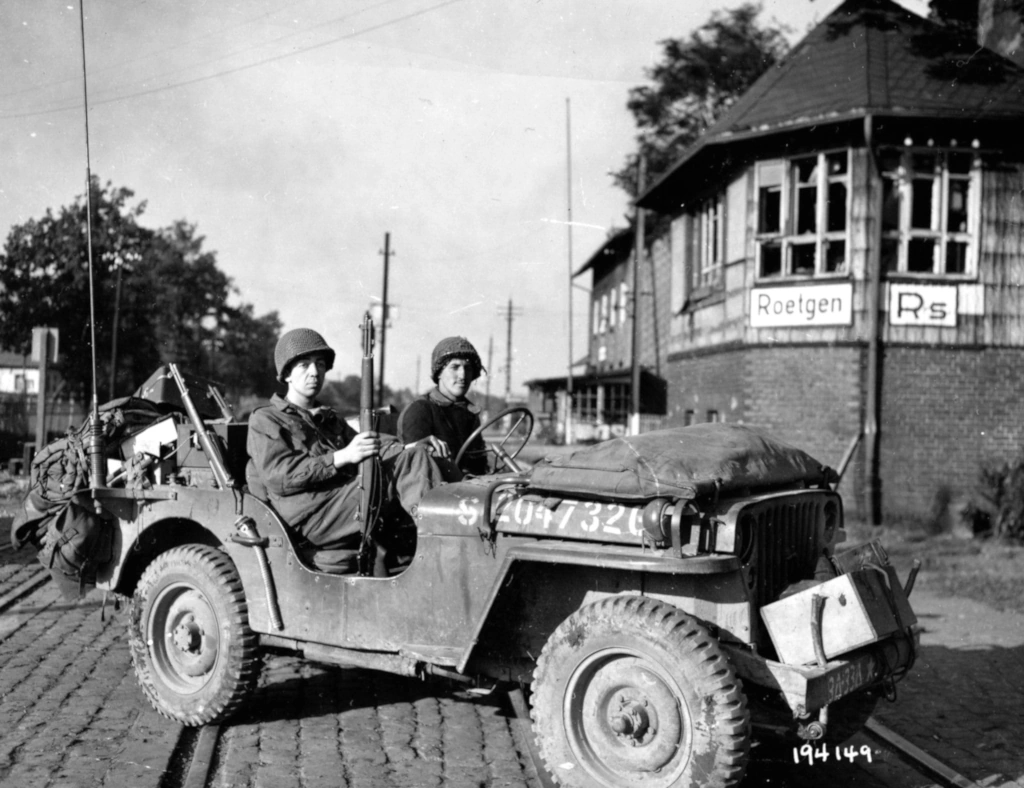
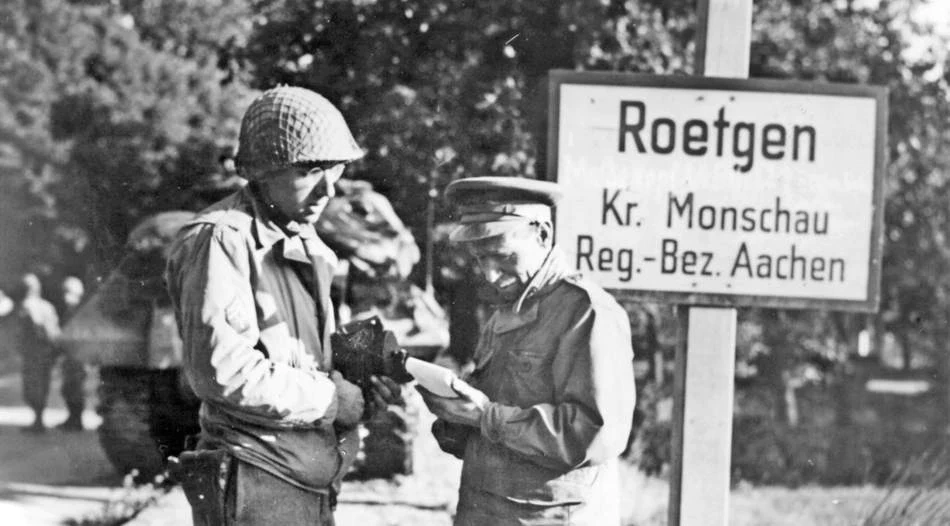
In the evening of September 12, the 353.Infantry-Division reported American armor converging on Roetgen from the west. Elements of the 253.Grenadier-Training-Regiment observed American tanks and jeeps, followed by strong infantry detachments on personnel carriers moving along the Raeren – Roetgen Road. Two American tanks and four armored cars accompanied by infantry pushed into Roetgen. One platoon of the security company in Roetgen (328.Replacement-Training Battalion of 253.Grenadier-Training-Regiment) was pushed into the southern part of the town. Intensive infantry fighting developed as American armor advanced to the northern periphery of Roetgen. Keeping out of the range of German antitank weapons, the tanks fired into West Wall bunker embrasures, while American infantry guns laid down a heavy barrage in front of the obstacle wall. Low-flying aircraft attacked the obstacles and defense positions. By 1900, the volume of American artillery and tank fire began to dwindle. The Germans remained in possession of all West Wall fortifications. An hour later German reconnaissance found that the Americans had left Roetgen.
Sitrep, 328 Repl Trng Bn to LXXXI Corps, 12 Sep 44, LXXXI Corps KTB, Meldungen der Div.; Daily Sitrep, LXXXI Corps, 2230 on 12 Sep 44, LXXXXI Corps KTB, Tagesmeldungen.
At 2000 on September 12, American tanks and infantry advancing between the Hergenrath – Aachen Roads and the Eupen – Aachen Roads toward the Scharnhorst Line — the first (western) band of West Wall Fortifications — captured Bunker 161 at Brandenberg Hill, two miles north of Hauset. Forces under the Kampfkommandant of Aachen were immediately committed in a counterattack to wipe out this American penetration of the West Wall. They failed in this endeavor but were able to stop the American attack. temporarily. At the same time American armored cars and a few tanks also reached the West Wall about half a mile southeast of Schmidthof and apparently decided to laager there for the night.
Mng Sitrep, 353 Inf Div, 0445 on 13 Sep 44, and Tel Conv, Seventh Army to LXXXI Corps, 1140 on 13 Sep 44, LXXXI Corps KTB, Kampfverlauf; Mng Sitrep, LXXXI Corps, 0555 on 13 Sep 44, LXXXI Corps KTB, Tagesmeldungen.
Mng Sitrep, 353 Inf Div, 0445 on 13 Sep 44, LXXXI Corps KTB, Kampfverlauf.
Late in the evening of September 12, Gen Schack issued an order to his divisions which defined their assigned West Wall Sectors and outlined the further conduct of operations. The 116.Panzer-Division was charged with defending the city of Aachen. The Kampfkommandant of Aachen with attached troops was subordinated to the 116.Panzer-Division, as were all elements of 353.Infantry-Division and 526.Reserve-Division in the sector of the 8.Luftwaffe-Battalion, the 12.Luftwaffe-Battalion, the 19.Luftwaffe-Battalion, and the 453.Grenadier-Training-Battalion (253.Grenadier-Training-Regiment). The armored elements of 116.Panzer-Division were to fall back to the West Wall only in the face of superior American pressure while the attached forces would move into the fortifications ahead of the main body in order to complete the improvement of the positions.
TWX, A Gp B to OB WEST, 2350 on 22 Sep 44, A Gp B KTB, Anlagen Operations-Befehle [Operational Orders], 1.IX. – 30.IX.44. Referred to hereafter as A Gp B KTB, Operations-Befehle; Daily Sitrep, 116 Pz Div, 1925 on 21 Sep 44, LXXXI Corps KTB, Tagesmeldungen
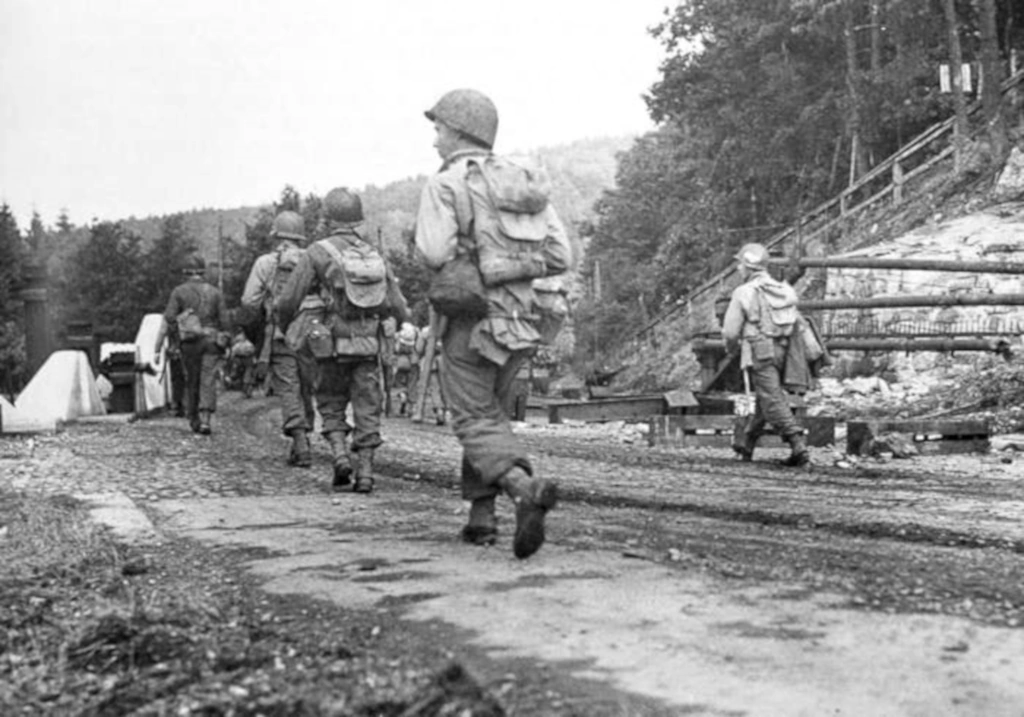
The 9.Panzer-Division, with attached remaining elements of 105.Panzer-Brigade, was assigned to the defense of the sector between the 116.Panzer-Division and the boundary with LXXIV Corps — the Stolberg Corridor and northern Wenau Forest. All elements of the 353.Infantry-Division and the 526.Reserve-Division in this sector of the West Wall were attached to the 9.Panzer-Division. These were Headquarters of the
Tel Conv, LXXXI Corps to 9 Pz Div, 1500 on 15 Sep 44, LXXXI Corps KTB, Kampfverlauf; Sitrep, 9 Pz Div to LXXXI Corps, 16 Sep 44, LXXXI Corps KTB, Meldungen der Div.
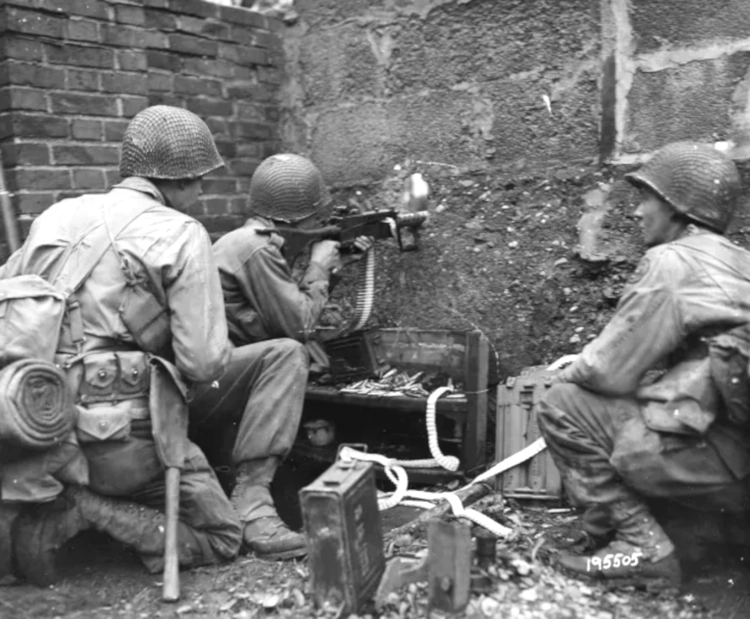
Notation The geographic location of the 9.Panzer-Division sector fated this division to bear the brunt of the Battle of the Stolberg Corridor. Never possessed of organic elements sufficient for an adequate defense, the division also sustained very heavy losses in this action. Thus it had to be shored up regularly by all kinds of reinforcements, sometimes of a very dubious value. The designation ‘9.Panzer-Division’ became a collective term for a veritable hodgepodge of unrelated armor, antitank, infantry, and artillery units.