




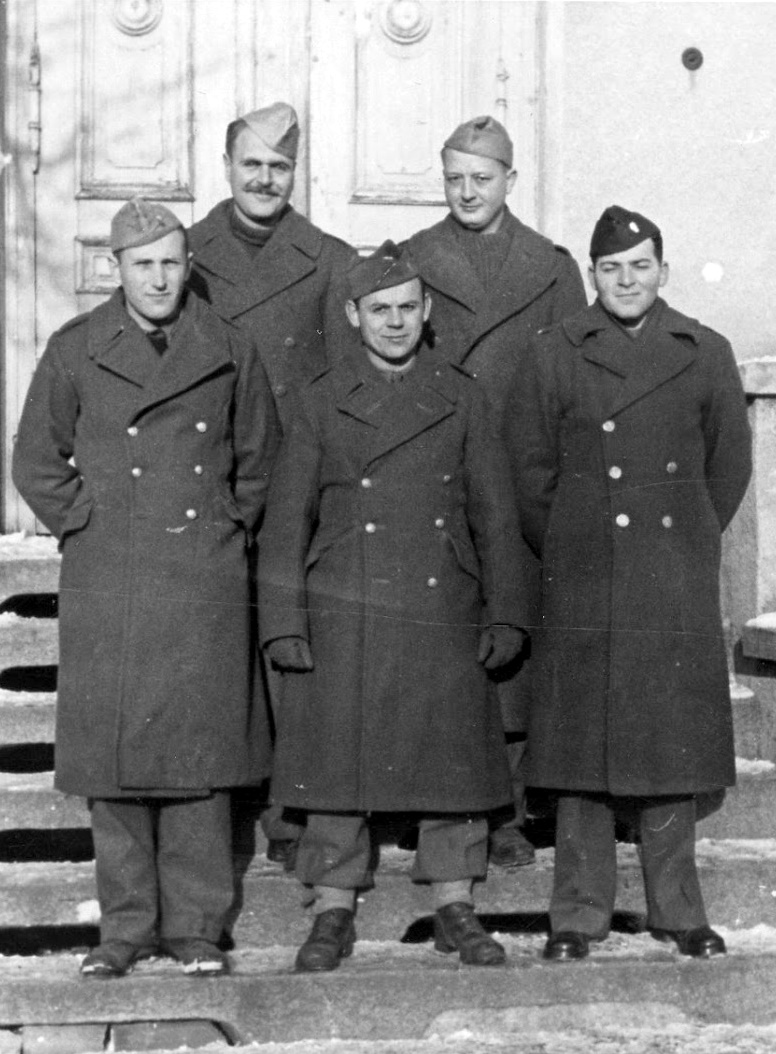
 The reason for hiding me was that there is a headcount every night at around 10 o’clock. While the guards would not miss me in my barracks because they did not have an accurate count on new prisoners yet, they would find an extra man in this barracks and this would create a chaotic condition for all the prisoners in this compound.
At 10 o’clock the guard appeared and started the count. I was hidden under a mattress on one of the top bunk beds, praying that they would not look there, scarcely daring to breathe or move and sweating profusely. The count went okay because when they got the correct number, they left. Besides fearing for my safety, I was concerned that I might have created a very serious problem for those who had befriended me. The night passed however with no further incident and when we were routed out, the next morning, I slipped back to my barracks, never having been missed. The next night, however, the story would have had an entirely different ending, for that morning we were accounted for and assigned definite bunks, after which anyone missing would be searched for until found. The result is possibly being shot or at least punished in some manner. The guards would assume any irregularity in an attempt to escape and would act accordingly.
We were given a rare opportunity later in the day because we were permitted to write a letter home. To this point, we had no way of knowing what our families back home knew and what they did not know and we virtually felt like nonentities. The rules, there were always rules with the Germans, were strict about what we could and could not say. We were to let the people at home know that we were alive ‘and being well cared for’ and that was about all, except maybe to express how we missed them, loved them, and wished that we were home. The monitors of the letter-writing left no doubt in our minds that the letters would be heavily edited and censored, even with all the rules and near threats, it was wonderful to know and feel that some connection with the outside world would be made through this letter writing. Somehow it took away the loneliness and the futility of the whole experience of being captured, hungry, and in the hands of an enemy who had little or no love for us. The feeling of finally settling into a routine situation generated by the events of the past two days was to be disrupted by a situation which, up to now, had only been a rumor. We had been aware of the rumbling of heavy guns in the east, a good distance from us, but since we were not immediately threatened shrugged off the implications. We did not know how quickly our total situation was to change, nor did we know how it would change, not only for us but the entire Oflag and German contingency.
Return to Germany via an Ocean Voyage – on Foot
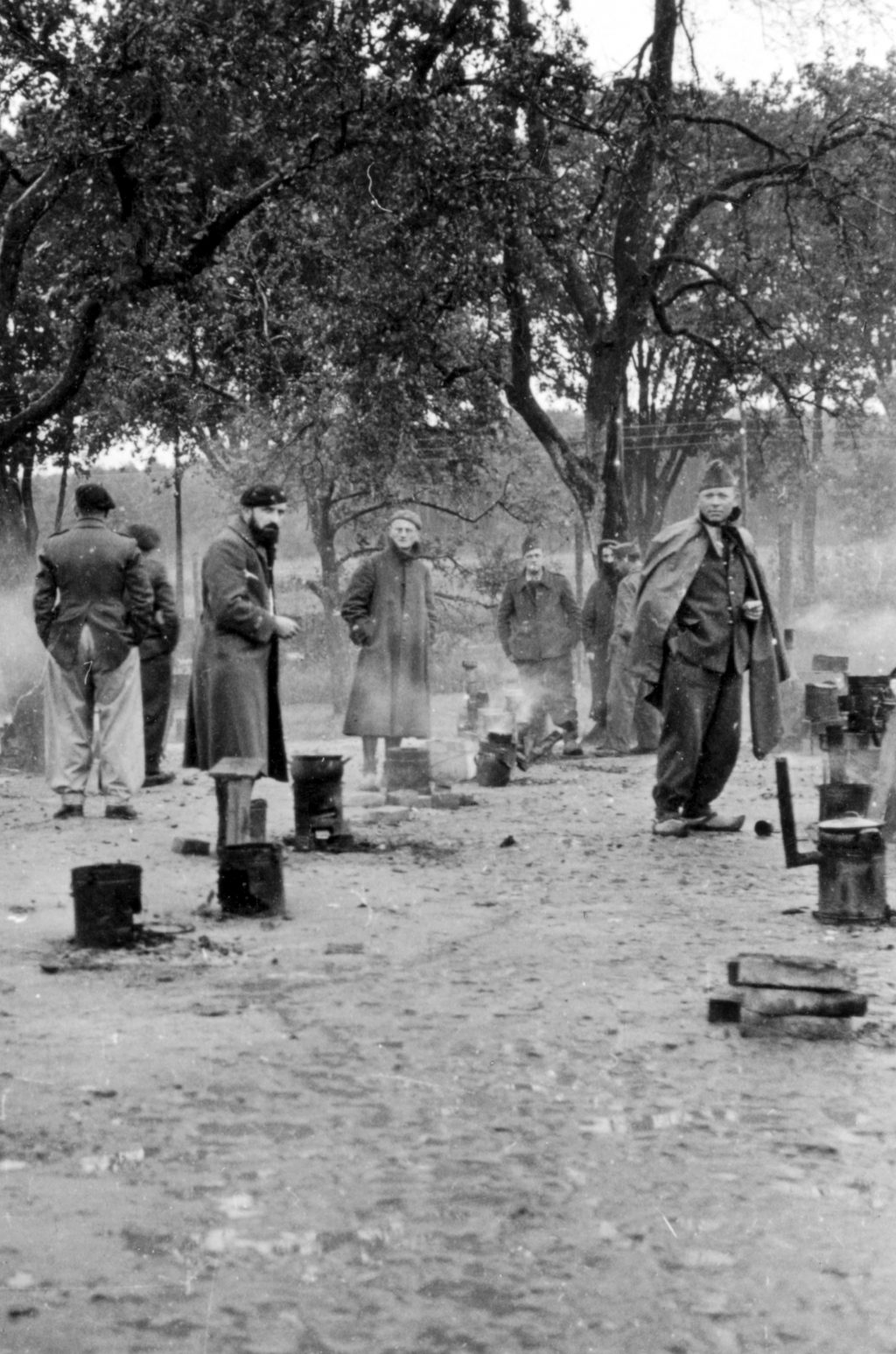 In any large gathering of people, especially when denied access to the outside world, there are always rumors of a variety of topics. We had heard that the Allies had broken through on the Western front and that liberation was only a matter of a few days, which we found out later was only a wishful thinking story of a soldier who always professed to be ‘in the know’. Contrary to this we had heard that the Allies had been pushed back to the English Channel as had happened at Dunkirk and was therefore at least believable. This turned out to be pure fiction invented by an over-zealous German patriot. The story that the Russians were on their way to Warsaw and consequently to our prison camp, circulated cautiously but with a more ominous overtone. When this was mentioned, the German guards looked genuinely worried and at times very frightened. There were stories of how brutally the Germans had treated the Russians in the assault on Russia and in the near-victory short of Moscow. We had our first-hand view of the brutality of the German guard, during our march to Warsaw. The guards were terrified of the possibility of retaliation if the Russians were successful in their drive toward Warsaw. Stories of a breakthrough and repulsion of the threat persisted, when in fact no one knew what was happening. The constant rumbling of the guns being fired by both the German Army and the Russians within our hearing left little doubt that there would be no settling down to any routine activities in this camp.
Early on the third day since we had arrived at the Oflag, we were rousted by very nervous and frightened German guards, who were telling us we were to grab whatever we could to keep warm and to get ready to move out as quickly as possible shouting at us ‘Schnell, Schnell’. There was confusion and near hysteria among the German soldiers, many seemingly conflicting orders were being shouted and the abject fear on the faces of the guards was apparent. We gathered that word had come down that the Russians had broken through the eastern front and were descending on Warsaw, which turned out to be true. It seemed that the only concern of the camp commander was to get us out of the area to prevent the Russians from liberating us and to save their necks at the same time. Even now they persisted in wanting to keep us as hostages. Loosely organized, but very carefully guarded we were herded out of the camp and headed in a westerly direction. It was extremely cold, the wind was howling, and in the half-light of dawn the soldiers scampering everywhere, there was an unreal aspect to our very existence. The thought of going back out into that Polish flat country and resuming our previous hellish conditions was almost overwhelmingly depressing. The only hope that any of us had that made the situation bearable was that the Russian Army might succeed in overrunning the Germans and liberate us. We had no thought of the mechanics of how this would happen or how we might be killed along with German soldiers when they were overrun.
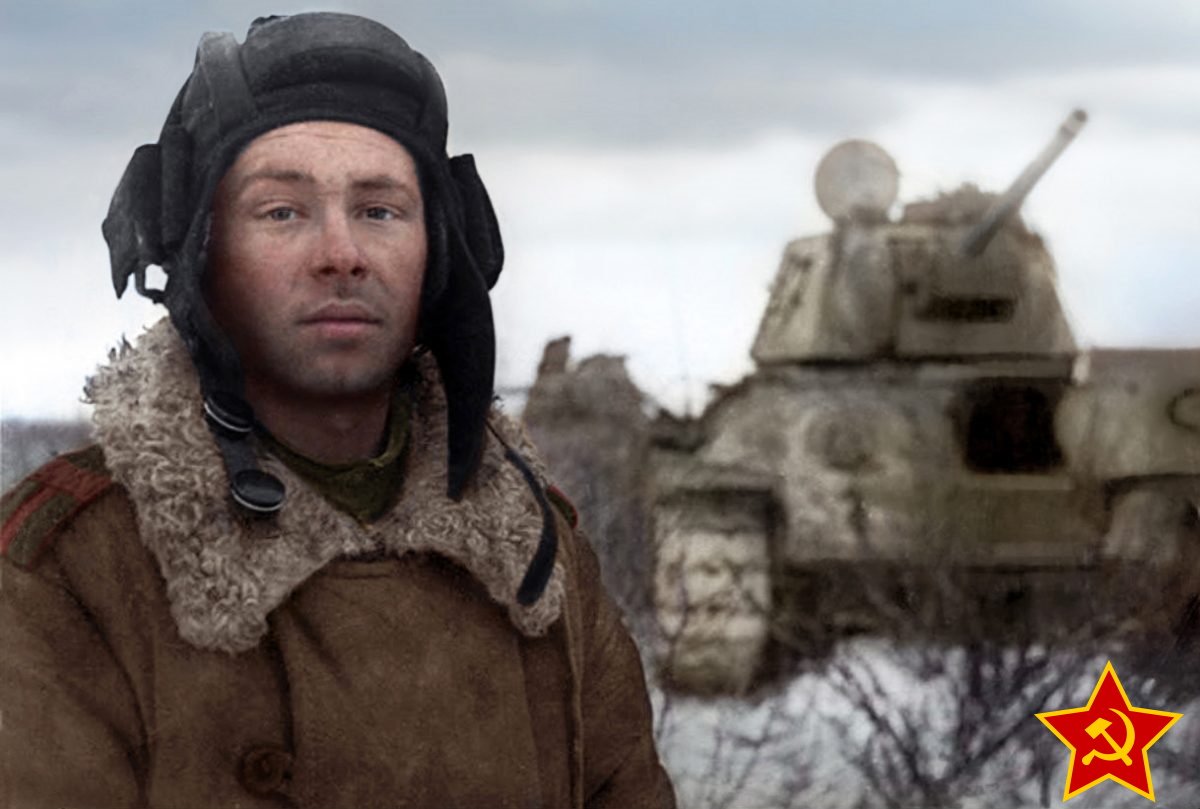
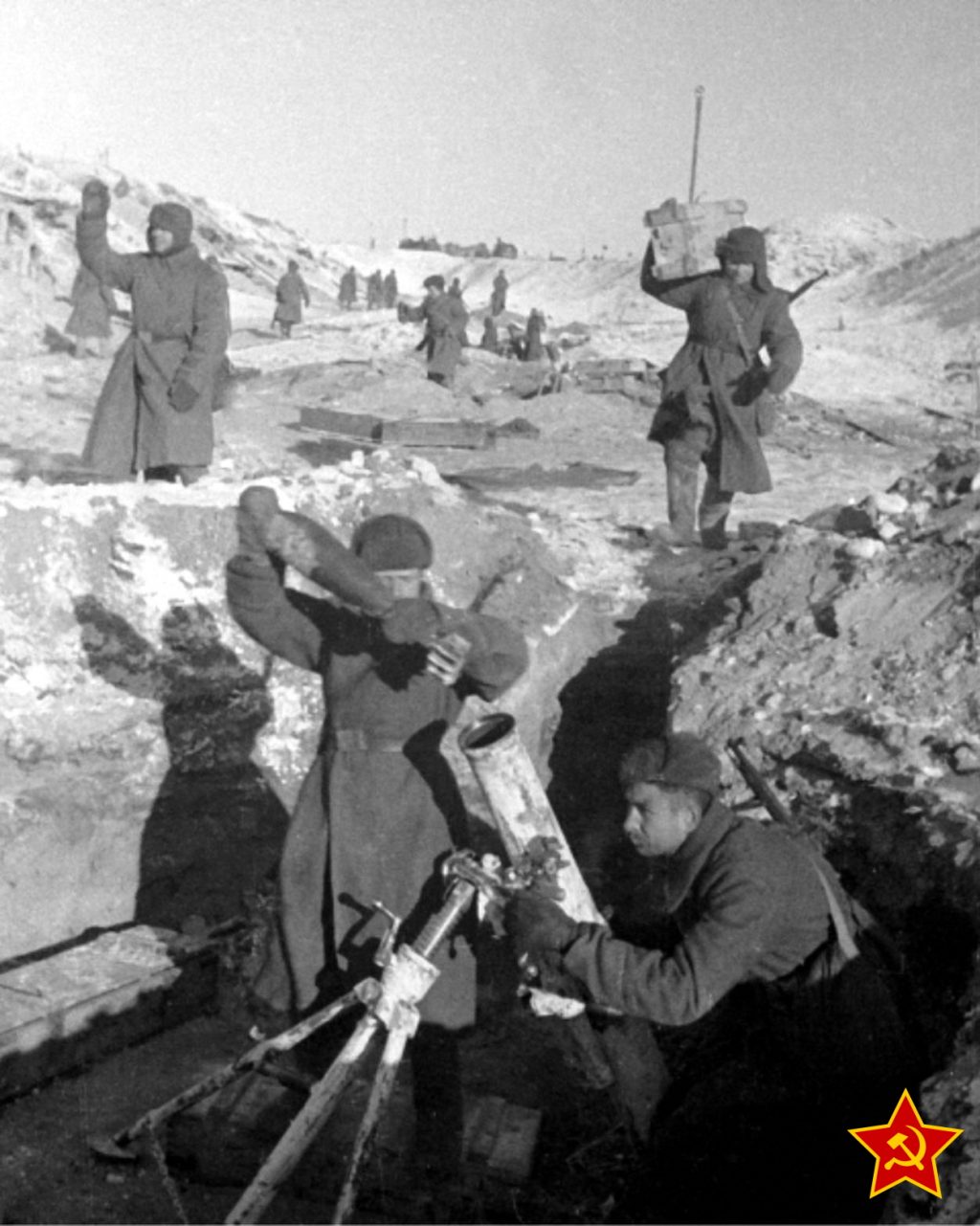 After all, the Russian artillery had no way of sorting out the good guys from the bad guys, nor did we even know if they were aware that we were there. This set off a whole new set of fears for us. We too had heard how the Russians moved quickly, decisively, and murderously on an enemy and wondered whether or not we would have time to tell them ‘Hey we’re on your side’. With this thought, we were almost willing to run with the Germans anywhere where our position would be generally safer. Running, tripping, slipping sliding, and falling we were moved to the west toward an unknown destination. We could hear the roar of the artillery and the general battle getting closer and closer. We later learned that the Russians had indeed gotten to Warsaw and in holding up there had unwittingly allowed our group of guards and prisoners to get away from them.
The battle was so close that at times we were walking through a corridor with German artillery going over our heads toward the Russians, and the Russian artillery going over our heads toward the Germans. Fortunately, neither of them was aiming at us but the scream of the shells was just as unnerving, we didn’t know what anyone was shooting at. It didn’t take us long to realize that we were once again in the rut of a foot-in-front-of-a-foot routine, out in the open and blinded by the awful whiteness of the snow and the nothingness ahead of us. I don’t believe that there is anything worse than not having any idea of a destination or feeling that your captors are in a little better position. What made it worse was that we knew the effect of the cold and the hunger potential that lay ahead. We had learned this from our not-too-remote previous experience of the weeks before this. One of the things that struck us was the benefit we had derived from just those couple of days in the Oflag. This was instrumental in helping us to make a better adjustment to our total situation. At least we had learned to cope with cold and hunger within reason and, what is more, we each now had a blanket, a luxury not true in our previous exposure and the lice were temporarily under control.
 In typical American style, we were perpetually optimistic that it was only a matter of a short time until the Russian Army would overtake us and our ordeal would be over. As we passed through small Polish villages we were aware that the attitude of the Polish people matched our optimism, and they were more open in their hostile attitude toward the German soldiers, often shouting obscenities at them and gleefully asking them how it felt to be on the run for a change. It was obvious that they knew much more of the total situation than we could surmise and were feeling confident that it was only a matter of time until they would be liberated from the long torturous German occupation and oppression.
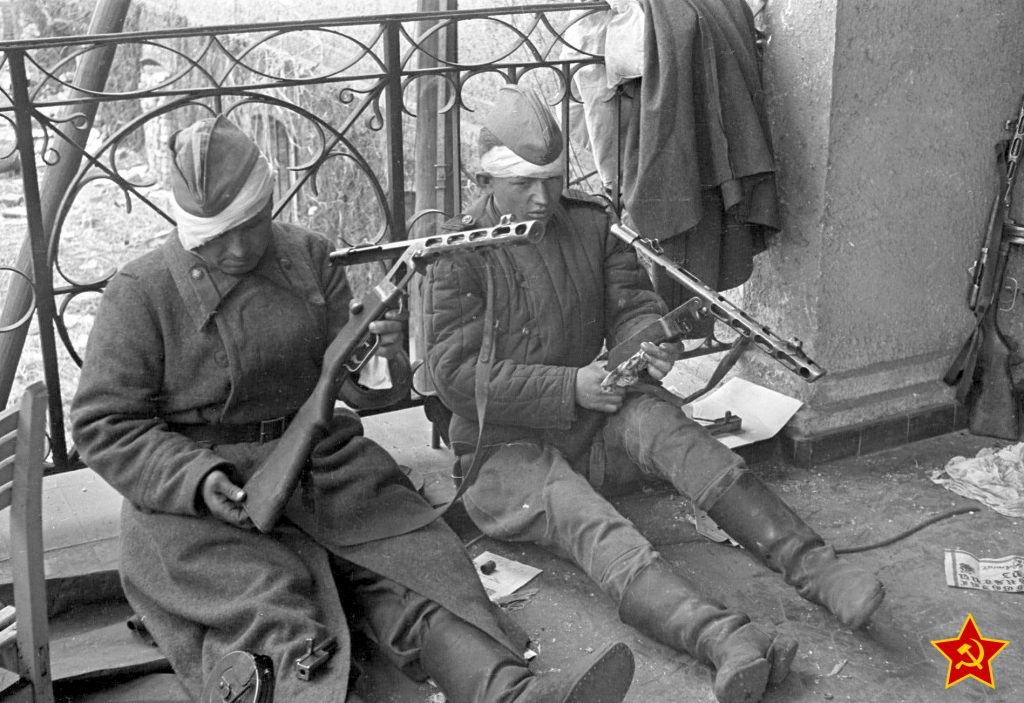 Their departure was rapid and unexpected and our being left, we were confused as what had happened. Our guards were rushing us through town after town often going from before dawn to well after dark. We could still hear the sounds of battle behind us. The German Luftwaffe was active in desperate attempts to assist the ground troops. We could see them going to our north and also to the south indicating to us that the Russian advance was on a broad front and closing fast. After 5 days at a point midway between Warsaw and Poznan, we entered a small town that had been evacuated. Some said it was Koto, and others thought it was Konin, but in any event, the German guards suddenly disappeared without any warning, leaving us to just mill about.
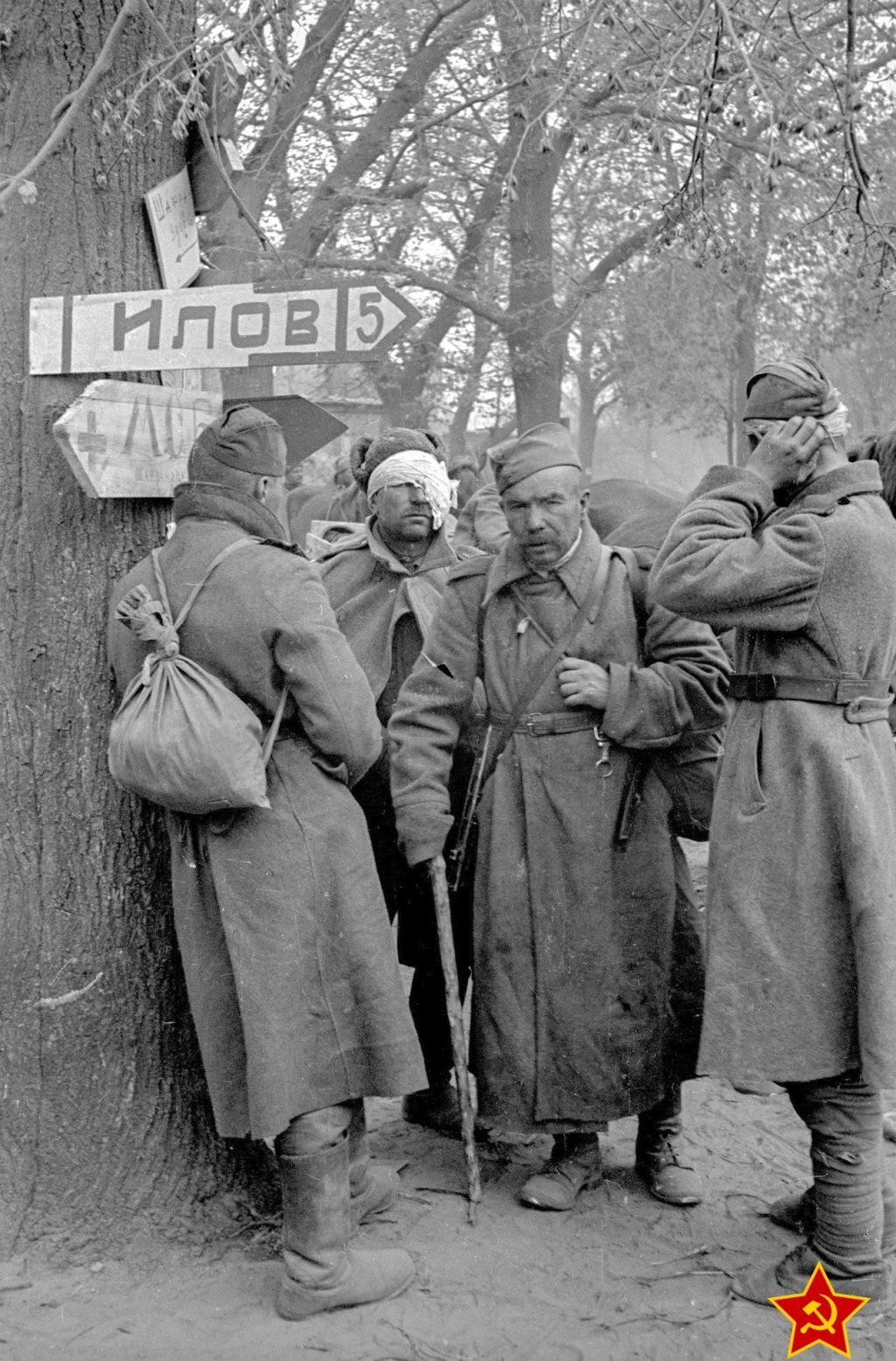 It suddenly dawned on us that we were free and just as suddenly we knew why. The Russians were attacking from the east and went right on past us. What we saw was unbelievable. There were Russian soldiers on horseback, riding hard and in every way, except the uniforms, reminding us of our own Cowboys chasing Indians. They paid little attention to us, although they did seem to know that we were not Germans. They seemed intent on pushing their advantage at such a speed as to nearly trample us at times. After we recovered from the shock of what had happened we began to cheer and hug each other scarcely believing that it was all real, we experienced feelings of euphoria that you feel after a victorious home ball game.
We began to search the town for food and any sign of anyone who might be able to tell us where we were and what had happened, but we found no one. When we reached the center of town which was a kind of square we were amazed and delighted to see a huge hog hanging from a rack, head down, split wide open, and thoroughly cleaned as though ready for roasting or cutting up, either of which we would be happy to undertake as soon as possible. We wondered why the people who left the hog there had left in such a hurry, not taking such valuable food with them. We would never learn this. We busied ourselves with planning what to do with the hog. We had two major things to consider, one to build a fire, and two to start cutting up the meat, meaning we had to find a knife. We had little idea about cooking but knew enough to build a kind of rack to lay the pork on and to do the cooking slowly. We scrounged around for wood using anything we thought would burn without adverse flavor. One soldier found some matches in a house nearby, and soon we had a beautiful warming fire going. We had intended to let it burn down making a charcoal bed suitable for roasting the meat but this was not to happen. Some prisoners on the west edge of town screamed that the Russians were returning in full retreat with Germans close on their rear – the Germans had been reinforced and had counterattacked driving the Russians back killing hundreds of them as they advanced relentlessly. We were panicked and had no idea which way to go. To go east would seem to ally us with the Russians and probably get us killed as well. The decision was made to try to hide and let the Germans go past us, then under cover of dark try to escape to the west or east, whichever from the judging of the battlegrounds, to have the closest friendly troops. All thoughts of the hog were put on hold and we hid in houses and cellars. One man even put himself inside the carcass of the hog.