

Reviewed by Doc Snafu on August 10, 2025.
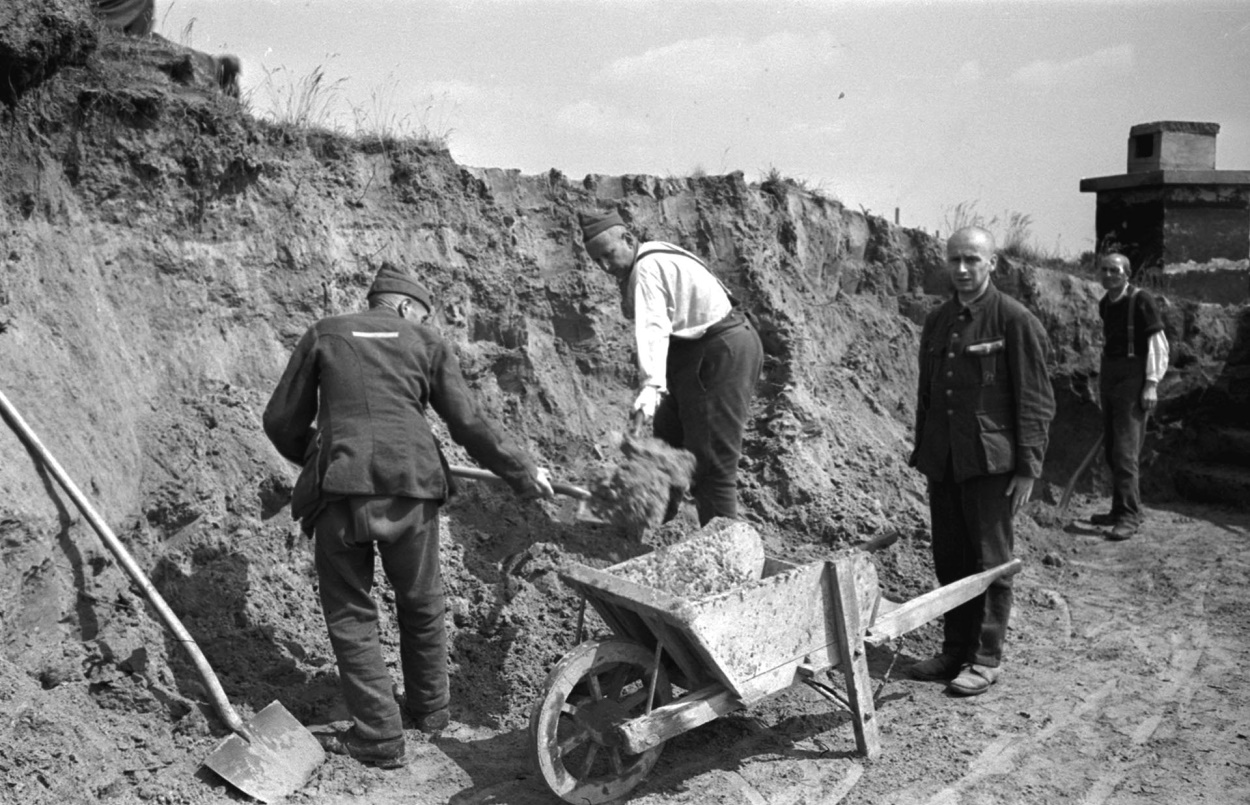
Images Sources: (1) United States Holocaust Memorial Museum, Provenance: Paul Hartman, Source Record ID: Collections: 2006. Hartman; (2) Gunter Gillot own archives; (3) AI generated images for EUCMH
Document Source: Report to Brig Gen R. McClure, Chief, PWD, SHAEF (Main) (for Mr. C. D. Jackson). From: Brig Gen A. G. Neville, BGS (P & PW) Main HQ, 21st Army Group. April 30, 1945, Report on Atrocities committed by the Germans against the Civilian Population of Belgium (February 1945).

FOREWORD
Those who regularly visit the European Center of Military History know that I do not censor anything — neither the photographs nor the texts. When the facts presented in an archive are verified, and when the individuals involved are clearly identified, I see no valid reason to conceal those facts or to modify the content in an attempt to soften the reality. The history of human evolution on this planet is replete with similar stories. And over time, it seems that only the methods of cruelty have evolved.
The text I am about to present concerns the history of my country, Belgium, and more specifically, the practices implemented by the Nazis — not only during interrogations, but also during so-called recreational moments, and ultimately, in acts of rape. These Nazis, under the direction of the Gestapo, were bloodthirsty beasts who derived pleasure solely from the cruelty they inflicted upon civilian prisoners.
It is to these people — to these ‘little Belgians’, as they are often condescendingly referred to — that I dedicate this archive.
Doc Snafu
PREPARATORY NOTE
This report was originally published in December 1944, by the Headquarters British 21st Army Group under the title ‘Report on German Atrocities’. It has now been decided to publish separately that part of the original report which dealt with atrocities committed by the Germans against the civilian population in Belgium. Since the original report was published, certain additional information regarding German atrocities against civilian population has become available and has been included in this edition.
The following abbreviations occur in the text:-
SS – Schutz Staffel (bodyguard & Nazi Party Troops)
SD – Sicherheitsdienst (German Security Service)
SP – Sicherheitspolizei (German Security Police)
GPF – German Feldpolizei (German Field Police)
VNV – Vlaamsch Nationaal Verbond (Belgian Pro-German Movement)
MNB – Movement National Belge (Belgian Resistance Movement)
Breendonk Concentration Camp – Report Content
The ‘Gaz Chamber’ – 1
The Camp Staff -1
General – 2
Accommodation of the Prisoners – 2
Organization of the Camp – 2
Entry into the Camp – 2
Prisoners allotment to Rooms, Cells – 2
Prisoners allotment of Food, Clothing, Mail, etc. – 2
Medical Inspections – 2
Typical Day of a Prisoner in barrack room – 2
Prisoners detained in Cells – 2
12- Interrogations – 3
13- Instruments (torture) left behind by the Germans – 3
14- Places of execution – 3
15- Number of prisoners who died in Breendonk – 3
16- Escape – 3
17- Charges, Trials and Releases – 3
18- Statement by a member of the German Security Police – 3
19- Visit to Breendonk – 3
20- The Tir National – 3
Appendices – 1, List of some of the peoples imprisoned in Breendonk
Appendices – 2, List of some of the peoples imprisoned in other places
a- Statement made by Franz Fischer, Appendix B
b- Statement made by A. Denis, Appendix C
c- Statement made by C. Lemaitre, Appendix D
d- Statement made by Paul Levy, Appendix E
e- (Extract) Statement made by Madame Paquet, Appendix F
f- (Notes) Interview with Adolf Singer, Appendix G
g- Notes by T. Frankignoulle, Appendix H
h- (Notes) Interview with Emile Scieur, Appendix I
i- (Extract) Statement made by Emile Renard, Appendix J
j- (Precis) Statement made by Paul De Rudder, Appendix KL
k- (Precis) Statement made by Major Van Roosbroeck, Appendix L
l- (Precis) Statement made by Hubert Gents, Appendix M
m- (Precis) Statement made by Raymond De Ponseca, Appendix N
n- (Precis) Statement made by Mrs Leopoldine Aulotte, Appendix O
o- Statement made by Lieutenant Barn Greindl, Appendix P
p- (Precis) Statement made by Jean-Baptiste Charrin, Appendix Q
q- Statement made by Hubert Laude, Appendix R
r- Statement made by Leon Joseph Ernould, Appendix S
s- (Precis) Statement made by Emile Laber, Appendix T
t- (Precis) Statement made by Abbé Jules Quientet, Appendix U
u- Liste of Permanent Staff at Breendonk Concentration Camp, Appendix V
v- (Paraphrase) Statement made by Madame Verdickt, Appendix W
w- Liste of civilians employed at Breendonk Concentration Camp, Appendix X
x- (Short) Statement made by Joannes De Schutter, Appendix Y
y- (Detailed) Statement made by Joannes De Schutter, Appendix Z
aa- Statement made by Franz Aloy Amelinckx, Appendix AA
bb- Statement made by Lodewijk Octave Moens, Appendix BB
cc- (Second) Statement made by Lodewijk Octave Moens, Appendix CC
dd- List of some head men of other rooms in Breendonk, Appendix DD
ee- Statement made by Madame Dalemans, Appendix EE
ff- Statement made by a member of the German Security Police, Appendix FF
gg- List of Germans and Collaborateurs referred to in the report who are not shown in the Appendices V, X, or DD, Appendix GG
REPORT – INTRODUCTION
(1) The object of this report is to collect evidence of Atrocities committed by the Germans against the civilian population in Belgium. It should be remembered that this report cannot be regarded as exhaustive. It merely summarises the evidence which has been collected by a small number of officers over a period of three weeks. An album of photographs has been compiled and should be examined in conjunction with the report.
(2) Atrocities were committed against the civilians by: members of the German Security Police (Sicherheitspolizei), of which the Gestapo (Geheime Staatspolizei) forms part; members of the Flemish and Wallons SS in Belgium; members of the Secret Field Police (Geheime Feldpolizei) and the German Army Guards at the Concentration Camps.
(3) The first thing that strikes one when mentioning German atrocities is the skepticism of the British troops and the British civilians. The idea of torture and mutilation is so abhorrent to the British mind that it is not easy to believe that practices that are associated with the Spanish Inquisition could be carried out during the twentieth century by Europeans. This archive produces evidence of German atrocities. Whilst it is not easy to find people who bear signs of mutilation, it must be remembered that the worst mutilated people were killed or died or were taken off to Germany. Nevertheless, several people have been found who carry signs of mutilation, their mutilated bodies have been examined, and their stories obtained. Those stories have been cross-checked as far as possible. Even though many of the people questioned were quite unknown to each other, their stories all bear a striking similarity to the treatment of civilian prisoners received at the hands of the Germans. Many of those stories would not have been obtained if the trainloads of prisoners had been taken to Germany from Brussels and Antwerp at the beginning of September 1944. Owing to sabotage of the engines, damage to the track, and the speed of the Allied advance, the Germans were compelled to leave these prisoners behind. A Flemish member of the German Security Police who is now in the hands of the Belgian Police has given details of how civilian prisoners were ill-treated, which confirms the stories of the prisoners. Some accounts of atrocities, however, cannot be substantiated or may be exaggerated. No cognizance had been taken of such stories.
(4) People who were imprisoned and ill-treated included:
– (a) Jews
– (b) Political prisoners, especially those who had or were suspected to have socialist or communist tendencies
– (c) People who were known or suspected of having pro-ally sympathies
– (d) People who were working against or suspected of working against the Germans, e.g., people who assisted Allied airmen to escape or belonged to the Belgian underground movement
– (e) People who had been denounced to the Germans by their personal enemies, usually by anonymous letters. In many cases, those people belonged to no political or patriotic party and were unable to say why they were imprisoned
– (d) Hostages
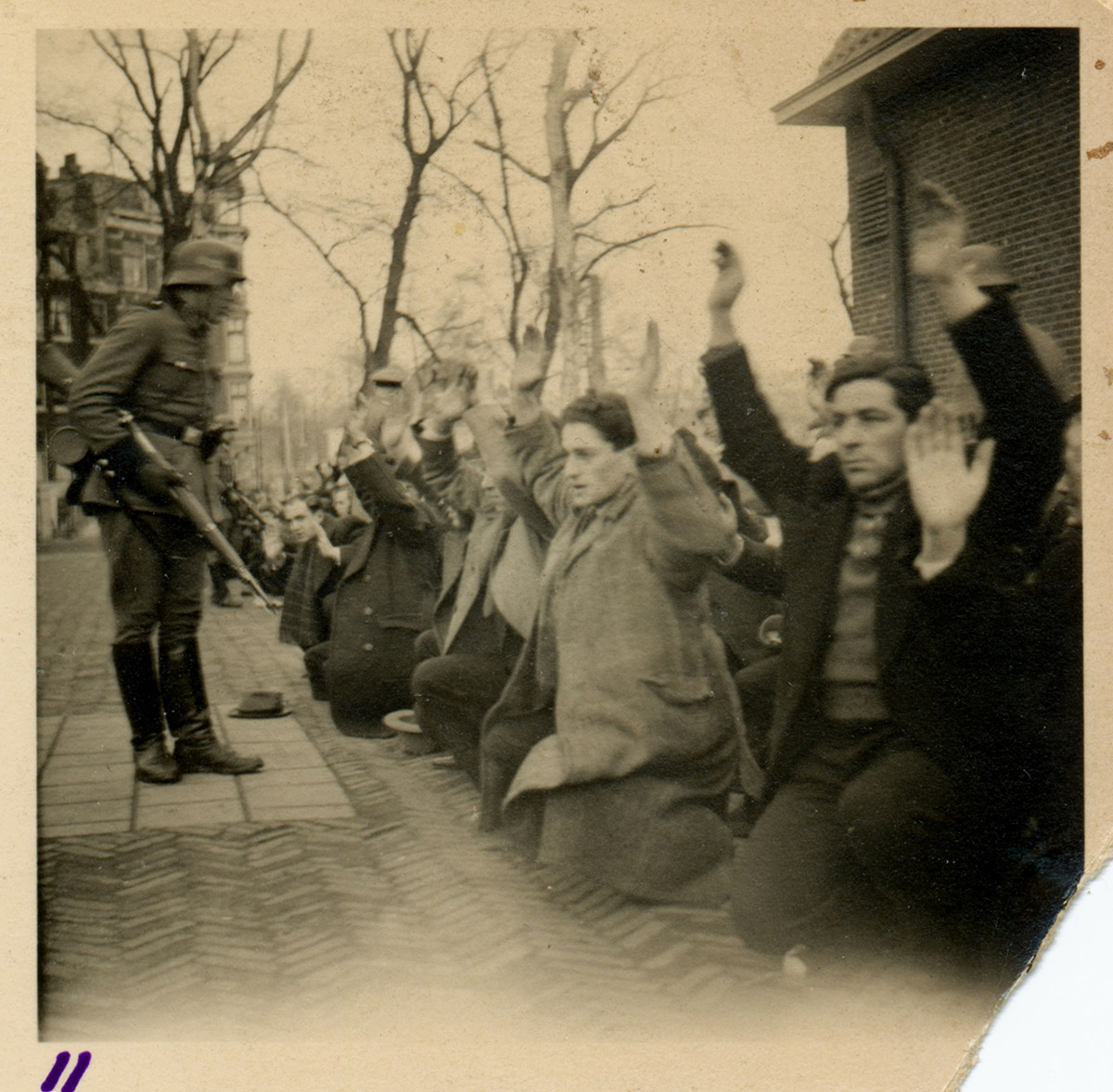
Details of some of the persons who were imprisoned are shown below in the Appendix. Some of those persons were killed or have died, but detailed statements have been received from several of the persons named in this Appendix, and those stories are set out in Appendices B to U.
(5) Places of Imprisonment and-or Torture or Execution
Breendonk: Malines – Concentration camp originally for Jews only. Prisoners were tortured and executed there.
Brussels: Place Rouppe, Gare du Midi: Political prisoners were interrogated and tortured by Walloon and Flemish SS.
Brussels: Avenue Louise 453: Gestapo Headquarters. Suspects were interrogated and tortured.
Brussels: Avenue Louise 349; New Gestapo Headquarters. Suspects were interrogated and tortured.
St Gilles: Prison de St Gilles Avenue Dupectiaux: A certain amount of interrogation of political prisoners was carried.
Brussels: Rue Traversière: Headquarters Geheim Fieldpolizei.
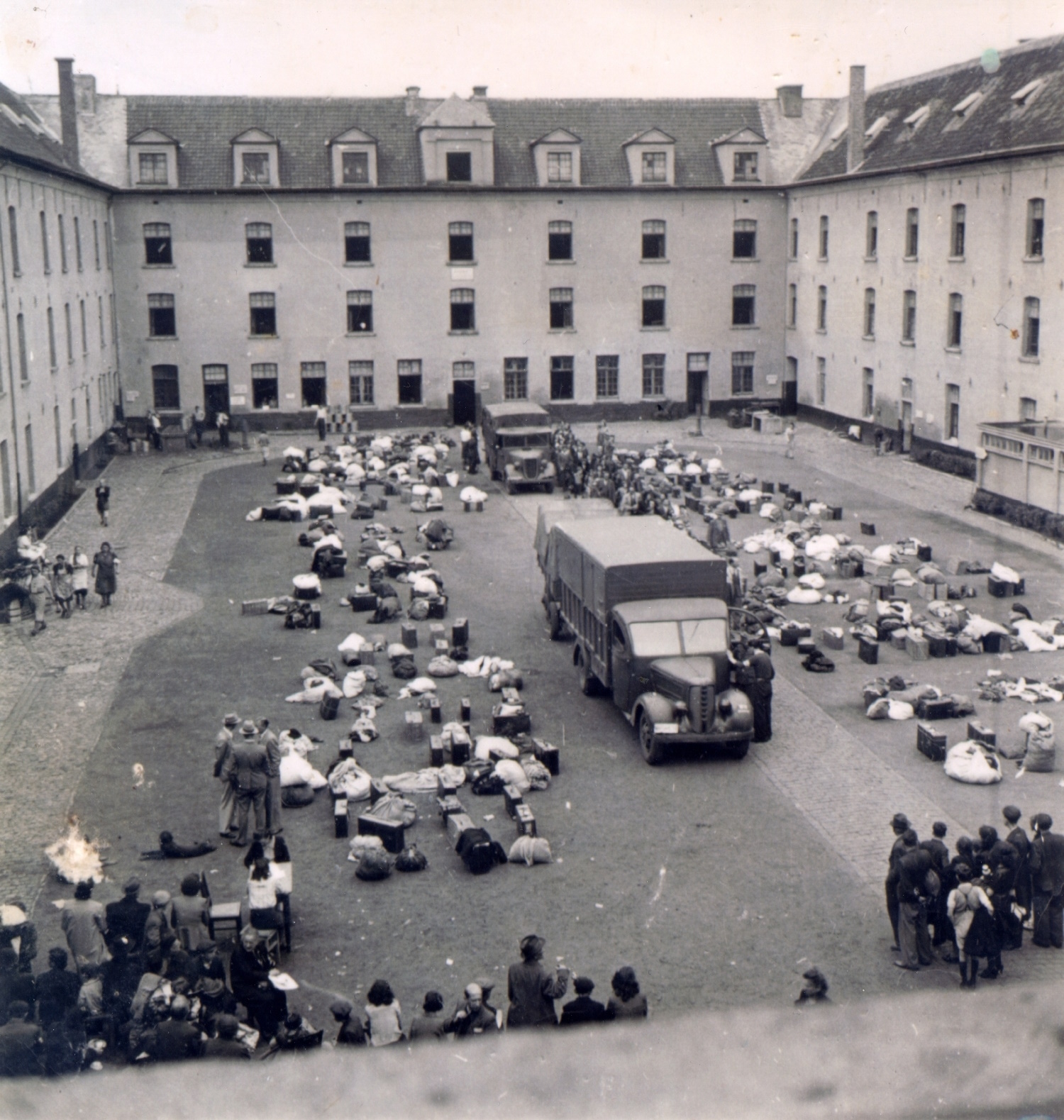
Laeken: Caserne St Anne (Barracks): Political prisoners were tortured.
Brussels: Tir National (Firing Range): Where prisoners were shot.
Namur: Citadelle de Namur: For political prisoners.
Charleroi: Prison de Charleroi: Political prisoners were tortured.
Charleroi: Caserne Tresiginnes (Barracks): Political prisoners were tortured.
Ghent: Osstracher: Place where the Gestapo interrogated, tortured, and carried out the execution.
Bourg Leopold, Ecole Militaire: Political prisoners interrogated and tortured by Wallons and Flemish SS.
Antwerp: Prison Antwerp: Political prisoners were held and tortured.
Antwerp: Avenue Elisabeth 22: Gestapo Headquarters.
Liège: Forteresse de Huy (no information).
Liège: La Citadelle de Liège: Political prisoners and partisans were tortured and shot.
Liège: Boulevard d’Avroy: Gestapo Headquarters.
Liège: Hotel Britannique: Headquarters Geheime Feldpolizei.
The above list is not exhaustive, as many other places of imprisonment and torture existed. Of the above places, two (2) will be described in this report, namely the Breendonk Concentration Camp and the Tir National in Brussels.
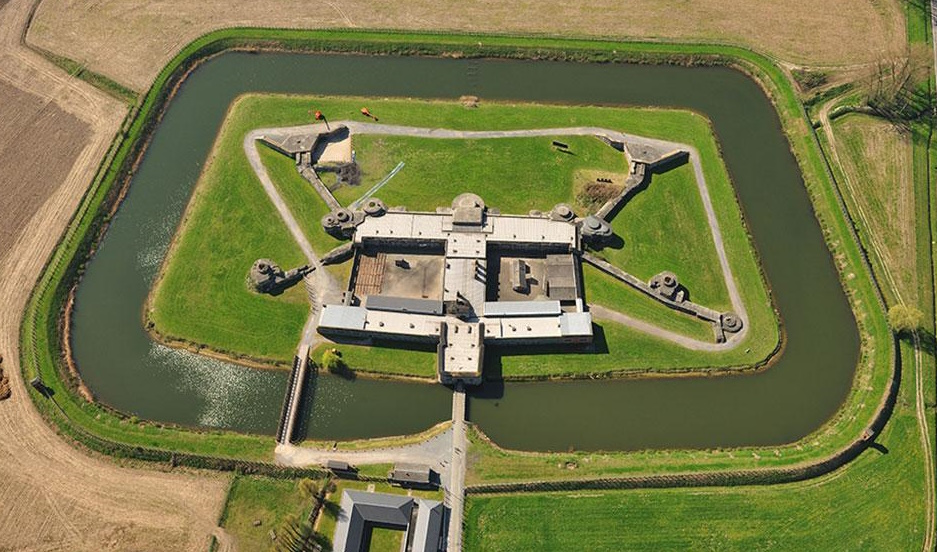
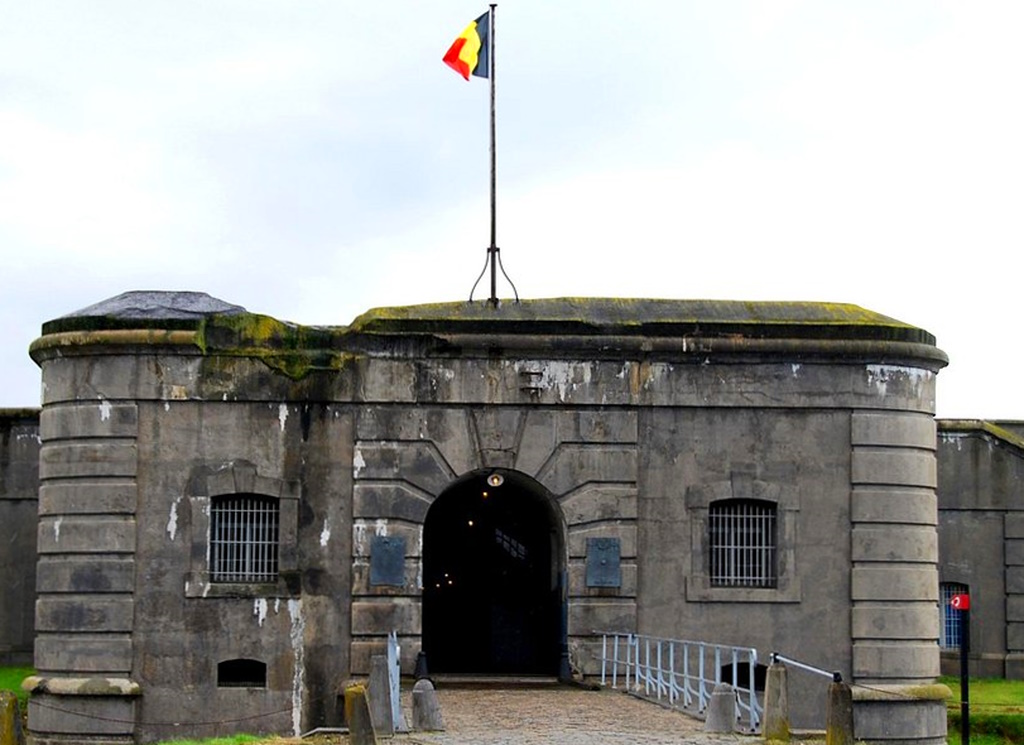
(6) Breendonk Concentration Camp. This was originally a Fort built as part of the outer defenses of Antwerp. It is situated on the main Brussels-Antwerp Road about 20 Km from Brussels and about 22 Km from Antwerp. The Fort is 2 squat grey buildings surrounded by a wide moat, over which runs a causeway, which is the only entrance. Round the moat is a stout barbed wire fence, some seven and a half feet high. Most of the buildings are originally partially covered with earth in order to provide additional protection for the garrison and to camouflage the Fort. The Germans made the prisoners remove the earthen banks, and at the time of the liberation, most of the earth had been removed. The Fort has been allowed to fall into disuse by the Belgians after the 1914-1918 War. It was, however, occupied by the Belgians’ GHQ for a few days when the Germans invaded the country in May 1940. At first, the Fort was used by the Germans as a Concentration Camp for Jews, but after a short while, every kind of prisoner was incarcerated there, although by and large, they were mainly political prisoners.
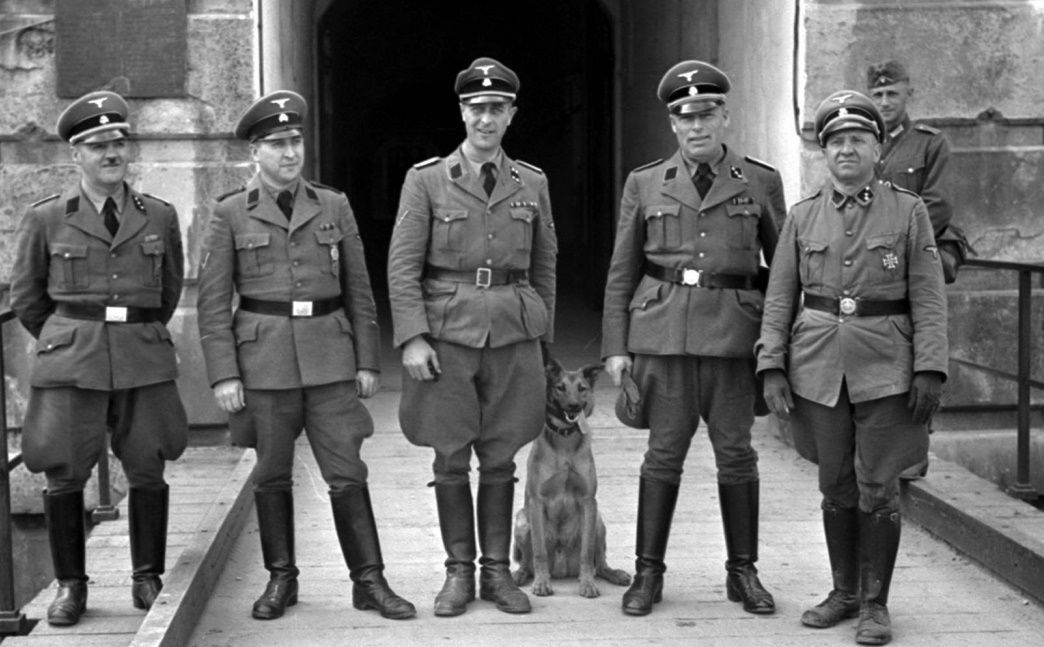
(Above, l to r) SS-Untersturmführer Ernst Lais (Baden-Baden Germany); SS-Hauptscharführer Walter Muller (Neu-Haldensleben Germany), SS-Sturmbannführer Phillip Schmitt (Camp Commandant) (Düsseldorf Germany); SS-Untersturmführer Franz Wilms (München-Gladbach Germany); SS-Obersturmführer Arthur Prauss (Charlottenburg Germany).
(7) Accommodation for Prisoners consisted of: (a) Eleven rooms, each measuring approximately forty-two feet long, twenty-one feet wide, and thirteen feet high, with a door at one end and at the other end two windows which were painted over with blue paint. The door had a lock and a heavy iron bar, which was placed in position on the outside when the prisoners occupied the rooms. The windows were kept open all day. Part of the floors of these rooms were made of stone and part of wood. Each of the rooms contains a stove, which was lit during the winter at 1700 hours. Forty-eight prisoners were accommodated in each room in triple-decker bunks. There were also a few small tables and stools in each room in the small space, which was not occupied by bunks. In addition, each room contained one bucket for use as a night latrine. A total of five hundred and twenty-eight prisoners could be held in these rooms.
(b) Four huts measuring approximately thirty-six feet long by eighteen feet wide and eight feet high were built especially for Jewish prisoners. These are built of wood and match-boarding, being somewhat similar to the rooms described above, except that the windows are smaller. All the huts are covered with creosote, which makes them very dark. They contain no stoves or any form of heating. They were furnished with triple-decker bunks, a few small tables and stools, and one bucket per hut for use as a night latrine. One of those huts was used as a workshop. Forty-eight Jews were imprisoned in each of the other three, the maximum number being one hundred and forty-four.
(c) Thirty-three brick cells built by the Germans in two of the rooms of the Fort. These cells are 1.95 M (6ft 5ins) by 1.57 M (4ft.6ins) wide. The top of each cell is enclosed by an iron grill, which is about 6ft from the ground. All the doors were of wood, some of which were reinforced by iron bars, whilst others had a large iron grill. The plain wooden doors have small trap doors so that the warders could look into the cells, and through which the prisoners’ food was passed. At the foot of each of the doors that have a large iron grill is a small trap door for passing food to the prisoners. The cells contained a wooden board that served as a bed. This board was kept upright during the day by means of an iron bar which was operated from the outside of the cell. The bed was lowered at bedtime and raised at reveille. Each cell also contained a bucket that served as a latrine. One of these cells has a pair of shackles concreted into the back wall.
(d) There are six dark cells into which no daylight can penetrate. These cells have white-washed walls and stone floors. They each contain a plank bed, which was kept against the wall during the day or removed from the cell. In addition, there was a bucket for a latrine.
(e) It will be noted that the camp has sufficient accommodation for seven hundred and ten prisoners.
(f) All the above rooms and cells were lit by electricity, but that was only used for inspection by the guards.
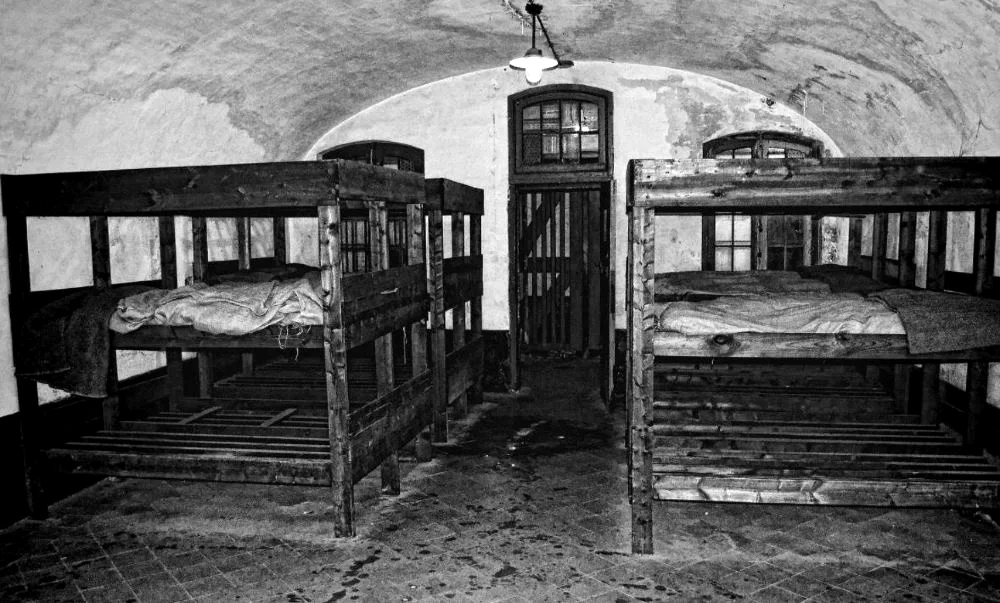
(8) The Germans installed an up-to-date kitchen, very good showers, and also latrines for the prisoners. There was also an infirmary.
(9) Gas Chamber: There are two rooms, each shaped like a horseshoe, one of which is known as the Gas Chamber. One enters each of the rooms through two steel doors. Neither has windows, but each has two ventilation shafts and a coke stove. A popular rumor is that the Germans used to gas prisoners in the Gas Chamber by means of the fumes from the coke stove. No proof of this has, however, been obtained. The rooms were designed as gas-proof chambers after the lost war. Some prisoners state that the room known as the Gas Chamber was used as a mortuary and sometimes contained up to twenty bodies.
(10) Torture Chamber: This is a circular-shaped room without windows and a stone floor with a shallow gutter across the width, which serves as a drain. In the room are a coke stove, a bed, and a table. It is lit by electricity, and in addition, there is an electric point similar to that used for an electric fire. There are three marks in the well and coiling where 2 pulleys were installed by the Germans. This pulley was dismantled by the Germans some weeks before they fled, and the holes were filled with cement.
(11) Camp Staff: The camp was commanded by a SS Major (SS-Sturmbannführer). Under his command were two or three SS Lieutenants (SS-Untersturmführer), a small number of German SS guards, and six to eight Flemish SS. This formed the permanent staff. Their names and other particulars will be shown later in the archive. There was also a detachment of the Wehrmacht in the camp for guard duties. The Wehrmacht men were approximately fifty, but they were constantly changed. Most of the personnel lived in the camp; at first in the Fort itself and later in wooden huts which were constructed near the entrance. Most of the Officers and NCOs were billeted in houses near the Fort. Madame Verdickt, who lives in a small house at the entrance to the camp, had some of the Officers and NCOs billeted on her. Later in this archive is a paragraph of a statement that Madame Verdickt has made to the Belgian authorities. It should be noted that although a total of approximately seven women prisoners were held at different times, there were no wardresses.
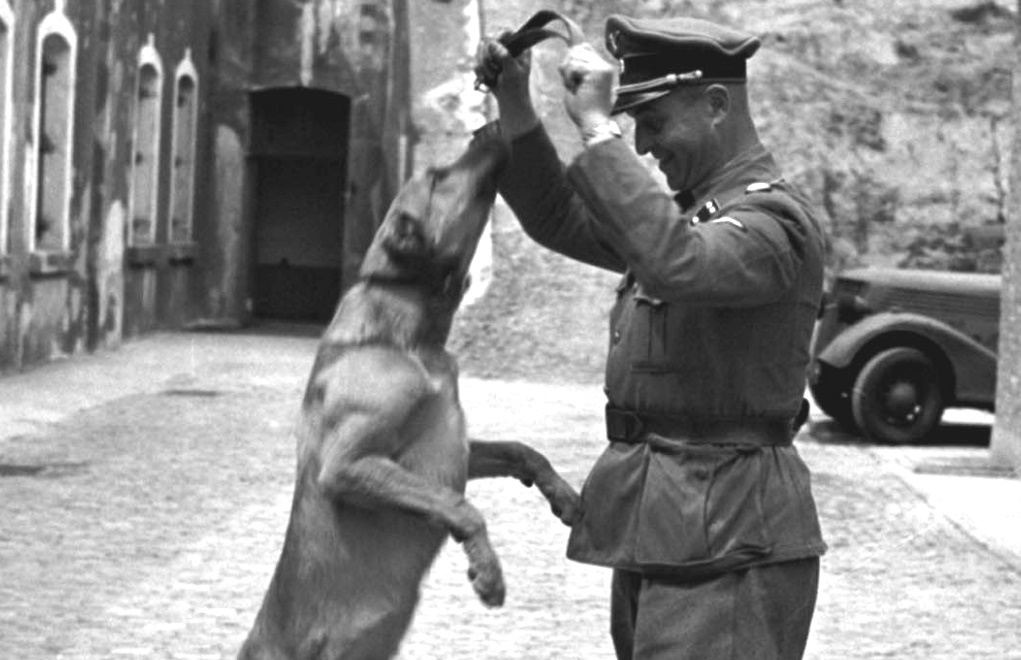
(12) In addition, a certain number of civilians who lived outside the camp were employed; one was a cook, another a gardener, and another engaged in looking after the livestock which belonged to the garrison. In addition, a local blacksmith who was in the SS was employed to do general repair work at the Camp. This man made some of the instruments of torture. Two other civilians were also employed at the camp from time to time, an electrician from the Breendonk village who locked the electric supply and a general contractor. The names and particulars of all the civilians referred to above will be shown later in the archive. Statements made by those available civilians will also be shown later.
Organization of the Camp
(13) Each room was in charge of a prisoner who was made responsible for the discipline and cleanliness of the room. Prisoners put in charge of rooms were nearly always German Jews. Apart from this, Jewish prisoners were generally kept quite separate from the other prisoners.
(14) Some of the SS guards were employed indoors, whilst some were employed outside. All the guards were armed, and they generally carried whips or crops, which they rarely hesitated to use. The Wehrmacht troops attached for guard duties did not come into contact much with the prisoners.
(15) All orders were given in German. Prisoners had to understand or face the consequences. Prisoners were only allowed to speak to the guards if they required anything. If they tried to indulge in normal conversation, they were invariably punished.