




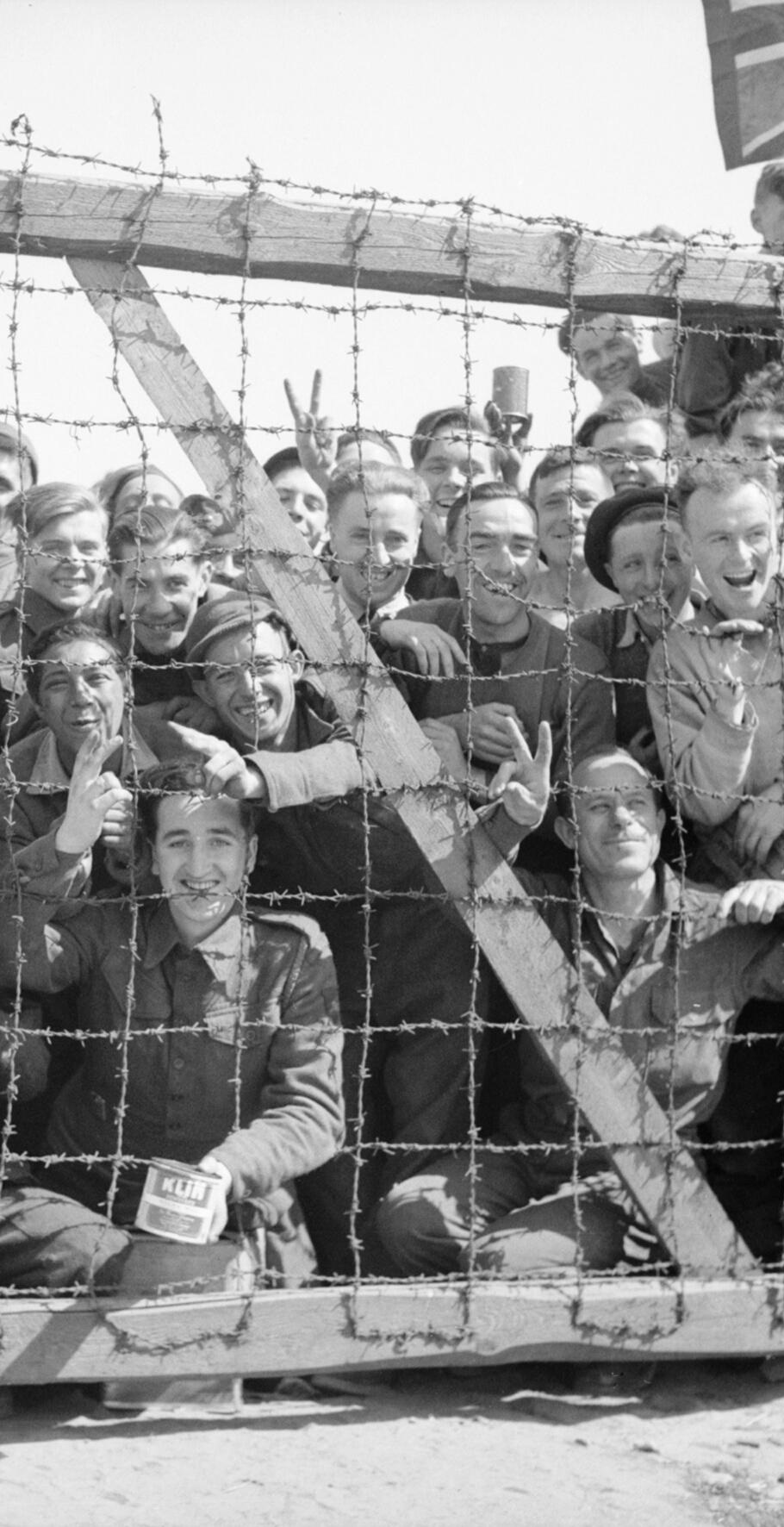
We were confused, it seemed to be near dawn and we immediately figured that the Germans were finally going to dispose of us. We tried to get out of the locked doors with no success until a shell blew a hole through a wall, which made it simple to get out. We did not go, however; because we had no idea what was going on outside of that wall. All of a sudden it was deadly quiet, we could hear the shuffling of feet, some heavy motors, and then the sound of tanks maneuvering. We heard someone shouting to the Germans to come out with their hands over their heads. The voice was in English with a decidedly American accent and they were using phrases that expressed attitudes toward the German soldiers with which we could all identify quite easily. By some miracle, American soldiers had captured this POW camp and were now about to liberate us. We cheered them as they passed through the gates but they seemed to be all business with no time to waste and told us to hurry and jump on the tanks because we had little time to head west and back to the safety of our battle line. We learned that they had penetrated 100 miles behind the German lines to get to us. They had fought the whole way there and, as rumor had it, it was all because of Col Waters and his son-in-law to Gen Patton who was incarcerated in this particular Hammelburg camp. We never knew for sure whether or not this was true; because events took place so rapidly that we had no time to think of reasons why this was happening. There was not enough room on the tanks for all of the men, so that those of us who could not get on the tanks ran alongside them, taking turns riding and running – we had learned to share. Despite our depleted condition, we were able to keep up for about a mile headed west from the camp, when we noticed the tanks, one after another, were stopping. They had run out of gasoline. Once again we experienced terror, rage, anger, and frustration. We quickly dismounted and began to turn to the west to no avail. The German tank detachment which had been pursuing our column merely closed in on a hill above us and with a few well-aimed shots of armor-piercing shells, disabled any tank which even tried to move.
Small arms fire discouraged our running any further to the west and I doubt that we could have gone very far under any circumstance because of our depleted physical condition. We were once again rounded up. This time the crews of the tanks were added to our Prisoner of War group and we were put back on the road to Hammelburg. This second aborted liberation was almost more than any of us could stand and our depression was long-lasting, our stamina and faith were being tested beyond belief. Our number had once again gone lower, either because of men being shot, wounded, or possibly by some miracle some of them avoiding recapture. Even though our original number of POWs had decreased because of illness, death from cold, some prisoners being wounded, and some escaping, the influx of prisoners from the Hammelburg camp made a sizable column once again. There were a mixed feeling because there were those of us who had already adjusted to the long march concept, newly liberated POWs from Hammelburg who had to get seasoned to the feeling of open-air living, and finally, the angry, newly-captured tank crews who were dismayed at the hand fate had dealt them.
Nuremberg and near Annihilation
We learned to accept the frustration, once we had a chance to adjust to the fact that there was nothing we could do to change what had happened at Hammelburg. The trudging one foot after the other had begun again, with one exception: we were in contact with American soldiers who had very recently been free men and knew what was happening with the war. We eagerly pumped them for news about everything. At first, they were nearly hostile to us, seeming to blame us for what had happened to them and their resulting capture. After all, we had a long time, had endured much suffering, and had adjusted to the hardships; while they had not yet even accepted their plight, we did not harbor any ill feelings toward them for their attitudes.

Once they realized that it was a military decision and not we PWs who had caused their capture they were more than willing to loosen up and talk to us. The Allies were on the move, in nearly all areas. The Germans were being routed and things were looking good. Gen Patton had taken it upon himself to try to deepen the penetration into enemy lines, to establish a front, very similar to the earlier successful German tactics which had gotten us so badly defeated in the Battle of the Bulge. It was ironic that a fuel problem and not a lack of guts or planning caused the defeat of Patton’s efforts. The loss of the tanks and the capture of the well-trained crews could not help but set the Southern American thrust back in terms of time, men, and equipment. We often wondered what the top brass who engineered the overall offensive was saying to General Patton at that moment. One thing was for sure, he had shown them that deep penetration of enemy lines was possible and that more planning and cooperation between the Allies might well shorten the war since a weak spot in their defenses had been found. Information regarding the war in Japan and the situation on the home front was pretty much rumor but optimism ran high. None of us was lucky enough to know any of the newly captured tank men who might have provided us with more specific news about the people in whom we were interested. Despite our frustrated liberation and only having sketchy information, all of us felt happier and more optimistic just knowing that the war was going well for the Allies and that they were within range. One thought and fear that we all shared was asking ourselves what happens to POWs at the end of a war. We wondered if we would be used as hostages in the negotiations.
 Would the anger of the German people be taken out on us? Were our very lives in danger? These thoughts were terrifying. We did, however, in our inimitable way see the brighter side. We reasoned that the German people and soldiers might be more amiable and ingratiating to us, hoping for more lenient treatment by the Allies in the event of their defeat. We had to wait a good while for answers to these questions and, as it turned out, there was a mixture of reactions on the part of both soldiers and civilians. Some reactions were terrifying to us and almost humorous but all caused much fear and apprehension in us. But wait, I’m getting ahead of myself, specific situations will be brought up as they occur.
Our march seemed to be aimed at heading us east and south to get us away from the German western front and the Allies and still was consistent in getting us to Berchtesgaden. Rumor had it that we were headed for Nuremberg which was a very large railroad marshaling center and known to be a major munitions manufacturing area. Both of these pieces of information were good reasons for us not to want to go anywhere near Nuremberg since the Allies were doing some of their heaviest bombing of the war in the Nuremberg sector. Despite our fears and apprehension, we were headed straight as an arrow for that town. En route, nothing much changed except that it was getting warmer with the approaching springtime. The civilians we encountered in our line of march were somewhat more friendly or at least did not go out of their way to be cruel or call us names or spit on us. More people were willing to offer to trade bread or other edibles for some of the cigarettes or chocolate that we were able to get from our Red Cross packages. The packages were still being divided between 6 and 8 men, even though we were supposed to be given one for each soldier. The German soldiers in charge of distribution were still ‘losing’ many Red Cross boxes. We were getting closer to the Swiss border and it seemed to us that the packages were coming a little more frequently. Our situation had become very confusing and conflicting. On the one hand, things were looking up from a temperature and food point of view but, on the other hand, they were looking very dark regarding our future in Nuremberg with the heavy bombing in that area. The distance to Nuremberg was relatively short considering the distance we had already covered and soon we were aware of the increasing signs of a very large city ahead of us. For your geographic reference, it should be noted that we were coming into the city from the north and west which put us between the city and any incoming bombers which might pass over. We came into visual contact with Nuremberg without any particular incident and were lulled into a sense of anticipation in place of our apprehension.
 Except for the scars of bombed-out buildings, Nuremberg was a beautiful city with the old buildings standing proudly in the background, spoiled only by the tremendous railroad marshaling yard in the foreground. There was much activity and train movement in and around the industrial-type buildings with nothing to suggest that a great war machine was being fed from this very area. Row on row of train tracks could be seen going out in all directions. While we were admiring the view and anticipating going into the city the guards decided to take a rest stop in a very heavily wooded area just west of town. We were permitted to lie down and rest. We were just beginning to relax when there was the deafening sound of warning sirens. We heard the extremely loud rumble of motors and what we estimated to be hundreds of bombers were droning on in an increasing crescendo to the point that we could hardly hear ourselves talk. The sky was nearly solid with the lead wing of planes going over our heads aiming at the heart of the city. As the planes dropped their bomb load on the city, the city burst into flame and black smoke – it was awesome to watch and terrifying to see the damage done in so short a time. We waited for the all-clear to sound, but now – there was no all-clear, as another wave of planes came in following the same path and repeated the bombardments. We were amazed to see that anything was still standing when the smoke cleared enough for us to see what had happened. But wait, the more thunderous roar of motors and more bombers repeat the process with one exception: they were now beginning the bomb run on the town earlier, seemingly to try to avoid hitting the populated section and concentrate on the industrial complexes and the railroad marshaling yards. There was only one problem from our point of view: we were in the path of this run and the bombs were falling short and on us in the woods. We were panicked and worst of all there was no place for us to go. The path of the bombers was so wide that running from left to right of the line of approach would only expose us to more direct hits than we thought we could get in the woods. Even here we were wrong: the bombs were making a splintered pile out of the woods and leveling everything in sight. Men were screaming and running in all directions to escape the bombs but to no avail. Those who were hit were in deep shock, one man was running around out of control looking for his arm, which had been blown off. Others were looking for their legs, they seemed driven to find the parts as though they thought they could put them back in place. One of my officers was hobbling around with his right leg blown off at the knee and bleeding in spurts. It was all I could do to get another officer to help me hold him down so that we could put a tourniquet on his leg and stop the spurting blood. He cried pathetically, ‘Where is my leg, give it back to me’ and then he mercifully passed out.
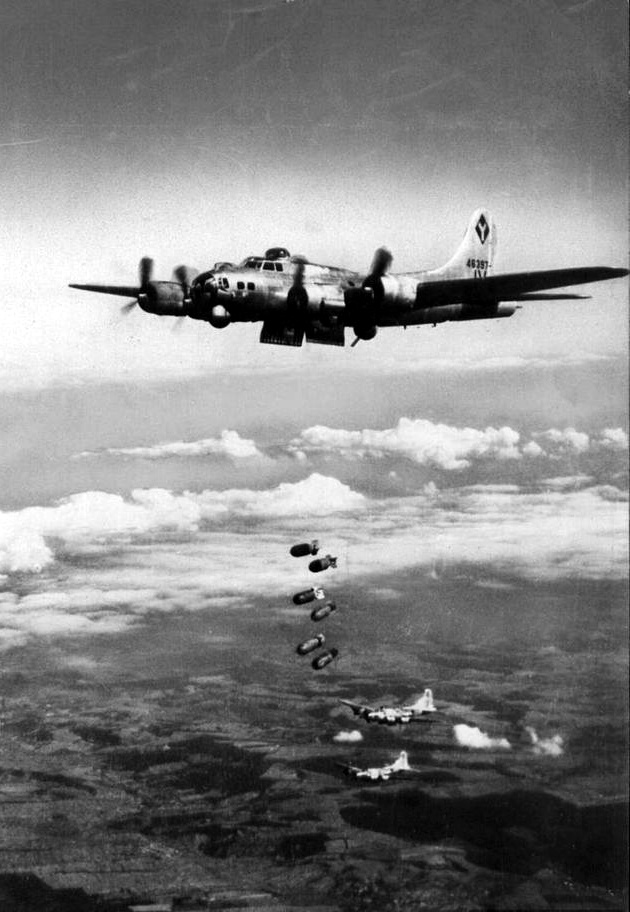 The bombs were making craters in the ground as far across as 50 to 75 feet and sometimes 3 to 4 feet deep. Men would disappear in the explosion. We would drag the wounded into these craters for protection from more exploding bombs. As if it wasn’t bad enough that the bombs were falling, we were being barraged by parts of machinery from the factories that had been hit – it was a nightmare watching a heavy metal wheel pass over your head or land nearby. Some factories kept blowing up for hours after being hit; we thought they might be ammunition plants or chemical plants. There was no let-up, wave after wave of planes passed over, each dropping its lethal load, circling, and heading back to base – unfortunately not all were able to go back. There was no way a sky full of planes could escape the anti-aircraft guns and the flack that the Germans sent up to protect this vital city. Black puffs of smoke and spiraling plane parts were all too common. The bombing continued unmercifully, looking to my left I saw another man lying face down on the ground, a piece of metal fragment had cut him up the back as though a knife had been used on him and some part of him was laying outside of his body. With Ed’s help, we were able to open the wound, clean out the part, whatever it was, and put it back inside him. We held him together with a belt. We later learned that he lived through this experience with the help of some hospitalization when the raid was over.
The bombing continued, and we kept seeing trees fall, there was very little if anything left standing as we had crawled into the deeper hole near us. Then Ed let out a yell, looked very odd and dazed, and held his hand to his head which was split wide open right down the middle, half of the skull part lying on his shoulder, his brain exposed. We rushed over to him, washed off the brain as well as possible, put his head back into position, and put a couple of thread sutures in his head, using a needle and some GI thread, which later got infected. Despite the trauma, he did not pass out, although, I feel he was in shock for several days following this incident. Toward evening the bombing stopped. The German guard, what was left of them, evaluated the situation and rounded us up, literally forcing us to run from this area to the southeast. Any ambulatory man was helped to move. It was, however, necessary to leave the non-ambulatory men behind. Ed was fairly conscious and with the help of the two of us was able to stay with us. He, like myself, feared being put in the hands of German doctors at this point in the war.
Leaving the open area which a few hours ago had been a woods but was no longer with any trees standing, was to be another anxious time for us. Not only were we pulling, supporting, and carrying some of our friends but the German guards had turned very hostile. They herded us toward the road; pushing, prodding, and yelling at us. We were faced with a new threat: very angry civilians. The bombing had left them in no mood to tolerate an enemy who was within their reach and they were menacing both in actions and words. Some were carrying pitchforks and looked fully capable of using them. The guards, despite their probable agreement with the crowd, were evidently under order to get us to Berchtesgaden and therefore, had no choice but to protect us.
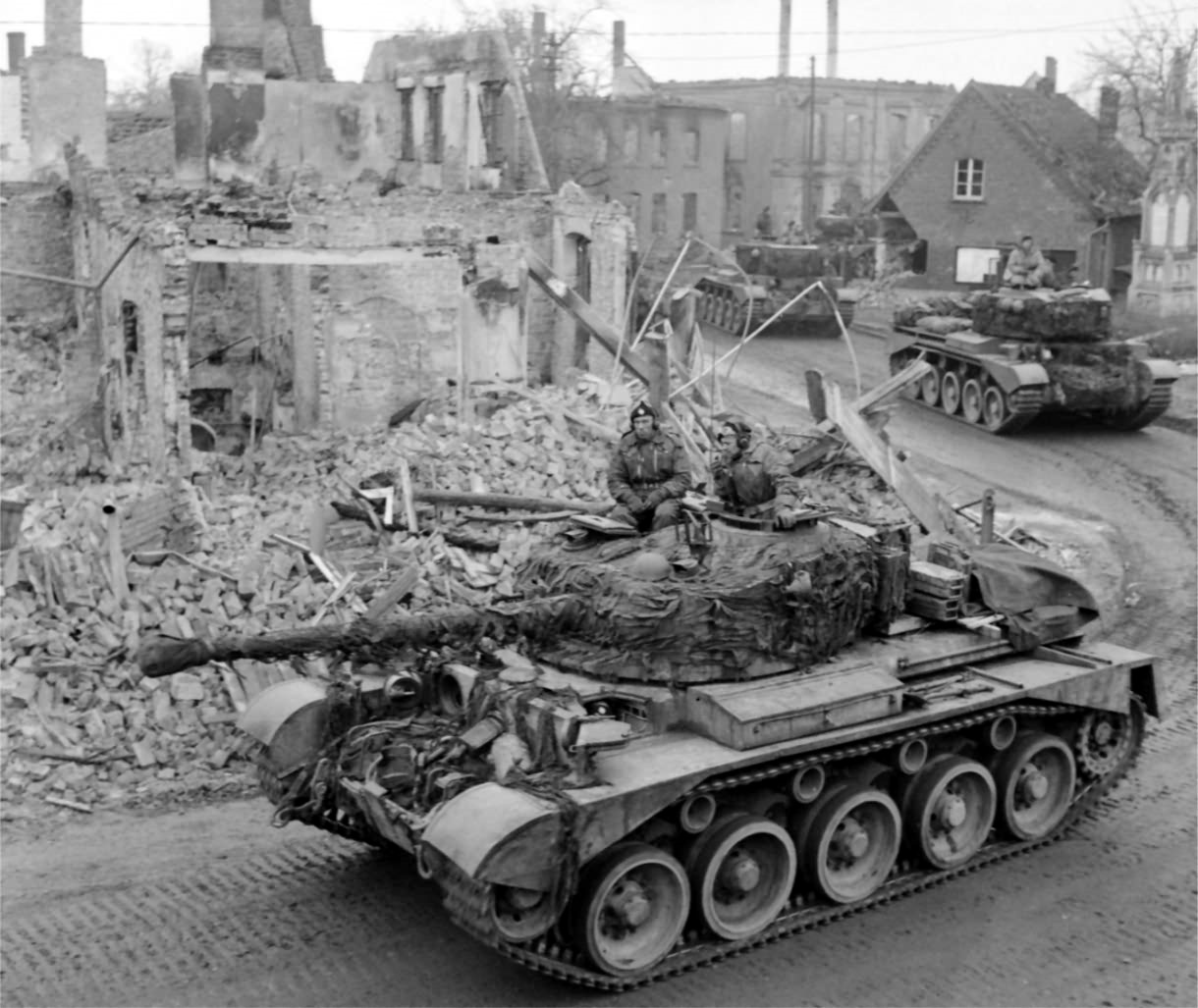 We moved rapidly to the south leaving the civilians behind. The next couple of weeks were filled with anxiety because there was a war going on now on all fronts and we were being zig-zagged first south and then west and then east to avoid battlefronts. The frequent changes were confusing and not having a map, half of the time we had no idea where we were. There were more frequent stops, giving us time to rest more and do some minor grooming. Probably the most horrendous event we experienced emotionally during our capture occurred on Apr 12, 1945. The guards rousted us as usual but seemed somehow more compassionate. It was then they announced, ‘We are sorry to tell you but your President died’. This was a bombshell we had never expected, nor could we fully realize the implications. What would happen now? Would the war effort change? Would the leadership take time and prolong the war? What would the new President be like? How would this affect the German’s attitude toward us? Would the death of FDR, affect Allied cooperation? Of course, we had no answers to any of these questions but being egocentric human beings our concern was the direct net effect on us in the coming weeks.
Panic and fear were combined to give us some very anxious days. Rumors were flying, even the German guards were concerned regarding the net effect on them if the war were to end with a new President in charge. We didn’t have a lot of time to concern ourselves with this problem before another one took its place. We had pretty much shed any superfluous rags or pieces of the blanket we had been carrying to keep warm and cushion us from the hardness of the ground. Carrying any excess weight was just too much effort and drained too much energy; this was because it was getting warmer and the need for these items was less. We noticed that we were beginning to climb gentle slopes in the direction of some foothills ahead.