




What we did not realize was that we were going to climb a mountain in the next few days. We were off of the road network and the ground was getting more uneven. Helping the wounded was more difficult and our energy reserves were dangerously close to being exhausted. Thank God that the ascent was slow but even that worked against us because it was spring and it still got much colder as we climbed higher. Prisoners began to drop out of the column, our number from the few hundred who had survived Nuremberg was again dwindling. Thank heavens Ed had gained strength, even though his head had infected along the suture line. He was a hearty man and was carrying his weight. It was a good thing that he could; because I am sure that we could not have handled any extra load at this point. We were out of contact with any food source and the guards were using some kind of dry ration for themselves. Despite our miserable situation, I have to say that the mountains were breathtaking. We could see for miles over the tops of lesser peaks and down through valleys.
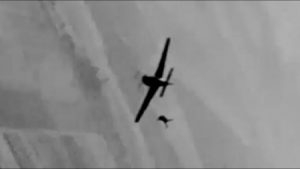 At one point we were looking down on German planes as though it were an aerial view. The reason for this situation was that the Allies had total air superiority and these planes were maintaining a hide-and-seek profile so that they would not be shot down, therefore, they followed the lowest valley they could find. The maneuver was not entirely successful, however; because even as we watched, two American fighter planes attacked and shot down a German cargo plane and a Nazi fighter plane, which was the escort. It was as though we were watching a toy
  situation or a fantasy – everything seemed to be in slow motion. I began to realize that our reactions and feelings were beginning to be dulled by all of the inhumane things we had seen and experienced and by the bloodshed caused by the bombings and strafing which had affected us directly. The worst of all of this was our inability to help change any of this or help in any way to shorten the war. We were useless to the war effort and we knew it. Sleeping on the ground at this altitude, with the cold returning, was again taking its toll on our bodies. For weeks we had all experienced increasing pain in our feet, hips, and shoulder joints.
 The cold would penetrate our bodies and a kind of arthritic pain would follow. Our feet were still tender from being frozen back in Poland and the fact that some of our callouses on the big and little toes were as much as a half-inch thick began to make walking more painful. This added discomfort and was to persist until we descended the mountain but even then it would not entirely go away. The only positive things at this point were: one, the German guard attitude was better, two, civilian reaction was kinder and three, the sounds of the bombing were getting closer. The Germans called it ‘the war getting close’. The indications are that the war might soon be over. We could only pray that this was true. Once again, however, the question loomed: ‘What happens to prisoners of war when the war is over?’ Are they hostages, are they killed, or do they become displacement targets for a country losing a war? It’s similar to having no experience with such a contingency or knowing how to face death with no prior experience. One has to wait for what is happening to know the answer and the waiting is hell. We were now headed west again, seeming to have had to avoid some obstacle or impending attack by some Allied Army, although we were never sure what. There was no way that we could know what the war situation was about which troops were attacking in which zone. The walking had again become mechanical but there was much more contact with the civilian population.
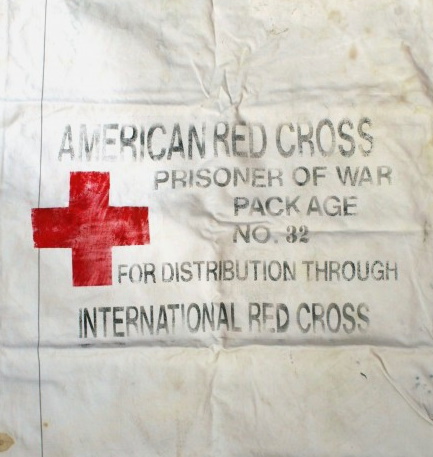
 It would seem that some German people felt sorry for us and would risk coming up to the column to give us bread or potatoes. Once a man carrying a string of fish passed us and then returned to give the string of fish to us. We were delighted but rather hard put as to what to do with them. That night the guards had built a fire and allowed us to put the fish in an old tin can filled with water and boil it on the fire. Despite starvation, this turned out to be the worst-tasting, most inedible food I have ever tried and nobody was able to swallow any of it. We didn’t know if it was a lack of seasoning, the boiling in the old can, or just plain spoiled fish but one thing was certain, a starving man will not and I emphasize will not eat just anything presented to him despite all the popular reference to the fact that he will. Shortly after this, we were aware of being in a more populated area judging from the amount of activity, trucks coming and going, and supplies being put in piles along the road. Little did we know these were meant for us – they were the Red Cross packages that had long been promised. The distribution was based on one box per two men, although again I emphasize it was supposed to be one box per man. The excitement of getting this food was almost too much for us to handle. Dividing the box was somewhat of a problem since there was only one can of some food and one package of another.
The most memorable item for me was Nestle’s chocolate. Once again we had some trading material in the form of cigarettes. Never would anybody trade a morsel of food for any reason. It was difficult to know where to begin eating but the can of beans looked like a good place to start. Experience has shown us that measuring carefully what we were going to eat each time, ensured the longest period a given amount of food would last. There was also a tendency to prolong the eating process and take very small savory bites. There was powdered milk in the package and I decided to make some chocolate ‘candy’. I made it a purposely slow process. I measured out a couple of spoons of chocolate and mixed it with just a trace of water, making a softball. I then rolled this in powdered milk, rolling it out in a wormlike configuration. I then cut this into tiny segments to be savored later at a rate that would be painful to an observer. The whole opening of the packages and the preparation process was like getting ready for and having an old-fashioned picnic.
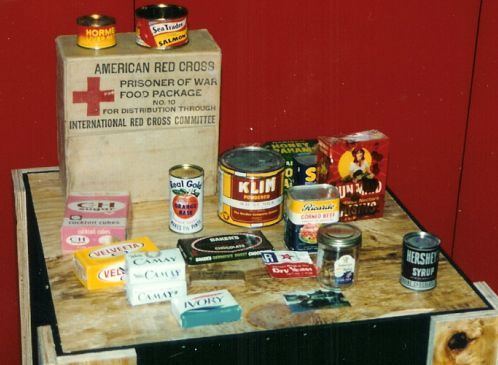 The biscuits, jelly, canned potted meat, and powdered milk provided us with a balance of food which we desperately needed. I have always been amazed at how we had survived without fruits or vitamins. Perhaps there were more vitamins and minerals in the ‘grass soup’ than we would have suspected from the taste of it. After eating and running through our nearly nightly grooming process, which by now had been more feasible because it was warmer out and we could take off our shirts and pants at times. Each man would help the other pick up the rapidly moving lice in areas inaccessible to him – again the scene would be similar to that seen in a zoo at the monkey compound; except that, by now our hair and beards were so long we didn’t look much like monkeys. The thing that both amazed and horrified us was to see our bodies (I probably really should say see our bones) and what had occurred over the past months besides the excess growth of beard and hair. We looked like skeletons, with deep sunken eyes, ribs showing no meat, just skin covering the bone, prominent pelvis bones, and between them a sunken area making the pubic area a large mound in its own right.
 You could touch your fingers together as you grasped the radius bones at the wrist. The buttocks were caved in and the total appearance was disheartening and grotesque. On the light side, receiving the Red Cross packages and subsequently eating of some of the food had a relaxing effect and seemed to make us more able to relate to each other, even to the guards. By this time we had learned some German words and could communicate by supplementing the sentences with gestures and pictures. It was becoming apparent that the guards were more interested in relating to us in a more understanding manner now and we interpreted this to mean they were also concerned as to what would happen when the war was over, particularly if they should lose it. This created a complex interaction which was to become a problem for us some days later. It got to a point where the guards would take time to try to teach us some German words and even show us pictures of a wife, sweetheart, or children.
We had been walking to the west for several days and noticed that the guards were more uneasy than usual when two of them walked up to us and gave their rifles in a gesture of surrender. We were not sure how to handle this problem since the war was still on, we were in enemy territory, in US uniform, not knowing where we were, nor knowing where the Allies were, and not knowing where the nearest fighting German Army was. During training, it was said that you would take the rifles and hold the guards captive but not all the guards had done this and as a result, we could have been shot on the spot by any guard who did not want to follow this procedure. Our next thought was if we took them captive where would we take them? Next realism, we are enemy soldiers no matter how disheveled we looked, we would be armed and behind enemy lines and, as a result, would be viewed as spies and probably shot on sight by any German troops who might happen by. The truth of this was to become quite apparent just before our liberation.
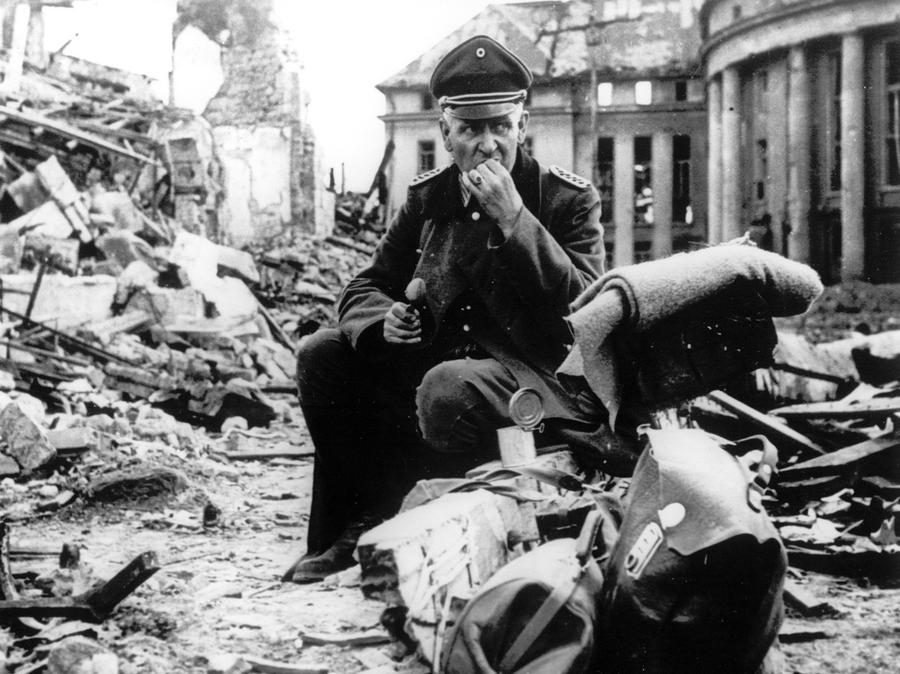
After long deliberation, we decided that if the war was this close to being over and if the soldiers felt that they had lost it to this extent, our best decision was to remain their prisoner for a while. We felt we had not come all of this way and with all of the suffering, to be shot as spies, the Geneva Convention rules could not save us. The German soldiers were surprised at our decision but seemed to understand our reasoning.