



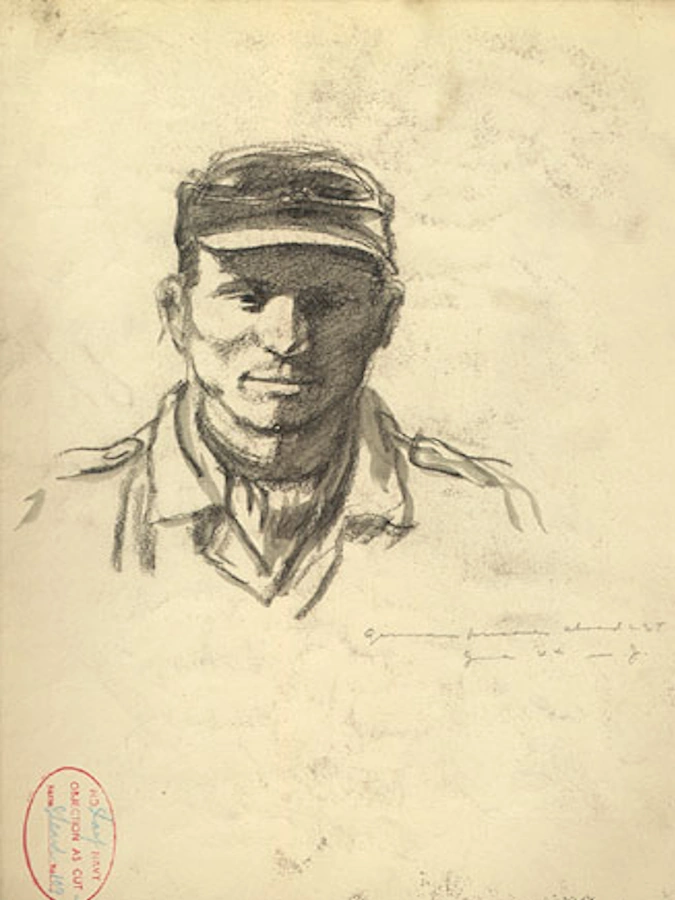
German Prisoner Aboard LST, Mitchell Jamieson #V-31b, Charcoal & wash, June, 1944, 88-193-RH
A study of a German prisoner-of-war.

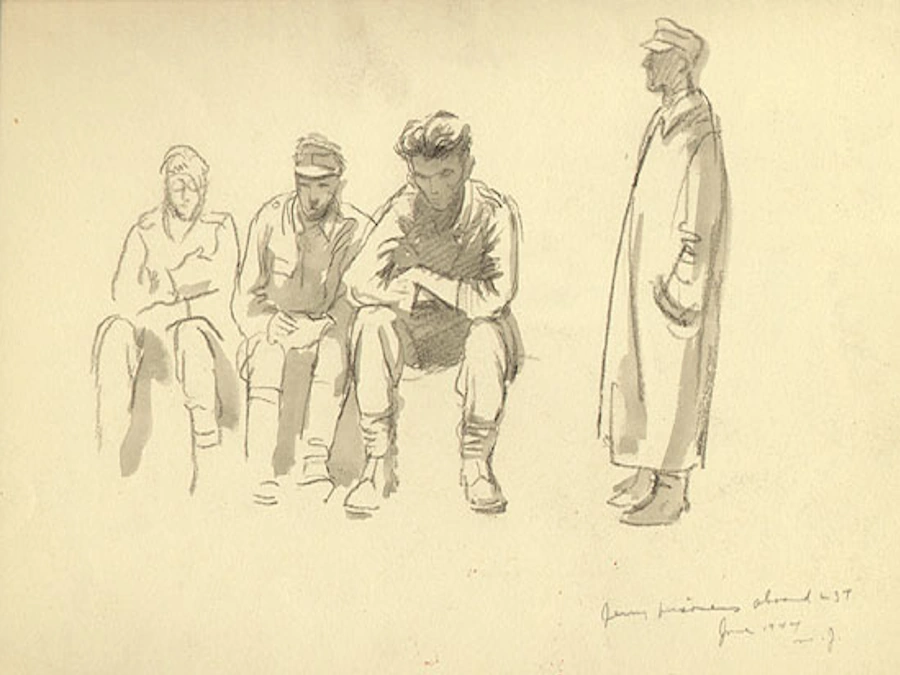
Jerry Prisoners Aboard LST, Mitchell Jamieson #V-67, Charcoal & wash, June, 1944, 88-193-ST
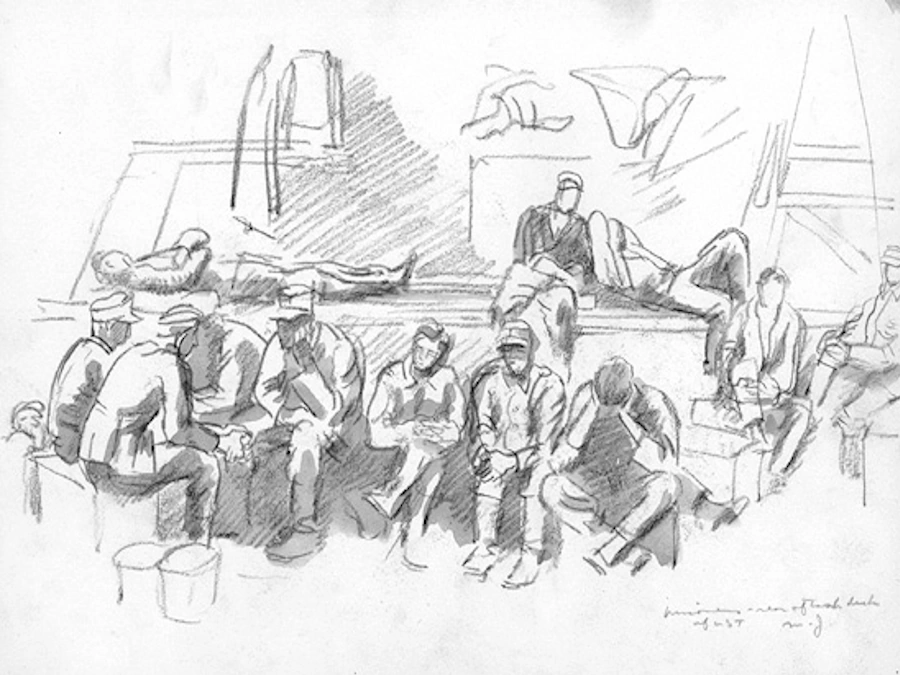
Prisoners Rear of Tank Deck of LST, Mitchell Jamieson #V-39, Charcoal & wash, circa 1944, 88-193-RQ
German prisoners were placed in spaces where they could be easily guarded while being transported to Britain on US Navy ships. The large empty tank deck of an LST was such a space.
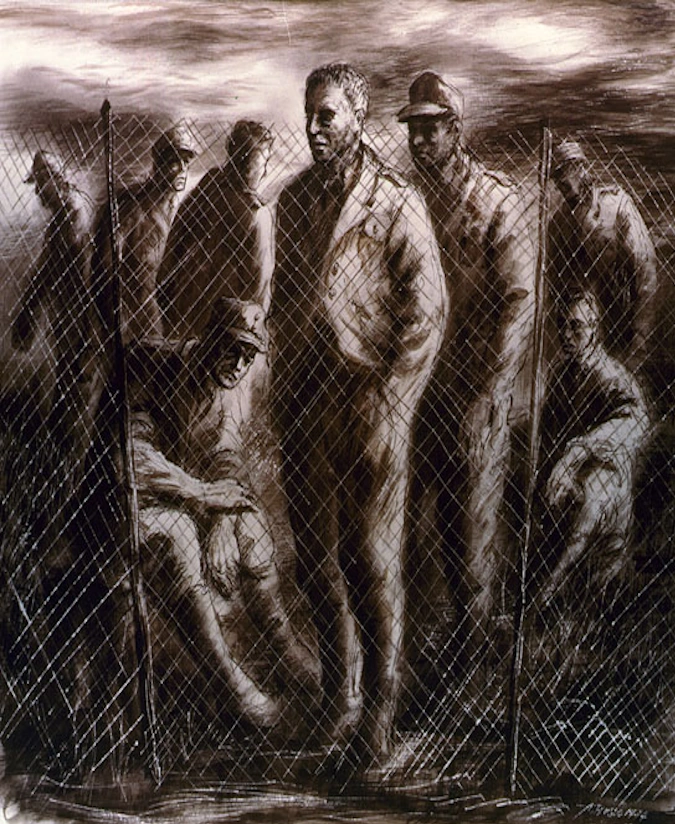
German Prisoners Behind Barbed Wire, Alexander P. Russo #29, Wash & ink, 1944, 88-198-AC
Among the prisoners taken during the D-Day landings were such non-Germans as Czechs, Poles, Yugoslavs and even Mongolians, which on first observation might easily have been mistaken for Japanese. Upon arrival in Southern England, they were interned in facilities with barbed wire perimeter fences which, with armed guards, prevented them escaping.
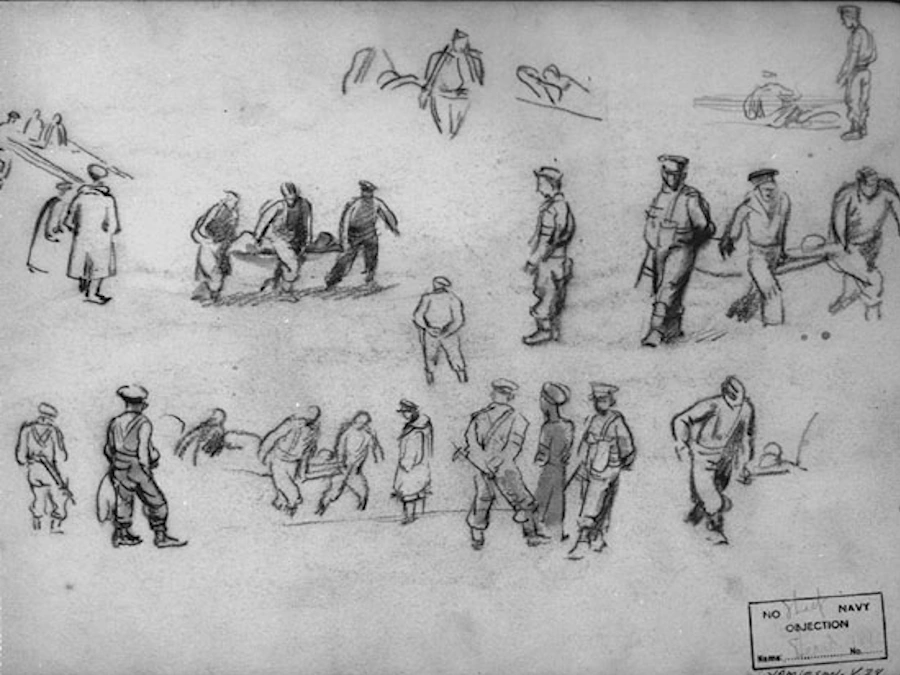
Boche (German) Prisoners at P.O.W. Cage, South England, Mitchell Jamieson #V-28, Charcoal & wash, June, 1944, 88-193-RD
German army prisoners of war, after being transported to Britain, were assembled in temporary internment facilities before being dispersed to P.O.W. camps all over England and Scotland
The Invasion of Normandy: Wreckage
The flotsam and jetsam of battle lay strewed about the battlefield. During the Normandy landings, German beach obstacles and defenses destroyed numerous Allied landing craft and vehicles in the approaches or on the beaches themselves. These twisted hulks were prominent reminders of the price paid for the successful invasion.
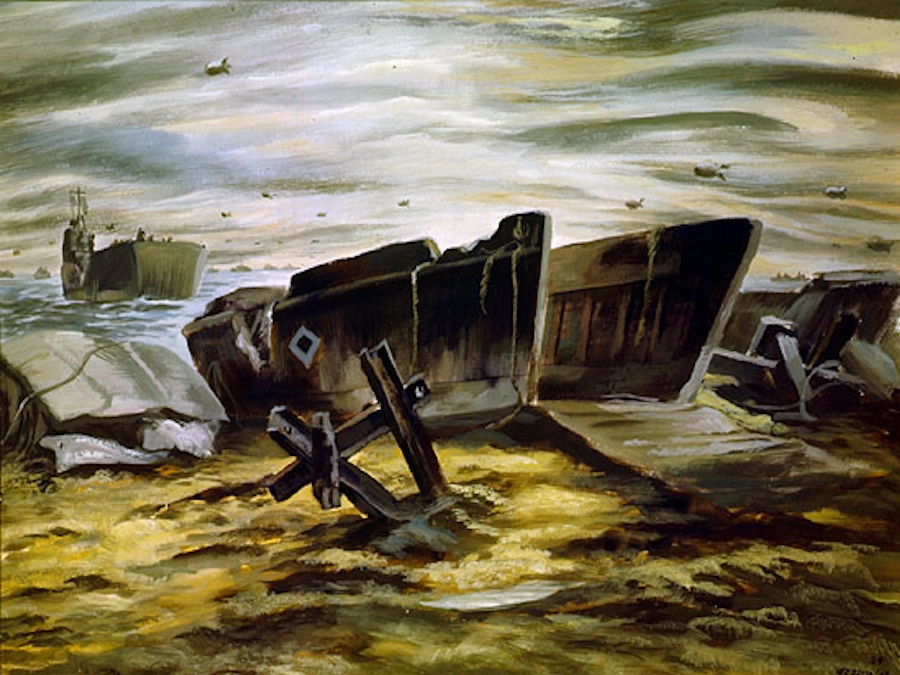
Wrecked LCVP, Alexander P. Russo #34, Gouache, 1944, 88-198-AH
It once held life. It was the staunch craft in which men were trained in landings on many practice beaches. It finally met its fate with its crew on a Normandy beach on D-Day.
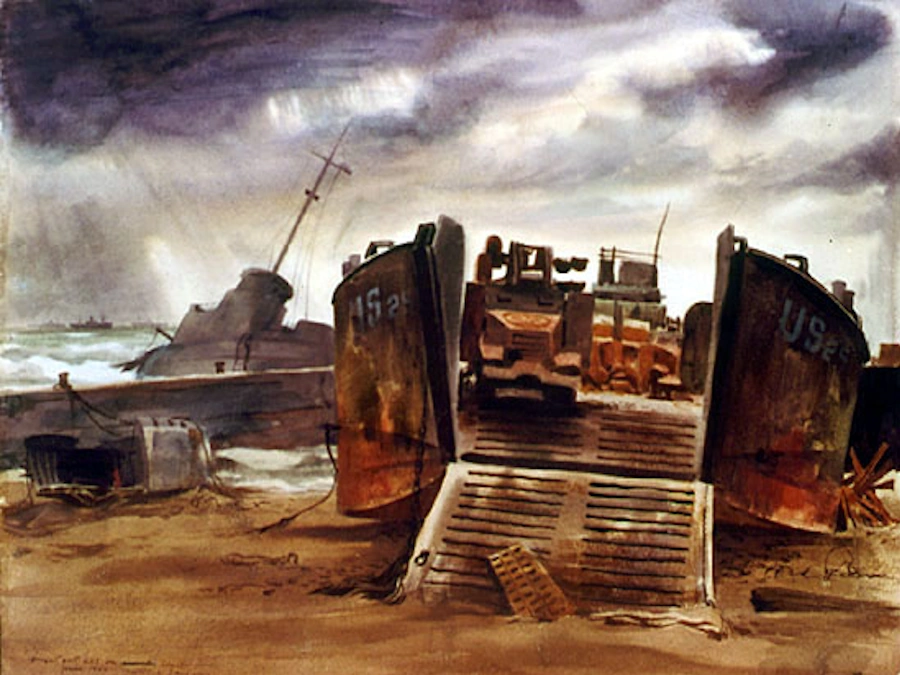
Burnt Out LCT on American Beach, Mitchell Jamieson #228a, Watercolor, June 1944, 88-193-IE
This is typical of some of the gutted wrecks along this most tragic of beaches. It had mobile anti-aircraft vehicles aboard and had been so completely ravaged by flame after being hit that its agonies had left it with a look somehow permanent and fixed in rigidity, as though suffering rigor mortis, in a way like a human corpse. A smashed LCIL is in the surf beyond the pontoon barge and an LCVP, or the remains of it, is in left foreground
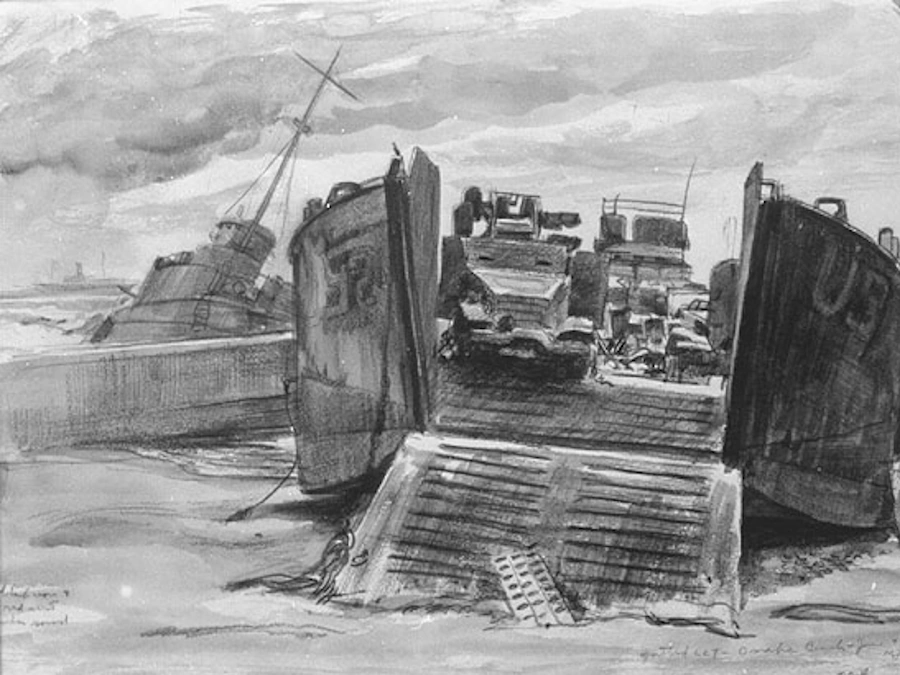
Burnt Out LCT on American Beach, Mitchell Jamieson #228, Charcoal & wash, June 1944, 88-193-ID, Study for #228a.
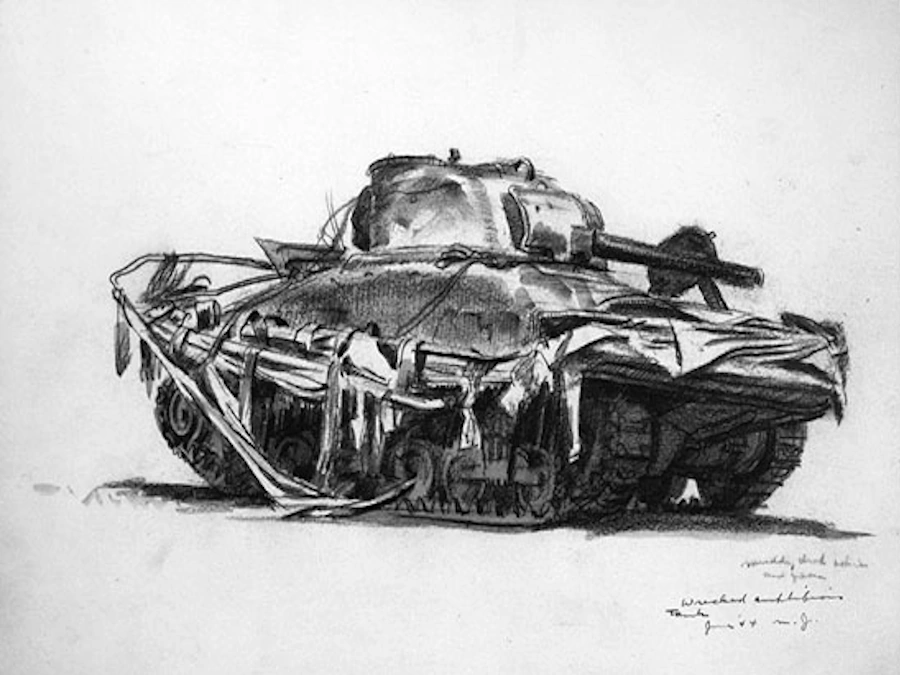
Wrecked Amphibious Tank, Mitchell Jamieson #V-30, Charcoal & wash, June, 1944, 88-193-RF
This was an American “Sherman” DD tank, fitted out for amphibious operations.
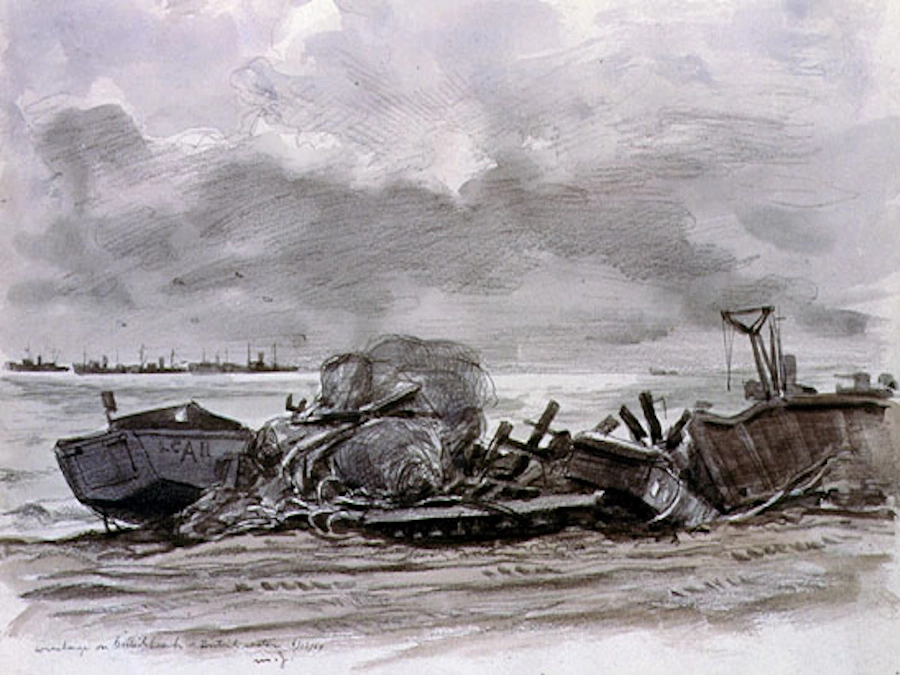
Wreckage on British Beach – British Sector, Mitchell Jamieson #V-40, Charcoal & wash, 16 June, 1944, 88-193-RR
Wrecked landing craft, hit by the fire of German guns as they came ashore, litter the British invasion beaches. Such wreckage was scattered the length and breadth of the American, British and Canadian beaches at Normandy, and is the signature of a beach over which an amphibious landing encountered fierce resistance.
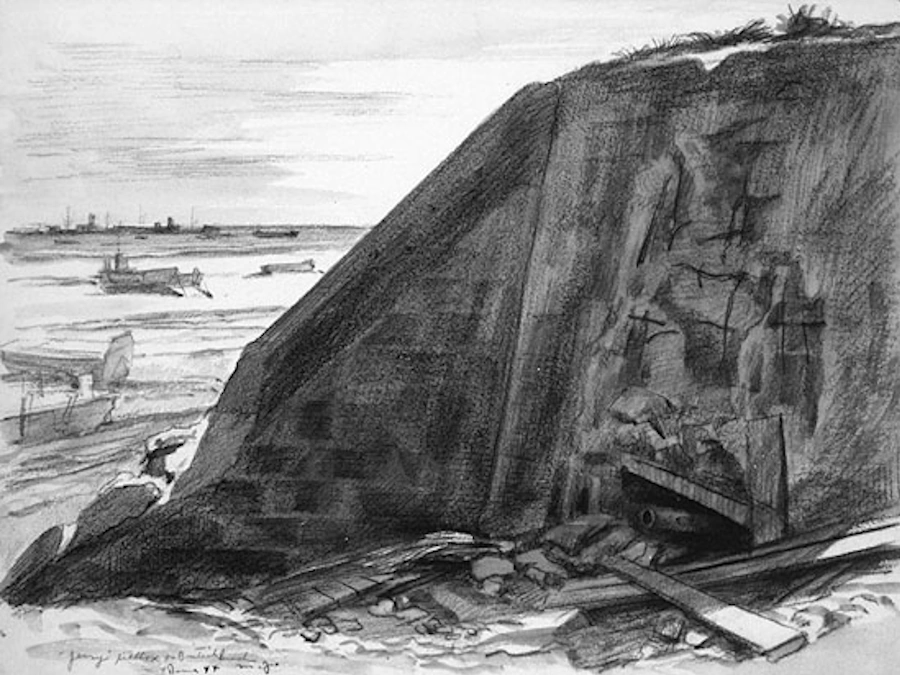
Jerry Pillbox on British Beach, Mitchell Jamieson #V-42, Charcoal & wash, 1944, 88-193-RT
Pillboxes were smaller machine-gun positions protected by hardened fortifications of steel-reinforced concrete. These pillboxes and larger artillery bunkers were positioned to command wide swaths of beach in zones of interlocking fire
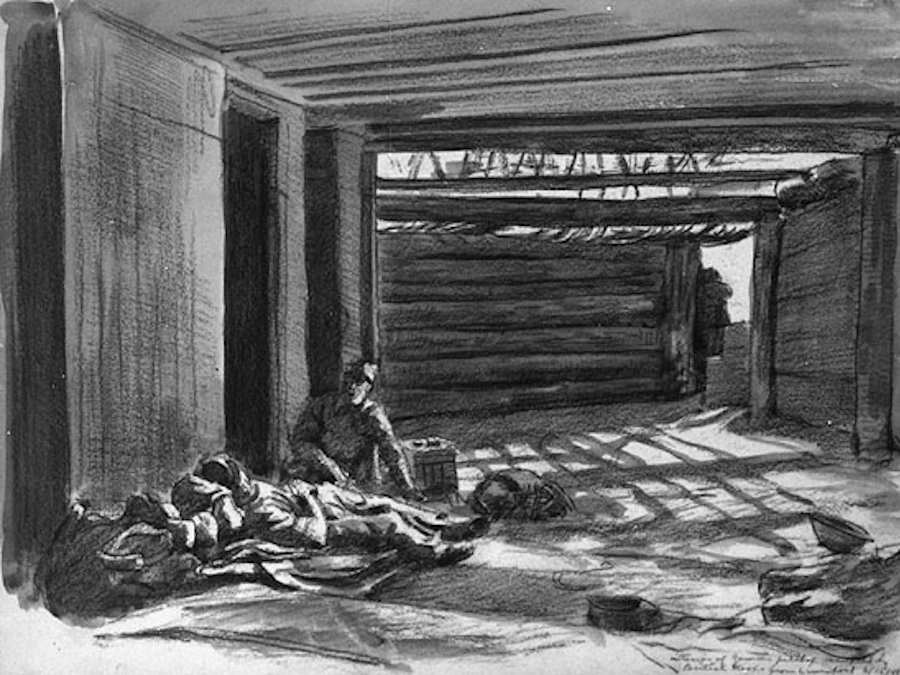
Interior of German Pillbox Occupied by British Troops from Liverpool, Mitchell Jamieson #V-41, Charcoal & wash, 15 June, 1944, 88-193-RS
Once conquered, German concrete bunkers and pillboxes were used to protect Allied troops from German artillery fire and air raids.