



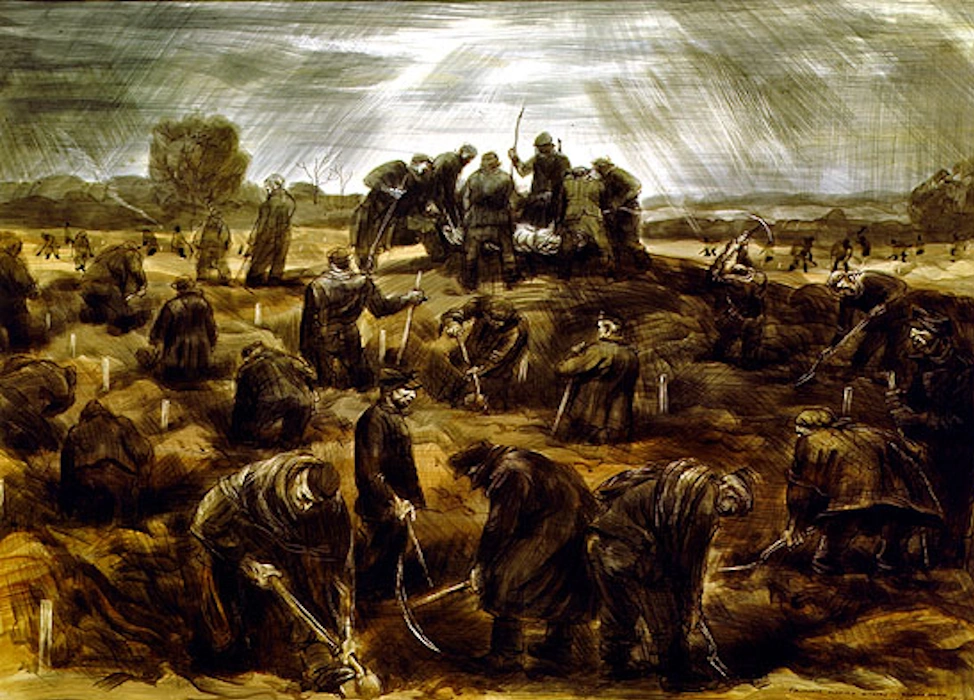
Prisoners Digging Graves Omaha Beach, Mitchell Jamieson #276, Scratch board, June 1944, 88-193-KQ
This scene was in the Omaha Beach sector at the burial ground on one of the hills overlooking the beach.

The Invasion of Normandy: The Prisoners
The advancing allied troops took numerous German prisoners of war during their advance from the beach into the hinterland. After being segregated into groups of officers and enlisted men and assembled on the beach, the captured Germans would be transported to prisoner of war camps in Britain. The war was over for them.
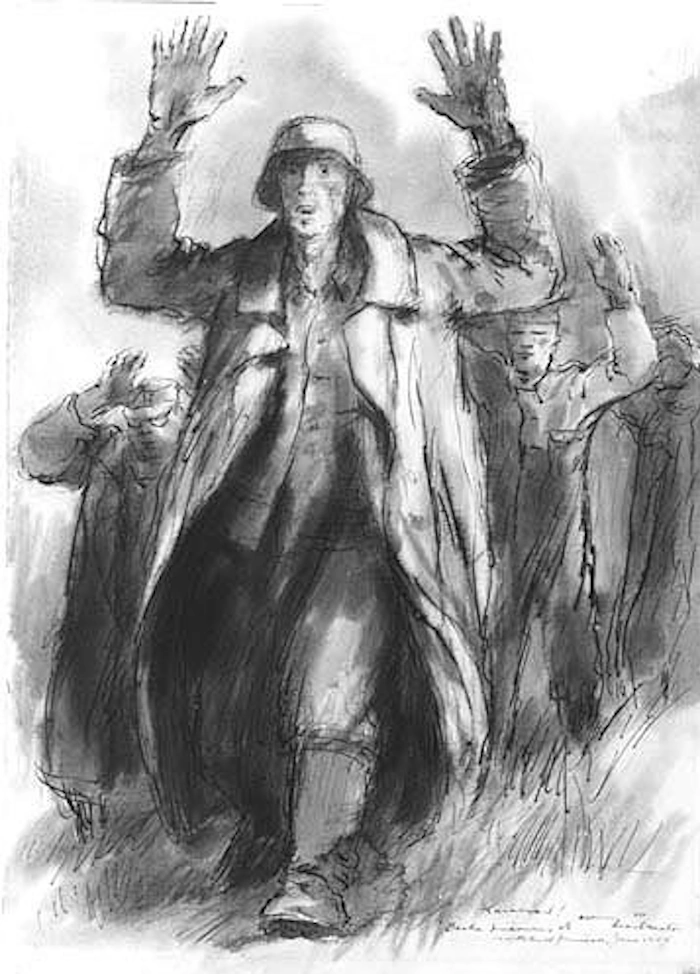
Kamerad, Mitchell Jamieson #236, Ink & wash, June 1944, 88-193-IO
German prisoners of war surrendering at the American beach sector; the cry of “Kamerad!” was the word they used to indicate that they were giving themselves up and not to shoot!
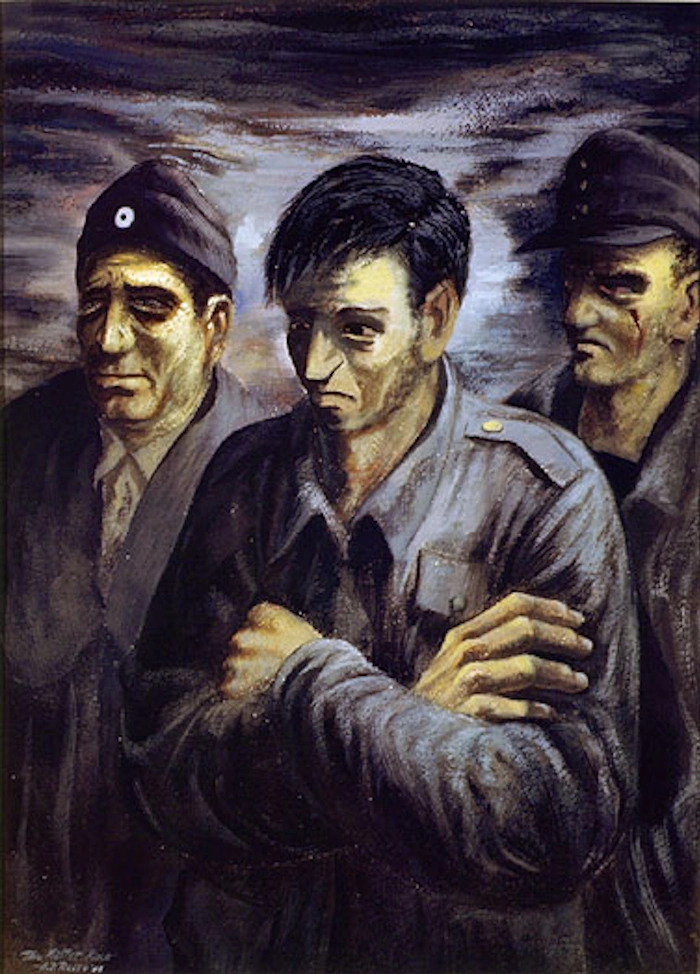
The Master Race, Alexander P. Russo #27, Gouache, 1944, 88-198-AA
German prisoners, three examples of the so-called Nazi master race. Hitler’s Nazi ideology asserted that the German (or “Aryan”) nation was genetically, morally, and culturally superior to all others, and was destined to dominate the world. During the war, Allied troops proved this propaganda to be a lie and derisively referred to the “master race,” especially when it was brought low, as the German prisoners depicted here. Although of different physical types, their facial expressions said one thing: disillusionment
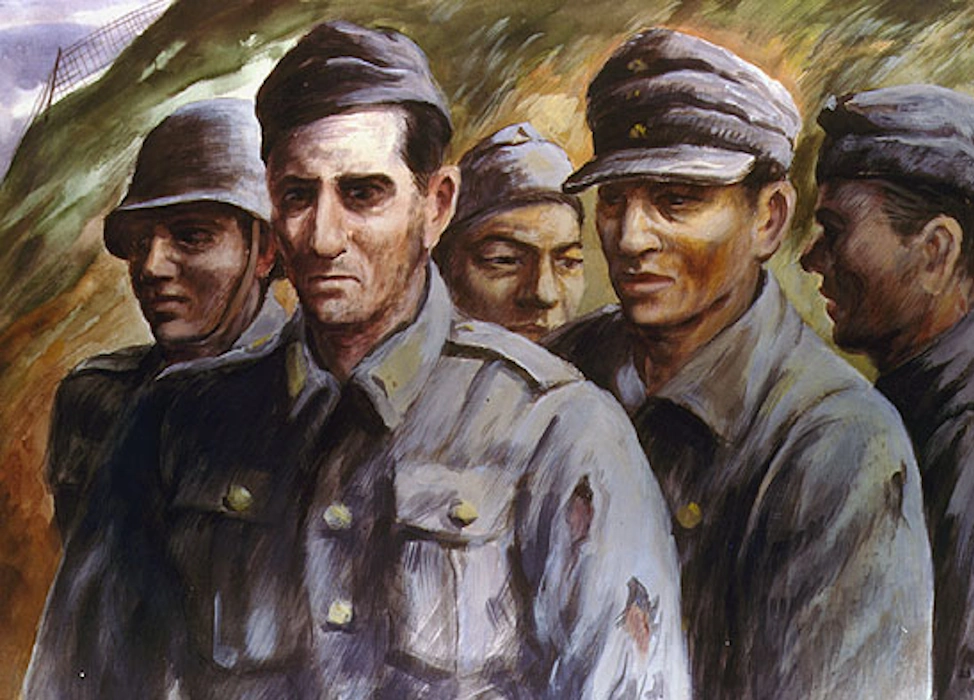
German Prisoners Taken on D-Day, Alexander P. Russo #28, Gouache, 1944, 88-198-AB
These prisoners comprised a strange group when considered in reference to the Nazi “super race” and their ideology of racial purity and superiority. Among those taken were Czechs, Poles, Yugoslavs and even a group of Mongolians. The most dangerous was the group of German boys of sixteen or seventeen. They had grown up under Hitler’s regime, been thoroughly indoctrinated in his ideology, and couldn’t quite understand what had happened to them. They lived in dreams of their armies recapturing the beachhead and driving the Allies into the sea.
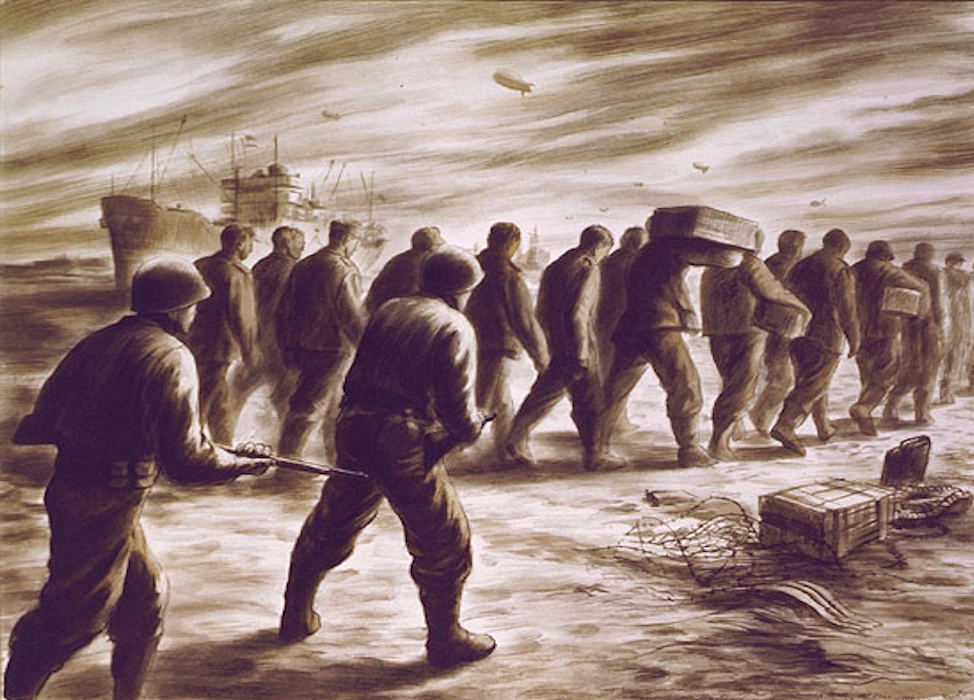
Prisoners Embarking for England, Alexander P. Russo #30, Ink and wash, 1944, 88-198-AD
American soldiers marched German prisoners to the transports waiting to take them to prisoner of war camps in England.
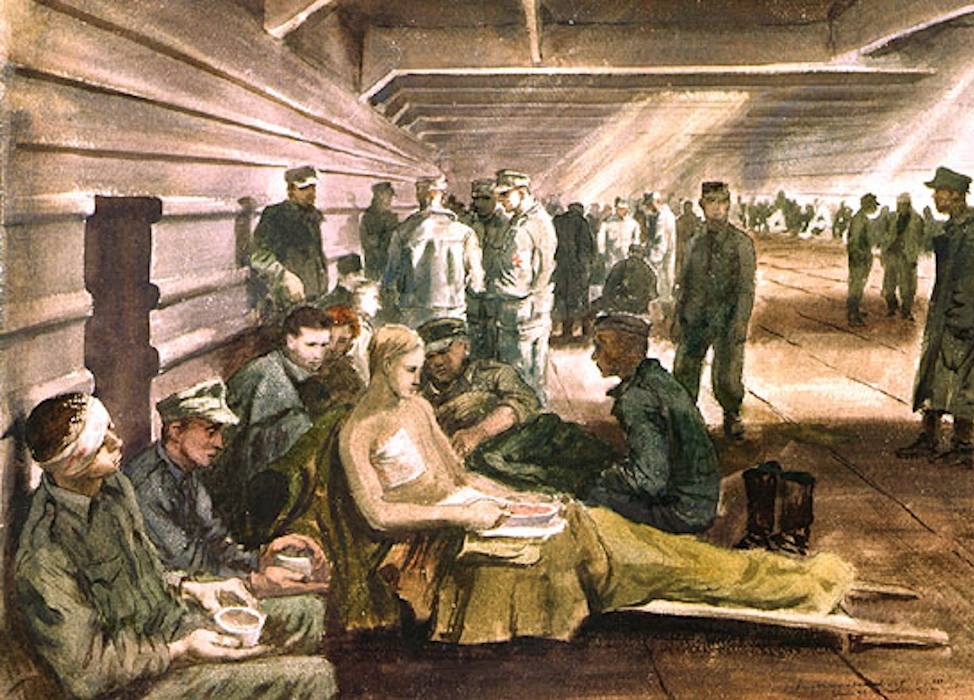
Prisoners Aboard LST, Mitchell Jamieson #229, Watercolor, circa 1944, 88-193-IF
German prisoners, some of them wounded, were brought back to Navy ships headed for Britain and prisoner of war camps. Many of these were Poles and conscripts from the Balkans and Russia, forced into the polyglot Nazi army. For the most part there was among them a noticeable absence of that sullen defiant attitude of the deep-dyed Nazi in these first prisoners, and many of them frankly seemed glad to be out of it. The captured officers, true to from, were quartered separate quarters with bunks. There were also on board several civilian prisoners, among whom were two women. The artist sketched while accompanying a British intelligence officer who questioned prisoners.
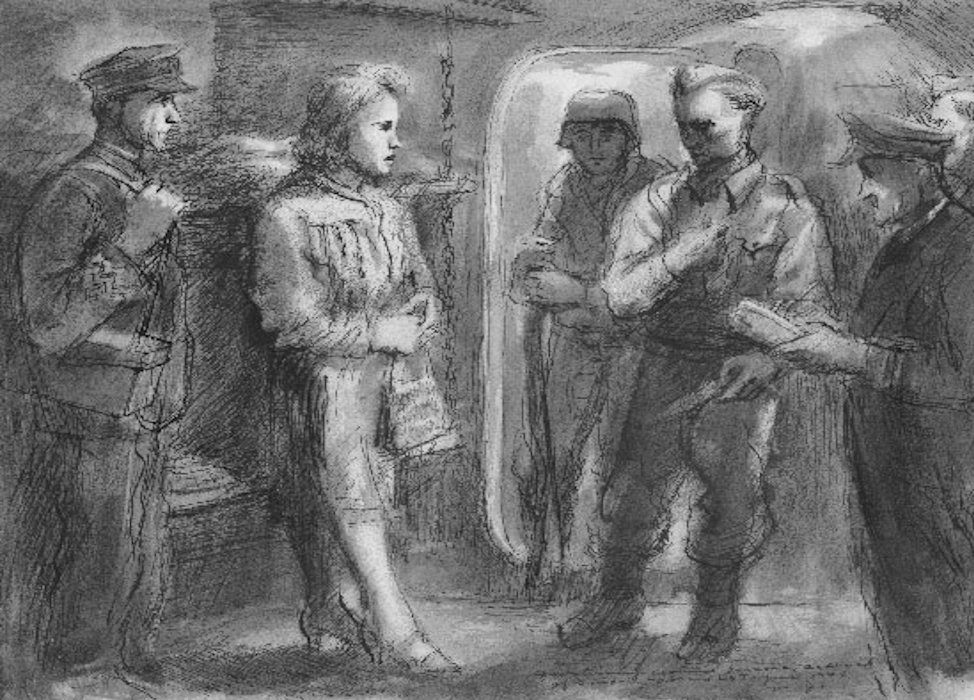
Polish Girl Accused of Sniping, Mitchell Jamieson #S, Pen & wash, June, 1944, 88-193-PZ
The younger of the two female prisoners was a 29 year-old Pole, blond and blue-eyed with broad cheekbones. Her name was Erna and she was accused of luring British soldiers on, like Circe, then shooting them in cold blood. Her story was that she had lived in France for many years, then married a German soldier who had been killed in Russia. After this she had come to Normandy as a cook for a German garrison along the coast. The other woman was a Turkish Jew who talked excitedly in French, telling the story of her flight to France from the Nazis and how terrible France had been under Nazi occupation. She was middle-aged and frightened, and appeared sincere and innocent.
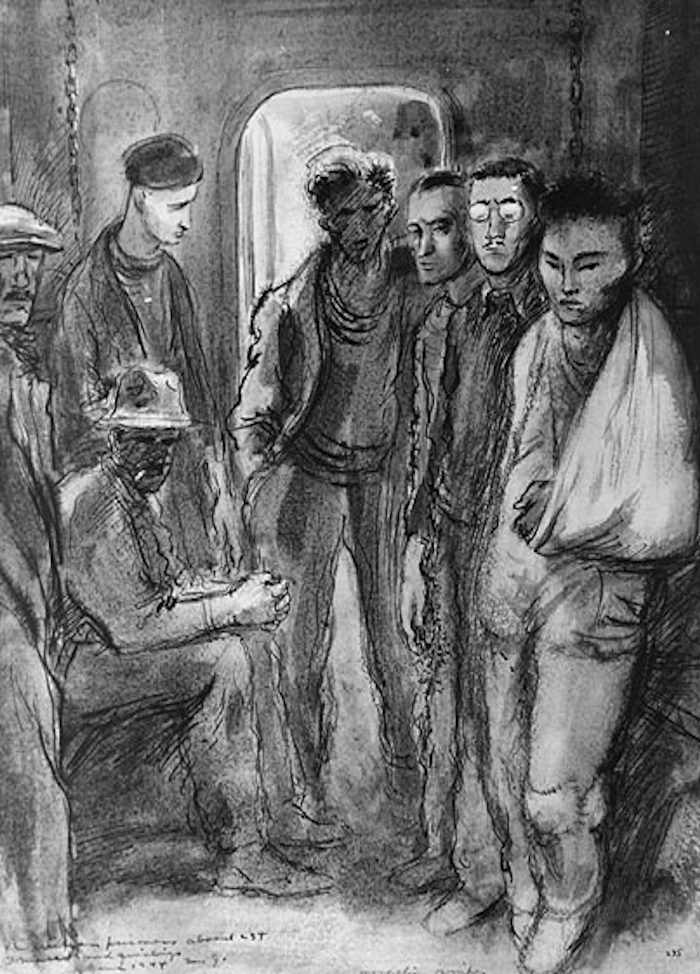
Snipers and Quislings, Mitchell Jamieson #235, Ink & wash, June 1944, 88-193-IN
On board this LST were several civilians prisoners. One was a Mongolian with his arm in a sling. The others were strange assortment of individuals, some ready to protest their innocence at once, others silent and unfathomable. Some proved to be “Quislings” – traitors who had sympathized with the Nazis and aided in the occupation of their homelands. They were called “Quislings,” after a Norwegian traitor of that name.
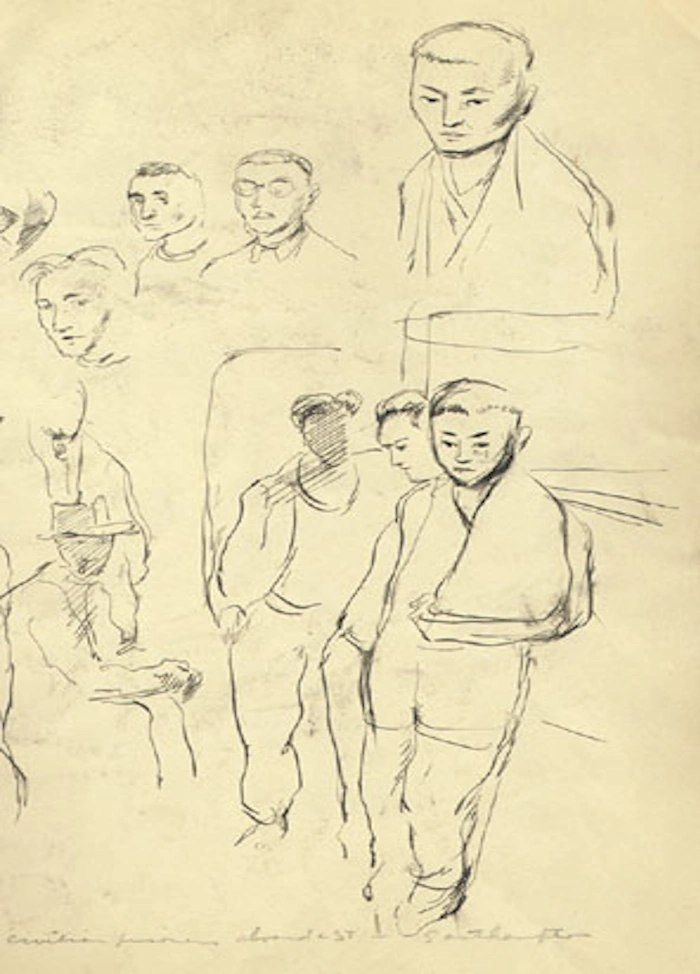
Civilian Prisoners Aboard LST – South Hampton, Mitchell Jamieson #V-38b, Pen & ink, June, 1944, 88-193-RP
Study for Snipers and Quislings
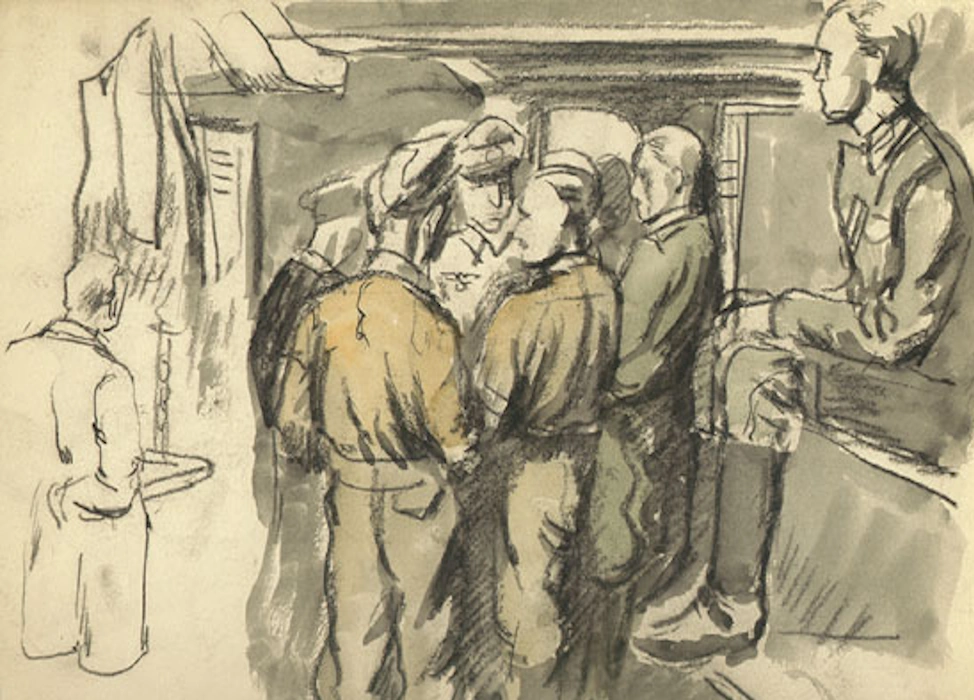
British Intelligence Officers Interviewing Captive German Officers Aboard LST, Mitchell Jamieson #V-38a, Charcoal & wash, 12 June, 1944, 88-193-RO
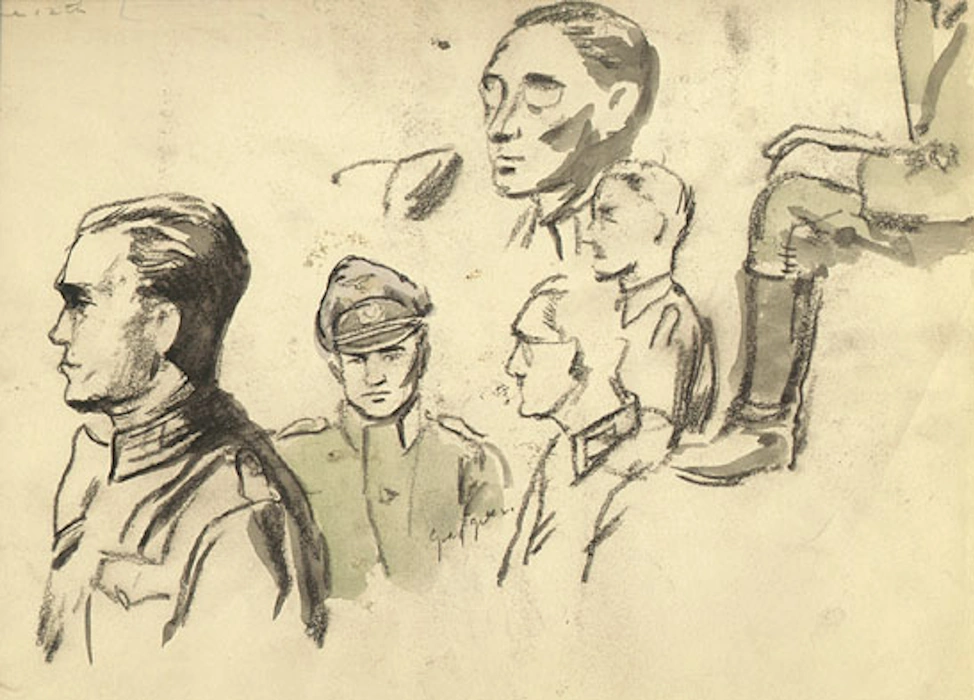
German Officers Prisoners Aboard LST, Mitchell Jamieson #V-26, Charcoal & wash, 12 June 1944, 88-193-RB
A study of various German officers.
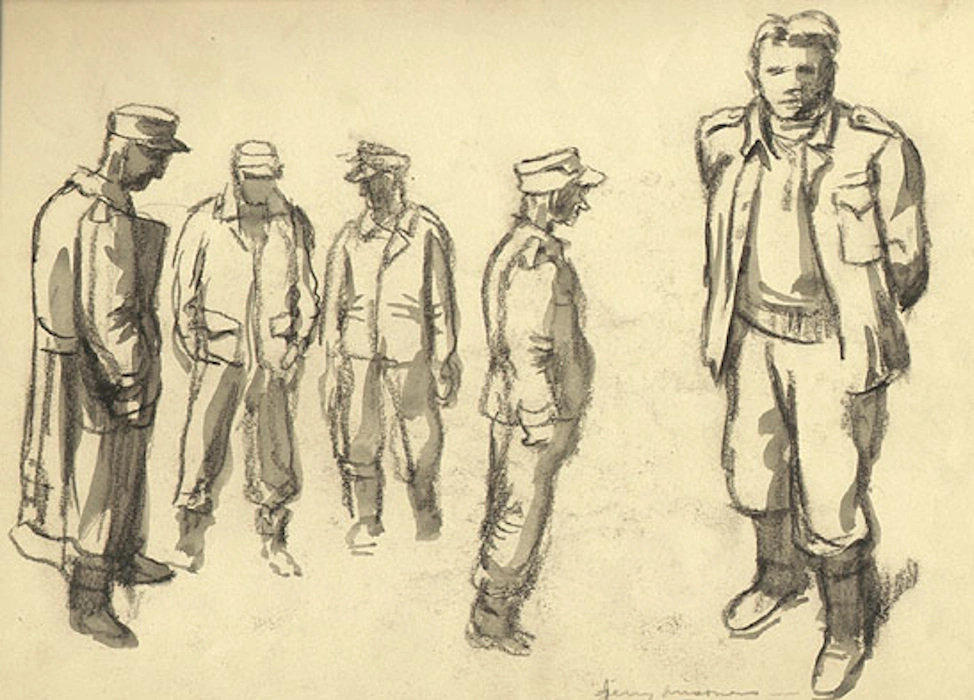
Jerry Prisoners, Mitchell Jamieson #V-31a, Charcoal & wash, June 1944, 88-193-RG
“Jerry” was a moniker used by Allied soldiers in reference to the Germans.