

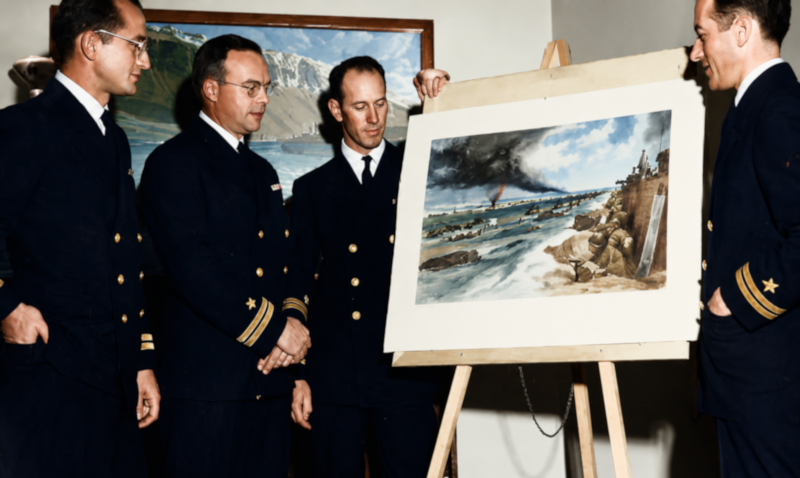
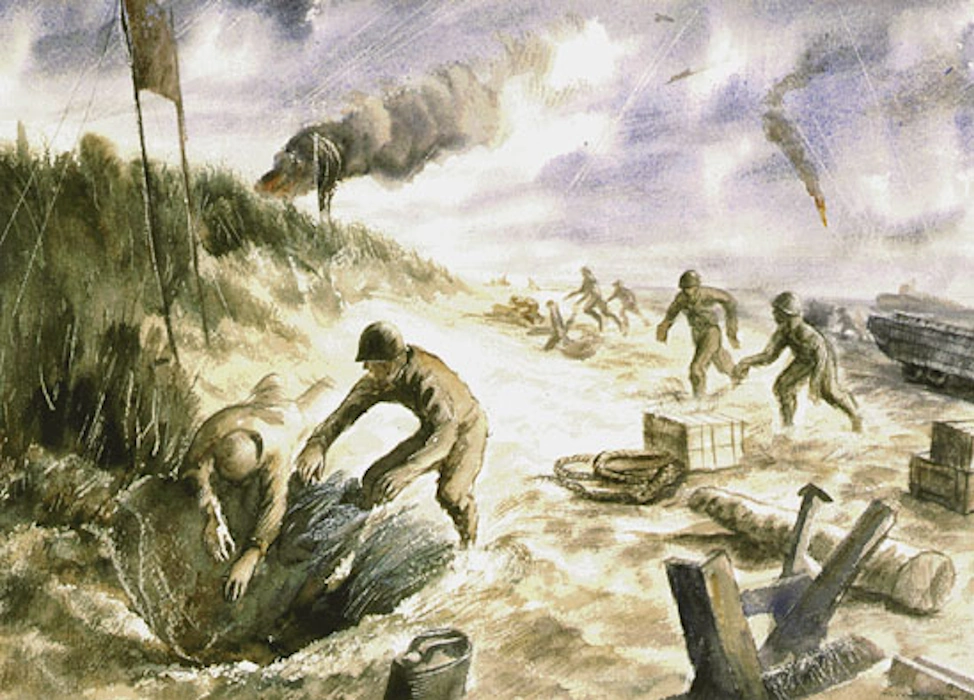
Diving For Cover, Alexander P. Russo #17, Watercolor, 1944, 88-198-Q
Men dove for foxholes or bomb craters as enemy planes strafed the Allied beachhead on D-Day + 2 (June 8, 1944).

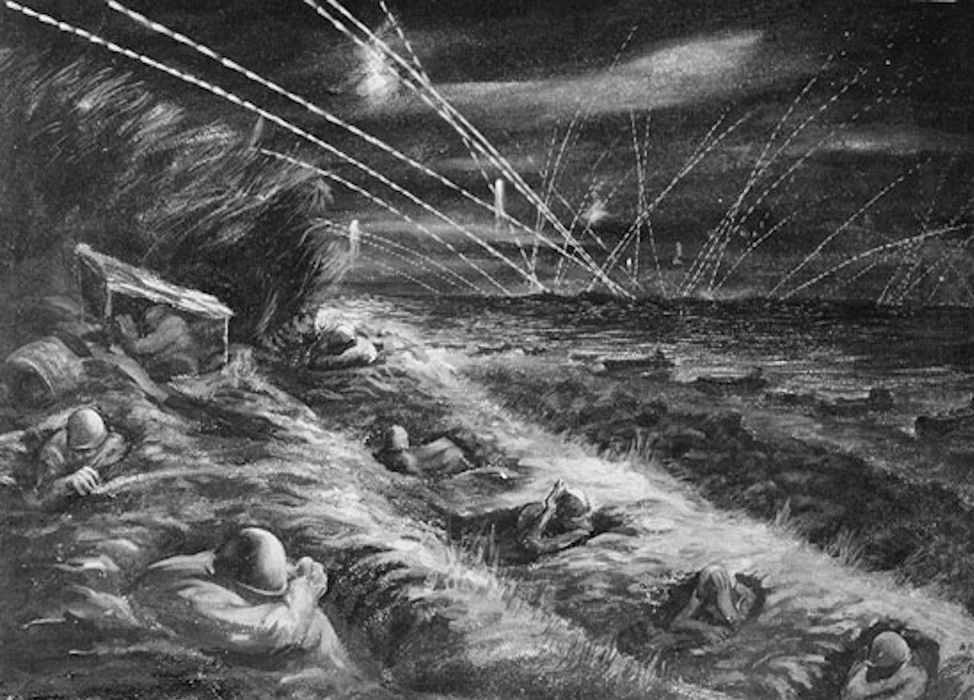
Foxhole on a Normandy Beach, Alexander P. Russo #19, Gouache, 1944, 88-198-S
Beach battalion men and shore troops sought refuge in foxholes along the beach. Every night since D-Day, raids by enemy planes on the allied beachhead became an accepted discomfort. The men crouched, laid or sat in foxholes all night and caught whatever few precious hours of sleep they could before dawn. Some Allied casualties in this area were inflicted by friendly low anti-aircraft fire.
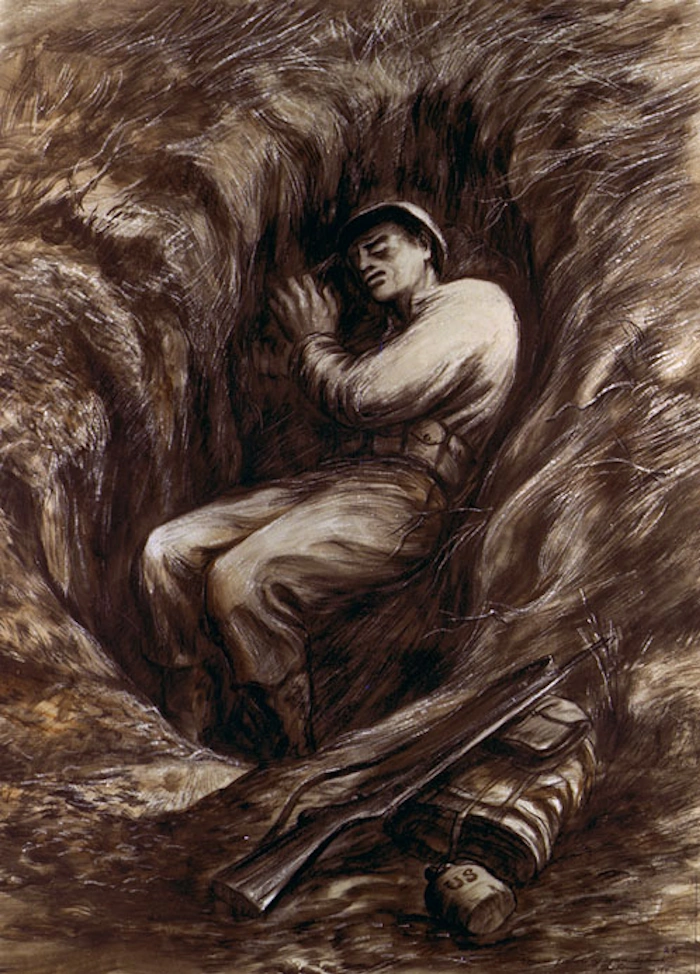
An American Soldier Sleeps, Alexander P. Russo #22, Ink with wash, 1944, 88-198-V
The first rise in terrain off Omaha Beach was studded with foxholes, shell-holes and bomb craters left behind by troops that participated in the initial landings on D-Day. This soldier was typical of thousands who found what comfort and shelter they could after their landing on a hostile beach. Dreams of home, fatigue, and the realization of where he was and what he had been through marked his tired, sleeping face.
The Invasion of Normandy: The Wounded
The German defenses on the Normandy beaches were formidable and well designed, while the troops manning them were efficient and well-disciplined veterans. They imposed a terrible toll on the Allies. Every battle has its wounded and dead – Normandy was no different.
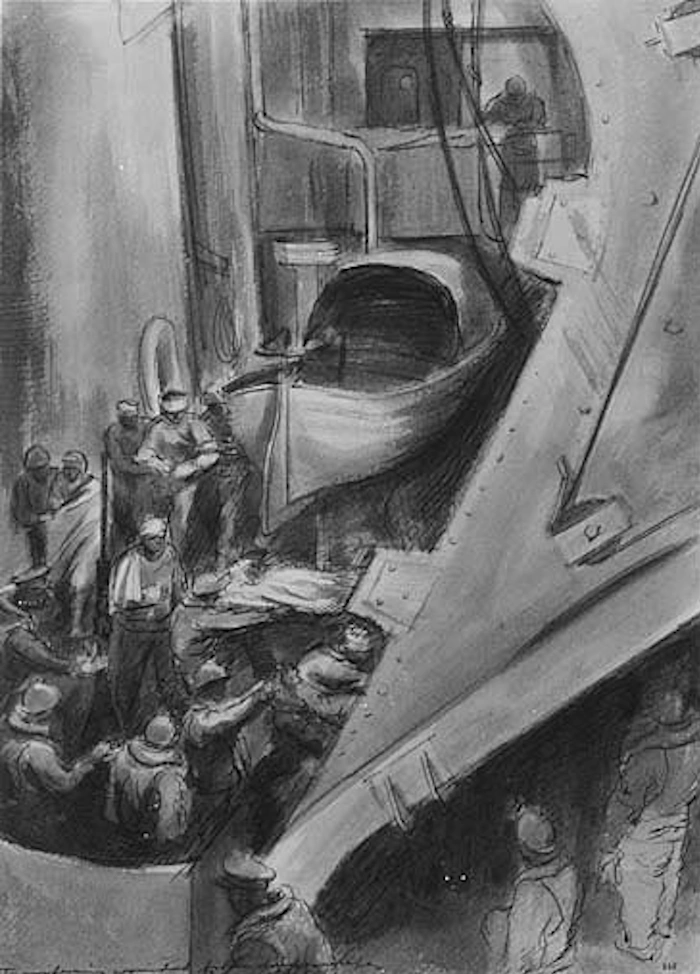
Transferring Wounded From Minesweeper to LST, Mitchell Jamieson #225, Ink & wash, June 1944, 88-193-IA
Early D-Day morning, survivors and casualties were brought on board from an Allied minesweeper which had hit a mine and sunk the preceding evening. They were picked up by another minesweeper and given emergency first aid, but their medical supplies were nearly exhausted. Allied LSTs had been fitted out as temporary hospital ships with two Navy doctors and an Army doctor, as well as several pharmacist mates. Operating rooms had been rigged up in the rear of the tank deck and screened off. These improvised and rough facilities did much to save lives before moving the victims further to the rear and more sophisticated medical treatment.
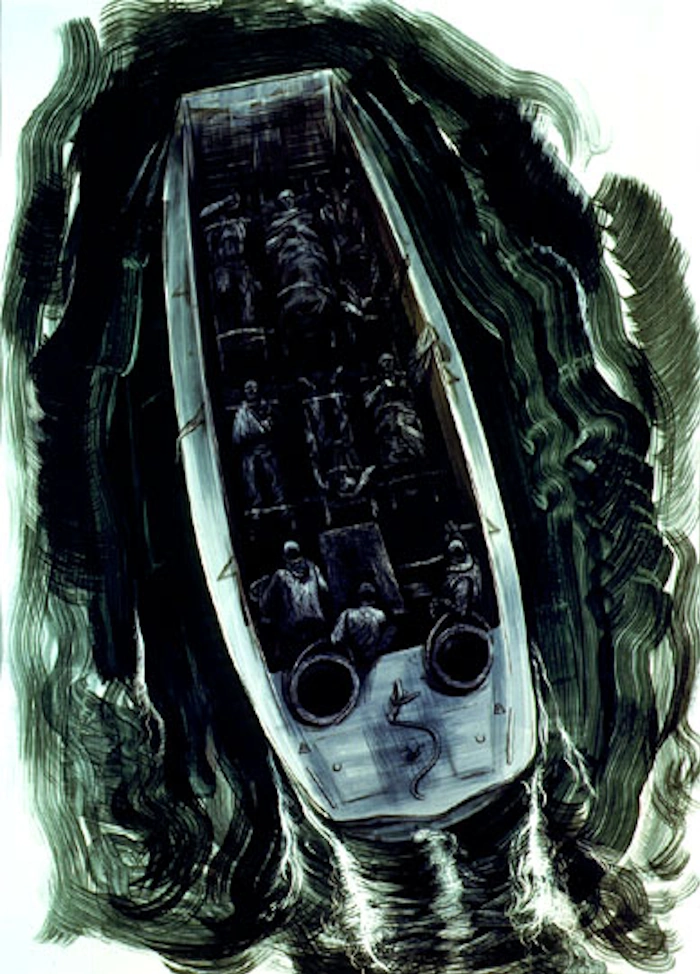
Voyage Through Pain, Mitchell Jamieson #269, Ink, 1944, 88-193-KG
An assault craft returned to an LST from the Utah beachhead in Normandy loaded with the first wounded of the landing.
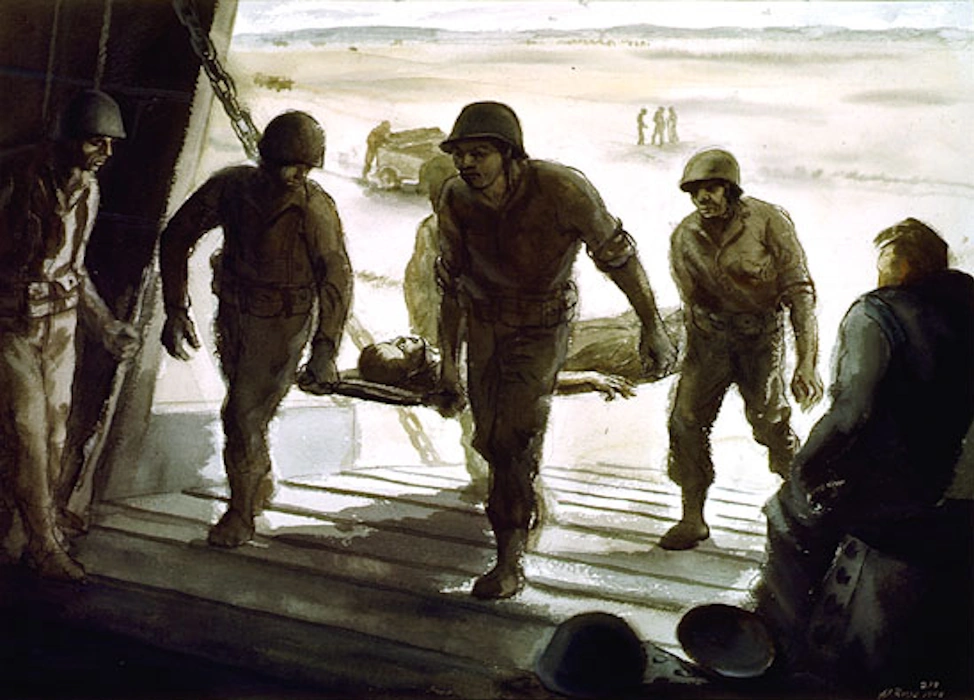
Taking the Wounded Aboard, Alexander P. Russo #21, Watercolor, 1944, 88-198-U
After the fighting moved inland, beach obstacles were cleared away and the danger from German artillery subsided. LSTs were able to safely move in to load Allied wounded from the continuing D-Day attack for transportation to England.
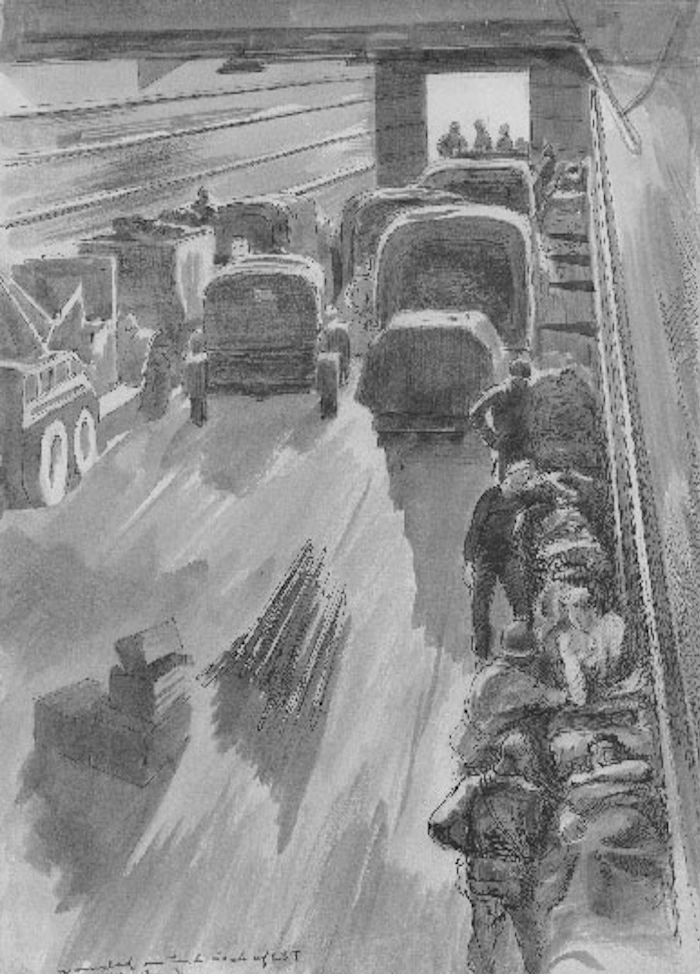
Wounded on Tank Deck of LST, Mitchell Jamieson #R, Pen & wash, June, 1944, 88-193-PY
Wounded Allied troops were placed where they would be out of the elements, and on an LST that meant the covered tank deck. Later the wounded were transferred to hospital ships and vessels with better facilities for transport back to England.
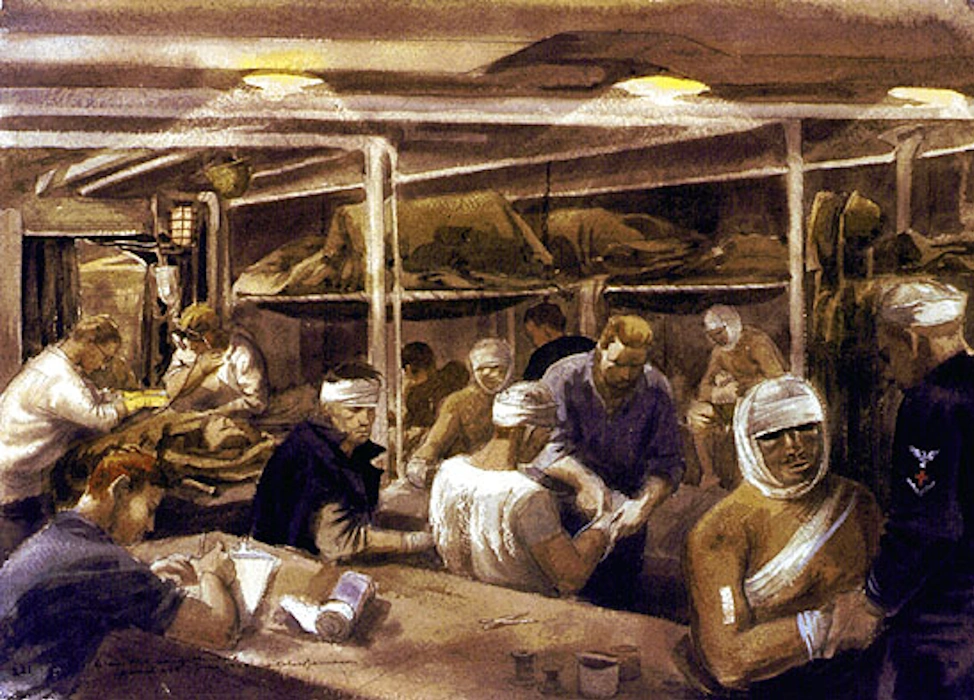
Wounded Being Treated Aboard LST, Mitchell Jamieson #221, Watercolor, June 1944, 88-193-HW
This was the scene in part of the crew’s quarters used for treating the wounded, mostly burn cases. To the left, one of the men was given plasma to compensate for loss of blood. Others were bandaged. A seaman seated at the table kept a record of treatment and the condition of patients. In the first days of the invasion, after unloading their cargo of men and vehicles LSTs brought back wounded and prisoners in constant streams. Then, after discharging them in England, the loading would start again. Soon they would be underway again, perhaps bound for a different beach this time.
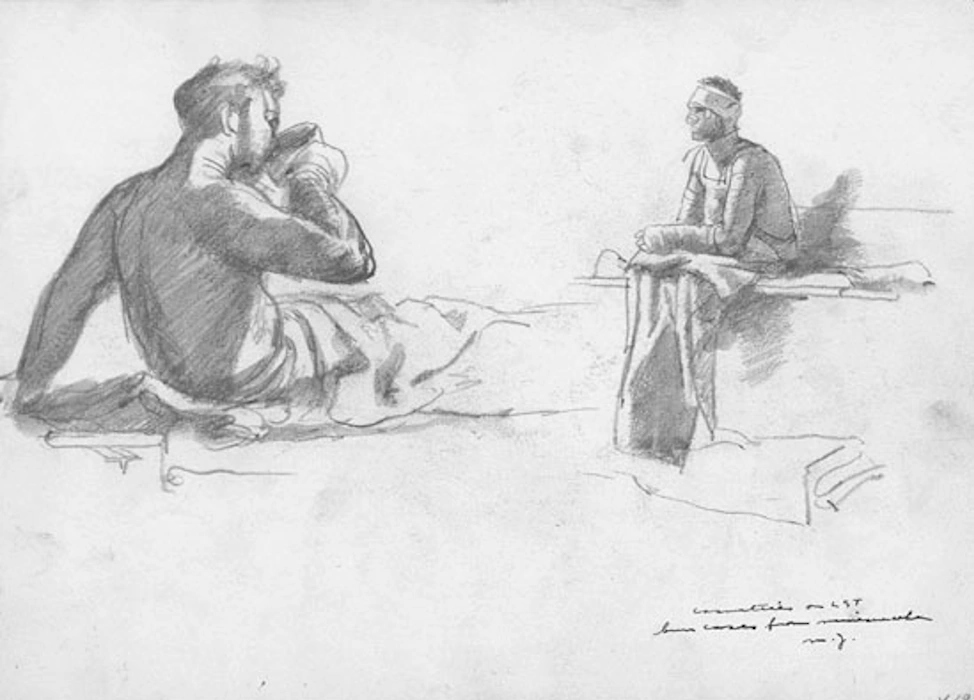
Sick Bay, Mitchell Jamieson #V-69, Charcoal & wash, circa, 1944, 88-193-SV
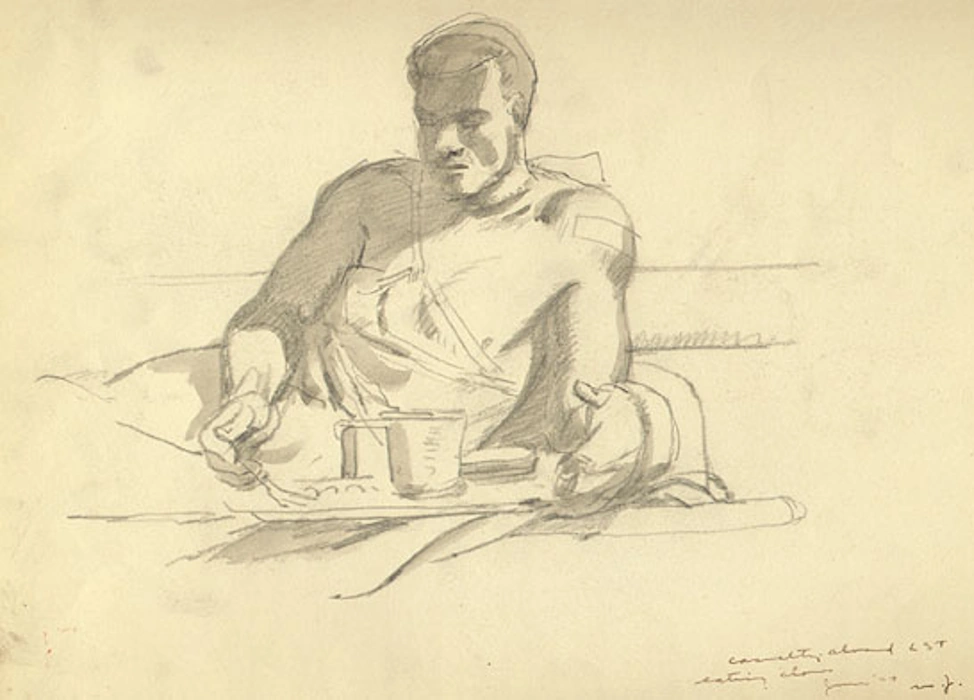
Casualty Aboard LST Eating Chow, Mitchell Jamieson #V-32, Charcoal & wash, June, 1944, 88-193-RI
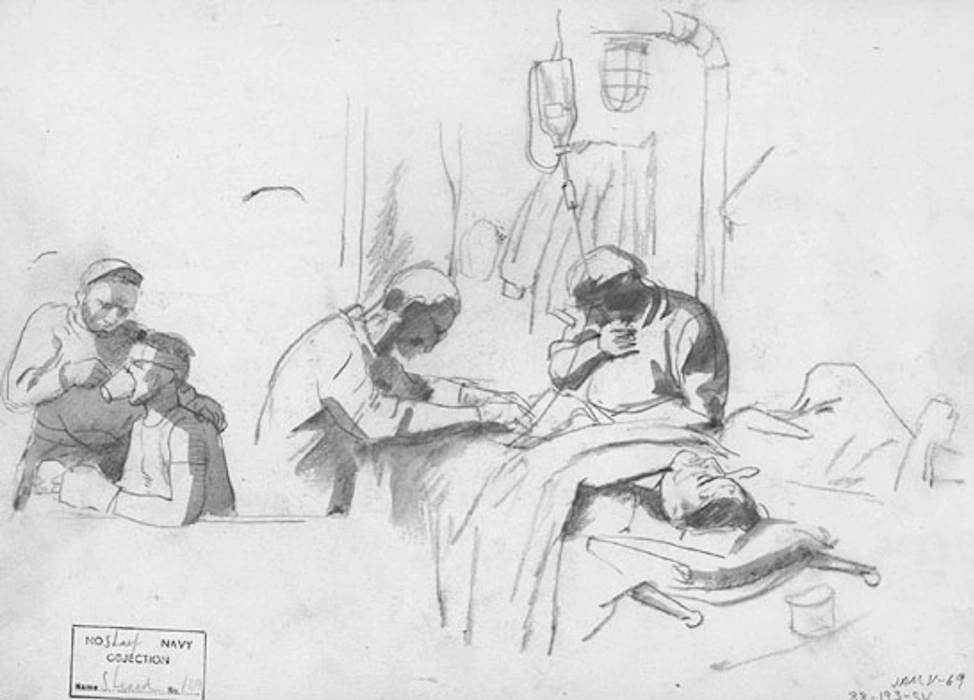
Causalities on LST, Mitchell Jamieson #V-69 (reverse side), Charcoal & wash, circa, 1944, 88-193-SV
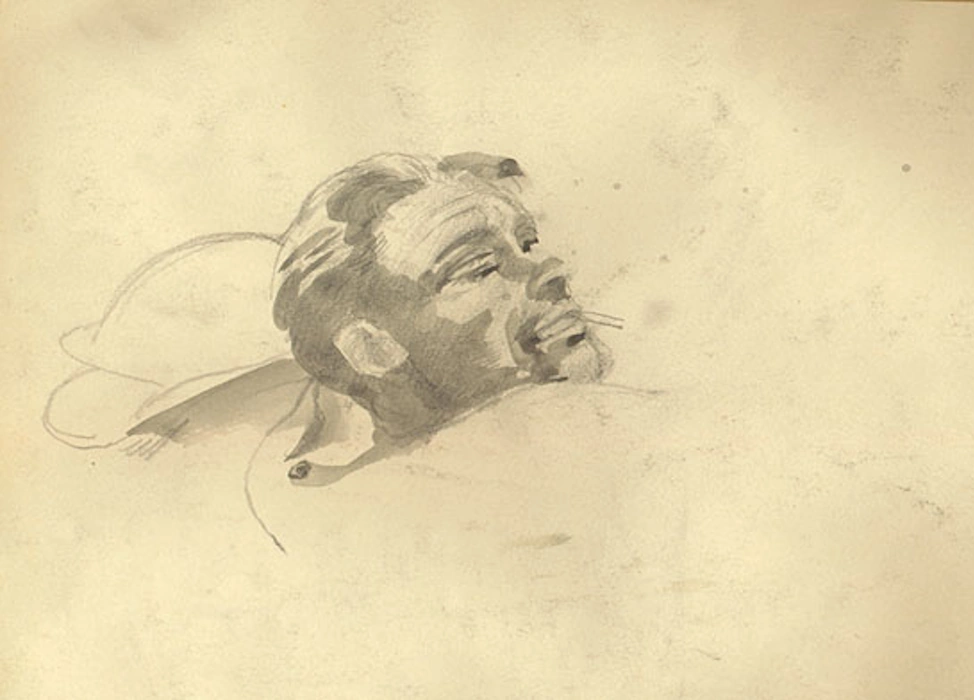
Man Smoking, Mitchell Jamieson #220 (reverse side), Pencil, circa 1944, 88-193-HUb
In 1944, cigarette smoking was considered to have a calming effect and cigarettes were available throughout the military supply system.