


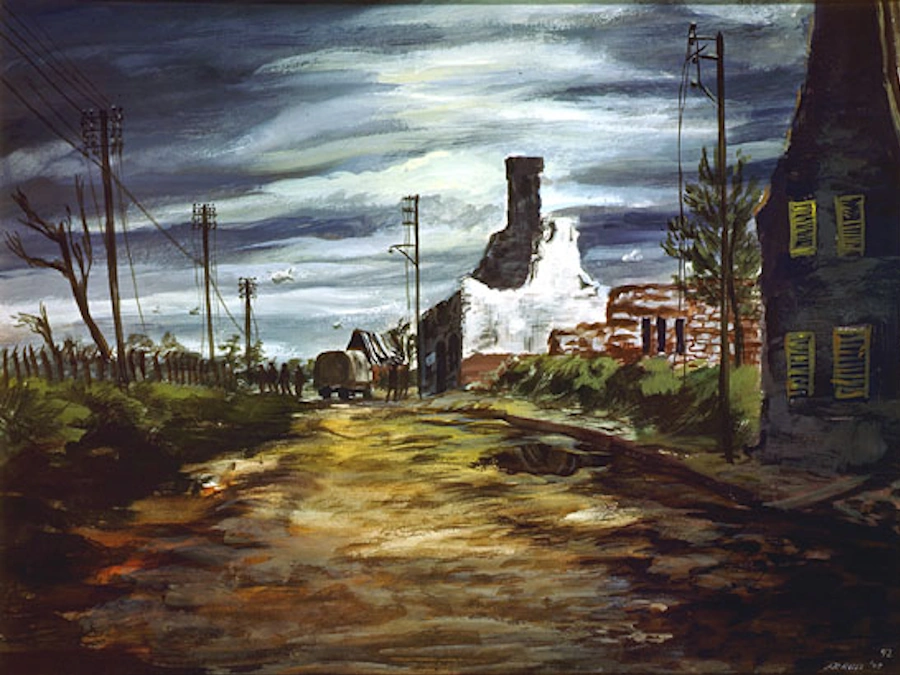
Street in Vierville-Sur-Mer, Normandy June 10, 1944, Alexander P. Russo #42, Gouache, 1944, 88-198-AP
This is the kind of destruction wreaked by both sides on hapless civilians and their communities that were caught in the tide of invasion.

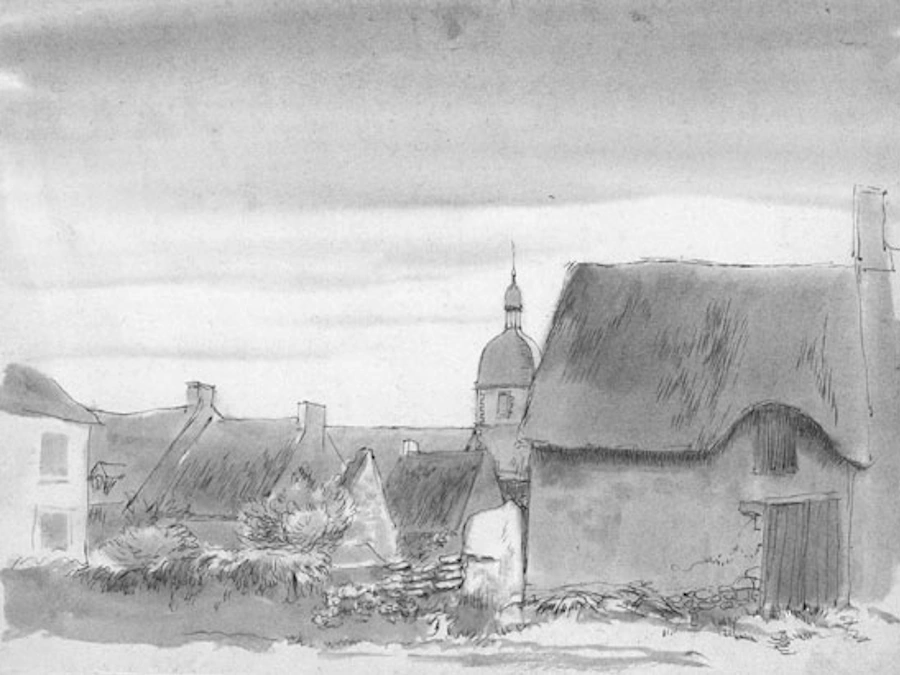
Unidentified, Mitchell Jamieson #V-64, Pen & wash, circa 1944, 88-193-SQ
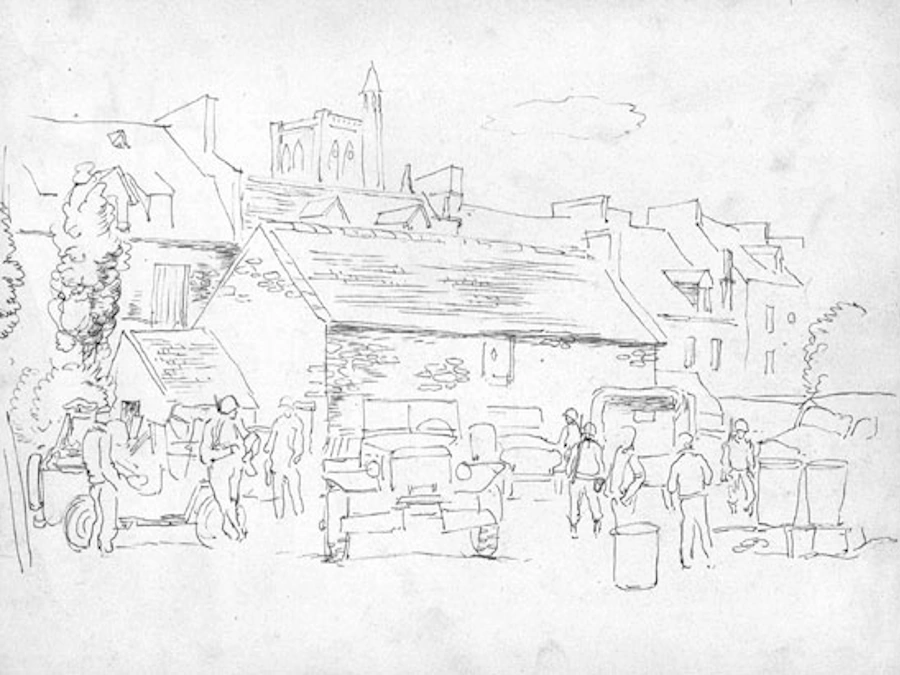
Occupation Scene, Mitchell Jamieson #V-50, Pen, circa 1944, 88-193-SB
As Allied troops advanced inland, they liberated French villages and towns.
The Invasion of Normandy: Beach Activity
As the fighting moved inland from the invasion beaches, they became hives of activity. Reinforcements arrived across the English Channel from Britain and thousands of tons of supplies came over on transport ships to increase the Allies’ might. All was not quiet for the troops on the beaches or the ships awaiting their turns to unload – German warplanes swooped in to bomb and strafe, while German artillery (until it was driven out of range) continued to shell the beaches, making them places of continued danger.
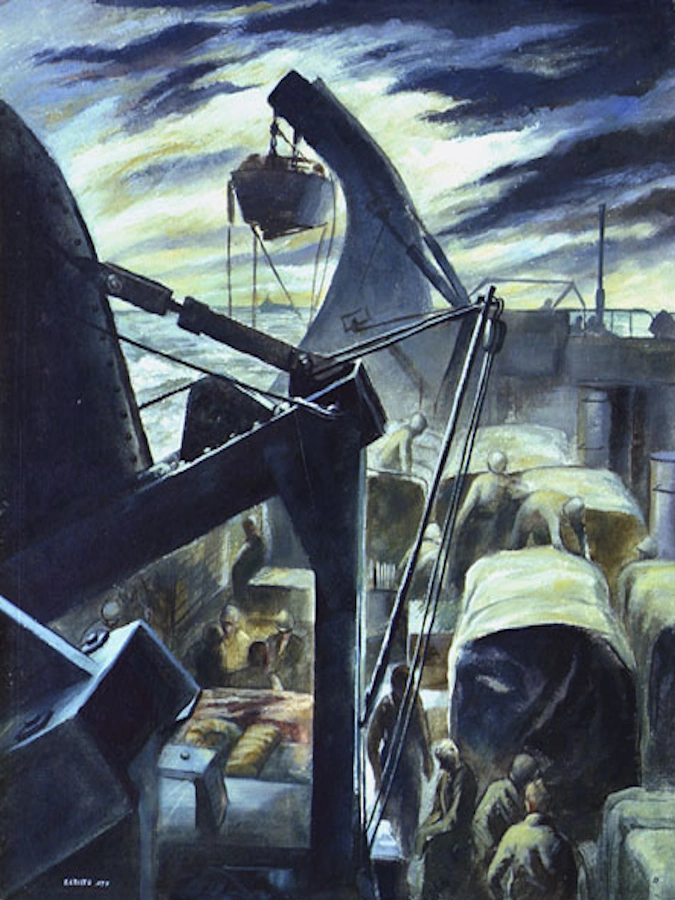
Destination Omaha Beach, Alexander P. Russo #11, Gouache, 1944, 88-198-K
This is the port side of LST 317, which carried troops, equipment and trucks loaded with land mines enroute to Omaha Beach on D-Day +1 (June 7, 1944).
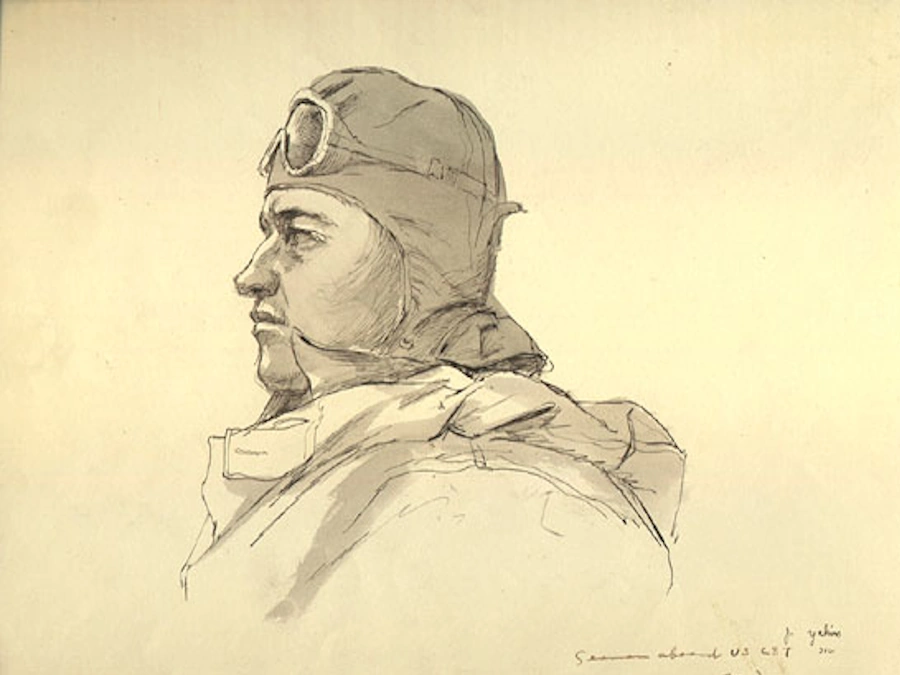
J. Yakins, Seaman Aboard U.S. LST, Mitchell Jamieson #V-46, Pen & wash, circa 1944, 88-193-RX
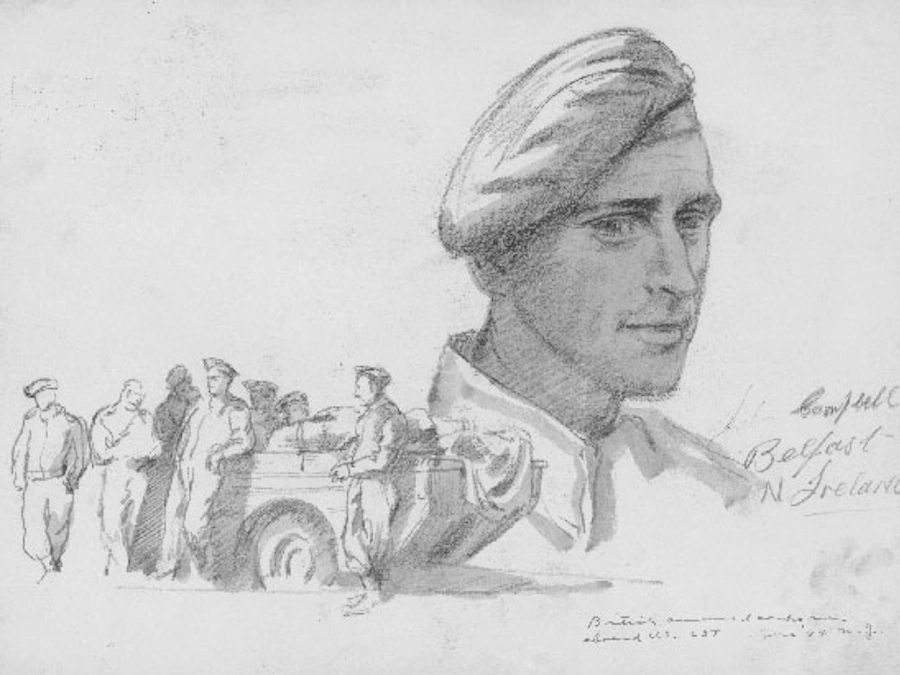
John Campbell, British Armored Corpsmen Abroad U.S. LST, Mitchell Jamieson #V-45, Charcoal & wash, June, 1944, 88-193-RW
This British tanker came from Belfast – Northern Ireland.
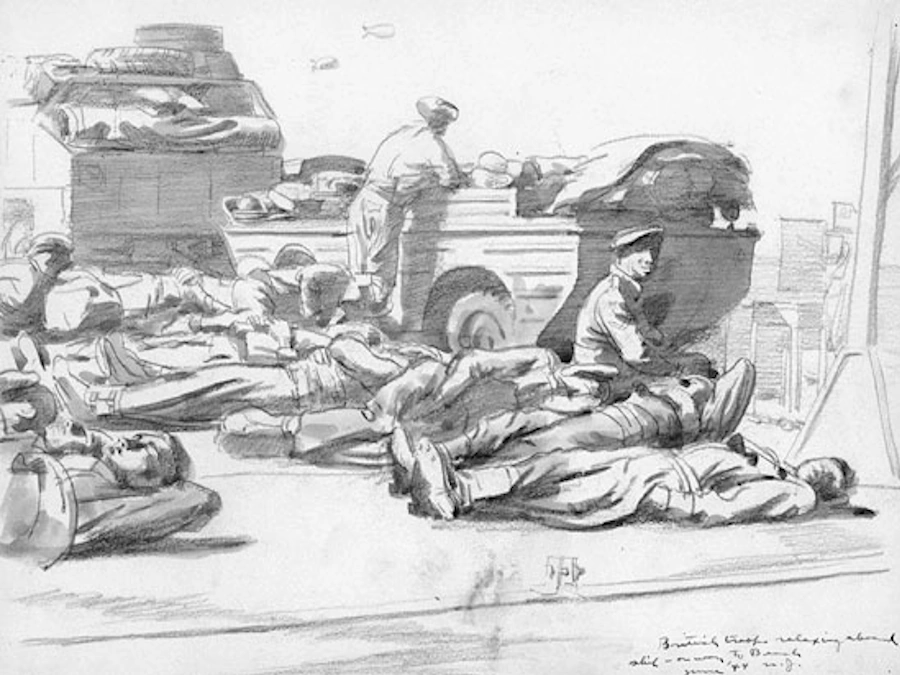
British Troops Relaxing Aboard Ship on Way to Beach, Mitchell Jamieson #V-29, Charcoal & wash, June 1944, 88-193-RE
One rested where and whenever one could, because once one entered the crucible of combat, it would be a long time between periods of meaningful sleep.
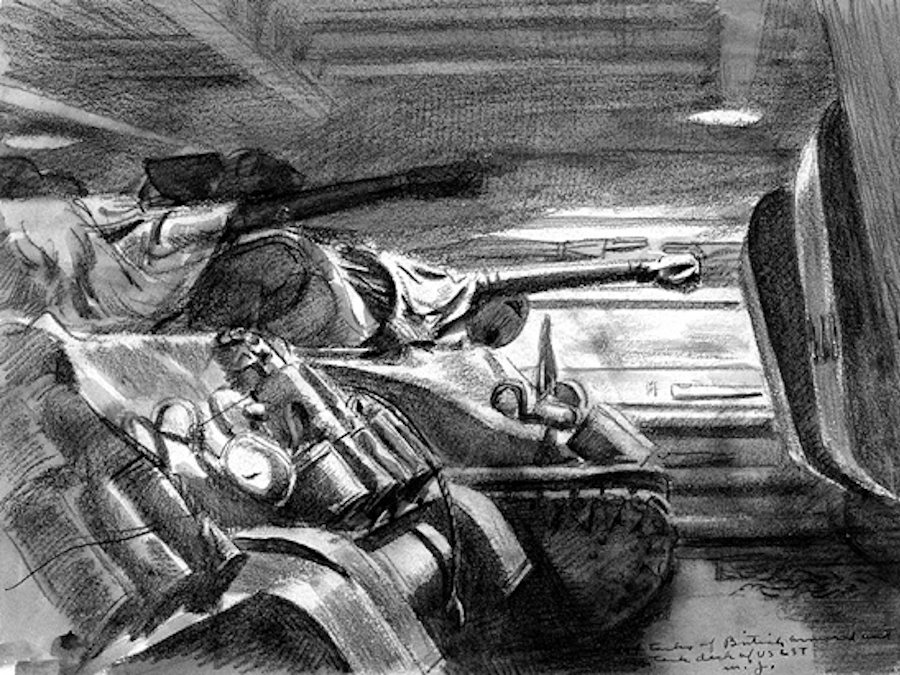
M-4 Tanks of British Armored Unit on Tank Deck of U.S. LST, Mitchell Jamieson #V-27, Charcoal & wash, circa 1944, 88-193-RC
US Navy ships weren’t restricted to transporting US troops and materiel, but also served the British and Canadian forces.
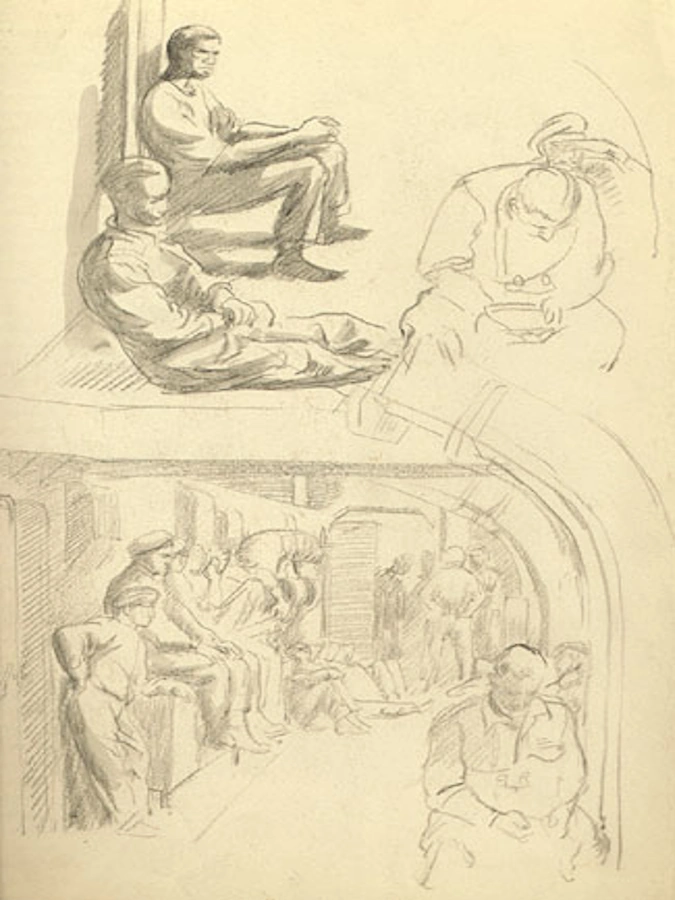
Unidentified, Mitchell Jamieson #V-24, Charcoal, 1944, 88-193-QZ – British troops on an LST.
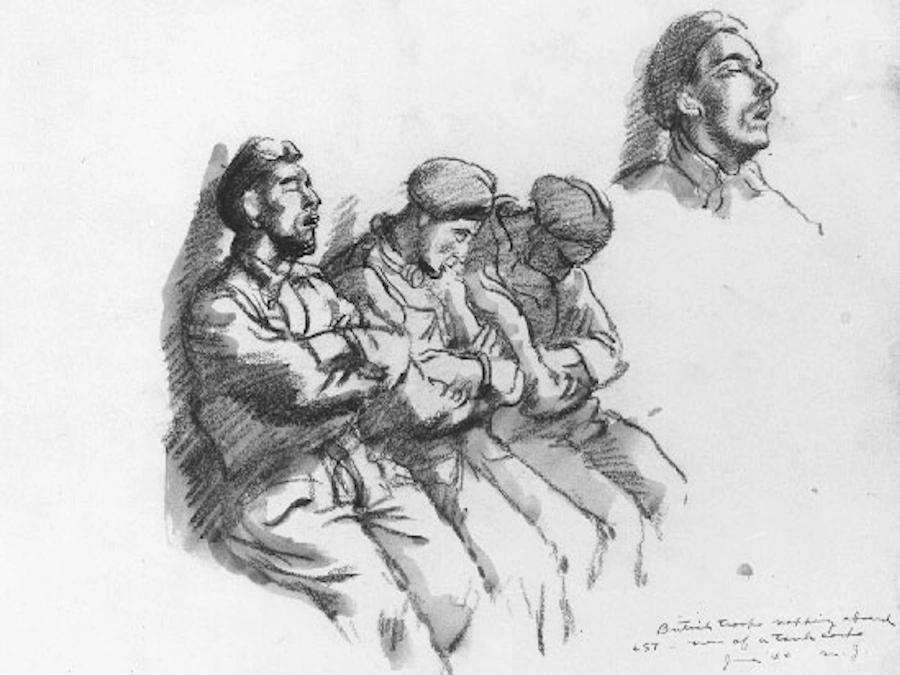
British Troops Napping Aboard LST – Men of a Tank Corps, Mitchell Jamieson #V-34, Charcoal & wash, June 1944, 88-193-RK
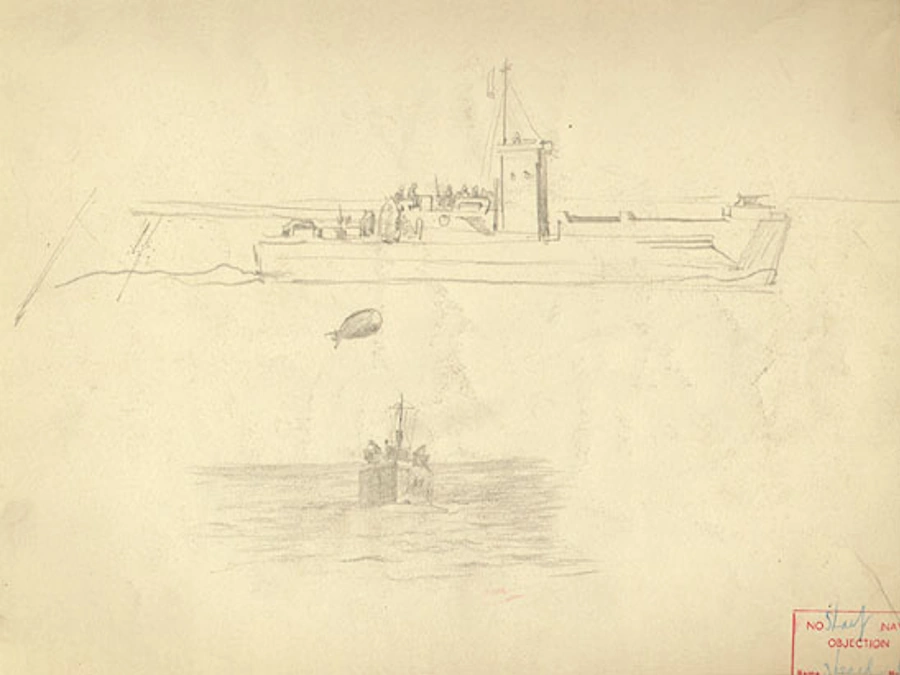
Blimp Over Ship Bow (sketch) & Starboard Ship (sketch), Mitchell Jamieson #V32 (reverse side), Pencil, June 1944, 88-193-RI(b)
Studies of unidentified Allied naval vessels.
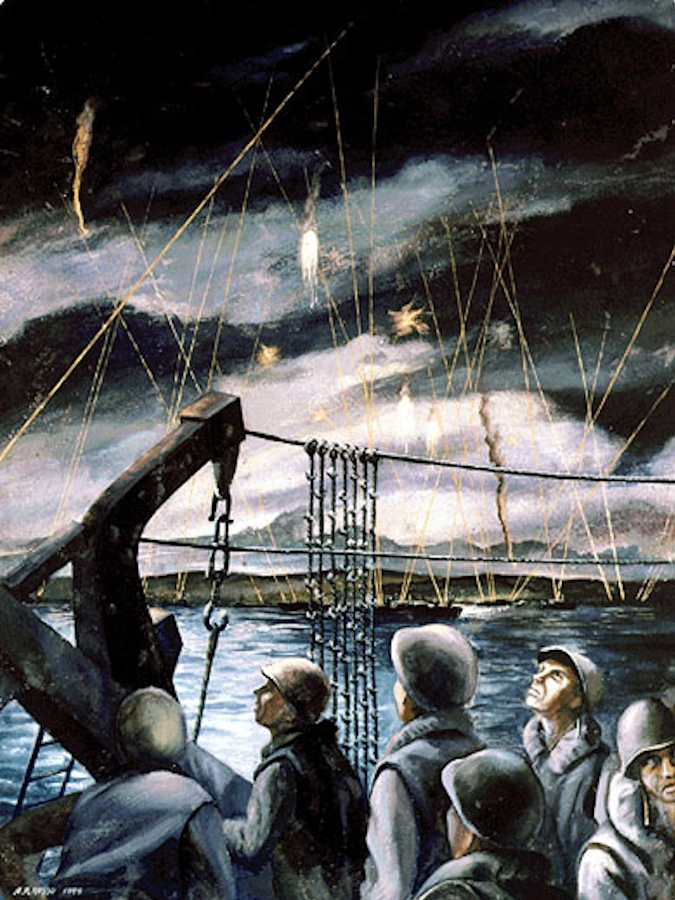
In the Transport Area, Omaha Beach, Alexander P. Russo #16, Gouache, 1944, 88-198-P
The expected occurs as small boat crews returned after a busy day at landing men and supplies on Omaha Beach. Yellow-white flares dropped by German planes lighted the skies and ships, and their weird forms contrasted strangely against the pattern of tracer bullets fired into the thick foreboding clouds.
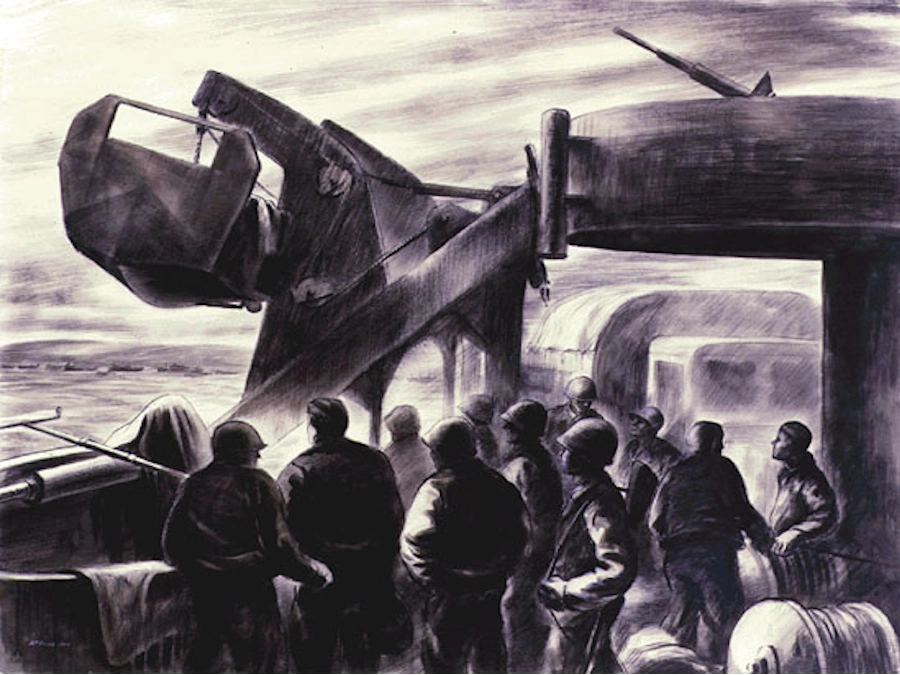
LSTs Waiting to Unload off Omaha Beach, Alexander P. Russo #14, Ink with wash, 1944, 88-198-N
This craft was waiting for the signal from the beach which denoted a place for landing and unloading – a highly organized activity in which timing and discipline moved the right ships at the right time to the right place to unload the right cargo needed by troops onshore. The ship’s crew and Army personnel
watched the unloading activity from the forward starboard deck.
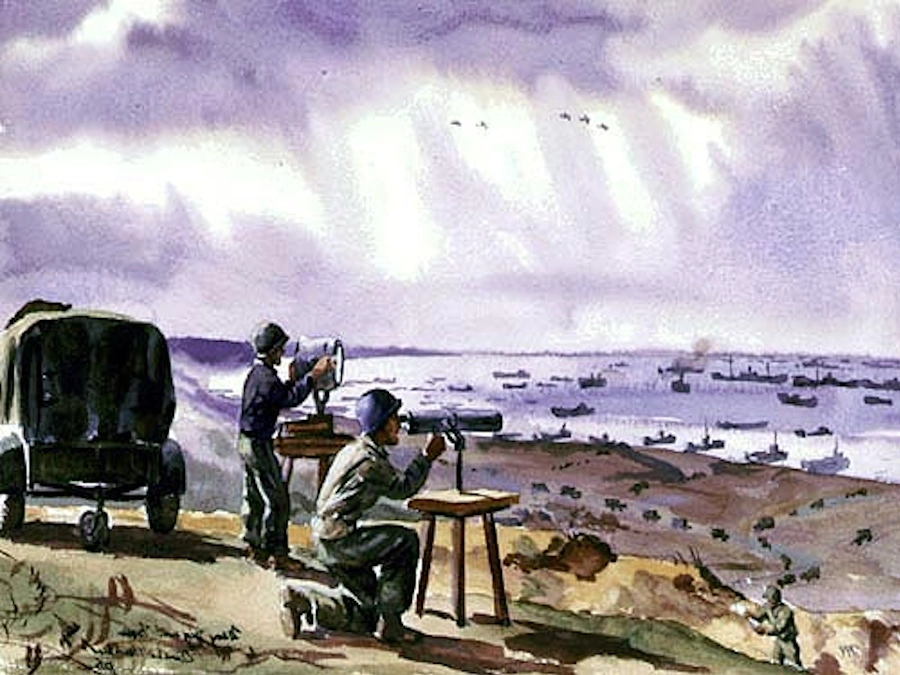
Navy Signalman – Omaha Beach, Dwight Shepler #199, Watercolor, 1944, 88-199-GV
These Navy men set up a beach communications station between ships and shore – using the semaphore light (able to be seen from afar) and Morse code to pass messages from land commanders to ships offshore. The signalman with the telescope read the ships’ semaphore signals and passed them on.