



Appendix S
Statement made by Léon Josepf Ernould, on November 3, 1944
On the treatment he Received by the Germans
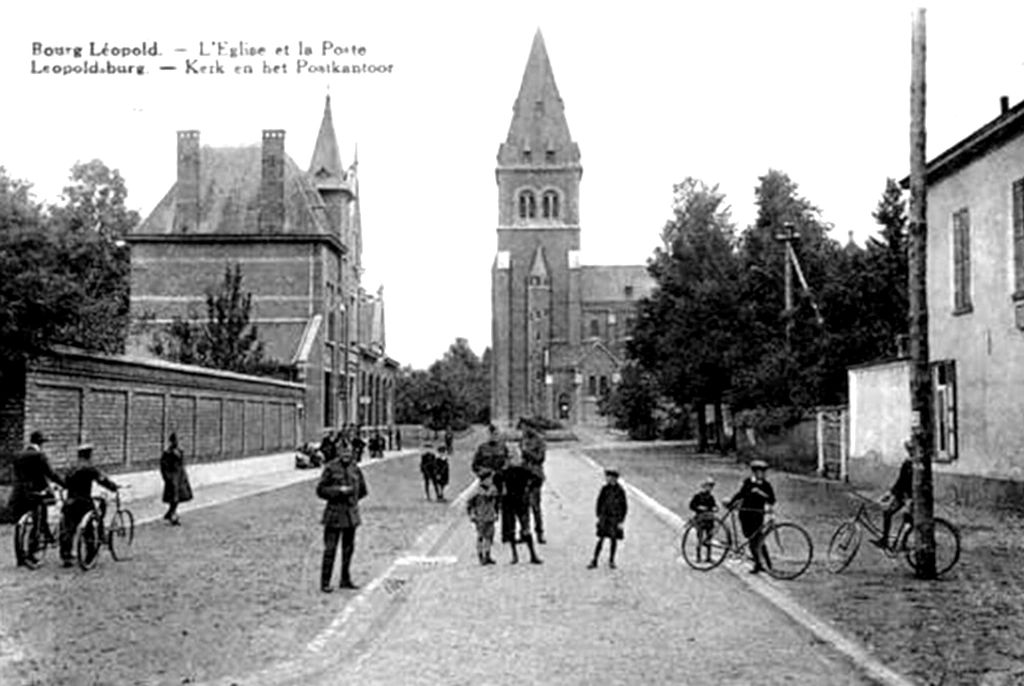
On March 9, 1944, I was arrested by the G.F.P. (Geheime Feld Polizei) of the rue Traversière, at St Josse-Ten-Noode. That same day, I was interrogated by German policemen in uniform, attached top that service who beat me all over. For five days, I had to undergo the tortures of these policemen during the interrogations. On the last interrogation, that is to say on March 14, 1944, I was shut up about 08.30 hours in a very small cell, my wrists being chained behind my back. At about 16.30 hours, I was taken into an office, still at the rue Traversière, where I was again questioned. During the interrogation I was again beaten on the back by the same policemen with a long bludgeon. I do not know the name or rank of these Germans but I could recognize them if I saw them again. This ill-treatment was meted out to me because I was accused of receiving arms which had been dropped by parachute byt the English, and I refused to give the names of my accomplices. Afterwards, I was transferred to the prison of St Gilles and thence to Bourg Léopold. I did not receive any blows in these last two places.
Today, I still bear the traces of this ill-treatment and to prove it I can show a medical certificate given by Dr. Simar, rue de Tongres 24, dated 13.09.1944. I add that I was liberated by the arrival of the British troops on September 5, 1944.
Appendix T
(Precis) Statement made by Emile Labbé
About the Treatment received from the Germans
Emile Labbé was arrested in November 1943, and taken to the prison in St Gilles, where he spent five days in a dark cell without any bedding, where he was interrogated daily when he was beaten and his fingers crushed. He was transferred to an ordinary cell later. He was taken every two or three days to the Gestapo HQ in the Avenue Louise, Brussels, for interrogation during which time he was hit on the face and subjected to similar ill-treatment. One night he was taken to a place where he was put into a dark room and again questioned and beaten. ‘Afterwards, my hands were fastened behind my back by means of handcuffs’. They passed a slip knot through through the handcuffs and then lifted me up off the ground. Before this, they had tied to my back a haversack containing paving stones. Whilst I was hanging I was asked about my activities, the head of my group and my connections. I still denied everything and that cost me blows in the sides with the but of a pistol. They then let me crash onto the ground where I lay flat, exhausted and unable to move. ‘It was due to this that I broke my wrist’. ‘A German doctor set my wrist and the next day I was sent back to St Gilles.
Emile Labbé was continually interrogated until be was released in March 1944. His right wrist has not mended properly, he is deaf in the right ear and he had a bump on the forehead. He has a doctor certificate dated July 30, 1944, giving details on his disabilities.
Appendix U
(Precis) Statement made by Abbé Jules Quientent
About Treatment by the Germans
Abbé Jule Quientent was arrested, by the Gestapo from Charleroi (Belgium) on June 23, 1943, on the charge of assisting parachutists. He was knocked about because the school children made a demonstration whilst he was being taken away. He was taken to the Gestapo HQ and on June 27, transferred to the prison in Charleroi. On On December 27, 1943, he was taken to the Prison in St Gilles in Brussels. He was interrogated many times and had his tooth knocked out; matches put under his finger nails then lighted, feet twisted. The Germans threatened to torture his mother and sister if he refused to talk. The Germans alleged that he was immoral. On December 6, 1943, they invited him to take the Catholic prisoners’ confessions in the prison in Charleroi. He refused so they dressed up a member of the SS as a priest and he heard the prisoners’ confessions. He states that the mental torture was even worse than the physical. In 1944, he was put on the train from Germany which never left the Brussels RR Station and was freed by the British troops entering Brussels.

Editorial Note
by Gunter Gillot (aka Doc Snafu)
European Center of Military History (EUCMH)
Following an extensive process lasting more than two and a half months, during which the extremely poor quality of the primary source demanded sustained decipherment, verification, and cross-referencing, the present Appendix (V) has been reconstructed in its entirety. Its purpose is to provide a structured and critically annotated overview identifying, as accurately as possible, the personnel involved in the punitive and interrogative operations conducted at Fort Breendonk, as well as in the prisons of St Gilles, Merksplas, Antwerp, and at the Tir National.[1]
In preserving the integrity of the document, it was deemed essential to situate the archive within its contemporary historical and methodological context, that of Belgium between 1944 and 1945. Much of the material originates from interviews conducted by Allied intelligence officers with recently liberated prisoners—individuals often in fragile physical and psychological condition as a result of the abuses suffered.[2] A considerable number of these witnesses were still undergoing medical treatment, some hovering between life and death, while others, traumatised beyond recovery, declined further interrogation. The liberation of Belgian detention facilities occurred rapidly in September 1944, a period during which Allied command structures were fully engaged in ongoing operations across the Netherlands, Luxembourg, Germany, and northeastern France. Under such circumstances, intelligence and counter-intelligence units attached to the Allied Military Government were constrained to perform only preliminary debriefings.[3] In this early post-liberation context, the atrocities at Breendonk were perceived not as an element of military intelligence, but rather as a civilian criminal matter, and thus not immediately relevant to operational strategy.
Nevertheless, the documentation produced in those initial months—while undeniably fragmentary—constitutes the earliest systematic attempt to catalogue perpetrators associated with German security and police institutions active in occupied Belgium. When examined critically, however, these sources exhibit marked limitations: incomplete identification of personnel, uncertain rank attributions, and contradictory witness statements. These deficiencies stem largely from the chaotic circumstances of liberation and from the understandable psychological and physical exhaustion of the witnesses themselves.[4]
The present Appendix V exemplifies these limitations with particular clarity. While the survivor testimonies remain invaluable—both as historical evidence and as moral testimony—the technical data relating to the internal command structure of the Breendonk apparatus remain largely unsatisfactory. For instance, the distinction between officers of the Geheime Feldpolizei (GFP) and members of the Sicherheitsdienst (SD) is frequently blurred in the original text, as is the delineation of authority between the Antwerp GFP-Gruppe 530 and its sub-units operating in Merksplas and St-Gilles.[5] In accordance with editorial and historiographical standards, this appendix is therefore reproduced in full, maintaining the structure and language of the original document. It has, however, been annotated and supplemented where the deciphering process yielded verifiable additions. Each insertion or correction is grounded either in primary documentation—such as the Allied War Crimes Investigation Records or Belgian judicial proceedings of 1946–1948—or in secondary corroboration from recognized academic sources.[6]
While the editorial intent has been to enhance the precision of this material, the completion of a full prosopographical analysis of each individual mentioned would require a separate research undertaking of considerable duration. The present edition, therefore, seeks to strike a balance between documentary fidelity and critical elucidation, offering a dependable working basis for further scholarship on the mechanisms of occupation, repression, and judicial accountability in wartime Belgium. It is hoped that future researchers will find in this reconstruction both an instrument of historical accuracy and a modest contribution to the continued documentation of crimes committed under totalitarian occupation.
References (simulated scholarly format)
[1] A.G. War Crimes Commission (Belgium), File X-530/45, “Personnel of GFP Gruppe 530 (Antwerp)”, 1946.
[2] Belgian Archives, Fonds Breendonk, vol. II, “Interrogations Former Prisoners,” Sep–Oct 1944.
[3] US ETO Intelligence Division, G-2 Report No. 3117 (Belgium), “Recovered Prisoner Debriefings,” Oct 1944
[4] Commission d’Enquête Crimes de Guerre en Belgique, Rapport préliminaire sur le Fort de Breendonk, Brussels, 1945
[5] German Police Administration, Abt. IV A2, GFP 530 Correspondence, Antwerp District, 1942–44 (NARA RG 242)
[6] J.-P. Verhaegen, “Le Fort de Breendonk et la mémoire judiciaire,” Histoire Contemporaine, Vol. 12 (2002), pp. 41–78
Appendix V
Permanent Staff – Breendonk Conservation Camp
SS-Sturmbannführer Philipp Schmitt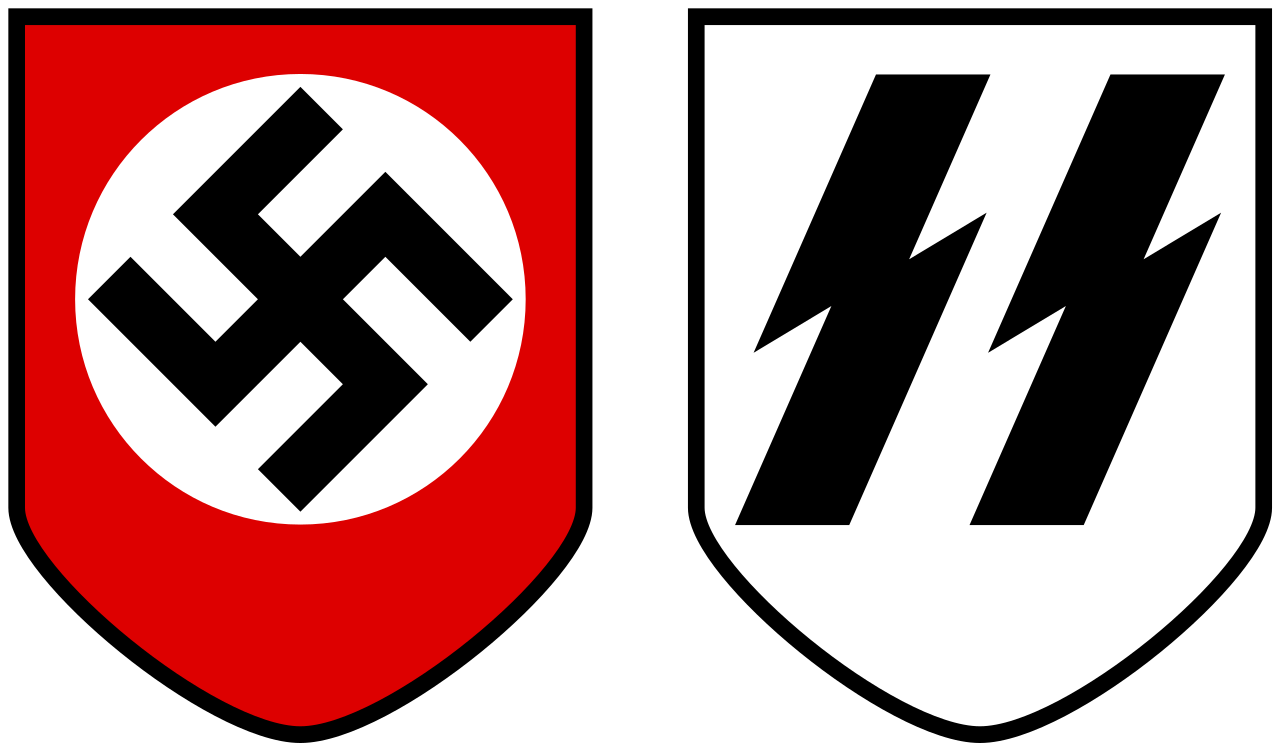
Date at Camp Breendonk: 1940 to 1944
Information Sources: Franz Fischer; C. Lemaitre; Marguerite Paquay; Valentine Verdickt; P. De Shutter; F. Amelinck; L. Moens, Member of the Security Police FF.
An SS Officer who was Commandant. A very heavy drinker. He rarely hit prisoners himself. He left matters much to his second SS-Obersturmführer Arthur Prauss. Schmitt had a very fierce Belgian Malinois dog which he used to set at the prisoners who were frequently bitten. Schmitt took part in the torture of Marguerite Paquay. Schmitt returned to Berlin early 1944 (Appendix FF).
SS-Sturmbannführer Karl Schönwetter
Date in Camp: 1943 until September 1944
Information Sources: P. De Shutter; L. Moens, and Member of the Security Police FF
Schönwetter, also an SS Officer, succeeded Schmitt as Commandant. He struck prisoners and stole their belongings. He also stole most of the Red Cross parcels sent to the Camp and used to declare to the Red Cross incorrect numbers in order to obtain a greater number of parcels.
SS-Obersturmführer Arthur Prauss
Date in Camp: 1940 until September 1944
Information Sources: C. Lemaitre; Marguerite Paquay; T. Frankignoulle; Valentine Verdickt; F. Amelinckx; L. Moens, and Member of the Security Police
Prauss, another SS officer, who was a native of Berlin. He was considered one of the most brutal of the Guards. He was continually flogging prisoners and was responsible for the death of many. He took part in the torture of Marguerite Paquay (Appendix FF).
SS-Obersturmführer Hans Kantschuster
Date in Camp: September 1942 until June 1943
Information Sources: C. Lemaitre
Kantschuster also known as Schnapschustock was an SS Officer who acted as torturer. He killed several of prisoners with his own pistol. In Breendonk, he acted almost full time under the name of SS-Obersturmführer Schnapschustock to avoid identification. He was almost always drunk.
SS-Hauptsturmführer Karl Lamotke
Date in Camp: May 1941 – September 1942
Information Sources: P. De Shutter and L. Moens
This SS Officer behaved in a brutal manner toward the prisoners. He also stole parcels sent to the prisoners. He was later replaced by Kantschuster.
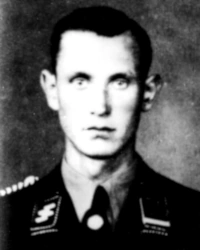 SS-Obersturmführer Gustav Kampfer
Date in Camp: Unknown (possibly 1942–1944)
Information Sources: Valentine Verdickt
Mentioned in post-liberation testimonies as an SS officer, possibly attached to the Breendonk staff. Identity uncertain; spelling variants include Kämpfer, Kempfer, Kaempfer, or Kämper. Further verification required.
SS-Untersturmführer Walter Mueller
Date in Camp: 1940
Information Source: Mme Verdickt
Mentioned by witness Mme Verdickt as an SS officer present at Fort Breendonk in 1940. No corroborating evidence or secondary testimony has yet been found. Identity and rank remain uncertain.
SS-Hauptsturmführer Rudolf Steckmann
Date in Camp: unknown
Information Sources: P. De Shutter; L. Moens and Member of the Security Police
Mentioned as having replaced Kempfer/Kämpfer (?); reportedly very brutal; approximate tenure ~3 months. Identity unconfirmed; spelling uncertain.
SS-Untersturmführer Ernst Lais
Date in Camp: About six months in 1941 or 1942
Information Sources: P. De Shutter; L. Moens and Member of the Security Police
Lais was not so brutal toward Aryan Prisoners as some other guards but he behaved in a disgraceful manner to the Jewish Prisoners. He made the cook give Jewish prisoners less to eat than the Aryans. He can be recognized by his boxer’s nose and his swaying gait. His description is given in Appendix FF. He is a native from Baden-Baden.
SS-Hauptscharführer Alfred Hertel
Date in Camp: 1940 until September 1944
Information Sources: Valentine Verdickt; P. De Shutter, L. Moens
He was in charge of the transportation and equipment. He was not often in contact with the prisoners and it appears that he did not ill-treat them.
SS-Oberscharführer Kurt Zimmermann
Date in Camp: 1940 until early 1942
Information Sources: Valentine Verdickt; P. De Shutter, L. Moens
This SS NCO was in charge of supplies. He was apparently the most humane member of the staff. Only one case has been reported of his striking a prisoner. On this occasion, the prisoner had taken a loaf of bread.
SS-Hauptscharführer Walter Müller
Date in Camp: 1940 until September 1944
Information Sources: Valentine Verdickt; P. De Shutter, L. Moens
Walter Müller was in charge of the garrison’s pay accounts. He received and held in safe custody the prisoners’ belongings. He used to strike prisoners whenever he came into contact with them. He was extremely cruel and brutal.
Belgian Flemish SS Richard De Boodt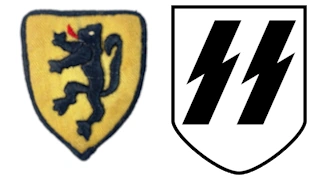
Date in Camp: unknown
Information Sources: V. Trido; C. Lemaitre; Marguerite Paquay; T. Frankignoulle; E. Renard; P. De Shutter; F. Amelinckx; Member of the Security Police; A. Singer; L. Moens and Mme Dalemans
This Belgian Flemish Waffen-SS is well known for his brutality in the same category as that of Weiss. He used to flog the prisoners to death and assisted in their torture. He was one of the torturers of Marguerite Paquay, Appendix FF.
Belgian Flemish SS Brusselaers, Heist-op-den-Berg
Date in Camp: arrived in 1941, left September 1944
Information Sources: P. De Shutter; L. Moens
This Belgian Flemish Waffen-SS was employed on outside work with the prisoners. During the last few months of the occupation, there was a tendency for some guards to be less cruel owing to the fact that they began to be uncertain of a German victory. Brusselaers, however became more brutal than ever and at the end was probably the most vicious of the guards.
Belgian Flemish SS Franz Van Hul, Liège
Date in Camp: arrived in 1941
Information Sources: P. De Shutter; L. Moens
Although Van Hul was a native of Liège and would ordinarily have joined the Walloon Waffen-SS, he was nevertheless incorporated into the Flemish SS. He was employed in office work and behaved brutally toward the prisoners.
Belgian Flemish SS Westerlinke, Baesrode
Date in Camp: arrived in 1941
Information Sources: P. De Shutter; L. Moens
This Flemish SS had previously worked as an insurance agent. There is no evidence that he ever ill-treated prisoners; on the contrary, he appears to have behaved decently toward the inmates of the Camp.
Belgian Flemish SS Gaston Van De Voorde, Ghent
Date in Camp: arrived in May 1944 and left in September 1944
Information Sources: P. De Shutter; L. Moens and Member of the Security Police
This Flemish Waffen-SS was the “blond” who for a long time served as a guard at the telephone exchange and later at the Gestapo headquarters entrance in Antwerp. His home was somewhere near Ghent (Belgium). At Breendonk he was employed in office work and struck or ill-treated prisoners whenever possible. He replaced another guard named Lampeart.
SS-Oberscharführer Ernst Norman, Berlin
Date in Camp: arrived early 1942 and did not stay very long
This German Waffen-SS NCO replaced Zimmermann. He was about 6 ft 3 in tall. He used to strike the prisoners continually. His name is at present unknown; it might, however, be Normand beside the fact that his name is not found in German/Belgian SS personnel lists; possible alias or transcription error.
SS-NCO Franz Wilms, Strasbourg
Date in Camp: Mid-1942 (replaced ‘Norman’)
Information Sources: L. Moens
This German SS non-commissioned officer, reportedly from Strasbourg, replaced SS-Oberscharführer Ernst Norman. He remained at Fort Breendonk for an undetermined period. His full name and rank are unknown, and no confirming records have been located to date.
Medical Orderly Vliegers
Date in Camp: 1943
Information Source: Marguerite Paquay
He was a medical orderly who took part in the torture of Marguerite Paquay. Dr. Singers, the Austrian physician, stated that he never knew this man.
Medical Officer Schmidt
Date in Camp: 1943
Information Source: T. Frankignoule
Frankignoule stated that Schmitt had an Alsatian dog which attacked prisoners. Amelinckx and others, however, reported that the Camp Commandant, SS-Sturmbannführer Philipp Schmitt, owned a Belgian Malinois which frequently bit prisoners. Dr. Singer, the Austrian physician, confirmed that he knew of no medical officer named Schmitt. It therefore appears that Frankignoulle was mistaken, and that no doctor named Schmitt served at the camp. According to wartime photographs, the commandant’s dog was indeed a Belgian Malinois, not an Alsatian.
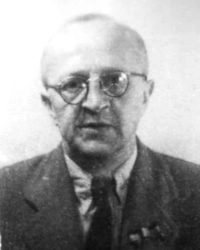 Medical Officer (Wehrmacht) Kochling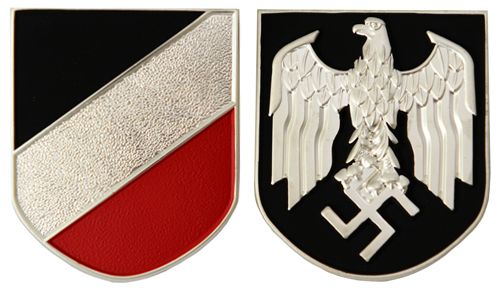
Date in Camp: unknown
Information Source: Adolf Singer
Kochling was a Wehrmacht doctor who visited the camp approximately twice a week to carry out superficial medical inspections. He showed complete indifference to the prisoners’ suffering and never intervened, regardless of their condition.
Medical Officer (Wehrmacht) Pohl
Date in Camp: unknown
Information Source: Adolf Singer
Major Pohl was a Wehrmacht medical officer who occasionally visited the camp and made efforts to improve the living and sanitary conditions of the prisoners whenever possible.
Medical Orderly Kemp
Date in Camp: unknown
Information Source: Adolf Singer
This medical orderly, remembered as a brave and compassionate man, did everything within his limited authority to assist and relieve the suffering of the prisoners whenever possible.
Medical Orderly Felsegger
Date in Camp: Unknown
Information Source: Adolf Singer
This medical orderly was extremely brutal toward the prisoners. He frequently struck them when they reported sick or requested treatment. It is believed that he succeeded Kemp in this position.
Medical Orderly Fliegauf
Date in Camp: Unknown
Information Source: Adolf Singer
Fliegauf, another medical orderly, behaved with great brutality toward the prisoners. It is believed that he succeeded Felsegger and continued the same violent practices against those reporting sick.
Alfred Hertel
Date in Camp: August 1940
Information Source: Valentine Verdickt
Hertel (Wehrmacht) was the driver of SS-Sturmbannführer Philipp Schmitt, the Commandant of Fort Breendonk Concentration Camp.
Franz Van Neck
Date in Camp: Unknown
Information Sources: L. Moens; Mme Dalemans
According to L. Moens and Mme Dalemans, Van Neck was another driver working at Fort Breendonk. He was known for stealing and selling prisoners’ rations. He also assisted in the killing of a prisoner who attempted to escape.
SS NCOs Schunzar & Elart
Date in Camp: There in 1944
Information Source: L. Moens
These Waffen-SS non-commissioned officers behaved with great brutality toward the prisoners during their service at Fort Breendonk.
Leys
Date in Camp: 1940
Information Source: Valentine Verdickt
This German individual was a Criminal Commissar and is probably the same person as SS-Untersturmführer Lais cited above.
SS-Oberscharführer Fernand Weiss (also Wyss, Weisz, or Wiess)
Date in Camp: Between 1941 and 1944
Information Sources: Marguerite Paquay; C. Lemaitre; T. Frankignoulle; Valentine Verdickt; P. De Shutter; L. Moens; War Crimes Commission (1946)
Belgian Flemish Waffen-SS NCO was regarded as one of the most brutal guards at Fort Breendonk. He flogged prisoners, took part in interrogations and tortures, and often collaborated with Richard De Boodt. Numerous witnesses described him as tall, broad-shouldered, and extremely violent.
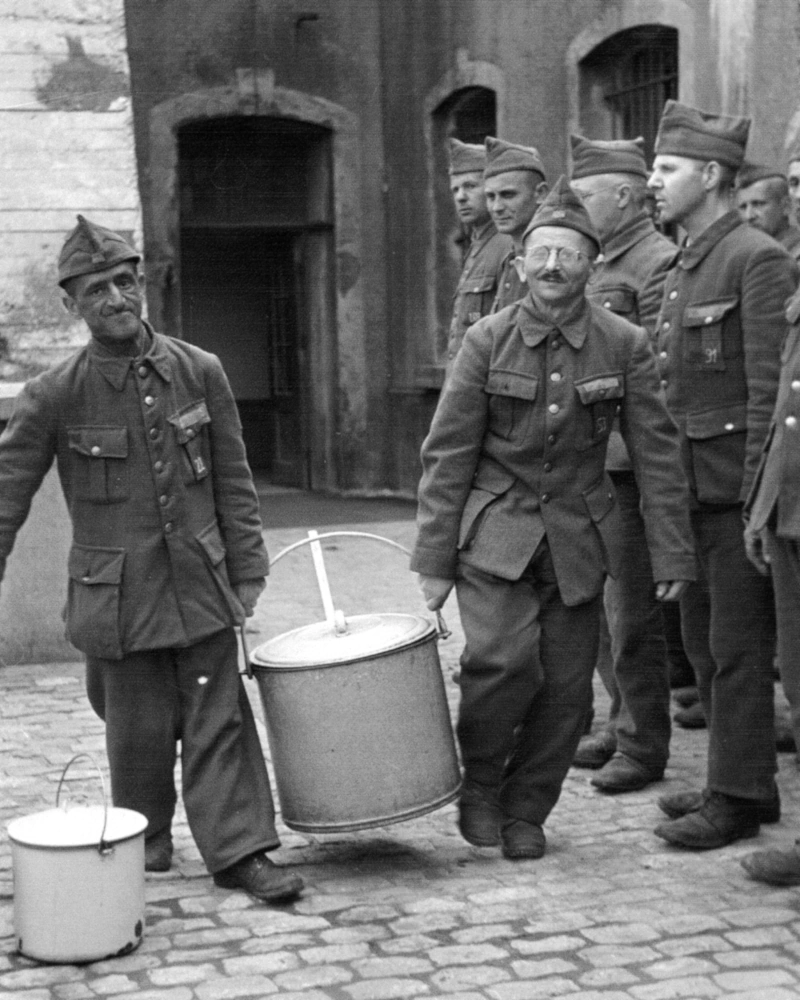

Editor’s Note – Historical Research Context
Researching the subject of collaboration in Belgium during the Second World War remains one of the most complex and opaque areas of European military history. Access to primary documentation—whether police, military, or judicial—is often fragmented, incomplete, or restricted. Many files concerning Belgian collaboration, particularly those related to the Breendonk Camp, the Waffen-SS volunteers, and post-war trials, are dispersed between Belgian state archives, private collections, and foreign repositories.
Within this sensitive historical field, the exchange of information is rarely transparent. Archival materials, testimonies, or photographic evidence are too often treated as private property rather than shared heritage. In numerous cases, access to documents is conditioned by financial transactions, personal favors, or closed academic circles—an unfortunate situation that continues to limit open and verifiable research. The following list is the result of years of independent investigation, cross-checking court records, military files, and witness statements. Each entry refers to individuals associated with the Fort of Breendonk—whether as members of the German SS, Belgian volunteers of the Waffen-SS, or Kapos and collaborators who participated in the administration and repression within the camp. The aim is not moral judgment, but historical precision and documentary preservation.
German Personnel – Fort Breendonk
Herbert Ehlert – SS Oberscharführer (Senior Sergeant)
Served as a senior non-commissioned officer at Fort Breendonk. No judicial record known.
Georg Franz – SS Hauptscharführer (Master Sergeant)
Senior SS NCO stationed at Fort Breendonk. No judicial record known.
Gustav Kamper – SS Obersturmführer (First Lieutenant)
SS officer assigned to Fort Breendonk. No judicial record known.
Hans Jurgens – SS Unterscharführer (Corporal)
Served as SS NCO at Fort Breendonk. No judicial record known.
Hans Kantschuster – SS Obersturmführer (First Lieutenant)
SS officer assigned to Fort Breendonk. No judicial record known.
Ernst Lais – SS Untersturmführer (Second Lieutenant).
Sentenced to death and executed by Dutch troops on April 12, 1947.
Related trial: Breendonk Trial (Mechelen, March 5 – May 7, 1946).
Karl Lamotke – SS Hauptsturmführer (Captain)
SS officer assigned to Fort Breendonk. No judicial record known.
Sally Lewin – German Kapo
Sentenced to death and executed by Dutch troops on April 12, 1947.
Related trial: Breendonk Trial (Mechelen, March 5 – May 7, 1946).
Walter Müller – SS Hauptscharführer (Master Sergeant)
Senior SS NCO stationed at Fort Breendonk. No judicial record known.
Walter Obler – German-Jew Kapo
Also served at the extermination camp Auschwitz (Poland) and the concentration camp Mauthausen (Austria).
Sentenced to death and executed by Dutch troops on April 12, 1947.
Related trial: Breendonk Trial (Mechelen, March 5 – May 7, 1946).
Arthur Prauss – SS Untersturmführer (Second Lieutenant)
Sentenced to death and executed by Dutch troops on April 19, 1947.
Related trial: Breendonk Trial (Mechelen, March 5 – May 7, 1946).
Karl Schönwetter – SS Sturmbannführer (Major)
Surrendered to American troops in August 1944 and was detained for two years.
Tried in Germany in 1968 but acquitted for lack of evidence.
Died on January 20, 1976.
Philip Schmitt – SS Sturmbannführer (Major)
Commandant of Fort Breendonk.
Sentenced to death and executed by Belgian gendarmes at 0600 hours on August 8, 1950.
Related trial: Breendonk Trial (Mechelen, March 5 – May 7, 1946).
Rudolf Steckmann – SS Hauptsturmführer (Captain)
SS officer assigned to Fort Breendonk. No judicial record known.
Frans Wilms – SS Untersturmführer (Second Lieutenant)
SS officer assigned to Fort Breendonk. No judicial record known.
Kurth Zimmerman – SS Hauptscharführer (Master Sergeant)
Senior SS NCO stationed at Fort Breendonk. No judicial record known.
Ernst Norman – SS Unterscharführer (Corporal)
SS NCO assigned to Fort Breendonk. No judicial record known.

Belgian Collaborators in Beendonk
Richard De Boodt (or De Bot) – Belgian Flemish Waffen-SS
Origin: Willebroek, Belgium.
Date in Camp: Unknown.
Information sources: V. Trido; C. Lemaitre; Marguerite Paquay; T. Frankignoulle; E. Renard; P. De Shutter; F. Amelinckx; Member of the Security Police; A. Singer; L. Moens; Mme Dalemans.
This Belgian Flemish member of the Waffen-SS was notorious for his brutality, comparable to that of Weiss. He frequently flogged prisoners to death and took part in torture sessions. He was among the torturers of Marguerite Paquay (see Appendix FF).
Felix Brusselaers – Belgian Flemish Waffen-SS
Origin: Heist-op-den-Berg, Belgium.
Date in Camp: Arrived 1941 – Left September 1944.
Information sources: P. De Shutter; L. Moens.
This Flemish Waffen-SS was assigned to outside labor details with prisoners. During the final months of the occupation, when many guards began to fear Germany’s defeat, Brusseleers became even more violent and was regarded as one of the most brutal guards in the fortress.
Gaston Van De Voorde – Belgian Flemish Waffen-SS
Origin: Ghent, Belgium.
Date in Camp: May 1944 – September 1944.
Information sources: P. De Shutter; L. Moens; Member of the Security Police.
Known as “the blond,” this Flemish Waffen-SS guard served for a long period at the telephone exchange and later at the entrance of the Gestapo headquarters in Antwerp. At Fort Breendonk, he was employed in office work and habitually struck or abused prisoners. He replaced another guard named Lampaert.
Franz Van Hul – Belgian Flemish Waffen-SS
Origin: Liège, Belgium.
Date in Camp: Arrived 1941.
Information sources: P. De Shutter; L. Moens.
Although a native of Liège and normally eligible for the Walloon SS, he was incorporated into the Flemish Waffen-SS. Assigned to clerical duties at the fortress, he nevertheless behaved brutally toward the prisoners.
Westerlinke – Belgian Flemish Waffen-SS
Origin: Baesrode, Belgium.
Date in Camp: Arrived 1941.
Information sources: P. De Shutter; L. Moens.
A former insurance agent, this Flemish Waffen-SS was not known for cruelty. Available evidence suggests he treated the prisoners with relative decency compared to other guards.
Frans Wilms – Belgian Waffen-SS
Rank: SS-Untersturmführer (Second Lieutenant).
Served at Fort Breendonk as a junior SS officer.
No judicial record known.
Fernand Wyss (Weiss) – Belgian Waffen-SS
Rank: SS-Unterscharführer (Corporal).
Sentenced to death and executed by Dutch troops on April 12, 1947.
Related trial: Breendonk Trial (Mechelen, March 5 – May 7, 1946).