



Biographical note
Paul De Rudder (born ca. 1920 – fate unknown) was a young Belgian civilian from Brussels arrested by the German authorities on March 16, 1944, accused of espionage—a charge often applied to members of underground intelligence and courier networks. Detained and severely tortured during interrogation, he was later transferred to Camp Beverloo, a military installation repurposed by the Germans as a detention and labor camp during the final phase of the occupation. De Rudder remained there until the liberation of Belgium in September 1944, when Allied troops reached the region. His detailed testimony, reproduced in Appendix K, provides valuable insight into the late-war German security apparatus in Belgium and the continuity of methods of coercion and torture between the Gestapo offices, local prisons, and satellite camps like Beverloo.
#039 – Major Van Roosbroeck
Archival statement: 96 rue Paul Devigne, Schaerbeek. He was arrested in May 1942, accused of having organized the departure of Belgians to England. He was locked in the Prison in St Gilles and later in Merksplas. He was released in May 1943. Three weeks after being released, he was re-arrested and locked back in the Prison in St Gilles. He was then sent again to Merksplas and later to the Watten Camp (Kraftwerk Nord West) near St Omer (France). In all places, he was tortured and subjected to brutal treatment. He was released in January 1944. Since this time, he has been in the hospital. It is improbable that he will recover. For an account of his experiences, see Appendix L. Actually, he is still in the hospital rue de la Poste in Brussels.
Biographical note
Major Van Roosbroeck (first name unknown) was a Belgian Army officer residing at 96 rue Paul Devigne in Schaerbeek, Brussels. Arrested in May 1942 for his role in organizing clandestine passages of Belgian volunteers to England—a key element of early resistance networks—he was successively detained at the prisons of Saint-Gilles and Merksplas, both under German control. Released briefly in May 1943, he was re-arrested only three weeks later and eventually transferred to the Watten Camp (Kraftwerk Nord-West) near Saint-Omer, France, where prisoners were forced to labor on military installations. Throughout his imprisonment, Van Roosbroeck was subjected to repeated torture and beatings, leaving him gravely injured. Liberated in January 1944, he was hospitalized at Rue de la Poste in Brussels, where he remained in critical condition. His testimony, preserved in Appendix L, is one of the rare officer-level accounts describing the treatment of Belgian military personnel accused of aiding escape routes to Britain.
#040 – Hubert Genis
Archival statement: 9 rue du Duc, Brussels. Was arrested on February 18, 1944. He was interrogated at the Headquarters of the German Field Police, rue Traversière, Brussels, and later transferred to the St Anne Barracks in Laeken where he was tortured. He was in the train station in Brussels, which contained prisoners that the Germans intended to take to Germany. Owing to the speed of the Allies’ advance and sabotage, the train did not start. All the Germans fled, and the prisoners were freed. For an account of his experiences, see Appendix M.
Biographical note
Hubert Genis (dates unknown) was a civilian resident of Brussels living at 9 rue du Duc. Arrested by the German Field Police on February 18, 1944, he was interrogated and brutally tortured at their headquarters on rue Traversière before being transferred to the St. Anne Barracks in Laeken—a site notorious for the mistreatment of political prisoners and resistance suspects. In early September 1944, Genis was among the detainees placed aboard a train intended for deportation to Germany. Due to Allied advances and sabotage of the railway lines, the train never departed Brussels. As German forces fled the city, the prisoners were liberated. His statement, preserved in Appendix M, provides a vivid first-hand account of the final weeks of occupation and the chaos surrounding the attempted evacuation of prisoners from Brussels just before the city’s liberation.
#041 – Reymond Defonseca
Archival statement: 20 rue de Montenegro, Brussels. A police officer at St Gilles. In 1942, and again in 1943, he was arrested as a hostage and imprisoned at Louvain and at Huy. In February 1944, he was again re-arrested when convalescing from an operation. He was taken to the St Anne Barracks in Laeken and tortured. He was on the prisoner train with Genis (#040). For an account of his experiences, see Appendix N.
Biographical note
Reymond Defonseca was a police officer serving in the Brussels district of Saint-Gilles. Arrested twice as a hostage in 1942 and 1943—a common retaliatory practice used by German authorities against Belgian civil institutions—he was detained first at Louvain and later at the Citadel of Huy. In February 1944, while recovering from surgery, Defonseca was arrested a third time and transferred to the St. Anne Barracks in Laeken, where he was subjected to interrogation and torture by the German Field Police. He was later placed aboard the same deportation train as Hubert Genis (#040), which was intended for Germany but never departed Brussels due to sabotage and the rapid advance of Allied forces. Defonseca’s statement, preserved in Appendix N, contributes significant documentation regarding the persecution of Belgian police officers accused of sympathizing with or covertly assisting the resistance movement.
#042 – Mme Aulotte
Archival statement: 354 Chaussée de Bruxelles, Brussels. She was denounced by a Belgian, seized by the Gestapo in March 1944, and tortured. She was in the prisoners’ train, which did not start (#040 and #041). For an account of the tortures, see Appendix O.
Biographical note
Madame Aulotte (first name unknown) was a civilian resident of Brussels living at 354 Chaussée de Bruxelles. She was denounced by a compatriot to the Gestapo in March 1944—a common tactic used during the occupation to eliminate suspected resistance sympathizers or settle personal disputes. Arrested and subjected to brutal interrogation and torture, she was later included among the prisoners placed on a train intended for deportation to Germany. The train, which also carried Hubert Genis (#040) and R. Defonseca (#041), never departed Brussels due to sabotage of the rail lines and the rapid liberation of the city by Allied forces. Mme Aulotte survived and later gave a detailed statement (Appendix O) describing her torture at the hands of the Gestapo. Her account underscores both the role of civilian denunciation and the indiscriminate cruelty inflicted upon women accused of even minor involvement in resistance activity.
#043 – Lieutenant, Baron Albert Greindl
Archival statement: Sûreté de l’État, Room 403, Shell Building, Brussels. He was caught in France after coming back from England. He was imprisoned in Perpignan (France) and tortured. Later, he was transferred to Fresnes near Paris (France), where he was again tortured. He was released on August 18, 1944, when Paris was liberated. For an account of his experiences, see Appendix P.
Biographical note
Lieutenant, Baron Albert Greindl (born 1911 – d. 2001) served as an officer attached to the Belgian State Security Service (Sûreté de l’État). During the war, he played an active role in the Allied intelligence network and undertook a clandestine journey to England to coordinate with British intelligence authorities. Captured in France while attempting to return to occupied Belgium, Greindl was imprisoned at Perpignan, where he was severely tortured during interrogation by the Gestapo. He was later transferred to the prison of Fresnes, near Paris, where the torture resumed. Greindl was liberated on August 18, 1944, during the liberation of Paris by Allied forces. His testimony, preserved in Appendix P, is among the most detailed officer-level accounts of Gestapo methods in France and illustrates the shared mechanisms of repression faced by Belgian intelligence operatives working with the Allies. After the war, Baron Greindl continued his service within the Belgian security and diplomatic corps.
#044 – Jean-Baptiste Charrin
Archival statement: 52 rue de la Borne, Brussels. He was denounced by a Belgian to the Gestapo as an agent of the Allies. He was tortured in the St Gilles Prison. He was on the train bound for Germany, which failed to start (#040 and #041, and #042). (Appendix Q). He was an active member of the Belgian Underground Movement.
Biographical note
Jean-Baptiste Charrin (dates unknown) was a resident of Brussels and an active member of the Belgian underground resistance. Betrayed by a fellow Belgian who denounced him to the Gestapo as an Allied agent, he was arrested and subjected to brutal interrogation and torture at the Saint-Gilles Prison in Brussels — one of the central detention sites for political prisoners under the occupation. In September 1944, as the Germans attempted to evacuate their remaining detainees, Charrin was placed aboard the same prisoner train as Hubert Genis (#040), R. Defonseca (#041), and Mme Aulotte (#042). The train never departed due to sabotage and the rapid advance of Allied forces liberating Brussels. Charrin’s account (Appendix Q) details both the torture endured within Saint-Gilles and the chaotic final days of the occupation. His testimony stands as a representative example of the risks faced by Belgian resistance members betrayed by informants during the final phase of German control.
#045 – Hubert A. H. Laude
Archival statement: Rector of the Colonial University, Antwerp. He was denounced by a Belgian to the Gestapo as a member of the Belgian Underground Movement. He was tortured in the Prison in St Gilles and condemned to death on September 1. On September 3, he was put on a train bound for Germany, where he was to be shot. Fortunately, the train did not start in Brussels and was liberated when the Germans ran away from Belgium after the British troops entered and captured Antwerp. (Appendix R). Hubert Laude was a disabled veteran of World War I.
Biographical note
Professor Hubert A. H. Laude (born ca. 1890 – fate unknown) served as Rector of the Colonial University in Antwerp and was a respected academic figure before the war. A veteran of the First World War, he was wounded in service and left permanently disabled. During the German occupation, Laude was accused—wrongly—of belonging to the Belgian Underground Movement after being denounced by another Belgian. Arrested by the Gestapo, he was interrogated and tortured in the Saint-Gilles Prison in Brussels, then sentenced to death on September 1, 1944. Two days later, he was placed aboard a deportation train bound for Germany, scheduled for execution upon arrival. The train, however, never departed Brussels due to the sudden liberation of Belgium following the entry of British forces into Antwerp. Laude’s narrow escape from execution, described in Appendix R, exemplifies the chaos of the German withdrawal and the survival of many condemned prisoners only through the intervention of Allied advances.
#046 – Léon Joseph Ernould
Archival statement: 107 rue Garard, Brussels. Arrested by the German Secret Field Police on March 9, 1944, accused of receiving arms by parachute. He was liberated by the arrival of the British troops on September 5, 1944. (Appendix S).
Biographical note
Léon Joseph Ernould (dates unknown) was a civilian resident of Brussels arrested by the Geheime Feldpolizei (German Secret Field Police) on March 9, 1944. He was accused of participating in the reception of Allied weapons and supplies dropped by parachute—an activity closely linked to the Belgian resistance’s sabotage and intelligence networks. Ernould was detained in one or more German-controlled prisons in Brussels, where he remained under harsh conditions until the city’s liberation by British forces on September 5, 1944. His statement, included in Appendix S, confirms the coordination between Allied air operations and Belgian resistance cells, as well as the increasing frequency of arrests in early 1944 targeting civilians involved in such missions. Ernould’s survival and liberation on the very day British troops entered Brussels mark his case as one of the last recorded detentions before the collapse of German control in the capital.
#047 – Emile Labbé
Archival statement: 23 rue Jules Bouillon, Brussels. Arrested in November 1943, and taken to the Prison in St Gilles. Interrogated and brutally treated. Mr. Labbé is now 34 years of age. (Appendix T).
Biographical note
Emile Labbé (born ca. 1909 – fate unknown) was a Brussels resident arrested by the German authorities in November 1943. He was taken to the Saint-Gilles Prison, a central hub for Gestapo and Feldgendarmerie interrogations in occupied Belgium. Labbé was subjected to repeated beatings and harsh interrogation sessions intended to extract information about underground contacts or resistance activity. His detention, though of limited duration, left lasting physical and psychological effects, as noted in post-liberation medical evaluations. At the time of his testimony, he was 34 years old. Appendix T contains his full statement, which provides corroborating details on interrogation methods used in Saint-Gilles, echoing numerous other survivor accounts from late 1943 when German repression in Brussels reached its peak.
#048 – Abbé Jules Quientet
Archival statement: 7 rue Grand, Paturages (Mons). Was arrested on June 25, 1943, and charged with assisting parachutists. He was freed from the train station in Brussels, which was to convey off prisoners to Germany but it did not start. (Appendix U).
Biographical note
Abbé Jules Quientet (dates unknown) was a Catholic priest from Pâturages, near Mons, arrested on June 25, 1943, by the German authorities. He was accused of aiding Allied parachutists—a common charge brought against clergy who provided shelter, false documents, or guidance to downed airmen and resistance couriers. Detained and interrogated in Brussels, he was among the prisoners assembled for deportation to Germany in early September 1944. The train, however, never departed due to sabotage of the railway network and the rapid advance of Allied troops toward the capital. Quientet was freed when German guards abandoned the train during their retreat. His testimony, preserved in Appendix U, reflects the prominent role played by members of the Belgian clergy in resistance support operations and their frequent persecution by the Gestapo during the final phase of the occupation.
APPENDIX B
Statement made by Franz Fisher, survivor Breendonk Camp
General Considerations
I have been asked to write a detailed report on the living conditions and the treatment of prisoners interned in the concentration camp of Breendonk, during the German occupation of Belgium. Obviously, in this modest account, a complete picture cannot be given, nor is it even possible to give approximately correct figures of the numerous victims of the barbaric measures that were incarcerated in this prison; of those who succumbed as a result of the harsh and difficult slave work that wan inflicted on then; of the brutalities, beatings and tortures they had to suffer; of the systematic malnutrition that made them perish, and particularly of the physical tortures that caused so many deaths among them. Nor am I counting those who were shot or hanged, often without any trial whatever. But the number of victims of this hard imprisonment that lasted for more than four years, is surely in the thousands, and the number of those who perished at Breendonk or after having left it, is in the hundreds.
It is possible, and in any case highly desirable, that the Belgian Government should be able to make an enquiry into this question. Meanwhile, it is morally necessary that the authoritative voice of those who were able to reconstruct the memory of their stay at Breendonk should be heard. Already, a large literature of authentic documentary statements is in the course of production, and the author of this account will publish in the course of the next few days a volume of memories of his captivity in that prison. (The Hell of Breendonk – Scenes relived – Labor Editions – Brussels). This is therefore less of a complete and detailed report than the relating of a few episodes that happened in captivity and quoted here more as an exemple with which I would like to make known to those in Great Britain, who wish to take an interest in these painful and tragic facts dealing with the reign of cruelty and terror that the Nazi domination imposed on the Belgian people.
What was the Prison in Breendonk? An ancient abandoned Fort on the first military defenses of Antwerp. Situated along the Brussels – Antwerp highway, about a kilometer from a large industrial district in Willebroek. This military bunker had been abandoned owing to its strategic uselessness and unhealthiness, for antique casemates were cold and damp and allowed water to penetrate.
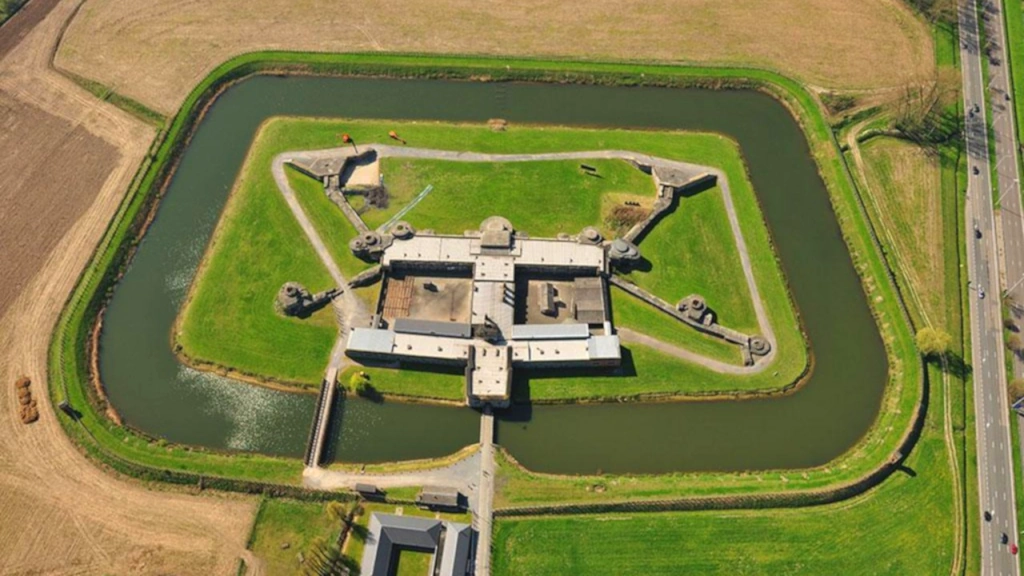
It had first been decided at the beginning of the German occupation to make it into a concentration camp for the Jews whom the Gestapo were tracking down everywhere and with whom they had filled to overflowing Belgian prisons. But very soon, hostages were also brought there, political prisoners and Belgian personalities who were considered undesirable. Then, when the Germans declared war on the Soviet Republic, Communists or anyone with any kind of Communist sympathies whatever were also sent to Breendonk. Among these, number were some who had no Communist sympathies whatever, but who had been denounced as such to the Nazis, mostly anonymously. For my part, I was incarcerated in Breendonk for more than two months, after which I was transferred for eight weeks to the cellular prison of St Gilles near Brussels, without having been tried or even questioned. For this was the custom in these imprisonments.
The majority of those miserable beings who were there were in complete ignorance as to why they were held. There were some who remained for months and years. Hundreds of others, after a long stay, were sent to concentration camps in Germany. And very many came out of that hell in coffins; they had not been able to withstand the horrible treatment, the wounds and illnesses not cared for, or they had just simply been killed.
The Prisoners
It would be hard to name all the personalities who underwent this hard and cruel detention at Breendonk. I only want to remember certain names among then, these I had met during my own captivity. These were: M.M. Bouchery, ex Minister of Transport and first Vice-President of the House of Representatives of Belgium; Van Kersbeek, Councillor at Malines and ex Member of the Parliament; the Communist senator Heindels and Borremans the Member of Parliament; the Advocate General and Chief of the Malines Police Force; Fromont, another Member of Parliament and Mayor of Willebroek, the President of the Polish Club of Belgium, the famous artist Jacques Ochs, Director of the Academy of Fine Arts at Liège, a Belgian Officer whom I am told was General Langlier, the Reverend Father Gouhert, Director of the Catholic Institute ‘Arts et Métiers’ at Lille, M. Levy, the most popular of all broadcasters in Belgium, etc. All these personalities had to undergo the very same regime as all the other prisoners, had to do the hardest of all force labour, had the same under-nourishment and suffered the same bad treatment. M. Bouchery is still ill as a result of his ill-treatment and sufferings (M. Bouchery has died since this statement was written) and his colleague from Malines, M. Van Kersbeek, died sometime after his liberation, worn out by the privations and physical sufferings as well as the moral ones.
The Hunger Diet
Everything was organized to bring about that slow death caused by utter exhaustion. Here is the list of the food that we were given for a whole day: two pieces of dry bread, one at five in the morning, the other at five in the afternoon. This represented, all told, a weight of about a hundred grammes; in addition, at two o’clock, a bowl of soup. And this was all. During a short time, the prisoners had been authorized to have sent to them, from outside, parcels of food of six kilos a fortnight, but when I arrived at the camp, this ‘favour’ had been abolished, the excuse being given that Communist literature could have been hidden inside the parcels. In this way, the prisoners could actually be seen losing weight, but those who were caught eating grass, like sheep do, to satisfy their hunger, were put into solitary confinement. I was among that number.
Forced Labour
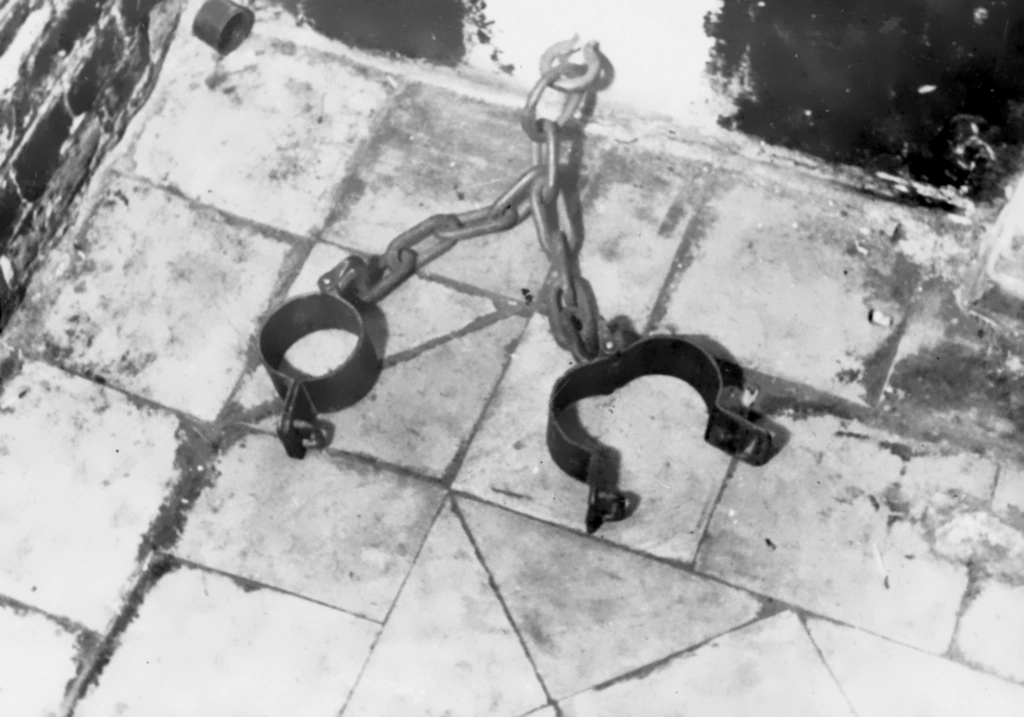
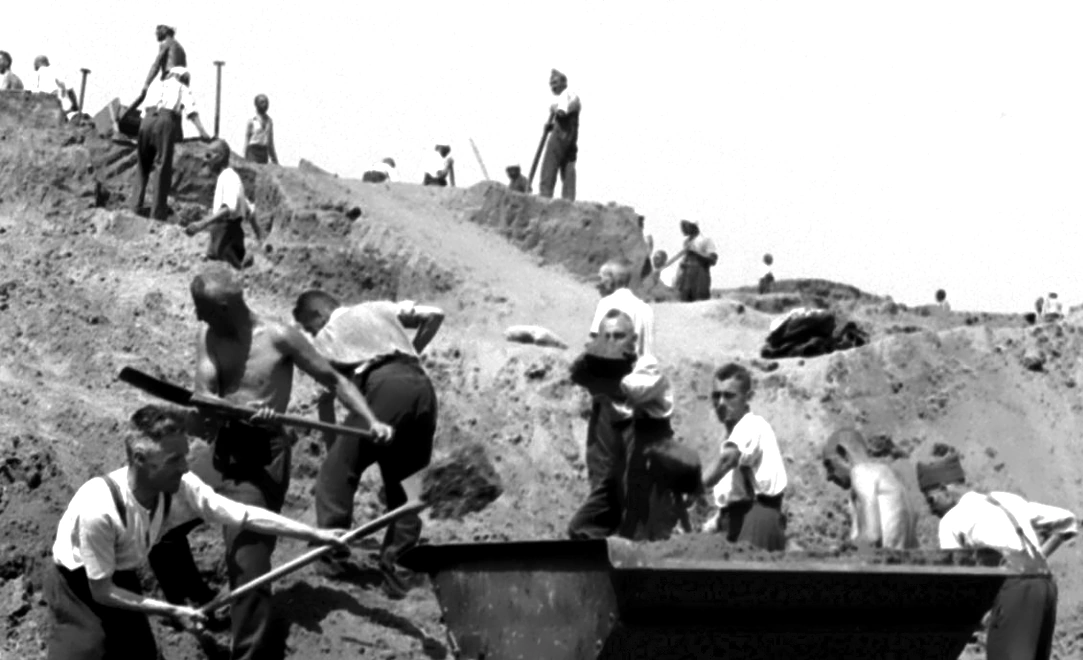
All prisoners, regardless of who and what they were, from six in the morning, in shifts of two hours, had to accomplish, without interruption, without stopping for one single second, and without lifting their heads, the most difficult labour. They had to level off banks with shovels, push trucks laden with earth or do the same work with wheelbarrows, they had to carry large stones extracted from the banks, and finally, a job reserved for the very oldest and most infirm, the breaking of bricks into small pieces. All this was punctuated by beating with whips and sticks, meted out by the supervisors and soldiers when the work was not progressing quickly enough. For hours on end, one could only hear the brutal yells that were supposed to stimulate this forced labour, and the painful moanings of the victims. Later on, another torture was reserved for those who were too weak to carry out the work. Cells still to be seen at Breendonk, a little larger than a telephonic cabin, were built for them, and they were obliged to remain standing for twelve consecutive hours, and if they weakened, they were beaten.
At times, particularly when we were undergoing a collective punishment, in which the camp’s three hundred prisoners had to continue their work after their eight hours, men could be seen to fall like flies, and their comrades would pick them up and take them to an unclean casemate, where all the sick were piled and which, ironically, was called the infirmary. But more often than not, in the early morning, one could see prisoners sadly carrying oblong boxes; they were the coffins of the unfortunate ones who had succumbed to similar sufferings. After some time, they were not even worried about giving these victims a decent burial. They were all buried together in the camp very secretly. It was thus that fifty Jewish prisoners were buried under a small hillock that can still be seen at Breendonk.
Wounds, Murders and Tortures
Have I said that punches and kicks were the rule in this accursed camp? Sometimes, under the pretext of a collective punishment, the denial of food for a whole day. But all this was nothing to what happened in that back room, in the guard house, which one only passed with shudders. It was there that the original cells were built, and prisoners who were considered insolent were thrown into them, or who, at work, had not obeyed the brutal orders that were shouted to them, and which they usually did not understand since they were always in German. I got to know these cells the very same day on which I was liberated. I was made to go through a room with large barred cages all around it, similar to cages that are found in zoos. When I passed, the poor prisoners gripped the bars of their cages to try to enter into conversation with me. But I was put in a cell without light and without air, where I could not hold myself straight. This torture luckily lasted only one hour.
By what follows, I was able to admit, as anyone who visits Breendonk must admit, the executioners had perfected their methods. Narrow solitary confinement cells have been built so small that one could hardly stand, a room for ‘reflexion’, where to get confessions, the unfortunate ones had to undergo first the cold bath, then the boiling hot one and finally there was a torture room with all the implements for maiming the flesh and breaking the bones complete with a gutter to let the blood run away. It is quite true that close by all this, in a similar enclosure, there are the execution posts and the scaffolds for those who were hanged. He who will not believe this, let him go and see for himself.
The Executions
If I were asked to denounce the culprits of these atrocities, I would answer that, in the very first place, the most guilty is the regime. The most humane of the officers who guarded us assured me that it was by similar methods, in their own concentration camps, that the Nazis had been able to quell the thousands of German adversaries, of whom they had rid the Reich. But it was obvious that the actual executioners in this abominable system of repression at Breendonk put a sadistic zeal in their work, and they also are held responsible. Are names wanted? You can well imagine that our torturers did not identify themselves to please us. The Camp Commandant was SS-Sturmbannführer Philipp Schmitt. A man who was impassive and insensitive, who would pass by us with disdainful air, and who did not seem to be worried by our martyrdom.

(Philipp Schmitt was arrested in May 1945 in the Netherlands. In the prison of Rotterdam, Schmitt was recognized by a former inmate of Breendonk, and in November 1945, he was handed over to the Belgian authorities and imprisoned in Breendonk. Schmitt was tried in August 1949 for his role in the deaths of 83 inmates at Breendonk and the inhuman treatment of the prisoners in the facility. He never showed any remorse and denied all of the atrocities that occurred at Breendonk, claiming he was merely re-educating the inmates as ordered. Schmitt was sentenced to death on 25 November 1949. On 8 August 1950, Schmitt was executed by firing squad in Antwerp at 0600 in the morning. He was the last person to be executed in Belgium before the abolition of capital punishment in 1996).
Schmitt had given the reins to a brute who directed all the labour; he would shout insults, and would swear in the face of everyone, he would strike the prisoners with his riding whip or with his gloves, and it was he who gave out all those orders of torture. This horrible and grotesque character went under the name SS-Obersturmführer Arthur Prauss (a.k.a Lieutenant Polsom). Is it his true name? I could not say, but he remained a sufficient number of years at Breendonk for him to be identified. Try to seize him in Germany and make him pay the price for the immense number of his crimes against humanity. Crimes that he committed in the camp of famine and torture.
I, Franz Fischer, certify that this account is authentic.
(signed) Franz Fischer
Belgian Member of Parliament
Honorary President of the Brussels Press
(On September 2, 1944, SS-Obersturmführer Arthur Prauss fled the Camp in Breendonk with the other SS men to Düsseldorf (Germany). According to German sources, he was killed on April 19, 1945, in the Battle of Berlin (Germany). However, a former Hungarian SS man claimed to have seen him in Hanover (Germany) in February 1947, together with another executioner from Breendonk, Richard De Bodt).
(Notes Report’s Compiler: No other evidence of bodies being buried in Breendonk has been produced, nor have excavations revealed any bodies. It is considered that Lieutenant Polsom is SS-Obersturmführer Arthur Prauss).
Statement Made by A. Denis, Reprisals Camp Breendonk
Germany Ways – Dante in his work entitled ‘The Inferno’ says in so many words
‘Abandon hope all ye who enter here’
The Fort of Breendonk was destined to receive these political detainees classified by the Germans in the category of Terrorists. This category included in their mind every type of resistance to the occupants and particularly the pro-British, who wore on their prison uniform a special sign (white and red bar), the other detainees wearing different signs according to their classification. This visual sign enabled the gaolers to inflict on the different detainees every kind of annoyance and cruelty without having to examine the particular case of each one.
There were two types of detention: (1) complete isolation, (2) communal. The workers in the latter category were compelled to do the most laborious tasks under inhuman conditions; loading wagons (about thirty a day) to be conducted and unloaded for filling pits under the guards of the German and Belgian Nazis (VNV-Flemish and Rexist Walloons), who were provided with lashes with which they beat the detainees. When, in their mind, a detainee did not work fast enough, as a punishment, they placed on his back an army pack filled with bricks and weighing about thirty kilos, with which, under the blows of the lash, he had to do the same work as the others. These unfortunates were drilled and martyrized continually; they wore clogs and had to march to attention before the guards, jumping in the air at each step.
The Life of Detainees in Solitary Confinement
Brought to the Fort handcuffed, the detainee was taken to an office where he was searched and where every object in his possession was taken away from him. All these operations, which took place at the Fort, were done with the face to the wall against which, for the slightest thing, he was knocked by a blow in the neck. The search finished, a blue sack without any opening and descending as far as the belt, was placed on his head, and he was then conducted by an SS to a cell.