



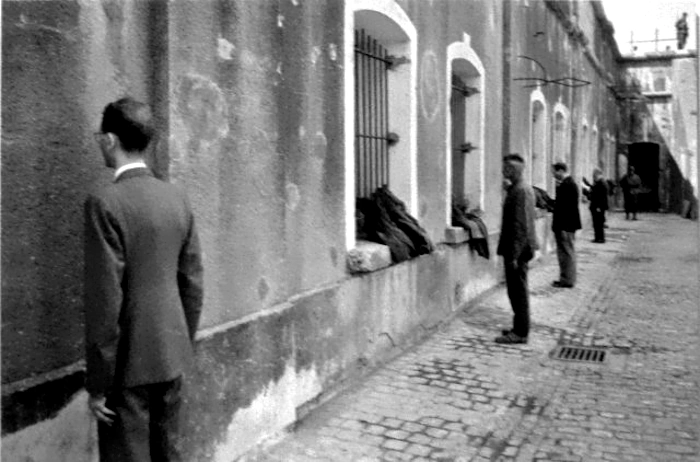
Some of the sentries took opportunity of the fact that the prisoners had to ask for permission of attending personal needs in a prescribed form (standing at attention, cap in the right hand, three yards from the sentry and with prescribed words – ‘Sir sentry, I ask you most respectfully to be allowed to go out for a while) not to answer or to refuse to grant that permission; as the prisoner were awfully weak that meant a new kind of an ordeal. One of the favourite collective or personal punishments was performing P.T. with straightened out arms, having heavy tools (a pickaxe or shovel in the hands). Another one was ‘race on the belly’ with guards whistling, yelling, and running all around the punished people. As I told you before, the first prisoner who ever died in Breendonk was beaten to death, and some other prisoners committed suicide (one by hanging, one drowned, one by jumping from the roof where he was working), one was shot by mistake by a drunk sentry but his corps was used to impress the other prisoners as having tried to escape, but most of the people who died were actually exhausted (some grew mad) and no accurate figure can be given since they died in the infirmary (not created before March 1941) in the Hospital in Antwerp or in the Military Hospital in Bruxelles. Jews and Aryans were initially grouped in separate sections in December 1940. In August-December 1941, two different infirmaries were created. Dr Adolf Singer remained in charge of both.
About special cases of ordeals, I saw the following ones: A young Flemish worker guilty of ‘apparently’ stealing a German motor car, tried to steal the pistol of an NCO. He was beaten successively by the SS Officers and the NCOs, by the Army NCOs, by the soldiers, by some of the German Jewish heads of rooms. One of the last ones claimed to have washed his bleeding face with vinegar. We had to parade before the practically unconscious man, standing at attention before the wall on which he was beaten. Another time, four kilos of potatoes had been stolen by the people of room #4 while they were peeling them, the whole room (thirty-two prisoners at the time) was condemned to perform P.T. without eating for a whole Sunday from 08.00 to 20.00. On another day, I saw one of the prisoners who was very weak because he had caught a cold, asked to remain lying in the morning (at the time, no infirmary existed). He remained in his bed up to the roll call, when the lieutenant grew furious about it and got him out in the courtyard, half-dressed, and threw water on the poor man to ‘get him up’. This prisoner (#64) died a few hours later.
One evening, during the roll call, the order ‘caps off’ was repeated nineteen times because one of the prisoners, being completely exhausted, always came late. This prisoner was not allowed to attend the sick ward. he had no strength enough that night to have his supper. The following morning, he was found dead. Once outside to work, a prisoner who was found guilty of eating grass was beaten, put in a wheelbarrow, and thrown in the water. He succeeded in getting out and remained mute for a few days. Suddenly, he recovered but was mad. He insulted the Germans in French, he spoiled his clothes, etc. He was brought to a cell. The next day, he was released from the cell and got ‘light work’. Two days later, he committed suicide by hanging.
Two brothers of Antwerp (Lithuanian) were arrested together (brothers Sbirsky). The first one was physically weak and did not know French or German was asked to report to the Gestapo. His brother, stronger and knowing French, Flemish, and German, decided to accompany him. Both were arrested and sent to Breendonk without being interrogated. The first one had to sing for the benefit of the staff. He had to work as well and died completely exhausted. His brother became mad as the Lieutenant told their mother that he was ‘keeping them under his protection’.
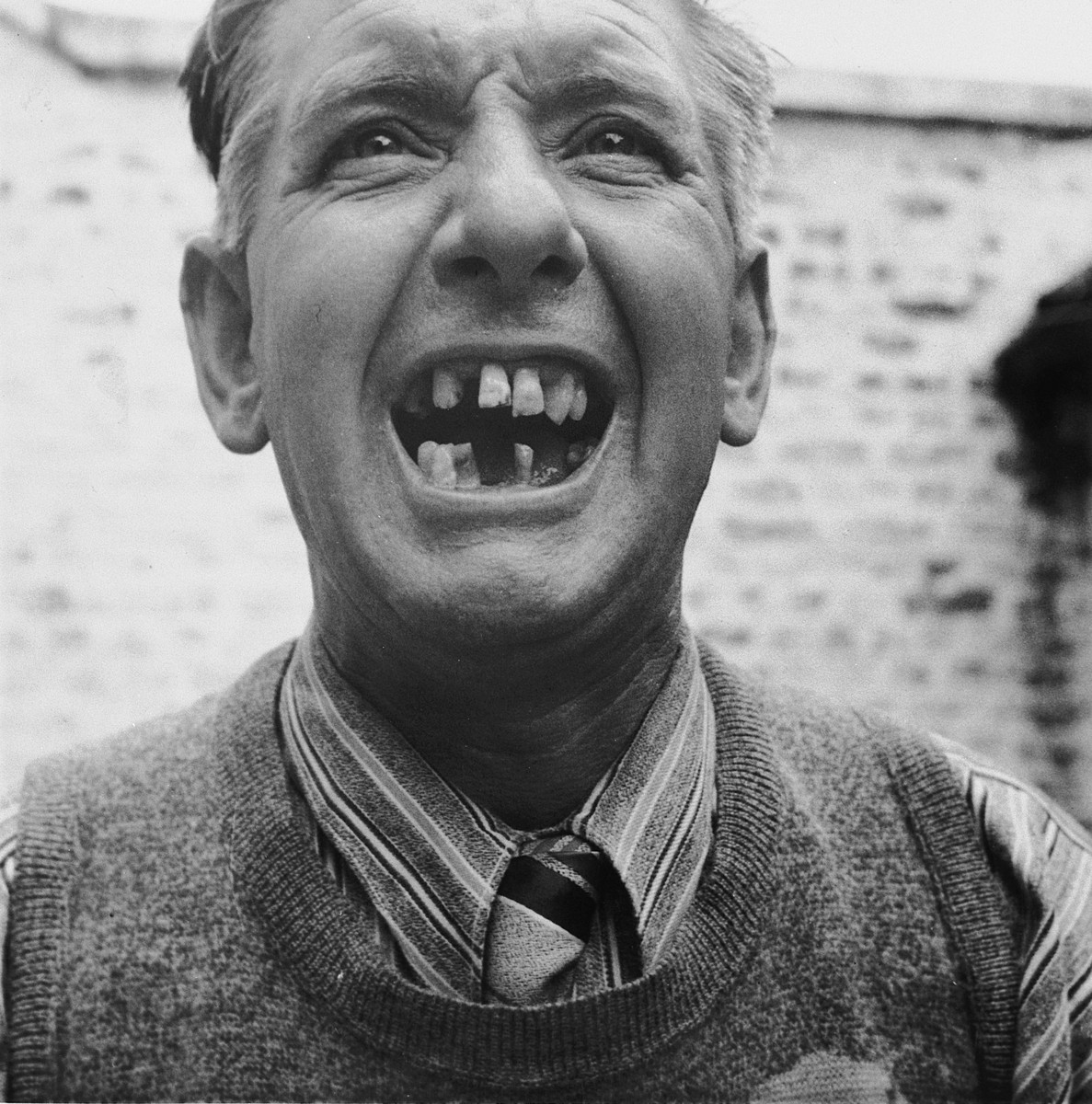
Some prisoners tried to fake a greater weakness than the real one. It didn’t help at all since the SS were never impressed by it but on the contrary tried to get weak people completely down. A pedlar from Antwerp (#22 I. Neumann) a dwarf quite insane, was brought to the camp for ‘being too late outside in Antwerp. He was used as a puppet by the staff who had him dancing when visitors came or singing. He got light work but enjoyed bad treatment from the head of the room #1. Very often, he didn’t get any breakfast since his bed was not made according to the rules (he was really unable to do it). Of course, he was unable to perform any decent P.T. (He didn’t find out the difference between right and left). And very often he was physically punished for it. He died completely exhausted five or six months later.
(signed) Paul M.G. Levy
Extract from a Statement made by Mme Marguerite Paquet, rue de Zéphyr, 28, Wolluwé Saint Lambert (Bruxelles) on October 30, 1944
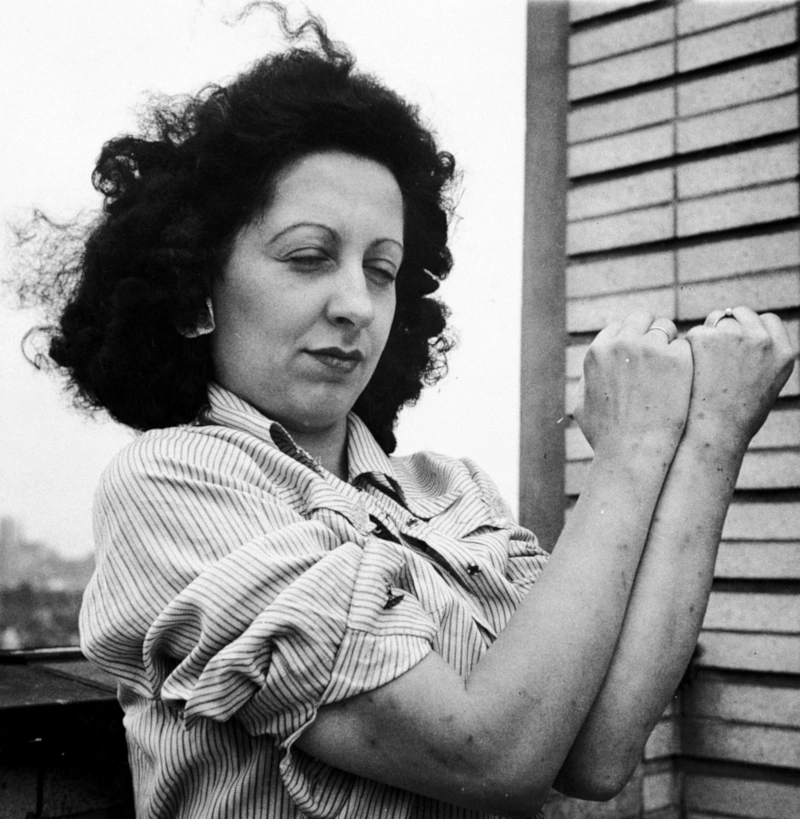 At Breendonk I lived in a cell (Room 8 – Cell 16) upright from 06.00 in the morning til 20.00 at night and sleeping during the night without covering or mattress. During my stay, I had handcuffs both day and night: they were only taken off for ten minutes in the morning to allow me to empty the white metal coverless bucket, which served me as a latrine. This emptying took place inside the camp, where I was led by an armed soldier, my head being covered by a hood.
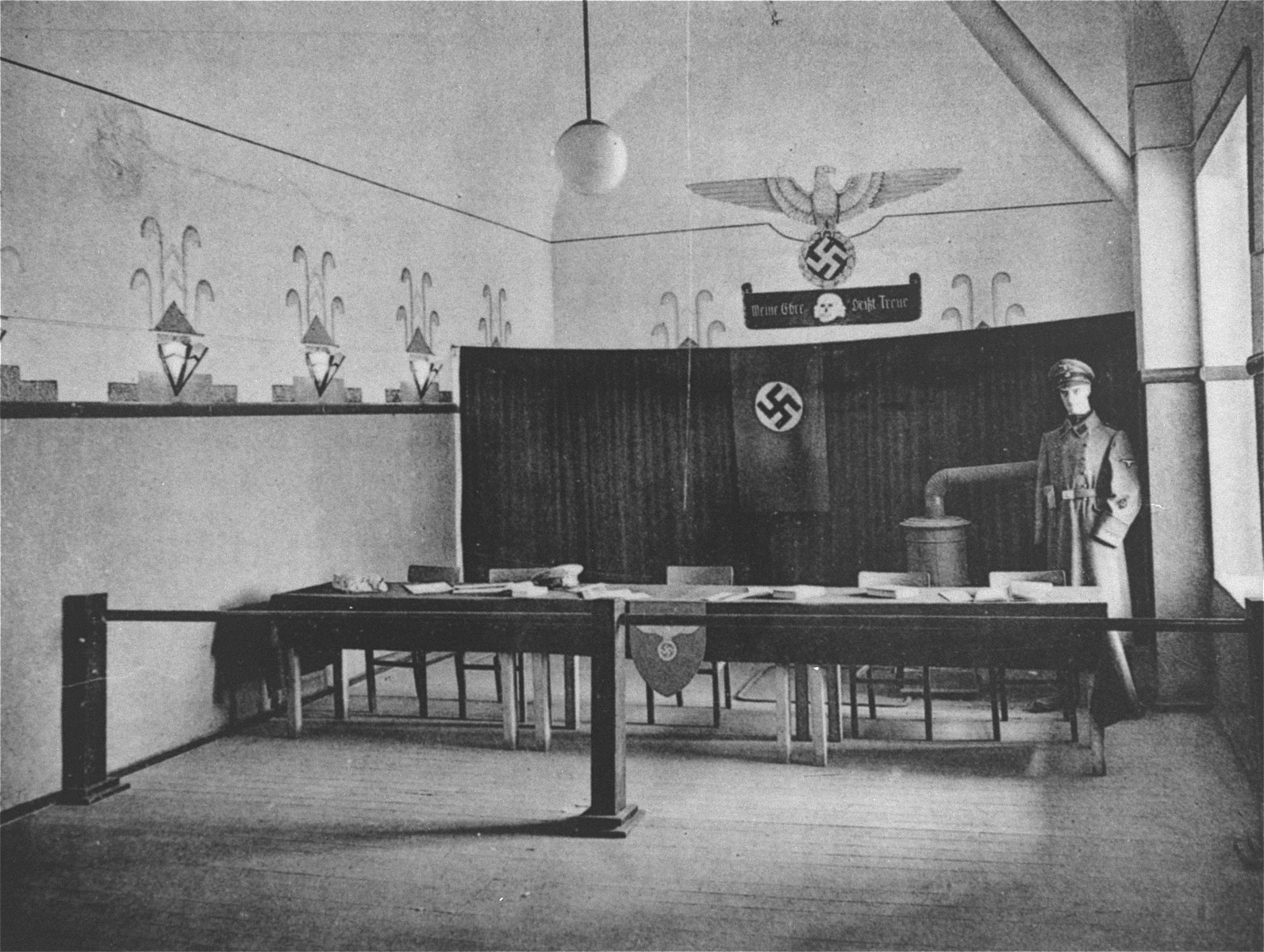
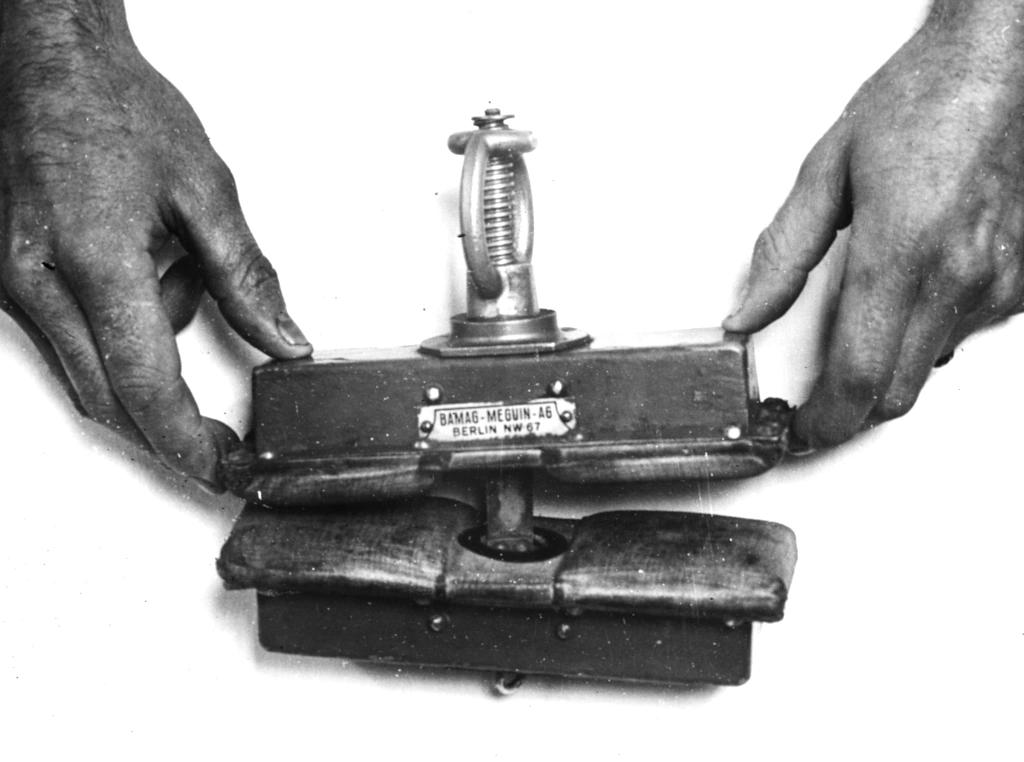
I was interrogated six or seven times in the SS room. This was a round room without windows, with a table and a bench on which the SS sat as spectators. On the left at the end was a pulley attached to the ceiling from which passed a rope ending in a running knot. My hands were tied behind my back with big wood fibre handcuffs, which were passed through the running knot. Entirely naked, I was lifted above the ground and beaten with a rubber truncheon covered in leather and wielded by SS-Sturmbannführer Phillip Schmitt, SS-Obersturmführer Arthur Prauss, and SS Fernand Weiss and SS Richard De Bodt. In the course of one interrogation, I had my nails crushed in a kind of iron letter-pressing machine.
After the first interrogation, the medical orderly, Vliegers, gave me an injection in the breast. Thinking that it was intended to stupefy me, I took advantage of a moment’s inattention to put my fingers down my throat, thus making myself vomit. I heard the orderly say to the SS Schmitt ‘It’s not good, the injection makes her sick.’ In addition, I, as well as my cell companions, received almost every day punches and truncheon blows, which, among other things, broke my teeth. In the course of the daily outing to empty the bucket, I received a bayonet wound in the arm, the sentry thinking that I was lifting up my hood. Another time, he struck me with the stock of his rifle in the back of the neck, resulting in a curvature of the spine.
(Note 1) The letterpress (fingers crusher) found at Soignies (Belgium), which is referred to in #47 (above) of the report, was taken to Mme Paquet. She identified it as identical to the instrument with which her fingernails had been crushed off. She was loath to look at it for long and expressed a wish that it might be taken away as quickly as possible.
(Note 2) Mme Paquet was a member of the underground movement.
Appendix C
Notes made as a result of two interviews with Adolf Singer, 60, Place Colignon, Schaarbeek, Bruxelles, and Austrian Jewish Doctor
(Entered Breendonk on March 3, 1941, and left on March 31, 1944.
Adolf Singer was arrested for entering Belgium from France without the permission of the German authorities. He was released upon the arrival of Allied troops in Belgium while being incarcerated in the Caserne d’Ouain (Malines) in preparation to being sent east. Singer did not know where the bodies of the Breendonk victims were taken for burial, although to his knowledge, some three hundred people were shot and about fifteen hanged during his time at the Camp.
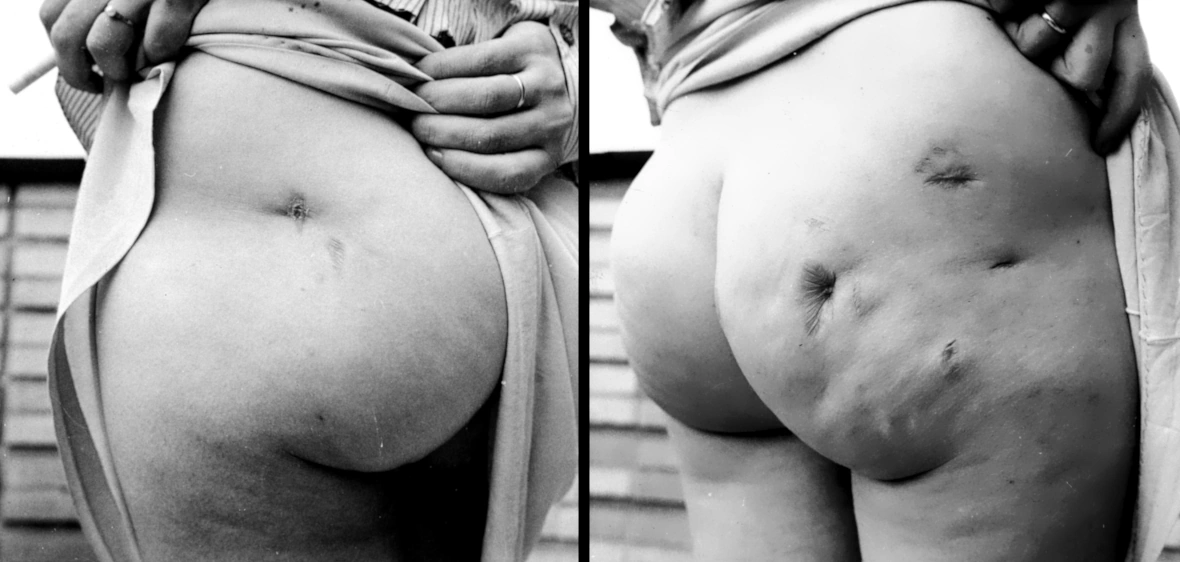
In practice in Vienna (Austria) as a doctor before the Anschluss, Singer was appointed to assist in the Breendonk infirmary. He held this post for a year and a half. In this capacity, he entered the ‘torture chamber’ to treat the victimùs of the ordeal. To his knowledge, five or six women were tortured in this room and received just as brutal treatment as the men; suspension, lashings, beatings, etc. During the winter of 1942/1943, he personally attended a Belgian woman, a lawyer’s wife, who had been severely beaten after being suspended from the pulley on the ceiling. He treated her in her cell. Her thighs were badly marked. She was later sent to Germany. He also treated Mme Paquet for heart trouble (Appendix F). Singer was only allowed to attend non-political prisoners. He worked with the following medical orderlies: one named Kemp, a good man who did as much as he could for the prisoners under his care; another one named Felsegger, a really bad character who beat the patients brought before him, the worst type possible; and finally another one named Fliegauf, a brutal man who ill-treated those under his care.
The German doctor who was responsible for the camp in the beginning was named Kochling, and he really did nothing for the prisoners. He visited the camp twice a week but hardly cared about the conditions. Many men died because of his indifferent attitude. He was succeeded in his job by a Major Pohl, a Wehrmacht doctor who did a great deal to improve the conditions in Breendonk and who personally intervened with General Alexander von Falkenhausen to secure more food for the prisoners. He was a good man.
Singer, also knew Mrs Schmitt, the wife of the Camp Commander, and says she has sadistic tendencies. She would watch the prisoners work and faint from ill-treament. She acted as her husband’s secretary for a time. She was about five feet six inches in height, had dark hair and eyes, full lips and had a sensual apparence. SS-Sturmbannführer Phillip Schmitt and SS-Obersturmführer Arthur Prauss were responsible for making the prisoners stand naked while awaiting medical inspection. They sometimes had to stand for nearly two hours while waiting to be examined. Prisoners were often lousy in spite of attempts at disinfection. Each new arrival from another prison brought more lice with him. The most men at one time in the camp numbered six hundred or slightly more. The most in the infirmary at one time numbered one hundred and fifty. To Singer’s knowledge, about five hundred men were killed or died in Fort Breendonk during his time there. He knows of no women who were killed.
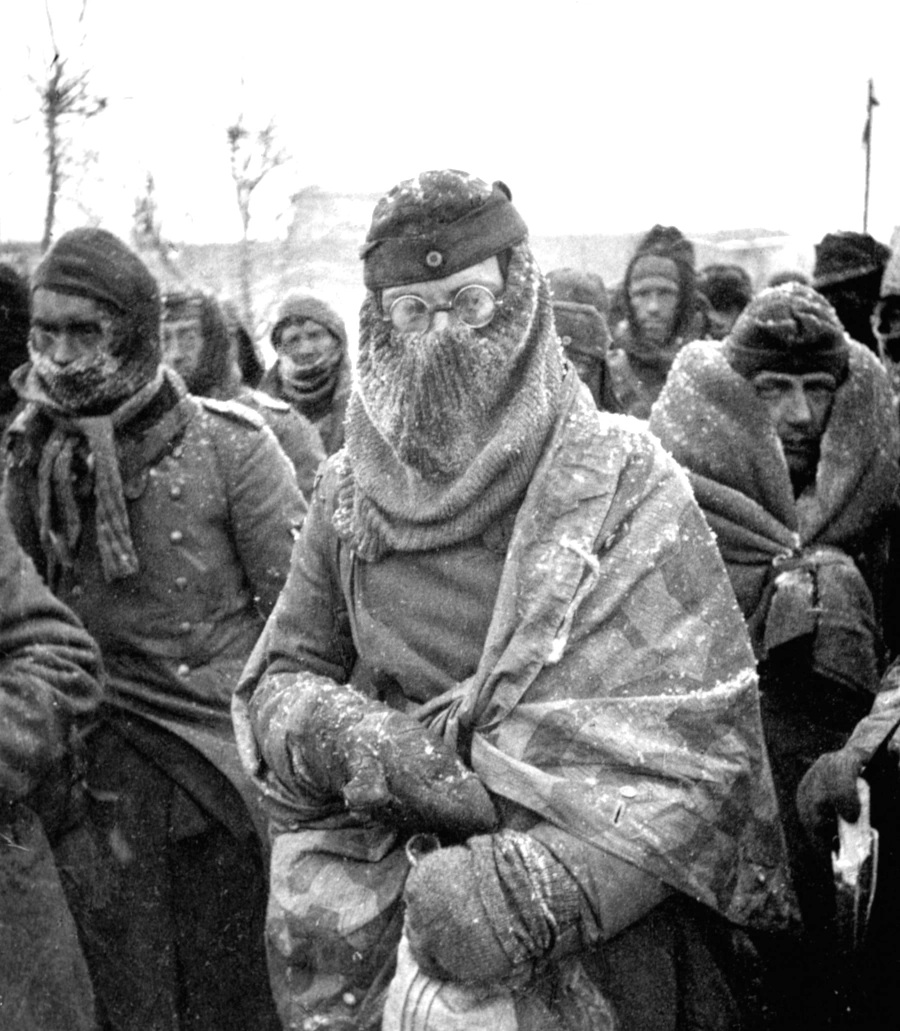
After the fall of Stalingrad (URSS), the SS-Obersturmführer Hans Kantschuster gave an order to SS Fernand Weiss and SS Richard De Bodt that eighteen Jews and two Aryans were to be thrown into the water because he said the Jews were responsible for the Stalingrad defeat and Russia coming into the war. These men were thrown into the water and beaten on the head until they drowned. Singer saw the bodies afterward.
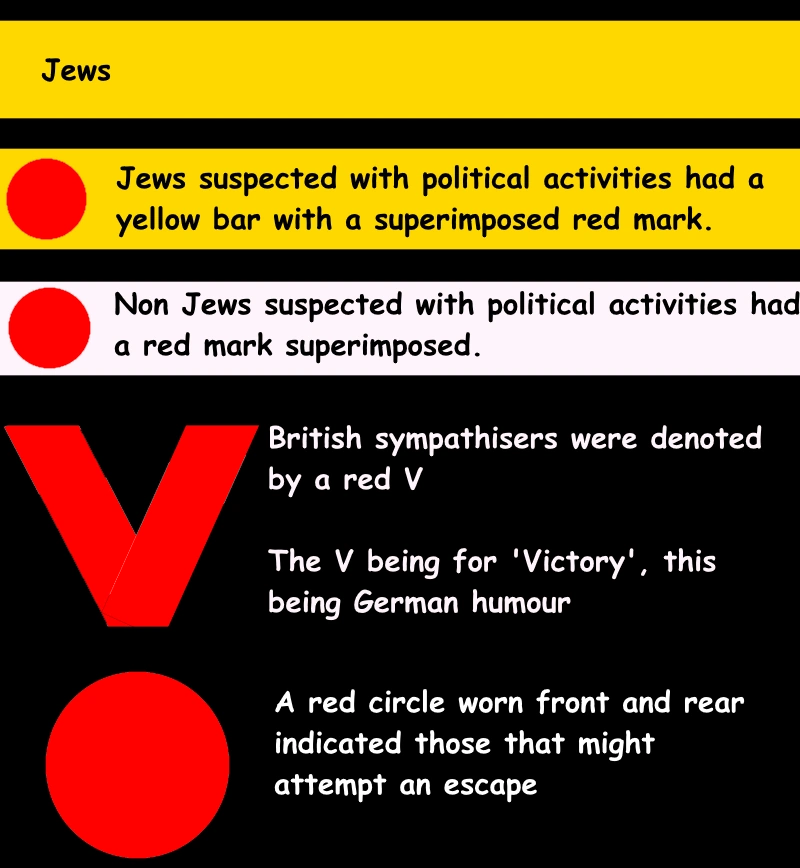
Sings Used to Mark the Prisoners at Breendonk
(as stated by Dr Singer)
Appendix H
Notes on my stay at Breendonk Camp, April 2, 1943 to May 21, 1943
T. Frankignoulle
I was arrested at home at 04.00 in the morning by a sergeant and two gendarmes. I was taken to Gestapo HQ, avenue Louise, where I was put in a garage, face to the wall, guarded by two sentries who were already indulging in brutalities against the men who were brought there. Certain prisoners who were made to keep their hands in the air for half an hour, were kicked, punched and beaten with rifle butts. I remained standing without moving until midday. Then the men were loaded into lorries (forty-eight in mine) and in the most impossible positions. We were taken straight to Breendonk. On our arrival, the ill-treatment began immediately. We were lined up in two (we were seventy-three in number) in the tunnel which leads to the camp and lashes of the whip fell like rain on those who dared to move. The lieutenant set the example.
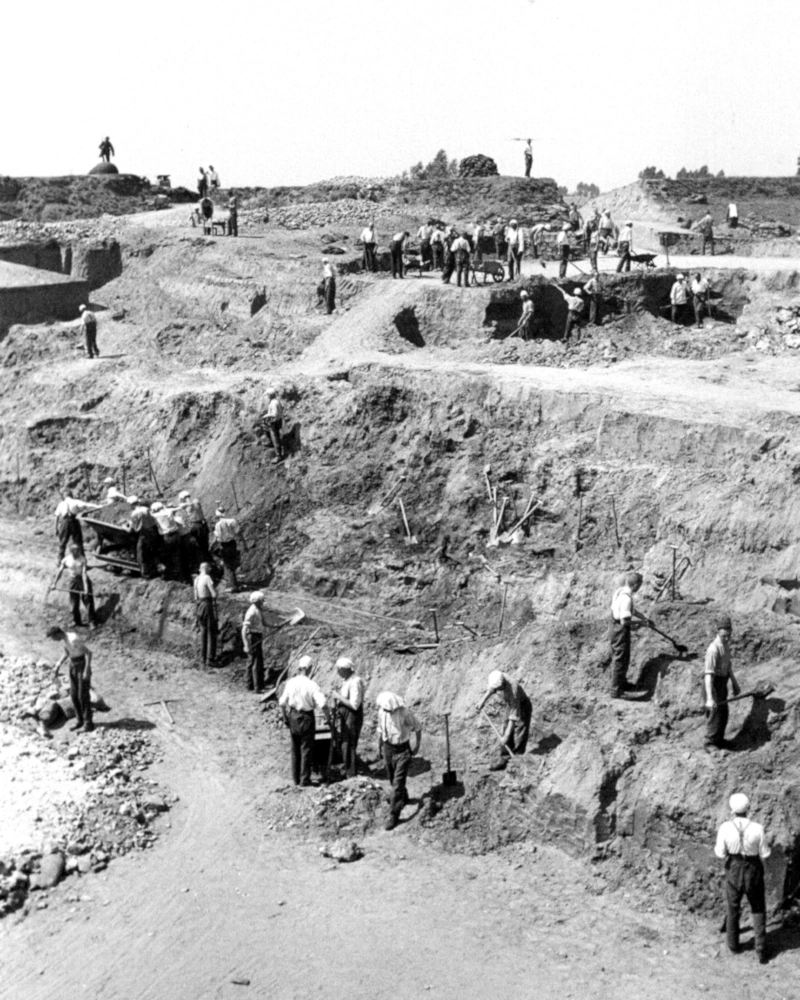
We were immediately sent to the barbers (hair, beards and moustaches cut off), divented of our civil clothes and everything we had on us, papers, money etc., and dressed like convicts (khaki trousers and coats with numbers and distinctives signs, after which we were taken to a room containing forty-eight prisoners. Toward 14.00, we went outside and were handed over to the Belgian SS who made us do marching drill. We had to throw ourselves to the ground, crawl, etc., this to the accompaniment of many a blow, and without regard to age or state of health. The next day, we were put to work, digging, working with the pick, filling and wheeling barrows and carrying baskets, picking up stones, always under the threat of blows.
As soon as we arrived we could see the pitiful state of the unfortunate people who had preceded us. Some were covered with sores and boils. The torturers of the camp nearly always set on the same ones. I have personally witnessed atrocities which pass imagination. A Jew one day suffered such martyrdom at the hand of the head of his room, a German called Oblatt, that he died the following night. The scenes were of a daily occurence. Another day, a prisoner was caught by a Flemish labourer who worked on the farm, whose name was Amelinckx and horribly beaten for having taken a piece of swede. An SS called Peleman who came along, fell on the unfortunate man with blows and kicks, leaving him covered with blood. Almost daily we hear the frightful cries of men and even women, who were undergoing the most terrible tortures in the rooms designed to make them talk. I remember the cries of one woman which lefta most atrocious impression on my mind.
We were ill-nourished and after a few days almost the whole of our contingent were the victims of lice. We had to carry out the most filthy tasks, empty the ditches of dung-water, etc. In the yards were we worked our hands were easily injured. We received no treatment and on our return to camp we were made to clean our shoes, shovels and picks etc., in a great trough full of muddy water containing the remains of urine and other impurities. A day rarely passed but the prisoners, lined up in the courtyard, had to witness the punishment of one or the other of the men, called from rank to receive, bent over double, up to twenty-five or thirty strokes of a stick. It was nearly always the Belgian SS Weiss who was alloted this atrocious job, which he carried out with unparalleled fury. The day after, he was beaten in this manner, a man whose back was but on single sore, was made to work all day at the hopper with a sackful of bricks. He received many a blows in the course of that terrible day’s work. We were not even quiet at night. Several times we were woken and beaten for a trifle.
On another day, all the occupants of our room were punished and sent to the ‘Stone Job’. That day, we were put on loading stones, some weighing up to thirty kilos (sixty pounds), on our shoulders, and carrying them seven hundred yards away. This work had to be carried out at the run and lasted for two and half hours.
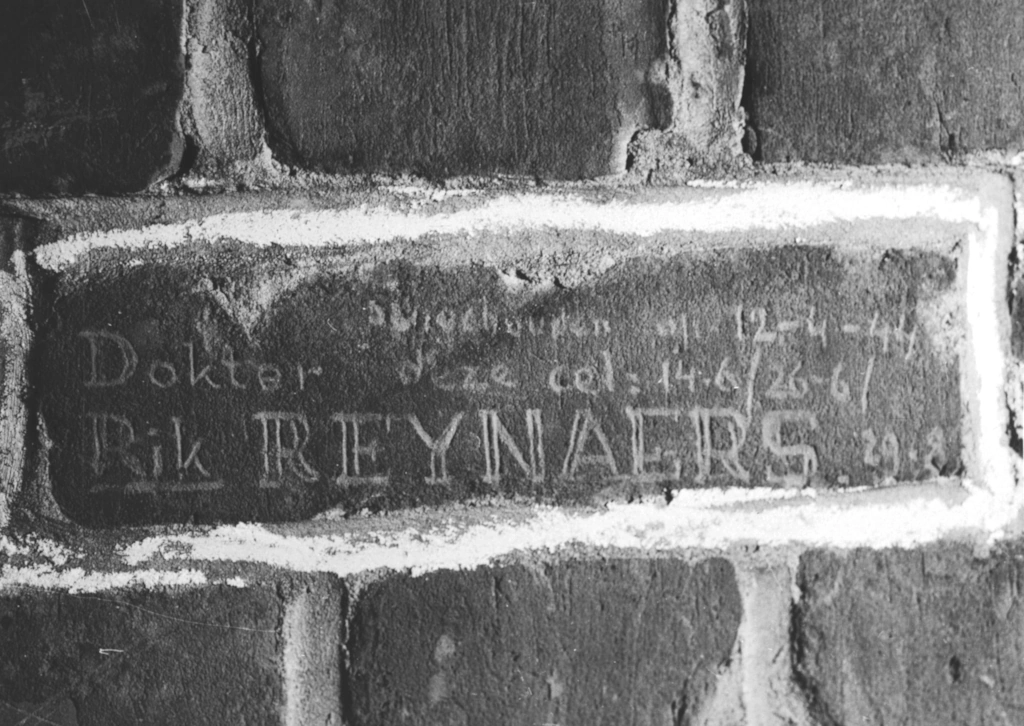 My wife sent me various parcels of clothing and food. Nothing, however, was given to the prisoners.
At the beginning of the month of may, the prisoners who were working as carpenters had to prepare the scaffold and gallows intended for some people condemned to death. I myself worked on the cleaning of ground which the Nazis were preparing for the place of execution. It was opposite the ten posts where numerous Belgians had been shot before. On May 10, 1943, they made us stop work sooner than usual. The Belgian SS De Bodt had told us there were to be three hangings. The Germans had made a real ceremony of it. There were many officers and members of the Gestapo there to witness the execution. I saw from my window the procession crossing the courtyard. Poor Frateur, who walked first of the three condemned (they all had their hands tied behind their backs) was led by the left arm by the lieutenant, and by the right arm by a member of the Gestapo. The second was held by the Belgian SS Weiss, the third by the other Belgian SS De Bodt, and both of them by a member of the Gestapo. A quarter of an hour later, the procession repassed through the courtyard. A car contained the coffins of the three victims. The next day, I was able to ascertain that they had been hung with chains.
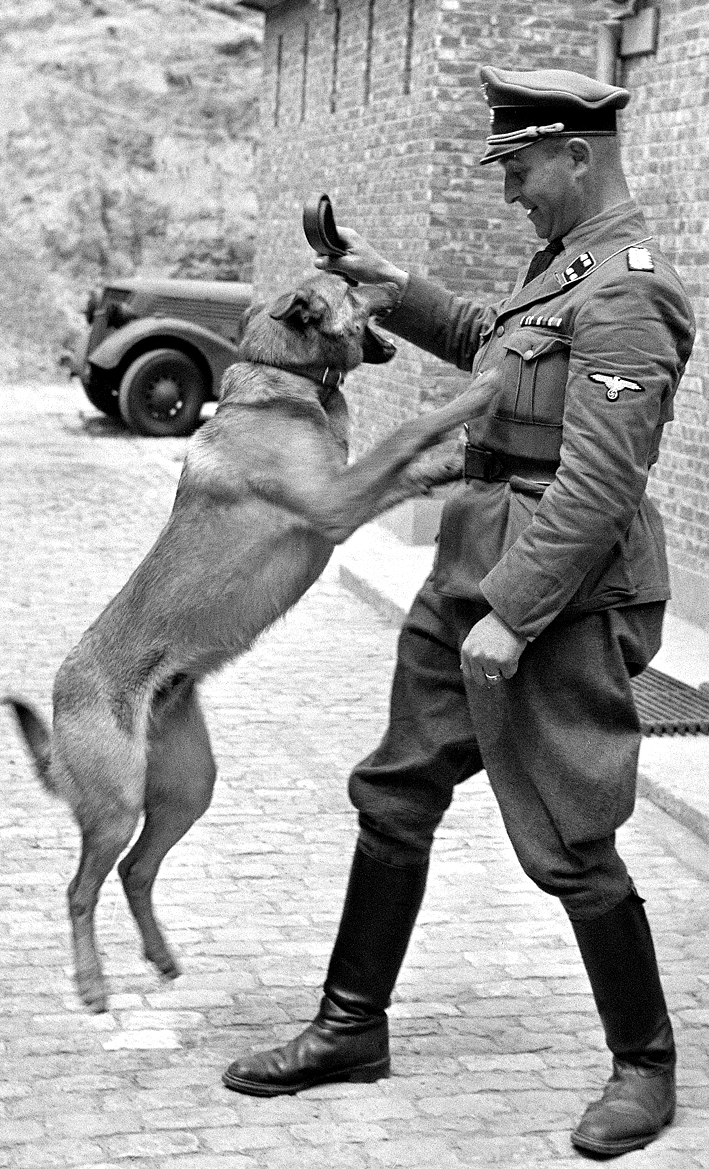 The Camp Commander, SS-Sturmbannführer Phillip Schmitt, had a big Belgian Malinois dog called Lump. This dog cruelly bit several internees. SS-Obersturmführer Arthur Prauss;, speaking to the dog, said in so words ‘would you like to tear them all into pieces’. Schmitt’s wife often walked about the yards all dressed up. A little girl, the daughter or a relative was also seen on this ground. She might have been twelve or thirteen years old.
The camp surgery was open in the mornings. The sick or wounded hesitated to go there. Sometimes you got blows there. Sometimes, the corporal medical orderly exempted a man from work. But he had to go on parade in the courtyard. It was SS-Obersturmführer Arthur Prauss who decided in the end. This he sometimes did with strokes of the stick. Some men were hungry. They picked up whatever they could, grass, roots, leaves, potato peelings or even bones buried in the mature. A dead lamb, stripped of its fleeces, was burried. Some prisoners having seen this, disinterred the lamb and ate it.
I remained two months at Breendonk and three months at the Citadelle de Huy. My health was affected by it. I had to give up my employment as a civil servant for seventh months. I underwent an intestinal operation in July 1944. I am still to this day underweight by about thirteen pounds.
(signed) T. Frankignoulle
34, rue de Parme, Saint Gilles, Bruxelles
November 3, 1944
 Appendix I
Statement made of an interview with Emile Scieur
rue Massart, 27
Monceaux-sur-Sambre, on November 25, 1944
Emile Scieur entered Breendonk on December 21, 1942, and left on December 17, 1943. During this time, five months were passed at the Sainte Marie Hospital in Antwerp. He was arrested for terrorism. Emile Scieur underwent a first questioning in the torture room where he was hang by his hands bound behind his back. In this position, he received numerous blows from a lasch which rendered him unconscious. A second questioning was later attempted with the same methods as the first. No satisfaction was obtained.
It became known to the SS guards that the prisoner in Scieur’s room were complaining that packages sent to them had been stolen by the SS personnel. This was true as no package that was sent was ever received. For the above reason, thirteen men from the room were taken to the torture chamber for punishment and example. During this phase, Scieur had his teeth broken by blows from the fists of the Belgian SS Weiss.