



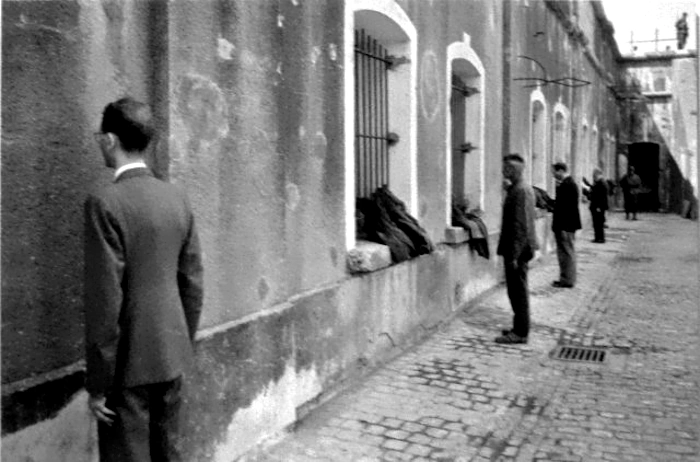
(16) Prisoners were arrested by the Gestapo or Secret Police and taken first to the Police HQ. Sometimes they were interrogated and beaten up there, but this was not an invariable rule. Sometimes they were charged with an offence against the Germans, and sometimes they were not. Quite a number of prisoners were sent to the camp from other prisons. On entering the camp, prisoners were to stand strictly at attention inside the entrance of the fort or inside the prison yard. They were usually made to stand with their faces against a wall. Sometimes they were kept standing for only a short while, but more often it was several hours. During this time, they were not allowed to move or go to the lavatory. If one wanted to go to the lavatory, he relieved himself where he stood and was punished by the guards for uncleanliness. The batch of prisoners that entered with M. Antoine Abbeloos of 627 Chaussée de Mons, Anderlecht on June 22, 1941, was kept standing at attention for forty-eight hours. They were not allowed to move and were not given any food or water. They collapsed like flies with heat, thirst, and fatigue, whereupon they were revived by the guards kicking them and made to stand at attention again. After this period of standing at attention, prisoners were taken to their rooms or cells.
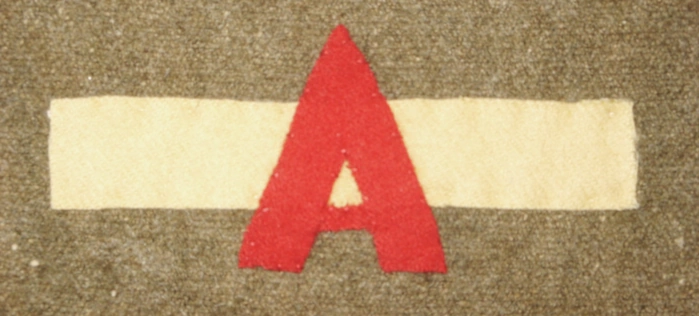
(17) Shortly after this, they had to hand in their clothes and all their personal belongings and received a dilapidated prison uniform instead. This prison uniform consisted of old Belgian army uniforms, a pullover or shirt, a cap, a belt, and a pair of sabots. The sabots were often too small, whilst it was often forbidden to wear the cap because it had to be carried in the belt. Each uniform had sewn on it the prisoner’s number and a distinguishing mark showing the class of prisoner to which he belonged. Some of these uniforms can still be seen in the fort. In addition, each prisoner was given a towel, but no soap was issued. Prisoners who were locked up in the rooms were given two or three thin blankets and a paillasse. Prisoners locked up in the cells were not given, as a rule, any form of bed covering.
(18) The prisoners then had their head shaved. Any prisoner who had a moustache or beard also had it shaved off. Prisoners also had a brief medical inspection during which they were made to stand naked in the prison yard, no matter what the weather was like.
Allotment of Prisoners to Rooms or Cells
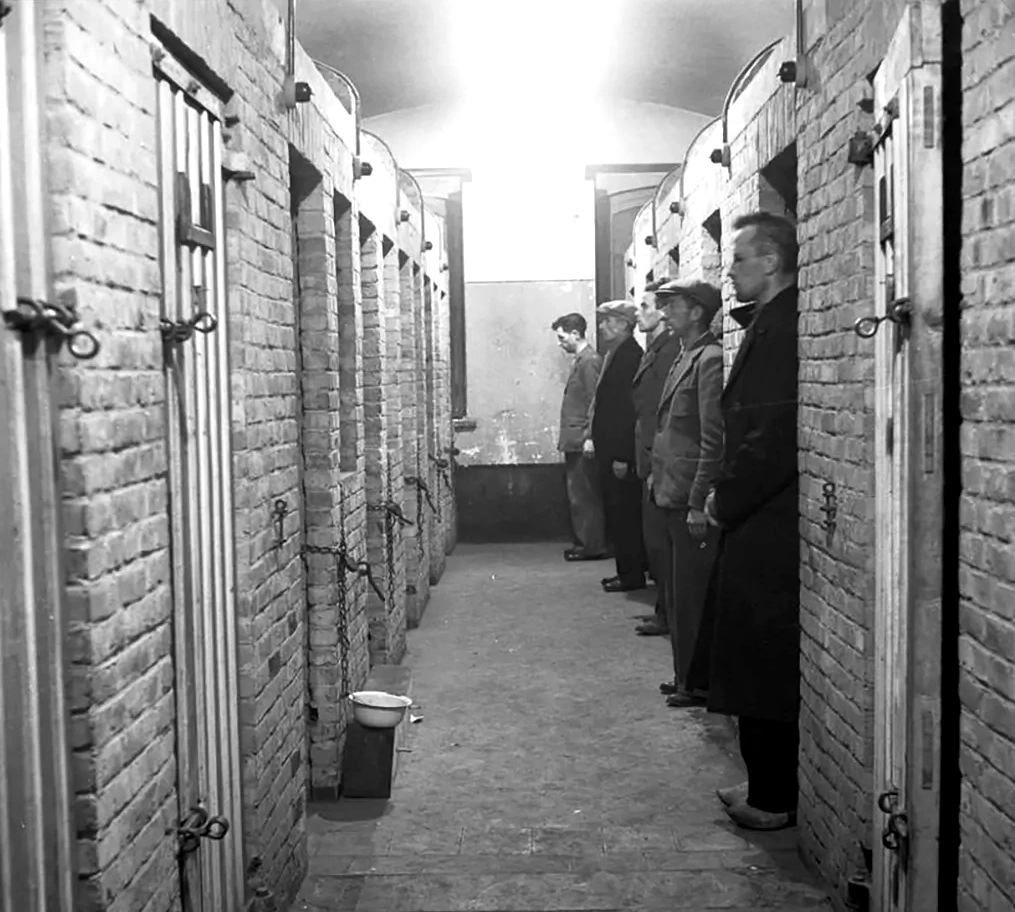
(19) The majority of the prisoners lived in the barrack rooms, but those who were considered to be more dangerous were kept in the cells, whilst the most dangerous type of prisoners were locked up in the dark cells. Quite often, the prisoners in the cells or dark cells had handcuffs or shackles on the whole time they were there. The prisoner who was allotted to the cell which has the shackles cemented into the wall was made to eat his meals on all fours owing to the fact that the food was placed on the ledge of the trap-door in the cell door, and he was not allowed to lift it into the cell.
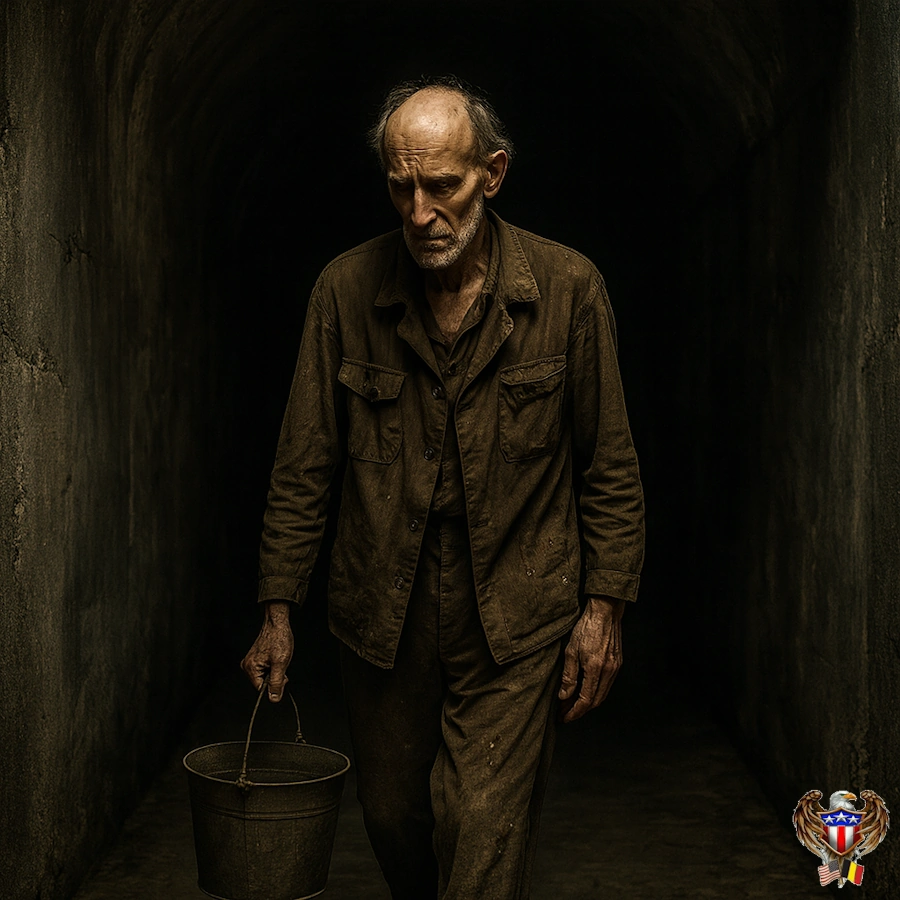
(20) Prisoners who were locked up in the cells were only allowed out under escort to empty their latrine buckets, which took a matter of four to five minutes daily. They were allowed no exercise. Prisoners held in the dark cells had a black hood put over their heads before they left their cells on this daily duty. Thin prevented other prisoners from seeing who they were and forced an additional punishment.
Food
(21) From the opening of the camp in 1940 until sometime in 1944, the food was very bad and quite insufficient. It was quite common for a prisoner to lose three to four stones after being in the camp for three months. According to the statement made by M. Moens, the cook, at Appendices ‘BB’ and ‘CC’, the daily ration per prisoner was originally:
| Food | Grammes | Equivalent in ounces |
| Bread | 175 | 6.125 |
| Jam | 20 | 0.7 |
| Sugar | 30 | 1.05 |
| Butter/Margarine | 30 | 1.05 |
| Cheese | 5 | 0.175 |
| Meat with Bone | 30 | 1.05 |
| Meat without Bone | 20 | 0.7 |
The total ration shown above is 9.8 ounces per man. The prisoners, however, did receive in addition a litre (1.5 imperial pints) of watery soup per day and two mugs of ersatz coffee. After some time, the bread ration was increased to 250 grammes per day, which is equivalent to 8.75 ounces, leaving the total ration exclusive of soup 12.425 ounces per man. The Belgian Red Cross made every effort to supplement the rations, but only a fraction of the goods they supplied reached the prisoners. From 1943, the Belgian Charity, the Foyer Léopold III, delivered all kinds of food, and from this time, the prisoners’ rations improved, although the prisoners only received a portion of what was delivered. In 1944, the food improved a great deal as the ration of bread was increased to 500 grammes per day (17.5 ounces), and 1 kilogram (2.2 pounds) of potatoes was authorised to be issued. The prisoners, however, rarely received their full rations. They rarely received any meat except perhaps occasionally in the soup.
(22) In the early days, prisoners were allowed to receive parcels of food, etc. from outside, but this privilege was stepped on the grounds that Communist literature was being smuggled into the fort and that the parcels contained rationed foods which must have been bought on the Black Market.
(23) There were three meals a day, which consisted of the following: (a) breakfast, which took place between 0600 hours and 0730 hours, depending on the time of year. A slice of dry bread and a mug of ersatz coffee; (b) midday: took place any time between 1100 and 1400 hours and consisted of a bowl of watery soup. The only thing that the prisoner says in its favour is that it was very hot; (C) supper, which took place at 1900 hours. Consisted of a piece of bread, sometimes a small piece of butter or margarine, or a teaspoon of jam. Occasionally, a potato or a salted sardine was also issued. A mug of ersatz coffee was also issued.
Clothing, mail, etc.
(24) Parcels of clothing which were sent to the prisoners by their families and friends were confiscated as a rule. Sometimes, however, they were delivered to the prisoners. Normally, prisoners were only issued with clothing when that which they were wearing was completely unfit for further use.
(25) As a rule, only non-political prisoners were allowed to write or receive letters, and this privilege was only granted occasionally. The civilian employees and sometimes some of the guards did smuggle letters in and out of the fort.
(26) No smoking was allowed. Prisoners found with tobacco in their possession were punished. Occasionally, however, the headmen of the rooms were given one cigarette, which they had to smoke immediately.
(27) All prisoners were made to pass through the showers once a week. Very rarely was soap provided, and the prisoners were rarely given time to dry themselves and accordingly had to put on their clothes whilst still wet.
(28) There was no chaplain attached to the camp. It is not known whether or not a German chaplain was present at all the executions. It is understood that one was in attendance on some of these occasions.
Medical Inspections
(29) There was no resident medical officer on the staff, but only a medical orderly. The medical orderlies who it is stated to belong to the Wehrmacht changed periodically. They varied tremendously – some were good, whilst some were very bad, and one in particular used to beat the patients. An Austrian Jewish doctor called Singer was imprisoned in the camp from March 1941 until March 1944, when he was transferred to another prison (Appendix A).
Shortly after he entered the camp, he was sent to work in the infirmary, where he remained for some eighteen months. This doctor was under the orders of the medical orderly and was not given a free hand to practise medicine. It was the medical orderly or one of the camp staff who really decided the medical condition of a prisoner. All prisoners were medically examined by a visiting German army doctor about once a month, everyone being inspected at the same time. For these inspections, the Commandant of the Camp ordered the prisoners to line up in the courtyard completely naked, regardless of the time of the year or weather. One of the visiting medical officers, Major Pohl of the Wehrmacht, was very sympathetic to the prisoners and endeavoured to improve the conditions of the camp. Another Wehrmacht medical officer called Kochling was completely indifferent to their fate. It appears that the medical inspections for all the prisoners, who sometimes numbered over six hundred, often only took a little over an hour. The camp authorities did take pains to prevent serious infectious diseases or epidemics from breaking out, hence the weekly bath. But often, scanty attention was paid to cuts, wounds, and sores on the prisoners’ bodies brought about by ill-treatment and under-nourishment. Normally, the infirmary contained forty to fifty sick prisoners, but on one occasion at least, it held over one hundred and fifty patients. Prisoners there received no extra food.
A Typical Day of a Prisoner Detained in Fort Breendonk
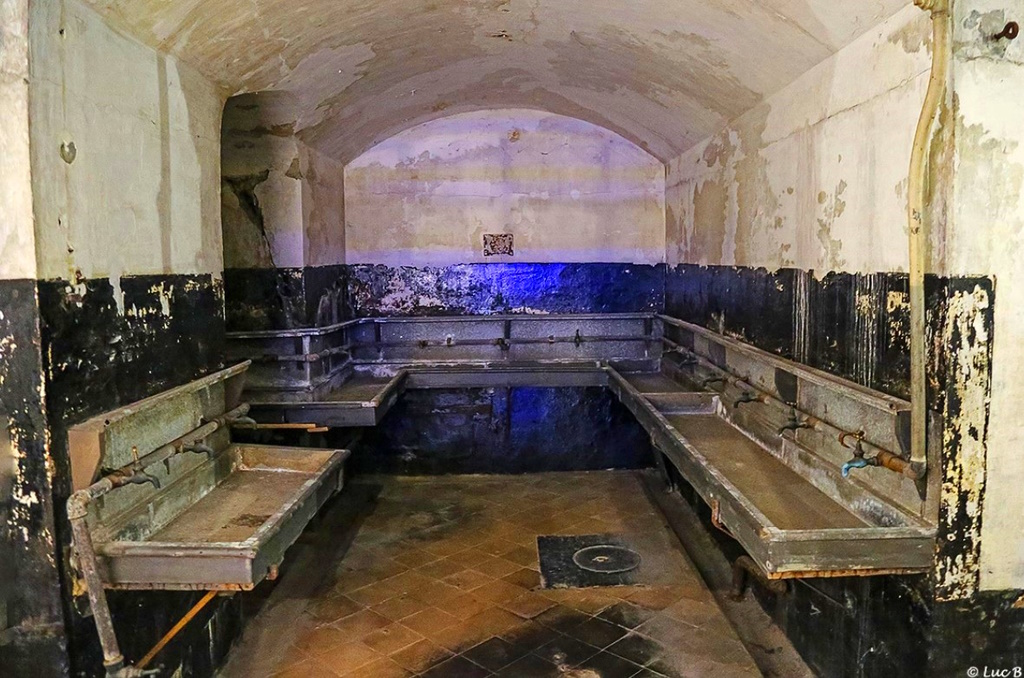
(30) At reveille, which is normally at 0600, the prisoners had to spring out of their beds. Anyone who was found in bed after reveille was lashed by the guards. Prisoners in the barracks rooms had to form up outside their rooms and stand strictly at attention. The head man of the room then reported his room to the guard. Any prisoner who was slow in getting out of bed was lashed by one of the guards, and in addition, often struck by the head man of the room. As so many of the prisoners were in a very weak state of health, or were old and infirm (some being as old as seventy years of age), they often did not move with the alacrity which the Germans demanded, and as a result, they were beaten without mercy. After the prisoners had been counted, they washed naked to the waist in the ablution benches in the corridors. They were not provided with soap. They were allowed about two minutes for washing. After this, they had to clean up their rooms and make their beds. All beds had to be made in the German army fashion with the blankets folded on top of the paillasses. Great importance was attached to the correct making of beds, and no breakfast was issued until the guards were satisfied with them. If they were not considered satisfactory, the guards used to show their displeasure by thrashing the prisoners.
(31) The prisoners were escorted to the lavatory, where they were allowed to remain for two minutes. This was often the only time during the day when they were allowed to use the lavatory. As many of the prisoners had dysentery, they wished to remain in the lavatory for more than two minutes, but they were not permitted to do so. Anyone who was considered to be loitering was beaten. Incidentally, no lavatory paper was provided.
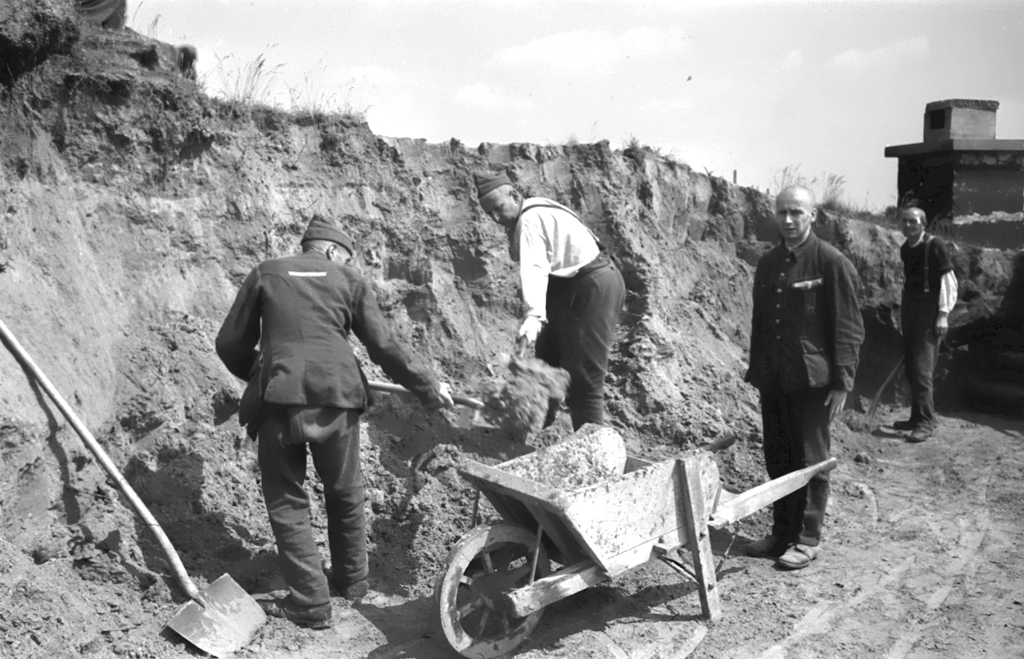
(32) The prisoners were then put to work. Some were employed in the carpenter’s shop, although most of them worked outside the fort. The outside work consisted of building a large embankment around the fort to prevent people from seeing inside, or removing the earth that covered a great deal of the fort, or breaking some of the concrete emplacements into pieces. Picks, shovels, and wheelbarrows were provided for this work.
(33) During this outside work, the prisoners were often, for no apparent reason, made to do exercise. They were formed up in squads and made to run, lie down, and run again. They even had to get down into a puddle of water. They were often lashed for getting their uniform wet or dirty. In addition, the prisoners were made to goose-step. Very often, the prisoners carried out these exercises with packs on their backs containing heavy stones, although this was normally reserved as a punishment if the guards thought the prisoners were not working sufficiently fast. The aged or infirm were not excused.
(34) If a prisoner wanted to use the lavatory, he had to ask permission from one of the guards and often stand strictly at attention whilst awaiting the answer. Very often, the guards would not answer for a considerable time or refuse permission. If a prisoner who was made to wait fouled his uniform, he was punished. All prisoners state this was a regular occurrence.
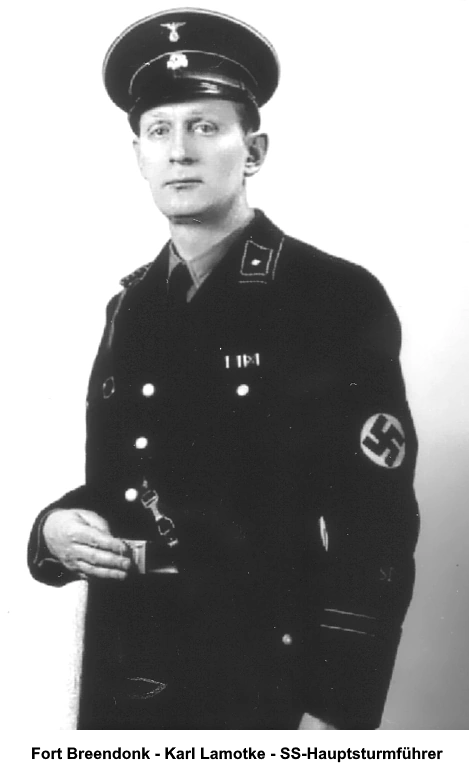
(35) All work and exercises were supervised by the German and the Flemish SS guards who took every opportunity of ill-treating the prisoners. They were helped by some of the headmen of the rooms (some of whose names will be in Appendix DD). When a prisoner was spoken to by an officer, he was made to stand at attention, and he was not allowed to answer back in any way. Some of the ordinary SS used to insist that prisoners also stood to attention when they addressed them. Anyone who answered back was flagged or accused of mutiny and committed to the cells. Work and exercise continued no matter how cold it was, and very often when it was wet. When the prisoners got wet through, they were sometimes allowed to return to their barracks room, but they had no other clothes to change into. The Jews were generally singled out for the worst treatment, and they were often flagged unmercifully and were made to undergo every humiliation.
(36) No prisoner was allowed to report sick without the permission of one of the guards. Even when a prisoner was flagged so that the wounds on his undernourished body were bleeding, permission had to be obtained to go to the infirmary to see the medical orderly. That permission was not readily given. If permission was obtained to report sick, the prisoner was kept waiting by the medical orderly for an indefinite time in the courtyard outside the infirmary. Prisoners were sometimes kept waiting for hours, and they were completely naked – that being the rule when reporting for medical inspection. As often as not, the prisoner was told to return to his work, as there was nothing wrong with him.
(37) The only break during the hours of work was for the mid-day meal, which took place any time between 1100 hours and 1400 hours or later. If the guards considered that any prisoner had infringed any of the rules or was not working sufficiently hard, the mid-day meal was postponed for two or three hours.
(38) The prisoners did not normally work after the last meal of the day but remained locked in their rooms. Each room had one small bucket for a night latrine. This was soon filled, and after this, there was no alternative but to use the floors of the room. When this happened, the guards invariably beat the prisoners, some of whom say that the guards endeavoured to make some unfortunate persons eat their own excreta.
(39) It appears that sometimes there was no work on Sundays, but this was by no means an invariable rule, as many prisoners say they were made to work every day.
Prisoners confined to the Cells
 (40) At reveille, their beds were pinned to the wall or removed from the cell. The only time the prisoners were allowed out of their cells was once daily to empty their latrine buckets and to wash, which took a matter of three or four minutes. Prisoner in the dark cells had hoods placed over their heads when they were escorted out to empty their buckets. This was to prevent their being recognized by other prisoners and to act as an additional torture. When these prisoners washed, no other prisoners were allowed to be present. These ‘cells’ prisoners generally did no work at all, whilst many of them were kept in manacles, handcuffs, and/or shackles. Prisoners in the dark cells were not allowed to lean against the whitewashed walls. If they did so, the whitewash came off onto their clothes, and when the guards saw it, they were beaten.
(41) Prisoners who normally lived in the rooms were committed to the cells for the most trivial offences. M. Paul Levy (In Appendix A) has stated that he was severely flogged with a whip by one of the SS lieutenants and committed to the dark cells for saying ‘I’ll try’ when one of the guards told him to move faster when he was working in the camp grounds. He was told he had mutinied. He was released on the third day and allowed to return to his room. On his return, his fellow prisoners told him that a parcel had arrived for him. Shortly after his release, the SS lieutenant who had flogged him came to the barrack room and asked him if he had anything to say. Levy asked whether he could have the parcel, which he was told had arrived at the fort for him, as it could contain food, and he was hungry. The lieutenant said that there was no parcel and marched him to the office to make sure. The SS in the office said there was no parcel. As a result, the same SS lieutenant who three days previously had flogged Levy for saying ‘I’ll try’ gave him a large cake. Levy states that this incomprehensible action made him think that he was in a lunatic asylum.
Interrogations
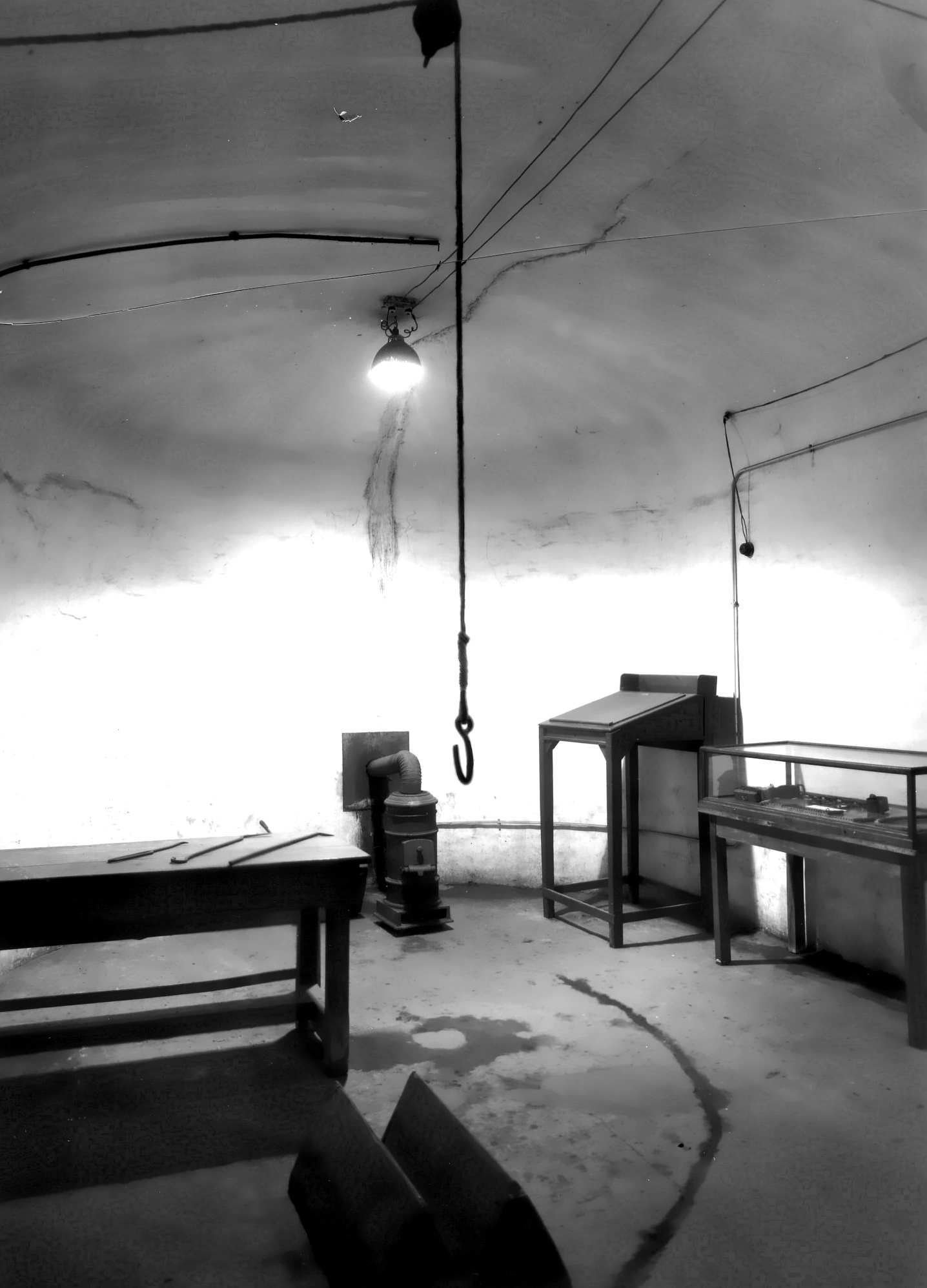
 (42) Prisoners were not normally interrogated until they had been in the camp for a month or two, on the principle that their powers of resistance would have decreased during that period. Some prisoners, however, were interrogated shortly after their entry. Interrogations were sometimes carried out in the office to the accompaniment of blows across the face and body. If the prisoner would not talk and the Germans particularly wanted to obtain information from him, he was taken to the torture chamber. Here, he was generally stripped naked. During these interrogations, the prisoner was usually handcuffed and subjected to one of the following tortures:
 (a) Being hit across the face or body, particularly in the region of the sexual organs with a truncheon or cat o’ nine tails.
(b) Doing laid across the table and thrashed.
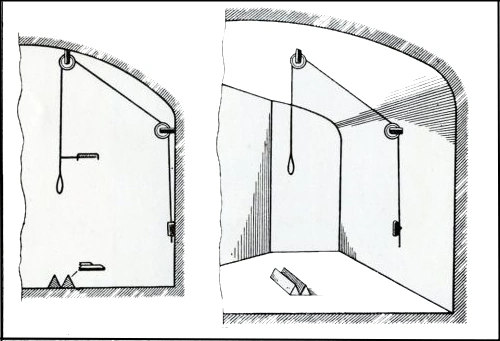
(c) Being hauled up to the ceiling by means of the pulley referred to in paragraph 10 above and thrashed whilst in mid-air, or released from the ceiling, so that he crashed onto the ground, or onto the sharp edges of wooden blocks.
(d) Being burned on the body with cigar ends.
(e) Having his fingers crushed in a press.
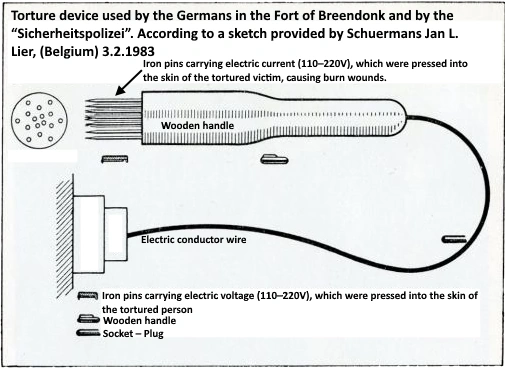
(f) Having his body burned with an instrument that was connected to the electric plug in the torture chamber. This instrument (figure above) consisted of a flat circular metal plate that contained several short needles with a wooden handle. It is believed that this instrument was brought to the Fort from Brussels or Antwerp.
(43) Women were not excused these tortures. Mrs Paquet, in her statement at Appendix F, gives details of the treatments she received in the torture chamber when she was interrogated whilst she was completely naked. Singer, the doctor who worked in the infirmary, in his statement at Appendix G, says that a Belgian woman was also beaten up in this torture chamber whilst she was completely naked.
(44) Before people could be subjected to torture, an application had to be made by the Commandant of the Camp to the SS HQ in Brussels, who, it is believed, had to apply to Berlin (Germany). It is understood that the camp authorities never waited for the reply to their application, but proceeded to torture the victims immediately.