



Instruments left behind by the Germans
(45) The following articles and instruments of torture were found in the camp after the departure of the Germans:
(a) A heavy leather whip.
(b) A string thong threaded with leaden beads.
(c) A pair of handcuffs.
(d) Two pairs of shackles.
(e) A form of chain handcuffs which can be tightened as required.
(46) The Camp moat has been drained in order to ascertain whether or not it contains any other instruments which the Germans may have thrown away in their hurried departure. Apart from a machine gun, ammunition, and various articles of army equipment, the only articles found have been a pair of shackles and a heavy hide whip.
(47) A press, similar to that used as a finger press in Breendonk, was found in a German HQ in Soignies (Belgium). It is understood that the press was designed as a clamp for the rudder of an aircraft when it is grounded. Mrs Paquet identifies it as similar to the instrument in which her fingers were crushed (Appendix F).
Places of Execution
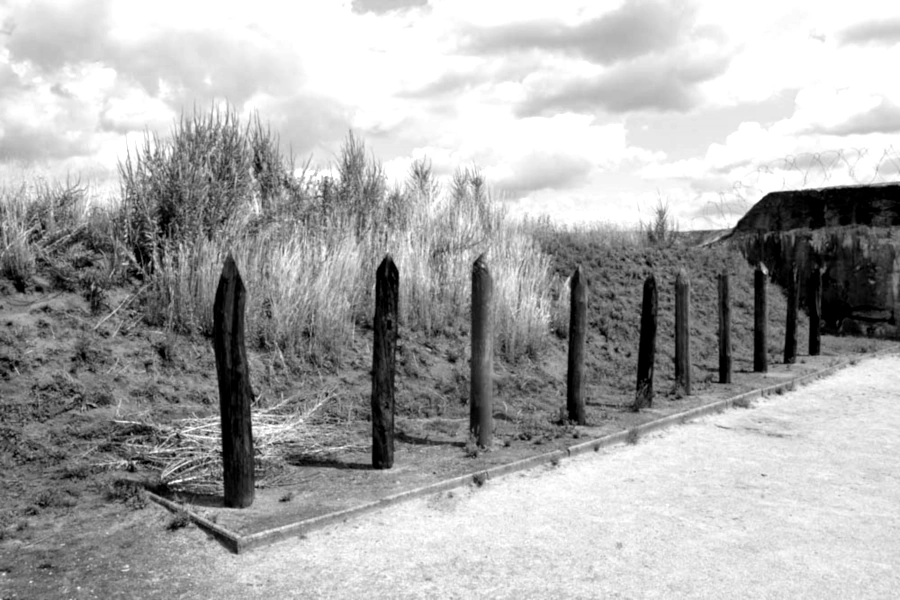
(48) Prisoners who were sentenced to death were generally shot. It appears to have been the custom for the condemned persons to erect the railway sleepers, which served as their execution posts. The prisoners were shot from about fifteen yards range. Ten railway sleepers have been erected in the fort in the place where prisoners say the shootings took place, the Germans having removed the posts before departure.
(49) Other prisoners were executed by hanging. The gallows was taken down by the Germans before their departure, but a facsimile has been constructed by the Belgians on the site of the original and from descriptions given by former prisoners. This gallows is built out-of-doors in a corner made by two walls. It consists of a platform with a trap door in it, which is operated by an iron handle. There are some stops for mounting the platform. Above the platform and resting on the two walls is a horizontal beam from which the condemned persons were hanged. Some ex-prisoners say that chains were used for the hanging and not ropes. Part of this facsimile was found in the fort, namely the steps and the iron handle. According to the cook Moens, the gallows was erected by the smith Karel Carleer about April 1944 (Appendix BB). De Schutter, the electrician, states that Carleer made the iron work, and the wood work was done by the prisoners themselves (Appendix Z). Franciscus Amelinckx, the former pig-man, states that the gallows was made by five prisoners (Appendix AA).
(50) It is not known how many people were executed. Moens states that the number was at least three hundred and fifty and that it included a French woman (the wife of an English officer) who was shot some seven or eight weeks before the Germans fled (Appendix BB). Lemaitre states that he has seen more than eighty persons leave for the execution cost, including Hermann, the Chief Postman of Brussels, Martial Van Schelle, the Olympic athlete and also a blind man (Appendix D). Frankignoule says that three persons were hanged on May 10, 1943, including one Fraiteur (Appendix H). Victor Trido says that twenty men were shot on January 6, 1943, and twenty-one on January 13, 1943, (Appendix A).
(12) In addition, a certain number of civilians who lived outside the camp were employed; one was a cook, another a gardener, and another engaged in looking after the livestock which belonged to the garrison. In addition, a local blacksmith who was in the SS was employed to do general repair work at the Camp. This man made some of the instruments of torture. Two other civilians were also employed at the camp from time to time, an electrician from the Breendonk village who locked the electric supply and a general contractor. The names and particulars of all the civilians referred to above will be shown later in the archive. Statements made by those available civilians will also be shown later.
Organization of the Camp
(13) Each room was in charge of a prisoner who was made responsible for the discipline and cleanliness of the room. Prisoners put in charge of rooms were nearly always German Jews. Apart from this, Jewish prisoners were generally kept quite separate from the other prisoners.
(14) Some of the SS guards were employed indoors, whilst some were employed outside. All the guards were armed, and they generally carried whips or crops, which they rarely hesitated to use. The Wehrmacht troops attached for guard duties did not come into contact much with the prisoners.
(15) All orders were given in German. Prisoners had to understand or face the consequences. Prisoners were only allowed to speak to the guards if they required anything. If they tried to indulge in normal conversation, they were invariably punished.
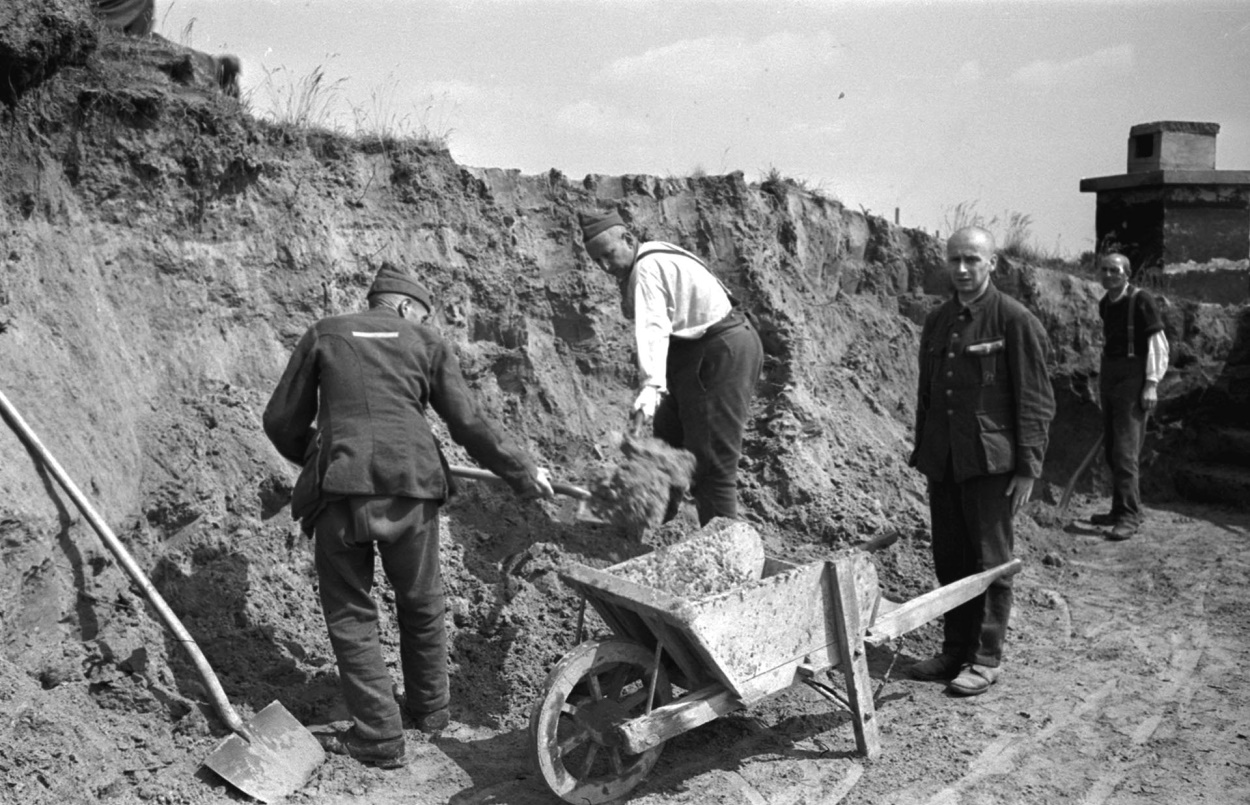
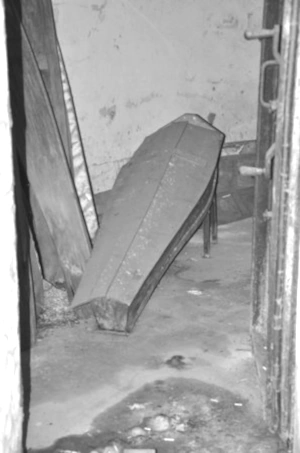 (51) Singer states that over three hundred people were shot and about fifteen people hanged between March 1941, and March 1844 (Appendix G). None of the dead, whether they were executed or died from other causes, was buried in the fort, except perhaps temporarily. They were taken away to an unknown destination. It is believed that a few of the victims were buried in some unmarked graves in the Camp in Brasschaat (Belgium) near Antwerp (Belgium), whilst a few may be buried in the unmarked graves at the Tir National (Brussels) referred to in paragraph (58) below. This information has not yet been verified. There are as yet no definite details available as to the burial places of the hundreds of victims who died or were executed in the camp. It is thought that many may have been cremated. All the dead were put into crudely and cheaply made coffins, whether or not they were executed. The coffins were not made in the fort. There are still a few coffins to be seen there.
(52) It is not known how many prisoners died in the Camp as a result of ill-treatment. Singer, the Austrian ‘Doctor’, says that over five hundred men died during his stay at the Camp from March 3, 1941, to March 31, 1944 (Appendix G). This figure includes over three hundred people who were shot and approximately fifteen people who were hanged. It thus seems that about two hundred people died in the Camp as a result of their ill-treatment, but it must be remembered that the Camp operation for over four years, and the information is available as to the number who died during the whole time the Camp was in operation. In addition, however, it must be realized that many of the sick were removed and sent to other hospitals (e.g., Antwerp), and no doubt many died there.
Escapes
(53) Very few prisoners managed to escape. In 1941, a Jew managed to escape, according to information received from Madame Verdickt (Appendix W). One prisoner who tried to escape was killed by the guards. (Details Appendix EE)
Charges, Trials and Releases
(54) Many of the prisoners never had any charge proffered against them. If a prisoner was charged, he was given no opportunity to defend himself or given any sort of a trial at the Camp. Sometimes, after a period of weeks or months, a prisoner might be released, even though he had been flogged and subjected to every kind of brutality during his detention. Very often, prisoners who were to be released were taken off work and kept in the infirmary in order to give them an opportunity to recover some of their strength and for their wounds to heal. Every prisoner who was released had to sign a statement which reads as follows:
UNDERTAKING
‘I, the undersigned, ………….. , hereby undertake in future to refrain from every political or propagandist activity. I understand that my release is governed by those conditions and that I am liable to fresh forfeiture of my freedom if I do not carry out this undertaking. I also declare hereby that I shall make no claim in respect of any measures which have been taken against me by the police. I am aware that I must say nothing about anything which I have seen during the time of my imprisonment, otherwise I shall be re-arrested and detained in a concentration camp.
I have to report immediately to …………… ,’
Statement by a Member of the German Security Police
(55) (Appendix FF) Contains an extract of a statement made by a captured Member of the German Security Police and who is in the hands of the Belgian Police. This statement confirms the stories of former prisoners.
Visit to Breendonk (1945 and 2025)
(56) It is suggested that readers of this report visit this camp, as it is impossible to convey the real atmosphere of this place on paper. There, they will see scratched on the walls of the rooms and cells calendars, names, messages, and drawings of the head of Jesus Christ. Many of these messages and drawings were scratched out by the Germans, but many still remain. (2025 – Fort breendonk)
Tir National
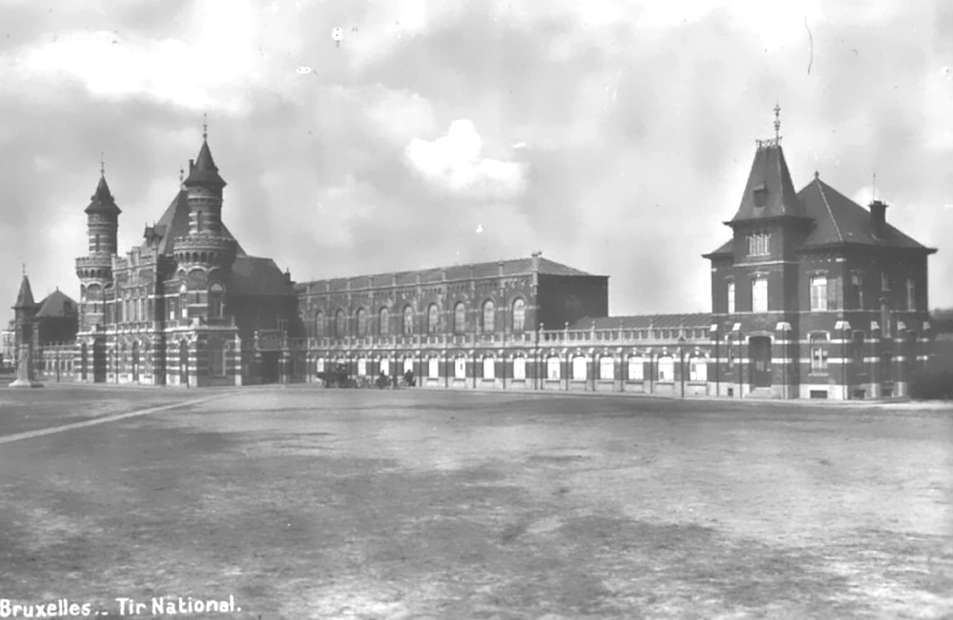
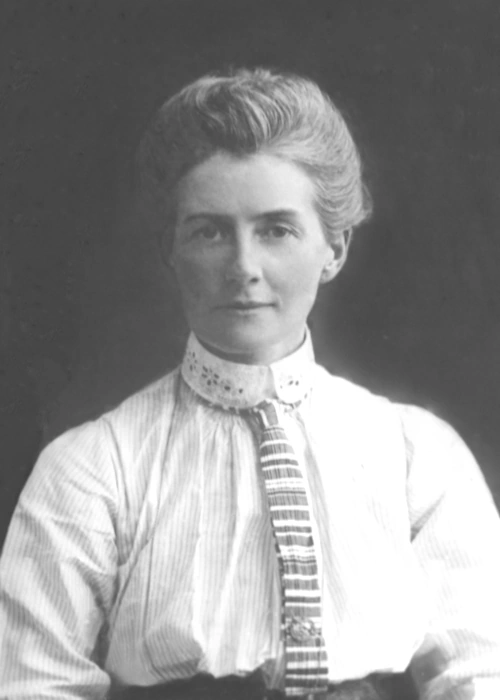 (57) This is a large barracks with rifle ranges. It is in Brussels (Schaerbeek). Nurse Edith Cavell was executed at the Tir National during the 1914/1918 war. Her statue, which was erected outside the barracks after the last war, was destroyed by the Germans in 1940. It is estimated that about a thousand people were shot here during the German occupation of Belgium during the 1940-1945 war, the victims being brought from different prisons throughout Belgium. The prisoners were tied to posts and shot from a range of about fifteen yards. The director, Maj Wastelain, found three of these posts after the Germans had left. He also found in a small shed some fifty posts ready as replacements.
(58) There are two cemeteries at the Tir National where some three hundred and sixty people are buried. Maj Wastelain has found a list of the people buried in one of these cemeteries and has thus been able to identify the graves, while the graves in the other cemetery are marked with numbers only. It must be remembered, however, that not all the victims were buried in these two cemeteries, many of the bodies being taken off to unknown destinations.
Germans and Collaborators Mentioned in the Report
(59) With regard to Breedonk, reference has always been made to the names of the permanent staff (Paragraph 11 and Appendix V), the names of the civilians employed there (Paragraph 12 and Appendix X) and also some of the head men of the rooms (Paragraph 35 and Appendix DD). The names of all other Germans and Collaborators mentioned in this report or in any of the appendices are shown in Appendix GG.
APPENDIX A
Some of the people who were imprisoned and ill-treated or tortured or killed by the Germans
Part 1 – Imprisoned in Breendonk Concentration Camp
#001 – Maurice Bouchery
Archival statement: Ex-Minister of Transport and first Vice-President of the House of Representatives in Belgium. Died in Brussels in November 1944, as a result of ill-treatment during his imprisonment.
Biographical note
Maurice-Marie Bouchery (1878 – 1944) was a Belgian Catholic politician who served as Minister of Transport during the inter-war period and later as First Vice-President of the Chamber of Representatives. Arrested by the German authorities in 1942 for suspected links with resistance circles, he was imprisoned in Breendonk and later in Saint-Gilles Prison. Released in critical condition, he died in Brussels in November 1944 as a direct consequence of the torture and privations endured during his detention. His name appears among the Belgian parliamentarians who perished under Nazi repression.
#002 – Oscar Van Kersbeek
Archival statement: Council of Malines and an ex-member of the Parliament. Died two weeks after his release as a result of ill-treatment.
Biographical note
Oscar Van Kersbeek (1882 – 1944 approx.) was a Belgian Catholic politician from Mechelen (Malines) and a former Member of Parliament. During the German occupation, he was arrested by the Gestapo for his suspected involvement with resistance activities and detained at Fort Breendonk. Released after a period of severe maltreatment, he died roughly two weeks later from the effects of torture and malnutrition suffered while imprisoned. Van Kersbeek is recorded among the political victims officially recognized by post-war Belgian authorities.
#003 – Albert Heindels
Archival statement: 11, Kolveniersstraat, Vilvoorde. Communistic Senator. Now a prisoner in Germany.
Biographical note
Albert Heindels (dates unknown) was a Belgian Communist politician and senator residing in Vilvoorde. Following the outlawing of the Communist Party under the German occupation, Heindels was arrested for his political activities and detained as a political prisoner. After initial imprisonment in Belgium, he was deported to Germany, where he remained in captivity at the time of the report. His name appears in records of Belgian deportees sent to concentration or labor camps for communist affiliation.
#004 – Jules Borremans
Archival statement: 161, rue Frères Treymans, Tubize. A member of Parliament. Now a prisoner in Germany.
Biographical note
Jules Borremans (born 1892 – fate unknown) was a Belgian socialist politician and Member of Parliament representing the Tubize district. Arrested by the German authorities for his political stance and suspected participation in resistance networks, he was classified as a political prisoner and deported to Germany. No definitive record of his liberation or death has been located, but contemporary lists of deported Belgian parliamentarians confirm his transfer to the Reich during 1942–1943.
#005 – Gaston Fromont
Archival statement: A member of Parliament and the Mayor of Willebroeck. Was imprisoned from February 1, 1941, to June 28, 1941. He was accused of sabotage. He lost 44 lbs during his imprisonment. He saw a Jew beaten to death. He himself was beaten many times and made to crawl using his elbows only. He does not know why he was released.
Biographical note
Gaston Fromont (1886 – 1959) was a Belgian socialist politician, trade unionist, and Mayor of Willebroek. Elected to Parliament before the war, he was arrested by the German occupation authorities on February 1, 1941, accused of sabotage and political hostility. Imprisoned at Fort Breendonk for almost five months, he endured continuous beatings and witnessed the killing of fellow inmates, including a Jewish prisoner. Released on June 28, 1941, without explanation, he later provided testimony that contributed to post-war Belgian inquiries on German atrocities. Fromont resumed public service after the liberation and remained active in local politics until his death.
006 – Jacques Ochs
Archival statement: Director of the Academy of Fine Arts in Liège. Was imprisoned in Breendonk from December 6, 1940, to February 20, 1942. His crime was being a Jew.
Biographical note
Jacques Ochs (1883 – 1971) was a Belgian painter, caricaturist, and fencing champion from Liège. A graduate of the Royal Academy of Fine Arts, he later became its director and was widely known for his political caricatures published in the Courage Illustré and Le Soir Illustré. Arrested by the Gestapo on December 6, 1940, because of his Jewish origin and satirical work, he was imprisoned in Fort Breendonk under harsh conditions for over fourteen months. Released in February 1942 after intervention by acquaintances, Ochs survived the war and returned to his artistic and teaching activities. His drawings and testimony became key visual records of the Breendonk ordeal.
#007 – Franz Fischer
Archival statement: Place Jamblinne de Meux, Brussels. A member of Parliament, Leader of the Socialist Party, and Honorary President of the Brussels Press (Serial 1–6 were imprisoned in Breendonk at the same time as M. Fischer). M. Fischer was only imprisoned in Breendonk for eight weeks in 1941. His account of life in the camp (Appendix B).
Biographical note
Franz Fischer (1887 – 1949) was a prominent Belgian socialist politician, journalist, and parliamentary leader. A key figure in the Belgian Labour Party (POB/BWP), he served as Member of Parliament for Brussels and was known for his outspoken opposition to the Nazi occupation. Arrested in 1941, he was confined at Fort Breendonk for eight weeks, during which he witnessed and later described the systematic brutality of the guards. After his release, Fischer continued to work discreetly with resistance contacts. Following the liberation, he played a visible role in post-war reconstruction efforts and remained a respected voice in socialist and press circles until his death in 1949.
#008 – André Denis
Archival statement: 23 rue Joseph Berger, Genappe. Son of LGen Henri Denis, a former Minister of War. Is a notary and President of the Genappe section of the Belgian Red Cross. His account of life in the camp (Appendix C).
Biographical note
André Denis (1903 – 1983) was the son of Lieutenant General Henri Denis, Belgian Minister of National Defense at the outbreak of the war in 1940. A notary in Genappe and President of the local Red Cross branch, André Denis was arrested by the German authorities for his family’s open opposition to the occupation. He was interned at Fort Breendonk, where he endured the same regime of forced labor and abuse imposed on political prisoners. His written account, preserved as Appendix C in the original report, provides one of the earliest civilian testimonies describing Breendonk’s internal structure and daily brutality. Denis survived the war and later resumed his professional and humanitarian activities in Genappe.
#009 – Charles Lemaitre
Archival statement: 6 Boulevard d’Ypres, Brussels. Postman. Was imprisoned with 41 other Brussels postmen on September 1, 1942. Was released after nine and a half months’ imprisonment. His account of life in the camp and his complaint to the Public Prosecutor, Court of Justice, Brussels (Appendix D).
Biographical note
Charles Lemaître (dates unknown) was a postal employee from Brussels who, along with forty-one of his colleagues, was arrested on September 1, 1942, during a mass roundup of postal workers suspected of aiding resistance communication networks. He was interned in Fort Breendonk, where he remained for over nine months under severe conditions of forced labor, deprivation, and violence. Released in mid-1943, Lemaître filed an official complaint to the Public Prosecutor of Brussels, later included in Appendix D of the investigation report. His testimony became a crucial piece of evidence in post-war judicial proceedings concerning the treatment of Belgian civil servants at Breendonk.
#010 – Paul-Emile Hermans
Archival statement: Head Postman of Brussels. Executed.
Biographical note
Paul-Emile Hermans (dates unknown) served as Chief Postmaster of Brussels. Arrested by the German authorities for his suspected role in facilitating the transmission of resistance messages and clandestine mail, he was detained at Fort Breendonk, where many postal employees were imprisoned in 1942. Following interrogation and repeated torture, Hermans was sentenced to death by a German military court and executed — likely at the National Shooting Range of Schaerbeek (Tir National). His execution symbolized the repression inflicted upon Belgian civil servants who refused collaboration and maintained loyalty to the underground networks during the occupation.
#011 – Martial Van Schnelle
Archival statement: An Olympic swimmer. Was a member of the Belgian underground movement. Was imprisoned, tortured and executed. He was executed whilst Lemaitre (#009) was in Breendonk.
Biographical note
Martial Van Snick, often recorded under the name Van Schnelle in wartime documents (dates uncertain), was a Belgian competitive swimmer and former Olympic athlete who joined the underground resistance following the German occupation. Arrested for his participation in clandestine operations, he was interned at Fort Breendonk where he endured repeated torture. According to surviving testimonies, including that of Charles Lemaître (#009), Van Schnelle was executed within the fortress grounds during Lemaître’s imprisonment. His death was officially recorded after the liberation among the Belgian sportsmen who perished for acts of resistance.
#012 – Pierre Crockaert
Archival statement: Brussels Postman. Died from blows received from Fernand Weiss, one of the Belgian SS Guard.
Biographical note
Pierre Crockaert (dates unknown) was a postal employee from Brussels arrested during the wave of detentions that targeted civil servants suspected of resistance activity in 1942. Imprisoned at Fort Breendonk, he was subjected to repeated beatings by the guards, among them Fernand Weiss — a Belgian SS collaborator notorious for his extreme brutality toward prisoners. Crockaert succumbed to his injuries after one of these assaults. His death was documented by fellow detainees and later cited in post-war trials against Weiss and other Breendonk personnel for crimes against humanity.
#013 – Jacques Bonnevalle
Archival statement: Brussels Postman. Died from blows received from Fernand Weiss, one of the Belgian SS Guard.
Biographical note
Jacques Bonnevalle (dates unknown) was a postal worker from Brussels who, like many of his colleagues, was arrested during the German occupation for suspected collaboration with the Belgian underground. Detained at Fort Breendonk, he was among several postal employees subjected to brutal treatment by Fernand Weiss, a Belgian SS guard infamous for his sadistic behavior toward prisoners. Bonnevalle was beaten to death by Weiss, his death recorded by witnesses and later cited in the post-war Breendonk war crimes proceedings, where Weiss was convicted and executed for his atrocities.
#014 – Jean Tissen
Archival statement: Brussels Postman. Died from blows received from Fernand Weiss, one of the Belgian SS Guard.
Biographical note
Jean Tissen (dates unknown) was a postal employee from Brussels arrested by the German occupation authorities during the repression of suspected resistance links within the Belgian postal service. Interned at Fort Breendonk, he became one of the many victims of Fernand Weiss, the Belgian SS guard notorious for his extreme cruelty and violence. Tissen was fatally beaten by Weiss during a punishment session in the prison yard. His death, corroborated by other detainees, was officially entered in the post-war Breendonk investigation files and served as evidence in the 1946 trial that led to Weiss’s conviction and execution.
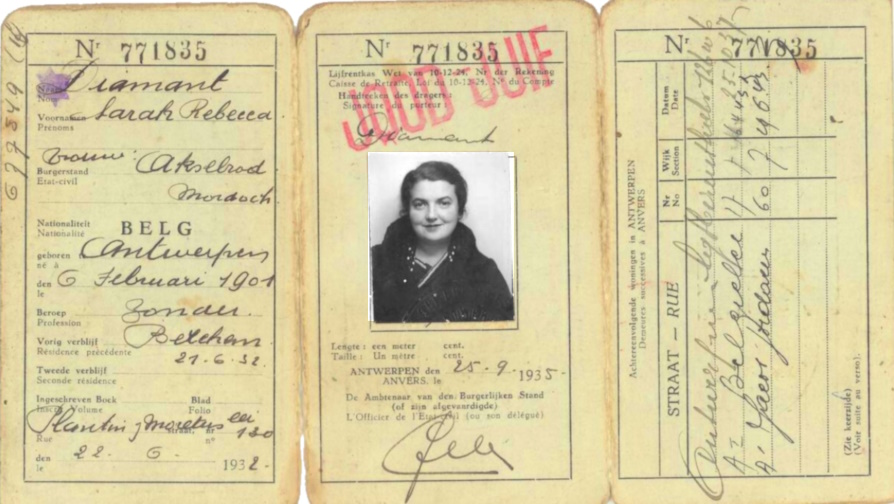
Belgium, July 29, 1941 — From this date onward, all Jewish identification cards were forcibly stamped with the word ‘JOOD–JUIF’, a stark marker of persecution under Nazi occupation.