



Description of the Cells
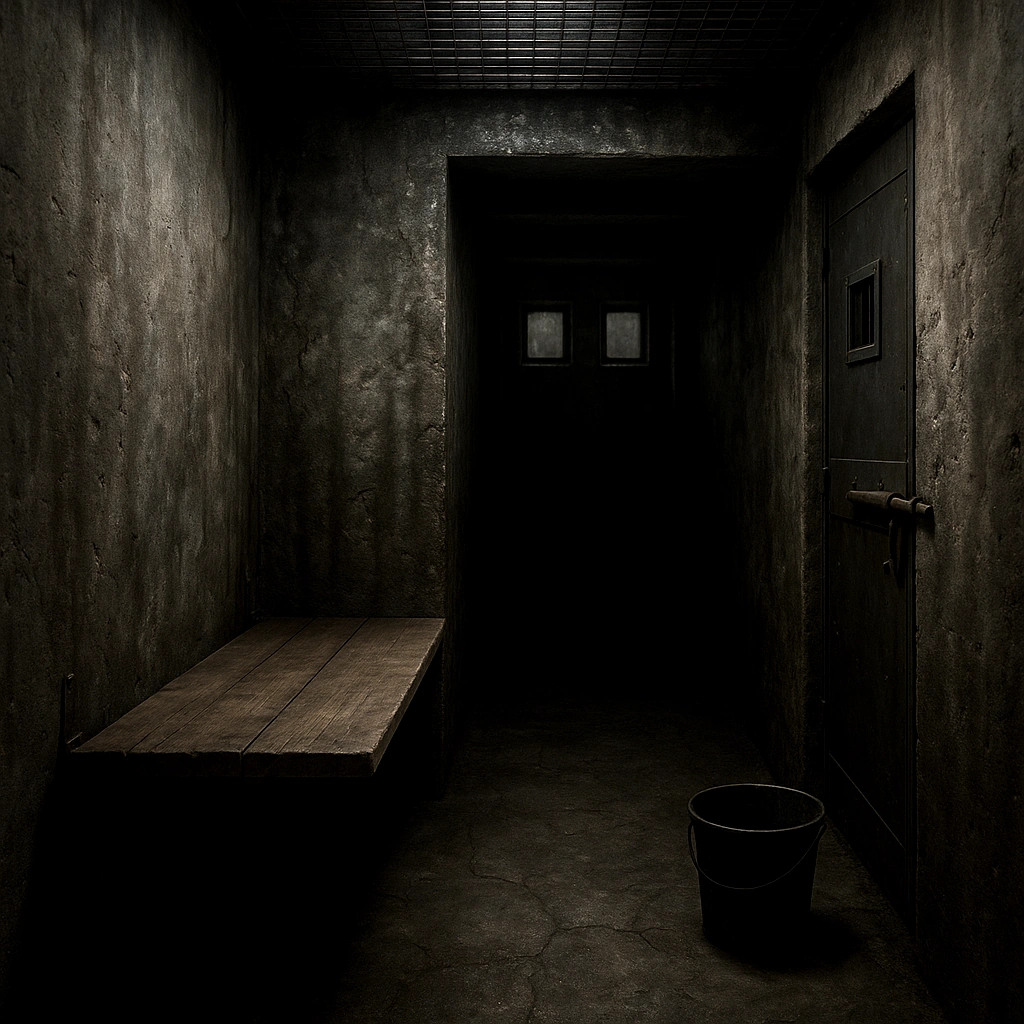
A cell was an area measuring one meter by two, only one opening: a door, with a small peephole, and provided with an outside bolt padlocked. The ceiling of the cell was formed by a grate which allowed the air already fouled by the other detainees who lived communally to penetrate. A plank fixed to the wall by a hook manipulated from the outside of the cell rendered it mobile and allowed it to be lowered to form a bed constituted along with a bucket the entire furniture of the cell. It was constantly damp, water percolating from the walls. In the extension of the central passage from which the cell jutted off were two windows, closed and blacked out in such a manner that neither air nor daylight could penetrate.
A few hours after entering the cell the detainee was conducted, as indicated above, to the clothing store where his clothes were taken from him and where he received a pair of trousers and a cap which it was forbidden to wear but had to be carried in the belt of the trousers, also an army jacket bearing the sign referred to his category and his prison number in large figures and in addition, a pull-over, a blanket and a hand towel. After this procedure, the detainee was re-conducted back to his cell. Only in his cell could the detainee rid himself of his pack, which he handed over to the Nazis who came for it.
Life in the Prison
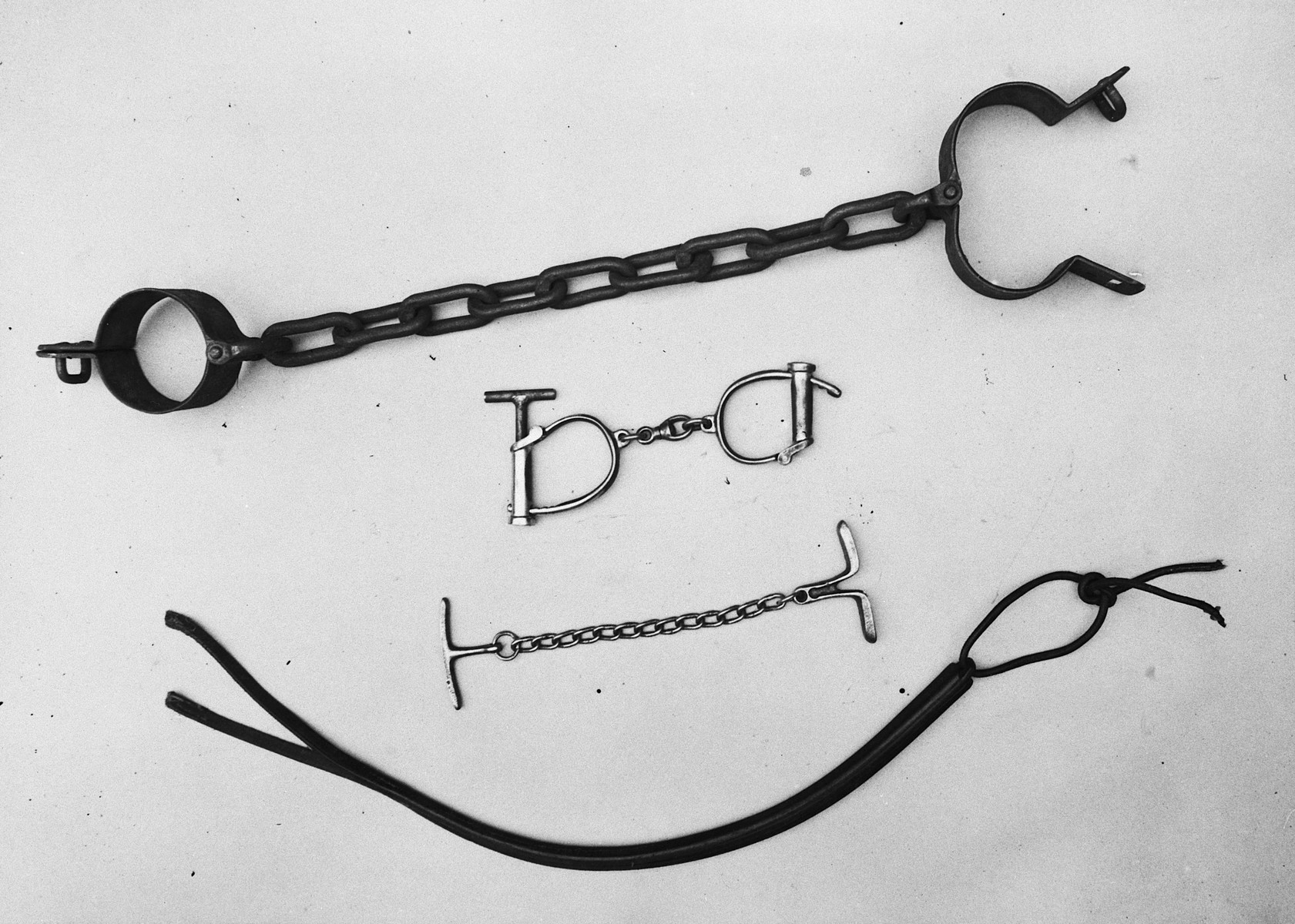
Reveille at 0600 with immediate fixing of the plank to the wall. From reveille until bedtime, which was at 2000, that is, fourteen hours without being either to sit down or squat, or lean against the wall, the prisoner was obliged to remain standing, the guard opening at every moment the peep-hole of the door, and each time the prisoner had to stand at attention and cry out ‘Eins’. The suffering caused by the fatigue was indescribable and had a very bad effect on his health. Fifty strokes of the rod were the immediate punishment for any breach of the rules. At 0730, the prisoner received a bowl of so-called coffee, which, with that given at 1700, was the drink given him during the entire day. Suffering from thirst was permanent. At 0830, the SS took the prisoners from their cells, one at a time, and conducted them to the latrines to empty their buckets; to go there, it was necessary to follow various interior passages where the prisoner was beaten up both by his own warder and the warder of the preceding or following prisoner. Certain of these warders forced their prisoner to strike another prisoner with the bucket he was carrying. The Nazis warders used to hit their prisoners in the face with their fists, kick their bodies, and strike them with chains, pieces of wood, etc. About 1100, the principal meal of the day, composed of a bowl of soup, was distributed. At 1700, the prisoner received a bowl of ersatz coffee, a ration of bread, a potato or a small sardine, and the equivalent of a thimbleful of butter.
The food was prepared by the prisoners but furnished by the Belgian authorities, who did what they could, but not only was the quantity totally insufficient, but also the quality. In 2000, the plank was unscrewed, and the prisoner could at least rest. The prisoner left his cell only to empty his bucket (during which time he was beaten up regularly) at that time, and before returning to his cell, he could, in a fashion, wash himself at the ablutions installed in one of the passages. In order to do so, the prisoner rid himself of his sack, rapidly threw his jacket on the ground, and put his head under the tap, not even having time to wash his hands, for the Nazi warder considered this was all that was required. Whilst this tool was placed, the prisoner’s face was against the wall, so he was not able to recognize the guard who came along and continued to beat him up. Replacing the sack on his head, picking up the bucket with one hand and his jacket with the other, the prisoner was led back to his cell under the blows of the Nazi warder.
Several times a week, both the cell and the prisoner were searched by three Nazis, who took advantage of each occasion to beat up the prisoner thoroughly, this being in addition to the daily punishment. Once a week, the prisoner received some clean linen which was in rags, and was was conducted with a sack on the head, to the showers, which he passed trough by himself so as not be able to see any other prisoner and where and where he had to put on his clothes whilst he was still wet, as insufficient time was allowed for washing himself.
Any relaxation supposedly humanitaria only took place for form’s sake. Each prisoner dreaded having to leave his cell, for he knew the ill-treatment which awaited him.
At the time of his entry to the Fort, the prisoner had a so-called medical examination by the German Medical Officer, the examination lasting four seconds. The prisoner, naked but with his head covered by a sack, passed through a passage and across an open yard, where, after waiting, he was brought before the doctor. The doctor merely made the prisoner open his mouth and applied his stethoscope in the neighbourhood of the heart; never had the prisoner an opportunity of being looked after by a doctor, either for illness or wounds contracted in the camp.
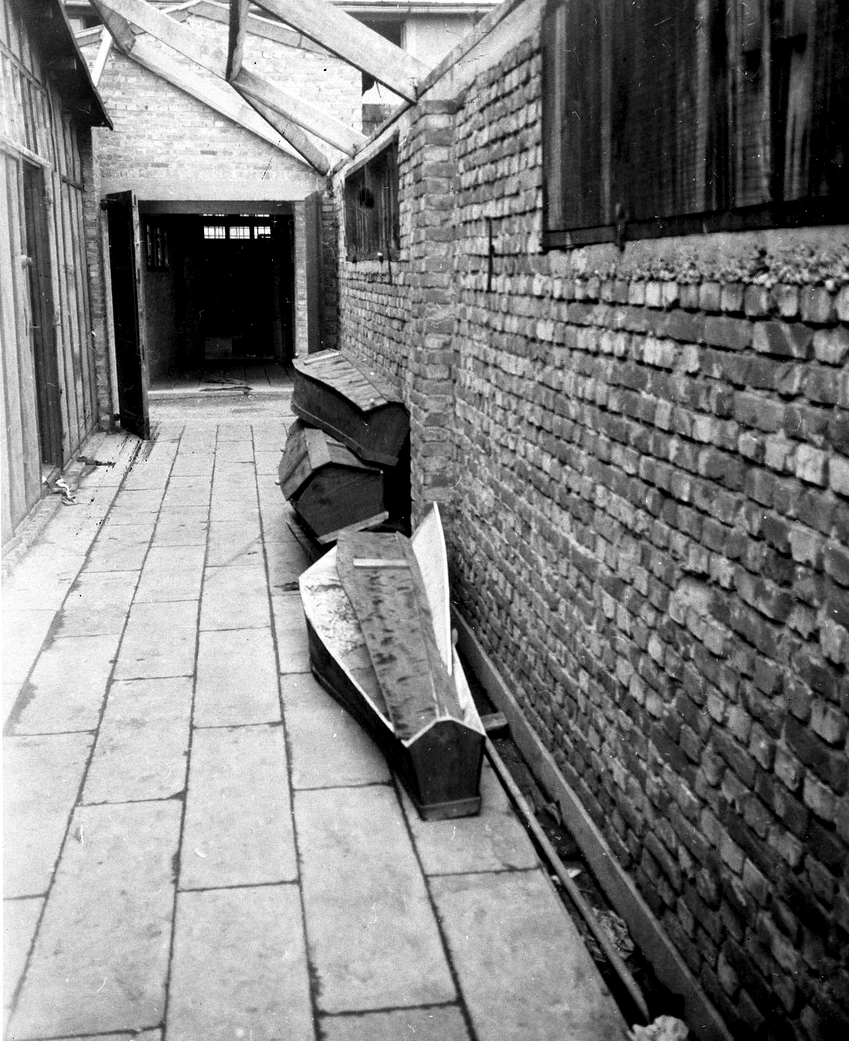
The prisoners was generally held seven to eight weeks before being interrogated, this period being intended to weaken them physically, so that their moral resistance would be lost when the Nazi officials of the Gestapo came to the camp to interrogate the prisoners. These interrogations were carried out in the presence of the Nazis of the camp, who were there to assist the interrogators in their mission, that is to say, to make the prisoners talk by striking them with a bludgeon on the head and the face and all over the body, including the groin. The stubborn prisoners were taken to the torture rooms situated in the cellars of the Fort. The sufferings of their unfortunate were such that from their cells, the prisoners heard them scream and moan inhumanely, sometimes for hours.
Furthermore, in the Fort were a number of ferocious police dogs. The Nazi jailers saw that the prisoners passed near these dogs and were bitten each time by them. During my first night in the Fort, a prisoner two cells away from mine managed to get out of his cell, intending to escape or die; he was caught five meters from his cell. He was chained and delivered over to the dogs. When he lost consciousness, which was many times, the German Nazis on guard jumped, both feet together, with their big nailed boots on the victim, whose cries of agony we heard for hours before he died.
Life of the Prisoners Living Communally
In addition to the facts already set out above, further confirmation was given me by a prisoner from Breendonk, whom I met in the cells at the prison of St Gilles and who is at present in Germany if he had not been shot. He is Major Stiers, an officer of the Belgian Regular Army and of the Colonies who left for Germany at the beginning of February 1944 without having been judged and after having passed four or five months in Breendonk and as long in St Gilles. He informed me that he had many times during his stay at Breendonk, attempted suicide rather than endure ill-treatment and torture imposed upon the prisoners. Maj Stiers had been confronted with the only too famous so-called Spaniard named Annie or Anita, informer and mistress of Prosper Dezitter, alias Capt Willy, etc. one of the heads of the German Counter-Intelligence in Belgium, having to his credit the discovery of the leading members of the pro-allied organizations in Belgium; he started certain resistance movements, subsidising them and furnishing them with arms, causing the Patriots to visit the stores for arms supposed to have arrived from England (one of these depots or stores was thus visited by one of my friends – a villa full of arms at Stockel.

Prosper Dezitter, also known as Prosper de Zitter, alias “the man with the missing finger” (19 September 1893 – 17 September 1948), was a Belgian collaborator with Nazi Germany during World War II. After World War II, Dezitter was arrested in Germany, extradited to Belgium, and condemned to death. He was executed at Ixelles on September 17, 1948.
I recall a story of Maj. Stiers. He told me that he had seen the Nazis at a time when there were too many prisoners in the camp, forcing them, by lashing them with a hide whip, to crawl in the water in the middle of winter, then forcing them to remain immobile for hours in the cold until they died. Speaking generally, a prisoner afflicted with any kind of illness was destined to die through lack of care. I can speak from experience, having had a festering bruise behind the ear for four weeks, the result of a blow from a fist, and I only received the attention of a German orderly four or five days later when he came to see if my wound had developed into a mastoid, which would have caused my death in very little time.
To sum up, Breendonk was a hell from those who passed through.
Signed: A. Denis
October 17, 1944
APPENDIX C
Statement made by C. Lemaitre
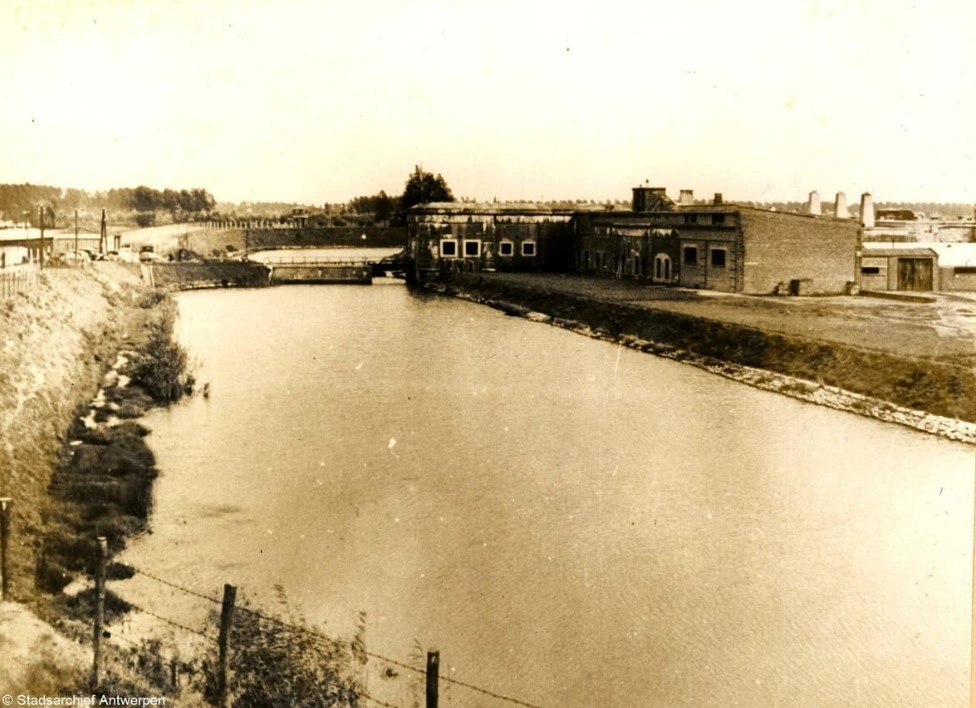
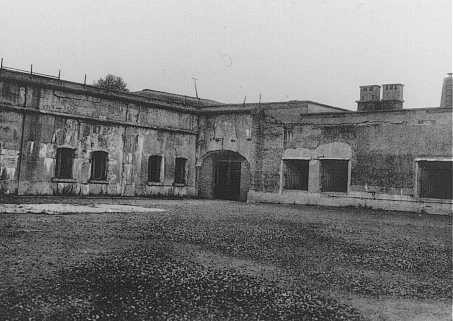
This report relates to happenings which took place during the period from September 1, 1942, to June 12, 1943. During the German occupation few details were known by the Belgian population of Breendonk, an ancient fort belonging to the outer defences of Antwerp which is situated a short distance from the highway Brussels – Antwerp, owing to the fact that very few prisoners cames out alive from this Gestapo pûnishment camp. Those who did had to sign a declaration by which they promised to reveal nothing of what they had seen or heard in Breendonk. In this same declaration, the liberated prisoners engaged themselves ‘to take no action against the German authorities’.
This helps to explain why, under the terror of the Gestapo and its accomplices, it was somewhat difficult for the public to know exactly what went on in this terrible camp, aptly named the ‘Hell of Breendonk‘. Nobody from the outside world entered the camp, except members of the Gestapo who arrived from various centres to interrogate the prisoners. Contacts with the outside world were impossible; the prisoners were definitely out off.
All the personnel, except the officers, slept in the camp. The camp was commanded by three German officers: SS-Sturmbannführer Phillip Schmitt (GER), SS-Obersturmführer Arthur Prauss (GER), and SS-Obersturmführer Hans Kantschuster (GER). Under their orders were forty-five soldiers, including a number of Non-Com of the Wehrmacht for guard duties, eight SS soldiers in grey uniform, with the SP badge (Security Police), Belgian subjects volunteers for this work, and well paid, receiving more than four thousand francs per month. It is these officers and these Belgian SS men who are mainly responsible for the terrible reputation of the camp; they did the beating and killing. Among the Belgian SS, particularly notorious were the following: Weiss Frenand of Antwerp, who killed more than thirty men during the stay of the author of the present report in the camp, De Bodt Richard (BE) of Brussels and Raes Eugêne (BE) also of Brussels. The others have certainly also committed crimes to account for, which only a strict investigation, together with the collaboration of ex-prisoners, will be able to prove.
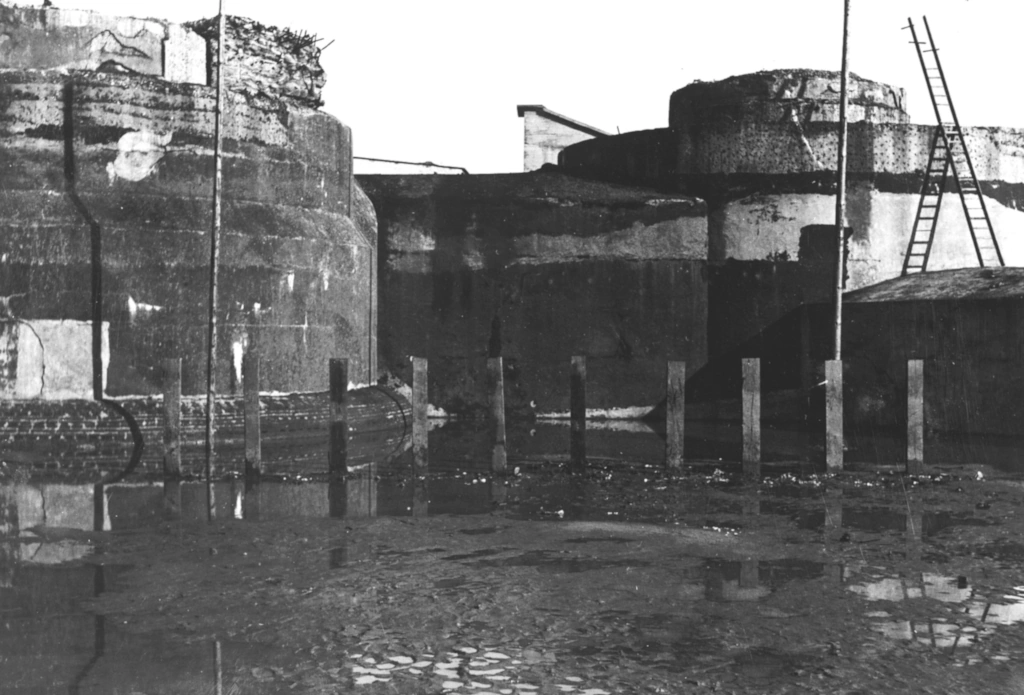
The prison regime of the camp consisted mainly of hard labour, clearing away the earth covering the fortified galleries and cupolas, leveling off the borders of the fort and the land adjacent. The earth was excavated with broken-down trucks. The SS guards insisted on the maximum amount of hard work being done, striking prisoners for nothing, and often death. The prisoners had to work in all weathers without their jackets, even in winter. According to the whim of an officer or an SS, they had to work stripped to the waist or in the rain. During extremely cold periods, they were forbidden to warm themselves by striking their sides; whoever was caught doing so risked being beaten to death.
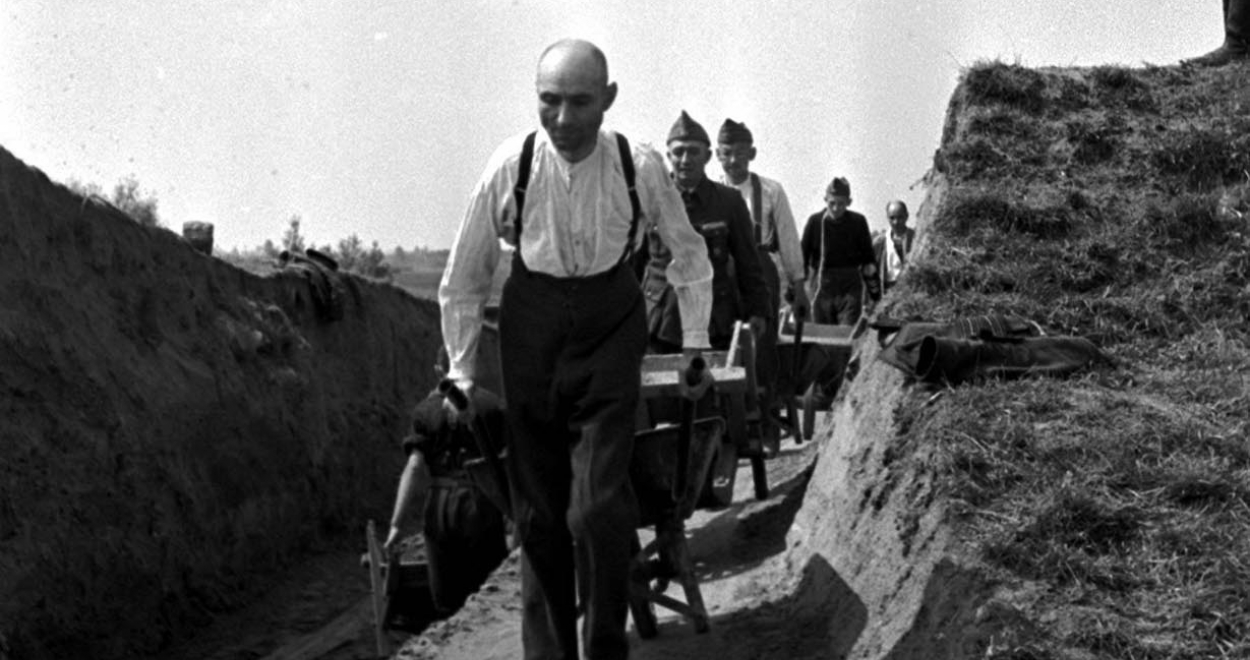
Prisoners were always bareheaded and with their heads shaved; forbidden to put their hands in their pockets; forbidden to cease work because of a wound; all the time at the orders of an officer or an SS for everything; forbidden to go to the hospital unless half dead, or without orders; forbidden to cease work even for a couple of seconds. Punishment during work consisted of gymnastic exercises, running with tools, shovels, pick-axes, throwing oneself on the ground at the order ‘lie-down’, ‘run’, ‘lie-down’, and crawling on the stomach over a long distance, even in the icy water of the pools. Whoever did not carry out the exercise well enough was beaten, often to death. These exercises were ordered at any hour of the day and without apparent reason. The orders for collective movements, falling in, marching, breaking off, and saluting, were given in German. One had to understand or guess, or be beaten.
Forty-eight and even fifty men were piled into the barracks rooms, transformed into prisons, rooms which in peacetime normally took twenty men. There were wooden cage beds with dirty and holed straw sacks. There were very few blankets and scarcely any toilet arrangements. Vermin was abounding. The rooms were cold and damp. Smoking and talking were absolutely forbidden. The very little food was definitely insufficient in vitamins and calories. About two hundred and twenty-five grammes of bread, a few grammes of sugar and jam, and ersatz coffee (acorn?) were the daily ration, with a cabbage soup, badly cooked in water and without salt. Apart from the barbarous treatment suffered by the prisoners, the majority suffered from distinctly characteristic illnesses, such as general anosmia, ulcers, and boils. There were many deaths on this account. Those sick who were absolutely incapable of working were placed apart and received no treatment. By order of the German doctor, who would only see these officers allowed to report sick, once a month, a few rare pills were given. The author of this report never saw a sick person get better at Breendonk; the man affected was not allowed to see the doctor. The author was also in this category.
We were arrested, forty-one men of the Brussels postal service, on September 1, 1942, the majority about 0400 at home, by agents of the Gestapo of Brussels. We were conducted to the Gestapo HQ – Brussels, Avenue Louise, and after verification of our identity, taken in lorries to Fort Breendonk. The writer was beaten up the first morning at Breendonk. We were searched and all our personal objects, including jewellery, were taken away from us. We were given numbers and prison clothes: Belgian soldiers’ trousers and tunic, with a number in big figures on the left side and a coloured badge, a similar badge being on the back of the tunic. These badges signified either: Jew (yellow and red), Communist (white and red), terrorist (large letter A), or having previously escaped (red and white ring). If one was not a Jew, one was a Communist. That was the definition adopted by the Gestapo. Without being interrogated, we were immediately treated as though we were guilty, receiving ill-treatment, beatings, and vile food. Finally, we were interrogated about two and a half months. These interrogations were carried out in a brutal manner; we were tortured and beaten, without knowing the reason for our arrest. Within a few weeks, half of our party had already been admitted to the hospital, incapable of working. At the end of four months, the following were dead.
Crockaert, Pierre, Brussels, Postman, died from blows received from SS Weiss.
Bonnevalle, Jacques, Brussels, Postman, died from blows received from SS Weiss.
Tissen, Jean, Brussels, Postman, died from blows received from SS Weiss.
Degreef, Sebastien, Brussels, Postman, died from blows received from SS Weiss.
De Pondt, Albert, Brussels, Postman, died after having been beaten up.
Van Boven, Jean, Antwerp, died after having been beaten up.
A few of the forty-one postmen were liberated in November 1942; about fifteen at the end of January 1943; some in February 1943; some in March-April 1943; the writer in June 1943, the last of the group to be freed. The majority are still under treatment and incapable of resuming their duties at the Post Office. Some have to follow special treatment, injections, and a careful diet. The writer of the present report, at the time of his arrest, measured 1.72 M and weighed eighty-two kilos. When liberated, he measured only 1.69 M and weighed forty-eight kilos. The writer was in a lamentable condition, his head still open from boils and blows received, his chest open and damaged and badly scarred. His legs are damaged, and even to this day, he is incapable of walking without the help of a stick.
During the month of March 1943, the writer saw the SS Weiss set upon the prisoners and kill five of them in the afternoon. These scenes were not rare for in September, during his first days of captivity, the writer saw a prisoner who, savagely beaten, did not get up on the order of the SS and was covered over with earth and stamped upon. Buried alive! It is not known what became of this unfortunate, whom it was forbidden to assist, under pain of death. It was also forbidden to look. Another was drowned and his head split open by blows with a spade. Those were frequent events, and to relate them all would require more than a report. It is also to be noted that the officers and the SS robbed the prisoners of their food; the prisoners had been obligated to give up their ration cards for the general use of the camp. Even parcels sent by the Belgian Red Cross were stolen by the SS personnel and the officers. The writer saw two baskets of biscuits from the Red Cross parcel given away for the cows.
The prisoners who were not at Breendonk were killed during the period from November 1942. The execution posts, ten railway sleepers, were erected by the prisoners. On the day these execution posts were erected, ten prisoners were shot at 1500. Among them were men who that very morning did not know that they were condemned to death, and had themselves assisted in placing the posts! The writer has seen more than eighty men leave for the execution posts. Among these, the Head Postman Hermans from the Brussels Post Office, and Martial Van Schnelle, are well known in the sporting world. All, including a blind man, went to the post upright and proud. For the hanging in May 1943, this took place during my sejourn at the military hospital of Antwerp.
The undersigned, Lemaitre C., Postman at the Central Post Office in Brussels, domiciled at 6, Boulevard d’Ypres, Brussels, born at Brussels on March 3, 1896, volunteer for the 1914-1918 war, war invalid, President du Conseil du Personnel de Bruxelles 1 postal section, 31 years service at the Post Office, certify on my honour the entire accuracy of the present report and affirm being able to guarantee its authenticity, with the testimony of colleagues, ex-prisoners of Breendonk.
A copy of the complaint addressed to the Public Prosecutor in Brussels is attached together with a copy of a paper in which is published an article on Breendonk written by the undersigned (Note: only the letter is attached). Further documents, such as the German order regarding deprivation of office, and additional punishment received at the time of liberation, are available for any useful conference on Breendonk.
Brussels, twenty-first of October, 1944
(signed) C. G. Lemaitre
Membre du Comité de l’Association des rescapés de Breendonk
Boulevard d’Ypres, 6, Brussels
Brussels, September 30, 1944
The Public Prosecutor
Court of Justice
Brussels
Dear Sir,
I, the undersigned, Lemaitre Constant, Postman at Brussels, born in Brussels on March 3, 1896, and domiciled Boulevard d’Ypres, 6, Brussels ex-prisoner at Fort Breendonk, beg to lodge a complaint against:
-1) SS-Sturmbannführer Phillip Schmitt (GER), Commandant of the Breendonk Camp, responsible for ill-treatment which I suffered in this camp where I was interned for nine and a half months (September 1, 1942 – June 12, 1943). Even his dog bit me on two occasions whilst in his presence without his attempting to prevent the animal from savaging me above the calf of the leg.
-2) SS-Obersturmführer Hans Kantschuster (GER). This officer’s functions were those of a torturer, and he is responsible for the death of several prisoners; he, himself, shot a number with his Pistol.
-3) SS-Obersturmführer Arthur Prauss (GER), who on numerous occasions struck me savagely.
-4) The SS Troops of the German Security Section, Belgian subjects, employed in Breendonk, responsible for the death of many prisoners, some of whom were killed during the same day. (I have personally loaded onto a cart the bodies of five men killed by the SS one afternoon during the month of May 1943). Amongst these Belgian SS Troops, an individual named Fernand Weiss of Antwerp was particularly notorious. During my stay in Breendonk, I witnessed more than thirty deaths to his account. I myself was beaten in such a manner that I had to be transferred to the military hospital in the Avenue Marie, Antwerp. It is a miracle that my postal colleagues of Brussels, arrested at the same time on September 1, 1942, are still alive. Five postmen arrested at the same time as I died in Breendonk, as a consequence of the blows and ill-treatment which they received. They were beaten up from the morning onwards and died the same evening.
-5) Two detainees, Belgian subjects, employed by the Germans to be in charge of the barrack camp; they beat up the prisoners in the most ignoble manner and stole the prisoners’ food. These two individuals are: Devos Valère of Gand and Hermans René, whose last known address was rue Peter Benoit, 72, Hasselt. Together with my colleagues, including M. Dewinter, Percepteur Principal des Postes, Bruxelles, we hope that a rapid and justly severe answer will be made to the present complaint.
(signed) C. Lemaitre
Président du Comité des Postiers de Bruxelles 1
Boulevard d’Ypres, 6, Bruxelles
Statement Made by Paul Levy Regarding Conditions in Breendonk
(Note: this statement is an exact copy of the original statement, which was written in English)
 I was brought to Breendonk on November 29, 1940, coming from the prison of St Gilles. As I had neither been tried nor even warned, I wondered about this transfer; the Gestapo-Feldwebel in charge answered that it had been decided to keep me in schutzhaft (protective custody) for the duration of the war. There were at the time about sixty prisoners in Breendonk, ten of them were Polish and Lithuanian Jews condemned by Belgian judges before the war and brought from Merksplas to Breendonk apparently by the Germans to create a ‘convict mood’ in the new camp; twenty other Jews of various nationalities (including Germans but no Belgians); and thirty non-Jewish people (mostly Belgian black-marketeers plus one German and one Belgian communist).
I was beaten during my first day by the sentries (rifles), then by SS-Obersturmführer Arthur Prauss (bare hands and feet), and to my great amazement by a fellow prisoner (Walter Obler, the head of my room). The opportunities for being beaten were, in the first place, not working as ordered (barrows not full enough, going too slow, etc.) or ‘answering senior people when addressed’, or ‘not falling in with the quickness and discipline ordered’, etc. Further, I was insulted when at work by the officers and men who took as a general theme for their speeches, ‘it is easier to get the Belgian people excited about our paratroops and to have them killed by others with criminal radio speeches than to fight decently on a battlefield’. I had to attend a so-called medical examination by a German Army doctor who declared me fit at a glance.
The general regime at the time was hard. Here is the timetable of the camp during the first months:
– 06.00 stand up; washing; dressing; making of beds; cleaning of rooms; preparing for breakfast
– 07.00 breakfast
– 07.30 P.T.
– 07.50 Fall in; work given out
– 08.00/12.00 work: removing earth from inside to create courtyards and bringing it outside to build a wall around the fortress
– 12.30/13.00 lunch
– 14.00/18.00 work as in the morning; cleaning of tools and uniforms, falling in and roll call
– 19.00 supper
The menu was:
– Breakfast: four ounces bread; two cup ersatz coffee (grilled acorns)
– Lunch: two plates of soup (with beans, onions, potatoes, very little minced meat. On Sunday (in 1940 only), a small piece of meat and vegetables
– Supper: same as breakfast
Parcels allowed once a week (1940 only)
 As work was hard and under the constant strain of surveyor (soldier, SS and heads of rooms) the prisoners were in a poor physical condition since food was really deficient in comparison to the labour involved they lost weight got small blisters, bleeding gums, cold feet (remaining cold during months), ‘unsensible’ toes and fingers, swollen hands and feet in the evening, swollen faces in the morning. This general bad condition went worse and worse, and was practically at its worst in spring and summer 1941 when the camp was overcrowded (Patriots, Communists, and Russians) and when the outside parcels were wholly suppressed. In March 1941, I wrote in a clandestine letter: ‘Here, the regime is going worse and worse. There is a real rain of punishments. Today, precisely at the time when I saw you on the road, a prisoner, sixty-three years old, was beaten to death. That was really the first death of the camp (a German called Julius Nathan). After months (more than five months) of suppression of outside parcels, the prisoners were allowed on September 9, 1941, to write home asking for a parcel including ‘two shirts, two pants, two pairs of socks and … four apples’.
 This regime produced not only a permanent morbid state but turned prisoners to ‘footmad people’: they grew really maniac about food, some there kissing and keeping food from home it was rotten while they were starving, other ones studying during days the way of eating a cake before actually cutting it, still other ones cutting their bread rations in very thin slices or in tiny little cubits, etc.
One of the most amusing and demonstrative cases was the case of a young German Jew (Edgar Hirsch, 19 years old) who after six months in Breendonk was brought back to the prison in St Gilles to carry out a fortnight solitary confinement after being condemned for coffee black marketing and brought back to Breendonk after three weeks of absence. We realised that he got fat in jail, although the food there was not at all first class, even far from that.
Very often, the officers imposed collective punishments; when a prisoner had escaped, or when too many people were found getting grass or leaves to eat, or when the amount of work done was supposed to be insufficient. These collective punishments were, for example: working on Sunday, running and going up and down, lying flat and standing up at the whistle, working through the whole day without eating before night. Individual punishments were the different varieties of arrests (combinations of work and eating, and sleeping in a cell), standing before the wall (the nose two inches from the wall) at attention, and fingers straightened out.