




Nieder Emmels & Ober Emmels

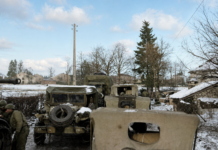
 Two objectives south of the Nieder Emmels Heide remained to be taken. The 2/120 moved forward on January 22 from Feckelsborn. Fox Co attacked Ober Emmels, a village that dominated the western half of the objective. Easy Co moved through Fox Co to take Nieder Emmels, the eastern, northern portion.
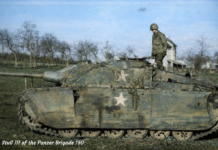
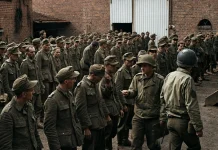
  Resistance was light since friendly troops were putting pressure on the southern tip of Nieder Emmels. Five enemy tanks were knocked out or captured, however; in one the motor was still running long after the town had been taken. Inside, riflemen found the tank driver frozen to his controls – dead. One hundred eighty-one prisoners were captured in the day’s action. Prisoners of war stated that they were overwhelmed by the speed with which our forces surrounded them. It is more than likely, however, that the enemy felt a constantly growing pressure, too, and sensing our relentless progress, did not care to stop it.
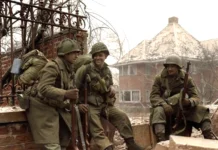
Sometimes the progress did not seem to be relentless. The supply routes always seemed endless, and the enemy had fought so fanatically that every man must have wondered if the advance were worth our losses. But the 120-IR had come through the ordeal with every mission accomplished, and if anyone had the ambition, he could have wandered among the camouflaged white foxholes and seen, here and there, a bearded smile from the man on guard, or could hear, now and then, a rough laugh from a doughboy crouched over his K-ration-box fire. At any rate, even though the cost had been high, the 120-IR had been too much for the enemy to handle.


 The seizure of these last objectives made possible the recapture of St Vith by the 7th Armored Diovision, which had been the last American forces in the town at the time of the German breakthrough. Elements of that division attacked through the 30-ID lines in the Nieder Emmels region on January 23. At 2230, the 3/120 relieved the 2/120 of Ober Emmels; the latter moved back to its former area at Feckelsborn.
 The following morning the 1/120 replaced the 3/120, which moved back to Malmedy. The 30-Cab Recon had been relieved of attachment to the 120-IR at 1730 on January 22, and was attached to the 117-IR. The next three days gave the Regiment a chance to rest and reorganize following the bitter campaign. Men warmed up in the shelter of a Belgian home for the first time in a week. Reinforcements joined the outfit. Light training included: battle orientation discussion, combat tips from veteran soldiers, first-aid instruction, and winter combat hygiene. Care and cleaning of equipment naturally took first attention in training. All weapons were brought up to A-I shape.


 On January 27, the Command Post of the 120-IR moved from Ligneuville to Sart (Joubieval), and was in operation at 1115. From Nieder-Emmels, the 1/120 moved to Verleumont (Joubieval); from Feckelsborn the 2/120 moved to Sart (Joubieval), and the 3/120 moved from Malmedy to Grand-Sart. Antitank Company assembled in an area at Provedroux. On the following day Cannon
  Company, with the 230-FAB, moved into Salmchâteau. On January 28, training began. Billets were cleaned and church services were held.
Weapons were cleaned and checked. The last three days of January were given to training, the  firing of weapons, and recreation. One noncom from each platoon attended Regimental Gas School on January 29. The 1/120 and the 2/120 saw a film on ‘Germany: Non-Fraternization’. Part of the 1/120 and 3/120 had bathed in Stavelot. All battalions were familiarized with the new M-24 light
 tank. Improvised snow suits, woolen ‘booties’, and Quartermaster arctic clothing were fitted and distributed.
At the end of January the German salient in Belgium, which had ended hopes for peace in 1944 and had startled once-complacent optimists in noncombat zones, had been reduced to a ‘bubble’. Von Rundstedt’s counterattack was already mentioned in papers as a ‘fizzle’, and compared to the dying convulsions of Ludendorff in the last war. The 120-IR will long remember the ‘Bulge’ in Belgium. The doughboys may not remember the spectacular success they had in overcoming some of Hitler’s few remaining crack paratroopers, the brilliant tactics of their commanders, nor the superhuman effort they expended in the worst of circumstances. But they will remember Thirimont and Hauts Sarts, Hill 522, and the counterattack on Emmesler Wald.
Even more, will they remember the dull, cold hours of watch, the long, dark days of plodding through snow, and the foxholes they dug in the pine woods and camouflaged over and over again? They will remember the cry of incoming tree bursts, and sleeplessly bitter nights, and cold K rations. Later, at a presentation of awards, Maj Gen Leland S. Hobbs, commander of the 30-ID, was heard to say, ‘In every hot spot, in every heavy encounter since D-Day – excluding only D-day itself – you men have been there, and have come through on top’. And so, along with St Lô and Mortain, the campaign of the Belgian Salient took its place among the most difficult assignments of the Regiment. The doughboys had fought doggedly and yard-by-yard against a stubborn enemy, a cruel climate, and unfavorable terrain. Another tough spot – another victory for the 120th Infantry.

On February 1, 1945, the Command Post of the 120 was located in Sart. The Regiment was in a period of rest and training following the campaign of the Belgian Salient, where it had pushed the German lines from Malmedy to Nieder Emmels. The AT Co was in Provedroux; Cannon Co was with the 230-FAB in Salmchâteau. The 1/120 was billeted in houses in Verleumont, the 2/120 at Grand-Sart, and the 3/120 in the same area. All battalions were receiving reinforcements, and extensive training was conducted, covering group tactics and weapons techniques. The deep snow which the Regiment had come to know so well in Belgium had begun to thaw out so that training in the battalion area was carried out in slush.
Word came that the Germans had been pushed back beyond the lines through which they had effected their terrifying but abortive penetration. Plans for the continuation of the fall offensive in Germany, disrupted by Von Rundstedt’s counter drive were to be resumed; the Division was to return to Germany; by the third day of the month march tables were completed. Secrecy was to veil the entire movement to the new location; accordingly, bumper identifications were painted out and shoulder patches were removed. It was without sorrow that the men who had fought through the cold and wilderness of the Ardennes left the winter and the mountains behind; as the men rolled their packs, spring had already warmed the countryside.
On the early morning of February 3, at 0345, the Regimental Command Post at Sart closed, and with bright lights, the first vehicles in the Regimental convoy crossed the Initial Point at Salmchâteau at 0400. Well-packed in the trucks and clutching their weapons and rolls, the troops rolled through Verviers, Eupen, and Aachen, to territory increasingly familiar to them. At Aachen blackout lights only could be used, and men of the Regiment began to realize that they were once again close to combat, and that, at the root of all the secrecy of the movement, a new mission was in store for them.
By 0800, the forward elements of the Regiment had reached the vicinity of Broichweiden (Germany), a town that the 2/120 and the 3/120 had seized in mid-November. In the center of this town, the Regimental Command Post was established shortly after 0800. Also in Broichweiden in an area where it had expected to spend Christmas week, the 1/120 was installed by 0950, followed an hour later by the 2/120 which settled in an adjacent area in the same community. The 3/120 reported that it had moved into an assembly area 1000 yards north of Zopp by 1150.
The old, familiar, battle-scarred quarters needed considerable renovation, and the soldiers went about this with enthusiasm, glad to be free of snow-covered foxholes. The weather was drizzly and dark, reminiscent of the fall rains of the Birk – Euchen – Altdorf days. When it was announced that the 30-ID was once again in the Ninth Army, the conversion to the ‘old days’ was complete.

# 2-37AE-P17
MALMEDY BELGIUM MISTAKEN BOMBING 23 AND 25 DECEMBER 1944
(Official Record after Investigation)
 Flash Report, dated 23 December, for the 322-BG, was the following: 322d Bomb Group Target: F-23027 (1530) Zülpich (Germany); Target Clear, Snow on Ground. VSBY 4-6 Miles in Haze: Did the weather affect the bombing: No; 322-BG’s History, December 1944. Updated; the Group’s bombers headed for the defended areas of Zülpich in the afternoon but weather conditions interfered with the operation and the majority of the aircraft brought their bombs back to base. Six aircraft misidentified the target and bombed the village of Malmedy (Belgium) while four others bombed past the village. Several others bombed casual targets. Because of the fluid situation of the troop lines during the German counter-offensive, no serious damage to our troops was reported in the bombing of Malmedy. Eighteen aircraft were flak damaged but there were no losses or casualties.
Malmedy – Zülpich Distance and Terrain.
Examination of a 1:100,000 map indicates the air distance to have been approximately 33 miles. Malmedy was situated at the junction of the Warche River and the Warchenne River the terrain being hilly and forested. Zülpîch and the nearby (northeastward) Lammersdorf were in open country, the latter also on a river, the Erft River.


December 25, 1944
By 387th Bombardment Group, 98th Bombardment Wing, IXth Bombardment Division (M), Ninth Air Force
. (1) Formation for 25 Dec. 44, 387th BG, Green Flight: Records did not identify the following as to rank and given names: Lead A/C – Pilot Anderson, Bombardier Shannon, in A/C #684; Other A/C – Pilots Mueller, Missimer in #880, #700; and probably. Patterson in #717, instead of Moffett of #899. Briefing at 1300; Takeoff at 1432. Interrogation Form of 387-BG, 25 Dec. 44. The flight led by Anderson appeared to have been composed of Anderson, Mueller, Missimer, and Patterson. Took off at 1432; Target was St Vith; Date 25 Dec. Flight dropped 64 x 250 GPs on the target. Born was noted as a locality. IX-BD, Photo Interpretation (First Phase Inter.) Report by 1/Lt Ben Mann, Photo Interpretation Officer, of 398-BG (98-BW) operations of 25 Dec Target briefed and hit – St Vith. A/C attacking – 30. Drop at 1605. Activity at target: The target area is completely enveloped by smoke, making identification of the target on their heading extremely difficult. Results of the bombing: Box I, Flight A. Anderson-Shannon. PNB (Primary Not Bombed). Apparent misidentification of the target as primary was completely enveloped by smoke. Hits in the town of Malmedy approx. 10-3/4 mi. N of Primary. Flights B and C of Box I attacked St Vith Box II, rot involved in Malmedy. Flight A, Morse-Britton bombed Rocherat by mistake, instead of St Vith, and that incident was referred to in the History (December) of the 387-BG.
Unsatisfactory Bombing Report. For 387-BG, Mission of 25 Dec. 44 to St Vith. Issuing organization was not identified, but it was likely. Box I, Flight A, Pilot Anderson, Bombardier Sharon Visuel Bombing. Results: PNB Reasons for Bombing or Failure to Attack Primary: Bombardier misidentified target. Bombed town of Malmedy 12 miles N NE of St Vith. Bombardier and Navigator were both positive they were on briefed target. ‘Gee’, box was not working well but the operator obtained a supposedly accurate fix on course 3 minutes from BRP. This fix corresponded exactly with the bombardier’s visual observation and no doubt existed as to his correct position. Snow, cover and haze made pinpoint navigation difficult. All details concerning error not coordinated.
Group’s OPFLAH, 25 Dec – No mention of Malmedy mistake. Report mold gives the impression the primary had been bombed as briefed, with certain exceptions. One flight of 4 a/c may have bombed Born P-850940. Overlay of Mission, by 387-BG. TOT, 1600; Altitude 12,500; Weather Nil clouds, 5 mi. IX-BD, Mission Summary (Afternoon), 25 Dec. 44. Dated 26 Dec. 44, as to Field Order #683. St Vith (Defended Village) 387-BG: 36 a/c dispatched, 26 dropping 426 x 250 GP on and in vicinity of primary. The leader of the flight misidentified primary. This a/c plus 3 others dropped 64 x 250 GP at Malmedy – friendly territory. Bombardier and navigator believed they were synchronized on primary. ‘Gee’, operator obtained fix 3 minutes from BRP which corresponded with visual observation. Snow cover and haze made pinpoint navigation difficult. Box 1 – Bligh A. PNB. An apparent misidentification of target as primary was completely enveloped by smoke. Hits in the town of Malmedy approximately 10 3/4 miles NW of primary. Other St Vith Attacks. 323-BG dropped from 40 a/c; 533 x 250 GP and 167 x WP 394-BG dispatched 39 a/c, but none bombed Failure to Bomb 387-BG a/c Personnel, Leader misidentified primary, dropping at Malmedy – friendly territory S/A Photo Reports 387-BG cameras operating 100% Weather: Nil Clouds. Visibility 3-4 miles plane to ground IX-BD. Mission Report (15-minute Report) 387-BG: 36 A/C; TOT 1500; Bombed primary; Deviation from route, etc. 850940 bombed by 1 flight
George Schneider (CIC HQ 3/120th Infantry Regiment)
During the night of December 22, 1944, an attack with rockets and machine gun fire failed to breach our lines; however, one of our jeeps got a bullet hole in the radiator. On the morning of December 23, I was told to take it to Malmedy to our motor pool and get it fixed. We had left our battalion motor pool a couple miles north of Malmedy, in a farmhouse. The overcast skies that had prevented our air force from giving us much needed assistance had now cleared sufficiently to resume bombing runs. While at the motor pool, B-17s and B-24s flew overhead and proceeded to drop their bombs on Malmedy. They targeted the town square and did a good job af landing all of their loads on the square, I headed for Malmedy to our headquarters where our staff was trying to contact the air force. Contact was made but the air force refused to believe that we were in Malmedy.
Their intelligence reported that the city was in enemy hands and the American equipment that they observed from the air was obviously captured and being used by the Germans. To further confirm our occupation of the city we climbed into the church steeples and any other available high structures and displayed colored fluorescent banners in accordance with a code. These panels were about two feet by four feet and were displayed mostly on vehicles in a convoy for identification from the air. Usually, only the fourth or fifth vehicle in a convoy displayed the banners. These displays were to be of ne avail the next few days, our precarious location became more vulnerable when we were reading in the Stars and Stripes that Malmedy was in German hands.
On the morning of December 24, I made another trip to our motor pool or to our medical station located next to the motor pool and was returning to our quarters near the square when I encountered a friend driving toward me. we met right in the town square where the rubble from the previous day’s bombing had been cleared for vehicular traffic. We were holding a conversation when we heard the familiar sound of large four engine bombers approaching. The planes were only a few seconds away when my friend, John Dotson said that he was getting out of here. He took off in his direction and I in mine. Our group had housed ourselves in the basement of a school less than a block from the square. I was in the schoolyard when I saw the lead plane drop a smoke flare (target marker) indicating that they were over the target. The jeep was still rolling as I jumped out and dove down the school stairs to the basement. The bombs were now falling and all we could do was to huddle up against a wall and pray that no bombs would strike the schoolhouse. Bombs would fall, then there would be a short lull until the next squadron was on target and the bombs would fall again. I didn’t hear any whistling sound like one hears in the movies, instead it sounded more like a load of bricks sliding down the tin roof of a barn and I was inside the barn.
This was a much larger attack than the preceding day and much of the city lay in ruins or the buildings were on fire. We surfaced from our shelter in the school and were surprised to find that the schoolhouse and an adjacent hospital remained untouched. We dug out survivors but could do nothing to extinguish the fires. An old man pleaded with me to help him save his home on which the flames from were rapidly approaching but I couldn’t help him. No trace was found of John Dotson. He either suffered a direct hit or was perhaps buried in some rubble. His body might have been recovered some time later but to this day the Army carries him as ‘Missing in Action’. That night, when some of the fires were burned out, a midnight Mass was held in a small chapel next to the school. This was not a peace on earth happy christmas Eve service and there were many grown men with wet eyes. There was no earth and we had no thanks for the presents our air force had showered upon us. The only thanks we had were that we were still alive.
On Christmas Day, our gifts would again rained from the sky courtesy of our American friends in the one of the blocks between the school and the square was burning and the fire was moving from one building to the next, one of the buildings in the path of the fire was a pharmacy stocked w
We were probably on our fifth trip and were feeling pretty brave from the cognac when we heard the familiar sound of approaching aircraft as we loaded the jeep. This time it was smaller planes, A-20s and B-26s, twin-engine bombers flying lower than the four-engine planes that bombed the two preceding days. We stood next to the jeep, and with fists painted toward the planes we dared them to drop their bombs. They obliged us and the effects of the cognac were short lived. I told the civilians to go to the cellar that was ankle deep in water and Pete and I followed. As soon as the first wave of planes completed their
mission Pete and I surfaced and found the nurse under the jeep. We pulled her out and the three of us headed up the hill while bombs fell behind us. This was the last trip up the hill. Fire consumed the remaining supplies in the pharmacy.
The air force was kind to us on December 26n, and they made no bombing runs on Malmedy. However, on December 27, they struck their final blow with some P-47s that harassed us with a few small bombs and some strafing. Compared to the three previous bombings, these fighter attacks were more humiliating than destructive. By now the weather was horrible even though the sky was clear. Snow was ankle to knee deep and temperatures were well below freezing. We were now getting many casualties from frozen feet. We were poorly equipped with only our combat boots of leather and thin socks. One of our generals rounded up all of the GI blankets he could find and sent them back to Holland and Belgium where he had local women make booties from the blankets. We wore them inside a pair of overshoes and managed to keep our feet from freezing.