




 One key planning assumption was that the initial conventional attacks would achieve a clean breakthrough on the first day of the offensive. It was assumed that the defenders in the area would be in disorderly flight on the first day, thereby allowing the Greif force to infiltrate the bridges unhindered. This critical assumption upon which the nature and concept of the operation were founded was ultimately proven faulty, and would even spell doom for the success of the mission. Skorzeny anticipated that if he was successful in seizing the bridges, it was very likely that his forces might be cut-off and isolated for a short period by Allied counter-attacks until the main body of the German advance could reach him. Very importantly, Skorzeny’s assessment of the terrain and forward defenses led him to believe that his special units would not be able to break through the American’s lines on their own, but would have to exploit a penetration achieved to some significant depth by the conventional forces making the initial attacks. He knew that the available preparation time was short, he had less than five weeks to prepare for this new mission.
In fact, he had voiced his concern over the lack of adequate planning and preparation time to the Führer personally. The unique nature of the mission would require special equipment and soldier in the form of captured American equipment, and English-speaking troops with a knowledge of American slang and idioms. His own SS Commando unit, of less than a battalion strength, could provide some expertise, manpower, and leadership, but the force would have to essentially be established and trained from scratch. His original designs for the force proposed a unit of over 3300 men dressed and equipped to pose as an American outfit. His initial task organization for the unit proposed a full-sized, robust, brigade. The creation of such a force, with such a unique and unorthodox mission, would take some time to do properly.
 Additionally, Skorzeny was keenly aware of the operational timeline for the offensive and knew that once committed, his forces would have only one day to reach and capture the bridges. Skorzeny also realized the limitations imposed upon his forces by the terrain. He identified the critical importance of the defensive advantage offered by the Hohe Venn Ridge along with the enemy’s forward defenses. The restricted nature of the Ardennes provided little maneuver space and confined his force to the few good roads that ran directly to the bridge targets on the Meuse.
His freedom of maneuver and action with any sizable combat force was dictated by the available road network behind the American lines as much as by any possible enemy counteraction. The specified tasks assigned to Skorzeny were to seize a minimum of two bridges over the Meuse River between Liège and Namur to infiltrate enemy lines covertly, posing as American soldiers; and to confuse the enemy by disrupting his communications and rear areas. The implied tasks that Skorzeny derived for his mission were: to conduct coordination with the conventional forces of the 6.Panzer-Army; conduct a forward passage of lines through the attacking divisions west of the Hohe Venn Ridge; exploit the confusion and disorganization within the enemy’s ranks, conduct deep recon of the bridge targets on the Meuse River for the commando force; seize the bridges at Andenne, Amay, or Huy through a surprise ‘coups de main’ attack; defend and hold two or more of the bridges until relieved by 1.SS-Panzer-Division; conduct a link-up with the 1.SS-Panzer-Regiment at the bridges; increase confusion and panic behind the lines among the defenders by circulating false reports, removing signposts, cutting telephone lines, and blowing up ammunition dumps; conduct tactical reconnaissance forward of the Skorzeny force and the conventional armored spearheads.
Two key limitations that Skorzeny was operating under were the requirement for strict secrecy and operational security (OPSEC) and the accepted laws of war. Hitler’s desire for utmost secrecy prevented Skorzeny from briefing his forces on their real mission or coordinating with the associated conventional units until only days before the offensive. Also, by wearing American uniforms his force would give up their protected status as prisoners of war (POWs) and if captured, would face execution as spies. Hitler directed that Skorzeny’s commandos were to wear their German uniforms under the American clothing, and were not to fight in American uniforms, i.e. they were to take off the American clothing before fighting. Although no record of a formal mission statement exists, if presented in current US Army fashion, Skorzeny probably would have looked something like this: on order, Battle Group Skorzeny infiltrates the zone to seize bridges over the Meuse River at Andenne, Amay, and Huy, to ensure the uninterrupted advance of the 6.Panzer-Army across the Meuse, and conducts unconventional warfare operations to disrupt enemy defenses in the area of operations.
 Skorzeny, after the war, presented a less formalized description of his mission: the mission of the Brigade was to seize undamaged at least two Meuse River bridges from among the following possibilities: Amay, Huy, or Andenne.
The concept of the operation was not particularly complex, but it was not necessarily easy to execute either. Skorzeny’s forces would follow immediately behind the lead spearheads of the I.SS-Panzer-Corps (SS-Gruppenführer Hermann Priess) attacking divisions as they pushed through the initial penetration created by the infantry divisions.
 Once west of the Hohen Venn Ridge, Skorzeny’s battle group would side-slip or pass through the lead panzer regiments and advance to the Meuse. Special recon teams would race ahead of the main body by jeep once a penetration was achieved, conduct recon of the routes, and place the bridge targets under surveillance. The main body of Skoneny’s force would then split into three smaller Kampfgruppe and would advance west following three separate directions of attack directly to the bridges, now called Objectives X, Y, and Z. One of the Kampfgruppe would each move behind the lead elements of the 1.SS-Panzer-Division (SS-Brigadeführer Wilhelm Mohnke), 12.SS-Panzer-Division (SS-Standartenführer Hugo Kraas) and the 12.Volksgrenadier-Division (Generalmajor Gerhard Engel).

 This was to have occurred by the end of the first day of the offensive. Tactical recon teams would advance immediately forward of the attacking divisions and these groups to report on local enemy defenses. Independent teams of commandos would conduct small-scale acts of sabotage ahead of and behind the main body to disrupt enemy communications and create disorganization within the defenders. Resistance would be bypassed and reported, as speed was essential and the limited combat power of the battlegroups was to be preserved for seizing and defending the bridges. Once captured, the bridges were to be defended, then turned over to the I.SS-Panzer-Korps. Skoneny’s force would then be prepared to continue acts of sabotage, and deep recon in support of the main attack. This was all to have occurred not later than the second day of the offensive. However, Skorzeny’s force would not be operating behind American lines completely on its own.
Concerned over the threat of reinforcement posed by the large American forces to the north of the 6.Panzer-Army, GFM Walter Model, the commander of Army Group B, the operational headquarters for the offensive, proposed on Dec 4, to Hitler another special operation. It would consist of an airborne force dropped behind American lines in the area of Krinkelt, Belgium to block enemy moves south against the northern flank of the 6.Panzer-Army.
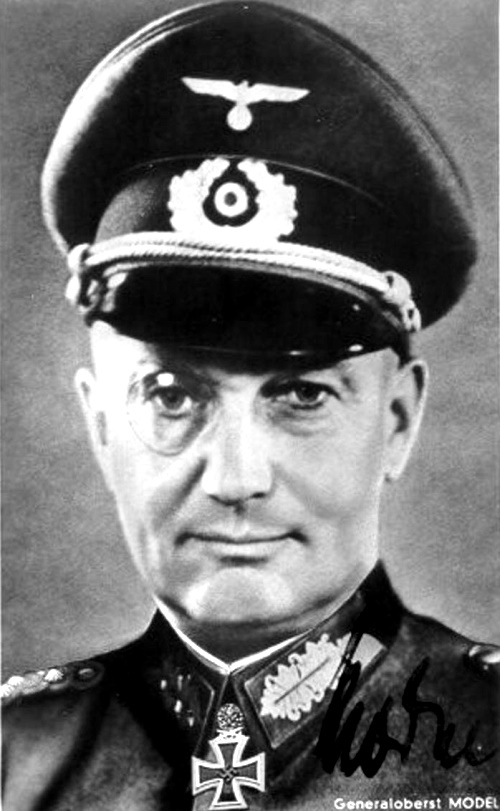 Although dismayed by airborne operations after the heavy casualties sustained during the invasion of Crete, Hitler seized upon the idea and approved it. However, he changed the drop location to an area north of Malmedy, Belgium, deeper behind the American front lines than Model’s original concept. This would put the paratroopers beyond the immediate reach of their panzer counterparts until a penetration was made of the American lines. The plans for this new operation were hastily drawn up on December 8, by Army Group B Headquarters. Although getting the paratroopers’ force would eventually pose a problem, getting the commander for this operation did not.
 Oberst der Fallschirmjagertruppen Friedrich August Freiherr von der Heydte, was in December 1944, the commander of the German Parachute School in Aalten, Holland. Summoned to the headquarters of Gen Kurt Student on December 8, von der Heydte learned of his role in what was to be the second special operation conducted to support Operation Wacht am Rhein, an operation code-named Stoesser. Oberst von der Heydte was to be the commander of the operation but, in the effort to maintain secrecy, he was initially misled about the actual location of the mission. Student briefed von der Heydte on the plan.
The Führer had decided to undertake a major offensive in which a parachute detachment would be employed. Oberst von der Heydte was to form and command this force. He learned that he was expected to jump behind the Soviet troops surrounding the German bridgehead on the Vistula River in Poland. He also learned that Gen Student wanted his force ready by December 13, the initial planning date for the start of the offensive.

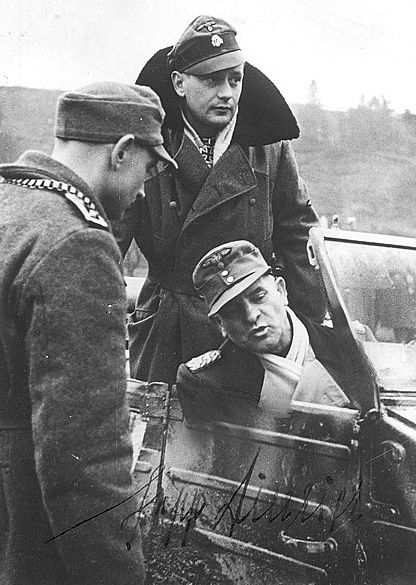 Oberst von der Heydte also met with the Army commander, SS-Oberst-Gruppenführer Sepp Dietrich. This meeting did not go very well because, according to von der Heydte, Dietrich was drunk. He attempted to work out the details of his mission, and although Dietrich appeared unconcerned over the operation, he was able to get the Army commander’s intent for the mission. Stoesser was to secure the crossroads either at the Mont Rigi (highway Sourbrodt – Malmedy – Eupen) or at Belle Croix (highway Sourbrodt – Eupen – Verviers) and block American reinforcements until elements of the Army linked up with him. Dietrich assured von der Heydte that the link-up would occur within 24 hours of his drop.
The Oberst managed to coordinate a few details then departed to set about his own preparations. The area of operations for Operation Stoesser was in the 6.Panzer-Army’s zone of attack. The designated drop zone and the objective area were astride Hohe Venn Ridge. Here the steep hills, dense woods, and marshy valleys limited the available avenues of approach. One good north-south running road connected the city of Malmedy with the city of Eupen. This formed the best avenue of approach into the flank of the 6.Panzer-Army. North of Malmedy, a road junction linked the town of Verviers with this highway. The terrain did not favor the employment of mass airborne troops. Very little was known of the enemy situation that Operation Stoesser would face Oberst von der Heydte’s request for an estimate of the enemy situation brought the following reply from Dietrich during their meeting: I am not a prophet, you will learn earlier than I will what forces the Americans will employ against you!.
The Fallschirmjäger Commander attempted then to gain more information from the 6.Panzer-Army HQs Staff members. He did not get much and later, he observed: we had thoroughly reconnoitered the American front lines and the enemy chain of command was well known. However, we were complete without knowledge of the enemy’s strategic reserves. The distribution of his forces within the American communications zone was also unknown.
Oberst von der Heydte requested then a personal air recon of the drop zone and target area. This was rejected for fear of compromising the entire offensive. At the drop time, several days later, little would still be known of the enemy situation. The specified tasks given to the Fallschirmjaeger were fairly clear: conduct an airborne assault, secure the road junction; block enemy reinforcements moving south along the Eupen – Malmedy road; link up with the elements of 12.SS-Panzer-Division, and be prepared to jump along the Meuse River in the vicinity of Amay to secure bridges for the advance elements of 6.Panzer-Army.

The implied tasks for the operation were to assemble rapidly after the drop, establish defensive positions around the road junction, and be prepared to block enemy forces for up to twenty-four hours. The key limitation Oberst von der Heydte was working under was the incredibly short amount of time available for the planning and the preparation of the operation, less than five days. The other limitation was that of available trained forces. Fighting as conventional infantry for the past three years, by Dec 1944, no parachute regiments were on active jump status. Additionally, no large-scale airborne drops had been conducted by the Luftwaffe. Ironically, the SS-Hauptsturmführer Kurt Rybka’s 500.SS-Fallschirmjäger-Battalion that conducted the last Airborne jump during Operation Rösselsprung on May 25, 1944, the daring but unsuccessful parachute and glider-borne assault on Josip Broz Tito’s headquarters in Drvar (Yugoslavia), would not be able to conduct Operation Stoesser as it was operating on the Eastern Front and had suffered heavy casualties.
The solution would be to form a kind of Fallschirmjäger Kampfgruppe or Task Force with elements from various remaining parachute regiments still operational in the Luftwaffe. Although this battle group concept was a standard procedure for the German military, the results would be far from anyone’s standards. Based upon the specified and implied tasks, the restated mission for Operation Stoesser might have read: on order, Battle Group Stoesser conducts an airborne assault to secure objective A (Crossroads Belle Croix), and establish defensive positions to block enemy counterattacks into the northern flank of the 6.Panzer-Army. This operation intended to block any allied advances against the flank of the 6.Panzer-Army, thereby allowing them to continue their advance across the Meuse unhindered.
The restrictive nature of the terrain in the entire area would make this possible at certain key points on the battlefield, like the road junction at Mont Rigi (Bévercé – #5 on the map). This is what was desired by GFM Walter Model and eventually understood by Oberst von der Heydte. However, the original guidance from the 6.Panzer-Army’s Chief of Staff, SS-Brigadeführer Fritz Kraemer to the Fallschirmjäger Kampfgruppe’s commander, indicated securing the road junction for use by the armored spearhead of the 12.SS-Panzer-Division, although this was not what the originators of the plan intended. This disconnect in guidance would serve to give von der Heydte some latitude on how he would conduct the mission. This issue would resurface later in the operation.


The concept of the operation was very simple!
(1) The paratroopers would conduct a mass night parachute assault into a drop zone in the immediate vicinity of their objective. (2) They were to assemble rapidly, then secure the road junction and immediate surrounding area. (3) At the road junction, they were to establish a blocking position astride the Eupen – Malmedy – Verviers road to cut the American lines of communications to their forward defenses. (4) The defensive position astride the road junction would then block combat units attempting to move south and reinforce the southern American defenses, or engage the flank of the 6.Panzer-Army. (5) Link up with the elements of the north flank division of the 6.Panzer-Army, the 12.SS-Panzer-Division, would occur by the end of December 16.
The Fallschirmjäger Group was expected to hold its positions for two days, if necessary until German forces could swing north and relieve them. Two days would be pushing the limits of the small battle group’s capabilities, but it was not a completely unreasonable demand. The Stoesser force was to be an airborne battle group of approximately 1200 men equipped with airborne short barrel 81-MM mortars, AT weapons (Panzerfaust), and MG-42 machine guns. The Kampfgruppe would be inserted by the conventional Luftwaffe Ju-52 aircraft.
Both Operations, Greif, and Stoesser, appeared in concept as viable missions. As events were to show during the limited preparation, and ultimately during the execution of the operations, the problems caused by the limited amount of time that hampered the planning effort would carry over throughout the missions. Although conceptually Operation Greif and Operation Stoesser fit well into the overall campaign plan for the offensive, realistically they were to be prepared in isolation and almost considered afterthoughts by the conventional commanders of the campaign. Based upon the concept of operations for each mission, Skorzeny and von der Heydte began their preparations immediately. From the start, the problems that would plague Operations Greif and Stoesser throughout their existence began to appear.

 OPERATION GREIF
The tasks of assembling and preparing the men and machines of Operations Greif and Stoesser began immediately after their inception. The Führer has ordered the formation of a special unit of a strength of about two battalions for employment on recon and special duties on the Western Front. The personnel will be assembled from volunteers of all arms the Wehrmacht, the Luftwaffe, and the Waffen-SS who must fulfill the following requirements: (a) physically A-1, suitable for special tasks, mentally keen, strong personality; (b) fully trained in single combat; (c) Knowledge of the English language and also the American dialect and slang. Especially important is a knowledge of military-technical terms.
This order is to be made known immediately to all units and headquarters. Volunteers may not be retained on military grounds but are to be sent immediately to Friedenthal near Orianenburg, Otto Skorzeny’s HQs outside Berlin, for a test of suitability. The Volunteers that do not pass these tests satisfactorily will be returned to their headquarters and units. The volunteers are to report to Friedenthal by November 10 latest. So read the order sent on Oct 25, 1944, from the OKW to all units on the Western Front. It sums up, in a nutshell, the process for assembling the special operator trainees, which in this case, would be the heart of Operation Greif. It also serves as an example of just one part of the many varied mission preparations that were undertaken for both operations. Special operations units require select personnel, unique equipment, and thorough training to successfully accomplish their high-risk special missions. The German special operations forces participating in Wacht am Rhein was no exception. The unorthodox, unique, and diversified nature of their tasks would place a premium on cohesive well-drained, and properly equipped forces. Unfortunately for the Germans, neither of the forces conducting the two operations would be well-manned, well-trained, or well-equipped.
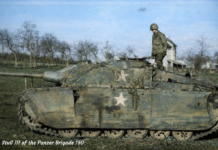
 Finally, the Panzer-Brigade 150 was created and assembled with nearly 2500 men coming from:
SS-Jagdverband Mitte (one company)
SS-Fallschirmjäger Abteilung 600 (2 companies)
Sonderverband Jungwirth (2 companies)
7.Panzergrenadier-Company (reserve)
11.Panzer-Regiment (4 companies)
655.Panzeräger-Abteilung (1 company)
190.Panzer-Aufklärung-Abteilung (1 company)
2.Panzeraufklärung-Abteilung (1 company)
I./Artillery-Abteilung.40 (4 batteries)
The lack of available time, coupled with the ad hoc nature of the organizations, would serve to prevent the formation of units truly capable of accomplishing their assigned missions with a reasonable probability of success.