

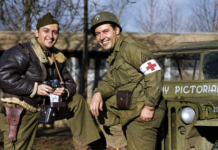
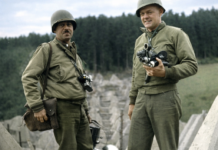
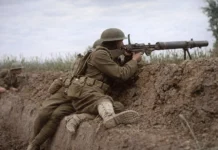


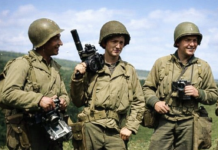
Unlike many wartime photographs, which were often taken before or after combat operations due to the extreme technical and physical limitations of battlefield photography, these drawings and paintings offer something far more immediate and deeply personal. Created by artists who were physically present within the operational areas, many of these works reflect direct observation, emotional experience, and the atmosphere of war as it unfolded around them. Far from being simple illustrations, they constitute valuable historical testimonies that capture elements of combat life, tension, exhaustion, preparation, and destruction that cameras of the period could not always record. Despite the remarkable authenticity and documentary value of this artistic collection, relatively few historians have devoted serious attention to its importance within the broader historiography of the Second World War. Personally, I consider this collection to be extraordinary, not only for its artistic quality, but also for its ability to preserve the human dimension of the Allied invasion in a uniquely vivid and authentic manner.
Reviewed by Doc Snafu on May 7, 2026.
Document Source: Library of Congress USA
Preparations for the Allied invasion of Normandy were unprecedented in scale and complexity. In addition to accumulating hundreds of thousands of soldiers and millions of tons of material in Britain, the Allies gathered hundreds of specialized landing craft in ports across southern England. These would play a critical role in delivering the Allied assault troops to the French beaches. Given the presumed difficulties in seizing French habors from their German garrisons, the Allies designed and built huge metal and concrete artificial harbors–later called “mulberries”–for tow to the Normandy beaches. Once the American and Commonwealth assault troops had secured beachheads in France, the mulberries would make unloading cargo ships easier and faster than carrying supplies over the beach.
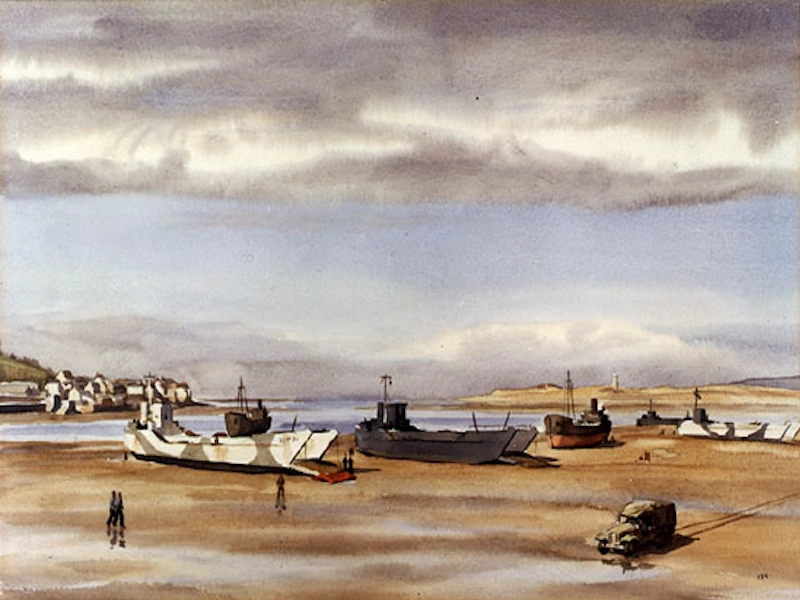
Appledore Ebb, Dwight C. Shepler #134, Watercolor, Feb 1944, 88-199-EG
The twenty-one foot tide of North Devon withdrew toward the Irish Sea, leaving the confluence of the Taw-and-Torridge a Y-shaped trickle in the flat sands. This was significant, for these tidal and beach conditions approximated those in Normandy where the allied invasion force would land in action. LCTs (Landing Craft Tank) and coasters, which would play a part in the invasion, were left high and “dried out” by the ebb. Beyond the lighthouse in the distance lay the dunes and surf-swept beaches of the US Army Assault Training Center at Woolacombe. Here a series of small boat crews from the Advance Amphibious Training Base at Appledore-Instow practiced assaults with successive divisions of infantry troops amidst realistic gunfire and bombardment. The principal objective was the long flat beach of Woolacombe, and the “hedgehogs” of its hinterland, a reasonable facsimile of a “certain” piece of the coast of the old continent. Time would tell where and when the actual invasion landscape would be encountered.

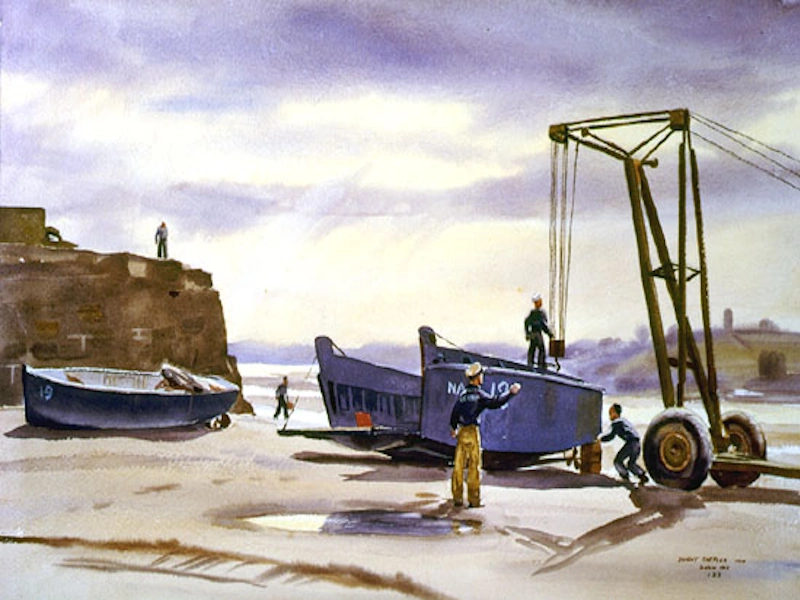
Maintenance – Instow, Dwight C. Shepler #133, Watercolor, Feb. 1944, 88-199-EF
The retreat of the lofty tides of Appledore left a landing craft high and dry so that a Le Toruneau crane could hoist her stern to exchange a bent propeller. The maintenance shop of Instow Amphibious Base had a great record of keeping busy tank and infantry landing craft operational, despite severe treatment in the surf. The sky reflected a typical winter mood of North Devon.
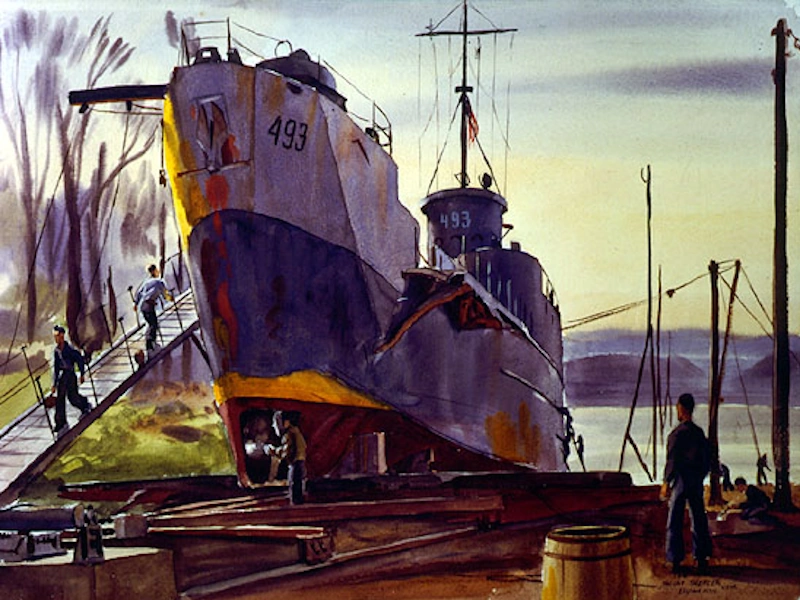
The Battered Amphibian Darmouth Amphibious Base, Dwight C. Shepler #136, Watercolor, March 1944, 88-199-EI
An LCI (Landing Craft Infantry), broached in attempting to rescue a sister ship from the rocks during a pratice operations, had her wounds dressed at the Waddleton Shipway in the sequestered estuary of the Dart.” US Navy ship fitters welded in new plates. Maintenance and repair of invasion craft constantly in use was an indispensable part of invasion preparations.
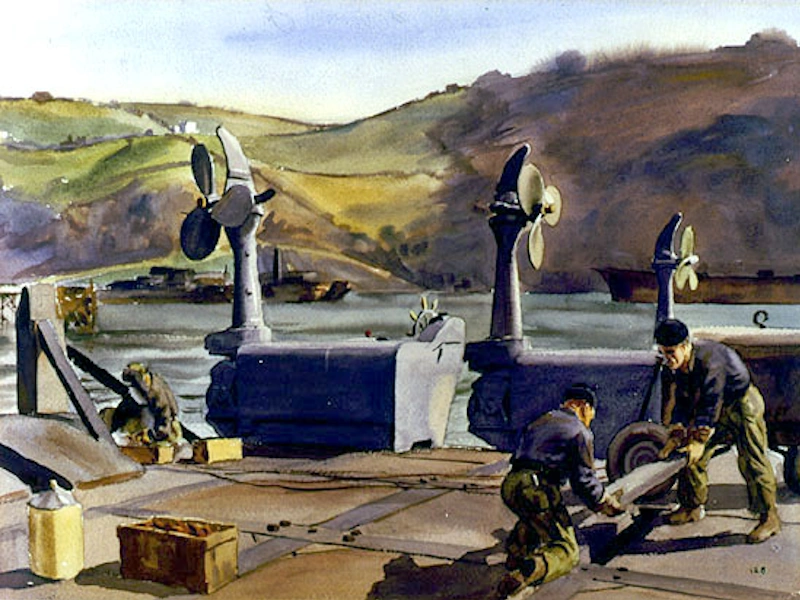
The Rhino’s Feet, Dwight C. Shepler #128, Watercolor, March, 1944, 88-199-EA
Strange symbols of modern amphibious war were the propellers of Rhino barges swung clear of the water across the sterns of two barges. Three of their four-power rise against the Devon hills, while Seabees completed assembly of pontoons. Rhino barges were 175 feet long and 42 feet wide and constructed of steel and girders. Shallow of draft and capable of carrying huge loads, they served as lighters (supply transport boats) for delivering their cargo on flat beaches, one of the great problems of the European invasion. Self-propelled, they made their ungainly way with their decks loaded with an incredible quantity of tanks, trucks, jeeps and the infinite paraphernalia of combat.
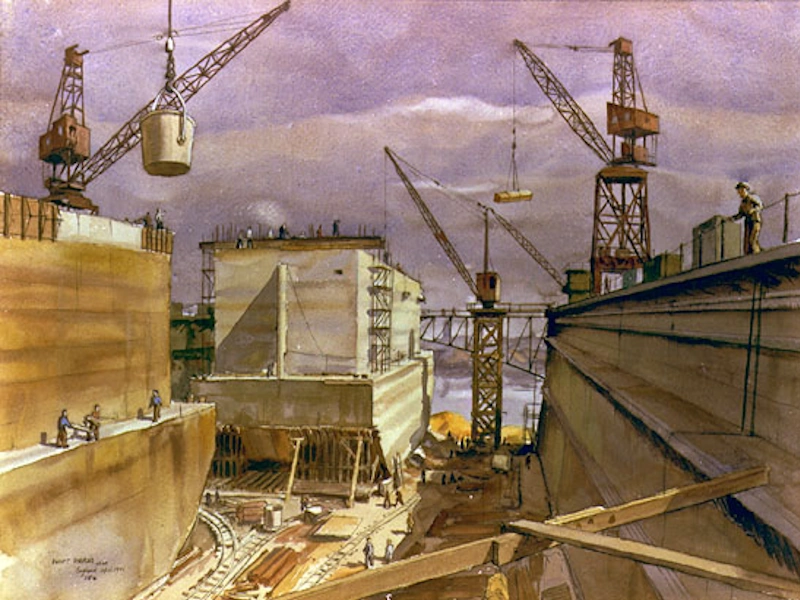
Phoenix Rising, Dwight C. Shepler #156, Watercolor, April 1944, 88-199-FD
With the complex of floating breakwaters, the sunken block ships and concrete Phoenix units made up most of it. This view of the great floating dry dock at Portsmouth, shows the underwater shape of the Phoenix units which were towed slowly at three to four knots across the English Channel. The “Mulberry” artificial harbor was invented in England and its units were built in Scotland and England. The “Mulberry” was designed to provide a harbor on a coast which had no such natural features. This was critical to the continued arrival and unloading of military supplies and reinforcements from England following the establishment of the D-Day beachhead. Mulberry ‘B’ was the British harbor, while Mulberry ‘A’ served the American landing beaches. British Royal Engineers and US Navy Seabees had the tough assignment of assembling the breakwater and piers on the Normandy side of the British Channel. The whole project was considered to be one of the boldest flights of imagination in history. Note the little window of the crew’s quarters for the trans-channel cruise.
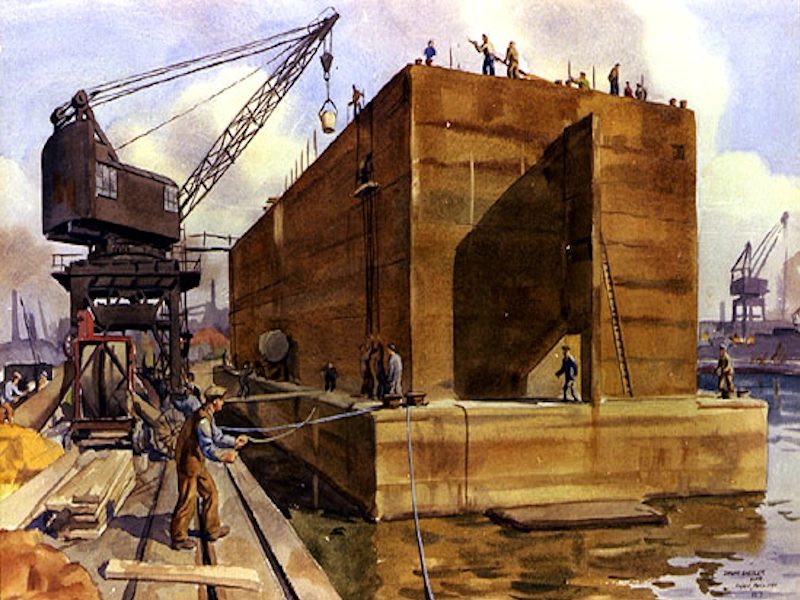
Phoenix Afloat, Dwight C. Shepler #157, Watercolor, March 1944, 88-199-FE
One of the great concrete sections of the main breakwater for a “Mulberry” floated at a fitting-out basin. Its hull of hollow and compartmented concrete, reinforced with tons of steel, had valves which permitted internal flooding as tugs nudged the sinking leviathan into its place in the breakwater of the man-made harbor on the Normandy coast. The outermost auxiliary element of the “Mulberry” harbor was a line of floating breakwaters. These were long steel floats, cruciform in cross-section. They were moored to the bottom and so sluggish in buoyancy that they barely showed above the surface. They knocked down and absorbed the force of the seaward swells before they reached the main breakwater composed of phoenix units and block ships.
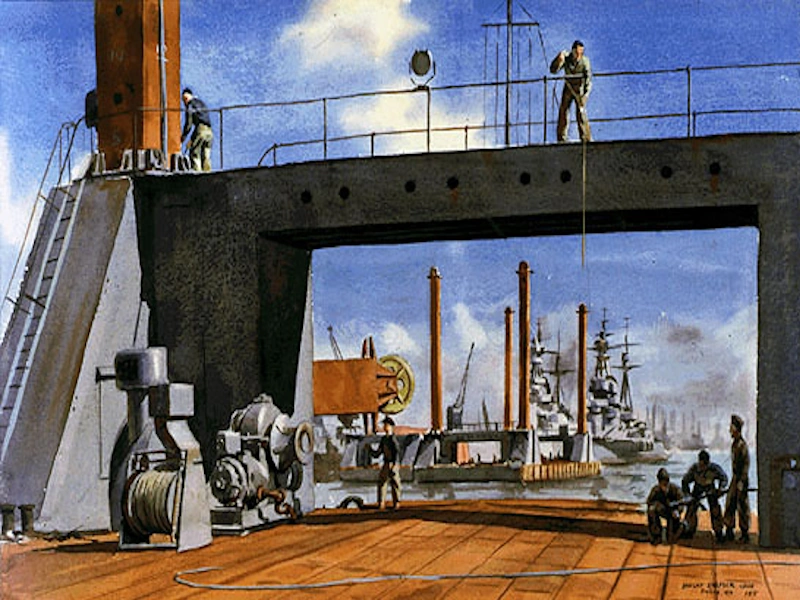
Pierheads for Mulberry A, Dwight C. Shepler #155, Watercolor, 1944, 88-199-FC
Within the shelter made by the floating breakwaters, the sunken block ships and the concrete Phoenix units, these pierheads rode up and down with the tide. From the pier heads floating on reinforced concrete pontoons, a bridge-like causeway made a roadway to the beach. Large ships were able to unload vital military supplies and troop reinforcements without running aground. This part of the man-made harbor was a mammoth towing job for the tugs. Its Seabee ensigns and crews had all the pride of battleship sailors in their strange craft of 1944. Seabees and Royal Engineers are depicted completing the installation of “spuds” in one pierhead while another loomed large in scale in comparison with the two old British battleships in the background.
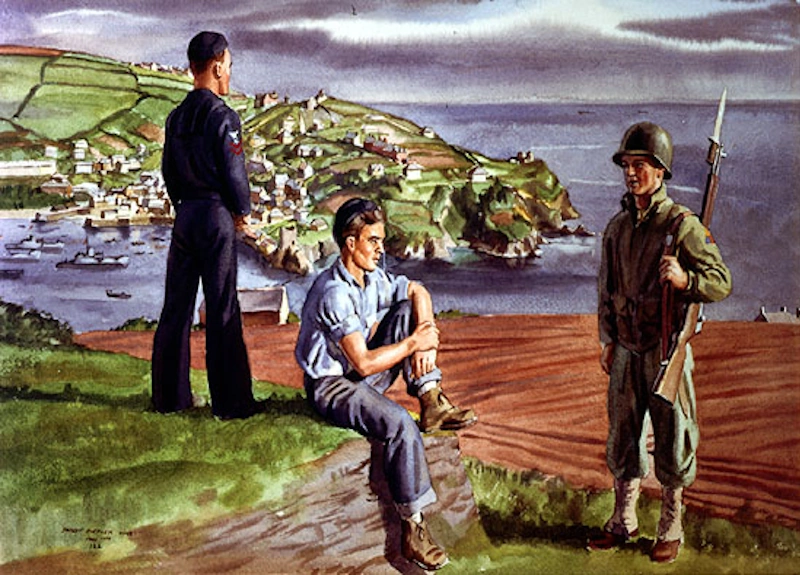
When Is “D” Day? Dwight C. Shepler #132, Watercolor, April 1944, 88-199-EE
Off-duty small boat sailors and an army sentry are shown discussing the principal question on the minds of Allied soldiers and sailors. The Allied High Command held the actual landing date in greatest secrecy, and many Allied troops did not know if they were going on the actual D-Day landing or yet another training exercise until they boarded the ships. Allied forces in Britain lived in uncertainty, knowing the orders could come at any time.
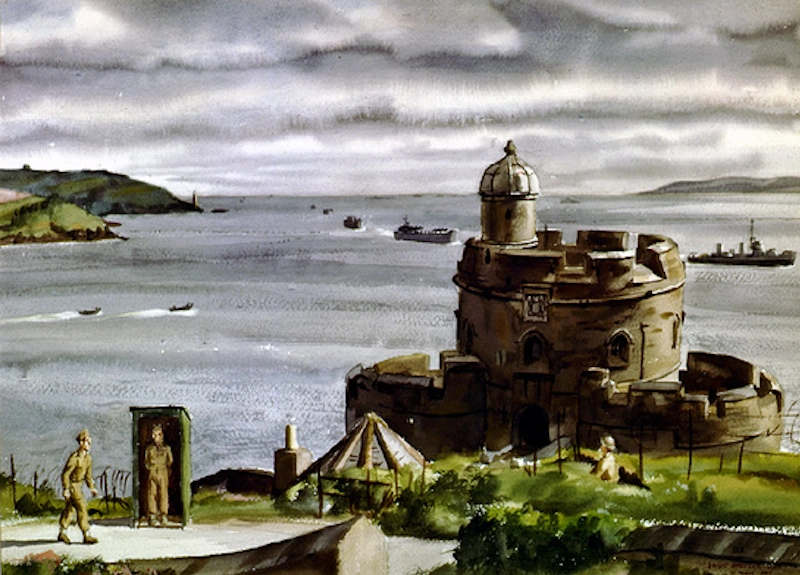
Ancient Cornwall Watches, Dwight C. Shepler #125, Watercolor, April, 1944, 88-199-DX
Warships were no novelty to St Mawes Castle, which has brooded over the waters of Falmouth Harbor for 400 years. The LSTs (Landing Ship, Tank) shown entering the harbor behind a US minesweeper of the Revon class were a 1944 expression of the kind of invasive naval forces which this castle was built to repulse. But the castle would be about as much use as an umbrella against these ships. When King Henry VIII of England constructed this artillery fort (as well as Pendennis Castle across the bay and many others) as part of his new coastal defense system in the 16th century, his measures were sweeping and extraordinary. Although a national monument in peacetime, the castle was used as a Royal Air Force auxiliary headquarters during World War II.
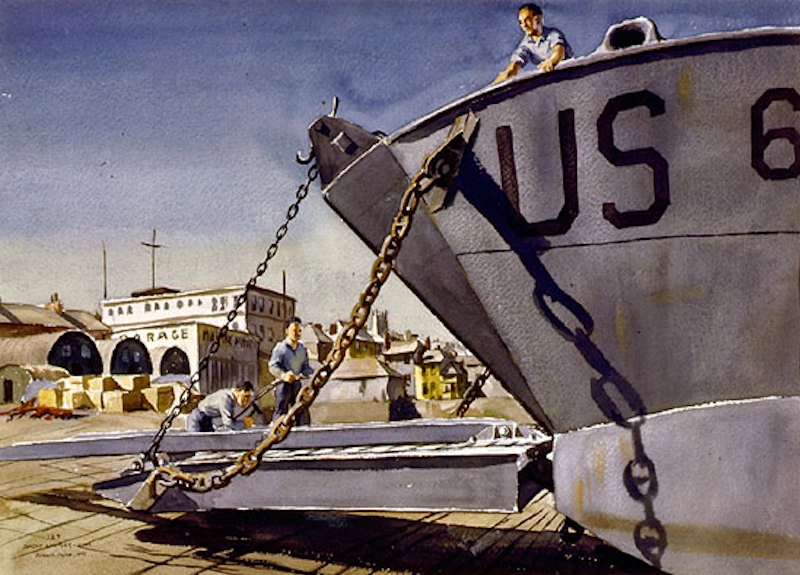
Platypus of Falmouth, Dwight C. Shepler #129, Watercolor, 1944, 88-199-EB
Shifters of the busy US Navy maintenance yard at Falmouth Cornwall, rigged ramp extensions on a LCT for the launching of amphibious tanks. This Landing Craft Tank was supported on a “hard,” a concrete apron which extended down below tide level like a boat ramp and approximated the slope of a beach, thus allowing the craft to be loaded while in an otherwise deep-water port. New hards were built in ports throughout southern England for the mammoth task of loading the forces of attack.
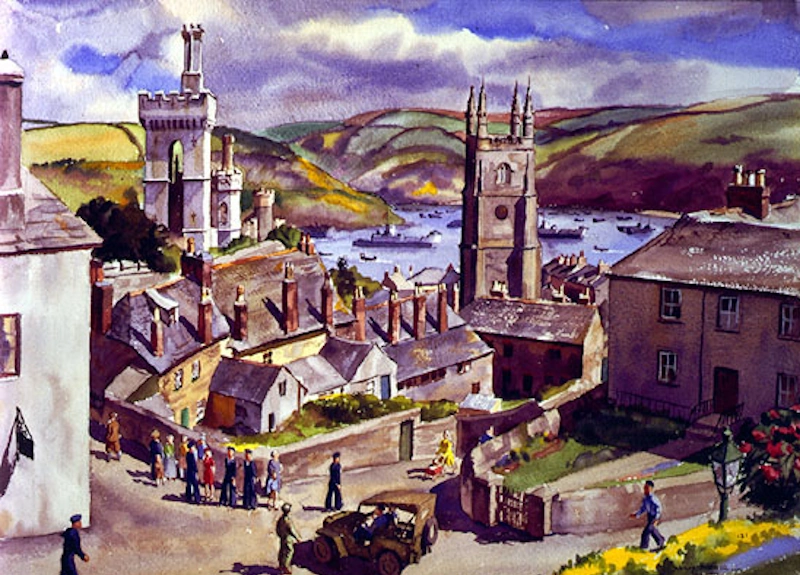
Uneasy Peace – Fowey, Dwight C. Shepler #131, Watercolor, 1944, 88-199-ED
Slumbering old ports heard the engines of countless amphibious craft echoing from the ancient buildings, which climbed the hillsides of this British town. Spring was painfully lovely, for a good spring meant good invasion weather.
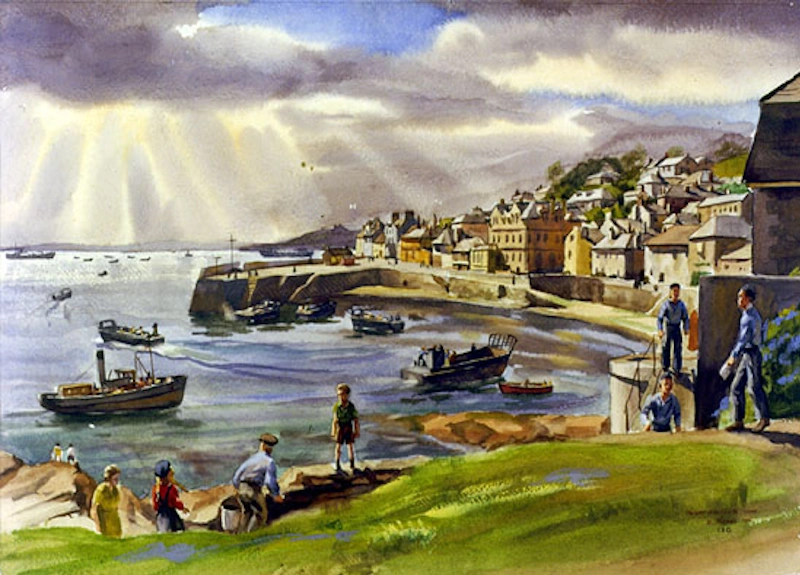
St Mawes Rendezvous, Dwight C. Shepler #130, Watercolor, May 1944, 88-199-EC
Instead of fishing boats, assault craft of the US Navy milled about the little harbor of St Mawes in May of 1944. They then departed for a rendezvous with LSTs in preparation for a practice landing on a beach some miles away. Life in this sunny village of the Cornish Coast went on somewhat as usual and, except for the ominous meaning of the maritime activity, had all the attributes of a lotus-eater’s existence.
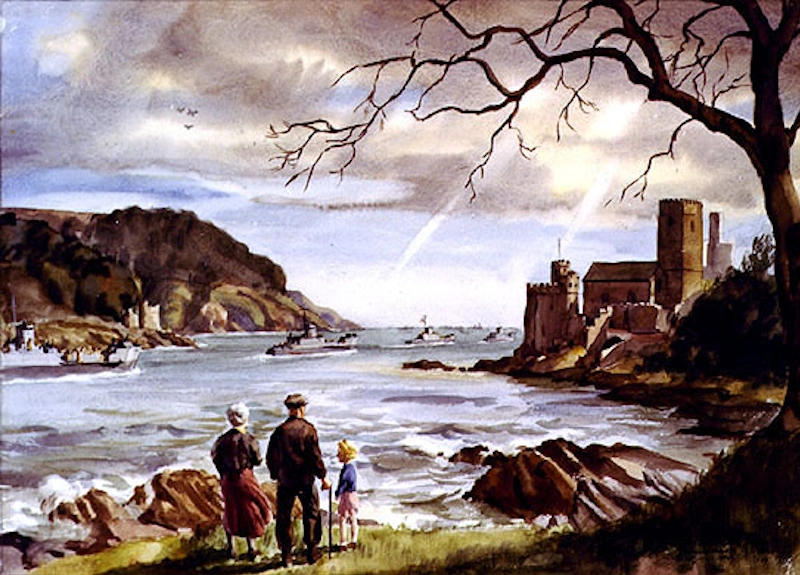
The Coast Inhabitants Wondered, Dwight C. Shepler #126, Watercolor, 1944, 88-199-DY
Time and again during the months preceding the invasion, the weird craft of modern amphibious warfare stood out through ancient harbor mouths of Devon and Cronwall, laden with troops and tanks. Mariners, too old for the sea, and women and children always watched, wondering if this could be The Day. From many ports the craft met in massive rendezvous off Dartmouth and hit the battered beaches of Slapton in full-scale and thunderous attack. One day, the vessels held their course for the continent.