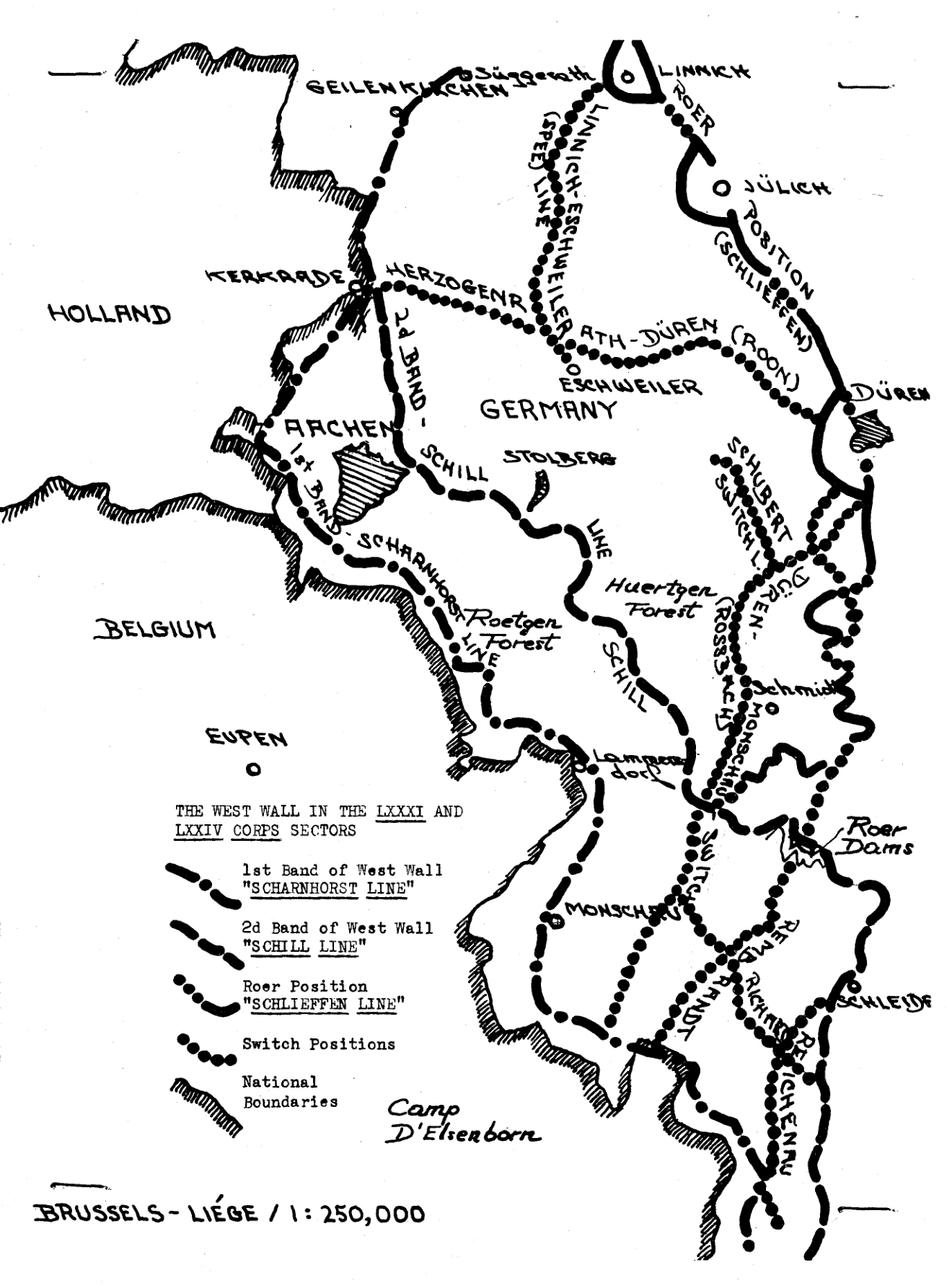
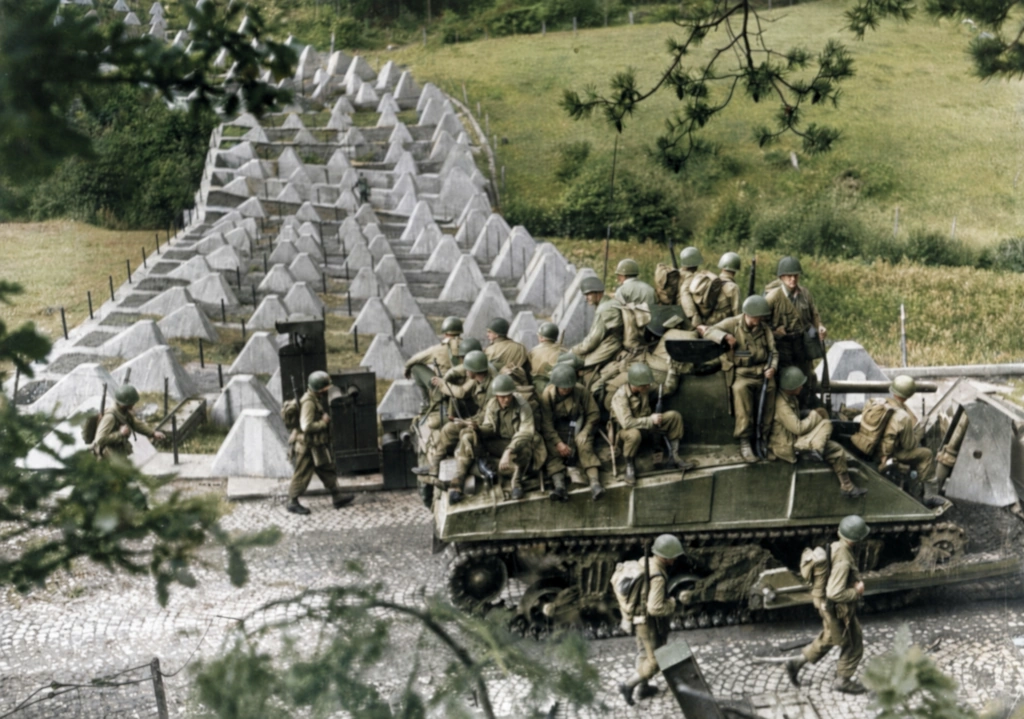


On September 23, 1944, the 275.Infantry-Division established its command post at Düren and occupied its new sector. Late in the afternoon its troops had all but closed the gap, having secured contact with he 12.Infantry-Division, but were still marching the Wenau Forest for contact with elements of the 353.Infantry-Division. The day brought localized fighting in the Aachen and Stolberg sectors, as did the days to follow, but all actions remained inconclusive. The German front, as established on September 22, held against all attacks. The crescendo at Stolberg on September 22, in fact marked the end of the VII Corps ‘reconnaissance in force’ in the LXXXI Corps sector. The Americans had deeply penetrated both bands of the West Wall, especially in the Stolberg Corridor, but on the whole the Germans had scored a defensive success in denying VII Corps a decisive breakthrough via Eschweiler to Juelich, Düren and Koln. The Germans had both emotional and materialistic incentives for offering such tenacious resistance in this particular area. They were defending the famous West Wall, their own nome soil and such historic cities as Aachen.
At the same time the contested area was highly industrialized and contained many vital war production plants. For instance, a plant in the little town of Weisweiler (two miles east of Eschweiler) produced 40% of the national output of an alloy essential to the entire German steel production. ‘From this point of view also the situation demands that the enemy penetration east of Aachen be wiped out…’ wrote Gen Brandenberger in a report to FM Walter Model. Much of the credit for the German defensive success undoubtedly belongs to German communications and logistics. Had the exhausted elements of LXXXI Corps which fell back to the West Wall about mid-September been left to shift for themselves, there can be no doubt that American forces would have broken through to Koln in a very short time. But in spite of the extremely heavy losses the Germans suffered, their situation on September 23, was actually much better than it had been one week earlier. In the space of that week the Germans had accomplished the extraordinary feat of moving three full-strength divisions to the Aachen Area. Of these divisions, the 12.Infantry-Division and the 183.Volks-Grenadier-Division had arrived and been committed. A third, the 246.Volks-Grenadier-Division, entrained on September 23, in Bohemia with the mission to relieve — at long last — 116.Panzer-Division and the 9.Panzer-Division. This relief was scheduled to get under way on September 23, even before the arrival of the 246.Division, with replacement units going into the line. The 116.Panzer-Division received orders to assemble in the Jûlich – Dûren Area as Army Group B reserve.
 Thanks to the relative quiet in the sector of the 116.Panzer-Division during the week from September 16 to 23, this division had not sustained any appreciable losses and had been rehabilitated to some extent while still in the line. Attachment of six battalions had more than doubled its organic combat strength. There were five times as many tanks and assault guns as there had been a week earlier. The fuel situation, on the other hand, was critical, with division reserves down to about five hundred gal Ions; as a result divisi on armor and motor transport were nearly immobilized. On September 23, the 9.Panzer-Division also received orders to disengage its forces but to leave its armor with the 12.Infantry-Division. The 9.Panzer-Division, with the 105.Panzer-Brigade and miscellaneous attached units, had taken the worst beating of all the German divisions in the area. In one week — from September 14 to 22 — the division had lost 21 officers and 1040 enlisted men. These casualties made up over two thirds of the combat strength of Kampfgruppe Sperling (9.Panzer-Division less forces attached to the 353.Infantry-Division on September 15, 1944. On September 22, 1944, the combat strength of the Kampfgruppe was down to 35 officers and 796 enlisted men. These forces were exhausted and suffered from severe combat fatigue, as evidenced by the fact that they abandoned their positions frequently even when supported by armor, and were quite impervious to dire threats from their superiors.
The outstanding factor responsible for the heavy German casualties and the shattered combat morale of the survivors, according to German observers, was the murderously efficient American artillery fire. Some units had been wiped out almost completely in three weeks of fighting. Thus, for example, the 105.Panzer-Grenadier-Battalion had gone into the line on September 3, 1944, with 22 officers and 716 enlisted men. Most of this strength — 11 officers and 611 enlisted men — had been lost from September 3 to 22, leaving the battalion with 11 officers and 105 enlisted men.
 TWX, Gen Brandenberger to A Gp B3, 1100 on 29 Sep 44, A Gp B KTB, Anlagen, Lagebeurteilungen – Wochenmeldungen [Situation Evaluations – weekly Sitreps], 15.V. – 11.X.44
Order, A Gp B to Seventh Army, 1315 on 23 Sep 44, A Gp B KTB, Operations-Befehle
TWK (Weekly Strength Report), LXXXII Corps to Seventh Army, 1200 on 23 Sep 44, [LXXXI Corps KTB, Befehle an Div.; TWK, 116 Pz Div to LXXXI Corps, 2300 on 22 Sep 44, LXXXI Corps KTB, Meldungen der Div
Tel Conv, LXXXI Corps to 12 Inf Div, 1330 on 23 Sep 44, LXXXI Corps KTB, Kampfverlauf
TWX, (Weekly Strength Report as of 1200 on 23 Sep 44), LXXXI Corps to Seventh Army, 24 Sep 44, LXXXI Corps KTB, Befehle an Div.; TWK, Maj Volker to 9 Pz Div, 22 Sep 44, LXXXI Corps KTB, Meldungen der Div
Tel Conv, LXXXI Corps to 12 Inf Div, 1330 on 23 Sep 44, LXXXI Corps KTB, Kampfverlauf
TWX, (Weekly Strength Report as of 1200 on 23 Sep 44), LXXXI Corps to Seventh Army, 24 Sep 44, LXXI Corps KTB, Befehle an Div.; Rpt, Maj Volker to 9 Pz Div, 22 Sep 44, LXXXI Corps KTB, Meldungen der Div
TWX (Weekly Strength Report as of 1200 on 23 Sep 44), LXXXI Corps to Seventh Army, 24 Sep 44, LXXXI Corps KTB, Befehle an Div.; MS A-971 (Engel)
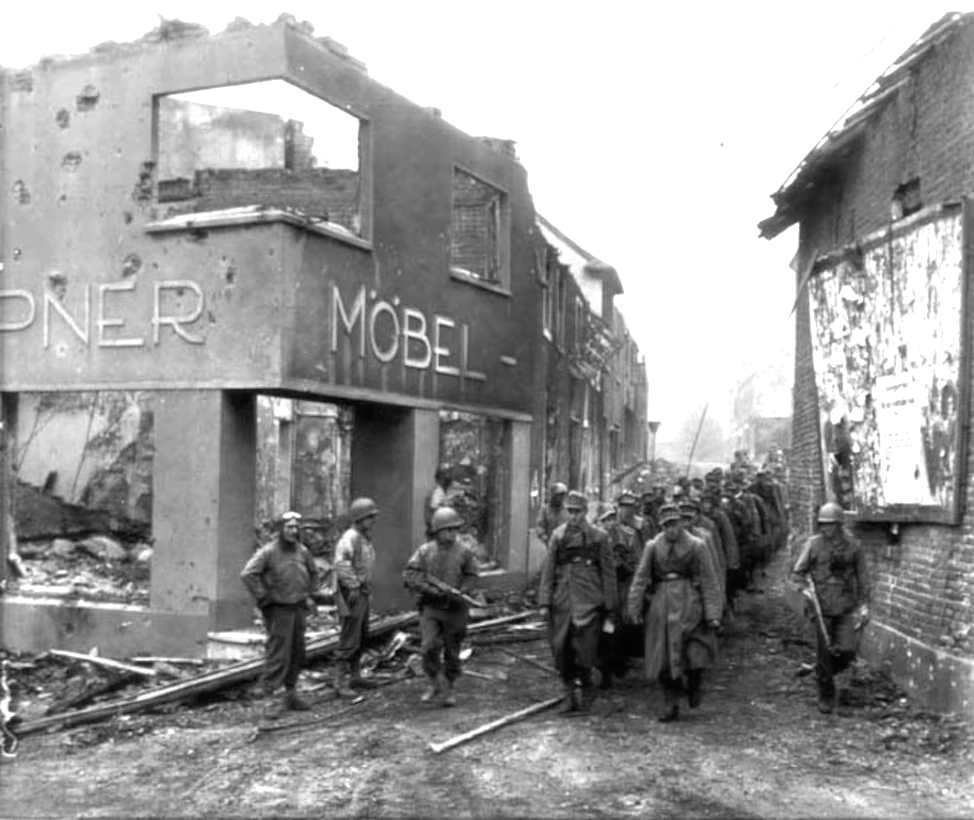
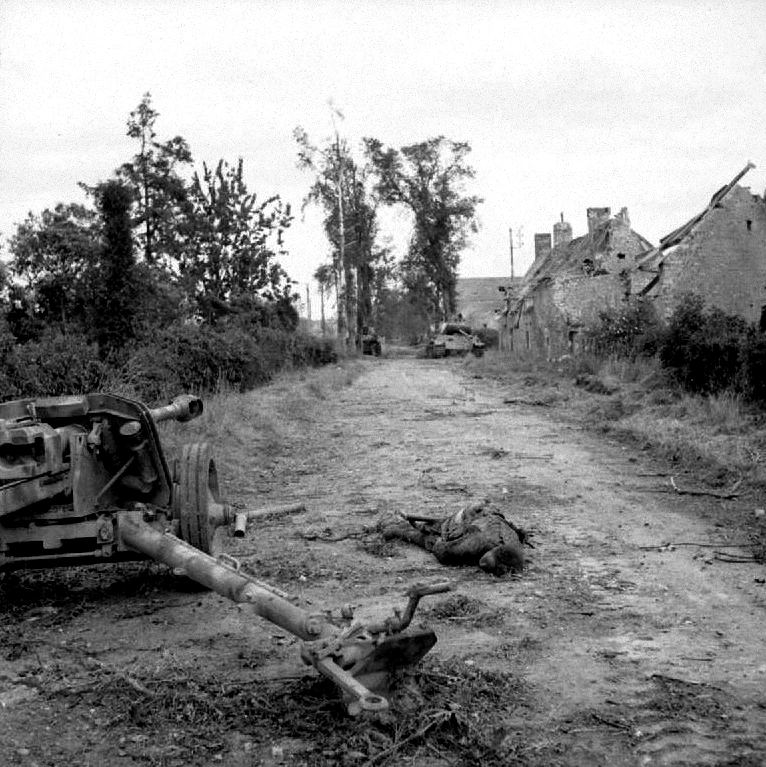 The 12.Infantry-Division had also taken terrible punishment during the week from September 16 to 23. In that single week the division had lost half of its combat strength: from a combat strength of 3800 men it was down to about 1900. According to Gen Engel the heaviest casualties had been incurred during the first two days (September 17 and 18) on the Aachen Front. In those two days of German counterattack the 89.Grenadier-Regiment had lost one third of its combat strength.
The 2d Battalion of 48.Grenadier-Regiment lost half of its strength in Schevenhuette. The heavy losses were due chiefly to the massed and well-directed American artillery fire and to the bloody street and house-to-house fighting in Verlautenheide, Stolberg, and Schevenhuette. In summing up his division’s first week of action on the Western Front Gen Engel writes that the division adjusted rapidly to the different conditions in that theater. He finds the reasons for the relatively successful defense in the high morale and physical fitness of the 12.Infantry-Division.
MS 7 A-971 (Engel); Tel Conv, Seventh Army to LXXXI Corps, 0940 on 21 Sep 44, LXXXI Corps KTB, Befehle an Div
LXXIV Corps
Defense of the Lammersdorf Corridor and the West Wall
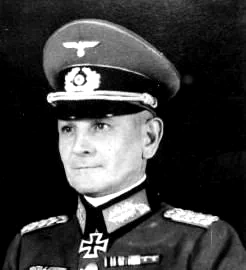
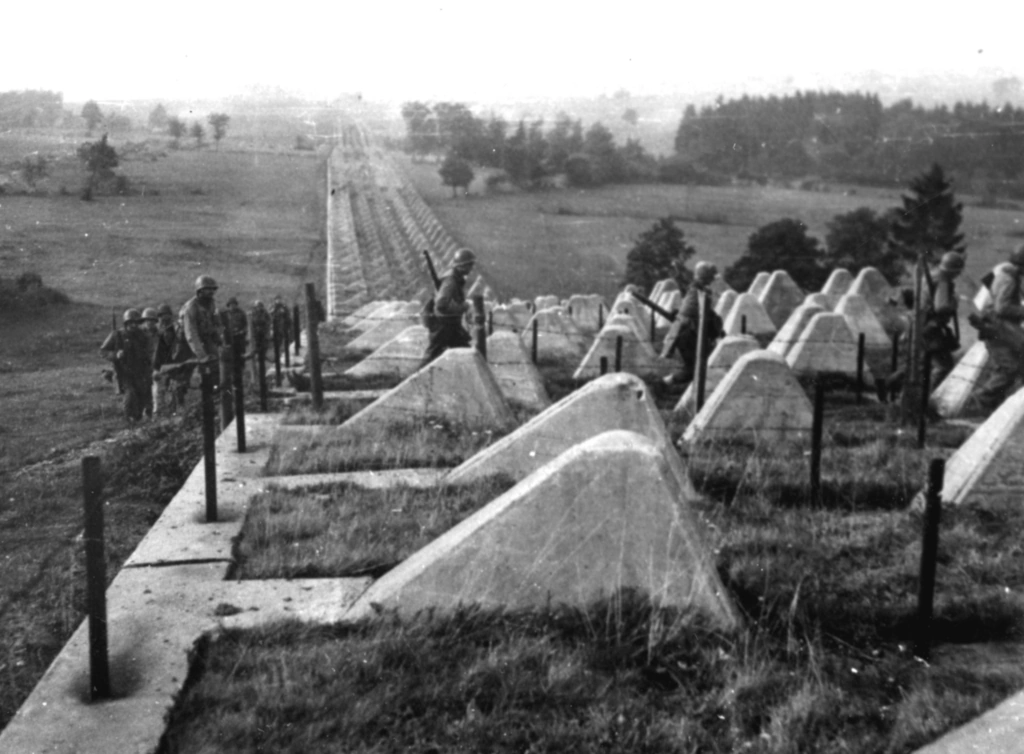
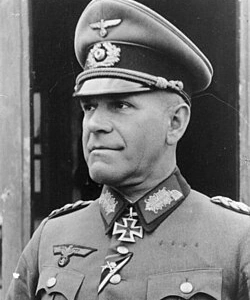 Although the Battle of the Stolberg Corridor definitely constituted the VII Corps main effort from September 12 to 23, 1944, this study of the German side would not be complete without an account of the forces facing the US 9th Infantry Division and the 4th Cavalry Group in the Lamnmersdorf – Monschau – Elsenborn Area. This sector of the West Wall had been assigned to LXXIV Corps, under the command of Gen Erich Straube. When the VII Corps launched its reconnaissance in force on September 12, the elements subordinate to LXXIV Corps were still fighting forward of the West Wall fortifications. These forces consisted of the exhausted remnants of two divisions, the 89.Infantry-Division commanded by Col Roesler, and the 347.Infantry-Division under Gen Wolf Trierenberg. The 89.Infantry-Division had hardly any organic forces left. Its the 1055.Infantry-Regiment had been completely destroyed in France. Of the 1056.Infantry-Regiment about 350 men were all that remained. The division had lost its entire artillery in France. The artillery men, engineers, signal and service troops had long ago been absorbed into the infantry.
Shortly before the 89.Infantry-Division reached the West Wall, a so-called Ost-Bataillon [East Battalionj of Russian ‘volunteers’ was attached. This battalion consisted of 400 – 500 men, was well trained, fairly well equipped and possessed four Russian 122-MM howitzers. In addition a Landesschuetzen Battalion which had done railway guard duty in Belgium was attached to the division. Like all such battalions it was composed of middle-aged, untrained, and poorly armed men. A little later the division also received two companies composed of stragglers and one platoon of military police. The West Wall Sector assigned to the division lay in the northern half of the LXXIV Corps sector. The division boundary in the north was identical to the LXXIV Corps boundary with LXXXI Corps: Zuelpich – Schmidt – Roetgen. In the south the 89.Division boundary with the 347.Infantry-Division extended from south of Schleiden via Arenberg to about Camp Elsenborn. Until the arrival of the 89.Infantry-Division the West Wall was occupied by the 416.Grenadier-Training-Regiment (526.Reserve-Division). This regiment consisted of 1200 – 1500 infantry replacements of all shades of value and fitness. Its artillery situation was so poor as to appear comical. The regiment boasted one German 105-MM howitzer and one, Italian medium (ca. 150-MM) howitzer. There was only one prime mover to pull both guns. After two days in action the Italian piece ran out of ammunition and from then on served psychological warfare as a ‘phanton gun’. Whenever the prime mover was not needed for more important purposes, the Italian howitzer was hitched on and dragged around the front to be shown off to the enemy. When the 89.Infantry-Division took over the West Wall Sector, the 416.Grenadier-Training-Regiment was attached to the division. In addition to this regiment, the 5.Luftwaffe-Fortress-Battalion, the 9.Luftwaffe-Fortress-Battalion, and the 14.Luftwaffe-Fortress-Battalion were attached to the 89.Infantry-Division. In antitank weapons the division had fourteen 75-MM antitank guns.
Order, Seventh Army to all corps, 9 Sep 44, LXXXI Corps KTB, Befehle: Heeresgruppe, Armee, usw.; MS # B-730 (Brandenberger)
Note: Intent on building up its strength to two infantry regiments again the 89.Infantry-Division maintained the regiment as a unit and later made it organic. On that occasion the 416.Grenadier-Training-Regiment received the designation of the late 1055.Infantry-Regiment.
TWX, A Gp B to OB WEST, 2350 and 2400 on 22 Sep 44, A Gp B KTB, Operations-Befehle; MS B-793 (Neitzel). Col Hasso Neitzel was Operations Officer of the 89.Infantry-Division
The southern half of the LXXIV Corps sector was assigned to the 347.Infantry-Division. The remaining organic combat strength of this division consisted of one hundred men of the 860.Infantry-Regiment and thirty men of the 861.Infantry-Regiment. On September 10, 1944 this little band was reinforced by forty men of a bicycle company. These elements were organized into a Kampfgruppe under the command of Col von Rochow, probably commander of the 60.Infantry-Regiment. After reaching the West Wall, Kampfgruppe von Rochow was redesignated 3d Battalion of the 860.Infantry-Regiment, and was gradually rehabilitated to serve as nucleus for a full-strength regiment. Besides these infantry elements of the 347.Infantry-Division still possessed two organic self-propelled 150-MM infantry cannon. When the 347.Infantry-Division took over its West Wall Sector, the 536.Grenadier-Training-Regiment (526.Reserve-Division) with about 1200 infantry replacements, the 7.Luftwaffe-Fortress-Battalion, and the ‘Stomach Battalion’ were attached to the division. It also received additional artillery with the 76.Artillery-Reserve-Battalion (six 105-MM howitzers and three 150-MM howitzers). Antitank weapons of the 347.Infantry-Division possessed seventeen 75-MM antitank guns.
 The 347.Infantry-Division may be dealt with very briefly here because it saw very little action during the last half of September 1944. On September 14, Kampfgruppe von Rochow was able to break out of an American encirclement near the Camp Elsenborn, throw American forces out of Rocherath, and assume command of its West Wall sector. Aside from reconnaissance and combat patrol activity centering around Losheimergraben, the sector remained quiet enough for the division to devote itself to the urgent task of rehabilitation and reorganization.
The sector of the 89.Infantry-Division was the scene of the US 9th Infantry Division‘s effort to drive through the Lammersdorf Corridor and gain the Roer River in September 1944. On September 12, the elements of 89.Infantry-Division, split up in isolated groups, were committed from west of Muetzenich to southwest of Kalterherberg. Both flanks of the division were exposed but American pressure was so minor that Col Roesler saw no compelling reason to withdraw to the West Wall. On September 13, the division reported that American armored spearheads advancing along the Eupen – Monschau road toward Monschau had reached the edge of the woods north and south of Neu-Hattlich. The next day other US forces pushing north from Bütgenbach in the sector of the 347.Infantry-Division reached the southern periphery of Kalterherberg at 1100. Elements of the 89.Infantry-Division established a screening line in Monschau and Hoefen. While fighting began in Kalterherberg, the 89.Infantry-Division repulsed an American attack on Lammersdorf. The US 9th Infantry Division‘s push had begun. Konzen fell into American hands, and along the Eupen – Muetzenich road American armored units attacked toward the Zollhaus [customs house] at Muetzenich.
 An American pincer movement aimed at the capture of Monschau emerged clearly, with one prong driving east on the Eupen – Monschau road while the other pushed up on the Bütgenbach – Kalterherberg road. Both drives made progress on September 14. In the evening of September 14, American forces captured the customs house at Muetzenich and crossed the German border. US infantry captured Kalterherberg and continued in a north-northeasterly direction toward Monschau while behind them American tanks and armored cars rumbled up the winding road from Kalterherberg to Monschau during the night from September 14 to 15. On September 15, the 89.Infantry-Division decided to withdraw all its elements to the West Wall. The 416.Grenadier-Training-Regiment (later redesignated 1055.Infantry-Regiment) was committed in the northern half of the division sector — Lammersdorf – Monschau area — while the remaining elements of the 1056.Infantry-Regiment were committed in the Hoefen – Alzen sector. The Russian battalion secured the division’s northern flank and boundary with the 353.Infantry-Division. The Landesschuetzen were committed on the southern flank and boundary with the 347.Infantry-Division. The Luftwaffe-Fortress-Battalions were not considered battle worthy and, hence, were employed to man the Schill Line, at this time still well to the rear of the division combat zone.
 KTB Entry, 1320 on 12 Sep 44, LXXXI Corps KTB, Kampfverlauf; TWX,
A Gp B to OB WEST, 2350 and 2400 on 22 Sep 44, A Gp B KTB, Operations-Befehle; IJS 7- B-563 (Trierenberg)
Daily Sitrep, A Gp B, 0200 on 15 Sep 44, A Gp B KTB, Tagesmeldungen; MS # B-563 (Trierenberg)
MS B-730 (Brandenberger)
Daily Sitrep, A Gp B, 0100 on 14 Sep 44, A Gp B KTB, Tagesmeldungen
Noon Sitrep, A Gp B, 1400 on 14 Sep 44, A Gp B KTB, Letzte Meldung
Evg Sitrep, A Gp B, 1930 on 14 Sep 44, A Gp B KTB, Letzte Meldung
Daily Sitrep, A Gp B, 0200 on 15 Sep 44, A Gp B KTB, Tagesmeldungen
Mng Sitrep, A Gp B, 0800 on 15 Sep 44, A Gp B iTB, Letzte Meldung
MS # B-793 (Neitzel)
Noon Sitrep, A Gp B, 1400 on 15 Sep 44, and Evg Sitrep, A Gp B, 1900 on 15 Sep 44, A Gp B KTB, Letzte Meldung
Mng Sitrep, A Gp B, 0810 on 16 Sep 44, A Gp B KTB, Letzte Meldung
Noon Sitrep, A Gp B, 1345 on 16 Sep 44, A Gp B KTB, Letzte Meldung
Evg Sitrep, A Gp B, 1915 on 16 Sep 44, A Gp B KTB, Letzte Meldung; MS # B-793 (Neitzel)
Mng Sitrep, A Gp B, 0730 on 17 Sep 44, A Gp B KTB, Letzte Meldung
Noon Sitrep, A Gp B, 1300 on 17 Sep 44, OB WEST KTB
Daily Sitrep, A Gp B, 0400 on 18 Sep 44, A Gp B KTB, Tagesmeldungen
Noon Sitrep, A Gp B, 1530 on 18 Sep 44, A Gp B KTB, Letzte Meldung
The American pincers continued to close on Monschau. Late in the afternoon on September 15, American forces which had advanced up the road from Kalterberg entered Monschau. While a battle ensued in the town, American armor on the Eupen – Monschau road crossed the railroad tracks east of Muetzenich and headed for a juncture with US forces in Monschau. The town fell to the Americans during the night from September 15 to 16, and 9th Infantry Division achieved its first penetration of the West Wall when its forces thrust northeastward from Monschau toward Imgenbroich when the Germans rallied to the defense. They recaptured Konzen and Bickerath and reported that they had knocked out one American tank at Muetzenich. On September 16, the 353.Infantry-Division with its sector was attached to LXXIV Corps. In the sector of the 89.Infantry-Division the day was uneventful except for an American attack west of Lammersdorf which the Germans repulsed. In the Monschau area the Americans were apparently busy consolidating their gains and contented themselves with continuous and very heavy artillery fire on the German MLR (West Wall).
During the night, the US forces renewed their attack in the northern sector of the 89.Infantry-Division and this time succeeded in penetrating Lammersdorf. In the south American troops entered Hoefen. The seesaw fighting which now began lasted for several days. In the small hours of the morning on September 17, the Germans launched counterattacks to wipe out these penetrations. In both areas they achieved initial successes. By morning on September 17, their counterattack had regained the first line of bunkers near Lammersdorf. At noon, however, the Americans renewed their drive north of Lamnersdorf with strong infantry and armor and achieved fresh penetrations in the Scharnhorst Line. Another US attack, at Paustenbach south of Lamnersdorf, was repulsed. At Hoefen fighting was very bitter. The village changed hands several times during the day. By evening elements of the 89.Infantry-Division had captured the southern part of Hoefen. Their counterattack continued: on September 18, in the morning only one bunker north of Hoefen remained in American hands; by noon the Germans had regained the complete bunker line at Hoefen and had captured fourteen Americans. But their success was short lived. At 1600 on September 18, fifteen to twenty American tanks broke through the MLR at Hoefen from the north and achieved a penetration east and south of Hoefen. The Germans were able to seal off this penetration by evening. In the north of the 89.Infantry-Division sector two American battalions supported by tanks launched an attack about 1700 and broke through the West Wall at Lammersdorf, penetrating three miles in a south-southeasterly direction to the Kall River Valley. There this penetration also was sealed off. The Americans renewed their attack southeast of Lammersdorf at 0930 on September 19, but ran afoul of a German fortified road block established during the night at the road junction half a mile southeast of Lammersdorf. Here this attack ground to a halt. Another American attack at Paustenbach was also repulsed. There the 89.Infantry-Division destroyed two US tanks and recaptured a bunker. The Germans noted that the Americans were building up their strength in Monschau. Additional forces including fourteen tanks had moved into the town.
Note: Evg Sitrep, A Gp B, 2045 on 19 Sep 44, A Gp 3 KTB, Letzte VMeldung. The Germans were very well-informed about what was going on behind the American lines in this sector. In MS B-793 Col Neitzel gives a rather amusing account of the constant traffic across the German MLR into and out of American held territory. German soldiers in civilian clothing paid regular visits to Roetgen and Monschau. From the American prisoner collecting point at Roetgen these visitors usually managed to bring back one or two German prisoners of war along with some American rations. From Monschau every move the Americans made was reported back to the G-2 section of the 89.Infantry-Division.
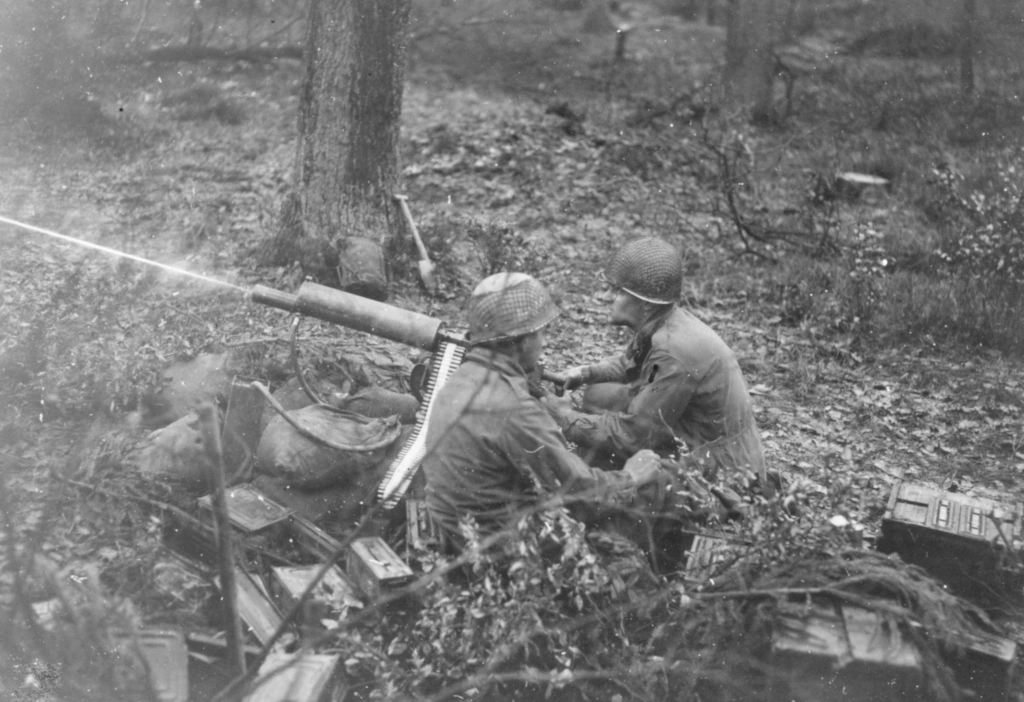
 On September 20, US 9th Infantry Division launched two armored attacks against Paustenbach. The Germans repulsed both and inflicted heavy losses on the attackers. Action in the LXXIV Corps sector shifted to the north where the Battle of the Stolberg Corridor fanned out southward to draw the 353.Infantry-Division and the 89.Infantry-Divisions into its orbit. At 1630 on September 20, American tanks jumping off from southwest of Zweifall penetrated to the monument located about three miles east of that village. Both, the 89.Infantry Division and the 353.Infantry-Divisions immediately launched a counterattack against this salient. The Americans, however, were not to be dislodged easily. On September 21, a US tank attack in the woods east of Zweifall threw the Germans back to the Weisser-Veh Creek one mile west of Huertgen. A few American tanks reached Germeter. To help restore the situation as soon as possible, Seventh Army ordered the 341.Assault-Gun-Brigade shifted from LXXXI Corps to the 353.Infantry Division. During the night from September 21 to 22, the division intended to move this assault gun brigade, one infantry and one engineer battalion, one artillery battery and five 75-MM antitank guns to the area with plans to counterattack on September 22.
Tel Conv, LXXXI Corps to 353 Inf Div, 1720 on 21 Sep 44, LXXXI Corps KTB, Kampfverlauf; Order, Seventh Army to LXXXI Corps, 1940 on 21 Sep 44, LXXXI Corps KTB, Befehle: Heeresgruppe, Armee, usw.; Evg Sitrep, A Gp B, 1840 on 21 Sep 44, A Gp B KTB, Letzte Meldung; Daily Sitrep, A Gp B, 0110 on 22 Sep 44, A Gp B KTB, Tagesmeldungen
Mng Sitrep, A Gp B, 0830 on 23 Sep 44, A Gp B KTB, Letzte Meldung; Daily Sitrep, A Gp B, 0200 on 24 Sep 44, A Gp B KTB, Tagesmeldungen; MS # B-793 (Neitzel)
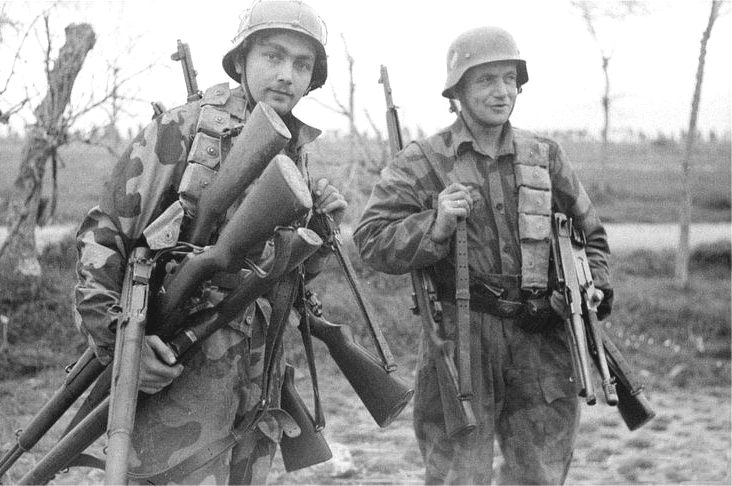
The German counterattack to wipe out the first American penetration of the Huertgen Forest apparently did not make any spectacular headway on September 22. On the second day of the attack (September 23, 1944) the forces of the 353.Infantry-Division pushed the Americans back to within three miles southeast of Zweifall and recaptured one bunker. Three American tank attacks launched in the Rollesbroich – Huertgen Forest three miles northeast of Lammersdorf were beaten back. As for the Russian ‘Volunteers’ committed here, the first encounter with US tanks proved to be too much -for them. After an appeal by several Russian deserters who rode American tanks into the Rollesbroich Forest and broadcast to their countrymen over a public address system, two thirds of the Russian battalion went over to the Americans in a body. This incident decided the Germans that they were through experimenting with Osttruppen [Eastern Troops]. The remaining Russians were moved to the rear where they were disarmed and employed as laborers. During the last week of September American combat activity gradually died down in the LXXIV Corps sector. The first American drive for the Roer had been stopped. No one — friend or foe — as yet anticipated the tragic significance which the name Huertgen Forest would acquire in the bloody battles for the Roer River Dams of October and November 1944.