

The 353.Infantry-Division received orders to relinquish control of the Scharnhorst Line and all elements committed there to the 116.Panzer-Division and the 9.Panzer-Divisions. Landesschuetzen Battalions, the (1/9, 11/6, and III/6) remained temporarily attached to 353.Infantry-Division for special assignments. (Landesschuetzen Battalions, I/9 and III/6 were attached to the 9.Panzer-Division two days later). Following its arrival in the LXXXI Corps zone the anxiously awaited 394.Assault-Gun-Brigade (six or seven assault guns) was to assemble in the vicinity of Brand. In corps reserve, this assault gun brigade would be ready to participate on snort notice in counter attacks with both 116.Panzer-Division and the 9.Panzer-Division was placed under the command of Col Pean (Commander, 116.Panzer-Artillery Regiment) and received orders to collaborate closely with the 49.Infantry-Division, the 116.Panzer-Division and the 9.Panzer-Division in coordinating its fire with the main effort of defense. Artillery Group Aachen, composed of the artillery regiments of the 116.Panzer-Division, the 353.Infantry-Division, and the Flak Gruppe Aachen. (Antiaircraft Artillery Group Aachen, a reserve antiaircraft regimental headquarters).
Order, LXXII Corps to all divs, 2230 on 12 Sep 44, LXXXI Corps KTB, Befehle an Div.
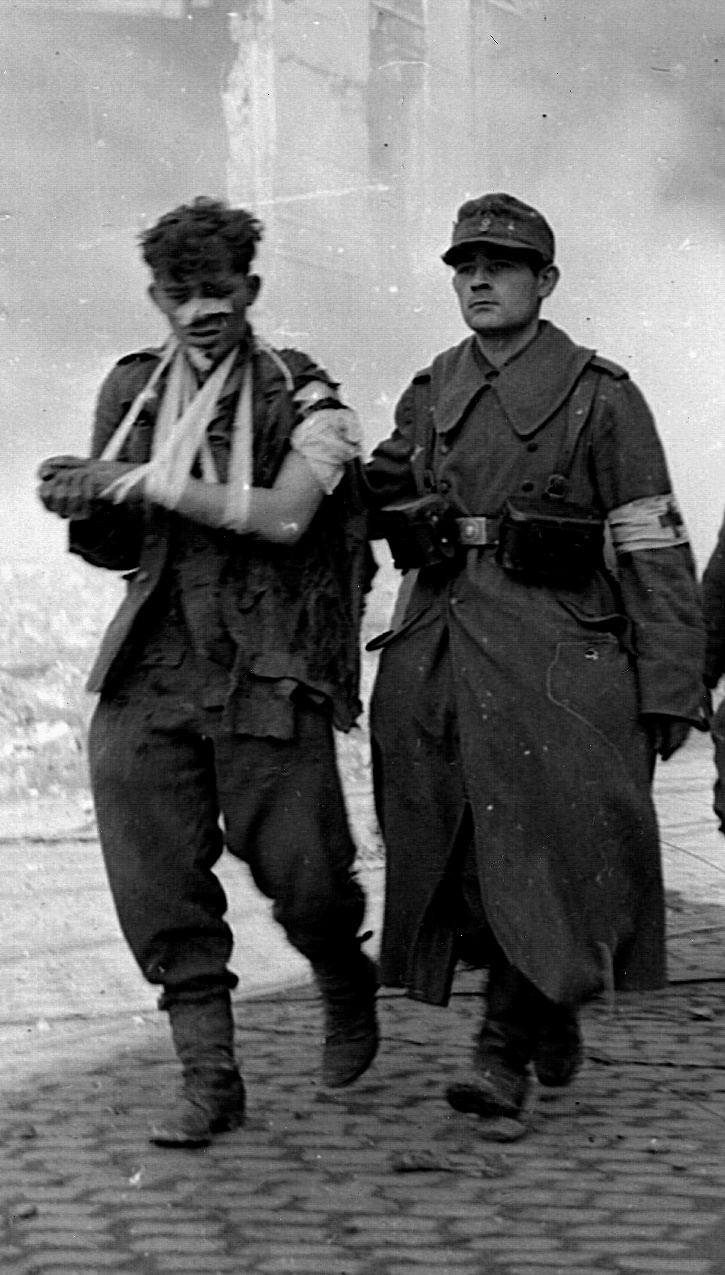 The night from 12 to 13 September passed quietly. During the small hours of the morning the 8.Luftwaffe-Fortress-Battalion, the 12.Luftwaffe-Fortress-Battalion and the 19.Luftwaffe-Fortress-Battalion were attached to the Kampfkommandant of Aachen in order to be committed at daybreak in a counterattack against the American penetration of the Scharnhorst Line at Brandenberg Hill south of Aachen.
Mng Sitrep, 353 Inf Div, 0445 on 13 Sep 44, LXXXI Corps KTB, Kampfverlauf.
At 0600 on September 16, the 116.Panzer-Division and 9.Panzer-Division assumed command of their new West Wall sectors. With some local defense units in the front line, Gen von Schwerin disengaged the organic forces of the 116.Panzer-Division — badly in need of regrouping and some rest — in order to assemble them in the Richterich – Würselen area northeast of Aachen.
That move made it impossible to commit these forces against the penetration at Brandenberg Hill before afternoon. In addition, if the enemy continued to advance and exploit his success, which had to be expected in any event, he could not be prevented from entering the town of Aachen from the south by noon.
ETHINT 18 (Schwerin); Daily Sitrep, 116 Pz Div, 13 Sep 44, LXXXI Corps KTB, Tagesmeldungen.
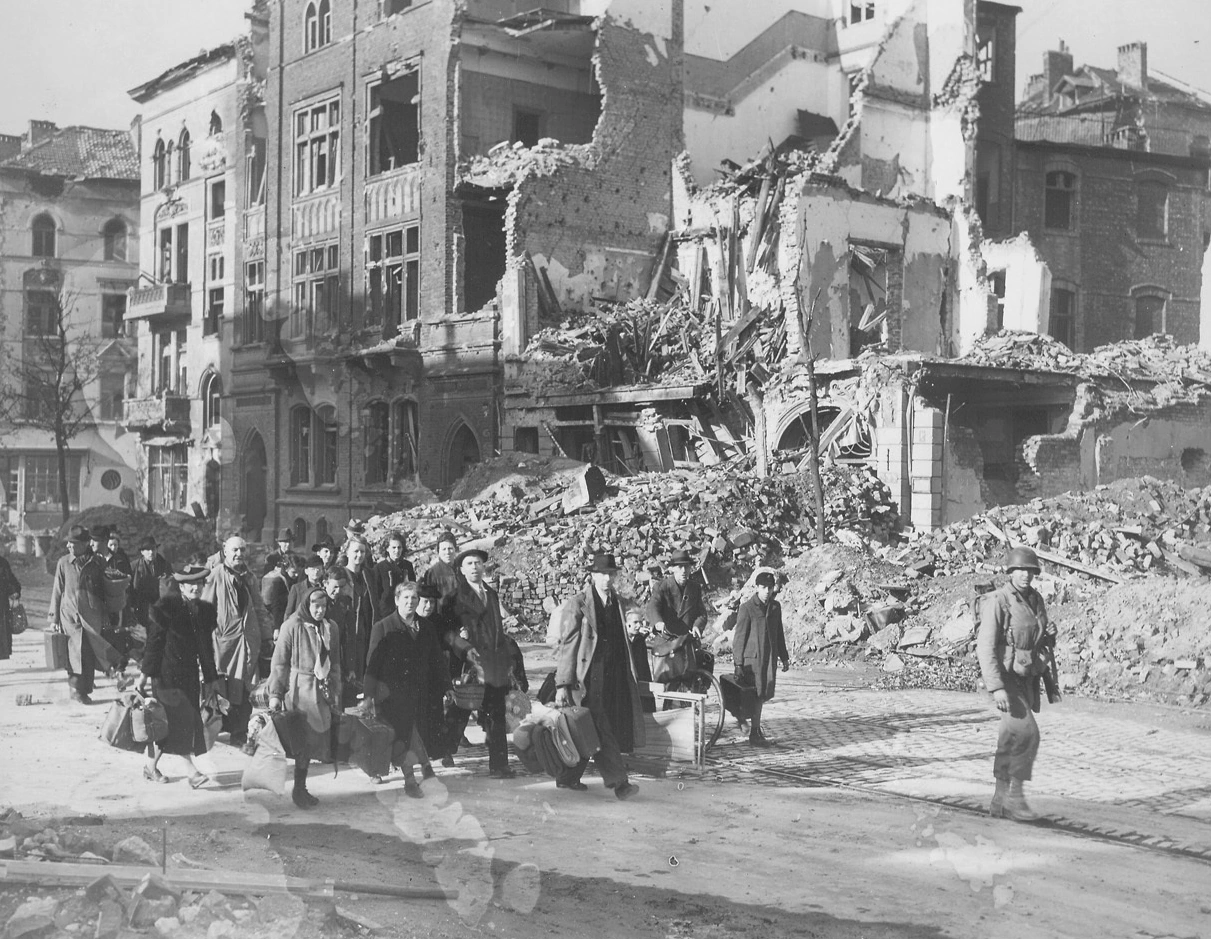
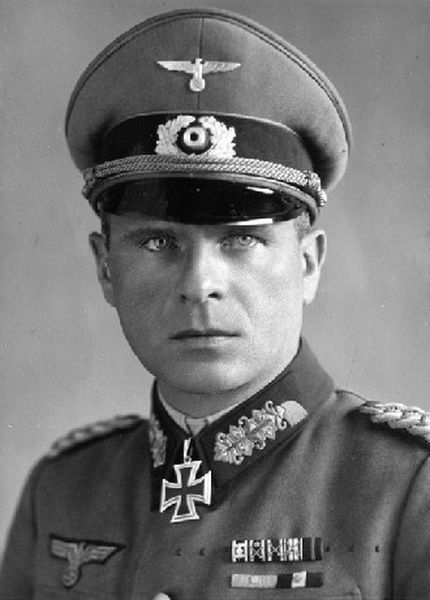 During the night from September 12 to September 13, the city of Aachen had been in the grip of chaos. Since Gen von Schwerin was to assume control on September 13, he drove into Aachen the evening before on the way to his command post at Laurensberg. He found the population in panic. It was the picture Hitler had made all too familiar in Europe — but now, for the first time, the shoe was on the other foot. ‘Women, with small children and babies, had loaded their last possessions on small hand carts and prams and walked into the night without having any idea where to go; they were driven only by fear and the threats of the Party that every person who did not leave the town would be shot as a traitor’….
ETHINT 18 (Schwerin).
Stirred by humane motivations and worried about the effect of the panic and the jammed roads on the morale and mobility of his troops, von Schwerin decided to put an immediate stop to the disorganized flight. When he sent his officers out to contact the police with orders to halt the evacuation, they returned to him with the shocking news that the entire police force and all government and Party officials had left Aachen; not one police station was occupied. Thereupon Gen von Schwerin took matters into his own hands. He sent his officers out once more to persuade the frantic populace to return to their homes. In so doing he exposed himself to the grave charge of having countermanded a Fuehrer order commanding the evacuation of Aachen. In the morning of September 13, the city was nearly calm again; for the time being all signs of panic had disappeared. All buildings housing the Party and municipal
administration were deserted.
Report, Model to OB WEST, 2230 on 15 Sep 44, A Gp B KTB, Operations-Befehle; Ltr, Gen Mattenklott to Reichsfuehrer SS Heinrich Himmler, 15 Sep 44, LXXXI Corps KTB, Meldungen der Div. General der Infanterie Franz Mattenklott commanded Wehrkreis VI, the military district which included the Aachen area. In desiring to spare Aachen the terrors of becoming a battleground, von Schwerin deviated sharply from Hitler’s avowed determination to turn the city of Charlemagne into a fortified stronghold where each house would be fanatically defended to give the Allies a foretaste of what to expect inside Germany..
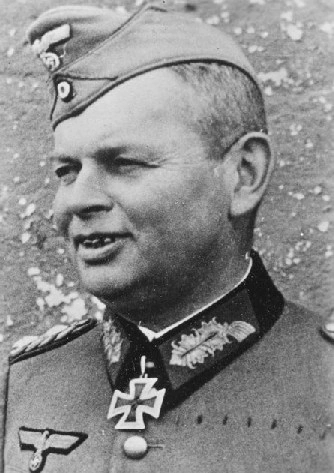 South of the city Kampfkommandant Col von Osterroth launched another counterattack against the American penetration at Brandenberg. Osterroth’s attempt of the night before to restore the situation had failed. The Americans were now in possession of Bunkers 160 and Bunker 161 and were feeding additional forces into their salient. All morning attempts by the weak forces under the command of Col von Osterroth to seal off the penetration remained inconclusive.
ETHINT 18 (Schwerin); Tel Conv, Seventh Army to LXXXI Corps, 1140 on 13 Sep 44, LXXXI Corps KTB, Kampfverlauf; Daily Sitrep, 116 Pz Div, 13 Sep 44, LXXXI Corps KTB, Tagesmeldungen.
As mentioned above, Gen von Schwerin‘s organic forces were executing a maneuver which prevented them from participating in the fighting southwest of Aachen before late afternoon. He believed that the American penetration at Brandenberg Hill would develop into a main effort attack against the city, and he knew that the Luftwaffe battalions would be no match for their opponents. Convinced that the Americans would have Aachen occupied in a matter of hours, von Schwerin privately thought this the best solution for the old city. After much searching through empty public buildings, von Schwerin finally found one man still at his post, an official of the telephone service. To him Gen Schwerin entrusted a letter, written in English, which the official promised to take to the commanding officer of the American forces as soon as they had occupied Aachen.
The letter read as follows: I stopped the absurd evacuation of this town; therefore, I am responsible for the fate of its inhabitants and I ask you, in the case of an occupation by your troops, to take care of the unfortunate population in a humane way. I am the last German Commanding Officer in the sector of Aachen. Signed: SCHWERIN.
Ibid.; Rpt, Model to OB WEST, 2330 on 15 Sep 44, A Gp B KTB, Operations-Befehle. Consequences to Count von Schwerin arising from his interference with the evacuation of Aachen and the discovery of this letter by the Nazis will be discussed later in this study.
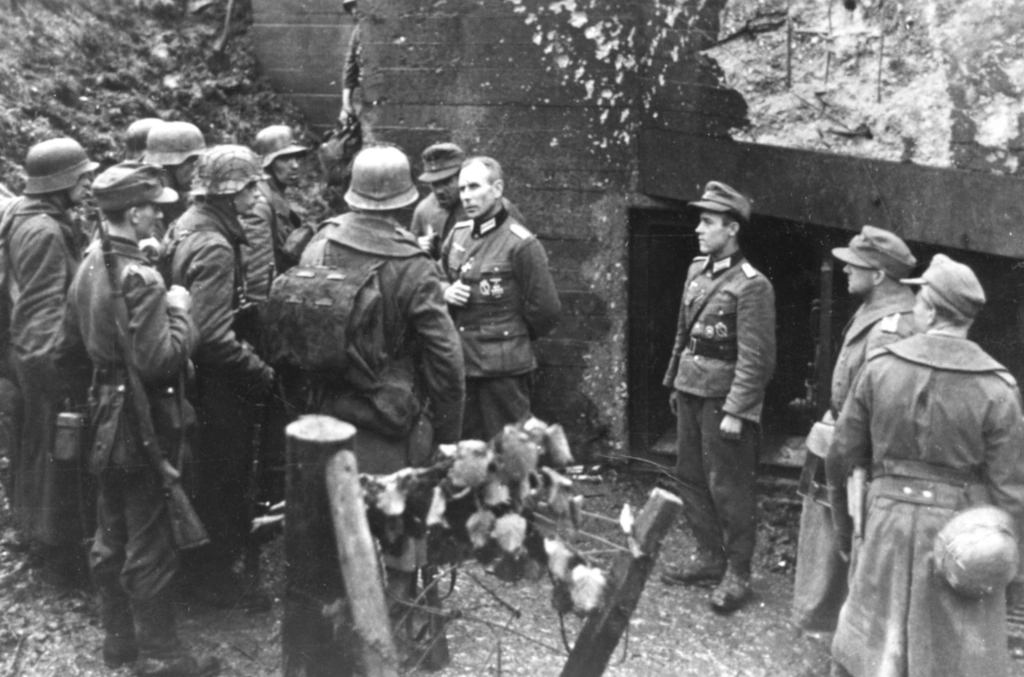
Meanwhile, however, the tactical situation had changed. Gradually it dawned on the Germans that the Americans were not going to exploit their opportunity to walk into Aachen but that they intended, rather, to envelop the city by driving up the Stolberg Corridor in the direction of Eschweiler. By noon on September 13, Col von Osterroth‘s men had finally succeeded in sealing off the American salient south of Aachen. Col von Osterroth thought he could hold the line against the American tanks if the assault guns of the 394.Assault-Gun-Brigade just detrained at the Aachen Nord Railway Station could be committed against them. The LXXXI Corps ordered the 116.Panzer-Division to wipe out the American penetration at the Brandenberg Hill at all cost. Unwillingly von Schwerin ordered his division, which had just arrived in the Richterich – Würselen assembly area, to turn around, march back to the other end of Aachen and assemble there for the counterattack. Although some replacements had arrived in the morning, and the battalions had an average strength of about three hundred men, the fighting power of the division was still low. Only about thirty tanks and assault guns were operationally fit, and the troops were tired and battle weary.
TWX , Col von Osterroth to 116 Pz Div, 1315 on 13 Sep 44, LXXXI Corps KTB, Meidungen der Div.; Daily Sitrep, 116 Pz Div, 13 Sep 44, LIXXI Corps KTB, Tagesmeldungen.
Rad, LXXXI Corps to 116 Pz Div, 1230 on 13 Sep 44, LXXXI Corps KTB, Kampfverlauf.
ETHINT 18 (Schwerin).
Von Schwerin ordered the 156.Panzer-Grenadier-Regiment to march through the city while the 60.Panzer-Grenadier-Regiment bypassed Aachen on its southern periphery. At 1600 the division jumped off against the American salient at Brandenberg Hill. It made some headway against American armored reconnaissance which had advanced to the outskirts of the city. The armor withdrew to the break in the German MLR, and the 116.Panzer-Division was able to close the gap, without attempting to recapture the American-held pillboxes after darkness had set in. Shortly after noon on September 13, US 3d Armored Division resumed its drive up the Stolberg Corridor. South of Rott the Americans cracked a number of bunkers and at 1225 achieved a penetration in the MLR. American armor advanced up the road toward Rott, filling in the antitank craters in its path. Less than an hour later US forces were within one mile of Rott, and the 9.Panzer-Division mustered all its available forces for a counterattack to be launched from Kornelimünster. Gen Müller asked the LXXXI Corps Operations Officer to move all available corps reserves to Kornelimünster. Realizing that the Stolberg Corridor, rather than the Aachen Municipal Forest south of the city, was the scene of the VII Corps main effort in his sector, Gen Schack ordered the 116.Panzer-Division to transfer half the assault guns of the 394.Assault-Gun-Brigade to the 9.Panzer-Division at Kornelimünster.
Daily Sitrep, 116 Pz Div, 13 Sep 44, LXXXI Corps KTB, Kampfverlauf.
Rad, 116 Pz Div to LXXXI Corps, 2235 on 13 Sep 44, LXXXI Corps KTB, Meldungen der Div.; Daily Sitrep, A Gp B, 0100 on 14 Sep 44, A Gp B KTB, Anlagen, Tagesmeldungen, 1.IX. – 15.X.44. Referred to hereafter as A Gp B KTB, Tagesmeldungen.
Sitrep, 9 Pz Div to LXXXI Corps, 1225 on 13 Sep 44, LXXXI Corps KTB, Kampfverlauf.
Tel Conv, Gen Mueller to LXXXI Corps, 1340 on 13 Sep 44, LXXXI Corps KTB, Kampfverlauf
Tel Conv, LXXXI Corps to 9 Pz Div, 1420 on 13 Sep 44, and LXXXI Corps to 116 Pz Div, 1430 on 13 Sep 44, LXXXI Corps KTB, Kampfverlauf.
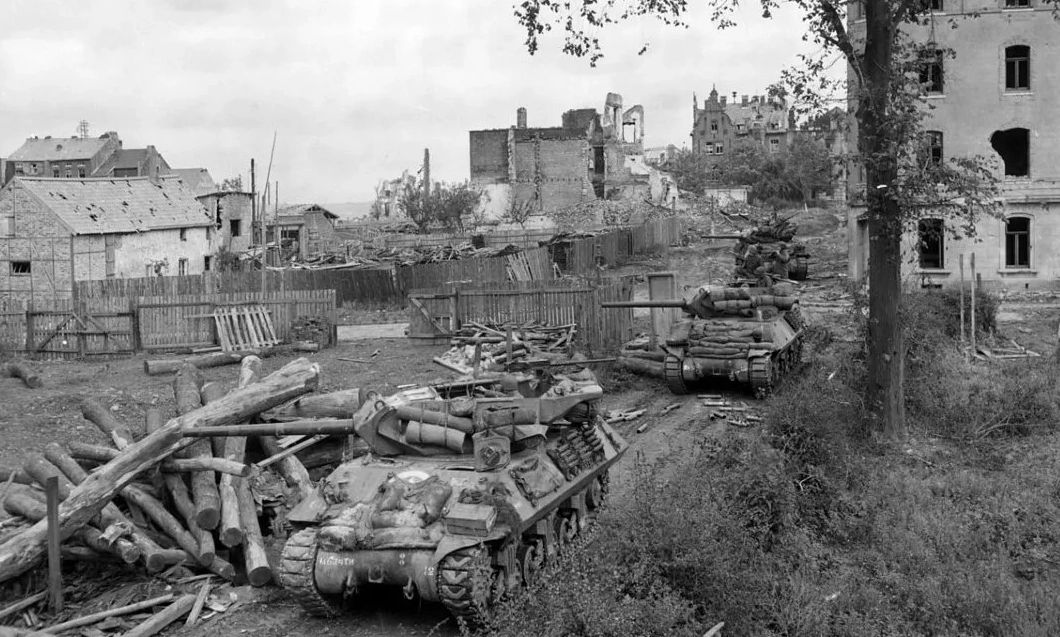
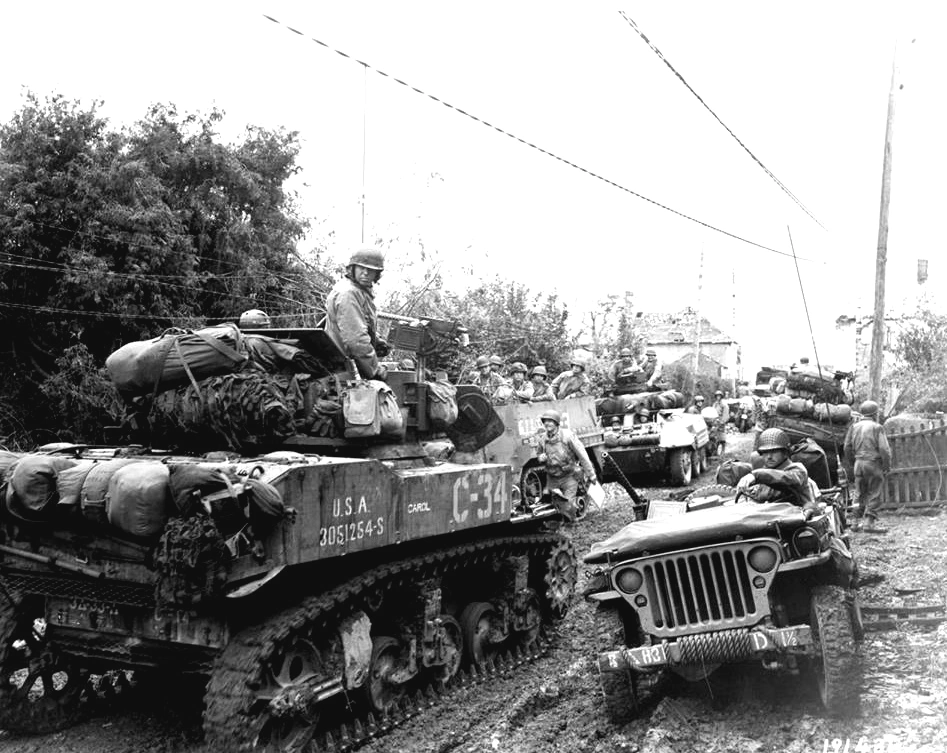
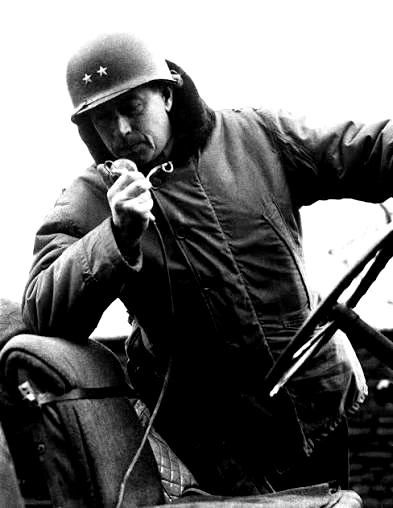 The US 3rd Armored Division drive up the Stolberg Corridor was in two-pronged, with one group attacking/the direction Schleckheim – Kornelimünster, the other toward Rott and Mulartshuette. At 1630 ten American tanks appeared before Rott while other US forces had already bypassed the village and were located east thereof. Headquarters and headquarters company of the 9.Panzer-Division sped to Rott in an effort to hold the line there. Other forces of the division attempted to screen off at Mulartshuette by means of obstacles and demolitions. In the early afternoon American tanks and infantry penetrated a German strongpoint south of Schleckheim and continued their advance toward that village. A race was now on between US and three assault guns of the 394.Assault-Gun-Brigade driving on Kornelimünster from different directions. At 1600 eight American tanks were observed on the road from Nuetheim to Kornelimünster. The German assault guns were expected in Kornelimünster at 1800.
Tel Conv, LXXXI Corps to 9 Pz Div, 1730 on 13 Sep 44, LXXXI Corps KTB, Kampfverlauf
Tel Conv, LXXXI Corps to 9 Pz Div, 1420 on 13 Sep 44, LXXXI Corps KTB, Kampfverlauf
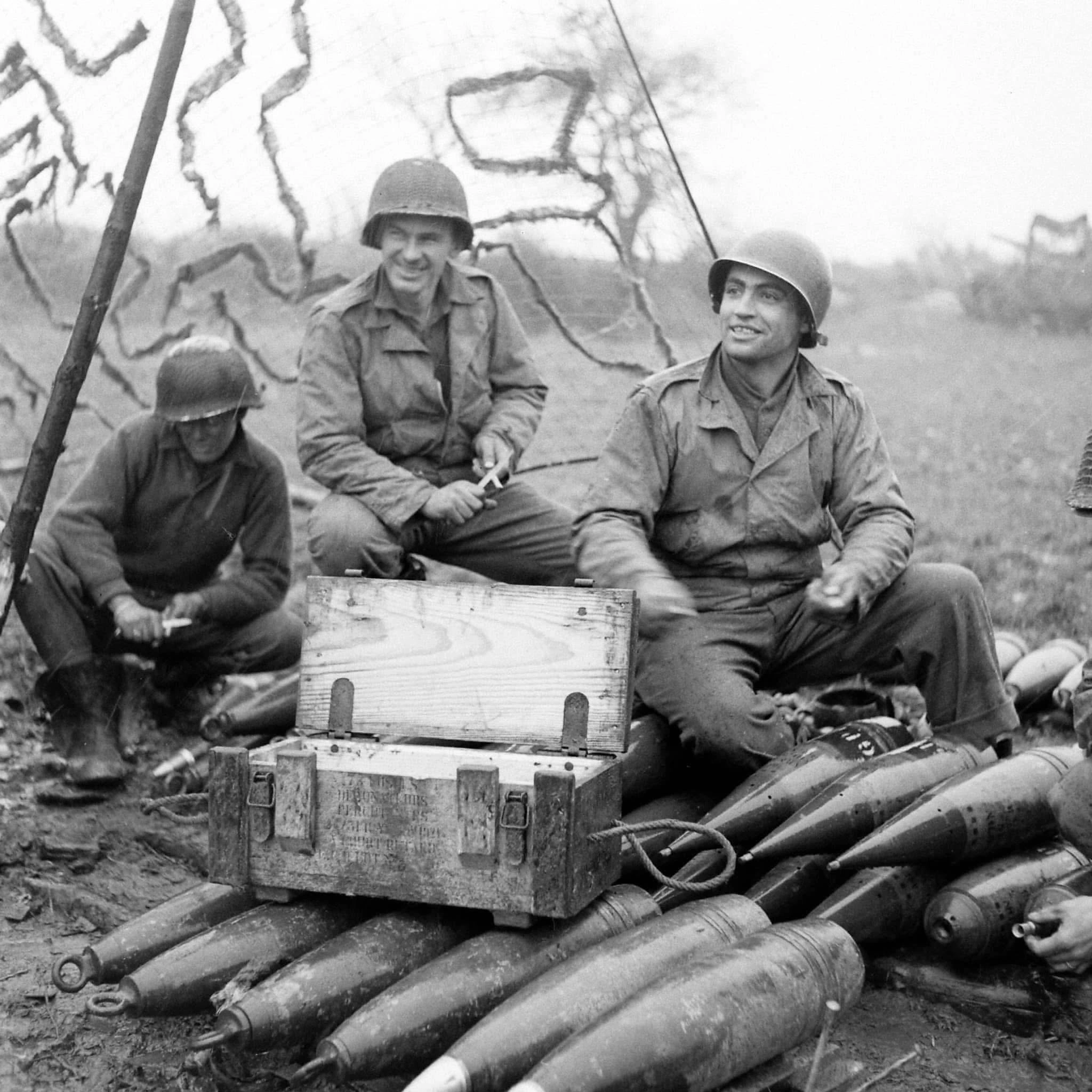
They arrived on schedule, and a battalion of the 9.Panzer-Division, reinforced by these three assault guns and a few 75-MM antitank guns which the division had picked up, began to establish a line of resistance from the northern periphery of Schleckheim via the northern edge of Nuetheim to the southern periphery of Kornelimünster. Of the first eight US tanks, four were knocked out by Panzerfaust (Hand-operated antitank grenades), but fifteen more tanks wheeled off to right and left in an effort to roll up the 9.Panzer-Division line.
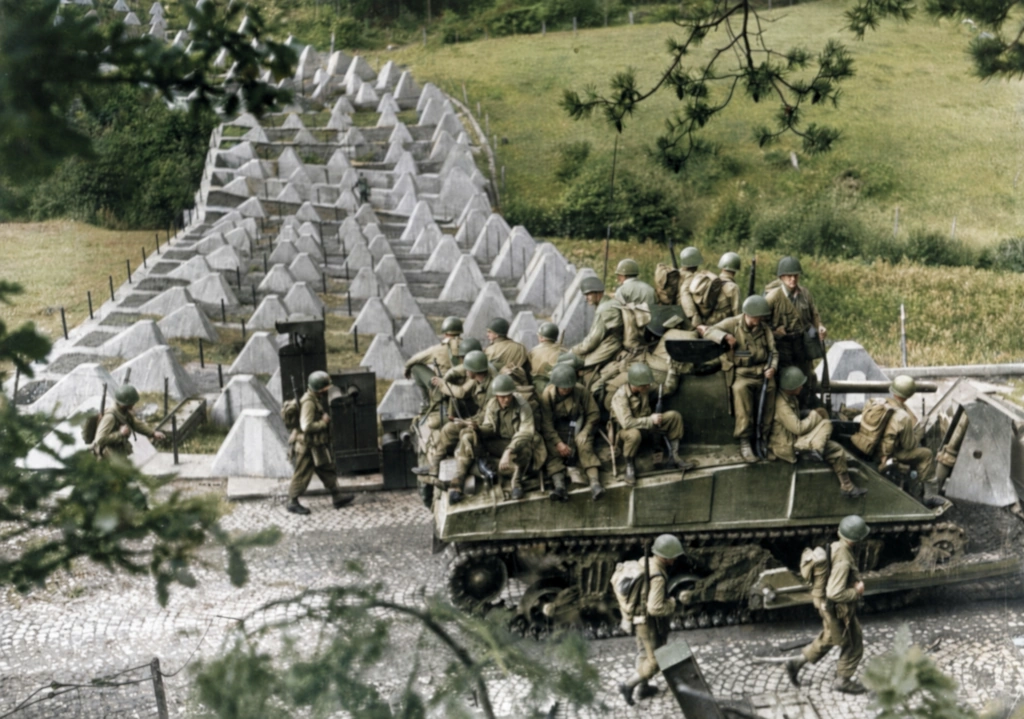
At 1845 fifteen US tanks broke through the line of bunkers and dragons teeth at Oberforstbach, while American infantry advanced along the road north of the Aachen Reservoir (Langfeld – Nütheim – Kornelimünster). Five American tanks attacked Bunker 109 on this road about halfway between the reservoir and Nütheim. Somewhat later the Germans reported American forces before Kornelimünster, near Mulartshuette, and in Hahn. At Rott Headquarters Company of the 9.Panzer-Division and the 105.Panzer-Brigade launched a counterattack in an effort to halt the American drive on Mulartshuette. German engineers hastily began to demolish all crossings over the Vicht River between Stolberg and Zweifall.
Tel Conv, LXXXI Corps to 9 Pz Div, 1830 on 13 Sep 44, LXXXI Corps KTB, Kampfverlauf; Daily Sitrep, 9 Pz Div, 13 Sep 44, LXXXI Corps KTB, Tagesmeldungen
Tel Conv, LXXXI Corps to 9 Pz Div, 1915 on 13 Sep 44, LXXXI Corps KTB, Kampfverlauf
Daily Sitrep, 9 Pz Div, 13 Sep 44, LXXXI Corps KTB, Tagesmeldungen
Tel Conv, LXXXI Corps to 9 Pz Div, 2030 on 13 Sep 44, LXXXI Corps KTB, Kampfverlauf
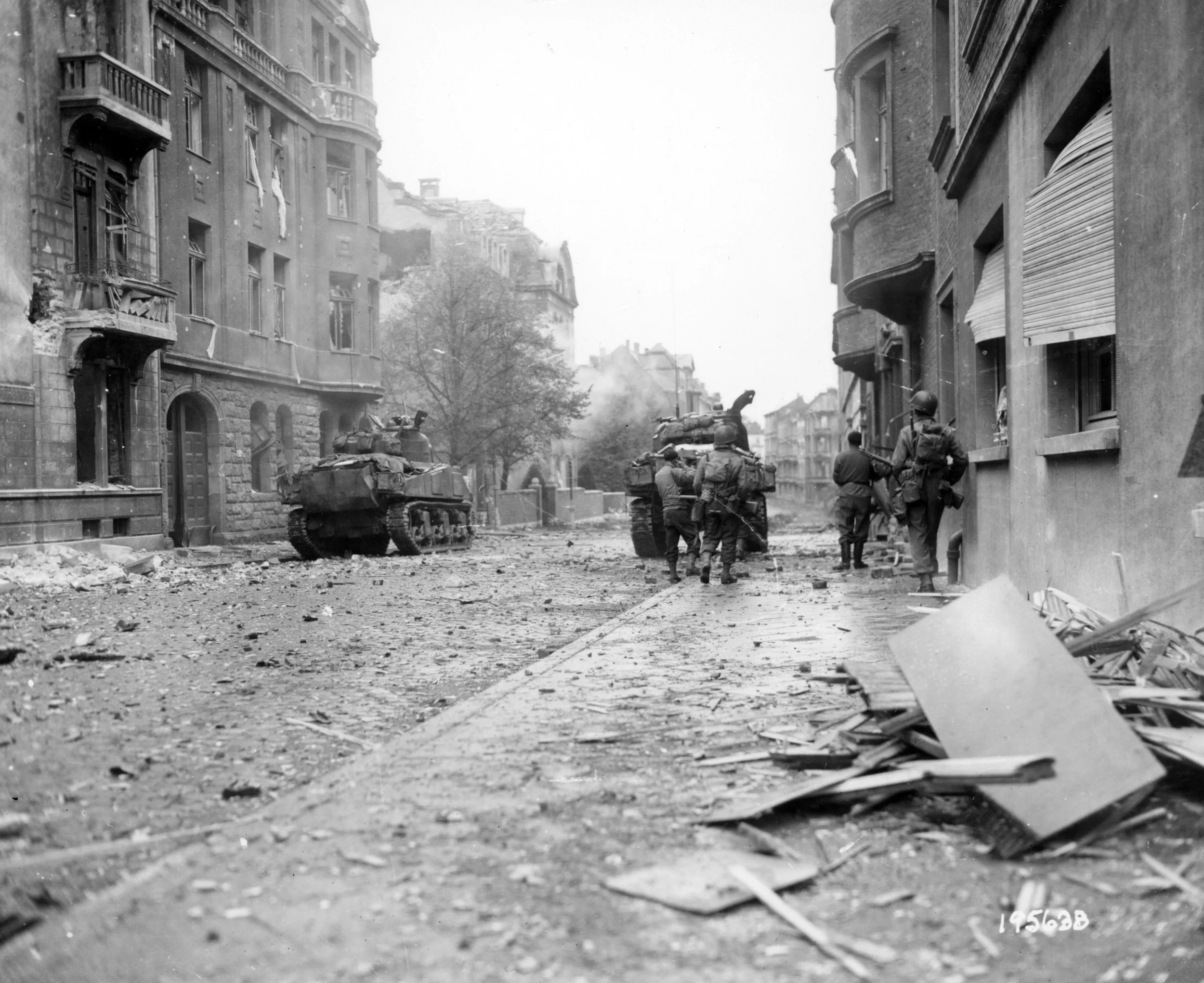
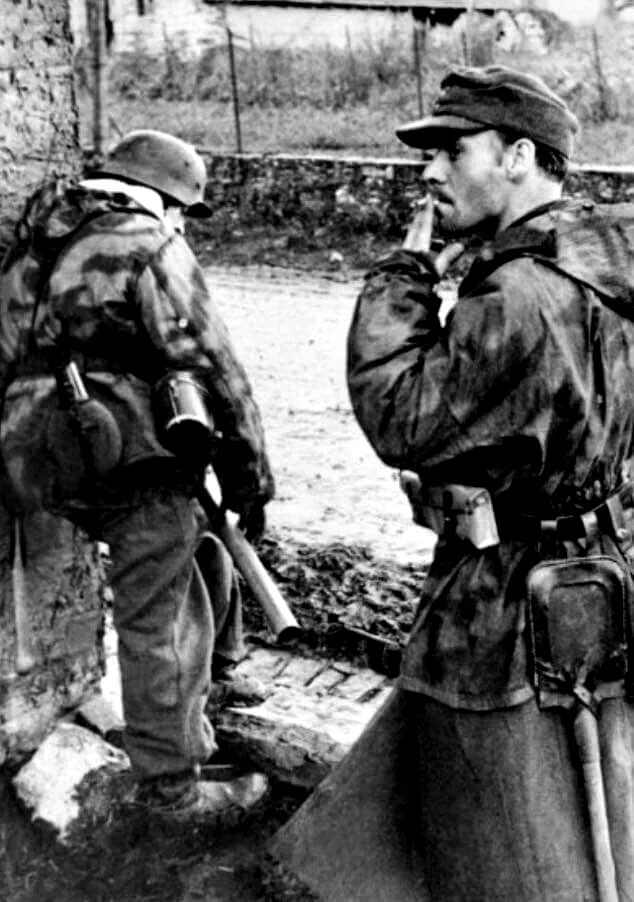 At LXXXI Corps headquarters American intentions emerged more clearly. The corps operations officer called Gen Paul Mahlmann of the 353.Infantry-Division to inform him that ‘… the enemy will probably launch a drive bypassing Aachen from the penetration area near Kornelimünster and Hahn … toward the second band of defenses – Schill Line‘.
The three Landesschuetzen battalions under the command of the 353.Infantry-Division were alerted to stand by for action. The LXXXI Corps also ordered the 116.Panzer-Division to transfer the 8.Luftwaffe-Fortress-Battalion and one battery of artillery to the 9.Panzer-Division. As September 13, 1944, drew to a close, the American advance against the LXXXI Corps sector had been checked temporarily. The salient north of Hauset was wiped out. The penetrations on both sides of Walheim had been sealed off in the line Kornelimünster – Hahn. The southern prong of the US 3rd Armored Division attack which had advanced across Rott, had been checked at Mulartshuette. The night from September 13 to September 14, 1944, passed quietly in the entire LXXXI Corps sector. The Germans observed strong American infantry and armored forces assembling in the Schleckheim – Walheim area but found Oberforstbach unoccupied.
Tel Conv, LXXXI Corps to Gen Mahlmann, 2040 on 13 Sep 44, LXXXI Corps KTB, Kampfverlauf
Tel Conv, LXXXI Corps to 116. Pz Div, 2320 on 13 Sep 44, LXXXI Corps KTB, Kampfverlauf
Daily Sitrep, A Gp B, 0100 on 14 Sep 44, A Gp B KTB, Tagesmeldungen
Lag Sitrep, LXXXI Corps, 0650 on 14 Sep 44, LXXXI Corps KTB, Tagesmeldungen
Daily Sitrep, 116 Pz Div 14 Sep 44, LXXXI Corps KTB, Tagesmeldungen
Rad, 116 Pz Div to LXXXI Corps, 1255 on 14 Sep 44, LXXXI Corps KTB, Meldungen der Div
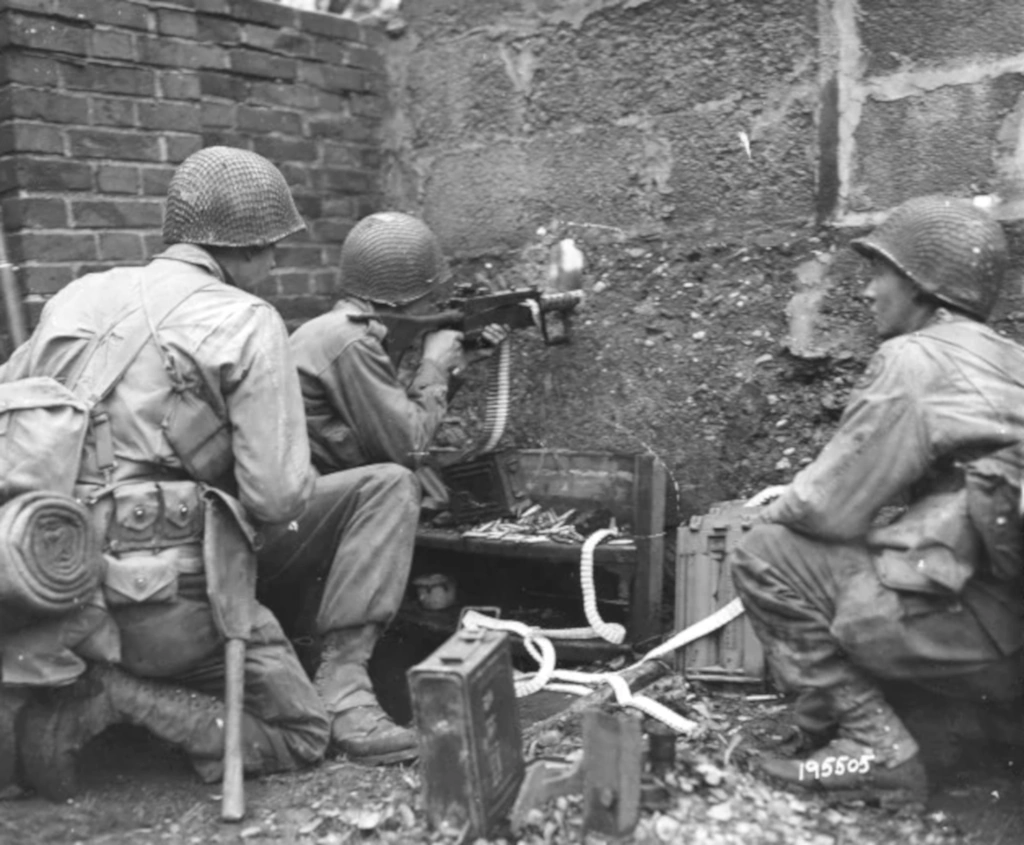
In the southern outskirts of Aachen, American reconnaissance in the morning of September 14, probed the 116.Panzer-Division front line at Bildchen toward Bunker 189 and Grenzhof. Then, American infantry with strong artillery support jumped off against the entire division front and broke through the bunker line in many places. The bunkers were bypassed singly and fought down from flank and rear by US infantry while American tanks followed up the attack. After noon the bunkers at Bildchen and Koepfchen (southwest and south of Aachen respectively) were in American hands. The 116.Panzer-Division forces were now defending a semicircle around Aachen, from Vaëlser Quartier west of Aachen to the boundary with the 9.Panzer-Division southeast of the city. Their intentions were to defend this line and to counterattack southward whenever possible.
Rad, 116 Pz Div to LXXXI Corps, 1340 on 14 Sep 44, LXXXI Corps KTB, Meldungen der Div
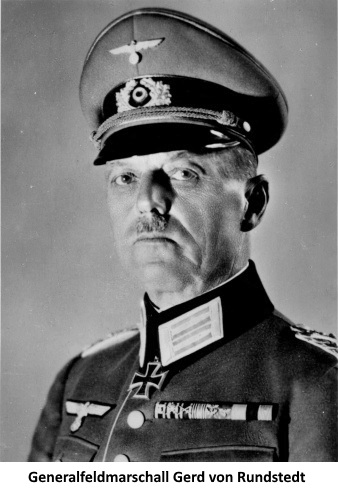 A short time later the division was forced to admit that all attempts to regain the belt of bunkers had failed because the densely wooded terrain (Aachen Municipal Forest) made adequate tank support and artillery observation impossible. As American forces drew closer to the city, the panic in Aachen reached a new high. According to Gen von Schwerin conditions were ‘catastrophic’. No police or civil authorities had yet returned to Aachen. The old museum director of Aachen, accompanied by a few city officials who had stayed at their posts, came to see von Schwerin to tell him that a group of leading citizens had chosen him, the museum director, to form a provisional city government. The general gave orders for the evacuation to proceed, provided rail and motor transport were available, but emphasized that it would only result in clogging up vital thoroughfares.
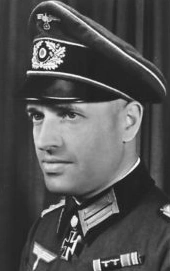 In addition to having to cope with the frantic civilian population, the 116.Panzer-Division, which on September 14, assumed direct command of all German elements in its sector, also had trouble with the Luftwaffe. In total disregard of the division commander’s orders the Luftwaffe attempted to pull its antiaircraft batteries out of Aachen. FM Gerd von Rundstedt (Commander in Chief West) himself had to interfere, reminding Luftwaffe anti-aircraft troops that they were to take orders, like everybody else, from the superior headquarters to which they were attached. Gen von Schwerin also complained that his Luftwaffe fortress battalions had a tendency to desert their positions in the face of even minor attacks.
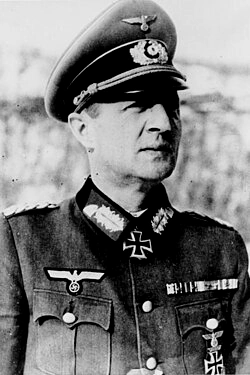 Tel Conv, LXXXI Corps to Gen von Schwerin, 0930 on 14 Sep 44, LXXXI Corps KTB, Kampfverlauf; Rpt, A Gp B to OB WEST, 1200 on 14 Sep 44, OB VWEST KTB; Rad, 116 Pz Div to LXXXI Corps, 1310 on 14 Sep 44, LXXXI Corps KTB, Meldungen der Div.; ETHINT 18 (Schwerin); MS # B-058 (Voigtsberger)
Gen Heinrich Voigtsberger commanded the 60.Panzer-Grenadier-Regiment. When Count von Schwerin was relieved of the command of 116.Panzer-Division on 15 September 1944, Gen Voigtsberger became acting division commander until the new commanding officer, Gen Siegfried von Waldenburg, arrived on 19 September
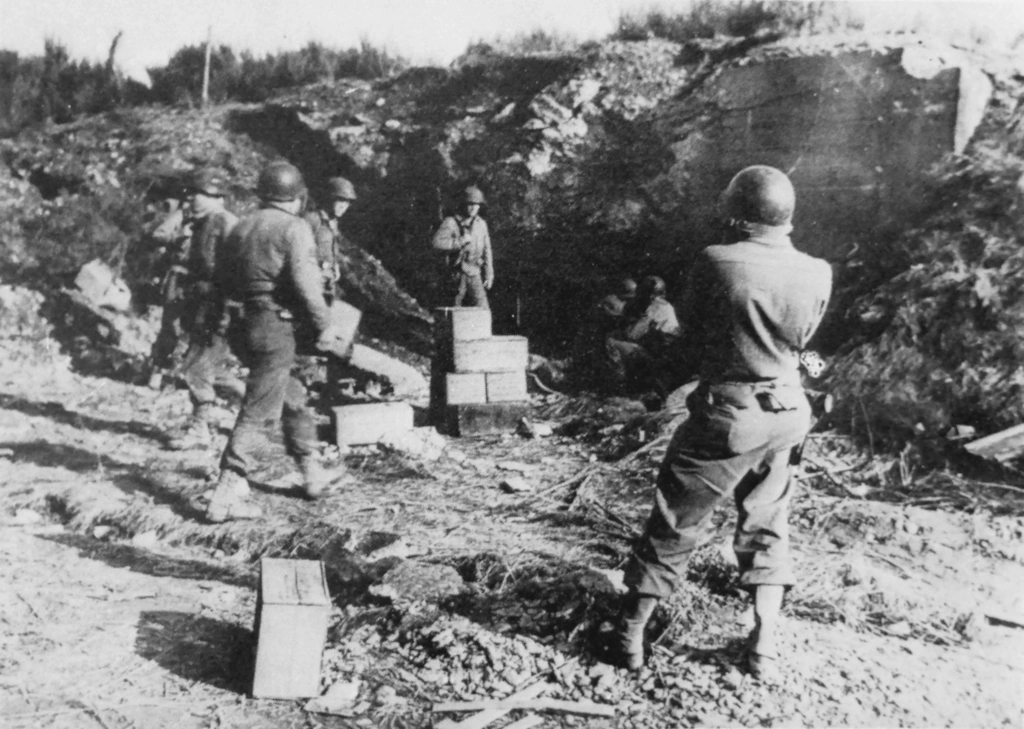
Early in the afternoon of September 14, strong American infantry and armored forces rolled up the bunker line from the direction of Brand, Niederforstbach and Oberforstbach. By 1500, they had gained a line extending from Beverbach Creek via Linzenshäuschen (on the Eupen – Aachen Road) to Friedrichsberg Hill. The 116.Panzer-Division, attempting to hold the line from the West Wall to south of Vaelser Quartier, from there to north of Friedrichsberg Hill – Linzenshaeuschen – Beverbach Creek, had lost contact with the 9.Panzer-Division on its left, southeast of Aachen. The Germans noted that their opponents were employing new tactics to crack West Wall Bunkers: the Americans would launch strong infantry attacks covered by smoke screens while the tanks followed to back up the attack and to support the infantry in knocking out the bunkers one by one. The Americans made heavy use of artillery and smoke screens.
Southeast of Aachen in the sector of the 9.Panzer-Division the American combat commands resumed their drive up the Stolberg Corridor in the morning of September 14. Having taken Oberforstbach and Niederforstbach, they captured Kornelimünster at 1030 and Breinig at 1100. American tanks were observed shortly after noon continuing northeastward from Kornelimünster toward Buesbach. About the same time, the Germans reported an American tank driving from Mulartshuette northeastward toward Zweifall. A few hours later — at 1715 — American infantry, tanks, and armored cars entered Zweifall. After fifteen minutes the infantry had captured the first four bunkers (Bunker 330, 334, 335, and 336) in the second band of West Wall fortifications, and the task force continued eastward through the breach in the direction of Vicht and Mausbach.
Tel Conv, LXXXI Corps to 116 Pz Div, 1500 on 14 Sep 44, LXXXI Corps KTB, Kampfverlauf; Daily Sitrep, 116 Pz Div, 14 Sep 44, LXXXI Corps KTB, Tagesmeldungen.
Daily Sitrep, LXXXI Corps, 2100 on 14 Sep 44, LXXXI Corps KTB, Tagesmeldungen
TWX, 116 Pz Div to LXXXI Corps, 1250 on 14 Sep 44, LXXXI Corps KTB, Meldungen der Div
Rad, 116 Pz Div to LXXXI Corps, 1420 on 14 Sep 44, LXXXI Corps KTB, Meldungen der Div
Tel Convs, LXXXI Corps to 353 Inf Div, 1715 and 1720 on 14 Sep 44, and LXXXI Corps to 9 Pz Div, 2000 on 14 Sep 44, LXXXI Corps KTB, Kampfverlauf; Daily Sitrep, LXXXI Corps, 2100 on 14 Sep 44, LXXXI Corps KTB, Tagesmeldungen
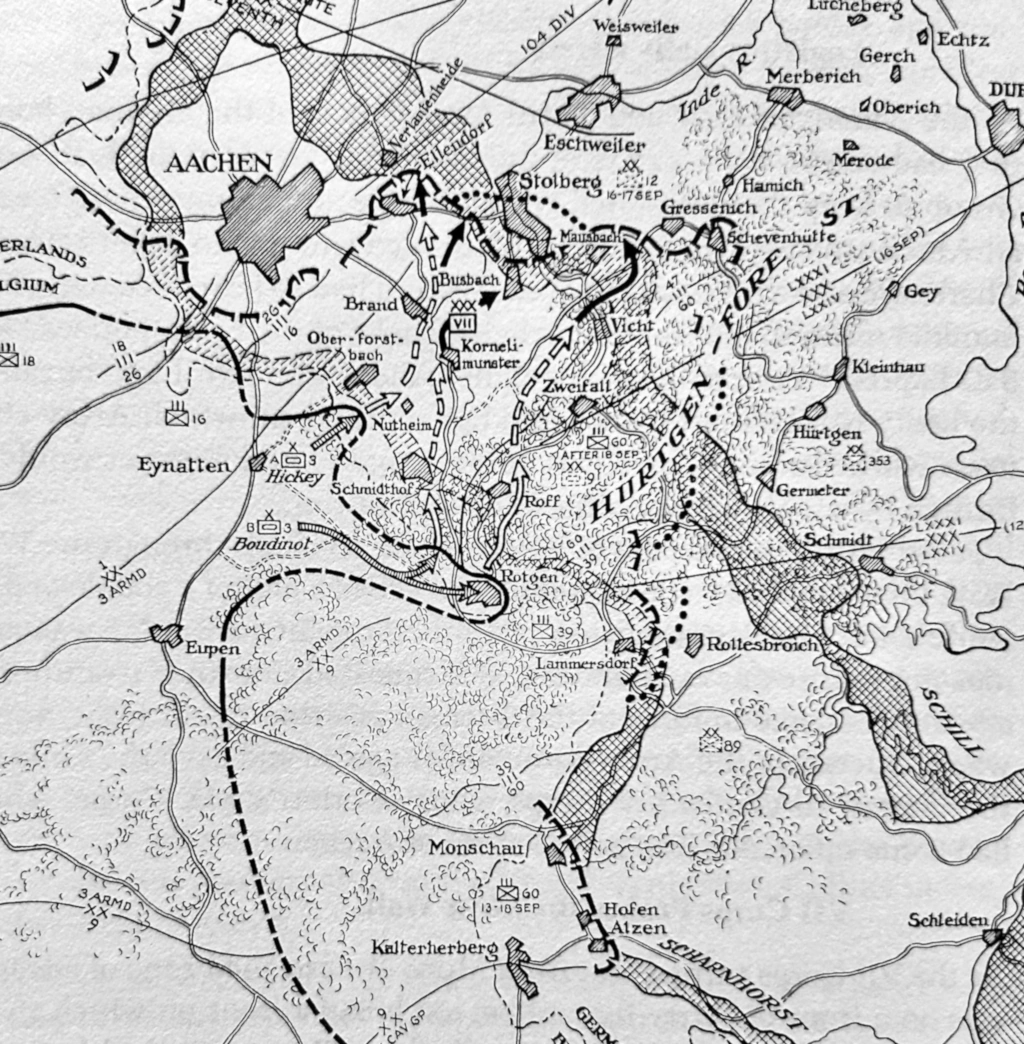
The front line of 9.Panzer-Division now extended from the southern edge of Brand – southern edge of Buesbach – east of Zweifall to the West Wall east of Roetgen. At 1800 the Germans reported that at least two hundred American tanks had assembled in Kornelimünster. Additional columns were seen moving north from Walheim. Up front the American spearhead reached the southern outskirts of Stolberg at 2000.
Apparently the Americans then decided not to continue their advance toward Stolberg and Eschweiler that evening. Instead, they worked on their encirclement of Aachen in the area between Aachen and Stolberg. Late in the afternoon American forces broke through the 116.Panzer-Division line between Beverbach Creek and Lindert, two miles west-southwest of Brand, and stabbed into the flank of the 60.Panzer-Grenadier-Regiment. The 116.Panzer-Reconnaissance-Battalion was committed in support of the division’s flank southeast of the Aachen Municipal Forest.
Evg Sitrep, A Gp B, 1930 on 14 Sep 44, A Gp B KTB, Anlagen, Letzte Meldung [Final Sitreps], 10.VIII. – 30. IX.44. Referred to hereafter as A Gp B KTB, Letzte Meldung
Sitrep, 9 Pz Div, 2030 on 14 Sep 44, LXXXI Corps KTB, Kampfverlauf
Daily Sitrep, 116 Pz Div, 14 Sep 44, LXXXI Corps KTB, Tagesmeldungen