

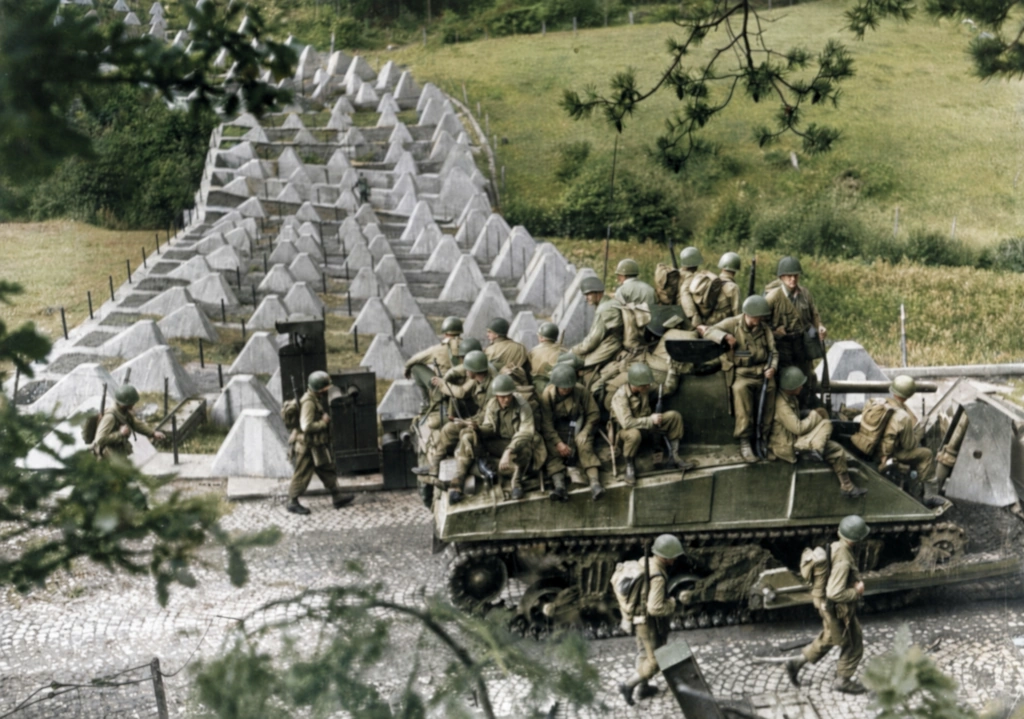
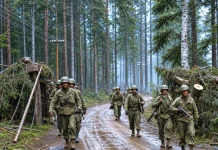


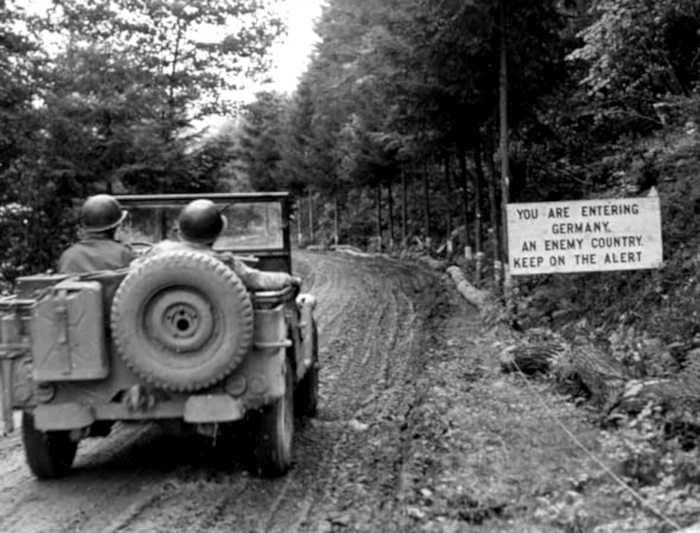
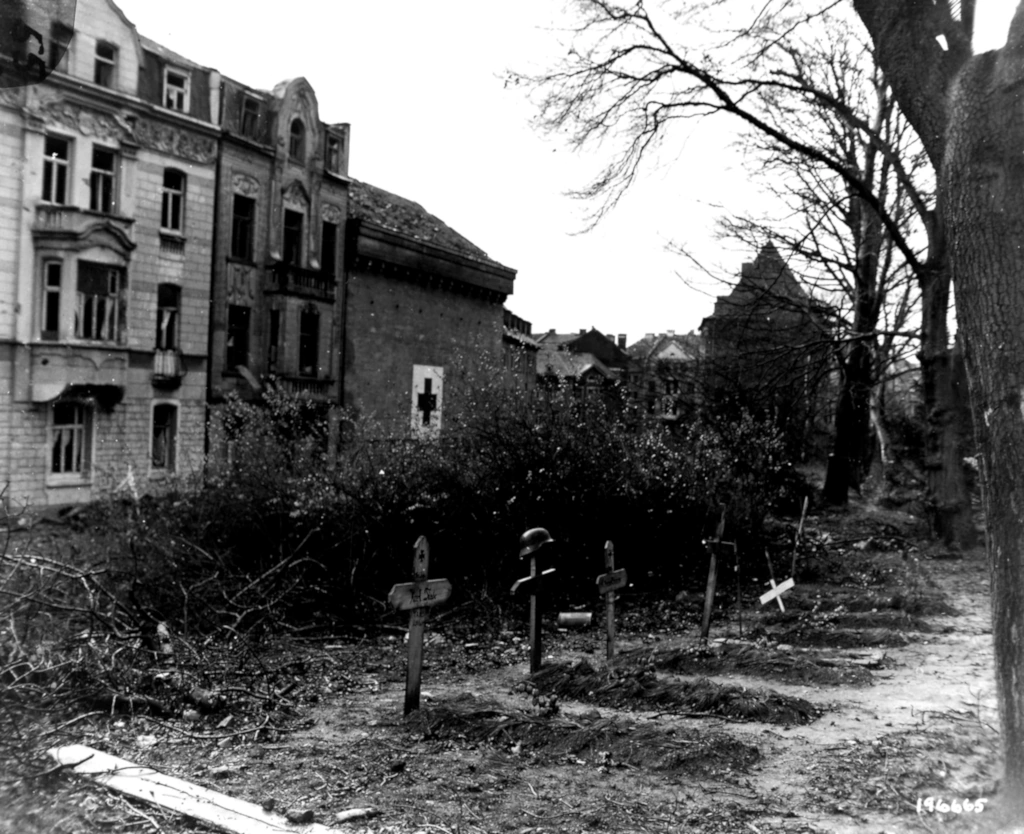
The first American unit involved in the Hurtgen Forest battle was the 9th Infantry Division. Early in the morning of September 14, 1944, elements of the 9th Infantry Division, supported by the 746th Tank Battalion started their advance across the Belgian – German border at the villages of Roetgen and Monschau. Their mission was to penetrate the German Siegfried Line, also known as the West Wall, and seizing the road centers in the area between Monschau to the south and Düren to the north. Three days after the attack started, elements of the 47th Infantry Regiment completely penetrated the Siegfried Line, and captured the town of Schevenhutte. Meanwhile, the 39th Infantry Regiment fought their way through the first line of defenses near the town of Lammersdorf while the men of the 60th Infantry Regiment pushed through the line near Hofen. The first part of the attack looked successful. However, well organized German resistance halted the advance of the 9th Infantry Division men at these positions, and the fast advance that started in Normandy two months earlier, ended right there. Hard and brutal fighting for small objectives was about to start. The battle of the Hürtgen Forest had begun.
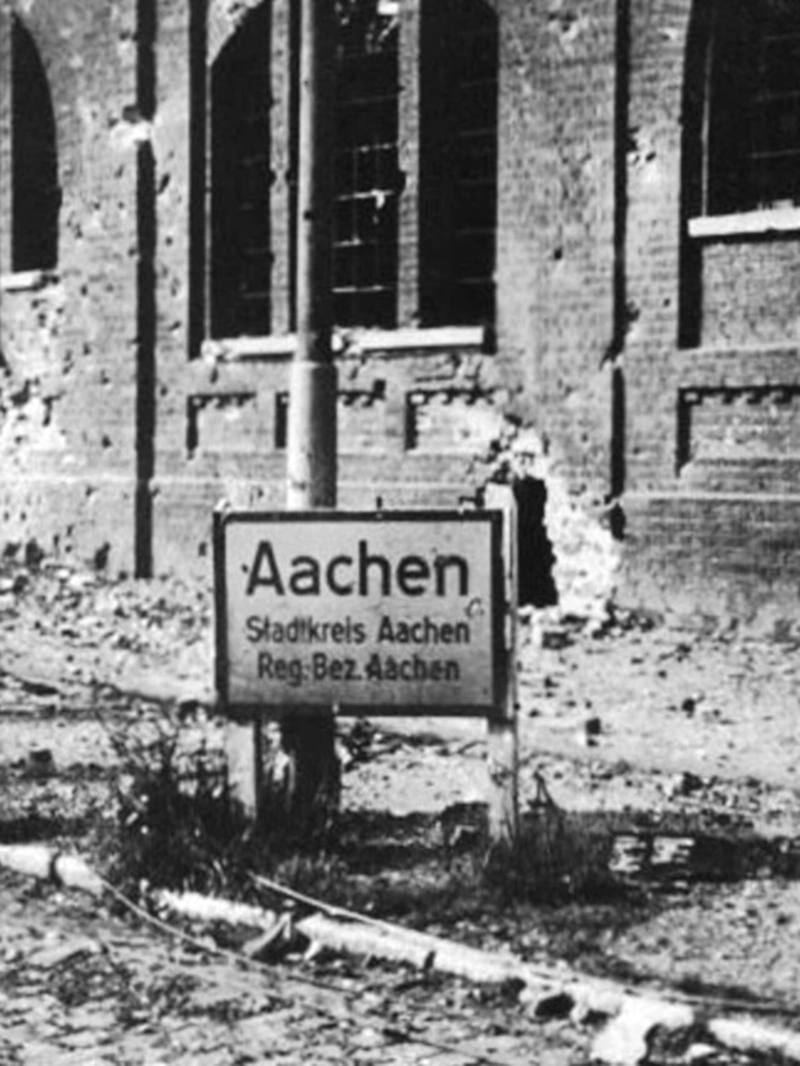 To complicate matters further, the 9.Panzer-Division, whose forces were needed to help restore the situation around Eilendorf, was short of fuel. Nevertheless, in the evening of September 19 plans still called for the 12.Infantry-Division to go ahead with its attack, although Gen Schack remarked that ‘the attack by the 12.Infantry-Division tomorrow morning will have little success’. In addition to its other problems, the 12.Infantry-Division already faced a personnel shortage. In the morning of September 20, Col Engel oriented his new corps commander, Gen Friedrich J. M. Koechling about the situation. In stressing the gravity of his situation, Col Engel stated that only four hundred men of the 89.Grenadier-Regiment were still available for the defense of the sector east of Stolberg. One engineer company of the 12.Infantry-Division, intended to close the gap near Duffenter (American salient at Hochwegerhof) had not arrived and its where abouts were still unknown. In view of the critical operational and logistical situation the new corps commander countermanded Gen Schack‘s order for a large-scale 12.Infantry-Division attack on September 20, and stated that, ‘in view of the heavy losses sustained and the mighty material superiority of the enemy, he will, in the future, order an attack only when it promises more success; aside from that the main mission will be to hold the line and to avoid unnecessary losses’.
All night long American medium and heavy guns shot harassing fire against the entire LXXXI Corps sector. In the sector of the ll6.Panzer-Division an American combat patrol, favored by the early morning mist, attached the German MLR south of Burtscheid at 0800 on September 20 and was repulsed. Aside from that, action in the Aachen sector was again limited to an artillery duel which lasted all day. Between Muensterbusch and Gressenich the forces of the 12.Infantry-Division spent a very busy day trying to defeat American endeavors to envelop Stolberg and to push further up the Stolberg Corridor toward Eschweiler. American operations on September 20, began with an armored infantry drive from Diepen±inchen northeastward toward Werth. Fearing a penetration at the boundary between the 89.Grenadier-Regiment and the 48.Grenadier-Regiment, Col Engel ordered an immediate counterattack. This attack, launched at noon on a fairly broad front, succeeded not only in turning back the American attack toward Werth but also in closing the gap between Stolberg and Duffenter and sealing off the American penetration at Hochwegerhof east of Duffenter. The 12.Infantry-Division established a coherent front line from the southern edge of Stolberg – Duffenter – eastward on the Duffenter-Werth Road as far as Hochwegerhof – southward to Weissenberg – southern periphery of Gressenich – northern periphery of Schevenhuette.
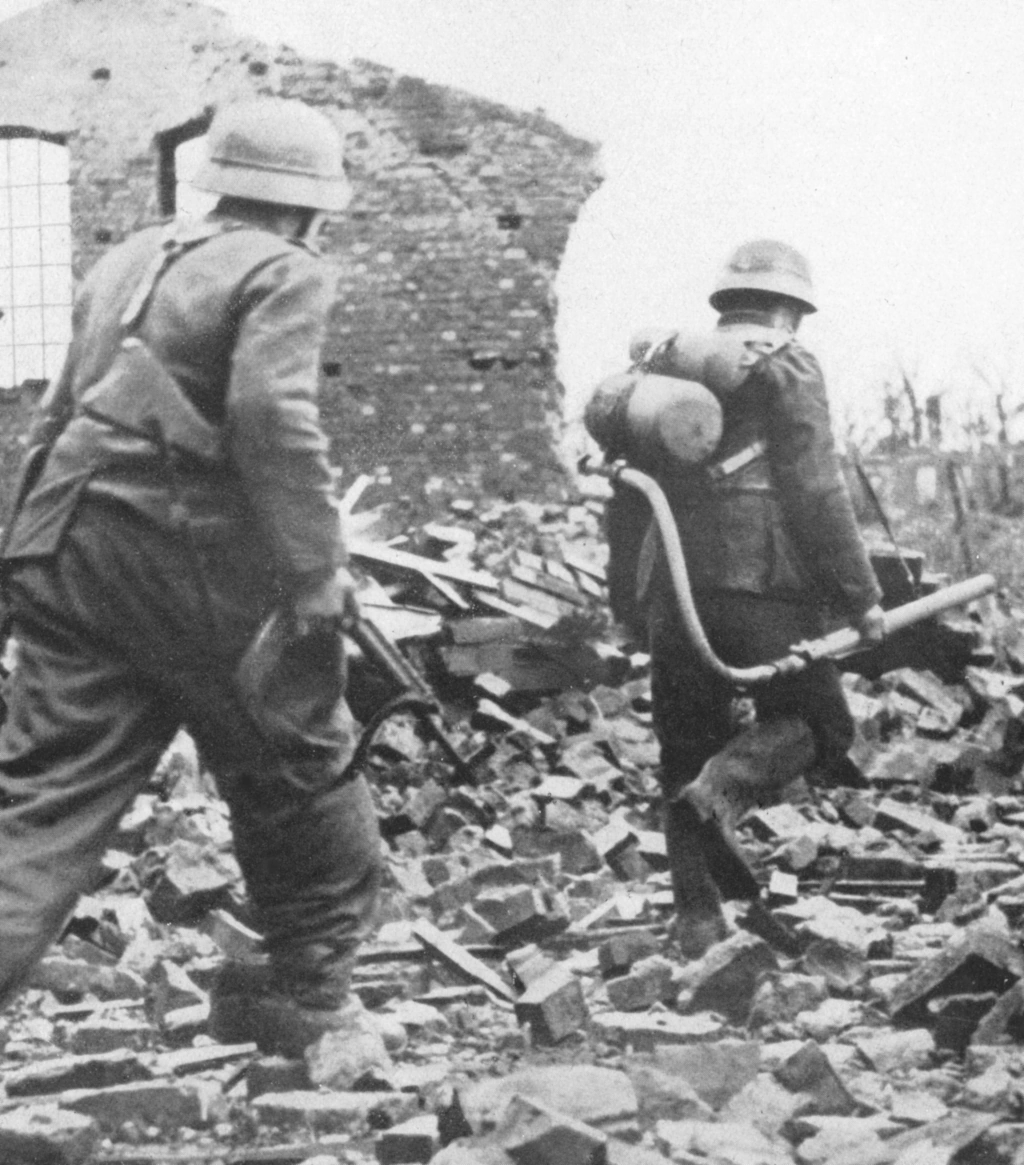 Tel Convs, Gen Schack to CofS, LXXXI Corps, 1100 and 2230 on 19 Sep 44, and LXXXI Corps to 12 Inf Div, 2010 on 19 Sep 44, LXXXI Corps KTB, Kampfverlauf
On September 20, 1944, Gen Schack was relieved as commander of LXXXI Corps (in connection with the Schwerin affair) and was replaced by Gen Koechling
Tel Conv, Gen Koechling to Col Engel, 0700 on 20 Sep 44, LXXII Corps KTB, Kampfverlauf
Daily Sitrep, 116 Pz Div, 20 Sep 44, LXXXI Corps KTB, Tagesmeldungen
Tel Convs, LXXXI Carps to 12 Inf Div, 1140 and 1400 on 20 Sep 44, LXXXI Corps KTB, Kampfverlauf; Daily Sitrep, LXXXI Corps, 2155 on 20 Sep 44, LXXXI Corps KTB, Tagesmeldungen
Tel Conv, LXXXI Corps to 12 Inf Div, 1845 on 20 Sep 44, LXXXI Corps KTB, Kampfverlauf
Tel Conv, LXXXI Corps to 12 Inf Div, 2010 on 20 Sep 44, LXXXI Corps KTB, Kampfverlauf
Tel Conv, LXXXI Corps to 12 Inf Div, 2010 on 20 Sep 44, LXXXI Corps KTB, Kampfverlauf (The gardens mentioned were in all likelihood smal ‘Victory’ type gardens cultivated by factory workers and owned communally. This institution is found all over Germany in peace and war and is called ‘Schrebergarten’.
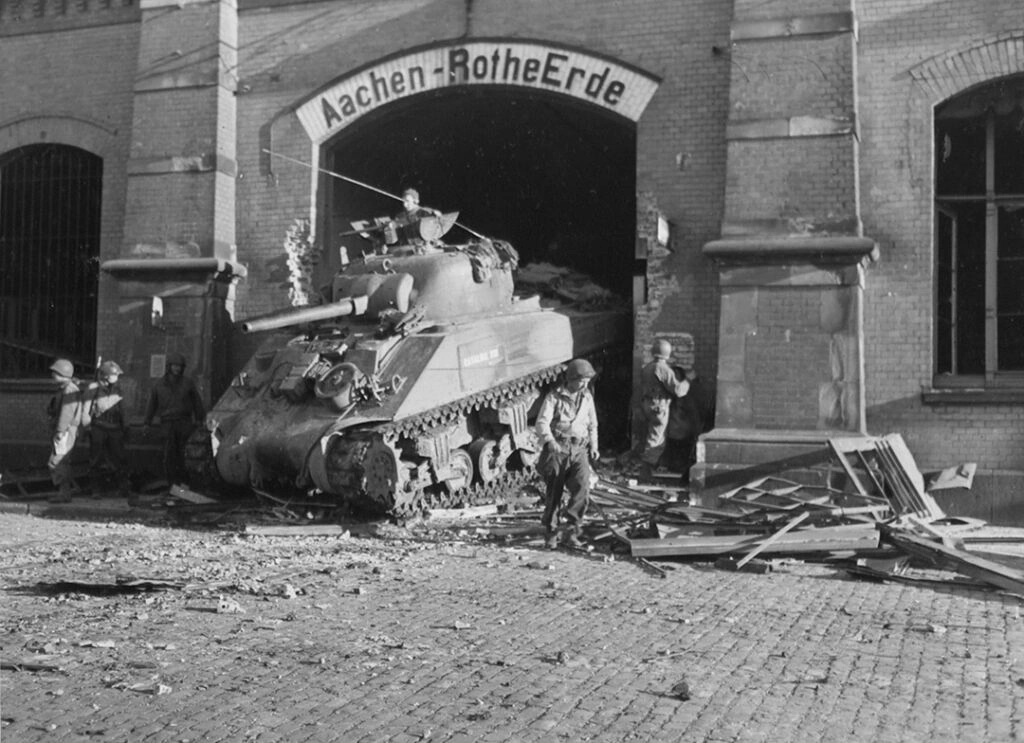
Later in the afternoon American forces embarked on the inevitable daily assault on Stolberg. Again they attacked on both sides of the German-held town. West of Stolberg American forces achieved a penetration at the site of the Stolberg Gun Factory. Driving northward from the Buesbach Area American tanks and infantry attacked the Donnerberg Hill, held by one and a half companies of the 12.Engineer-Battalion. The engineers were able to halt the American attack at first, but soon US forces had thrown a ring around Donnerberg Hill. Two German combat patrols, one from the northwest, the other from the northeast tried to crack this ring but failed. American forces fanned out from Donnerberg Hill: US infantry attacked from Donnerberg Hill westward toward Stolberg while US tanks sat on the western slope of the hill spewing fire at the city below. In the meantime other American forces had driven north from the vicinity of Muensterbusch and soon their tanks were plowing up the small vegetable gardens west of the Stolberg Factory belt. As the day changed to night, American troops entered Stolberg, and the situation developed into confused, disorganized house-to-house fighting in the city.
At dawn on September 21, American armor was observed assembling south of Donnerberg Hill preparatory to a renewal of the attack. When it came the Germans were ready and stopped the American attack, launched mostly by infantry with some tanks in support, at 0800. Two hours later US forces in battalion strength attacked northeastward toward Duffenter. In conjunction with this drive American troops captured the remaining bunkers on Hammerberg Hill. With this strategic height in American hands, southern Stolberg was extremely vulnerable to a US assault from the east. In the event that the southern half of the town could not be held, the German forces in Stolberg (9.Panzer-Division with attached units) proceeded to establish a switch position across the center of the town, from the Stolberg Mill west of Stolberg cutting across the town to the road junction southwest of Duffenter. The Germans were able to repulse one attack against the southern edge of Stolberg and knocked out two US tanks in the process. Late in the afternoon the expected major attack came out of the east, and came so fast that the forces of the 9.Panzer-Division (Kampfgruppe Volker) in the southern part of Stolberg were cut off before they had had a chance to withdraw northward to the switch position.
In very bitter fighting in the streets of Stolberg these elements finally battled their way out of the pocket and joined Kampfgruppe Schemm at the defense line cutting across Stolberg. Half of Stolberg was now in US hands and the attacks, mounting in intensity, continued into the evening. West of the town strong American forces achieved new penetrations in the factory belt while to the east the Americans gained the western slope of Donnerberg Hill — as on the previous day — and immediately wheeled northwestward to attack the switch position which barred their way into northern Stolberg. American successes on both sides of Stolberg threatened to envelop the Stolberg Hill – Duffenter Line, and the Germans feared the final collapse of their Stolberg front. Later in the evening, the American envelopment (especially the prong west of Stolberg) forced them to withdraw to a new switch line cutting across the northern sector of Stolberg from the vicinity of Schneidmuehle-Atsch southeastward to the village of Donnerberg.
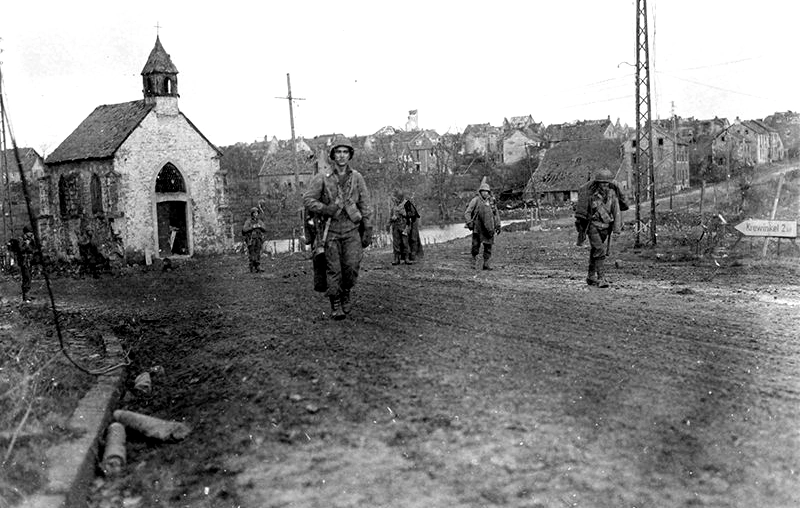
This account of operations in the Stolberg Area on September 21, 1944, is based on the following sources: Tel Convs, LXXXI Corps to 12 Inf Div, 1530 and 2015 on Sep 21 44, LXXXI Corps KTB, Kampfverlauf; Daily Sitrep, LXXXI Corps, Sep 21 44, LXXXI Corps KTB, Tagesmeldungen; Off Rpt on Battle of Stolberg, 9 Panzer Div, Sep 23 44, LXXXI Corps KTB, Meldungen der Div
South of Aachen the 156.Panzer-Grenadier-Regiment of the 116.Panzer-Division consolidated its defense line on September 21 to free some reserves. The front line of the regiment was re-established to extend from Vaelser Quartier (probably point of contact with the 60.Panzer-Grenadier-Regiment) – half a mile north of Hill 321 – half a mile north-northeast of the Steinebrueck Railroad station. This move disengaged the 453.Replacement-Training-Battalion which was to take over a part of the 12.Infantry-Division sector in accordance with LXXXI Corps orders. In relieving the 1st Battalion of the 27.Fusilier-Regiment, 453.Replacement-Training-Battalion of the 116.Panzer-Division took over the sector from Verlautenheide to the railroad overpass one mile west-southwest of Verlautenheide in the evening of September 21. From there the LXXXI Corps front line continued past the northern edge of the Stolberg factory belt, along the switch position across northern Stolberg to the northern edge of Donnerberg Hill; from there via Duffenter along the Duffenter-Werth road to half a mile west of Werth – Weissenberg Hill – western and southern edge of Gressenich – northern edge of Schevenhuette. The new boundary line between the 116.Panzer-Division and lath Infantry Divisions extended, in the combat zone, from Eschweiler (12.Infantry-Division) via the railroad overpass one mile west-southwest of Verlautenheide to Brand (116.Panzer-Division).
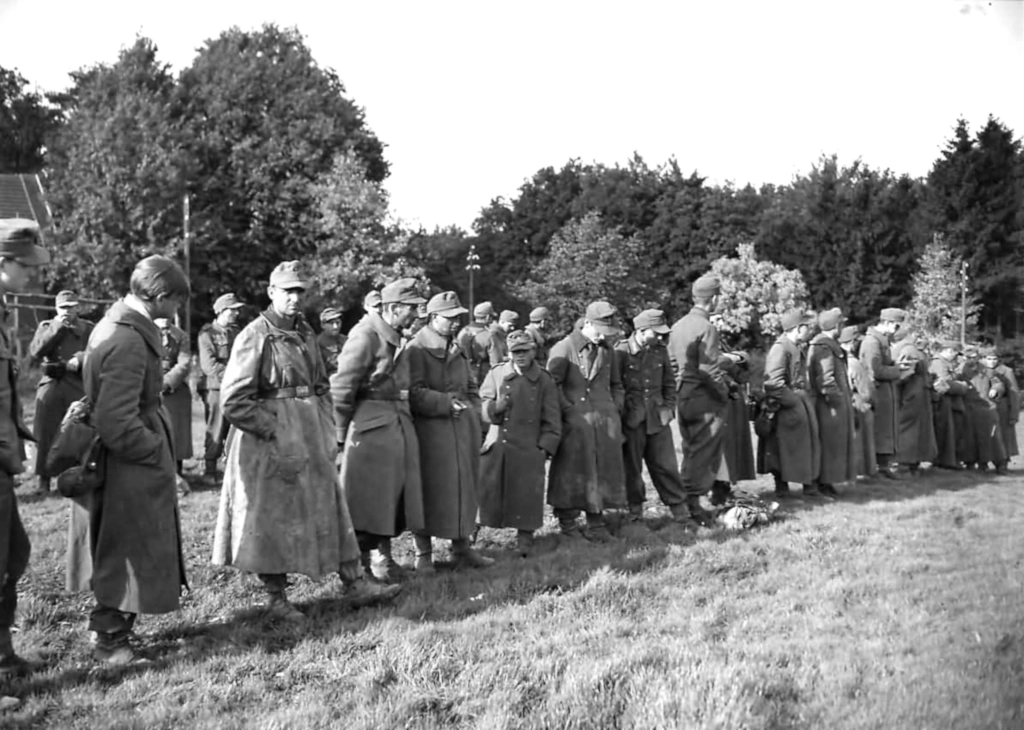
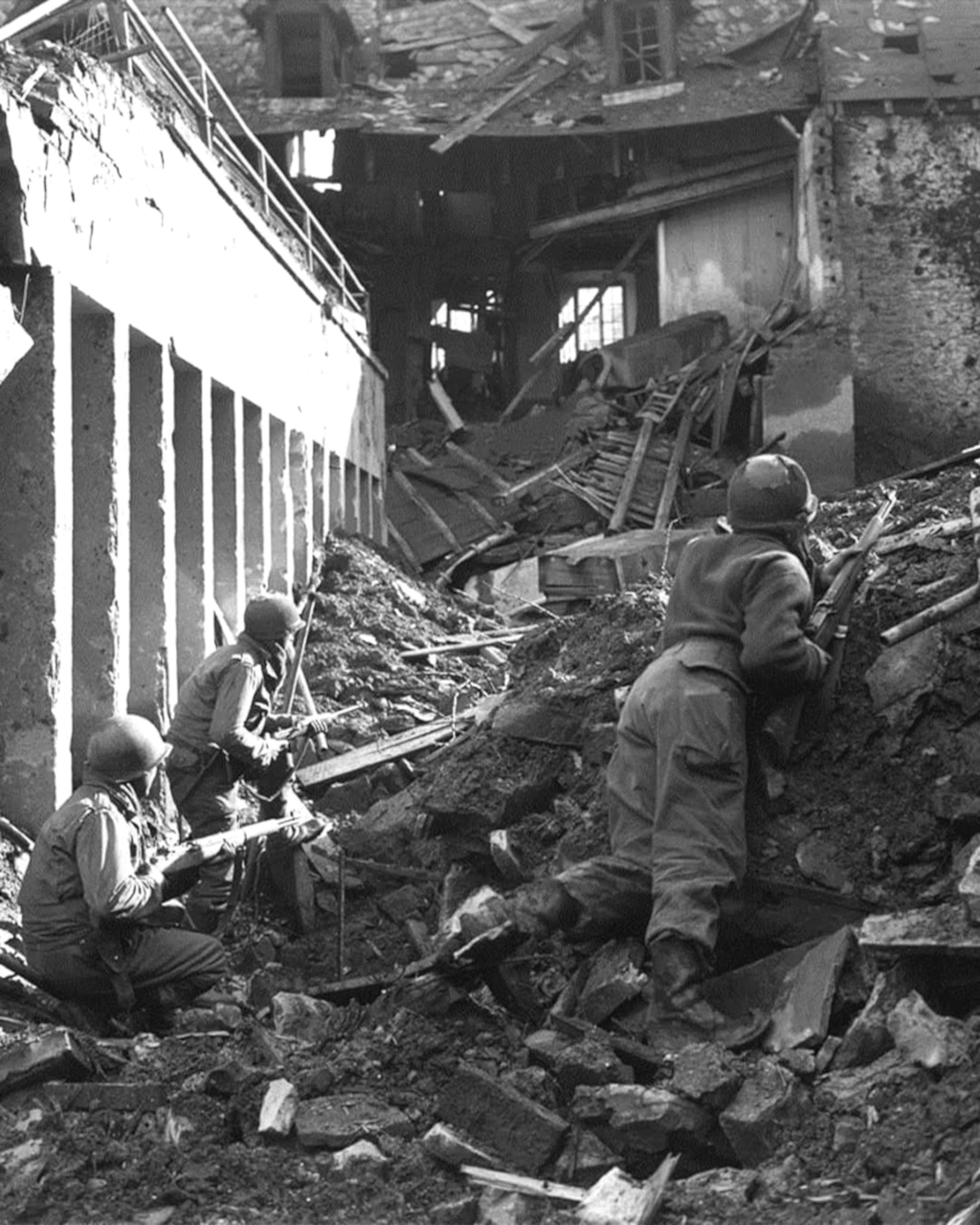 Immediately following its relief by the 453.Replacement-Training-Battalion, the 1st Battalion of the 27.Fusilier-Regiment was moved by motor transport to Eschweiler where it was to assemble for a counterattack, to be launched out of movement with intent to close the gap between Stolberg and Donnerberg. During the night considerable reconnaissance activity took place on both sides. The Germans spotted in numbers of US tanks everywhere and noted much digging in and improvement of positions in the vicinity of Hochwegerhof and Niederhof. At 0330, the 12.Infantry-Division repulsed an attack by five US armored cars against Bunker 708 on Donnerberg Hill. Panzerfaust destroyed two. of the armored cars. At 0730 on September 22, one American armored company (one tank and a few armored cars) was able to exploit the early morning fog to bypass the Stolberg switch position between Stolberg and Donnerberg and to push north as far as Zinkhuette (zinc mine) and Birkengang east of Stolberg.
At the same time, US forces launched repeated attacks with about fifty tanks from the south, southwest, and southeast toward Duffenter and the southern slope of Donnerberg Hill. After the unsuccessful attempt earlier in the morning to capture Bunker 708, ten US tanks lumbered up to the bunker and surrounded it. They stayed there for several hours without being able to crack the pillbox. Massed German artillery fire finally destroyred one tank and forced the rest to withdraw. German fire was also effective against American assemblies south and southwest of Donnerberg Hill. The Germans who had but one Panther and one assault gun on Donnerberg Hill this morning were afraid the counterattack of 1st Battalion of the 27.Fusilier-Regiment, would come too late to plug the gap.
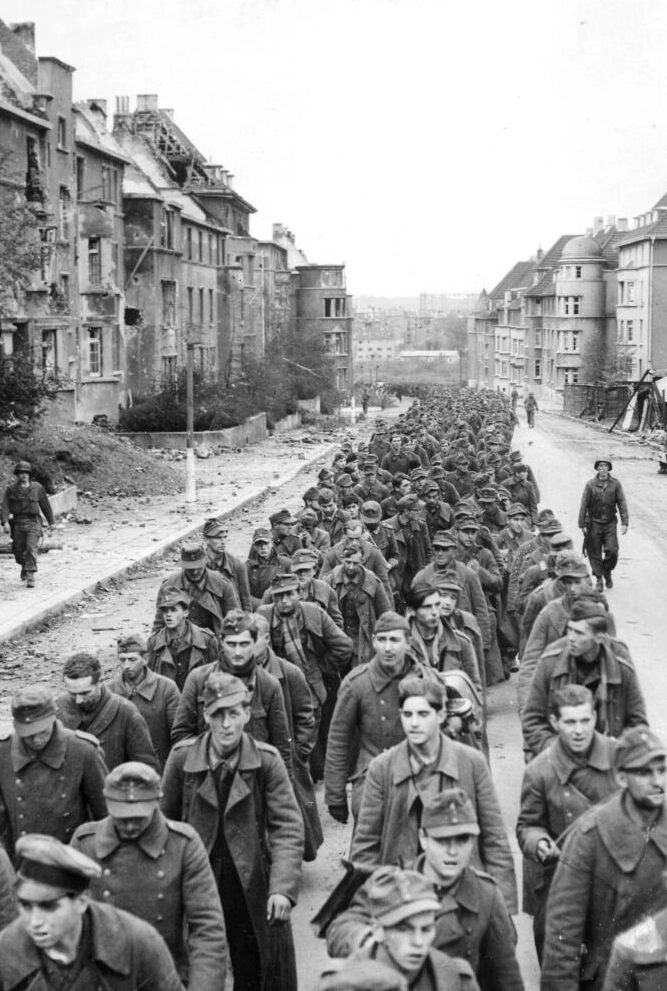 The 9.Panzer-Division cried for antitank weapons. This division, which had been promised relief days ago, was still defending the battered ruins of Stolberg as best it could; it took a terrible beating in the process. In only forty hours — from 1800 on September 20 until 1200 on September 22, 1944 — the division had lost 841 men, 18 of whom were officers. At noon on September 22, the factory belt west of Stolberg was once again in American hands. With its last reserves the 9.Panzer-Division established an antitank defense line facing west and running parallel to the main streets of Stolberg. American attacks at Donnerberg and southwest of Duffenter continued.
Tel Conv, LXXXI Corps to 12 Inf Div, 0700 on 21 Sep 44, LXXXI Corps KTB, Kampfverlauf
Mng Sitrep, LXXXI Corps, 0525 on 21 Sep 44, and Daily Sitrep, 116 Pz Div, 1925 on 21 Sep 44, and Daily Sitrep, LXXXI Corps, 21 Sep 44, LXXXI Corps KTB, Tagesmeldungen; TVX, LXXXI Corps to 116 Pz Div, 1520 on 21 Sep 44, and TWX, LXXXI Corps to all divs, 1515 on 21 Sep 44, LXXXI Corps KTB, Befehle an Div
Mng Sitrep, LXXXXI Corps, 0525 on 21 Sep 44, and Daily Sitrep, 116 Pz Div, 1925 on 21 Sep 44, and Daily Sitrep, LXXXI Corps, 21 Sep 44, LXXXI Corps KTB, Tagesmeldungen; TWX, LXXXI Corps to 116 Pz Div, 1520 on 21 Sep 44, and TWX, LXXXI Corps to all divs, 1515 on 21 Sep 44, LXXXI Corps KTB, Befehle an Div
Daily Sitrep, 12 Inf Div, 22 Sep 44, LXXXI Corps KTB, Tagesmeldungen; Report, 12 Inf Div to LXXXI Corps, 0430 on 22 Sep 44, LXXXI Corps KTB, Tagesmeldungen
Mng Sitrep, LXXXI Corps, 0505 on 22 Sep 44, LXXXI Corps KTB, Tagesmedungen
Noon Sitrep, 12 Inf Div, 1120 on 22 Sep 44, and Daily Sitrep, 12 Inf Div, 22 Sep 44, LXXXI Corps KTB, Tagesmeldungen; Off Rpt, Battle of Stolberg, 9 Pz Div, 23 Sep 44, LXXXI Corps KTB, Meldungen der Div
Tel Conv, LXXXI Corps to 9 Pz Div, 0850 on 22 Sep 44, LXXXI Corps KTB, Kampfverlauf; Sitrep, 9 Pz Div to LXXXI Corps, 22 Sep 44, LXXI Corps KTB, Meldungen der Div
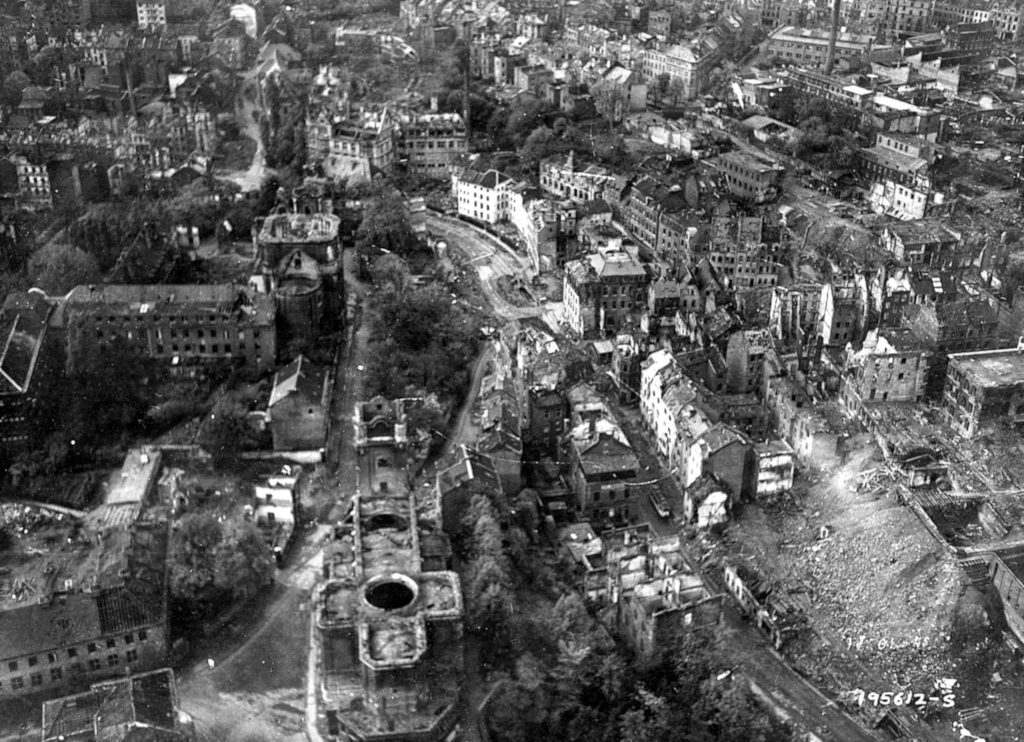
 In the nick of time the reinforced the 1st Battalion of the 27.Fusilier-Regiment arrived from its assembly area at Eschweiler and in a surprise attack descended on the US forces which had penetrated to Zinkhuette and Birkengang early in the morning. Attacking at 1300 the German battalion jumped off from the woods east of Birkengang on a broad front toward Birkengang and the village of Donnerberg. Despite heavy American fire the Germans were able to recapture these places rapidly and to continue their attack against the Americans on the western slope of the Donnerberg Hill.
Once more, the 12.Infantry-Division defended a coherent front line. All through the afternoon American forces continued to hurl themselves against the German line, but in vain. Jumping off at 1430, the US forces attacked from the south into the city at Stolberg. The exhausted elements of the 9.Panzer-Division were able to repulse them in bitter street fighting. At 1700, twelve US tanks renewed their efforts to break through the switch position in the city and achieved a local penetration. But on the whole the Germans held fast. On that day they inflicted on the Americans the loss of ten tanks, two armored cars, and two 210-MM self-propelled guns in the Stolberg Sector.
While the battle for Stolberg reached a climax in intensity, the central sector of the 12.Infantry-Division front was quiet except for a German artillery barrage aimed at smashing US concentrations in the Diepenlinchen – Mausbach Area. At the eastern end of the front, however, fighting was as bitter as in Stolberg, with the difference that here the Americans, on the defensive, also demonstrated the ability to stand their ground and to inflict terrific punishment on the attacking enemy. Before dawn on September 22, the 2d Battalion of the 48.Grenadier-Regiment had jumped off from Gressenich on a mission to wipe out the American bridgehead at Schevenhuette. Following a thorough artillery preparation the two German infantry companies executed an elaborate enveloping maneuver and attacked Schevenhuette from the northeast and southeast. The American outposts on the eastern perimeter of the village offered such tenacious resistance that the Germans had to kill them to the last man. Upon penetrating the eastern part of the village, the Germans were immediately engaged in such bitter and bloody fighting that they sustained murderous losses. When all officers of the battalion had been killed or wounded, the Germans were forced to discontinue the attack and to withdraw from the eastern part of Schevenhuette, which they had briefly captured. Back in Gressenich the survivors reported that US forces had converted Schevenhuette into a veritable fortress, fully secured by minefields and barbed wire and tenaciously defended by 600 – 700 men.
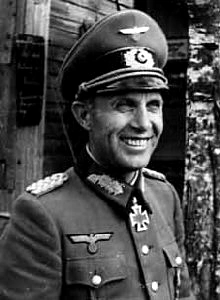
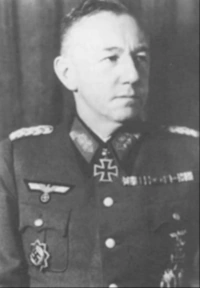 On the basis of this experience Gen Friedrich Koechling decided that the gap between Gressenich and the boundary with LXXIV Corps merited special attention. The arrival several days earlier of the 183.Volks-Grenadier-Division and its commitment in the Geilenkirchen area on the northern wing of the LXXXI Corps made it possible to disengage the remaining elements of the 275.Infantry-Division and to commit them, somewhat reinforced, to close the gap on the corps’ southern wing. The 275.Infantry-Division (Gen Hans Schmidt) spent the night from September 22 to 23 in disengaging its forces from the front and moving them to Düren for assembly. These elements consisted of about 1800 men combat strength, eleven 75-MM antitank guns, one organic battery of 105-MM howitzers and three attached batteries of 105-MM howitzers. In its new sector in the Wenau Forest the following forces were to join the division: one Waffen SS guards company, one battalion of Flemish Troops, formerly attached to Gruppe Jungklaus, Kampfgruppe Riedl, and the personnel of the 668.Heavy-Antitank-Battalion.
The 275.Division-Artillery was reinforced by the so-called Russian-Artillery-Group of the 49.Infantry-Division consisting of two batteries equipped with Russian 76.2-MM infantry cannon and one battery with Russian 122-MM guns. The division received orders to commit its organic troops and Kampfgruppe Riedl in the front line to plug the gap between the 12.Infantry-Division and the 353.Infantry-Division (LXXIV Corps) while the troops attached from Gruppe Jungklaus were to improve the bridgehead positions at Düren. The new boundaries of the 275.Infantry-Division were: in the north with the 12.Infantry-Division — Arnoldsweiler – Birkesdorf – Schlich – Schevenhuette – Vicht; to the south with LXXIV Corps: south of Düren to south of Zweifall.
Evg Sitrep, LXXXI Corps, 1630 on 22 Sep 44, LXXXI Corps KTB, Tagesmeldungen; Daily Sitrep, 12 Inf Div, 22 Sep 44, LXXXI Corps KTB, Tagesmeldungen
Daily Sitrep, 12 Inf Div, and Daily Sitrep, LXXXI Corps, 22 Sep 44, LXXXI Corps KTB, Tagesmeldungen; Daily Sitrep, A Gp B, 0315 on 23 Sep 44, A Gp B KTB, Tagesmeldungen
Tel Conv, LXXXI Corps to 12 Inf Div, 1230 on 22 Sep 44, LXXXI Corps KTB, Kampfverlauf
Daily Sitrep, 12 Inf Div, 22 Sep 44, LXXXI Corps KTB, Tagesmeldungen
Tel Conv, Seventh Army to LXXXI Corps, 1130 on 17 Sep 44, LXXXI Corps KTB, Kampfverlauf; Daily Sitrep, LXXXI Corps, 22 Sep 44, LXXXI Corps KTB, Tagesmeldungen
TWX, (Weekly Strength Report as of 1200 on 16 Sep 44), LXXXI Corps to Seventh Army, 22 Sep 44, LXXXI Corps KTB, Befehle an Div
Note: Having lost its weapons, this battalion was to be equipped with short-range antitank weapons (bazookas and Panzerfaust) until the arrival of new guns. No information is available about the composition of Kampfgruppe Riedl.