Beginning in 1942, women entered war industries in large numbers, leaving behind the traditionally female jobs of a domestic or service nature for the higher wages of the once male-dominated manufacturing jobs. Men had always been the nation’s welders, forklift operators, and factory workers. Now women worked at these posts and had to work harder to gain respect. Often they performed a man’s job better than the men did. For the first time, many women felt like they were doing something important by being employed, whereas before their ideas of a career had always been devalued. Ultimately women became as essential an aspect of the war effort as any other. But who were these women?
Women, WW-2 and Homefront
An American Family in World War Two
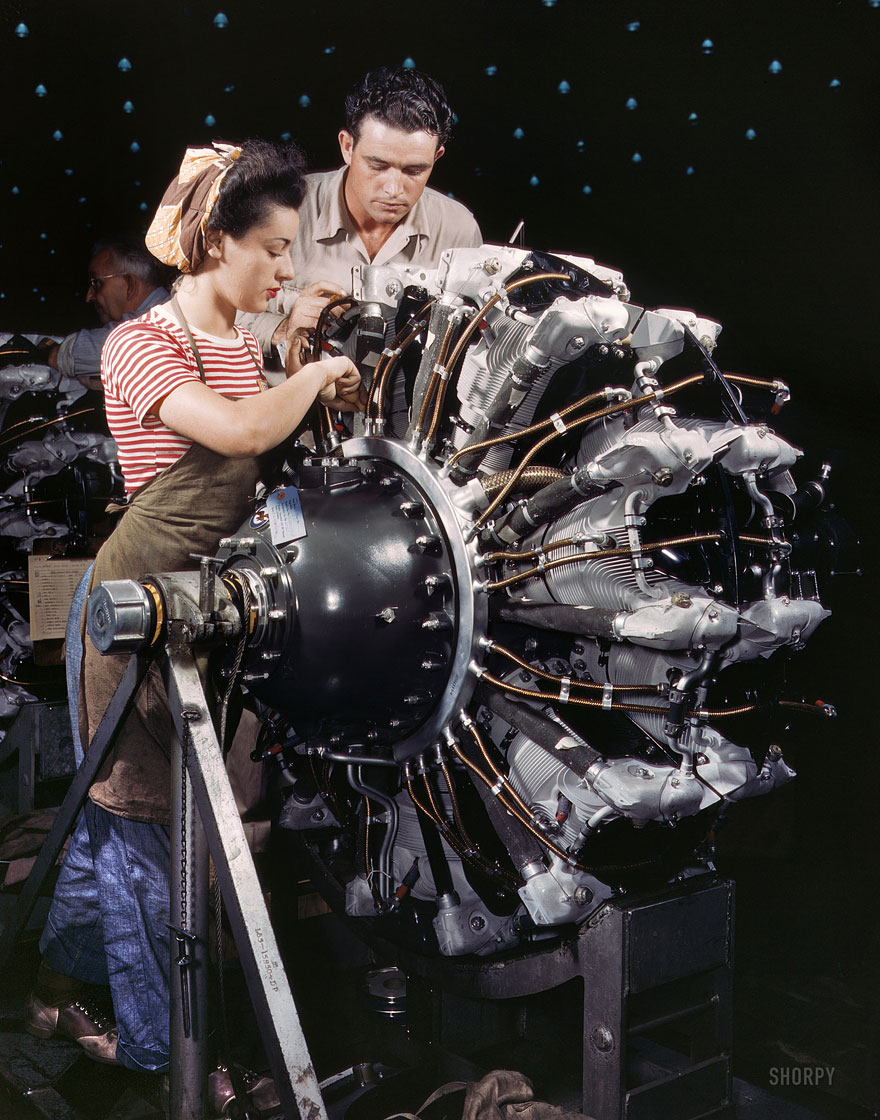 The women of the Bietz family would soon find themselves forerunners in wartime industry and spending long hours laboring to see the US through a World War. Margaret, Etta’s older sister, was the first woman in the family to respond to the call to war jobs. Half of the women defense workers had been in the nation’s workforce before the war and Margaret was no exception. She had been employed at Woolworth’s Dime Store for more than a year, during which time she met a young man, fresh out of high school and working in a slaughterhouse. They soon married and had just begun to start a new family when he was drafted in March of 1942. Margaret had her baby in the fall, and soon she applied for a job at the Depot and was hired on as a warehouseman, or clerk.
Margaret continued to live at home while she worked at the Depot and Mrs. Bietz looked after her baby. Her new job came with a large pay increase and, being a sturdy woman, she was well suited for her work. Margaret worked at the Depot until her husband, stationed on the beachhead in Italy, was shell-shocked and returned to the States. He was taken first to Memphis and naturally, Margaret wanted to be with him. Her immediate supervisor at the Depot, a bitter woman named Ruth Calabatt, had told her that all leave from work had been frozen and she couldn’t go. Margaret devastated and on the verge of tears, ran into the head of her division, Major Perkins. He asked why she was crying and she explained her husband’s situation. He acknowledged all leave was restricted but lowered his voice to add, If I had just gotten back from over there, I would want my wife to come to me, whether she had a job to come back to or not. Margaret went to her husband and they came home to Lexington months later. When Margaret returned to the Depot, she got her job back.
 In 1944, at the height of war production, almost one in three women defense workers had been full-time homemakers. Their addition to the workforce meant that married women outnumbered single women workers for the first time in US history. The duties of wives and mothers during the war years were tremendous. After working twelve hours a day at their defense jobs, women joined long lines at stores because most items were rationed, and arriving late meant the selection would be slim. When they got home they cooked, cleaned, and tended to the children, only to do it all over again the next day.
Childcare was a major dilemma during the war. Government agencies began to recognize the need for nurseries and childcare facilities, but it would be some time before new policies would take effect. Most moms formed babysitting collectives and family members or neighbors were relied upon to take care of children. Mrs. Bietz felt that she could help the war effort best by serving her family first. With warm blue eyes and reddish-blonde hair, she was a soft talker, but also a brave and stout woman. She was unaffected by the ranting: Put those housewife skills to use in the factory! Do it for your husbands and sons!
 She did some volunteer work but knew her most crucial role was to be the center of the family. Mrs. Bietz’s two youngest daughters weren’t yet old enough to have the option of staying in school or working. Otherwise, they would have proudly followed their older sisters’ lead and done their part to help the war effort. By 1944, one out of five women defense workers had been students on the eve of the war, and it was hoped that the press of wartime needs could induce them to temporarily postpone further education. However, Mrs. Bietz knew the importance of finishing their education, and her second youngest daughter, Jean, graduated from Lafayette High School.
Nonetheless, she encouraged the dedication her older daughters, Margaret and Etta, felt to the war effort.
Etta started babysitting while she was in high school, earning around two dollars a week. She used that money to buy pretty material, which she would give to her mother to make her school clothes. Etta’s family always had the necessities, but she often felt self-conscious because her parents couldn’t afford the store-bought dresses that other girls in her class wore. In fact, a feeling of shyness had plagued her life ever since she lost her left eye in an accident playing stickball as a child. Growing up with a glass eye, Etta felt like she stood out amongst her friends and became increasingly introverted.
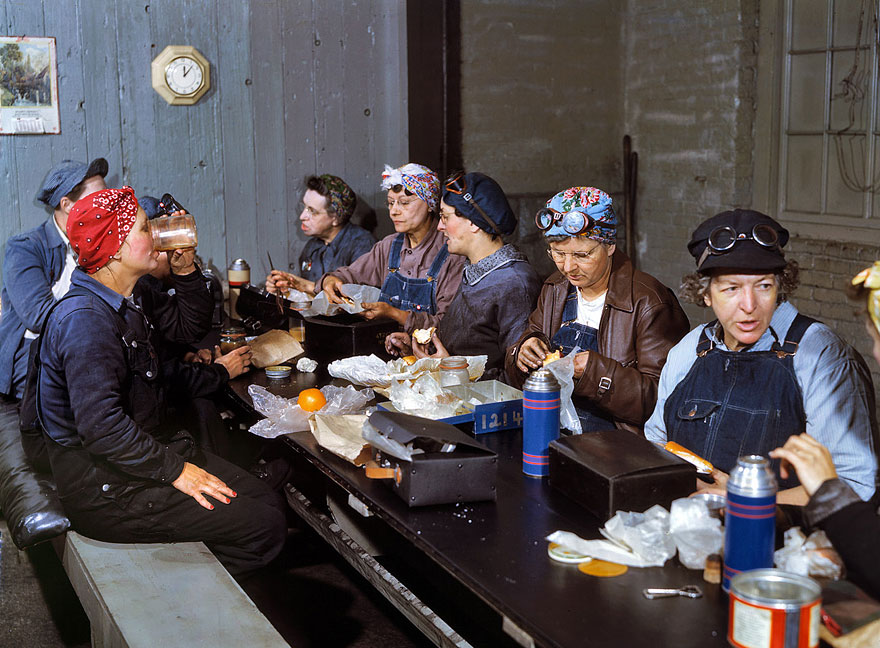
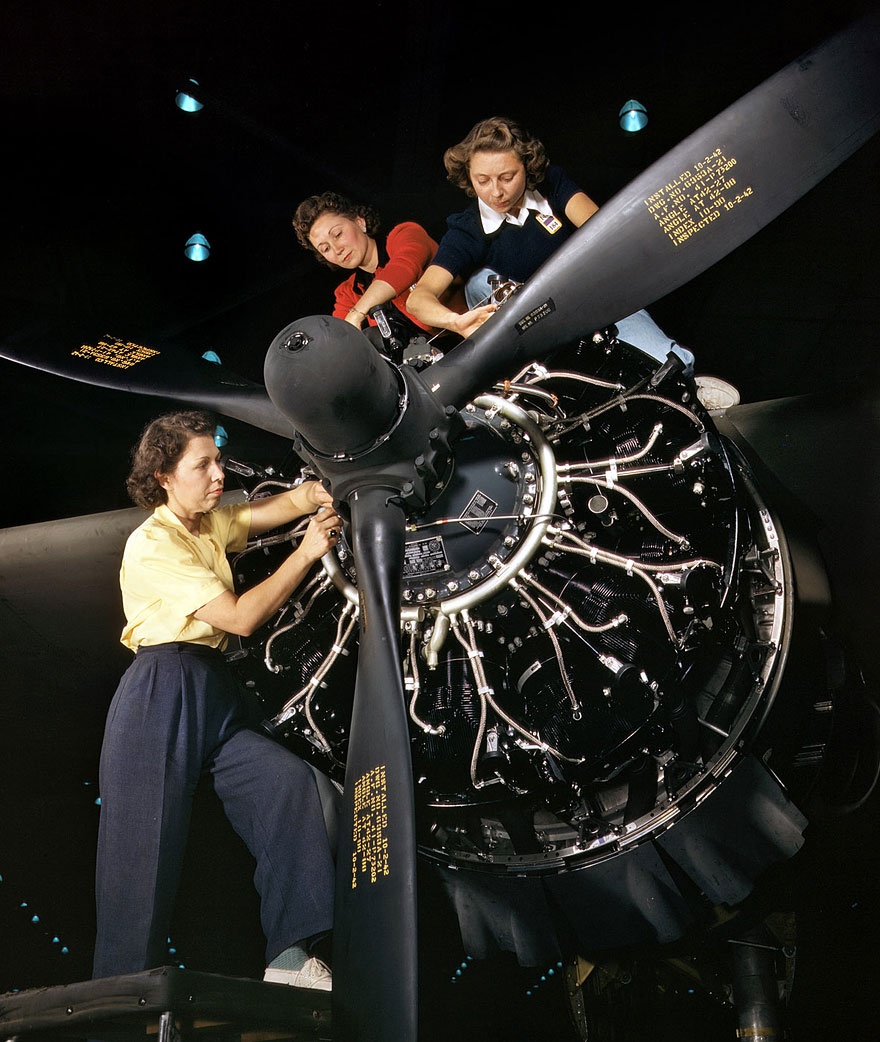 Etta finally quit school altogether in the 10th grade, being confident that she already knew more than her teacher. Her parents gave her the same option they had given her older sister—stay in school or work and pay rent. Etta went to work at a laundry up the street, which was about the only type of job that a girl with her education could get at the time. In 1944, Margaret encouraged Etta to put in an application at the post office, but she was reluctant. She liked working at the laundry since she didn’t have to be around people. Besides, she had recently earned a nickel-an-hour raise and was now clearing over eleven dollars a week. Six dollars went to her mother, for room and board, but that still left her five dollars to spend on clothes, lunches, and car rides.
Before long, however, Etta came to recognize the advantages of women in government jobs. Tall, robust, and single, Etta Bietz was exactly the kind of woman the War Manpower Commission was looking for. Single women in their late teens were natural recruits for the new jobs. Since they were usually short-term workers who would be employed only until they were married, they presented little threat to the status quo. It was assumed that they would be willing to relinquish their jobs at the war’s end to the returning servicemen. At her sister’s urging, she applied at the post office but was turned away because she was not quite eighteen.

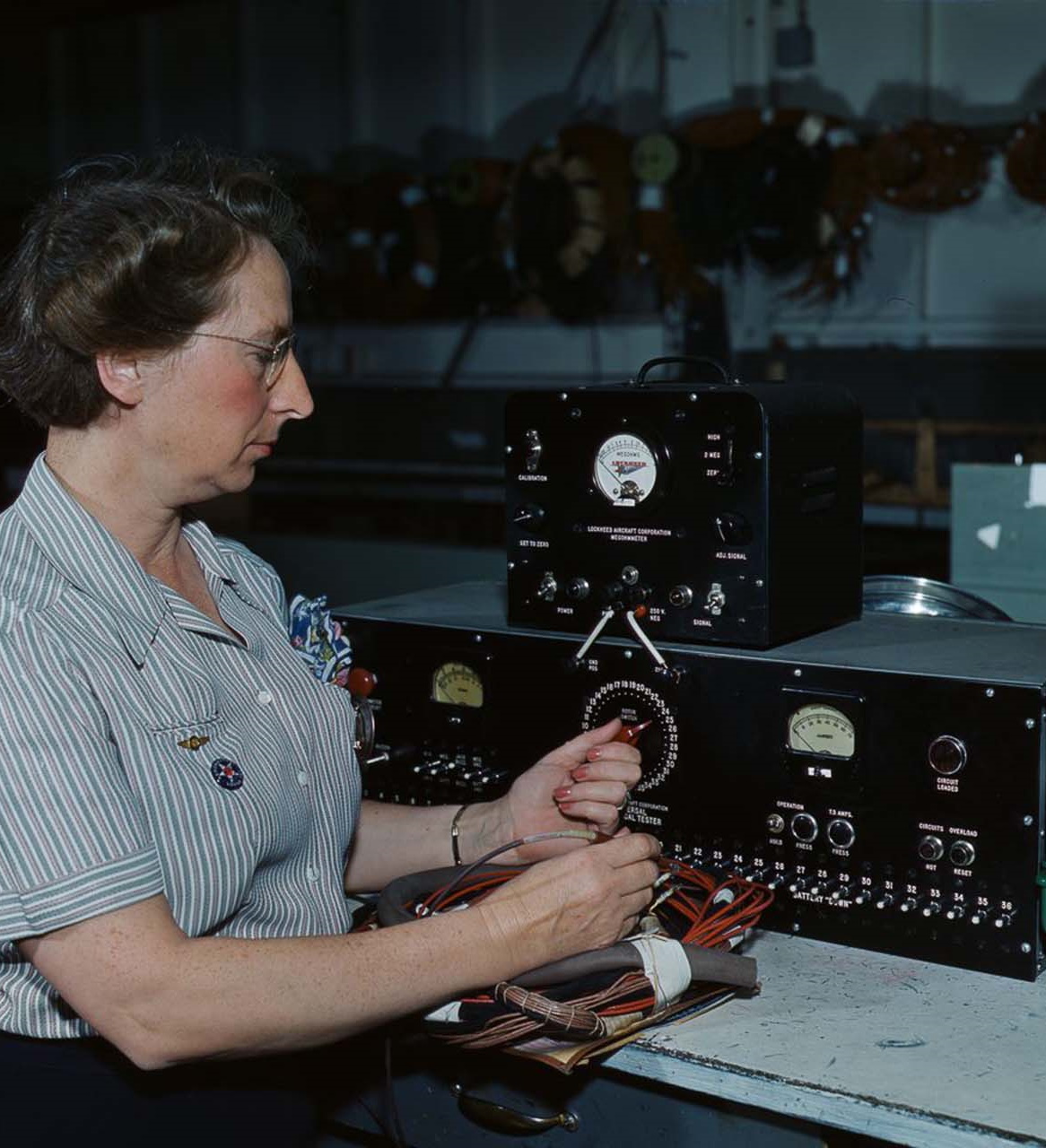 Before she had walked out the door, a clerk stopped her and asked her how much she weighed. Etta, being a full-figured girl, told the woman that she weighed 188 pounds. The clerk asked her to come back and explained that the Depot had just sent word that their packing room desperately needed workers. Only strong women could fill the strenuous position—women over 150 pounds. She was hired on the condition that she would obtain parental permission and was told that she could not work nights or overtime until she reached eighteen. On the same day, feeling the call to work for the effort, Etta quit her job at the laundry without notice. She was thrilled knowing that soon she would be making $29 a week, over twice as much as she had made before.
Etta’s work at the Depot was difficult, and dirty, but very rewarding. She was the youngest girl in the packing room, and the only one still unmarried. She was making good money and the long-lasting relationships formed between many of the women reflected the unity in the workplace. Etta met her best friend Hazel while working at the Depot. Women like Etta and Hazel wore pants in the workplace and were considered less ladylike by the women who worked in the office. They often rode the bus home together and believed that the women who held office jobs looked down upon them. The bus first picked up the employees at the Administration Building and then traveled down to the warehouses where Etta and Hazel worked. When the warehouse workers boarded the bus, the office workers moved to different seats to avoid sitting next to them. Etta and Hazel didn’t mind, since they preferred sitting together anyway.

 After working twelve long hours, Etta was excited to see her family and spend time doing the things she enjoyed. She took great pleasure in her new freedom and delighted in shopping and courting her new boyfriend. Etta’s increased pay allowed her to indulge, and she was finally able to buy fancy dresses from department stores. She often went out to dinner on Saturday evenings with other ladies from the Depot. As part of her support for the war effort, she purchased some war bonds. However, she enjoyed spending more than saving and often cashed them in. Etta was aware that many women during the war years took their liberties too far. Excited to marry a soldier, some women participated in furlough weddings, which prevented boys from going to war unwed. Etta happily dated her new boyfriend, seven years her senior, until he was drafted in 1945 and sent to Kansas. She missed him and wrote often.
Women felt a strong sense of duty and were answering the call to work for the effort. Still expected to tend to domestic duties, women had to learn the juggling act of career, family, and self. Much the same as women all over the country, Etta and Margaret Bietz had become a part of the war effort and felt a growing sense of achievement and contribution. Womanpower had become the greatest driving force in America, providing the necessities for US soldiers fighting in two theaters of war.
On August 14, 1945, the Depot Commander in Lexington verified that a representative of the Imperial Japanese Army had surrendered unconditionally, under the demand of the Supreme Commander of the Allied Force. After years of war, the loss of thousands and thousands of young lives, and billions of war industry dollars spent, the Allies restored justice in the world and American soldiers came home as heroes. The word of the surrender brought great relief, but for workingwomen, the news also came with a heavy heart. Despite their contributions, women working in wartime industries knew their employment would only be temporary. Returning soldiers would be in need of jobs, and women were naturally expected to step aside. A reversal in public sentiment now faulted women for having been in the workplace and not at home. The public felt working women contributed directly to the rising divorce rate, to cases of child neglect, and to increasing juvenile delinquency. Most Americans believed that since the war was over, women must return to traditional domestic roles. Even though a 1945 Labor Department’s Women’s Bureau survey found that 75% of working women planned to work after the war, the War Department campaigned for women to return to the home so that soldiers could get back to the male role as breadwinners of the family.
In 1946, the Depot in Lexington was forced to follow the nation’s leaders and laid off most of its women workers. But while private industry preferred men for employment, the Depot remained loyal to the women who had made it such a shining example within the Signal Corps. It initiated benefits unheard of in women’s jobs previously; for example, it had taken retirement out of the women’s salaries to provide assistance once the war was over. When the Depot dispersed the funds, most women had never seen so much money at one time. Etta was thrilled, and with the two hundred dollars she received she bought herself a new bed, and a lamp, and contributed some to the family. The Depot’s loyalty to these women was apparent as it continued to hire women back to their posts during every American conflict that required a call to action.
Etta Bietz and most other workingwomen knew of the temporary status of their jobs during the war years. While Etta happily relinquished her post at the Depot, it didn’t take her long to become restless not working. Shortly thereafter, she was back working, now as a billing clerk for a wholesale grocery store on Main Street. While working there that she met Pete Sipe, then thirty-seven years old and fifteen years older than Etta. He had been drafted into the Army Air Force and was released on December 7, 1945, exactly four years after the bombing of Pearl Harbor. As a returning veteran, he quickly got a job in Lexington, working as a cooper, or maker of barrels. Etta and Pete dated for a couple of years and finally were married in 1949.
In the 1950’s birth and marriage, rates skyrocketed. Returning soldiers were given good deals on buying homes and families were being raised in the comforts of suburban life. Women were getting married and adopting a life centered around homemaking, packing lunches, and boy scouts. Life magazine celebrated the American woman by portraying the ideal wife and mother as a suburban homemaker.
As the nation entered the 50s, Etta soon found herself in the midst of the baby boom. She had her first child in February 1950 but chose not to stay at home as so many women were doing. Instead, eight months after giving birth, she returned to the Depot to resume working and contribute to the effort during the Korean Conflict. She was inspired by her previous employment and had taken strides to become a more valuable employee at the Depot. She had taken a clerical typing class in an effort to become a ‘graded’ employee. Graded, or skilled, employees held higher positions, enjoyed better working conditions, and increased pay. Etta would return time and again to serve her community and nation, and eventually, she would be making more money than her husband.
The Depot and Lexington went through many changes during the sixties. By 1960, after almost twenty years as a part of the Avon community, the Depot boasted an annual payroll of more than $9,000,000 and provided work for approximately 2000 residents of the area. The same year that President Johnson signed the 1964 Civil Rights Act finally giving women rights in the workplace and elsewhere, the Depot and the BGO were combined to form the Lexington-Blue Grass Army Depot. In 1965, Etta started taking correspondence courses to finish her high school education. In 1967, one year before her eldest child was to graduate from high school, she proudly received her diploma.
Mr. and Mrs. Bietz raised their children to give completely of themselves to their family, their community, and most importantly, their country. Their daughter Margaret raised two sons and one daughter. Her daughter, Etta Mae has worked all her life and is now the co-owner of a successful auto repair shop in Lexington. The two youngest Bietz women, Jean and Anne, both raised daughters who dreamt of careers. Jean’s daughter, Betsy is the proud owner of a local beauty salon in Lexington, and Anne’s child, Mary Janine works as a Dental Assistant.
Etta Bietz instilled her pride and sense of achievement in working for the war effort into her family. Her son Skipper served in the Army Reserves, retiring as a Lieutenant Colonel. Etta’s daughter, Wanita, also served in the military and proved to be a pioneer for the women of her generation. In 1975, Wanita married a fellow officer and one year later, was honored by the Air Force Newspaper, the Skywalker, for being one of the first women at Wright Patterson Air Force Base that chose to continue her military career after becoming pregnant. While stationed at Kirtland Air Force Base in 1982, she helped to organize the first annual ‘Today’s Women in the Military’ conference, which brought together women from all branches of the military and addressed issues concerning discrimination, medical care, legal matters, and child care
Etta Bietz also became a catalyst for the next generation of women. One of her granddaughters, Amy, is preparing for a career in the mostly male-dominated profession of sports management, while her other granddaughter, Michelle, hopes to soon begin studies at the Patterson School of Diplomacy in Lexington. From the endless stories Etta has shared with her granddaughters and the example her life has become, the latest generation of Bietz women is determined to live up to the words their grandmother always told them, Make me proud…
The early 1940s proved to be a major shifting point in the history of Lexington and Central Kentucky. In the forefront of the changing face of historically agrarian-based communities into booming centers of production and wartime industry, Lexington was able to meet the need for a safe, secure and reliable access point to store munitions and supplies to be sent to unknown destinations thousands of miles away. The construction of the two depots in Central Kentucky brought with it innovative ideas in industry, community, and employment. The effects of the depots in the area were far-reaching and long-lasting. The depots created almost 10,000 new jobs in Central Kentucky, without crowding Lexington or any other surrounding cities. Good salaries at the depots allowed workers to spend money in the area, stimulating the retail businesses that were ailing due to the Depression. After the war, the industry was brought to the area by companies such as General Electric and IBM, offering technical jobs that were well suited for workers with experience in vital and detailed projects such as those at the depots. As men were going off to war, women were able to step up to the challenges facing the war industry. The tireless efforts made by women in the workplace are now recognized as the greatest homeland contribution to the decisive Allied victory.
Women such as those in the Bietz family did not know of the changing world before them on that early December day. As Etta read the headline announcing the bombing of Pearl Harbor, she was yet to realize what would become her role in the future of her community and her nation. By the age of seventeen, Etta was working for the war effort and putting in the necessary hours to keep American soldiers supplied with equipment and ammunition. Her compensation was not only the relatively high pay she received; her most significant reward was contributing to the cause. The greatest heroes of any conflict largely go unnoticed and are eventually forgotten. In this case that is not true. The woman of the Bietz family, Mrs. Bietz, Margaret Bietz, and Etta Louise Bietz, would forever be known in history as women who stood in the face of adversity at home with their hearts in remote locations on the other side of the world.