



Reviewed by Doc Snafu on November 17, 2025.
Document Source: Operations of the 2nd Battalion, 338th Infantry Regiment, 85th Infantry Division, in taking Monte Della Formiche, Italy, October 10/13, 1944, North Apennine Campaign, Personal Experience of Captain Orville E. Bloch, Rifle Platoon Leader. (The Infantry School, General Section, Military History Committee, Fort Benning Georgia).

 Avant Propos
The history of the 85th Infantry Division, from its activation in World War II to its approach toward Monte Della Formiche in October 1944, reflects the measured, methodical development of a US infantry formation shaped by doctrine, discipline, and relentless field training. Reactivated on May 15, 1942, at Camp Shelby (Mississippi), the division — nicknamed the “Custer Division” — was rebuilt almost from the ground up. Its three infantry regiments, the 337th, 338th, and 339th, drew officers and enlisted men from across the continental United States, forming a composite force whose cohesion relied on an intensive, phased training regimen instituted under Third Army standards. Under the command of Gen John B. Coulter, the division quickly absorbed the fundamentals of modern infantry warfare: combined-arms coordination, mobile defense, river-crossing techniques, and night operations — all of which would later prove critical in the rugged Italian Peninsula.
Throughout 1943, the 85th Division advanced through the Army Ground Forces’ training cycle, including the large-scale maneuvers in Louisiana, where the division’s regiments operated under sustained logistical pressure and in adverse terrain. These field exercises accelerated the unit’s operational maturity and validated the combat readiness of its organic artillery — the 327th, 328th, 329th, and 910th Field Artillery Battalions — whose precision and fire discipline would become hallmarks of the division’s later engagements. By late 1943, the division embarked for the Mediterranean Theater of Operations, arriving in North Africa for final staging. There, it absorbed the theater-specific doctrines required for Italy: mountain warfare, the reduction of fortified positions, and the management of limited road nets under enemy observation.
The division entered combat in April 1944, committing its regiments along the Gustav Line in the Minturno Sector. This baptism of fire was costly but decisive. The units quickly demonstrated their ability to conduct coordinated assaults against well-prepared German defenses, often situated on commanding ground and supported by interlocking machine-gun, mortar, and artillery positions. The breakthrough operations toward Terracina and the subsequent advance up the western littoral underscored the division’s growing tactical effectiveness, especially in the integration of infantry-artillery liaison teams, forward observers, and supporting engineer elements. By June, the 85-ID had reached the vicinity of Rome, contributing materially to the collapse of German positions south of the capital.
Following the fall of Rome, the division continued its northward advance through the Ligurian and Tuscan sectors. The summer fighting of 1944 imposed harsh attrition and tested the endurance of the infantry companies, which faced minefields, demolitions, and skillfully positioned German rearguards. Nevertheless, the division maintained momentum and, by late September, had reached the approaches to the Northern Apennines. Here, the terrain became the dominant tactical factor: steep ridges, narrow defiles, and weather-worn trails slowed all movement and placed a premium on small-unit initiative. By early October 1944, the 85th Infantry Division stood poised before the difficult massif culminating in Monte Della Formiche. The campaign that lay ahead would demand the same discipline, endurance, and tactical flexibility that had characterized the division since its activation in 1942 — a culmination of two years of methodical preparation and six months of hard combat in Italy.

Introduction
This document relates the action of the 2nd Battalion, 338th Infantry Regiment, 85th Infantry Division, in the capture of Monte Della Formiche, during the period October 10 to October 13, 1944, during the North Apennine Campaign in Italy.
 After the fall of Rome, the Fifth Army (Gen Mark Wayne Clark) pushed north against a strong, well-organized, determined rear-guard action by the enemy. The general consensus among every fighting man was that the next major enemy stand would be made somewhere along the North Apennine Barrier stretching from the Tyrrhenian Sea to the Adriatic Sea north of Florence. This shortly became known throughout the world as the German Gothic Line.
Ever since the Allies first landed in Italy the German had been developing this natural defensive position, accelerating construction after the fall of Rome. The German reinforced this position with a formidable chain of carefully sited rock-hewn pillboxes and bunkers, extensive wire entanglements, minefields, and tank obstacles, all integrated into the rugged mountainous terrain which rose to elevations of 3 000 to 4 000 feet above sea level. The mission of the Fifth Army (US) and Eighth Army (UK) was to break through the Gothic Line, exploit this breakthrough, and debouch into the Po Valley Plains.

 At dawn, on September 10, 1944, after a long pause to regroup and prepare an offensive, the Fifth Army launched its drive to pierce the highly vaunted line. The two American Corps bore the brunt of the assault, striking the line with three divisions along the axis of the Florence–Bologna Highway, known as Highway 65. The battle for the Gothic Line, like the Gustav Line campaign in southern Italy the previous winter, resolved itself into a series of hard-fought actions for dominating mountain features which formed the key points of the enemy defense.
Beyond the Gothic Line, the German had forty miles of mountainous terrain to defend before the Allies could deploy their might on terrain more suited for offensive warfare. Many cross-compartments afforded the enemy excellent defensive positions, and many were as formidable as the initial line itself.

The Breakthrough
On September 18, the Gothic Line was shattered. This event occurred only after some of the severest fighting ever encountered in Italy. As days went on and the Apennines began to appear endless, it seemed that the entire mountain range to the north might be called the Gothic Line. Whatever the name, it blocked the way to the Po Valley and it was toward that region that the Allies now directed their mighty offensive forces. Nevertheless, in pleasing contrast with the first week of fighting, the advance was now progressing with what appeared to be remarkable speed, with as much as two miles being covered in one day.


 Initially the enemy was somewhat disorganized, but they soon began to make use of every advantage the terrain afforded. Enemy reinforcements were moving up constantly. The 85-ID was opposed by the German 4.Fallschirmjäger-Division (Gen Heinrich Trettner) during the first ten days of fighting; following this period, elements of the 362.Infantry-Division (Gen Heinz Greiner), as well as miscellaneous units of the 715.Infantry-Division (Gen Hans von Rohr), and elements of the
  Lehr-Brigade also made their appearance. Many mountain masses were to come into the line of advance of the 85-ID. Some of these were Monte Abruzzo, Canda Bibele, Formiche, Fano, Castelvecchio, Costellaro, and many others.
The Objective
The specific mountain mass of which I am writing is Monte Della Formiche (Monte = Mountain). This mountain was part of one of the German secondary defense lines and was characterized by being especially formidable because of the steep cliffs which fell from all sides except the north. It was doubly important for the enemy to hold it, since it commanded Highway 65 in the division’s left sector, as well as the Idice Valley road. Furthermore, it afforded complete observation over the entire area for a distance of six miles to the south.
The 2nd Battalion of the 338-IR (85-ID) was assigned the task of wresting this critical terrain feature from enemy hands. This battalion, being in reserve at the time, was following closely behind the 3rd Battalion of the same Regiment which was doggedly fighting forward to establish a specified line of departure through which the 2nd Battalion was to pass in its attack. Below Monte Formiche, the terrain was very hilly and there was little opportunity for cover and concealment for the two battalions while moving forward from one hill to the next. In view of this, and the fact that the enemy had excellent observation, the 3rd Battalion’s progress was exceedingly difficult. In addition, the enemy not only used delaying tactics but stubbornly resisted every foot of the advance with machine-gun fire, sniper fire, small-arms fire, and mortar and artillery barrages. Every hill, ridgeline, and building was utilized by the enemy as strong points. No ground was given up to the attacker without contest.
During the night of October 10, the 3rd Battalion had accomplished its assigned mission of establishing a line of departure for the 2nd Battalion. The 3rd Battalion was to remain in its present position and be prepared for operations to the right of Monte Formiche. Combat patrols were sent out during the night and contact was made with the enemy along the entire Regimental Front. However, the patrols became heavily engaged and were driven back to our lines by intense machine-gun and mortar fire. The enemy appeared to be extremely sensitive and responded readily to every move made by one of the forward companies.

 The Attack
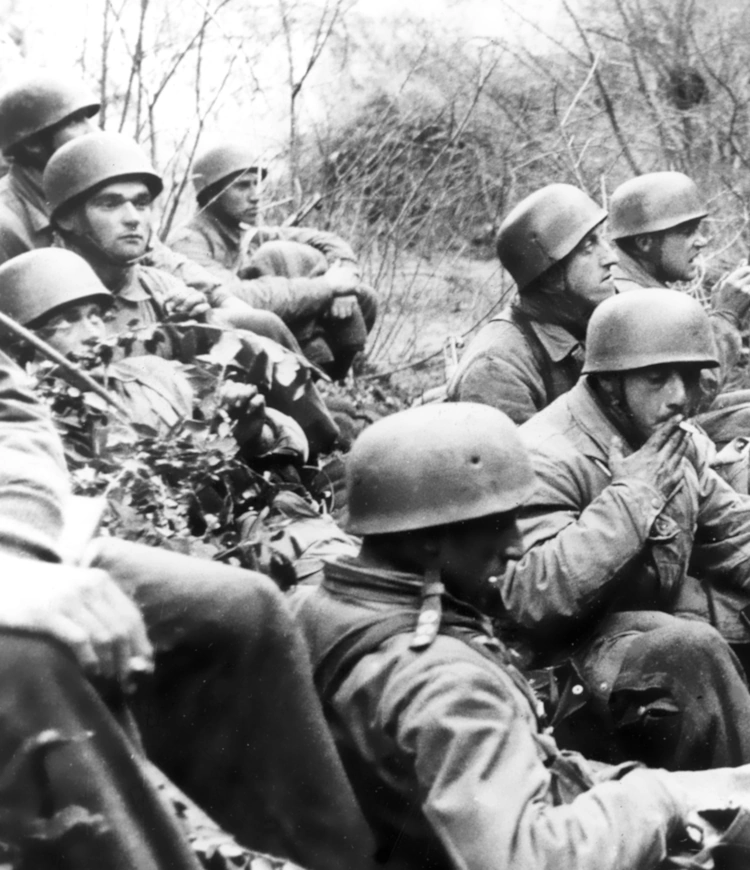
Prior to daylight, the 1st Platoon, with a strength of 18 men, moved out of Casoni, crossed the open ground under the cover of darkness, and reached the previously identified drainage ditch. The formation adopted at the ditch was a column of squads, each man directly behind the other, lying prone. The necessity of maintaining surprise forced all men to creep and crawl forward toward the objective, Maceratoio. Through SCR-536 radio communication, the Company Commander was contacted and notified of the platoon’s position. As the platoon advanced, this contact was maintained. At 0800, the supporting weapons began laying down devastating fires on their assigned target areas. Daylight was slow in coming due to a heavy fog obscuring the area from enemy observation. It did not take the enemy long to sense the oncoming attack, although their observation was greatly reduced. They began covering the forward slopes with mortar and artillery concentrations, most of which were ineffective as they overshot the ditch by a considerable distance.
Progress was extremely difficult. The ditch was muddy, shallow, and only 3 to 4 feet wide and deep. To the men, it seemed as though the slushy ditch stretched for miles instead of a mere 1000 yards. The platoon pressed forward as rapidly as possible, driven by the urgent need to reach the objective before the fog lifted. Nearing Maceratoio, all attempts to contact the 2nd Platoon failed. Nevertheless, the 1st Platoon continued moving forward.
At 0830, the platoon was in position for the assault. Bayonets were fixed and final instructions issued. The platoon was then broken into three six-man squads, each assigned a portion of the small cluster of buildings in Maceratoio, advancing from the west and south. The Platoon Leader radioed the Company Commander requesting that artillery and tank fire be shifted from Maceratoio to Ca Del Monte and to the church atop the mountain. All fires shifted accordingly, and the assault began immediately, each squad dashing toward its assigned sector under covering fire.
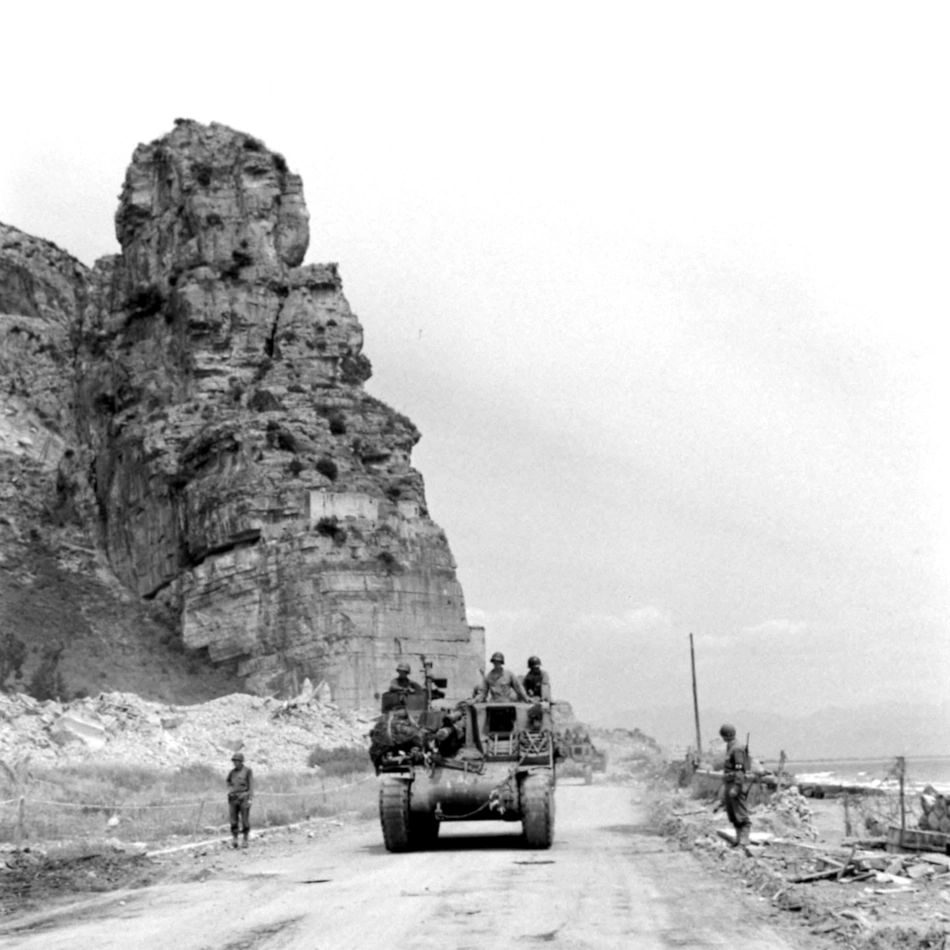
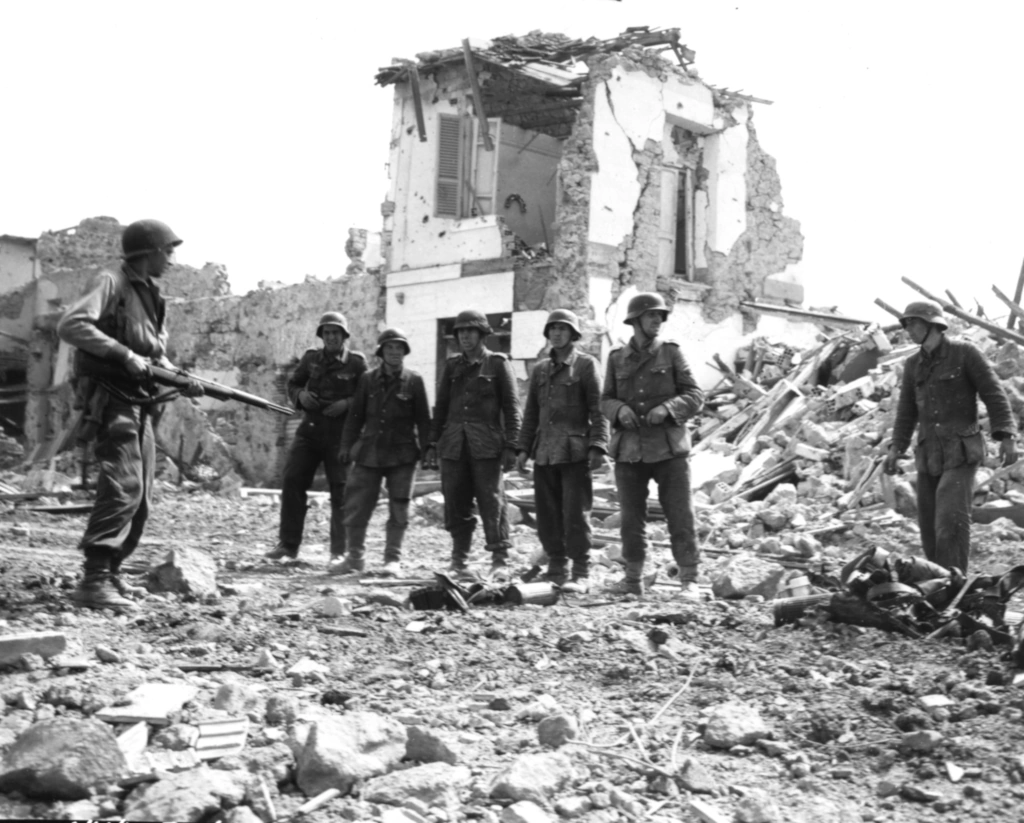
Maceratoio was taken. The success of the attack stemmed from the maximum exploitation of supporting artillery fire. The platoon had followed the fire closely and assaulted before the enemy could recover. In Maceratoio, the platoon captured one prime mover, one antitank gun, four machine guns, and nineteen prisoners. The prisoners were disarmed, searched, briefly interrogated, and locked inside a secured room, as no man could be spared to escort them to the rear and the fog had lifted.
Positions were established in and around the buildings. The Company Commander received the message: “Objective taken, no casualties, nineteen prisoners.” The commander, Lt William G. Coblin of Frankfort (Kentucky), an aggressive and bold officer, replied that he was leaving Casoni en route and ordered the platoon to move on to Ca Del Monte. Shortly afterward, all radio contact was lost.
Enemy mortar fire fell around the rear areas and in the vicinity of Casoni. Friendly supporting fire continued to strike the crest of Monte Formiche, the church area, and the flanks of Ca Del Monte.
Plans for the attack on Ca Del Monte were initiated. Prisoners revealed that Del Monte Ridge was held by a reinforced infantry company. Maceratoio could not be left undefended due to the prisoners and the absence of the 2nd Platoon. Ten men remained in Maceratoio, while the remaining eight plus the Platoon Leader advanced toward Del Monte. The patrol advanced cautiously along a narrow trail, hugging the cliffside and using whatever cover existed. Del Monte appeared deserted, likely due to heavy shelling. Within 50 yards of the first building, the group split into two teams. One dashed into Building No. 1, the other took position at Building No. 2. The Platoon Leader positioned himself to coordinate both teams.
The enemy suddenly reacted. The group in Building No. 1 captured eight Germans including one lieutenant. As the prisoners were sent back toward Maceratoio, fierce enemy fire erupted from three directions. The small American force was overwhelmed. Pfc Richard J. Kerrigan of Philadelphia (Pennsylvania) was shot through the right shoulder. In shock, he burst from the building screaming, discarding his equipment, and miraculously reached Maceratoio without being fired upon. The Platoon Leader, realizing Del Monte could not be taken with so few men, ordered a withdrawal. Four men successfully returned.
Enemy artillery and mortar fire now blanketed the entire forward slope. Maceratoio was hit repeatedly. The 2nd Platoon, still in the drainage ditch, maintained partial cover. The 3rd Platoon, caught in the open, attempted desperately to dig into the hard ground. The 1st Platoon received orders to hold Maceratoio at all costs. Easy and George Companies were to move in under cover of darkness. The platoon tightened its defensive perimeter, located enemy gun positions—including cave systems below Del Monte—and corrected fire for supporting tanks.
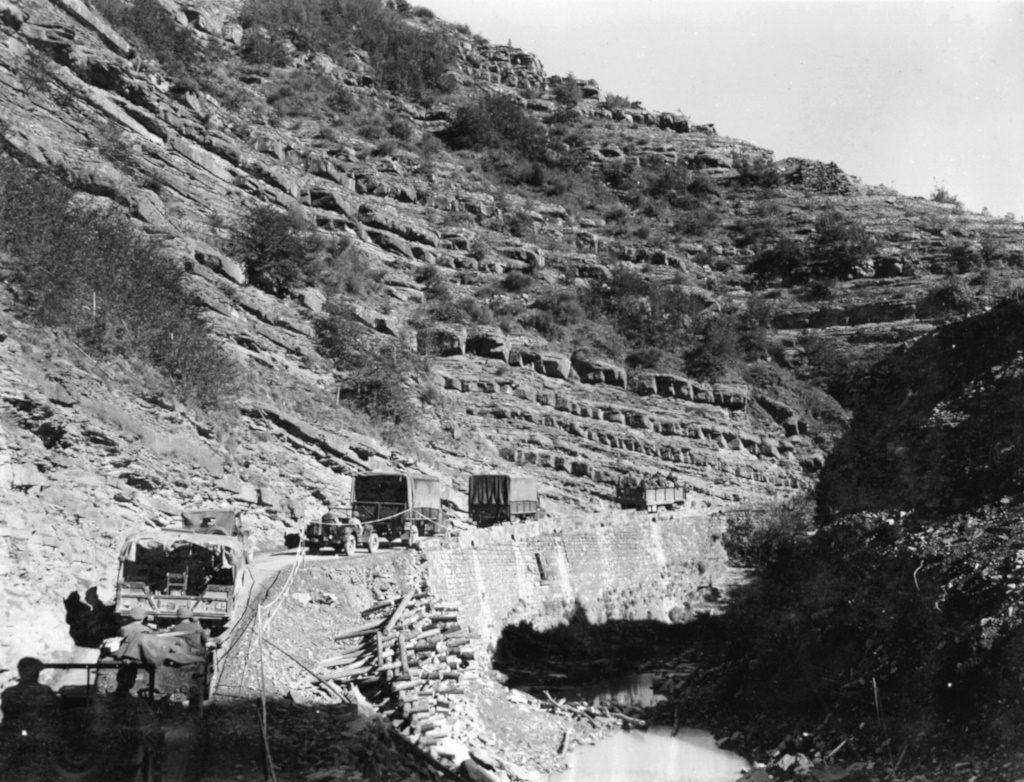
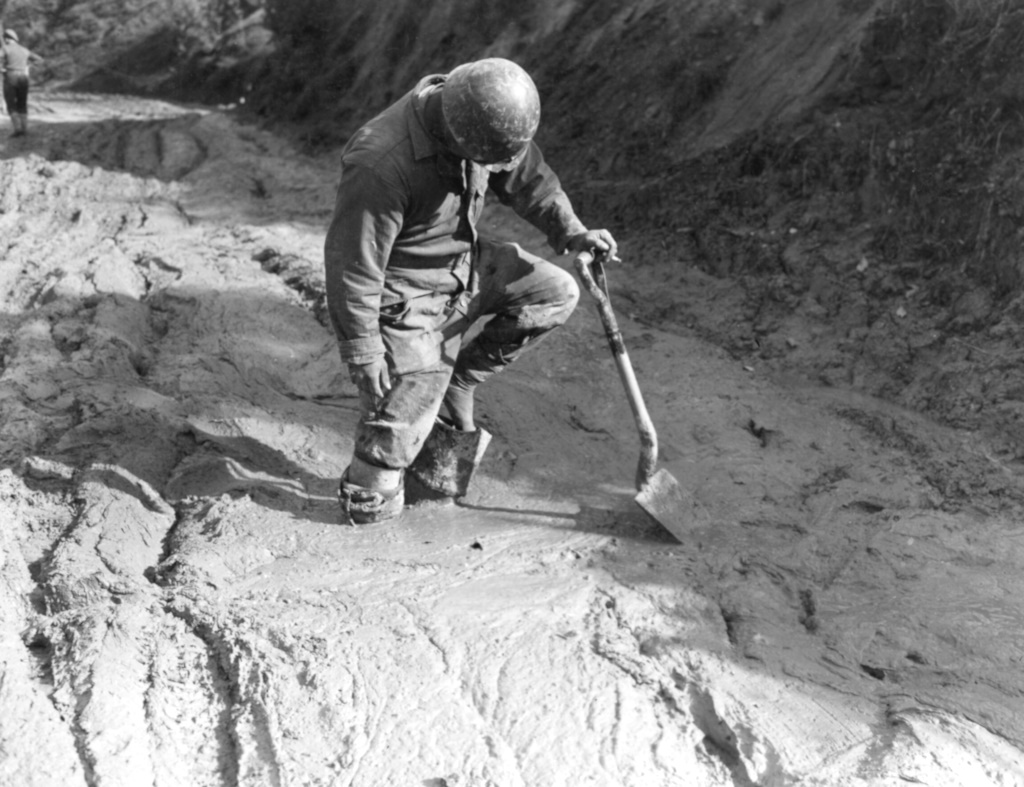
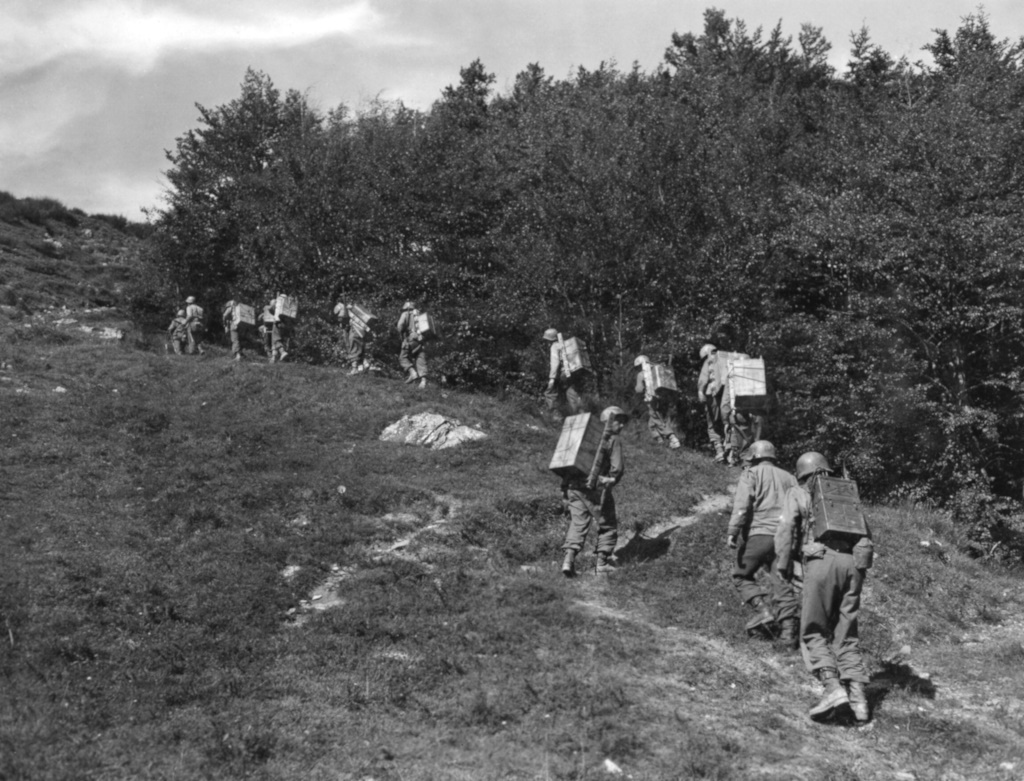
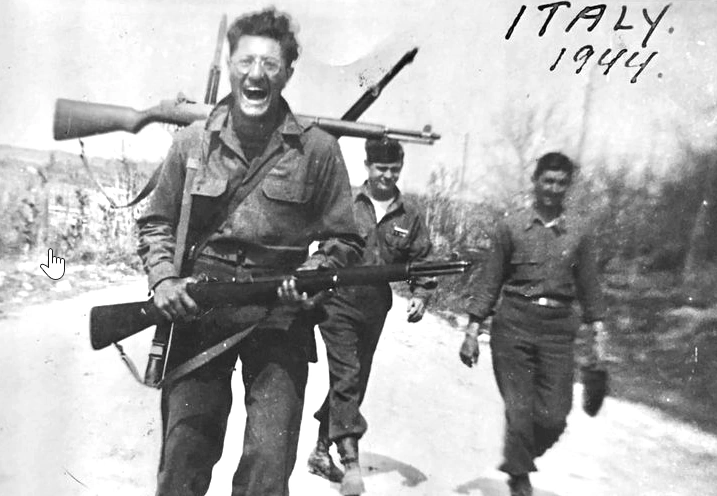
(Above) Troop movements in Italy were sometimes dry, sometimes muddy, sometimes snowy—but always dangerous in terrain dominated by snipers and artillery.
After nightfall, Easy and George Companies moved into Maceratoio and established a defensive perimeter. At 2200 hours, the 2nd and 3rd Platoons of Easy Company attacked Del Monte again but were repulsed after fierce fighting. Exhausted, they reorganized around Maceratoio. A new plan was formulated for a coordinated attack before daylight on October 11. Fox Company would occupy Maceratoio. Easy Company would take Del Monte and clear Del Monte Ridge. George Company would seize the church, cemetery, and crest. Fox Company would pass through Easy Company and continue the advance. Simultaneously, the 1st Battalion would attack the right slopes of Formiche.
The Enemy Counterattacks
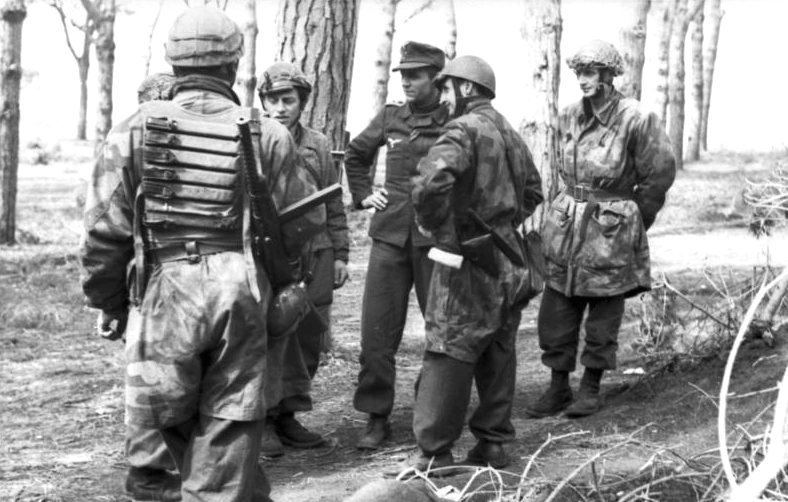
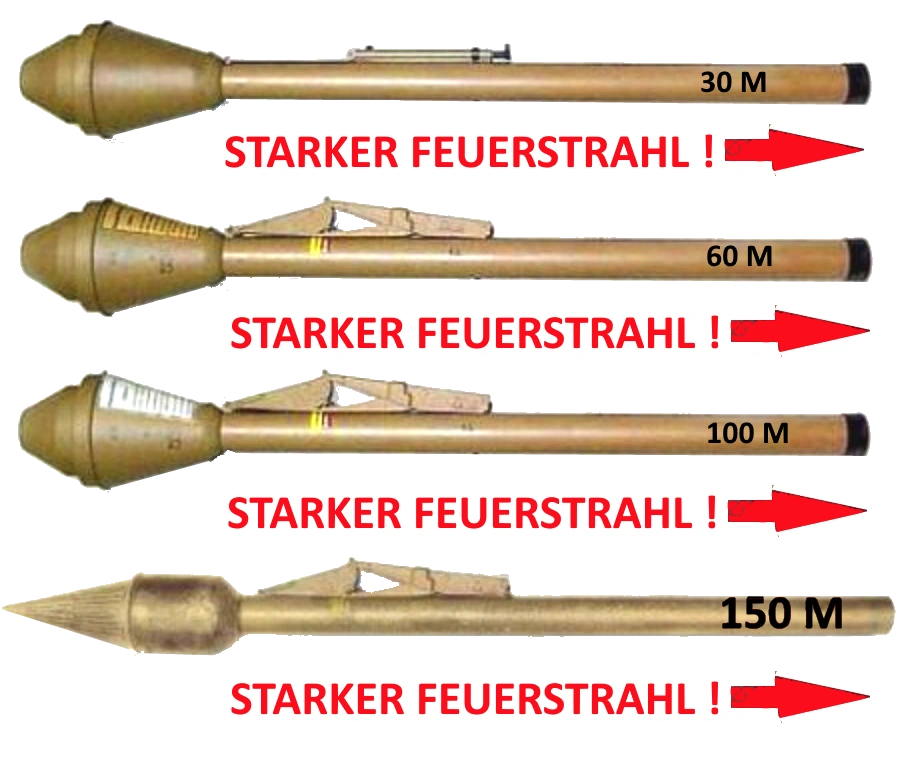
At 0330 hours, October 11, the battalion received one of the strongest German counterattacks of the campaign. The enemy massed automatic weapons on the crest above Maceratoio and attacked from Del Monte directly into the Easy Company sector. Their speed and violence achieved complete surprise. A prime mover captured earlier and parked in Maceratoio was hit by an incendiary grenade and exploded into flames, illuminating the entire village and exposing the defenders. Grenades, rifle-grenades, and machine-gun bursts raked the buildings. The enemy closed to within 40 yards and blew in walls with Panzerfausts. After two hours of brutal fighting, the attack was repulsed, but harassment continued from the high ground.
The Final Assault
At dawn on October 11, the battalion attacked as planned, preceded by exceptionally coordinated artillery, tank, and mortar fire. Easy Company, following the tank fire closely, advanced to the cliffs of Del Monte and cleared the town with bazookas and small arms. George Company scaled the sheer cliffs, seized the cemetery area, and pushed toward the church under intense fire. The church collapsed under shelling, causing casualties including the Company Commander. Despite this, George Company held firm and repelled successive counterattacks. German reverse-slope defensive errors allowed George Company to gain the crest of Monte Formiche. Fox Company moved between Easy and George Companies to reinforce the line. Item and Love Companies of 3/338-IR were committed as reinforcements. 3/339-IR was placed under the regiment as a reserve. At 0600 on October 12, the 3rd Battalion passed through and attacked Monte Della Vigna north of Monte Formiche. Once again, the Germans withdrew to the next defensible ridgeline, following their standard practice in Italy.
TO THOSE WHO SERVED
Orville E. Bloch, Capt (US)
Platoon Leader, 338th Infantry Regiment
85th Infantry Division – Custermen