



 On August 28, they learned that American tanks were in the vicinity and moved north to Soissons. There, they briefed the staff officers of the US 3-AD on German defenses in the area. The American officers displayed a particular interest in the German camp at Margival. The SFHQ, on August 30, sent Augustus the following message: ‘have received the order from Army commander for the FFI to take all possible steps to preserve following Somme River bridges from enemy demolition. All bridges in the Amiens area, also at Moreuil, Boves, Fiquigny, Conde, Longpré. You should attempt to preserve these bridges for about four days after receipt of this message. This is an important task. Count on you for fullest cooperation. If you need arms can drop from low flying typhoons’.
Team Augustus presumably received this message. That same day, the team passed through the American lines north of Laon (south of Froidmont), an area well known to Capt Delwiche. A subsequent OSS investigation revealed that all three members were shot and killed on the night of August 30 at the village of Barenton-sur-Serre. Apparently, German troops stopped a horse-drawn cart and found the three occupants in civilian clothes, carrying false French identity cards, and equipped with weapons, a radio, and other equipment.
 Since the German troops were the remnants of an armor unit interested mainly in escaping to the German Border, they undertook no further searches but merely shot the team and soon departed in the rain. The horse, still towing its cart, returned on its own to its stable in Mr. Magnien’s barn, which was occupied by armed FFI volunteers. The return of the horse and empty cart created considerable consternation, Mr. Magnien and his colleagues found the bodies of the Jedburgh Team Augustus the following morning, buried the three men at the Barenton-sur-Serre cemetery, and subsequently erected a memorial in their honor.
Jedburghs Team Andrew, August 15 1944
Operations in Eastern France and Belgium were particularly difficult for the SFHQ owing to the great distance from England and the proximity of German training areas and Axis security forces. In mid-April 1944, the SFHQ dispatched the first four members of the Operation [Citronelle], the code name for one twelve-man inter-Allied mission led by Col Paris de Bolladière into the French Ardennes on April 12 and June 5, 1944. Team Andrew; (BE) Lt Edouard C. d’Oultremont (Demer); (UK) Sgt Frank Harrison (Nethe). The mission’s leader, Maj A.H.S. Henry Coombe-Tennant (Rupel)(UK) and seven more men parachuted into the area on June 5 was to contact and assist the Maquis on the French-Belgian Border in the French Ardennes. The Germans soon launched a series of attacks in the area, and an American member of [Citronelle], Capt Victor J. Layton, radioed the SFHQ to report that a German attack on June 12 had scattered the resistance group. He reported 5 FFI members killed, 140 captured and estimated that perhaps 100 remained.
The SFHQ, on the night of August 15, dispatched Jedburgh Team Andrew to the southern French Ardennes, where they were to assist the FFI with arms deliveries and provide another communications link to London. The team consisted of Maj A.H.S. Henry Coombe-Tennant (Rupel)(UK), Lt Edouard C. d’Oultremont (Demer)(BE), and Sgt Frank Harrison (Nethe)(UK).
![Andrée Eugénie Adrienne De Jongh [Dédée], will become Countesse Andrée De Jongh in 1985 was born on November 30 1916 in Schaerbeek, Belgium and passed on October 13 2007 in the Clinic Saint-Luc in Woluwe-Saint-Lambert, Belgium. This extraordinary woman was a member of the Belgian Résistance and the Co-Founder of the réseau Comète [Network Comète] which saved hundreds of captured Allied soldiers' lives, helping them to get back to England. (Air-Sea-Ground Men). Avec la Française Marie-Madeleine Fourcade, elle est une des très rares femmes chefs de réseau de résistance.](https://www.eucmh.com/wp-content/uploads/2020/03/Civilian_Bravery_Awards_during_the_Second_World_War_.jpg "Andrée Eugénie Adrienne De Jongh [Dédée], will become Countesse Andrée De Jongh in 1985 was born on November 30 1916 in Schaerbeek, Belgium and passed on October 13 2007 in the Clinic Saint-Luc in Woluwe-Saint-Lambert, Belgium. This extraordinary woman was a member of the Belgian Résistance and the Co-Founder of the réseau Comète [Network Comète] which saved hundreds of captured Allied soldiers' lives, helping them to get back to England. (Air-Sea-Ground Men). Avec la Française Marie-Madeleine Fourcade, elle est une des très rares femmes chefs de réseau de résistance.") Henry Coombe-Tennant was born on April 9, 1913, in the Vale of Neath, South Wales, and subsequently became a career officer, serving in the Welsh Guards. As a member of the British Expeditionary Force in 1940, he was captured near Boulogne. In 1942, he and two colleagues escaped from their German POW camp near Warburg (Westphalia) and were fortunate enough to link up with the [Réseau Comet] network in Belgium, which assisted their return to England. Upon his return to England, Coombe-Tennant attended a staff college and in 1943 served on the SOE planning staff on Baker Street. Soon thereafter, he volunteered for the Jedburgh project. One of the members of the [Réseau Comet] network was Count d’Oultremont, born on September 27 1916 in Paris, a resident of Brussels, who was of medium height, well built, with blonde hair and mustache, and distinguished in appearance.
Henry Coombe-Tennant was born on April 9, 1913, in the Vale of Neath, South Wales, and subsequently became a career officer, serving in the Welsh Guards. As a member of the British Expeditionary Force in 1940, he was captured near Boulogne. In 1942, he and two colleagues escaped from their German POW camp near Warburg (Westphalia) and were fortunate enough to link up with the [Réseau Comet] network in Belgium, which assisted their return to England. Upon his return to England, Coombe-Tennant attended a staff college and in 1943 served on the SOE planning staff on Baker Street. Soon thereafter, he volunteered for the Jedburgh project. One of the members of the [Réseau Comet] network was Count d’Oultremont, born on September 27 1916 in Paris, a resident of Brussels, who was of medium height, well built, with blonde hair and mustache, and distinguished in appearance.
 In 1943, d’Oultremont followed the [Réseau Comet] escape route, shortly before the Germans rolled up the network. The two men were rather surprised to meet each other again at Milton Hall and decided to form their own team. With d’Oultremont on the team, they guessed they would be inserted into Belgium. The team received their alert on August 8 and on the 10, traveled to London for their briefing. The briefer informed them that the resistance forces in the French Ardennes had recently lost 200 men in an engagement, and only 150 remained. The SFHQ instructed Team Andrew to contact the [Citronelle] mission upon their arrival. Two French officers on a similar mission would fly with the team. In addition, a ten-man Belgian SAS force on an independent mission would parachute with them.
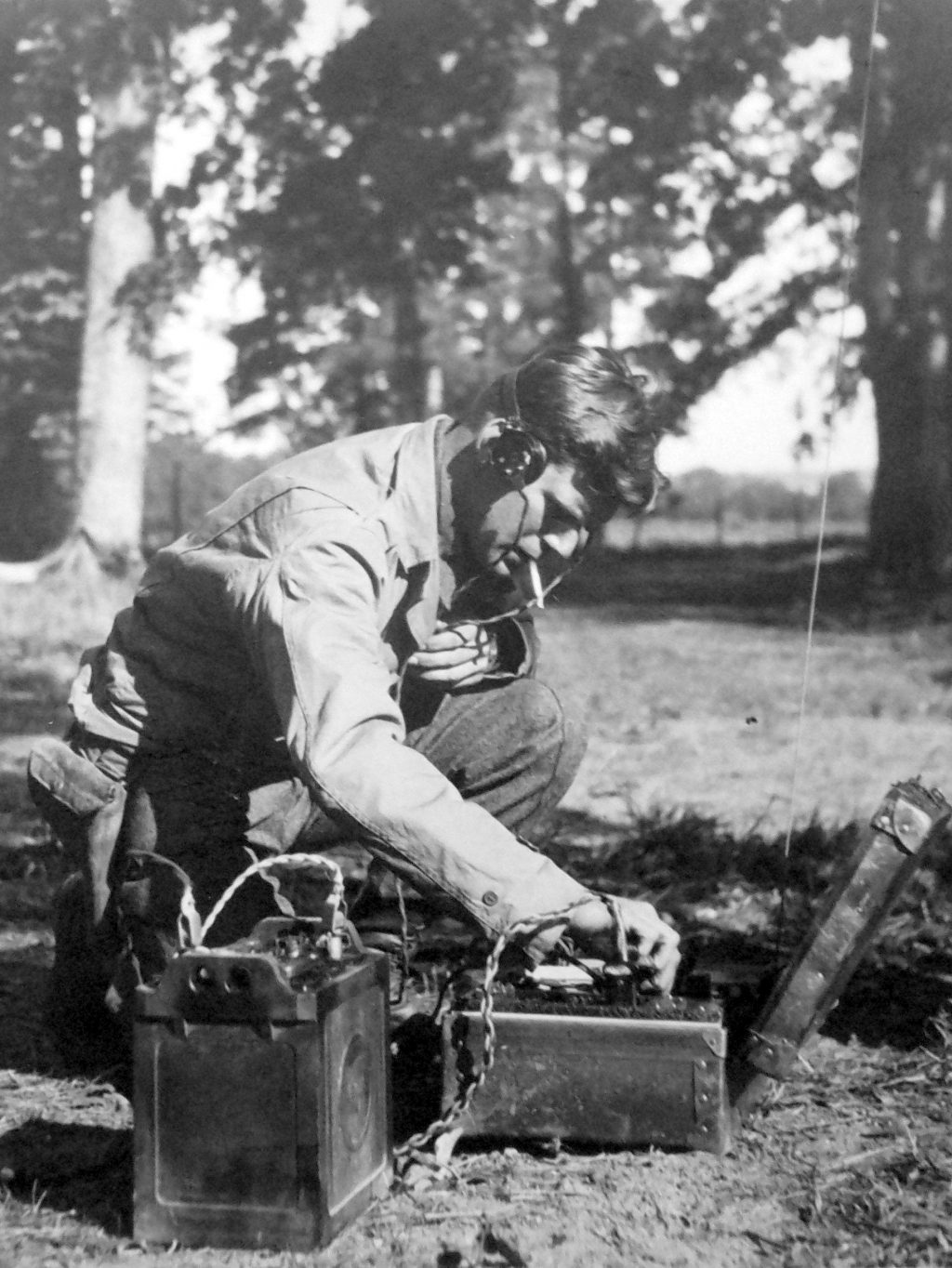
On the night of August 15, the group flew to the Ardennes skirting a storm with high winds. The SFHQ dispatched two bombers to the Ardennes that night carrying thirteen parachutists and forty-eight containers weighing approximately 6 tons total. Upon approaching the DZ, the landing lights were clearly visible, and the SAS team jumped first, about two kilometers east of Revin (France). The aircraft turned around to make a second pass, but this time the landing lights could not be spotted. Upon being informed that they would either have to jump ‘blind’ or return to England, Maj Coombe-Tennant decided to risk the jump. The strong wind scattered the team, but during the remaining hours of darkness, they located each other and buried their chutes. The Belgian SAS team had disappeared to conduct its own mission. At dawn, Team Andrew marched through the forest until they found a woodsman’s cottage, where they were offered shelter. On August 17, a Maquis lieutenant arrived and took them to meet Col de Bolladière’s [Citronelle] mission. Along with some other equipment, Team Andrew lost its radio crystals in the drop and was therefore dependent upon [Citronelle]’s radio for contacting the SFHQ.
 On August 25, the de Bolladière group received a request for help from a Belgian resistance group about five miles to the east that was in a skirmish with a German convoy. Col de Bolladière took about sixty men with him and found the ambush site. Upon spotting women in the convoy, he ordered that it not be attacked; but it was too late, and a firefight ensued. The following day near noon, a German company from Belgium found and attacked the [Citronelle] group as they were having lunch. The Germans’ use of 50-MM mortars proved particularly effective, and the [Citronelle] mission lost eight men killed and twelve wounded, including Col de Bolladière and Lt d’Oultremont. The Germans, however, had not expected such firepower, and both forces simultaneously retired – the [Citronelle] group to a camp south of Tourbillon. The following day, Coombe-Tennant and Capt Layton returned to the scene of the engagement and observed that the Germans had not removed their dead.
The [Citronelle] group subsequently remained deep within the forest about two miles north of the French Border. Their main link to the outside world was a Capuchin friar, Anton Hegelmann, who periodically visited their camp. Since they had little ammunition, they remained at their hideout the following week. Around September 1, the group learned of the advance of the US Army and decided to move south toward Charleville. Upon reaching the city, they discovered that the US Army had already seized the town.

 The group did, however, set up an ambush and managed to intercept a group of Germans retreating east. The US 1-A’s 10th Special Force Detachment picked up the team on September 8 at the V Corps headquarters and gave them a ride to Paris. Maj Coombe-Tennant and Lt d’Outremont left for Brussels to rejoin their regiments, leaving Sgt Harrison to file the final report.
Team Augustus was in the field for slightly more than three weeks, working with the [Citronelle] inter-Allied mission. The [Citronelle] group obviously undertook direct military action prematurely and consequently was forced to spend one critical week in hiding. If the [Citronelle] mission materially assisted the advance of Allied ground forces, it was only indirectly by tying down German forces and constituting yet one more possible threat to German forces retiring east. Maj Coombe-Tennant returned to the Welsh Guards, served in the Middle East, and retired in 1956. In 1961, he joined the Benedictine Order. On November 6 1989, he died at Downside Abbey. Edouard Comte d’Oultremont survived the war and returned to Brussels, where he died on February 3, 1988. The Jedburgh community subsequently lost touch with Frank Harrison.
The SFHQ planned to dispatch Teams Benjamin and Bernard on the night of August 19, 1944, to the Meuse-Argonne area of Northeastern France to assist the local FFI. Team Benjamin consisted of (UK) Maj Hubert O’Brian-Tear (Stirling); (FR) Lt Paul Moniez (Ulster); (FR) Lt Henri Kamiski (Serre) and was to operate east of the Meuse River. Team Bernard consisted of (FR) Capt Etienne Nasica (Argens); (UK) Capt Jocelyn de Warenne Waller (Tipperary); (UK) Sgt Cyril M. Bassett (Lancashire). Each team parachuted with the standard Jedburgh radial set, with which they were to contact the SFHQ in London to arrange the delivery of additional weapons and supplies.
Following a request for such supplies, it would take an estimated eight days for delivery. The two teams received a joint briefing on August 17 that proved suspiciously brief. Information on the state of the resistance in Eastern France proved sketchy, and the teams were not provided with detailed maps of the area. The planned jump for August 19 did not transpire, but on the following night, each team took off in a bomber from Fairford Air Base. Both bombers found their way to the DZ, several kilometers south of Clermont-en-Argonne, but could not spot the landing lights until directly above them. As the six Jedburghs parachuted, they suspected that something had gone wrong in the reception committee.
Jedburghs Teams Benjamin & Bernard, August 20 1944
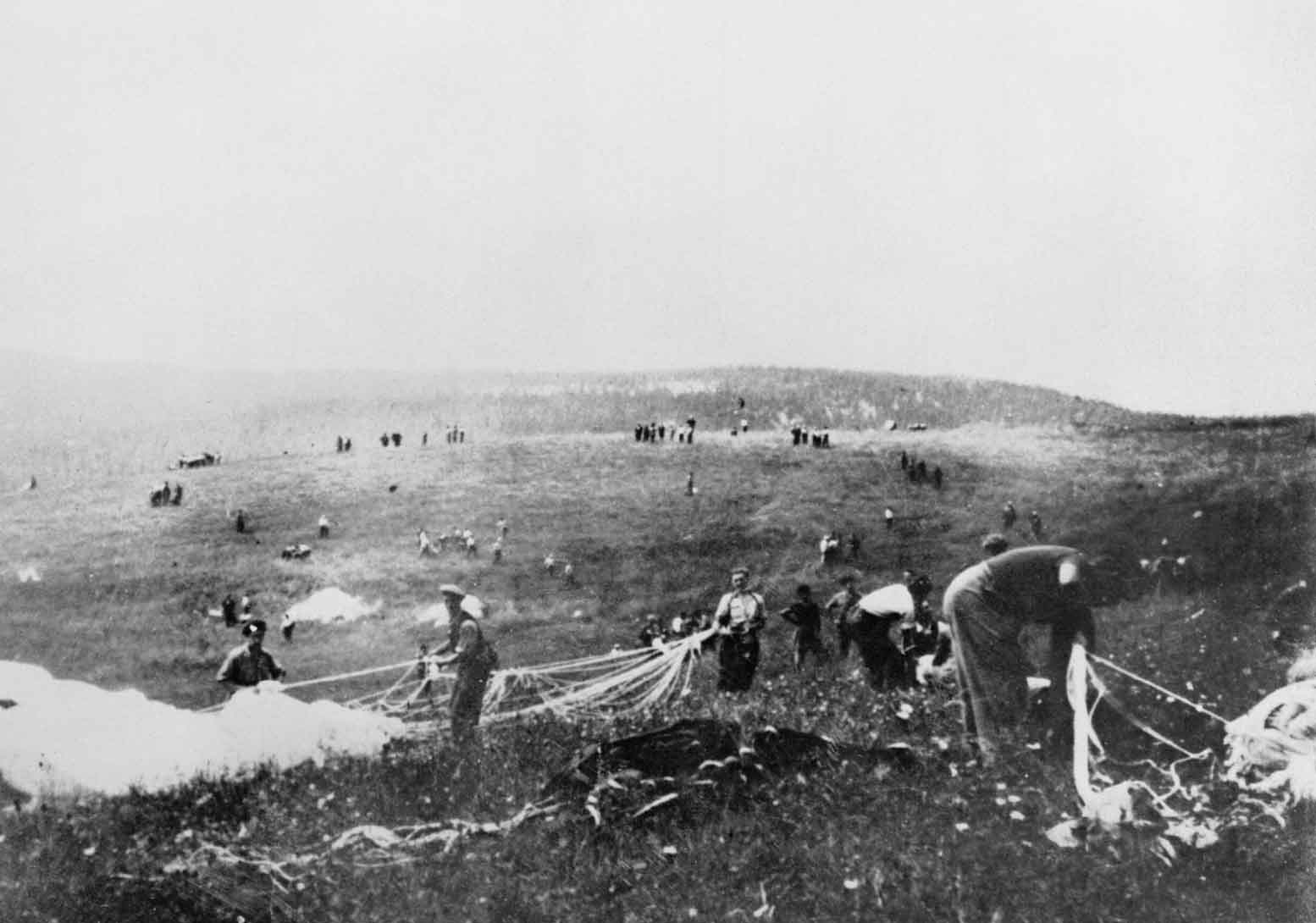
 The FFI reception committee had no previous experience working with parachuted men or materiel so consequently had not selected or prepared a suitable DZ. They had picked a very small field surrounded by the Argonne Forest. Thus, five of the Jedburghs, along with sixteen packages and about thirty containers, landed in the trees. The reception committee had selected a DZ that was far too small and complicated the problem by placing the landing lights too close to the tree line. Furthermore, they had only fifteen men, so it took two days and three nights to assemble the scattered containers and parachutes.
On August 21, two local resistance leaders escorted the Jedburghs to their camp on the edge of the Argonne Forest, three miles south-southwest of Clermont, where at 0630, they established radio contact with the SFHQ. They used Team Bernard’s radio since the other radio had been destroyed in the drop. They also decided to remain together in one large team until another radio could be supplied. It was not until August 23 that two senior FFI officials, Col Aubusson and Col Angelet (assistants of Planète), arrived to brief them on the local situation.
 They reported that Planète was in Nancy planning for a major operation in the Vosges and that he desired the FFI to harass the Germans in the Argonne Region east and west of the Meuse.
To accomplish this, there were about 600 men scattered about this rural area and another 300 in Saint-Mihiel. The Franc Tireurs et Partisans (FTP) had an estimated forty men in Stenay, 200 in Spincourt, and 50 in Souilly. To confuse the situation further, about 3000 Russian POWs worked as miners in Bassin-de-Briey.
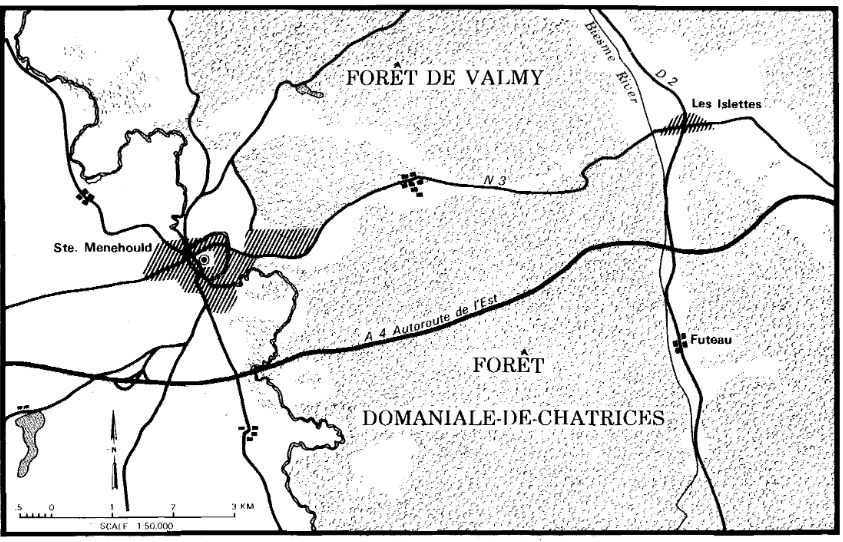
The two team leaders decided, therefore, to split up and return to their original plan. They would call for six priority parachute-supply drops at the beginning of the new moon, three in the Bernard sector west of the Meuse and three in the Benjamin sector east of the Meuse. They planned to arm a nucleus of 200 men in each sector. They consequently began preparations, contacting the local FTP leader to arrange his cooperation and to prepare for Team Benjamin to cross the Meuse. Then disaster struck. The following morning, August 24, the Gestapo and the French Milice posing as FFI Maquis at the town of Les Islettes, arrested the local FFI leaders. The two Jedburgh teams learned of this several hours later and began to carry off as much of their equipment as possible to a new camp. Later in the afternoon, 150 Axis troops led by an SS captain raided the Jedburgh camp evacuated only hours earlier. Through coincidence, an FTP patrol from Souilly, desiring to coordinate with the Jedburghs and secure more arms, arrived at the camp to find not Maquis but a large enemy force. The FTP fled, losing ten men and, no doubt, some measure of confidence in their FFI colleagues. The Jedburghs abandoned their earlier plans, knowing now that they were being hunted. They consequently moved again that same night through the heavily wooded Argonne Forest to the western side of the Biesme Valley into the Forêt Domaniale de Chatrices.
The move to the western side of the valley took three days, during which scouts attempted to determine the level of damage done by the Les Islettes incident. On August 28, they learned that one of the FFI leaders had been captured with a map showing the planned supply DZs. The following day, the group met with Major Rooney’s SAS Group Rupert, both groups having selected the same DZ for that night’s supply drop. After coordinating for a joint drop, the SAS canceled the drop later that evening. Probably on this same day, the SFHQ informed Team Benjamin of the imminent arrival of American ground forces and requested that Benjamin send guides through the German lines to meet them.
 On August 30, the guides dispatched by the Jedburghs contacted the advancing American force (US 3d Cavalry Group, US XX Corps), providing them with an estimate of the local situation. In the morning, the Jedburghs made three offensive patrols on the Ste Menehould – Les Islettes – Clermont road, hoping to cut off retreating German forces. They also desired to prevent the destruction of the railway tunnel and bridges of Ste Menehould. The road patrol encountered no German forces. A second patrol found the railway tunnel abandoned and not rigged for detonation. The third patrol (consisting of Lt Moniez, Commandant Dulac, and six men) entered Ste Menehould, killing four Germans, but later withdrew at the approach of German troops. A party of eighty FFI that was supposed to assist at Ste Menehould proved unable to fight through German forces. The US XX Corps began its advance on Verdun on August 30, led by its 3d Cavalry Group and the 7th Armored Division. The cavalry seized Ste Menehould at 0545 on August 31, and CCA (7-AD) moved toward Verdun to capture a bridgehead over the Meuse River.

The Germans had destroyed all of the Meuse River bridges in the area except the main bridge at Verdun, which was rigged for demolition and defended by a rearguard with two Mark V Panther tanks. As units of CCA entered the town shortly afternoon, a number of FFI volunteers ran under the bridge and managed to cut the wires to the explosive charge before the German sentries opened fire. Minutes later, the tanks of CCA arrived, knocked out the two Panthers, and proceeded east to secure the bridgehead.
On August 31, before the arrival of American forces, Capt Nasica was wounded in a skirmish with a German patrol at Futeau in the Biesme Valley. The Maquis advanced along the Biesme Valley, taking Les Islettes on September 1. On September 2, the group, about 100 men, entered Clermont and began to intercept German stragglers, killing or capturing about fifty men. The Jedburghs had turned over command of the Maquis to Commandant Dulac and on August 31, moved east across the Meuse toward Verdun. Upon reaching that historic town, they discovered troops of the US XX Corps in force and decided to contact the US 3-A headquarters to receive new instructions. On the return drive, as they approached Clermont, a German outpost opened fire on their truck, wounding everyone except Capt Waller and Lt Moniez. The Jedburgh team fled, losing its truck, radio, and the last of its personal equipment. During the previous night, a regiment of the 15.Panzer-Grenadier-Division had driven the Dulac Maquis out of Clermont and occupied the town. The Jedburgh group infiltrated through the German lines and reached Epernay on September 2, where Capt Waller met them. On the following day, they reported to Lt Col Powell of the 11th Special Force Detachment at the US 3-A HQ in Châlons.
The Jedburgh group rested and re-equipped over the week. Capt Nasica and Sgt Bassett were evacuated from local hospitals to England. On September 11, Col Powell directed the group to assist the [Pedlar] (Pedlar was an Intelligence Circuit led by Maj Bodington in the Châlon sur Marne area) circuit in the Chaumont area (Team Arnold report on Pedlar). The group subsequently participated in a daylight supply drop at Gargenville on September 13 and, following the capture of Chaumont, assisted Maj Bodington in the demobilization of his Maquis.
 From September 18-22, Teams Benjamin and Bernard stored excess parachuted arms at Nancy. They returned to England on October 2, observing that they should have been deployed at least two months prior to August 20. They also noted that the SFHQ had basically ignored the Meuse-Argonne Region until August 1944, by which time it was too late to create an efficient organization. Teams Benjamin and Bernard served in France for roughly six weeks, although only nine days before the US 3-A overran the area. Effective Axis security forced the two teams to hide from August 24-30. Between August 30 and September 2, four of the six Jedburghs were wounded, with two requiring evacuation.
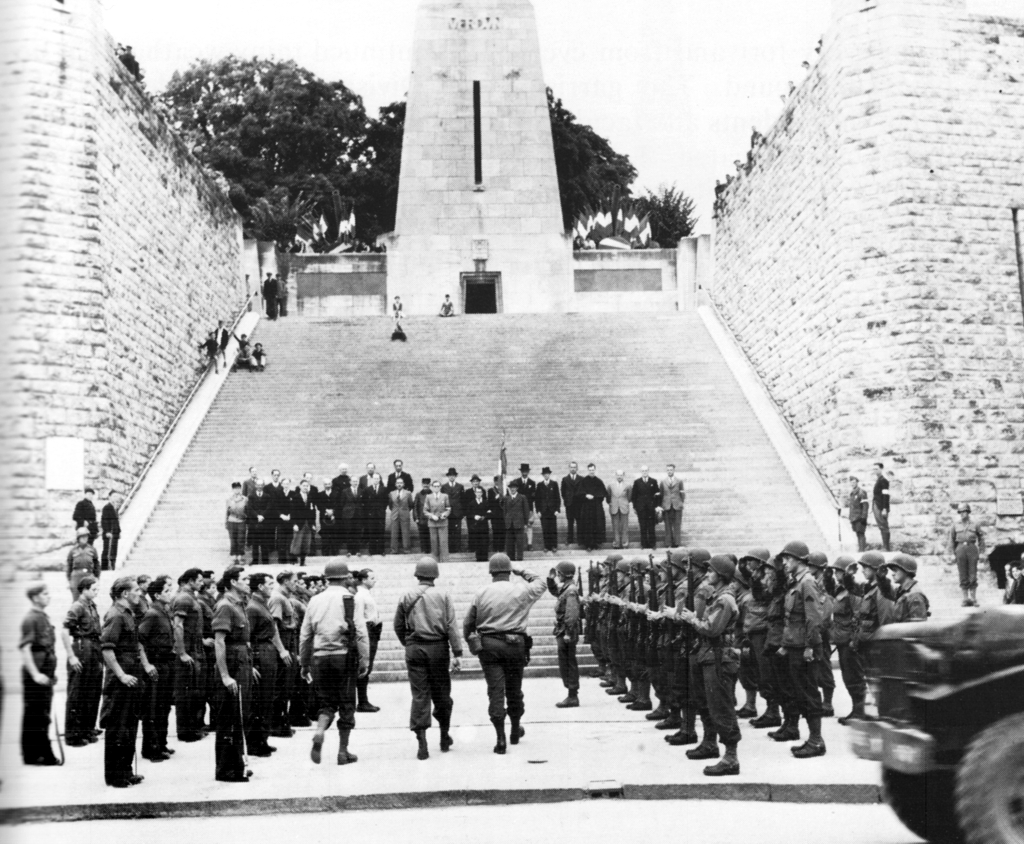
In many ways, the story of Teams Benjamin and Bernard provides more questions than answers. Their after-action report makes no reference to the FFI of Verdun and the capture of the Verdun Bridge, even though Verdun was only some thirty kilometers to the east. In a similar fashion, US Army records fail to mention any Jedburgh teams operating in the area. We also know that on August 30, the SFHQ directed Jedburgh teams to seize the bridges in front of the US 1-A to assist the advance of the ground forces. There is no indication, however, that similar messages, were sent to the SOF teams in front of the US 3-A. How it came to pass that an FFI group knew when and how to cut the wires of the demolitions on the Verdun Bridge remains open to question.
Jedburgh Team Alfred, August 24 1944
The SFHQ dispatched Team Alfred on August 24, 1944, to the Oise River Valley north of Paris to assist in organizing the local FFI, particularly through providing them an additional radio link to London and assisting in the delivery of arms. The team consisted of (UK) Capt Lewis Ritchie MacDonald (Argyll); (FR) Lt Jean-Marie Herenguel (Aude) and (UK) Sgt Albert W. Key (Wampum).
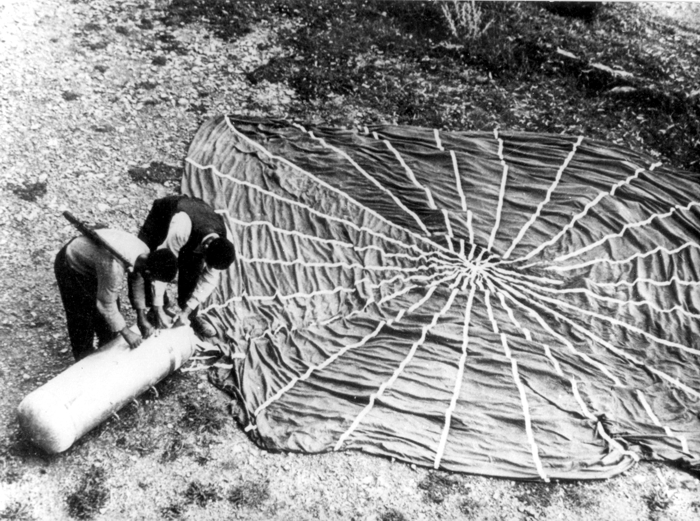 The team left Milton Hall in somewhat of a rush on the morning of August 9 for London, after which they prepared for their jump. It was not until August 23 that they received a rather hurried second briefing on the FFI and German situation in the Oise sector. They were also informed that it would take about eight days for the delivery of arms drops. The briefing officer told them that if they found themselves within forty miles of the battle zone, they were to recruit fifteen volunteers and move toward the Allied army, gathering tactical information along the way. Upon landing in France, they were to contact the local FFI chief DuPont-Montura. The team was instructed to avoid open combat.
That night, at 2300, Team Alfred departed on a two-hour flight through a rather severe storm for the DZ at Moulin-sous-Touvent (about 15 kilometers northeast of Compiègne), where the pilot dropped the packages and containers with some difficulty. He then gained altitude for a second pass so the team could safely jump, but amid fierce winds, he could not spot the landing lights and was forced to cancel the jump. The following night, they tried again, and after a fifty-minute search for the DZ in Moulin-sous-Touvent, the RAF bomber dropped both the Jedburgh team and their packages and containers. It proved an excellent drop, and it took little time for the reception committee to assemble the team and equipment and take them to the safety of a nearby quarry. As it turned out, the reception committee had secured the containers and packages dropped the previous night but had moved the equipment to a village some twenty kilometers away. Thus, the team would have to do without their personal kits for some time.
 On the morning of August 26, Lt Herenguel traveled to Clermont, where he met Commandant DuPont-Montura, the FFI commander for the Oise Area. Following their meeting, Team Alfred sent the following message to the SFHQ: ‘have contacted Chef FFI departmental. Five to six thousand partisans in area poorly organized but very enthusiastic and demand arms and yet more arms. 400 of the total armed in area Compiègne-Clermont. Area Beauvais destitute of arms’. That night, the team vainly awaited an arms drop at the DZ. The following morning, word arrived that there were parachutists nearby at Francières, so Capt MacDougall went to investigate. He returned later with five Special Air Service men. Their aircraft could not find the DZ, so the team dropped blind, although the pilot did not drop the arms containers.
The following day, Team Alfred radioed London, reporting the non-arrival of their arms shipment and stating that large bodies of disorganized German troops were moving north through Montdidier toward Lille. A coded BBC broadcast heralded another drop for that evening, so once again, the team assembled at the DZ. This time, they waited until 0230, when a heavy thunderstorm struck. Team Alfred later learned that the arms shipment had been dropped some fifteen kilometers away, where the local Communist-Party-sponsored resistance group had retrieved it.
 At this time, German activity forced Team Alfred to seek a safer location each day. On August 28, they took shelter in a cave located in a small wood. That same day, the team sent the SFHQ at least three messages, reporting that the Germans were destroying their airbase at Creil, preparing bridges for demolition, and at several locations erecting antitank obstacles and minefields. The team also reported that it had dispatched five volunteers toward the Allied lines to gain tactical information. That same day, the team received its first message from the SFHQ, enigmatically requesting exact map references-information the team was certain that agent Pasteur had already sent to London.