

Jean – military chief of region
Jean-Bari – Maquis leader
Jean-Marie – organizer of F-Section (Donkeyman) circuit
Jedburgh – UK & US specially-trained three-man team to work with resistance units behind the enemy lines
Jockey – F-Section circuit in southeastern France controlled by F. Cammaerts
Joseph – agent of the Maquis
– Julien – Jedburgh team with (UK) Maj A.J. Clutton (Stafford); (FR) Lt J. Brouillard (Vermont); (UK) CQMS T.S. Menzies (Essex)
– Kansas – (US) 1/Sgt L.J. Watters, radio operator, Jedburgh team Hamish
– Kentucky – (US) Capt B. M. Knox, member Jedburgh Team Giles
– Kilfire – Lt J. Telmon, member Jedburgh Team Aubrey
Kinley – chief subdivisionnaire of the FFI
– Kinros – (UK) Maj A.W. Wise, leader Jedburgh Team Frederick
– Kroner – (UK) Sgt I. Hooker, radio operator, Jedburgh Team Alan
– Kupek – (FR) Lt R. Pariselle, radio operator, Jedburgh team Hilary
Lash – Jedburgh exercise commencing 31 May 1944 and ending 8 June 1944, of a plan for Jedburgh teams to contact a resistance group and using it to attack enemy rail communications and other targets as indicated through radio transmissions at a later time.
Le Chat – French resistance group leader
– Lee – Jedburgh Team with (US) Capt C.H. Brown, (Pice); (FR) Lt N. Viguier (Sous); (FR) Lt A. Chevalier (Reis)
– Leix – (FR) Lt A. Thouville, member Jedburgh Team Alexander
Lemmiscate – DMR French resistance group
Lescat – agent of French Maquis
Ligne – French patriot
Lionel – Allied agent. Usage Lionel at Edouard
– Loire – (FR) Capt P. Lebel, member Jedburgh Team Giles
Louis – member of French resistance group
– Louisiana – (FR) Lt L. Blanchere, member Jedburgh Team Hamish
Loyton – SAS party
– Lundy – Sgt R. Loosmore, radio operator Jedburgh Team Andy
Lysander – (UK) light aircraft type used for insertions
– Maine – (FR) Lt Y. Delorme, member Jedburgh Team Ian
Mandinaud – member of the Maquis
Manomètre – French agent
Maquis – French guerrilla bands. (southeastern France)
Marcel – FFI leader
Marie-Thèrèse – FFI agent and liaison
Marksman – F-Section circuit
Marrionneau – FFI leader of Corps Franc
Mary – French liaison agent
– Massachussetts – (US) Sgt A.J. Denneau, radio operator Jedburgh Team James
Massingham – SOE base at Guyotville, west of Algiers
– Maurice – Jedburgh Team with (US) Capt C.M. Carman, (Utah); (FR) Lt H. Dumesnil (Virginia); (US) Sgt F.J. Cole (Georgia).
Maximum – non-American agent
– Mayo – (FR) Sgt Lucien Bourgain, radio operator Jedburgh Team Ian
ME/65 – Milton Hall, Jedburgh Training School in Peterborough, England
Mechalis – F-Section organizer
MI-6 – British military intelligence
Michaud – departmental chief of French resistance organization. Usage Michaud at Daries
Michel – member of the FTP
– Michigan – (FR) Lt D. Leb, member Jedburgh Team James
Michonneau – French resistance leader
– Middlesex – (UK) Sgt P.M. Colvin, radio operator Jedburgh Team Felix
Milice Vichy – police force, headed by Joseph Darnand, that employed Gestapo-like tactics against the Resistance.
– Mississippi – (US) Lt J.L. Singlaub, leader Jedburgh Team James
Mitchell Plan – Capt M. Millett’s mission in France to prepare the reception of Jedburgh Teams
MLN – Mouvement de Libération Nationale
MUR – Mouvements Unis de la Résistance (Combat, Libération, Franc-Tireur)
– Monmouth – (UK) Capt J.H. Coxe, leader Jedburgh Team Ivor
Monarque – non-American agent
Moraglia – French agent
Mossy – dropping ground (DZ)
– Nebraska – (US) Lt M.B. Starring, leader Jedburgh Team Anthony
– Nevada – (US) Lt P.H. Chadbourne, member Jedburgh Team Hilary
– Nicholas – Jedburgh Team with (UK) Capt J.C. Maude (Leicester); (FR) Lt H. Puget (Brecknock); (UK) Sgt M.A. Whittle (Northumberland)
Nicolas – French agent of the Maquis
Nicole – French agent
Noizet – French member of Maquis
– Norfolk – (FR) Capt J. Beaumont, member JUedburgh Team Gerald
OG – Operational Group. (Sabotage and Guerrilla – Normally 2 officers and 28 enlisted men)
– Oklahoma – (US) Maj John Gildee, leader Gedburgh Team Ian
Olive – French agent
ORA – Organisation de la Résistance de l’Armée, disbanded in 1942 by the Germans
Orcia – French agent
Orgeot – Mission Special EMFFI, mission set up resistance, southeastern France, and liaison with SF detachments, Allied officers, Jedburghs, FFI agents
– Oxford – (FR) Capt B. Allet, member Jedburgh Team Alec
Pablo – member of the FFI
Pair – French agent
Pascal – French patriot
Patre – non-American Allied radio operator
Patrick – Operational Group dispatched on 14/15 and 15/16 Aug 1944, Indre Département, France
Patrick – member of French Maquis
– Paul – (UK) Maj E. Hood (Shropshire); (FR) Lt F. Cormier (Durthe); (UK) Sgt K.J.W. Brown (Limerick)
Pauline – (FR) Miss P. Witherington, French agent. Usage Pauline at Geneviève & Pauline at Marie
– Pembroke – (UK) Capt S.N. Cannicott, leader Jedburgh Team Alan
– Perth – (FR) Capt C. Deprez, member Jedburgh team Anthony
Péruvier – Allied non-American radio operator
– Peseta – (US) 1/Sgt Robert R. Kehoe, radio operator Jedburgh Team Frederick
– Pfenning – (US) Sgt J. Bradner, radio operator Jedburgh Team Anthony
– Philip – Jedburg Team with (FR) Capt J. Derouen (Kintyre); () Lt R.A. Lucas, (Caithness); (US) Sgt G. Grgat (Leinster)
– Piastre – (FR) Lt L. Giry, radio operator Jedburgh Team Bruce
– Pice – (US) Capt C.H. Brown, leader Jedburgh Team Lee
Pierre – non-American agent
Pimento – F-Section circuit in the Rhône valley and adjacent areas controlled by A. Brooke
Planète – DMR of the FFI
– Pound – (US) Sgt E.B. Esch, radio operator Jedburgh Team Ronald
PWE – Political Warfare Executive (British)
QSA3 – Communication signal
– Quentin – Jeadburgh team with (UK) Capt W.S. Fenton (Cornwall); (FR) Lt J. Lessere (Wicklow); (UK) Sgt R. Dawson (Merioneth)
– Quinine – Jedburgh Team with (UK) Maj R. McPherson (Anselme); (FR) Lt M. Bourdon (Aristide); (UK) Sgt O. Brown (Félicien)
R – Resistance Region. Usage : R-1, R-2, etc
RAC – member of the FFI
Rado – RF Section agent
Rateau – RF Section agent
Ratissoire – French agent
RC – Reception Committee
– Reis – (FR) Lt A. Chevalier, radio operator Jedburgh Team Lee
RF Section – Section, Western European Directorate, independent French resistant groups which maintained direct liaison with BCRA
Renandin – member of the FTP
Revez – non-American agent
Richard – F-Section Agent
Robert – leader of a Maquis group
Rocket – non-American agent
Roger – member of the BOA
Rolland – Chief of FTP of région
– Rona – (US) Lt S.J.O. Alsop, leader Jedburgh Team Alexander
– Ronald – Jedburgh team with (US) Lt S.R. Trumps, (Boursier); (FR) Lt J. Dartigues (Boutton); (US) Sgt E.B. Esch (Pound)
– Ross – (UK) Maj V.E. Whtty, leader Jedburgh Team Harold
Rossignot – French patriot
Rousseau – member of the FFI
– Rupee – (FR) Lt C. Lejeune, radio operator Jedburgh Team George
– Rupert – Jedburgh team with (US) Lt R.A. Lucas, (Caithness); (FR) Capt J. Derouen (Kintyre); (US) Sgt G. Grgat (Leinster)
– Rutland – (UK) Capt G. Marchant, leader Jedburgh Team Aubrey
RV – Abbreviation for rendezvous
Salesman – F-Section circuit
Samson – non-American agent
Samuel – F-Section British agent
Samwest – SAS base
Sandra – regional commander of the Front National and chief of German controlled police in Nantes
SAP – Section d’atterrissage et de parachutage (Landings & Parachuting, southern France)
SAS – Special Airborne Service. British Army Airborne force for special missions
– Save – (FR) Capt P. Erard, member Jedburgh Team George
Secret Army – Gaullist military forces (l’Armée Secrète)
– Selkirk – (US) 1/Sgt Berent E. Friele, radio operator Jedburgh Team Gerald
– Selune – (FR) Lt Y.M. Dantex, member Jedburgh Team Ivor
Serpolet – Sub-mission of the Orgeot Mission
SFHQ – Special Force Headquarters. Joint SOE/SO headquarters in SHAEF.
SFU – Special Force Unit. SFU #4 was SPOC’s field liaison FFI/US 7-A
SHAEF – Supreme Headquarters Allied Expeditionary Force
– Shilling – (FR) Maj Leanclaude, member Jedburgh Team Gavin
Shinoile – Mission RF Section mission and sub-mission of the Orgeot Mission
Shipwright – F-Section circuit
SI – Special Intelligence Branch, Office of Strategic Services
SIPO – Sicherheitspolizei (German Security Police)
– Sixpence – (UK) Capt W. Dreux, leader Jedburgh Team Gavin
– Skye – (UK) Sgt K. Seymour, radio operator Jedburgh Team Jacb
– Sligo – (UK) Sgt H. Verlander, radio operator Jedburgh Team Harold
Snelgrove – SAS party
SO – Special Operations Branch, Office of Strategic Services
Socrate – regional Maquis commander
SOE/SO – Joint SOE and SO (of OSS) office in London which later became SFHQ
– Somerset – (UK) Capt J.J. Marchant, leader Jedburgh Team Félix
– Somme – (FR) Lt G. Levalois, member Jedburgh Team Horace
– Sous – (FR) Lt N. Viguier, member Jedburgh Team Lee
Spitfire – landing strip on the Vaucluse Plateau, ten miles north of Apt
SPOC – Special Project Operations Center, in Algiers
SSS – Strategic Service Section (an OSS/SI unit attached to US 7-A)
Ultra – German messages deciphered at Bletchley Park, England, Enigma machine
Underfoot – 21st Army Group
Uriage – member of the FFI
Vaudel – Lt Col Félix, French DMR
Vega – on-American agent
Ventriloquist – F-Section circuit
– Vermont – (FR) Lt J. Brouillard, member Jedburgh Team Julien
Verneuil – Maquis regional commander
Vervaine Mission – EMFFI mission
Verry – French agent
Violette – French agent
– Vire – (FR) Capt P. Aguirec, member Jedburgh Team Frederick
Wallace – non-American agent
Wash 19115 – British SAS party
Watermarck – SFHQ
Welehore – non-American agent
– Wington – (FR) Capt Paul Cyr, leader Jedburgh Team George
– Wyoming – (US) Maj J. Summers, leader Jedburgh Team Horace
Xavier – F-Section British agent
Yacc – Maquis regional chief
Yalelock – Special Force Detachment #12
– Yonne – (FR) C.C.R. Mersiol, radio operator Jedburgh Team Hugh
Yves – regional chief of the FFI
Yvon – member of the FTP
Zelabdais – non-American agent
Zéro – regional chief of resistance
Jedburgh Team Jacob, August 12 1944

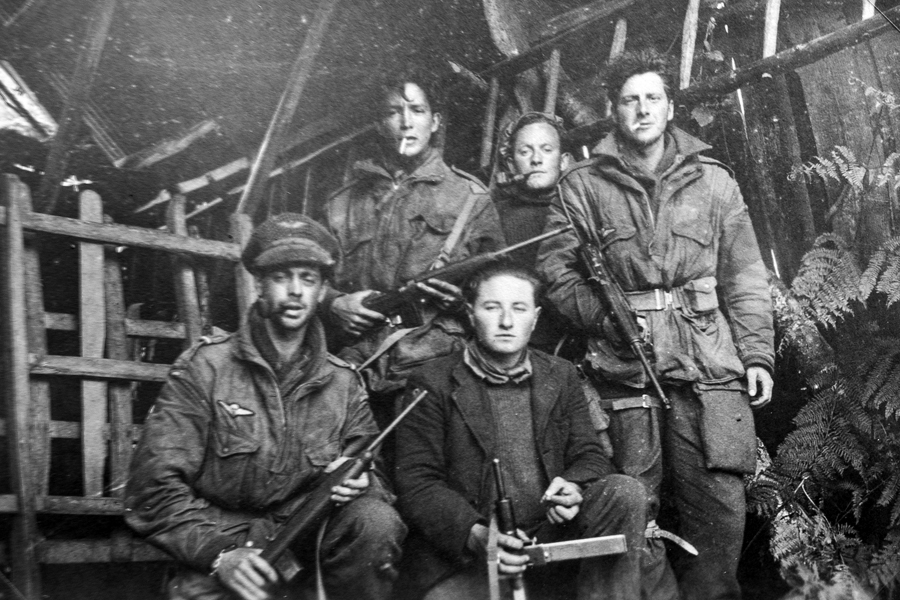
During the night of August 12, 1944, the SFHQ dispatched the Jedburgh Team Jacob to the Vosges Area north of Epinal as the twenty-sixth Jedburgh team to the Continent. They landed at about 0100 on August 13 near the village of La Petite-Raon. The SFHQ had previously been unable to support the eastern area of France and in mid-August resolved to send a Jedburgh team to the area. The SAS resolved to dispatch the ninety-one-man Team Loyton to the area also. The Jedburgh Team Jacob was to assist the local Maquis, cooperate with the SAS, but to remain under the command of the SFHQ. They were to avoid open offensive action against Axis forces. Team Jacob consisted of (UK) Capt Victor A. Gough (Arran); (FR) Lt Maurice Boissarie (Connaught); (UK) Sgt Ken Seymour (Skye). Gough was a pleasant young man from Somerset, who before entering the service had been a cartoonist. It was Gough who created the design for the Special Forces wings that the Jedburghs wore on their uniforms.
On August 16, Team Jacob radioed the SFHQ reporting that they had landed safely and were with a Maquis two kilometers south of Vexaincourt. Sgt Seymour injured his ankle in the jump, but they expected him to be ambulatory in seven days. Meanwhile, the team used the SAS radio operator and hoped to meet the Réseau Planète in a day or two. Of the 800 FFI volunteers in the area, only 50 were armed. Some 600 were forced to remain sedentary inactive in their homes. In two messages on August 26, the team requested a large supply drop and indicated that their radio set was not functioning. On September 5, Team Jacob reported that they had not yet received another radio but that they had contacted the SAS Team Loyton. It would appear that several days earlier Team Jacob and the SFHQ had attempted to conduct an arms drop that proved unsuccessful, resulting in numerous FFI casualties when Axis forces attacked them on the drop zone (DZ).
On the following day, Team Jacob canceled that night’s arms drop, reporting that Germans were on the DZ. The SFHQ next heard from Team Jacob on September 15, when it reported that Sgt Seymour had been captured on August 17 and was rumored to have been shot on the 20. In a recent battle, Capt Boissarie had been killed along with 100 Maquis. Another 100 Maquis had been captured with the remainder dispersed. On September 16, Capt Cough (Jacob’s sole survivor) radioed the SFHQ stating that he had rallied 200 Maquis and with the SAS assistance had armed them. He also reported that the transmitter and radio set recently dropped had broken during the drop. Cough said he planned to continue using the SAS set.
At 1900, September 18, Capt Cough sent his last message: have contacted 800 Maquis under Marlier. Sent message with the SAS yesterday for arms drop. Gave ground. The SAS will liaise [liaison] with you. Great difficulty working alone. Can’t come up at regular skeds [schedules]. Will come upon an emergency when can. Please have your message ready for me on this channel. Have not had money yet. The SAS having personnel drop to team here tomorrow. Please send money addressed to me with one of their officers
The SFHQ continued to send messages to Team Jacob through September 28. Capt Gough was captured in the days following September 18 and executed on November 25, 1944, at the Schirmek La Broque concentration camp in Alsace. He is buried at the Durnbach Commonwealth Cemetery near Bad Tölz, Bavaria. Capt Boissarie (alias Baraud) apparently died in a skirmish on September 4, 1944, at the Viambois Farm in the Vosges. Sgt Seymour was captured by the Germans, survived incarceration in a concentration camp, and returned to England.
Jedburgh Team Aubrey, August 12 1944
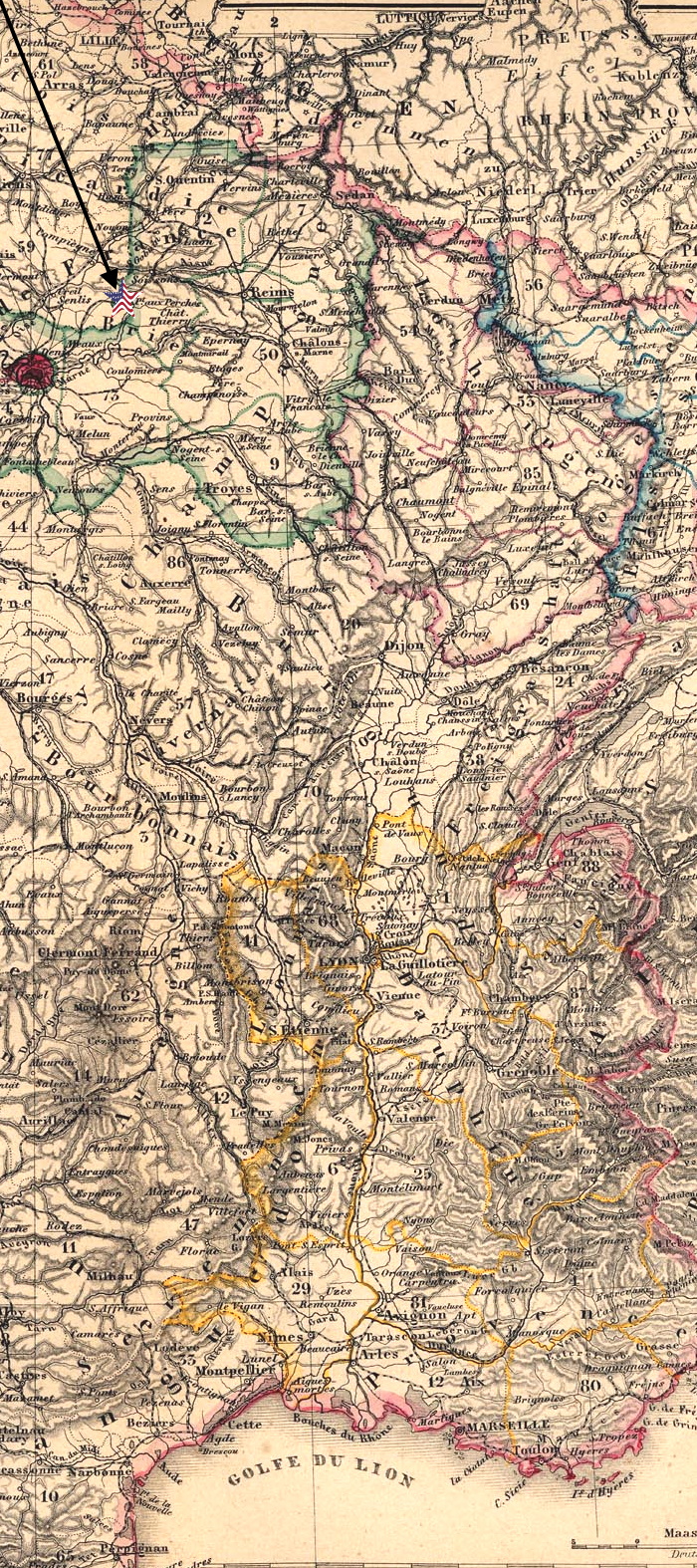 The SFHQ dispatched Team Aubrey as the twenty-seventh Jedburgh team to France from the United Kingdom. It was to assist the [Spiritualist] network (code name for the organizer and circuit) in the Seine-et-Marne Region east of Paris, providing an additional communication link to London, particularly for the delivery of arms and ammunition. The team consisted of (UK) Capt Godfrey Marchant (Rutland); (FR) Lt Jean-François Chaigneau (Kildare); (UK) Sgt Ivor Hooker (Thaler). They received their briefing in London on August 11 and left for Harrington Air Base at 1700. The team wore civilian clothes for the jump and took off in a modified B-24 from Harrington at 0015 on August 12, followed by two more B-24s carrying weapons, ammunition, and equipment.
At about 0155, the team parachuted without incident into a DZ near La Plessis-Belleville and were greeted by Maj René Dumont-Guillemet, the leader of the [Spiritualist] circuit, and a large reception committee from the village of Saint-Pathus. On the evening of August 12, the team cycled to the village of Forfry, where they established themselves in a safe house. The following day, Sgt Hooker developed a case of the mumps, and since there were no Germans in the village, he set up his radio and operated it from his sickbed throughout most of the remainder of the mission.
On the 14, the SFHQ approved Capt Marchant and Capt Chaigneau’s request to shift operations to the suburbs of northern Paris, where Maj Dumont-Guillemet had identified some 1500 volunteers. The team believed it much safer to operate in the built-up suburbs than in the gently rolling hills of the Seine-et-Marne. Capt Marchant secured Spanish identity papers and traveled daily throughout the suburbs, instructing small groups (including Parisian gendarmes) on sabotage techniques. The local resistance group provided Capt Chaigneau with false papers and a motorcycle, and he served as a liaison between resistance groups.
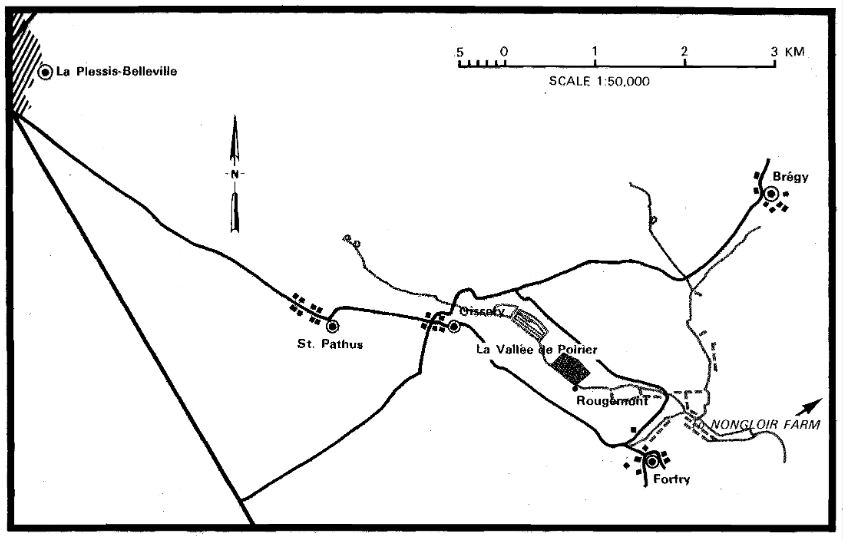 On August 21, Chaigneau and Marchant decided that with the German Army retreating from France, it was time to move to the Meaux Area. When Marchant and the [Spiritualist] radio operator named Blaise, bicycled back to Saint-Pathus, however, they found an SS and a German Army field unit camped about the village. The Germans moved north on August 24, and the following day, Maj Dumont-Guillemet, on his own initiative, instructed his forces to rise in revolt. Within hours, however, the SFHQ radioed to tell him that the revolt could not start until the SFHQ sanctioned the rising. Maj Dumont-Guillemet and Capt Marchant then conferred and agreed that to call off the uprising would only create confusion. They decided to go ahead with the insurrection.
Team Aubrey put on their uniforms again on August 26 and awaited the arrival of the FFI volunteers from northern Paris. The latter arrived the following morning in some twenty vehicles, having managed to avoid large German military convoys escaping to the north. This FFI group with Maj Dumont-Guillemet and Team Aubrey attempted to set up an ambush position near Rougemont, between Oissery and Forfry. It was not a bad defensive position, resting upon a sunken road with a good field of fire to the south, protected on the west by heavy wood and on the east by marshy ground impassable to armored vehicles.
The problems were twofold: the Maquis were basically unorganized and untrained, and the men really had no idea what would be coming down the road into their ambush. Only two Bren guns were operational, and only the Jedburghs knew how to operate the four PIATS (a hand-held antitank rocket – Projectile Infantry Anti Tank). Even as the FFI column unloaded at the sunken road, a German armored car opened fire on two FFI vehicles in Oissery. Seconds later, a German light tank opened fire on the vehicles in the sunken road. After about eighty minutes, at about 1230, with the arrival of additional Germans, Maj Dumont-Guillemet directed a covering force to hold off the Germans while the remaining men dispersed. Capt Marchant said he would remain with the covering force and ordered Sgt Hooker to leave the field. Hooker moved east along the streambed, where he met Maj Dumont-Guillemet. They spotted Capt Chaigneau about thirty yards ahead of them. Capt Marchant and the covering force held their positions for a short while until another German tank approached and opened fire at close range, whereupon the covering force also fled. Marchant was forced to crawl north to a lake, where he hid for the next eight hours.
The German armor continued to fire, killing Capt Chaigneau in the streambed with a high-explosive shell. The mud in the streambed was rather deep, so Hooker, Dumont-Guillemet, and the others crawled some two kilometers through the mud until they finally reached the shelter of the woods. From there, the group dispersed, with Hooker (who had discarded his codes) and Maj Dumont-Guillemet making their way to a safe house in Nongloire-par-Puisieux. Maj Dumont-Guillemet and Sgt Hooker spent the next day at the safe house.
On the morning of August 29, they awoke to the sound of machine guns and discovered a US VII Corps column advancing down the road to Soissons. They received a ride from the Americans to Meaux, from where they returned to Paris. On the 30, Sgt Hooker borrowed a jeep and drove to Forfry, where he found Capt Marchant, and the two returned to Paris, Maj Dumont-Guillemet had already returned to London, and the two surviving members of Team Aubrey followed soon after.
 The German armored unit that Team Aubrey encountered belonged in all probability to the LVIII Panzer-Corps, which was responsible to the German 1.Army on August 25-27. It consisted of the remnants of several severely battered divisions, including the Panzer-Lehr and the 9.Panzer-Division. The LVIII Panzer-corps concentrated its efforts on blacking the major road nets north of Paris until August 27, when it was forced to retire to the line Beaumont-Survillers-Dammartin-en-Goele-Meaux. In the nineteen days, it was in the field, Team Aubrey provided valuable information to London, particularly targeting data on a Luftwaffe airfield north of Paris. In addition, although the SFHQ probably knew of the withdrawal of the German’s Paris garrison, Team Aubrey’s confirmation of its departure on August 19 undoubtedly assisted in clarifying the situation. Capt Marchant estimated that the FFI lost eighty-six men and women killed in the August 27 engagement near Bougemont. Godfrey Marchant, originally from Buenos Aires, died in April 1945 when his B-24, bound for an SOE mission in Burma, crashed on takeoff near Calcutta. Ivor Hooker survived the war, returning to England to live in Suffolk County. He died in June 1988.
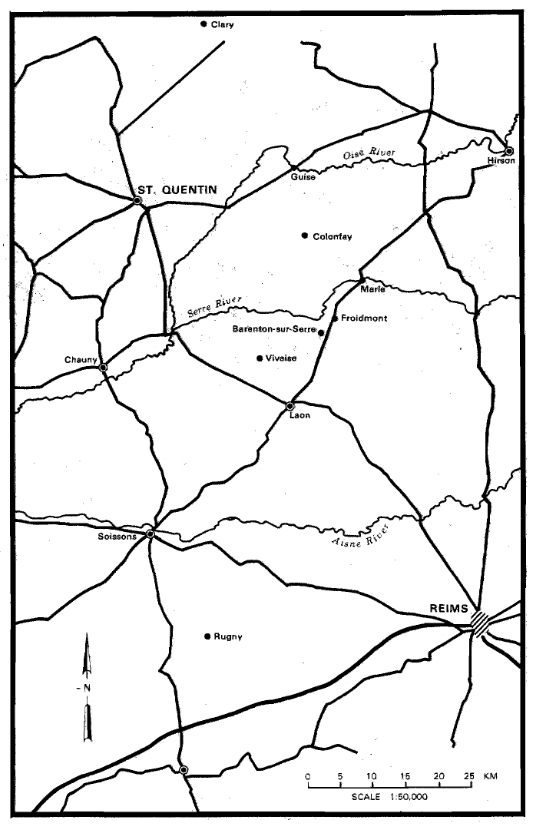
The SFHQ dispatched Team Augustus as the thirty-fourth Jedburgh team to the Continent on August 15, 1944, to the Aisne Region, where it was to assist the local Maquis and serve as an additional communication link to London. Maj John H. Bonsall (Arizona)(US), the team leader, was born on June 11, 1919, in Morristown (New Jersey). After attending a number of preparatory schools, he entered Princeton University, where he was in the ROTC program. He was commissioned an Army second lieutenant upon graduation in 1941, although he planned to follow his father’s example and practice law. He was called to active duty in August 1941, arrived in England in December 1943, and was promoted to major in April 1944. Capt Jean Delviche (Hérault)(FR) and T/Sgt Roger E. Cote (Indiana)(US) were the other members of the team. Delwiche was a professional officer born in Vivaise, a small village ten kilometers north of Laon. He was a profoundly quiet man, undoubtedly the result of the death of his wife and child to illness.
 On the night of August 15, the team flew from England with twenty-four containers weighing 3 tons and with no other passengers. Landing near the hamlet of Colonfay, about fifteen kilometers south of Guise, they moved to Le Nouvion-en-Thierache, the local resistance headquarters.
On the afternoon of August 16, they reached a farm near the village of Clary, which the resistance suggested would be much safer. The team radioed the SFHQ on August 17 that the reception had gone perfectly. Two days later, they reported that they had successfully contacted the local resistance leader. At that meeting, they apparently decided to follow the suggestion of the resistance to conduct operations to the south near Soissons. On August 20, the team radioed that the resistance movement in the Aisne Department was quite advanced, with 1100 men armed and trained and 4900 unarmed men.
 On August 21, the team moved south about 100 kilometers to the village of Rugny. Through August 24, the team sent London several reports on specific targets for the Allied air forces, mostly large German troop columns headed east for the German Border or trains stuck between railroad demolitions. On August 25, however, Augustus reported that there were so many German troops in the area that it would be unwise to form any Maquis and that hiding places were becoming harder to find. The following day, the team reported that the Germans were constructing field fortifications behind the Aisne River, although without minefields.