




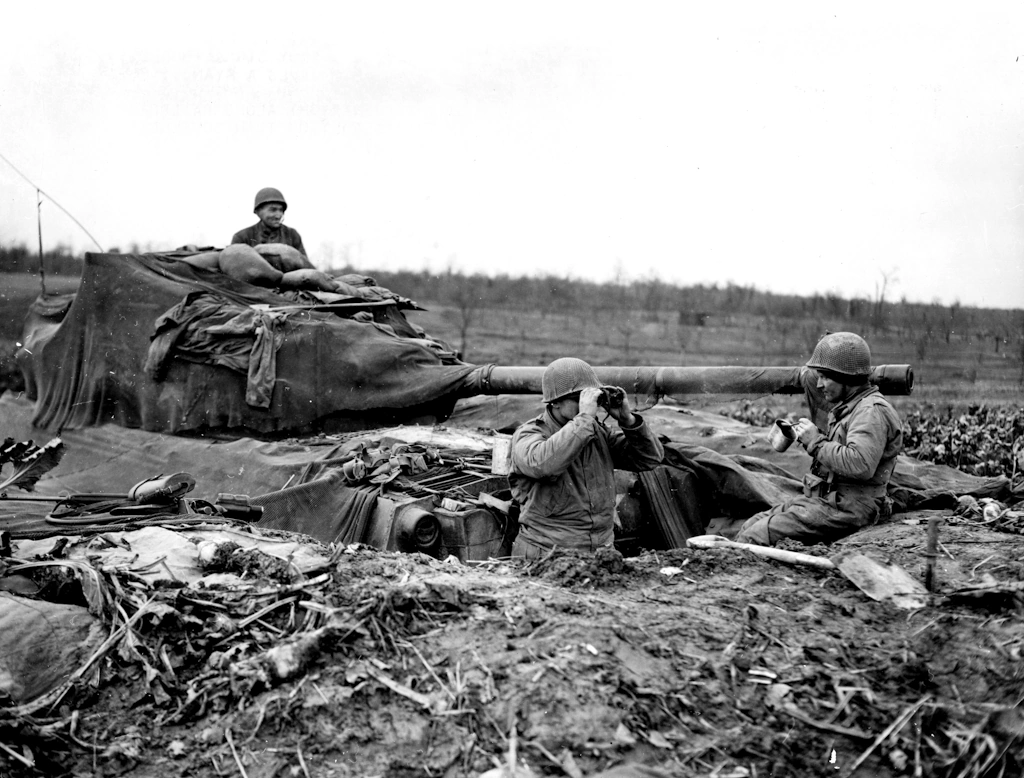
Another incident occurred on the B Troop front when machine gun posts were established at four points along the front line positions. Late one evening one of the outposts heard what sounded like footsteps crunching through the frozen snow. Several gun positions opened up into the darkness with negative results. The troopers decided to wait until daylight to see if they had hit anything. At dawn they heard women screaming and went out to check out what had happened. It was then that they realized that they had shot holes through the villager’s sheets which had been hanging out on a clothes line.
A similar event occurred at the group headquarters in Manderfeld. Related by Richard Johnson at the time was the EXO of Fox Co 18-Cav Recon Sq. German patrols had been active in this area and the signs of the coming winter were evident and the troopers continually worked to improve their positions using camouflage and overhead timbers for protection. The outposts had been connected to Fox Co headquarters by wire and captured German phones. On this particular evening in early December firing erupted from one of the outposts. A fusillade of fire lasting 20 to 30 minutes in duration ensued consisting of machine gun and rifle fire. The outpost had reported in by phone that it was being attacked. Headquarters alerted the other outposts, although all heard the firing that had taken place and everyone was on the alert. The outpost reported that they had killed several of the enemy. None of the positions reported seeing any activity. Following a sleepless night we were anxious for daylight to reveal what the situation was at the outpost. As we investigated cautiously we found the troopers very much alert at their stations. We didn’t find any dead Germans; the only activity that we could find was a small flock of sheep some one hundred meters off the corner of a small pasture.
This being the start of winter the ground was covered with snow. The sheep had left a telltale trail. It was obvious the sheep had charged the outpost, jumped directly over their position. The firing that erupted hadn’t killed one single sheep. In fact, upon examination none of the sheep had even been wounded. Needless to say the troopers of this outpost were the butt of all sorts of jokes. To put it mildly, their fellow troopers carried them high for some time. This proved to be a great cure for the tendency toward being ‘trigger happy’. That gross waste of ammo by the outpost did wonders in settling the nerves of our men. They really wanted a live one in their sights when they pulled the trigger. They realized that ammo was too valuable to use shooting up the landscape.
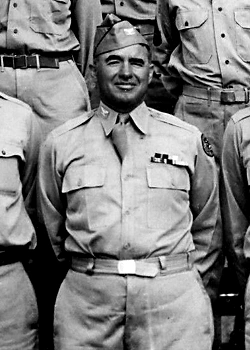 Col Devine accompanied by his French Liaison Officer Lt George H. Gudefin, visited the 106-ID Headquarters located in the town of St Vith immediately after the group became attached to the division. Gudefin states that Devine attempted to draw up a counterattack plan that would tie into the 106-ID’s defensive plans; however he received little cooperation from the staff of the division. Several visits were made to the division prior to December 16. During these meetings Devine suggested plans for a counterattack; however none of them were ever approved by Gen Alan Jones.
Gudefin recalled the strange attitude displayed by Gen Jones. Although the general had met Devine several times, he seemed to have a difficult time in recognizing him as the commander of the cavalry group that had been attached to the division. Devine was almost forced to reintroduce himself each time he met the general. In one instance, Col Devine and some of his staff were called to the division headquarters for a briefing one evening. The cavalry groups plans were discussed and submitted to the divisional staff and were accepted quite silently without much in the way of comments. The next morning, when Devine made another visit to the division Gen Jones burst into a tirade and demanded that Devine should submit his plans in the event of a German attack. It struck Devine and Gudefin as rather odd and were not impressed with the general attitude of the division as a whole.
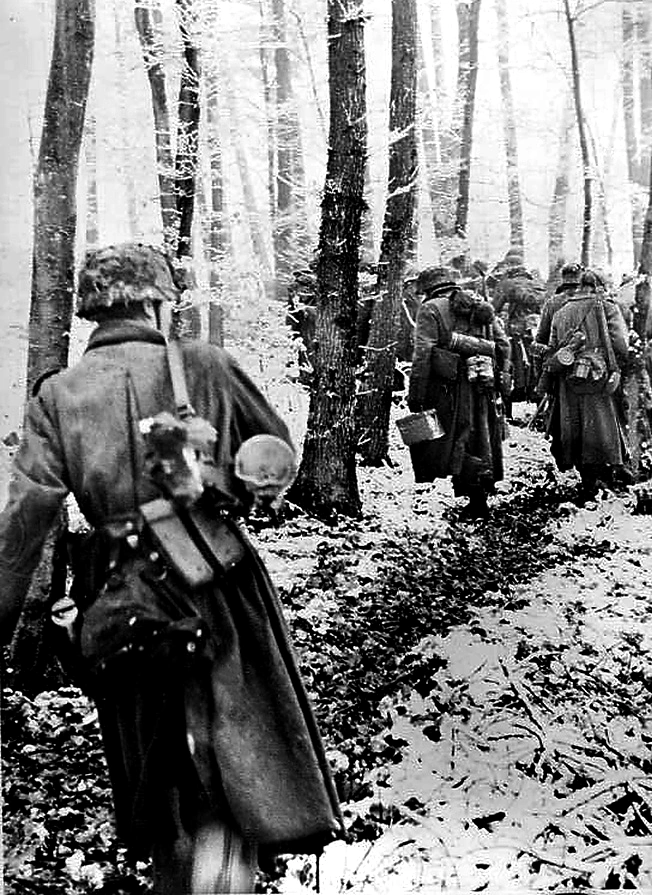 On December 13, the garrison in Roth received five rounds of heavy caliber mortar fire between 1511 and 1618. Artillery support was requested on the suspected German positions. At approximately 0845, officers from the 32-Cav Recon Sq less Fox Co made a route reconnaissance from their headquarters in Vielsalm to Manderfeld. This was carried out to familiarize officers of the travel routes between the two Squadron positions. Towards the end of December 13 at 2325, explosions occurred near the ‘Kings Woods’ positions in front of Weckerath. The cause was a possible grenade or booby trap that had been detonated by a German patrol which was fired on and driven off by elements of the garrison.
During the early morning hours of December 14, the Weckerath garrison heard vehicles traveling north at what they determined was a high rate of speed. Soon after at roughly 0600 an observer heard vehicles possibly moving onto a bivouac area. These vehicles were an estimated two miles distant. Cavalry troopers at Krewinkel captured two Germans during an early morning patrol. Later in the day Gen Middleton, CG VIII Corps arrived at the Manderfeld headquarters at 1245 to meet with Col Devine and his staff and eventually departed at 1350. Middleton was not unconcerned by the current situation in the Ardennes. ‘On the Schnee Eifel I wanted soldiers to know that I was interested in their welfare and that I was aware of their exposed position. I regularly visited various headquarters, occasionally making suggestions about defensive alignments‘ . A Troop at the Roth positions again received a dose of what appeared to be large caliber mortar fire. This occurred between 1600 and 1715 as 28 rounds fell near the positions. The 3rd Platoon of C Troop at ‘Kings Woods’ also received three rounds of the same ordnance. Just after darkness on the same day the 1st Recon Platoon of Able Co, 820-TDB had been repairing and improving their positions and slit trenches. All had been quiet until friendly flare activity revealed a German patrol of approximately eight men. Small fire as well several well placed grenades dispersed the patrol with unknown casualties.
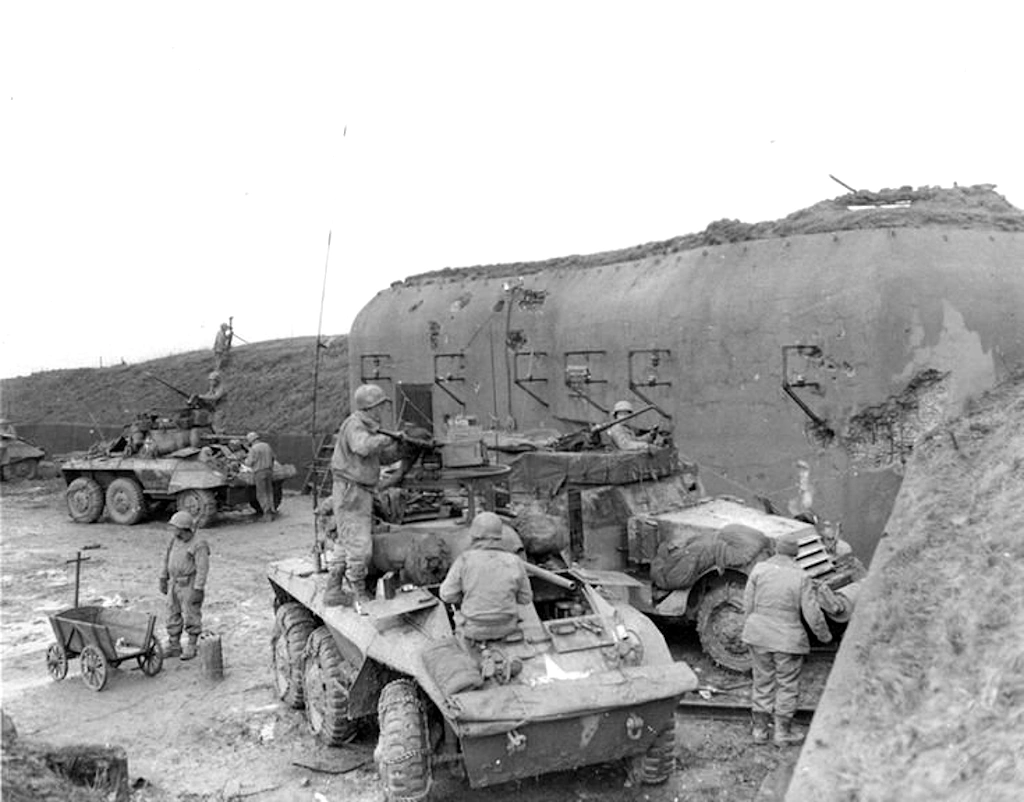

 December 15 saw a drastic decrease in the harassing mortar and artillery fire. At 0437, cavalrymen at Kobscheid detected movement and noises approximately 3000 yards out in front of their positions. A patrol from the Roth garrison picked up a deserter from the 5.Co, 295.VGD. Later on the same day, communications between the 32-Cav Recon Sq at Vielsalm and group headquarters at Manderfeld determined that the 32-Cav Recon Sq would send elements to the vicinity of Auw (Germany) to reconnoiter possible billeting prior to relieving the 18-Cav Recon Sq, which was to occur on or near December 16. Between 2300 and 2400, patrols were dispatched from the 820-TDB as well as C and B Troops which all resulted in negative results. All seemed to be quiet opposite the cavalry’s defensive positions.
According to squadron records and after action reports, on the night of December 15, 1944, 1st platoon, C Troop positioned at the village of Afst was given a patrol mission. The patrol was to be led by T/4 David Herzog, other members of the patrol were Pvt Robert L. Hickle, Pvt Richard H. King, Cpl John R. Banister, Pvt Harold G. Crister, T/4 William I. Barton and Pvt Roderick L. Diem. The eight-man patrol was ordered by the squadron S-2, Capt Gies, to go to a certain house among a small group of buildings shown on a 1/25.000 map as the village of Allmuthen (Germany). Infiltrating patrols of Germans had often held the area and the possession of the village changed hands several times between the Germans and the cavalrymen.
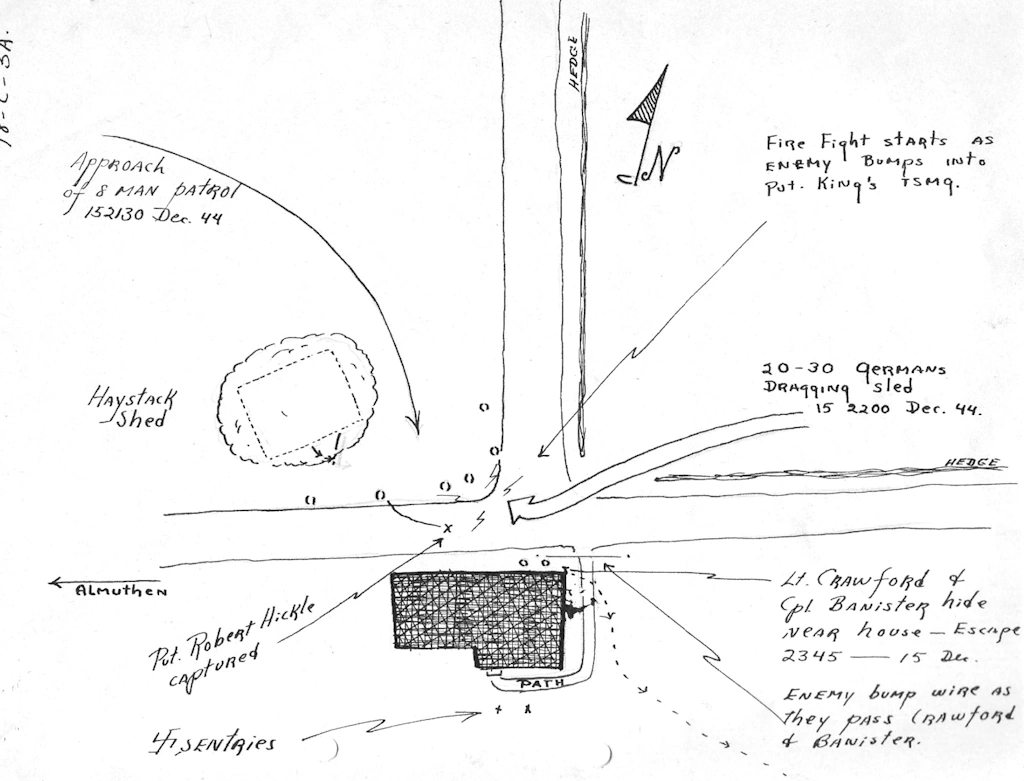 The patrol left Afst at approximately 1830 with the dark night as cover. It had originally been planned to give the patrol only a reconnaissance mission, however late in the afternoon the squadron S-2 designated that it should be an ambush mission and attempt to bring back prisoners. This change in plans persuaded Lt Crawford, the commander of the 1st platoon, to lead the mission himself in place of Herzog. The patrol circled around the village once, to make certain that it was clear of any Germans. Then it moved on to a trail junction where a shed and haystack was opposite a barn and a house. The haystack was built around the shed and had a door that faced the trail. At this intersection the patrol deployed in such a fashion so that it would be able to ambush any Germans that would pass this particular area. Crawford had instructed his men not to fire on any enemy groups that were larger than ten to twelve men, he did not believe that the firepower of the eight man patrol could take care of a larger group. The patrol investigated the haystack and realized that it was empty. Crawford and Banister crossed the road and positioned themselves in the shadow of the barn. They could hear people talking inside and heard a stifled cough; obviously there were Germans inside.
Around 2200 hours, or shortly before, a group was heard approaching from the north. The night was pitch black, making it difficult for Lt Crawford to accurately assess the size of the enemy force. The Germans, dressed in standard combat gear, moved in close formation, talking among themselves as they advanced. The ambush patrol, caught off guard by the sudden appearance of what appeared to be a much larger force, froze in place. Pvt King, Pvt Diem, and T/4 Herzog were positioned in front of a haystack when the Germans halted at the center of the road junction. A few began moving directly toward their location. At that moment, a German soldier unknowingly walked straight into the muzzle of Pvt King’s Thompson submachine gun. King opened fire, and the entire patrol immediately followed, unleashing a barrage into the unsuspecting enemy group. Once the gunfire ceased and silence returned, the patrol began to fall back toward the Afst positions. During the retreat, Lt Crawford and Bannister became separated from the rest. Moving cautiously through the snow which crunched loudly under their boots they made their way east, toward the rear of a nearby house. There, they spotted two German sentries but managed to slip past unnoticed.
Crawford and Bannister reached the Afst garrison safely at approximately 0045 hours on December 16. The rest of the patrol had given them up as ‘missing‘. At this point it was realized that Pvt Hickle had not made it back and had possibly been captured by the Germans, this as well as the encounter with the large enemy force was reported to squadron headquarters by Lt Crawford. It was unusual for this patrol to encounter such a large enemy group; most German patrols consisted of one non-commissioned officer and eight men, as did the cavalry arrangement. This allowed for smaller forces to slip through each other’s lines and gain access to important intelligence information without being detected. The confrontation with this superior enemy force carried more significance than the small ambush patrol was able to comprehend.
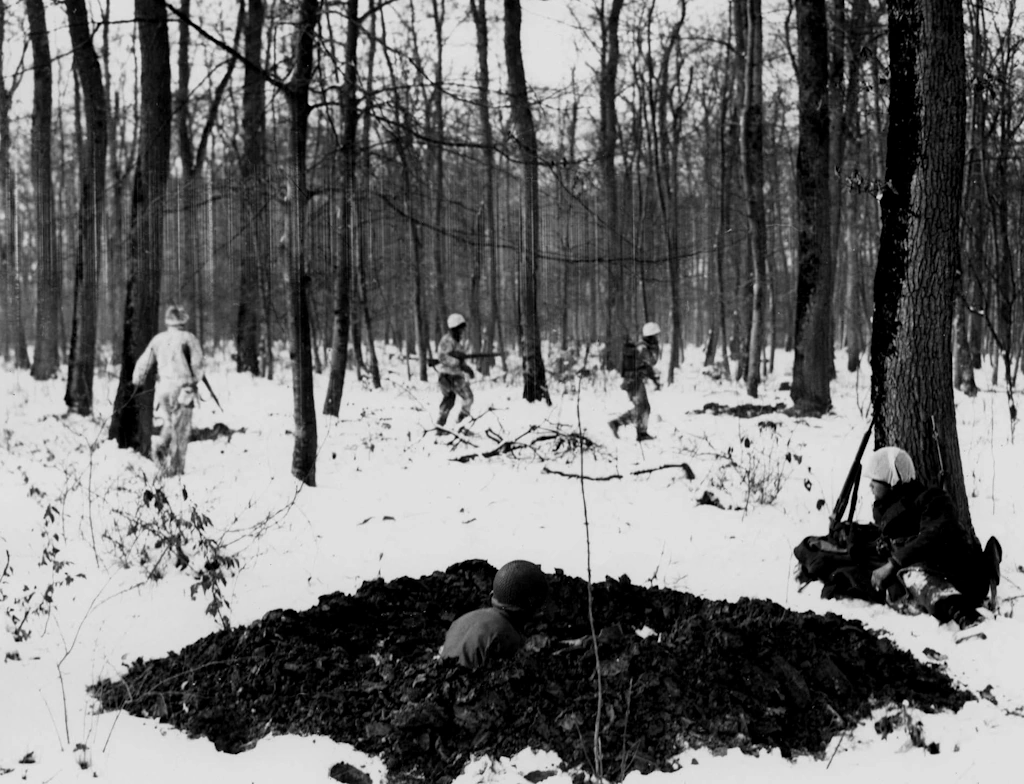
During the night of December 15/16, the garrison at Kobscheid also set up an ambush patrol on the trail that led into the village from the east. The patrol led by Sgt Kenneth Potts; did not come into contact with any enemy patrols nor did they hear a sound. Upon returning they were careful to avoid their own minefields. By December 15, Task Force X was aware that the 18.VGD and the 62.VGD were opposite their positions. An ominous silence from enemy positions enveloped the entire front in the Task Force X sector for two nights prior to the attack. The only real commotion on the past two nights was the detonation of anti-personnel mines by cattle that had wandered through a fence and into the mine fields. The usual flare activity became strangely nonexistent. The flares had been predominately amber, green and white being the most prevalent. The colors usually appeared in various combinations and from many different sectors of the front. Maj James Worthington, S-2 of the 14-CG stated that no real previous warning of enemy troop concentrations in this sector came to him from higher headquarters. However B Troop of the 18-Cav Recon Sq to the south of the main task force had received information from an S-2 of 423-IR (106-ID) that an attack could be expected. This information came from a German deserter.
 During the early morning hours of December 16, 1944, nothing indicated the powerful thrust that was soon to be made against the sector. Artillery fire was very light, flare activity was as usual. At 0513, the first blow was released. After a signal of two red flares and intense barrage of all types of artillery, mortar and rocket fire was opened. The fired barrage struck the forward positions, then rolled in to the positions at Manderfeld. After this heavy preparation, artillery in decreased amounts was received on all positions. At 0600, enemy infantry attacks in strength were made were made against the positions of Troop A and Troop C, but were repulsed by 0730 with heavy casualties to the attacking force. At 0730, after another short artillery preparation, all forward positions were again attacked by wave after wave of German infantry clad in white winter combat suits which were difficult to see against the white background of the snow and the cold fog in the early morning.
 Troop A and Troop C, reported that the German infantry at that position was supported by nine Panzer IV tanks and that our anti-tank positions had been destroyed. Troop A was directed to hold their positions at all costs and that no help other than artillery support could be expected. At 0830, the 3rd Platoon, Fox Co (light tank) was ordered to Weckerath in support of troop C. It was necessary that this platoon fight its way into the Troop C position as it was, by that time, surrounded. The platoon arrived at Weckerath without loss, immediately placed fire on ever approaching lines of white clad Germans, with machine guns, 37-MM Canister and HE shells. By 1000, the enemy had encircled all the Troop A and Troop C positions and had launched a general attack in the direction of Lanzerath and Berterath, that part of Task Force X occupied by Able Co, 820-TDB. This attack was supported by several self-propelled weapons. Part of Fox Co (18-CRS) was then placed on high ground on the east of Manderfeld. Prepared defensive positions at Manderfeld were manned by all available personnel except those in the Medical Detachment.
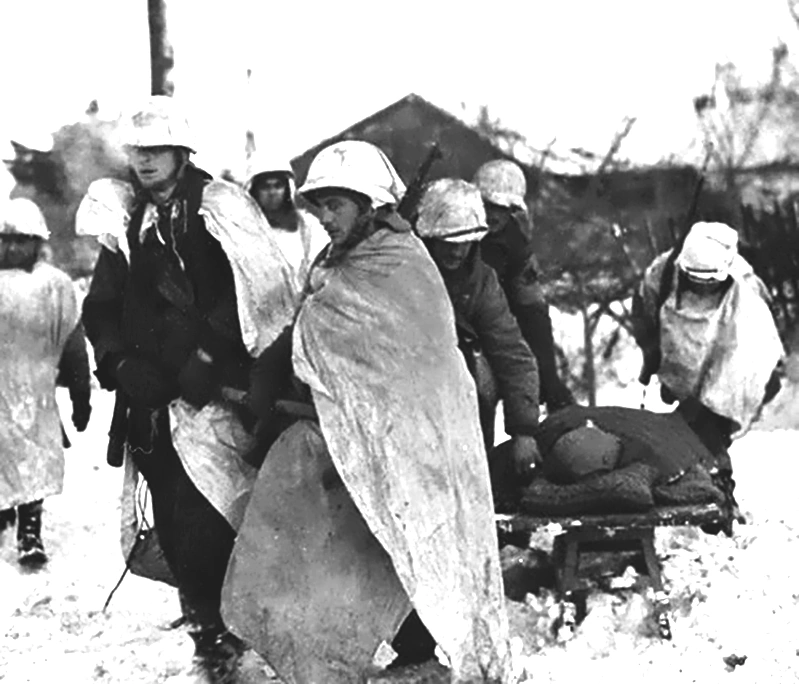
 Reports had been received by 1230 that all forward positions of the Task Force were surrounded. Troops A and Troop C were ordered to withdraw to the high grounds and road net in the vicinity of Manderfeld and Afst and supported by the 3rd Platoon of Fox Co, attacked through the surrounding German infantry and arrived at Manderfeld with only the loss of one M-8 Greyhound Armored Car and a Jeep. Troop A advised that their route of withdrawal to the north, west and south were closed by enemy infantry and armor and that it would be impossible to attack and force a withdrawal. Troop A was then ordered to continue in defense of Roth and Kobscheid as long as possible, then before disengaging, to destroy all their vehicles and equipment, and to withdraw by any possible route.
At 1200, the 32nd Cavalry Recon Squadron, which had been in the Group reserve at Rencheux (Belgium), arrived at Manderfeld, and was employed on the high ground to the northwest and south of the town. At 1530, the 14th Cavalry Group directed that the group prepare to execute a delaying action. The 32-Cav Sq was to cover the withdrawal of the 18-Cav Sq to the line Holzheim – Herresbach and then delay to the west along the Manderfeld-Honsfeld-Schoenberg-St Vith road, and maintain contact with the 18-Cav Sq on their left. By 1700, the 18-Cav Sq had cleared Manderfeld, Troop C maintaining contact with the enemy and covering the rear elements of the squadron; and by 1730, had established defensive positions in the vicinity of Holzheim. The squadron was then ordered by group to withdraw to the second delaying position at Wereth (Belgium). Withdrawal was completed and defensive positions organized by 2200. The days action was highlighted by the splendid conduct of all elements of the squadron. The troop A position in Roth was last heard from at 1630, at which time the troop commander advised that ammunition was low and vehicles and equipment were being destroyed.
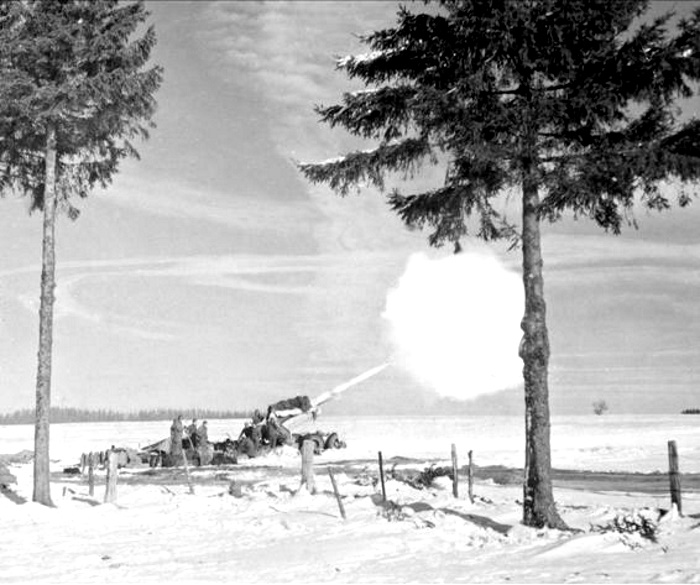

 All positions took a terrific tool of enemy infantry with automatic weapons, canister and high explosive ammunition fired from armored cars. Defensive fires and observed call missions fired by Troop B and the 275-AFAB, were continuous during the entire action and resulted in very heavy losses to the enemy. Estimated enemy casualties were high due to repeated attacks in mass formations against intense fire delivered from our men well-dug in their positions. Casualties of the 18th Cavalry Squadron consisted of two officers, twenty enlisted men wounded, and four officers and 134 enlisted men missing in action. ON the morning of December 17, Squadron positions at Wereth were attacked by enemy armor and infantry.
Successove delaying positions were fought to Born (Belgium), and defensive positions were organized. While in Born elements of the 7th Armored Division were contacted, and it was learned that the 7-AD was moving to relieve the 106-ID, and held St Vith. At 1515, the squadron was directed to break contact and withdraw to Poteau, and establish defensive positions along the high ground in that vicinity. There was very heavy traffic going both directions along the east-west road net Vielsalm – St Vith, and progress of the column was difficult. During the movement to the west, Troop C and Troop B and Fox Co were extracted from the column at Poteaux.
 Due to reports of an enemy column observed moving in on nthe north flank of the 7th Armored Division, the 14th Cavalry Group was ordered to return to Born the morning of December 18, and cover the flank of the division. A task force was organized from the elements of the 18th Squadron and the 32nd Squadron, and departure from Poteaux was made at 0730 on December 18. Upon reaching the high ground between Poteaux and Recht, the leading elements of the task force received heavy anti-tank and small arms fire. The enemy attacked then with tanks and infantry. The task force was forced back on Poteaux where heavy fighting continued through the morning. German wearings American uniforms infiltrated into the town, and one patrol advancing toward our positions in American uniforms was detected and destroyed. By 1030, artillery, self-propelled guns, mortar and automatic weapons were making the group positions untenable. At 1130, orders were received to fall back to Petit-Thier, were elements of the 7th Armored Division were then in positions.
Effective at 1400, December 18, the 14th Cavalry group was attached to the 7th Armored Division and directed to proceed to Rencheux (Belgium) to reorganize the remnants of the group into one effective squadron by 1200, December 19, 1944. The composite squadron was organized, resupplied, received vehicular replacements and was reported ready for action to Gen Robert W. Hasbrouck, Commanding General of the 7th Armored Division.
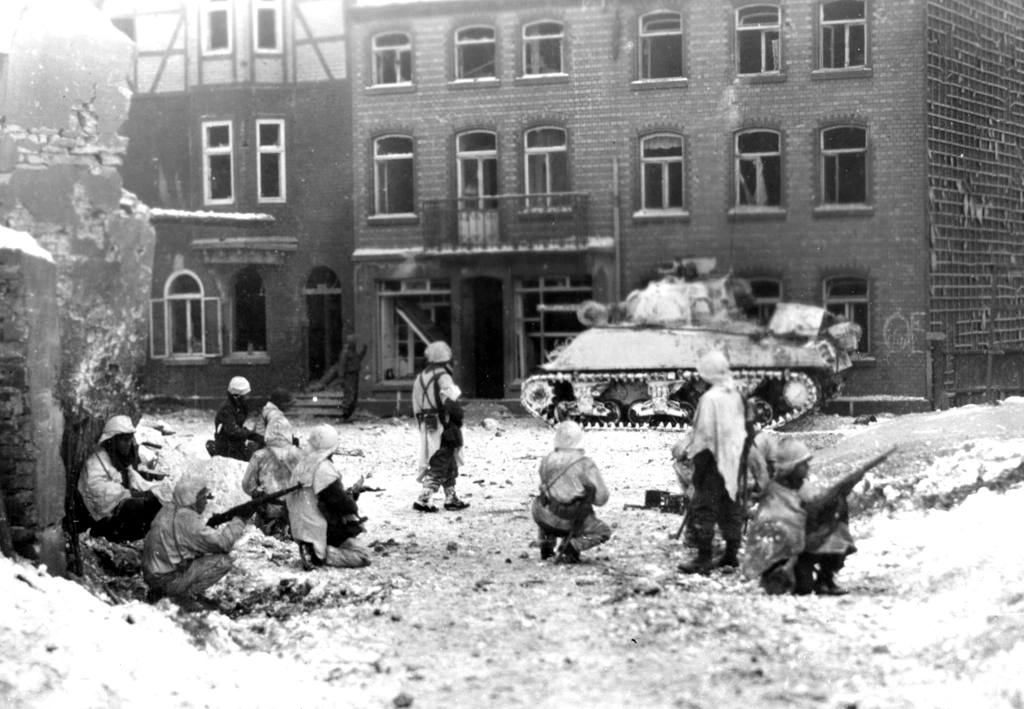
 The composite squadron remained with the 7th Armored Division fighting actions at Beho (Belgium), Salmchateau (Belgium), Bomal (Belgium), Cherain (Belgium), Gouvy (Belgium), Grufflingen (Belgium), Espeler (Belgium), Grandmenil (Belgium), Manhay (Belgium), and many other places until the 7-AD was relieved by the 82nd Airborne Division. ON January 1, 1945, the 14th Cavalry Group reverted to direct control of the US First Army and was directed to proceed to the vicinity of Villers L’Eveque (Belgium), to reorganize, reequip and receive reinforcements. Reorganization was completed on January 27, and a day later, the Squadron closed in the vicinity of Bovigny (Belgium).
 The 14th Cavalry Group was now attached to Gen Matthew B. Ridgway XVIII Corps (Airborne) and the squadrons further attached to Gen James M. Gavin 82nd Airborne Division.
During the drive back to the Siegfried Line, the 18th Cavalry Reconnaissance Squadron advanced though the same sector in which it had withdrawn. On the way back, the squadron saw much of its burned and demolished equipment and it dug its dead out of the snow, but there was a feeling of satisfaction that the squadron had done its part in stopping the last real offensive that the German would ever launch, and that once mighty force was being driving back to its own soil. At the end of the Battle of the Bulge, we ,learned that approximately 21% of Troop A infiltrated through from Roth and Kobscheid, and rejoined the squadron. The balance were killed or captured. Troop BN from their position at Winterspelt, with a regiment of the 106th Infantry Division, destroyed their vehicles and approximately 33% of the troop infiltrated through the lines and rejoined the squadron.
