


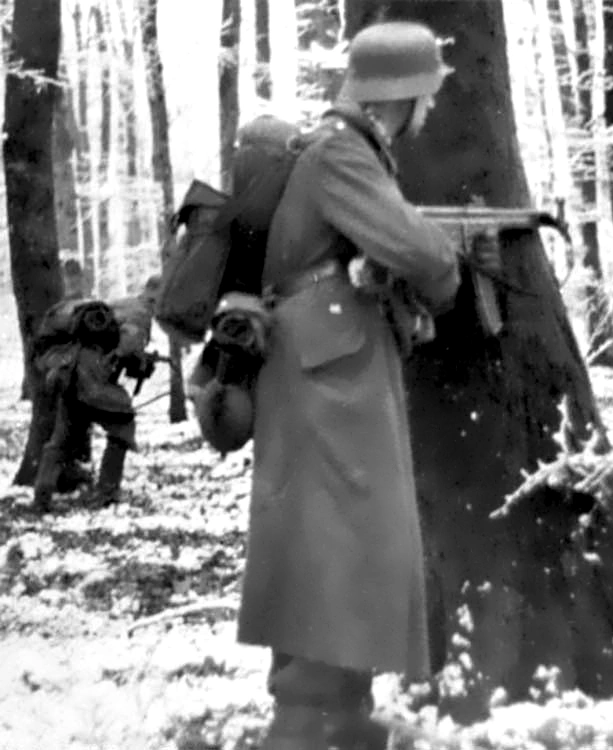
 The cavalrymen had experienced only light opposition from the Germans as they occupied and maintained these positions. Previous to October 22, the Germans had engaged in extensive patrolling, both during the day and at dark. The Germans had sent in frequent combat patrols, particularly on the south flank of the Losheim Gap near Kobscheid to gain knowledge of troop dispositions, capture prisoners and to inflict casualties on the various outposts. The Germans realized that in this sector the Americans were not planning and offensive anytime soon. They could operate patrols through the US lines, just as cavalry forces regularly sent out patrols hoping to net a prisoner or two and find out more about the defense opposite them. Periodic harassing artillery fire struck the garrisons infrequently. The Germans manning the positions opposite the squadron watched closely, and brought down artillery fire whenever the troopers had to expose themselves to maintain or add to the current unit defenses.
Bill Barton, C Troop, 18th Squadron, 1st Platoon; Our defensive positions at Afst were such that infantry advisors came out to us and said that you have to put a machine gun post here, another one there and you have to dig a trench or create a blind so that you can go from one position to another without being seen. We made a dugout, and we put corn stalks in front of it so that the Germans couldn’t see us coming and going. We also mined several of the 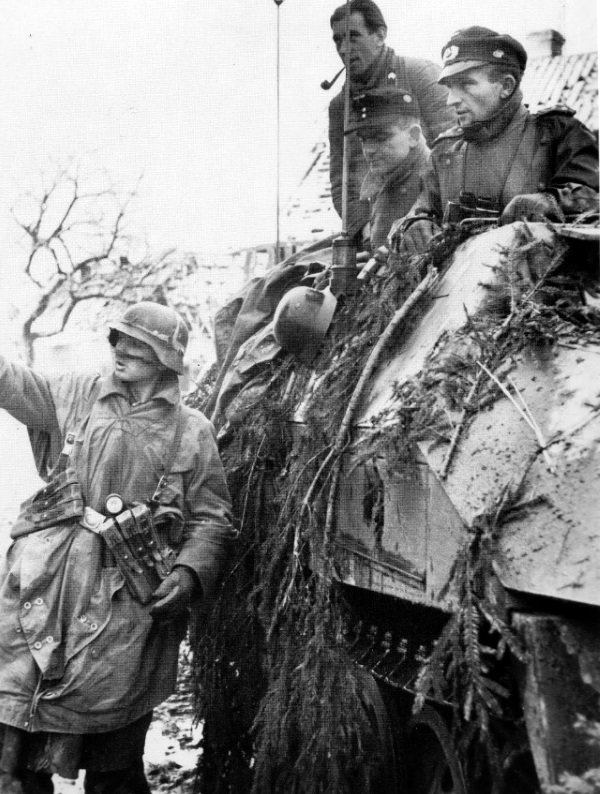 approaches to the village. Minefields, both German and American were known to be in the area; however, neither Task Force X nor the 2nd Infantry Division could chart their locations. On December 14, Col Devine requested corps for engineers and additional mines. The garrison had three armored cars which were never left out in the open; they were either hidden in buildings or sheds. There was not a single armored car exposed.
While preparing defensive positions in the village Bob Penrose stated that Afst was a little farm community composed of several houses, barns and outbuildings. Their first orders were to dig in, this meant digging trenches and machine gun positions emanating from the farmhouse command post in three directions facing the German pillboxes across the valley. The first trench and pit that were dug soon filled with about a foot or two of water. A Sergeant suggested that the troopers dig a drain to release the trapped water. Six cavalrymen stood around grumbling and considering the order that they had just been given, all the while staring into the sloppy mess. One of the men said I wonder where that sniper is that usually takes pot shots at us every day? There happened to be a weathered outhouse a couple of yards away from the machine gun pit. Penrose and the other men sure made a beautiful target staring into that water filled gun emplacement. Suddenly as if on cue, sniper bullets began zinging around the immediate area. Two men leaped into the outhouse and the rest jumped into that water clogged pit without a second thought. Apparently enjoying the situation, the sniper fired several more rounds into the outhouse. The two men in outhouse came out on their bellies and splashed back into the water filled trench in record time. That German sniper was either a lousy shot or the men of C Troop were his entertainment for the day.
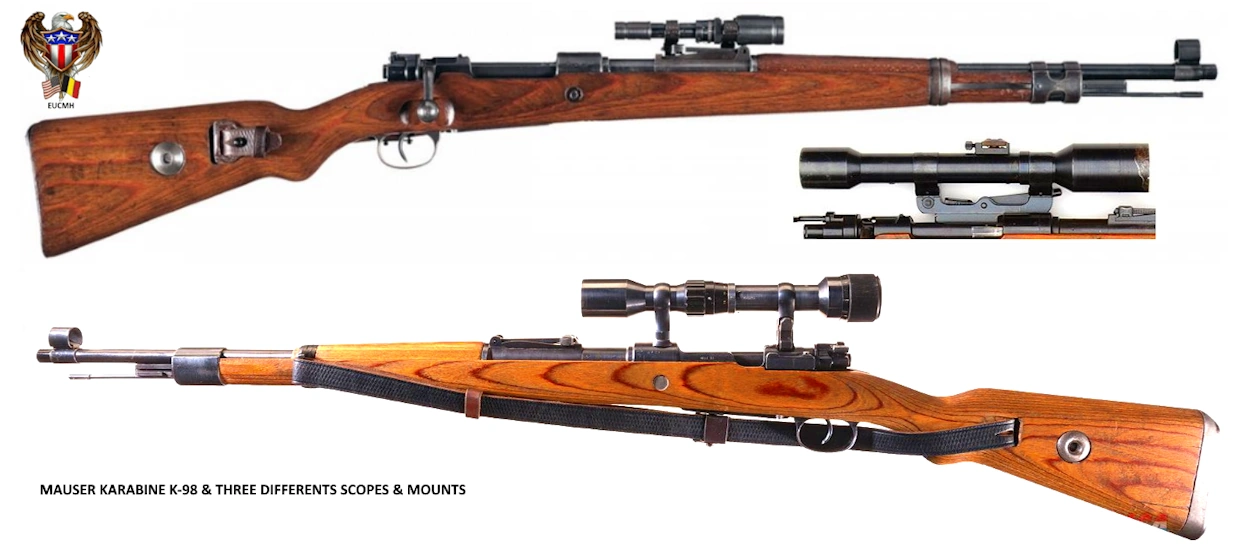
The Karabiner 98k (K-98) was the standard German service rifle during WWII, and it was also adapted into a sniper rifle platform with several different optics, depending on availability, sniper preference, and tactical needs. K-98 Rifle used a Caliber 7.92×57mm Mauser, was a bolt-action rifle, had 5-round internal box, stripper clip-fed, a barrel length of 600-MM (23.6 in) and an effective range of 500-M for the standard rifle, 800-M with the iron sights. Not every K-98 was a sniper rifle. These were specially selected rifles with above-average accuracy (typically sub-MOA in test firing). Once selected, they’d be fitted with scopes and mounts. By 1944, several types were in use.
| Scope Name | Magnification | Notes |
|---|---|---|
| ZF39 (Zielvier) | 4× | Most common. Zeiss or Hensoldt optics. Simple crosshairs or post. |
| ZF41 | 1.5× | Short eye relief, not well-liked. Often for marksmen, not true snipers. |
| ZF4 (Gw ZF4) | 4× | Originally for G43 rifles, sometimes used on K98k late war. |
| Dialytan 4× | 4× | Hensoldt scope, good optical clarity. |
| AJACK 4× | 4× | Swedish-made scope, used widely. |
| Kahles Helios ZF | 4× | Austrian optics, limited numbers. |
Mount Types Several types of scope mounting systems were used during WWII, High Turret Mounts which allowed for use of iron sights and easy bolt operation; typical for ZF39 scopes; Low Turret Mounts for lower profile, less prone to damage, but made bolt manipulation trickier; Side Rail Mounts an offset scope mount (common on late-war builds); rugged but affected cheek weld and the Swept-back Mounts which could be found on some ZF41 installations but were less reliable.
Performances With an effective range of 600–800 meters for a trained sniper. The only limitation was the bolt-action slow rate of fire; optics vulnerable to shock/damage but advantages were accuracy, rugged design, powerful cartridge. To be noted is the fact that by 1944, sniper rifles were increasingly important for defense, especially in urban or forested terrain (e.g., Normandy, Eastern Front, and later Ardennes). German snipers, armed with scoped K98ks, caused significant Allied casualties, particularly in hedgerow and city fighting.
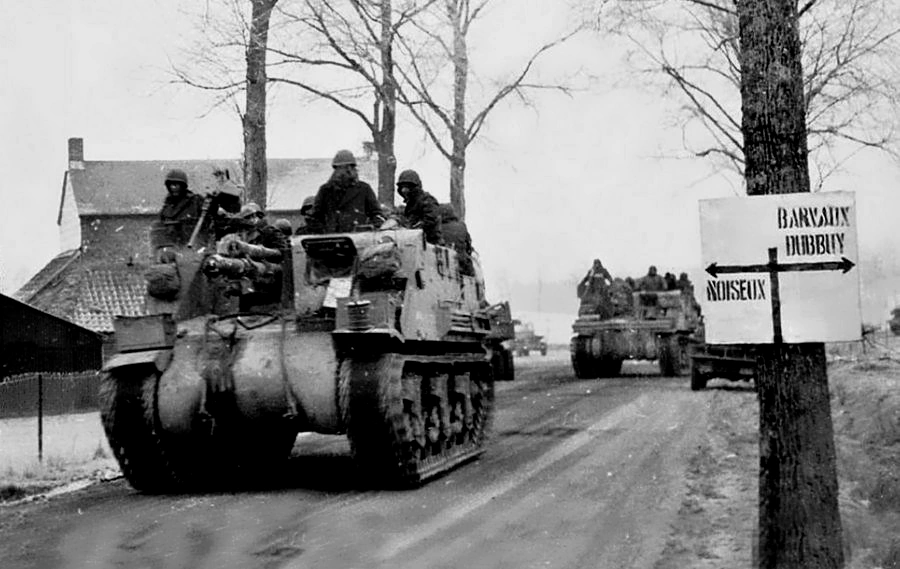 The 18th Cavalry Reconnaissance Squadron had immediate fire support from the 275th Armored Field Artillery Battalion under the command of Lt Col Roy Udell Clay along with the 634th Anti Aircraft Artillery Battalion. This unit was attached to Task Force X on October 24, and was equipped with 18 M-7 105-MM self-propelled howitzers mounted on the hull of a Sherman tank. They took up positions in the vicinity of Medendorf (Belgium), approximately two and one half miles west of Manderfeld. In these positions everything was plotted and surveyed and certain checkpoints were zeroed in. This meant that the battalion only had to name a checkpoint to the fire control officer and he knew the exact elevation and deflection to give the guns. These spots had been pre-fired on and hit through the survey map coordinates.
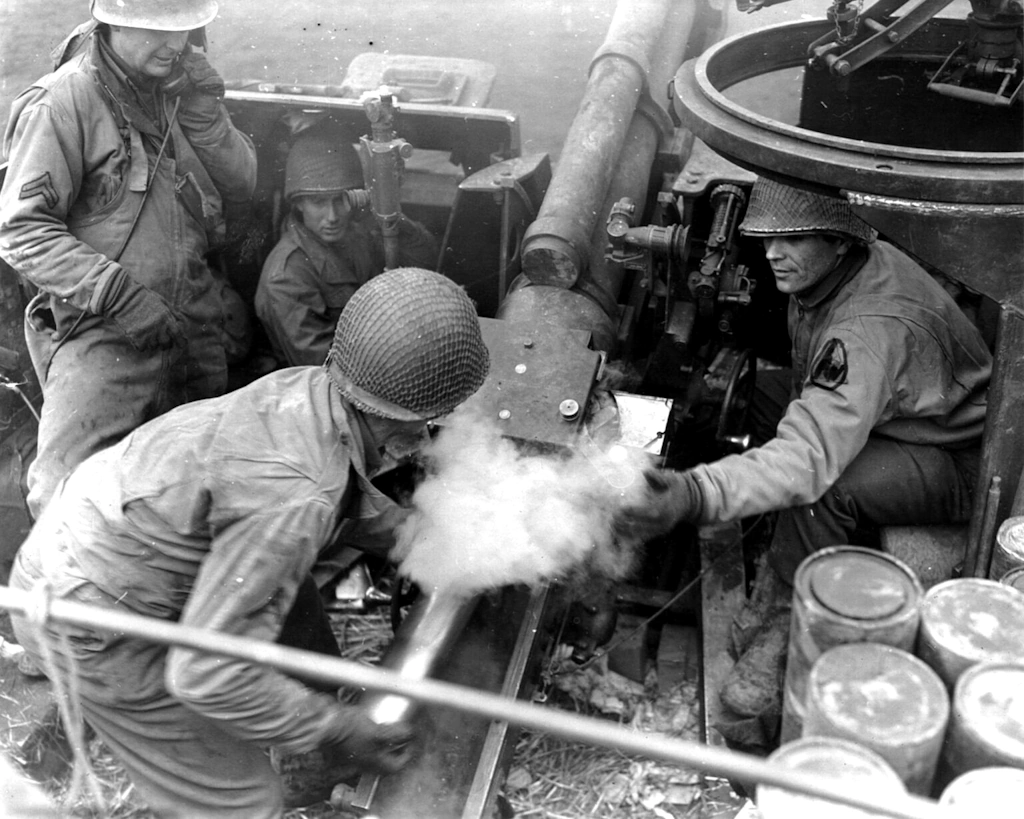 Checkpoints were plotted in a 360 degree circle. If necessary the guns could be completely turned around and still hit targets. The 105-MM gun had an effective range of five miles and could provide a high rate of fire. Each forward observer could either fire his battery or the entire battalion on any target of his choosing and as many times as he deemed necessary if he obtained the clearance to do so. From north to south the battalion manned observation posts at Lanzerath, Merlscheid, Afst, Krewinkel, Roth and Kobscheid. Upon arrival the 275-AFAB experienced a serious ammunition shortage which resulted in limited firing missions. They were given a daily allocation which they were not permitted to exceed. The ammunition leads were piled next to their respective howitzers. During the month that the squadron was in these positions, more than two hundred artillery call preparations had been registered. Forward observation observers from the 275-AFAB were present in every cavalry position.
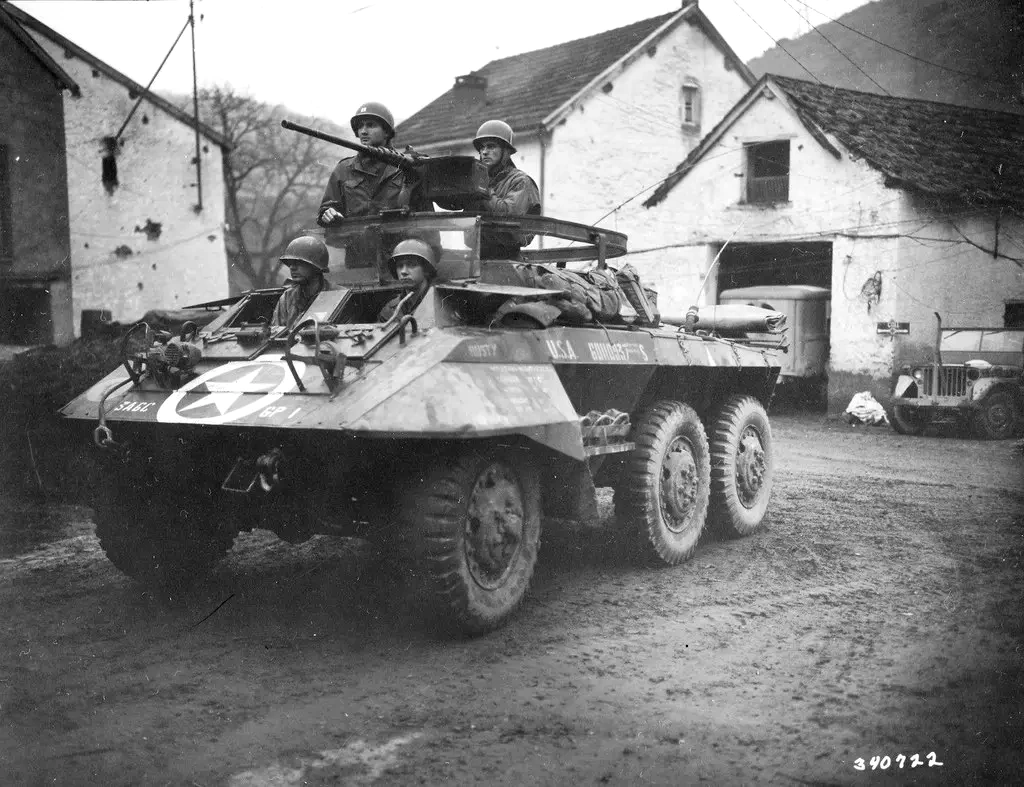 During this period E Troop was placed under operational control of the 275-AFAB as the troop was equipped with M-8 75-MM howitzers. In essence the battalion had an additional firing battery. However artillery observers were not the only ones to adjust and register artillery fire missions. Platoon leaders, platoon sergeants and at least four other members of each platoon had the chance to adjust artillery registrations, as well as squadron officers and all personal from E Troop and Fox Company, the squadron’s assault gun troop and light tank company. Both of these units were positioned just outside of Manderfeld, atop the Manderfeld Ridge as a mobile reserve. The 331st Medical Battalion had established a headquarters within the town as well. The unit had two collecting stations with one ambulance each at Manderfeld and at Winterscheid along with B Troop. The village is located atop a ridge, spreading into a draw coming eastward from the heights into the Our Valley. In addition to the 275-AFAB, eight battalions of corps artillery were in position to reinforce the 2nd Infantry Division artillery when called upon. This represented the bulk of the VIII Corps artillery.
The squadron commander Lt Col William F. Damon, now in command of Task Force X had encouraged this artillery coordination among the members of his command. Targets of opportunity were possible forming up places for a German attack, defensive locations and basically harassing fire missions. According to daily reports generated for the month of November and early December, the artillery of E Troop and the 275-AFAB was mainly used against German gun positions, to disperse patrols; any enemy activity that could definitely be located was usually fired upon. Additional defensive fires were prepared by supporting and organic artillery to cover dead spaces and all barrages were registered in for each position. Observation posts spotting enemy working parties and occupied or unoccupied outposts were also brought under artillery fire, making them unfit for further occupation. Additional targets were assigned organic and supporting howitzers for harassing and interdictive fire during the hours of daylight and darkness.
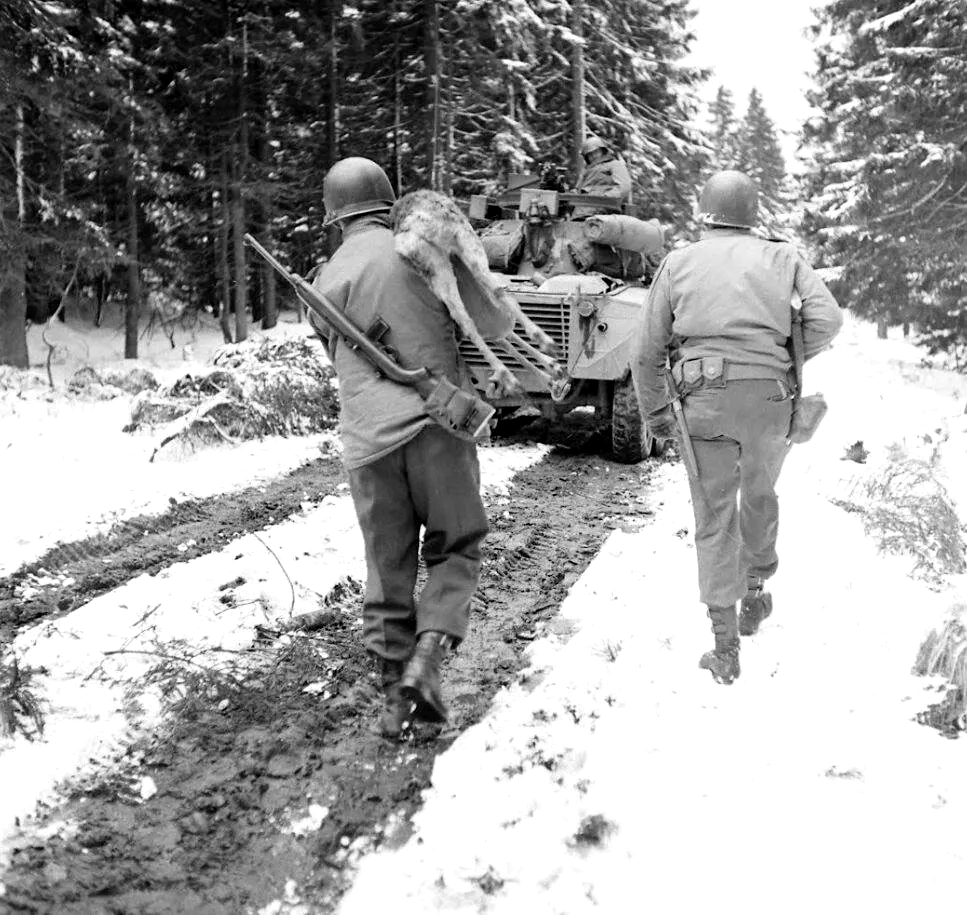
Task Force X daily and nightly patrols was effective throughout the sector during the period October 22-31 and dominated the area between friendly and enemy lines. The effectiveness of the enemy patrol activity was significantly reduced during this period. On a typical day five or six patrols would be sent out by the squadron to keep a check on enemy activity. The patrols varied in size and were given reconnaissance, counter reconnaissance and ambush missions in the hopes to capture prisoners for interrogation. These patrols were dispatched daily from Troop and Company sectors. Missions were to determine the location of German outposts and observation posts between the cavalry positions and the Siegfried Line, to attack any enemy patrols encountered, to secure prisoners and to set ambushes. Two German patrols were attacked during this time period and casualties were inflicted on both patrols. One German officer and one enlisted man were known to have been killed or seriously wounded. On October 22, a German patrol engaged units in positions in Kobscheid. The patrol was driven off and by artillery and small arms fire. On October 31, a US patrol of three men captured a German outpost consisting of a Panzerschreck (bazooka) manned by two riflemen.
Five night ambush patrols were set during this period of October, however the Germans were not active on these nights and the ambush patrols failed to make any contact. Each of the squadron’s garrisons had been divided into ten to fifteen outpost stations, manned with double personnel during the hours of darkness. The guards were shifted on a two hour on and four hour off basis. ‘Battle Stations’ had been assigned to every man in the garrisons, even platoon cooks had an assigned station; positions were established for each individual weapon in the event of an attack. For the period of October 22-31, the 18th Cavalry Reconnaissance Squadron took 10 prisoners of different ethnic backgrounds, received 225 rounds of various calibers within the garrisoned villages and suffered 12 casualties and 2 men killed in action. Germans prisoners were captured from the following units: 2.Company 18.Luftwafe-Battalion, 35.Traning-Replacement-Battalion; 9.Company 13.Fallschirmjäger-Regiment; 2.Company 454.Replacement-Battalion and another one from the 1.Company 454.Replacement-Battalion. Reports from various PW’s indicated considerable damage to forward enemy positions and a number of casualties.
On October 28, Troop D, 89th Cavalry Reconnaissance Squadron (Mecz) was attached to Task Force X.
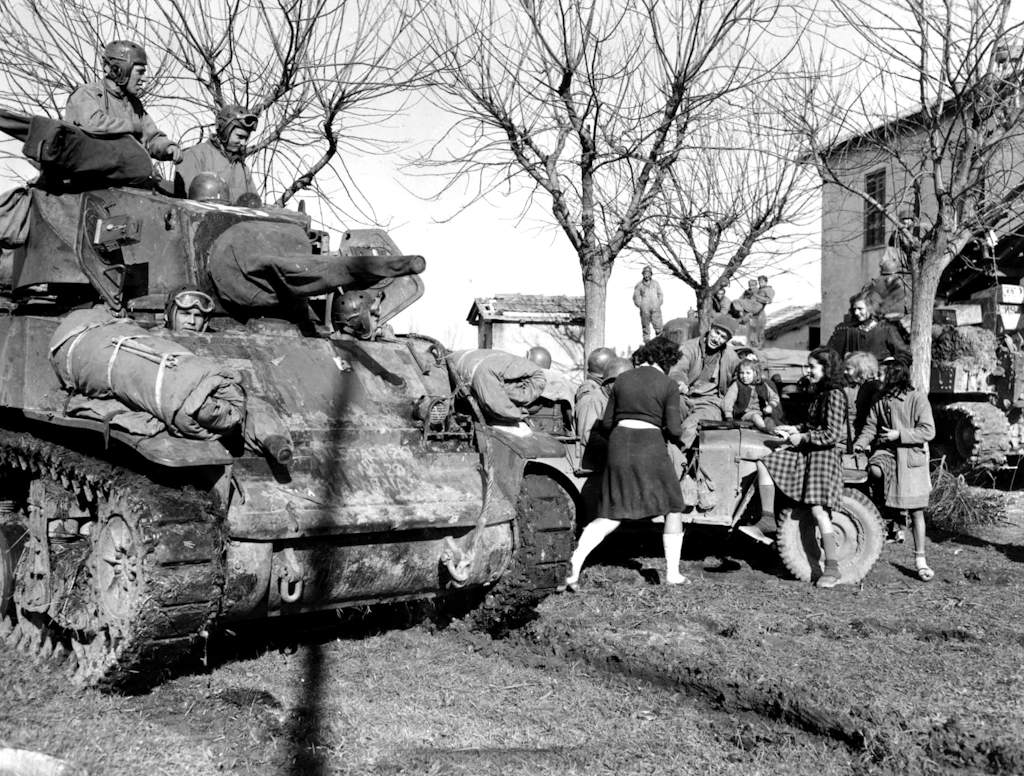
During the month of November, German patrol activity increased considerably, aggressive patrolling and combat patrols probing at night for areas of resistance and open or dead spots of which there were many aside from the cavalry troopers taking up positions in the afore mentioned villages there was virtually nothing from keeping the Germans from patrolling the areas in between these outposts during the night. Paul Morasch, B Troop 18-Cav Recon Sq at Winterscheid (Germany), ‘there were so many holes in that front line that at night the Germans could get a whole army through it. The 18-Cav Recon had a front that only a regiment should have been able to cover’. We would send 20 information (intelligence) back to Corps that something was happening up here. All night long you could hear equipment moving in down there in the woods. And they would say ‘that’s a static front, nothings going to happen‘. German combat patrols would observe what type of resistance the troopers offered. This information was passed on and enemy patrols would regularly move through these blind or unattended areas and make their way behind the strong points in a further attempt to secure additional information about the strength and depth of the defenses. Enemy patrols would often be heard moving about at night and would be taken under small arms and artillery fire by the cavalry troopers. German patrols or work parties sighted at daylight were fired on as well by E Troop with supporting fire from the 275-AFAB.
During the early morning hours of November 1, a German patrol of undetermined strength was active near the village of Roth (Germany). After firing automatic weapons into the front line defenses, the cavalry troopers returned fire and the patrol was driven off. Again at approximately 1945, a small German patrol was observed approaching Roth. An ambush patrol was dispatched and succeeded in capturing two members from the German patrol, both from the 295.Infantry-Regiment, 18.Volksgrenadier-Division. On the same day, a morning reconnaissance patrol dispatched from Able Co, 612-TDB (Towed), surprised a three man German patrol nine hundred yards west of the village of Losheim (Germany). After a sharp firefight, one German was killed and the other two escaped into the woods. At 2010, a German patrol was observed in the vicinity of E Troop, 18-Cav Recon Sq, positioned just to the southwest of Manderfeld. The patrol was eventually driven off with hand grenades. German patrols were active again on November 2 and 3, in the vicinity of Roth, Krewinkel and King’s Woods; these same positions also received some attention from 88-MM anti-tank guns.
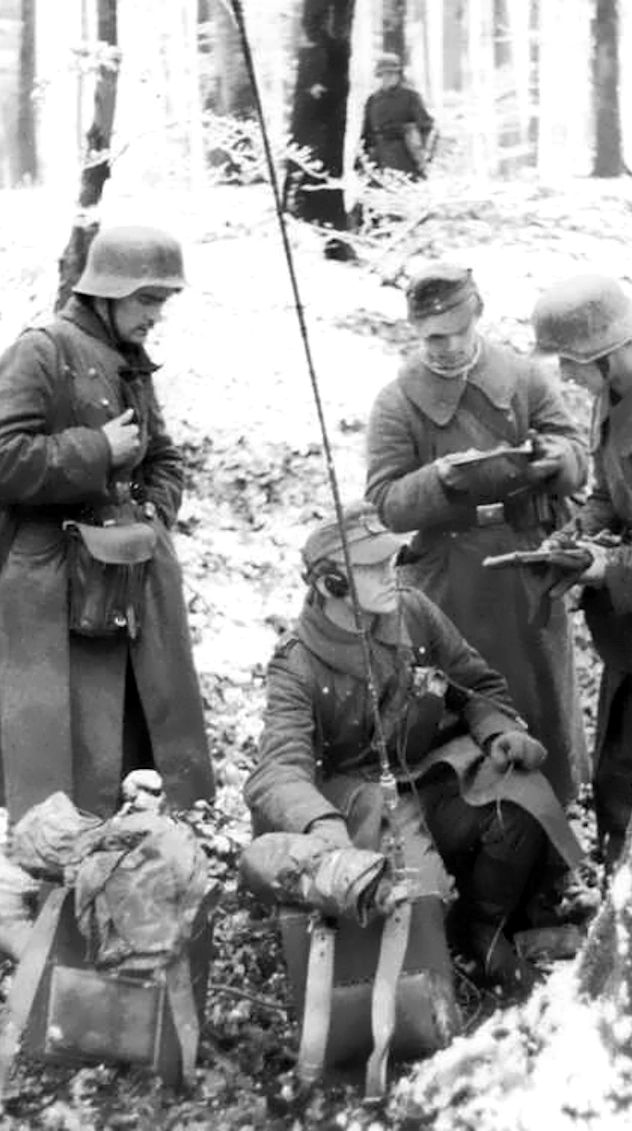 On November 5, a morning reconnaissance patrol was deployed from Able Co, 612-TDB located a German machine gun position and a working party of approximately ten men. E Troop fired on these targets with supporting fire coming from the 275-AFAB. During the early part of the evening, enemy patrols were active in the vicinity of Manderfeld, Headquarters of Task Force X. The patrols were eventually engaged and withdrew under small arms fire from cavalry security patrols in and around Manderfeld. Elements of A Troop garrisoned at the village of Roth lost three men from a direct hit on a position by German artillery. Intermittent artillery fire was also received in the garrison village of Afst, just north of Krewinkel. On November 7, the Germans attempted another foray into the Manderfeld area. At 2140, a small patrol attempted to infiltrate the Fox Co area and was driven off by a combination of grenades and small arms fire.
As the month of November wore on, this typical scenario played out time and again, day and night patrols by both sides, harassing and interdiction fire and the probing of US and German lines to capture prisoners and obtain intelligence information. On November 14, the distinct sounds of motors and vehicles were heard in various areas along the cavalry front. Also encountered during the hours of darkness was the use of flares by the Germans. During the month the use of flares peaked between the November 17 and November 23 and tapered off by the end of month. Along with the sounds of motor vehicles and flares was the nightly increase of German work parties and patrols, which were fired on by a combination of E Troop howitzers, the dug in M-7’s of the 275-AFAB and occasionally organic artillery support when available. Also during the closing weeks of November were reports from troopers opposite the Schnee Eifel of tracked vehicles and occasionally headlights off in the distance. During the hours of darkness, there was little visual contact with the Germans, the hills and valleys of the Schnee Eifel provided a natural barrier, keeping the concerned cavalry troopers only guessing as to what was taking place beyond those hills.
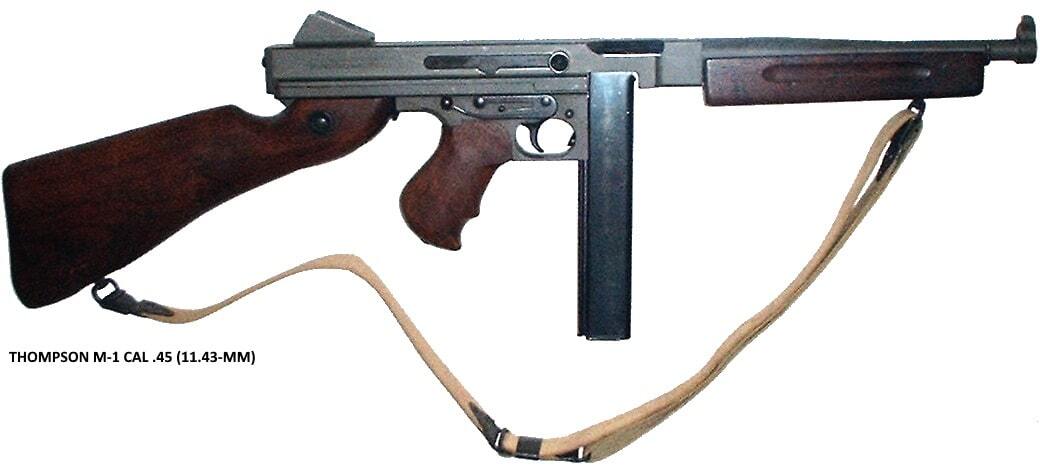
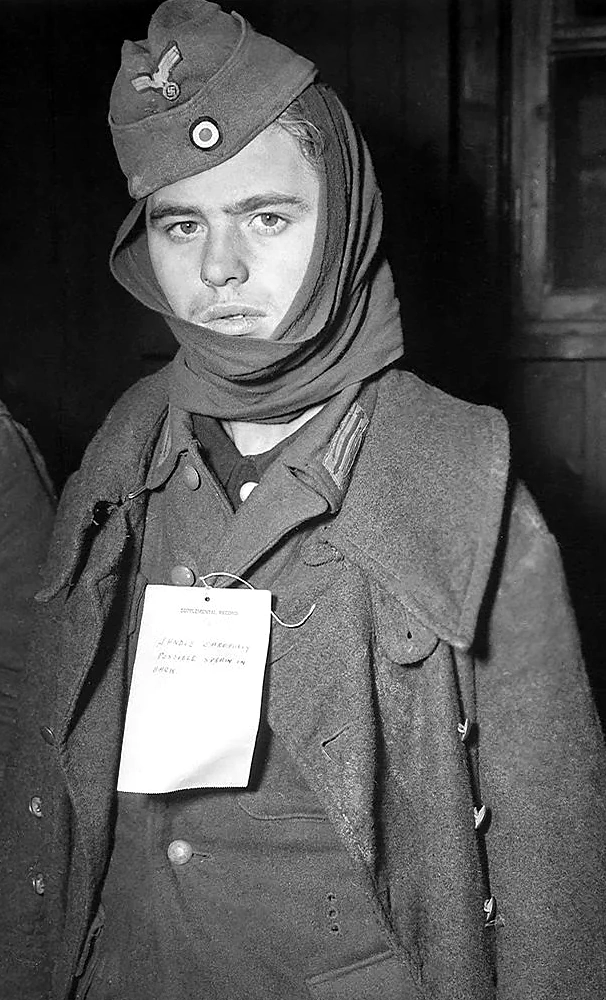 During the month of November there was a definite increase in German artillery along the Task Force X front. Approximately nine hundred rounds of various caliber of artillery were recorded to have landed in the sector. Also present was the constant sound of V-1 and V-2 rockets, which passed over the sector generally heading in a northwestern direction, however two rockets did crash and explode in Manderfeld without injury to any of the troops. Four civilians were injured and some livestock was killed as well as two houses completely destroyed. A mixed bag of prisoners had been collected up to this point, a total of fourteen German soldiers, 1 German civilian from the Koln (Germany) police force and three-escaped Russian POW’s (German) were captured. As a result of enemy captured and patrolling, the following German units were identified: 454.Replacement-Battalion, 295.Infantry-Regiment, 18.Volksgrenadier-Division, HQ Co. 1.Battalion, 989.Infantry-Regiment, 277.Volksgrenadier-Division and Penal Co, 1.SS-Panzer-Division.
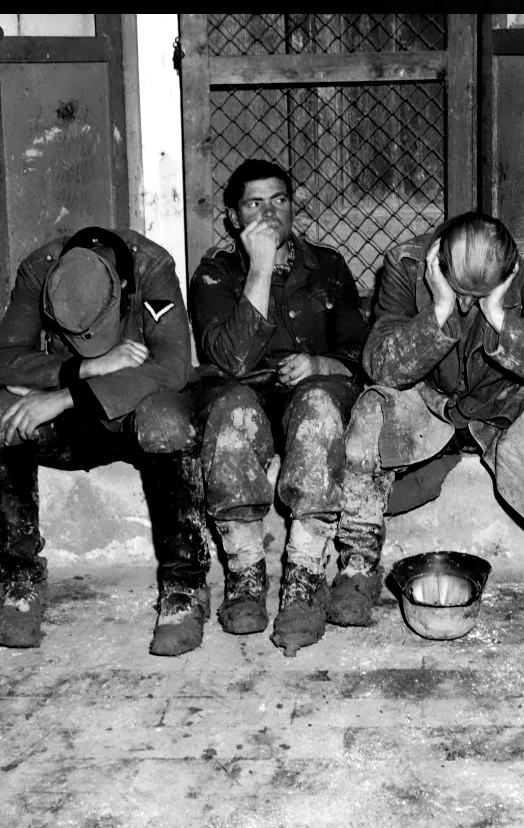
POW’s were interrogated and eventually transferred up to VIII Corps. Many of the prisoners related such information as a build up of troops and equipment beyond the Schnee Eifel. However, a common attitude among interrogating officers and intelligence personnel was that the prisoners would basically give any information that they thought would be helpful to their captors, the more valuable the knowledge would be, the better their treatment would be. So intelligence staff sections came to the conclusion that prisoners were just telling their American captors what they wanted to hear, not what was actually taking place.

 The word from both VIII Corps and First Army was two-fold, first many of the sounds that the troops were hearing was phonograph recordings, the Germans were just trying to give the US troops along the front a case of the ‘jitters’. Also many of the reports were coming from the newly arrived 106-ID, green troops not used to combat or being so close to the enemy. Corps also informed the division that the Germans were attempting to ‘simulate’ a massing of forces. It was a fact that during certain periods of the war the Germans did employ such a ruse. VIII Corps felt that these troops were just a bit
 nervous, after they became acclimated to front line conditions and gained more experience; these reports would probably decline in frequency. Secondly, G-2 staffs felt that what was also taking place was that various German units were moving out of the line and being replaced by other units, the vehicular noise would subside when these unit exchanges were complete. Records from the 106-ID indicate that the sounds of motor vehicles and shouting were perceived to be only intense patrol activity by the Germans. Nevertheless, a state of complacency and false security did exist in the higher echelons of the 106-ID. During this period much of it reflected the attitude of VIII Corps.
Upon examination of reports submitted by the 18-Cav Recon Sq for the month of November 1944, under the category of ‘Results of Operations’ it states that ‘as a result of aggressive patrol activity by units of Task Force X, the area between our lines and those of the enemy was dominated by us and the enemy was denied access to our rear areas for purposes of observation posts during daylight‘. After Action Reports also state that ‘all attempts of the enemy to establish forward observation posts and outposts were discouraged and positions were destroyed by our artillery, mortar and small arms fire. The small enemy patrols that managed to come into our positions at night were forced to withdraw without gaining any information as to all our strength and dispositions and without inflicting casualties‘. However, this was not entirely true; in several instances enemy patrols were able to move through the cavalry positions, which were widely scattered, undetected and were able to obtain information on the positions, defenses and outposts.
 During this period Task Force X patrols obtained intelligence information that indicated that the Germans had been engaged in further strengthening of certain parts of the Siegfried Line, constructing temporary fortifications and obstacles and the reorganizing of forces. Through prisoner interrogations and interviews, the quality of the troops occupying these positions had been determined to be questionable. Nonetheless it was also determined that such low quality troops would be able to perform with a fair degree of success in their mission to hold the current positions in the event of an attack. It was also revealed that the expansion of company fronts of the 294.Volksgrenadier-Regiment and the 295.Volksgrenadier-Regiment has resulted in a withdrawal of strong points in the vicinity of Losheim and a reduction of patrol activity. Observations also indicated that the battalions of these two regiments are employing their full strength on the line and are no longer capable of retaining a counter-attack force in their battalion reserve. The increase in artillery employment by the Germans and the areas in which he was able to cover led squadron S-2 officers to believe that mobile or self-propelled artillery was being utilized in their rear areas, and were moving them around frequently, especially in the areas of Losheim, Scheid (Germany) and Hallschlag (Germany). Organic artillery of the 18.Volksgrenadier-Division was known to be in the vicinity, however these units had not been located in front of Task Force X. Known locations discovered on November 24, were approximately five miles south of the right flank of Task Force X. Counter-battery fire resulted in practically complete termination of the fire, which had been harassing the south section of the task force. Visual reconnaissance during the day and patrols during the night did not indicate that the Germans were supporting their troops in this sector with any armor, at least not near their Main Line of Resistance (MLR). S-2 section also established that 26 unidentified units of the 18.Volksgrenadier-Divisions and 294.Infantry-Regiment were replacing existing units of the 989.Infantry-Regiment of the 277.Infantry-Division.