
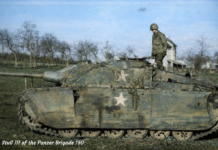


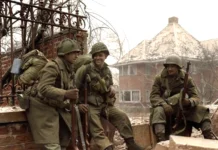
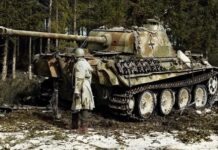
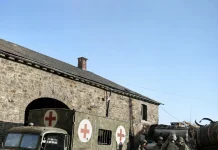
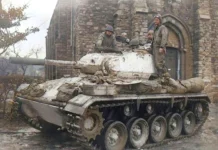
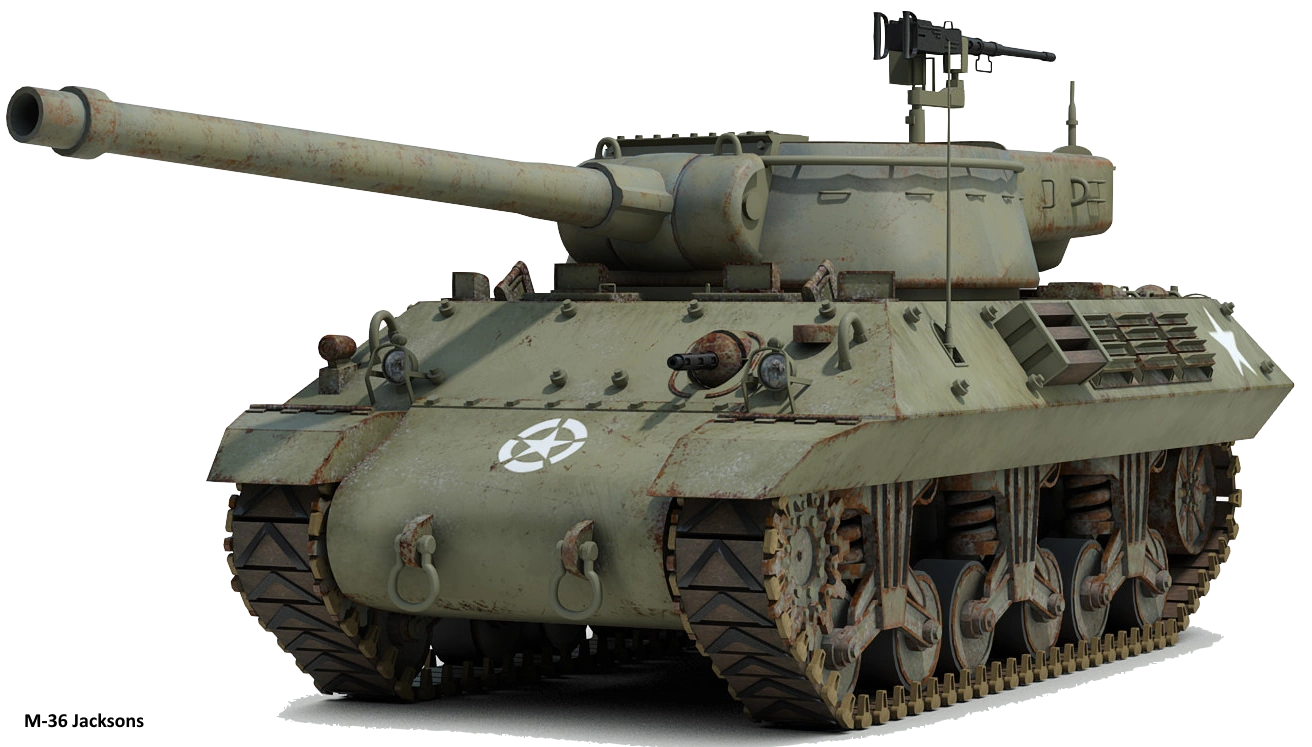
(Above – Doc Snafu) The M-36 Jackson, also known as the M-36 Tank Destroyer or M-36 Slugger, was one of the most powerful tank destroyers used by the US during World War II. Designed 90-MM Gun Motor Carriage M-36, the Jackson (not officially used by the US military at the time was mounted with a 90-MM M-3 gun – capable of piercing heavy German armor like the Mark V Panther and even Mark VI-1 Tiger and Mark VI-2 King Tiger. One .50 cal Browning machine gun on the turret added a little more fire power. With a crew of 5, commander, gunner, loader, driver, assistant driver, the M-36 was able to travel at 26 mph (42 km/h).
Built to address the limitations of the earlier M-10 Tank Destroyer, which had a 76-MM gun that struggled against heavy German tanks, the M36’s 90-MM gun could destroy German Panthers, Tigers, and even the King Tiger at reasonable ranges. This tank, saw action for the first time in late 1944, during the Battle of the Bulge. The open turret made the crew vulnerable to artillery and small arms but gave better visibility and gun operation.

 As the month of December began, the conditions of the front line positions resembled the previous two months. Patrols sent out from Task Force X during the first week of December returned without any prisoners and enemy patrolling was greatly reduced during this period. By December 4, German artillery had ceased almost entirely, picking up again towards the end of the week. One German patrol was detected at outpost positions near Kobscheid and was engaged and driven off by small arms fire from A Troop. The Kobscheid sector was known as a ‘hot spot’ when elements of the squadron took over the area, German patrols had been strong and numerous. On December 5, a German patrol was active in the vicinity of Berterath, a booby trap was set off south east of positions in the town. This patrol withdrew immediately after small arms fire was brought down on it by elements of the 612-TDB. During this period German flare activity increased during the period from December 1 through December 7, with no less than fifty-six flares during the first week of December. Flare activity would ebb and flow, for example on December 1, one flare during the night was observed, when on December 6, seventeen various types of flares were observed.

 On December 7, German patrol activity increased during the hours of darkness. Patrol activity was encountered at Krewinkel and Berterath and a German patrol entering from the east side of Manderfeld wounded a sentry guarding the command post of Task Force X and set fire to one of the halftracks. After a short period of time, the patrol was driven off with small arms fire and grenades. By the second week of December, outposts were reporting the sounds of tracked vehicles during the hours of darkness. Meanwhile the 32nd Cavalry Reconnaissance Squadron, the 18th’s sister squadron, received orders from VIII Corps on December 10, that the unit was relieved from attachment to the 28th Infantry Division and was to be immediately attached back to the 14th Cavalry Group. The 32-Cav Recon Sq started to arrive at
 Vielsalm (Belgium) during the evening of December 10, were it was billeted in the Belgian Ratz Military Barracks. Many of its officers had reconnoitered forward positions and telephone wire had been laid at several points. There had been no specific plans for the employment of the 32-Cav Recon Sq at this time. Col Devine and his staff had worked out an independent defensive plan providing specific routes of withdrawal and lines of defense. The plans were completed on the night of December 15; however they had not been distributed. It had been Devine’s intention to coordinate these plans with the 106-ID as soon as they replaced the 2-ID.
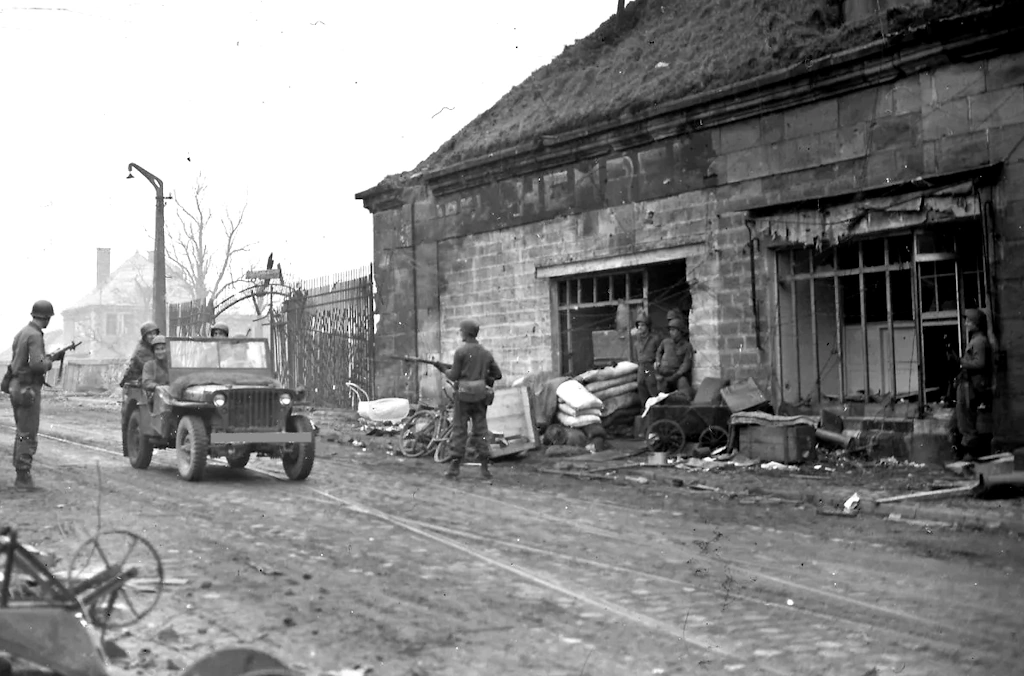
On December 11, at 1800, the 106-ID replaced the 2-ID. At that time, Task Force X was relieved of the attachment to the 2-ID and assigned to the 106-ID. At the same time Able Co, 820-TDB (Towed) under the command of Capt Stanton H. Nash, relieved elements of Able Co, 612-TDB, and were also attached to existing outposts of the cavalry to bolster its defenses. Baker and Charlie Cos were attached to the 106-ID Artillery. A Co, 820-TDB (Towed) moved to Merlscheid (Belgium) for the 1st Platoon, Lanzerath (Belgium) for the 2nd Platoon with the 2nd Recon Platoon and Berterath (Belgium) for the 3rd Platoon.
 The two reconnaissance platoons were attached from the battalion to Able Co, but the first was in turn attached to the garrison located at Krewinkel. The company was attached with elements to the 18-Cav Recon sq as of 2400 on December 11, 1944. Thirteen men of the 1st Platoon with two 3” guns and under the command of Sgt Joe Fiscus were attached to A Troop at Roth (Germany). The company command post was located in Manderfeld. At this point the 820-TDV spent December 12-14 improving gun positions and getting oriented to the conditions of the current situation. Orders handed down from VIII Corps to the 106-ID described the adjustment of forces in the Schnee Eifel as follows: elements of the 820-TDB to relieve corresponding elements of the 612-TDB less Able Co and the 1st and 2nd Reconnaissance Platoons, attached to division artillery. The 424-IR (106-ID) with the 106-Recon Troop attached, prepared to relieve the 23-IR (2-ID) in assigned sector on
  December 12. The 23-IR continued defense of sector. The 14-Cav Group consisting of the 18-Cav Recon Sq less B Troop, and the 32-Cav Recon Sq with Able Co and the 1st and 2nd Recon Platoons of the 820-TDB attached, maintained defense of sector formerly held by Task Force X. Task Force X, formerly commanded by the CO of the 18-Cav recon Sq. The 32-Cav Recon Sq was in the Group reserve at Vielsalm.
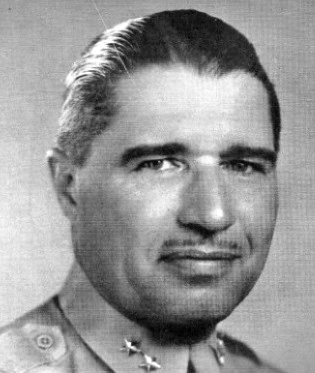
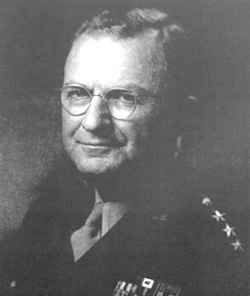 The CG of the 106-ID, Gen Alan W. Jones, assumed responsibility of the sector held by the 106-ID at 1900, December 11. The Division with elements of the 2-ID in contact maintained defensive positions and patrolled the front and flanks. From December 12 to December 15, the 106-ID staff reconnoitered the area and attended a conference with Gen Troy H. Middleton, CG VIII Corps. Discussions were held on detailed recommendations for a more adequate defense of the assigned area. It was also made known that although an extensive communications net had been prepared by the 2-ID, with wire to almost every squad and outpost had been left to the 106-ID. Unfortunately unlike the 2-ID the 106-ID had only a few sound powered telephones. Final plans were never agreed upon however Gen Jones did request to make adjustments to his initial deployment.
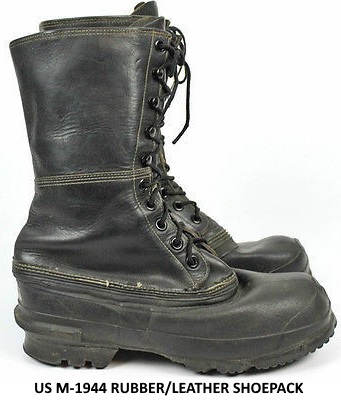 By the summer of 1944 the War Department had stripped the 106-ID for replacements. By August the division had lost more than 60 percent of its enlisted strength to the replacement pool. The losses had been among the division’s best people, over 7000 of its 13.000 officers and men. These trained men were lost after its major unit training. When the division was deployed to Europe, its new troops had very little unit level training. After experiencing a 207 mile truck convoy through France and bivouacking in two man tents for a week in the pouring rain the troops did not even have time to dry out before moving into the line to replace the 2-ID ‘man for man’ and ‘gun for gun’. The transition took two days to accomplish. Because of this the division went into the line with troops that did not have the time to develop a sense of unity. On the German side of the Schnee Eifel the unit was a perfect division to attack. It had two regiments on a front across the Schnee Eifel down to just above Hontheim and swept back to Bleialf. Its third regiment held a five mile front across the Winterspelt-Winterscheid gap which leads from the southeast towards St Vith which is located approximately 12 miles to the west of the Schnee Eifel. To make matters worse; by December 15, a number of trench foot cases had already been reported. Particularly within the 422-ID which had been the last regiment to be issued with overshoes.
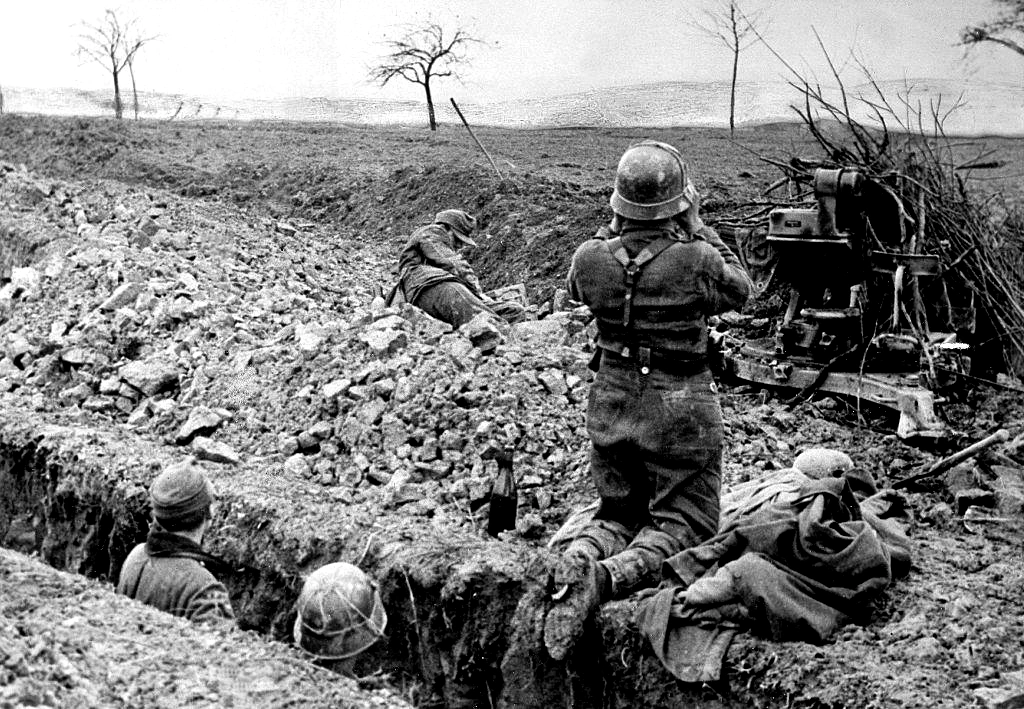
 Anecdote (Doc Snafu): In the deep forests of the Ardennes, between Eupen and St Vith, December 1944 unfolded with a brutal ferocity that few could have imagined. The quiet that had settled over this stretch of land was shattered in an instant as Hitler launched his desperate final offensive that would come to be known as the Battle of the Bulge. For the American soldiers dug into the northern shoulder, life was reduced to the raw basics of survival. Frozen earth refused to yield even to entrenching tools. Foxholes were chipped into the frostbitten ground, barely deep enough to offer shelter from the relentless German artillery. The snow came down in heavy sheets, muting the sounds of war until a shell would break the silence with sudden, thunderous violence. When the enemy’s 88-MM shells bursted above the treetops, they did more than scatter deadly shrapnel—they triggered a second wave of destruction. Tree bursts sent wooden splinters slicing through the air like daggers, and the concussive force would send avalanches of snow crashing down onto already cold, wet, and exhausted men. Foxholes quickly became white tombs, burying GIs under layers of snow that soaked through their clothing and sapped their will. The roads, few and narrow, were quickly churned into impassable ribbons of ice and mud. Jeeps and half-tracks spun their wheels helplessly or slid off into ditches. Medics struggled to reach the wounded. Men suffered in silence with frozen fingers, soaked boots, and thin rations. Many had been rushed in with summer gear, still wearing their standard-issue wool uniforms, which were no match for the biting wind that sliced through the trees like knives.
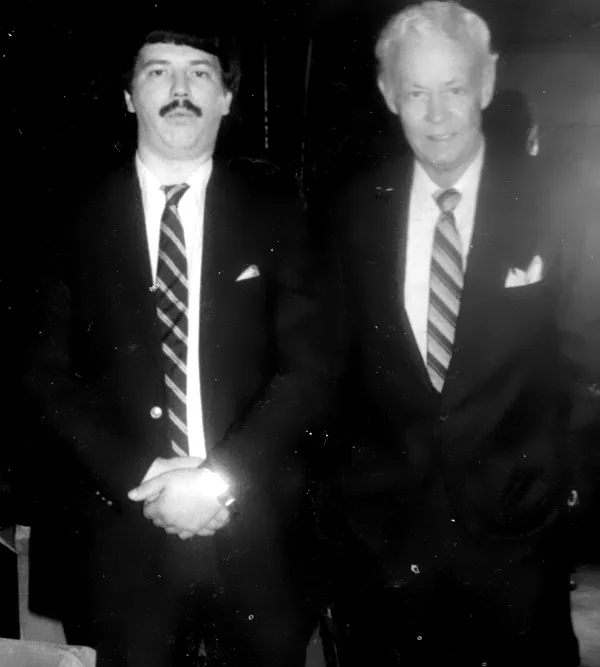
More than three decades after the guns fell silent in the Ardennes, I found myself in a quiet corner of Belgium Dolhain-Limbourg, to be exact. It was the late 1980s, and my daughters had taken an interest in horseback riding. I brought them to a local riding school nestled near the edge of town, where the air still carried the scent of hay and saddle leather. The horses moved with a calm rhythm, and the sound of children’s laughter filled the space with life. While the girls circled the paddock, I struck up a conversation with the elderly man who ran the place. He was gentle, well-spoken, with weathered hands and a quiet dignity. His name was Monsieur Derberg. We chatted idly at first—about horses, the town, the children—but as often happens in Belgium, the conversation eventually drifted to the war. He grew thoughtful, his eyes narrowing slightly as memory took hold. Then, with a mix of humility and pride, he shared a story that had stayed with him all those years.
During the war, he began, my wife was a couturière—a seamstress. She did small jobs for neighbors, repairs, hems… nothing extraordinary. But in December 1944, something happened I’ll never forget.
He told me how one bitterly cold day, a US Army GMC truck rolled to a stop right in front of their home. Two soldiers climbed out, uniforms dusted with frost, and asked if his wife could do a job—urgently—for the American Army. He called her out, and she spoke with the men briefly. Then, with a nod, she agreed. Moments later, the rear doors of the truck swung open, and half a dozen soldiers jumped down, their boots crunching the frozen ground. They began unloading piles upon piles of US Army wool blankets.
And not just that truck, Derberg said, his voice rising slightly with emotion. Within minutes, a convoy of GMCs pulled in and parked all around our street—all loaded with blankets. Our little house became a hub of emergency logistics.
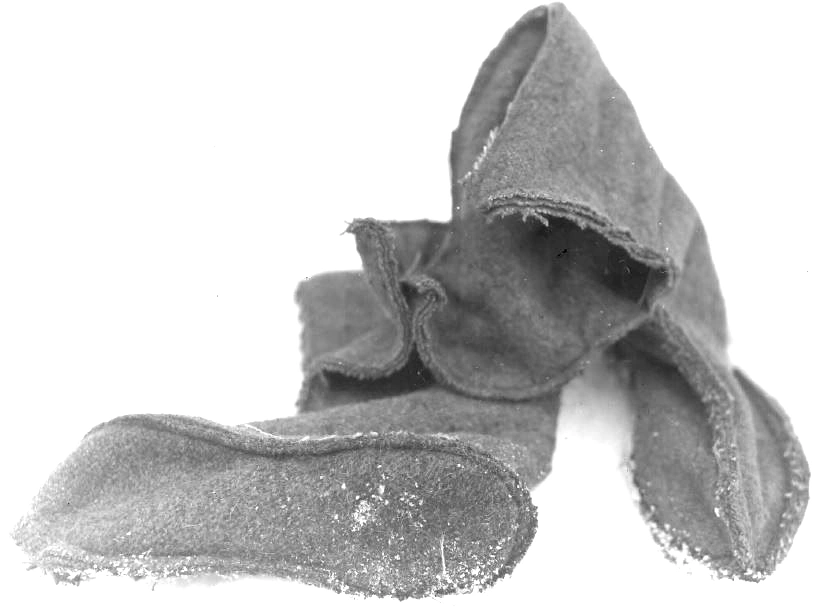
The job? Simple in concept, vital in execution: sew three standard-issue wool blankets together to create a single, thicker covering—something that might offer just a little more protection from the brutal cold in the Ardennes. His wife set to work immediately, hands flying over the heavy fabric while soldiers moved in shifts—unloading, carrying, and reloading the finished bundles. No one stopped to rest. As soon as a batch was completed, the first truck would rumble back toward the front, another taking its place.
This went on for hours and days, he said. We didn’t talk much. Everyone knew this wasn’t just a sewing job. This was life or death for those boys freezing in the foxholes.
The next day, the American Army returned—not with more blankets, but with a sign of deeper trust. Two large, industrial-grade sewing machines were unloaded and wheeled into the Deberg home. These were not the delicate machines of a tailor’s shop; they were military-issue, built for speed, endurance, and heavy fabric. The message was clear: the job had grown, and the Army was now counting on the people of Dolhain. Madame Deberg—practical, determined, and now fully committed called friends, neighbors, relatives. Within hours, women from all around the area had arrived, coats dusted with snow, hands already rough from the cold, eyes full of resolve. The living room became a workshop. The dining table vanished beneath folded fabric. Needles clicked. Threads snapped. The rhythm of sewing machines echoed like distant drums of a different kind of battle. For nearly three weeks, the effort went on. Ten, sometimes fifteen hours a day, the women worked in shifts, binding together layer after layer of coarse wool—blankets meant to shield cold, frightened boys in the forests of the Ardennes. This wasn’t for money or recognition. It was for the men who had come to free them, for the boys sleeping in snow, for the sounds of artillery that still rumbled just beyond the hills.
Mr. Deberg paused when he spoke of those days, his eyes misting slightly. Then, with the gentle reverence of a man sharing a sacred relic, he went inside and returned holding a large, ornate certificate, bearing the seal of SHAEF—Supreme Headquarters Allied Expeditionary Force. The paper was aged, its corners soft with time, but the name was unmistakable:
Dwight D. Eisenhower
General of the Army, Supreme Commander, Allied Expeditionary Force
Beside it, he showed me a letter—a personal thank-you from Gen Eisenhower himself, recognizing the contribution of Madame Deberg and the women who stood by her. Somewhere, he said, there had also been a medal, though it had long since disappeared. But it doesn’t matter, he added with a smile. We did what we had to do. There was no monument to those women. No parade. Just quiet pride—and warmth sent into the frozen front line, stitched by the hands of Belgian civilians, fighting in their own way for freedom. He looked at me, voice steady, and said:
We were a small country. But we did not stay quiet. Brave Little Belgium, they used to call us. I think, just maybe, we earned it.
 Approximately one-week prior the German offensive, an incident took place involving a Polish soldier who had escaped from the German Lines; he was picked up by the 2/422-IR (106-ID). The POW gave extensive information on German tank units that were concentrated in the area to the east of the 106-ID. The Pole described the attack that was to come and about the infiltration tactics which the Germans were planning. He had acknowledged that the attack would begin on December 17. When this information reached Capt H. H. McKee (106-ID), he called Col Robert T. Stout and passed on this detailed intelligence. In addition to the information on the impending counterattack given by the Pole, Col Matthews, EXO 422-IR, said that there were also reports of German motor activity, which took place on the night of December 14. During that evening the sounds of many motors could be heard. These reports were not kindly received and Col Descheneaux (CO 422-IR) criticized one battalion S-2 for reporting the movement of what he called ‘German convoys‘ when he could only be certain that he heard motors running. The division response to the receipt of this intelligence information was that Corps had informed the division that the Germans might play phonograph records to simulate the massing of troops and equipment.
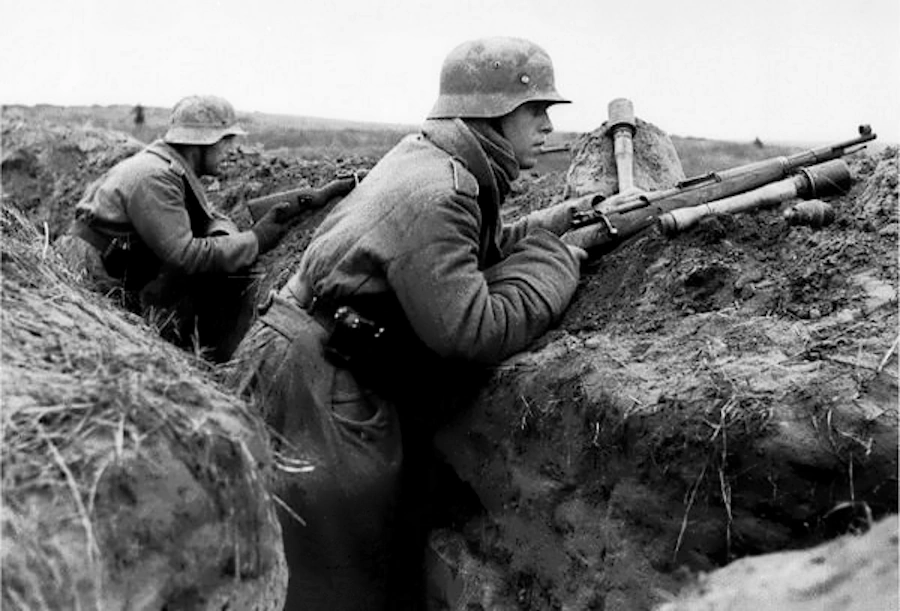 On December 12, the 14th Cavalry Group under the command of Col Mark A. Devine assumed command of Task Force X along with the 18-Cav Recon Sq, minus its B Troop, which was located approximately four miles to the south in Winterscheid attached to the 423-IR (106-ID). Devine commanding the 14th Cavalry Group had two squadrons, his mission was screening the entire five mile of the Losheim Gap, and he was required to spread his units extremely thin. This was a front appropriate for a full infantry division. For this reason he was getting reports from widely scattered platoons who were being surprised by Germans wearing different types of uniforms using different techniques. These he knew could not be coincidental, isolated attacks by different German units. It had to be a plan. But much of his wire was out, and by radio he hadn’t reached people who were getting the word out fast enough. Col Devine had not been satisfied with the current defenses. He reconnoitered the front line positions and ordered aggressive patrolling to his immediate front. Eventually this resulted in the capture of three men from the 18.Volksgrenadier-Division; however they did not reveal anything substantial in the way of intelligence. At this juncture they probably did not have anything of importance to divulge.
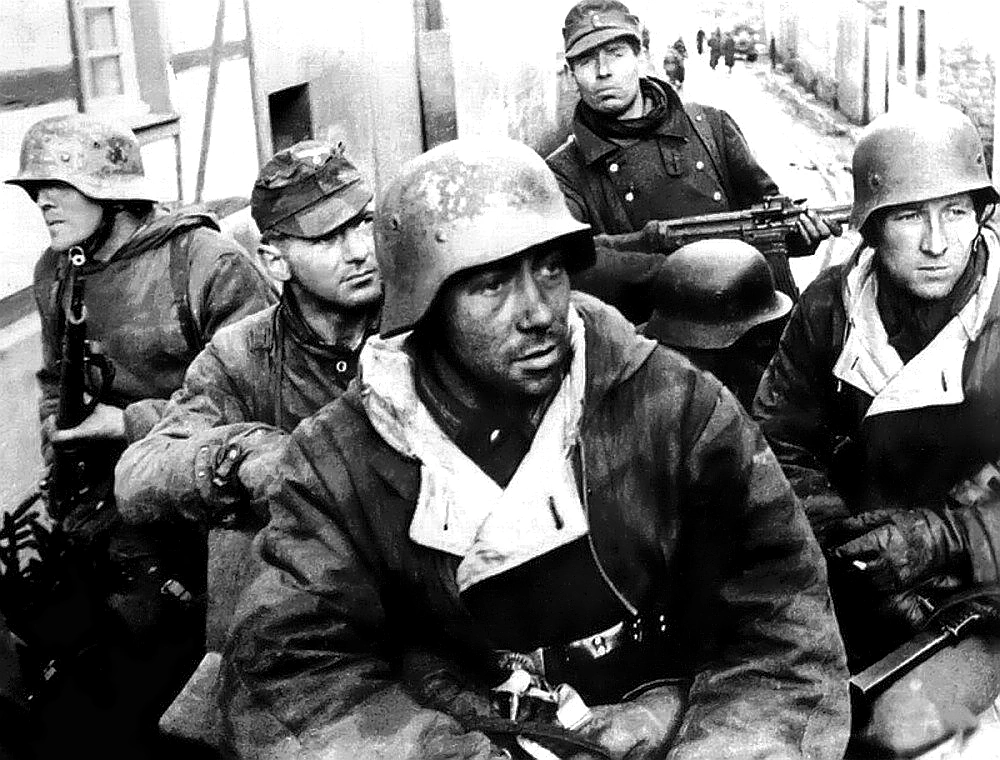 Seymour Kaplan of B Troop 18-Cav Recon Sq recalls that Col Devine issued an order when we got to Belgium that all men would wear their helmets buckled under the chin and that we would dress in our OD’s, not fatigues we were to wear our ties and tuck them in properly. In other words you’re going to go in here and fight as a gentleman or something like that. We all resented that and the rationale behind it according to some of our officers was that it was believed that if you got hit and you had your tie on you could use it as a tourniquet, well that’s nothing but bullshit, nothing but crap.
When Col Devine got up to the front opposite the Siegfried Line we had already established defensive positions. We could see the German positions possibly three quarters to one mile away on the side of a hill. We had only been up there for about three or four days and we were working on building these bunkers. We had to build three bunkers, one in the center and one on each side to take care of our flanks. My squad was responsible for the one in the center of our positions. We got this thing built and we did a heck of a job on it. One guy in my squad had been a coal miner from Kentucky and he knew how to shore up the inside of this bunker. We dug into the side of this hill and had four or five feet of dirt on top of it, we had a slit in the front were we had a .50 cal machine gun and two trenches on either side and had .30 cal machine guns there.
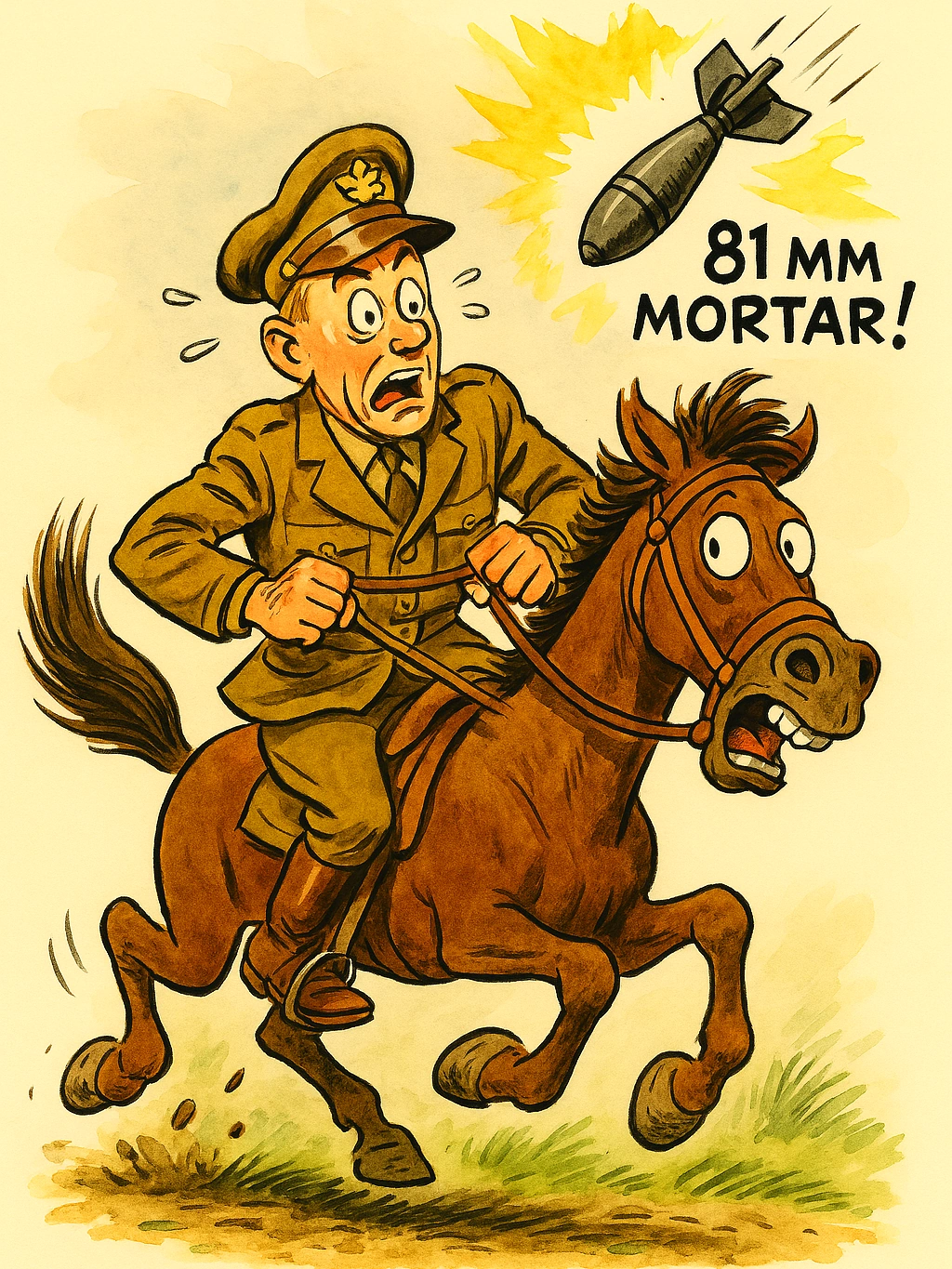
Well one day Capt Fossland and Col Devine showed up and were walking down to our positions. Both of them were marching like martinets with their chests stuck out. They came down to our defensive positions and I overheard Devine say to Fossland, ‘Captain look down there, you have a defile and some woods and a stream running through it and now if there was a German patrol down there, how quickly could you get mortar fire on them?‘ We had mortars set up in positions behind us and Capt Fossland got on the phone that we had hooked up and he barked out a fire order. Pretty soon you heard three rounds coming off. All of a sudden we heard this one round coming in and it’s what we used to call a short round or malfunctioned round for what ever reason it was dropping short. Those of us who were out of the trench at the time dove back into it while the Capt Fossland and Col Devine are still standing and this round comes down and drops about fifty feet away from where we were. A piece of that shrapnel caught Fossland in the leg and Devine literally became apoplectic. After those three rounds fell I called in and told them to cease firing. Fossland went down because he was hit and Devine had on these cavalry boots and was lying in on the captain verbally and as he was doing this he’s whacking his cavalry boots with this riding crop that he was carrying. Devine was using swear words that I had never heard before and I thought that I knew them all.
Col Devine had been particularly proud that in the two months that his unit had been in the line, the Germans had only been able to capture one prisoner. He had been impressed with his group’s ability to patrol the sector, especially at night. His troopers were covering frontages which would have been in excess for units many times their strength. Devine felt that the cavalry trooper did not have an equal.