




Reviewed by Doc Snafu on October 31, 2025.
Document Source: Operations of the Y-Force Operations Staff, US Army, Salween Campaign, Yunnan, China, May 10 1944 – January 20 1945. (Personal Experience of a Long Range Infiltration Patrol Leader), Capt Wah G. Chin

Foreword
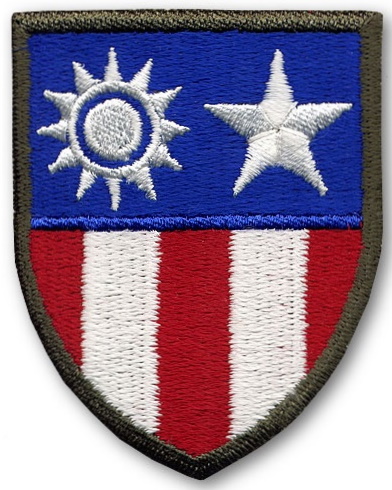 The Y Force was the South East Asia Command designation given to Chinese National Army forces that re-entered Burma from Yunnan in 1944 as one of the Allies fighting in Burma Campaign of World War II. The initial supreme commander of the theater was Gen Sir Archibald Wavell while head of the short-lived American – British – Dutch – Australian Command which was dissolved after the fall of Singapore and the Dutch East Indies.
In August 1943, the Allies created the combined South East Asian Command (SEAC), to assume overall strategic command of all air, sea and land operations of all national contingents in the theater. In August 1943, with the agreement of the Combined Chiefs of Staff, Winston Churchill appointed Adm Lord Louis Mountbatten as Supreme Allied Commander South East Asia, a post he held until 1946. The American Gen Joseph Stilwell was the first deputy supreme Allied commander, as well as heading the US China Burma India Theater (CBI) command.
Lord Mountbatten arrived in India on October 7, 1943 and SEAC came formally into being in Delhi at midnight November 15/16 . The headquarters moved in April 1944 to Kandy in Ceylon. On December 2, 1943, the Combined Chiefs of Staff approved in principle a staff plan designating the main effort against Japan to be the Pacific as the most rapid means of coming in range of the home islands for aerial bombardment. The secondary advance was along the New Guinea N.E.I. Philippine axis under the South West Pacific Area Command. The South East Asia theater, along with the North Pacific, the South Pacific and China efforts were designated to be supportive. At that time available forces were seen to be limited due to British commitment against Germany with major advances not anticipated until autumn of 1944 and after the defeat of Germany. The focus on the Central Pacific and South West Pacific were a compromise reached at the Casablanca Conference in which British views focused on the war against Germany with the entire war against Japan being limited ‘to the defense of a fixed line in front of those positions that must be held’ an approach unacceptable to the United States. Offensive actions in Burma, support of China and other theater activity beyond holding a defensive line in South East Asia, the position of the British Chiefs, were the result of US demands that the Japanese be kept off balance throughout areas of Allied – Japanese contact.
This report covers the operations of Y-Force Operations Staff, US Army, in support of the Salween Campaign, Yunnan, China, May 10, 1944, – January 20, 1945, in the China offensive. Personal experience of a long-range infiltration patrol leader. By way of orientation, a brief review of events from the early part of 1937 up to the use of American Ground Force personnel in China is necessary. In the early part of 1937, Japan witnessed the forming of an alliance between Gen Chiang Kai-Shek, leader of the Central Government of China, and the Communist Party. The new alliance meant a united China which gave rise to the possibility of her becoming a leader of all Asia. This was definitely a threat to Japan’s power in the Far East. She realized that there was no time to be lost. During the night of the July 7, to July 8, 1937 war broke out between China and Japan. The first shot was fired at the Marco Polo Bridge near Peking. (Statements by Lt Tso Shih-Tsun and Lt Wang Hsing, Chinese Army, Advanced Infantry Officers Class No II). The Jap’s plan was to conquer China and consisted of two courses of action: (1) destroy the military might of China and (2) destroy the economic and political status of China by capturing her industries, and severing her supply routes with the outside world.
The first course of action was accomplished without much difficulty. At the beginning of the war, the military might of China consisted of approximately 100 divisions, each averaging 5000 men. These divisions were not properly organized, trained, or equipped to meet the impact of Japan’s modern armies. The Japanese air force possessed complete air superiority. Tanks were unknown to the Chinese while the Japanese columns led by tanks, struck key industrial centers and lines of communication with lightning speed. The greater part of China’s military machine collapsed with the fall of Shanghai, main industrial center of China, in November 1937; and Nanking, capital of China, in December of the same year. It was here that Gen Chiang Kai-Shek placed 80 of his best divisions into action against the Japanese. Combined Japanese ground, air, and naval action defeated the Chinese attackers. The will of the Chinese people to resist was fully exemplified at Shanghai where the flesh and courage of the Chinese soldier met Japanese barrages of steel.

In the second course of action, Japan failed. She had not contended with the spirit of the Chinese people. The incidents of the battles of Shanghai and Nanking had created a bonfire of patriotic fervor that knitted the nation into one family possessed with one thought, that of defeating the Japanese invaders. As the Japanese armies captured one industrial center after another, China began to move from the coastal areas into the interior. Many industries and higher institutions of learning were evacuated into the mountainous areas of Yunnan and Szechwan. All equipment that was evacuated into the interior had to be moved by hand. The following example serves to illustrate the extent of the evacuation of China’s industries into the interior. The Han-Yan Steel Company, Ta-Yeh Steel Company, and the Liu-Ho-Ko Steel Furnace Company were moved to Szechwan and incorporated into one concern with an output of approximately 30.000 tons per month. By the summer of 1939, the long evacuation into the interior was over. China evacuated no further. The Japanese armies occupied the industrial centers in Eastern China. New industries were installed along the coast and operated at maximum capacity for the Japanese war effort. In the mountains of Western China, the Chinese settled down in new homes; all industries that were salvaged were operating again; and students were attending classes in the universities.
From the summer of 1939 to the early part of 1944, Japan increased her gains in Asia by capturing French Indo-China, Thailand, and Burma. This action closed the Burma Road, the last important supply route between China and the outside world. In China, all was quiet. The war between the two nations settled down to small isolated incidents rather than large-scale operations. Japan’s policy in China now was primarily one of economic strangulation. During this period China was organizing new armies in preparation for future operations against Japan. With the closing of the Burma Road, China was completely blockaded from the outside world. However she continued to resist the enemy. The only means of supply during this time was over the Himalaya Mountains by air (the Hump). But the tonnage of supplies delivered over this route was not enough to permit any defensive action against the enemy.

So, what was the Air Transport Command, the Hump and the CBI? The Hump was the first sustained, long range, around the clock, all weather, high altitude military aerial supply route. The route was between the Assam Valley in northeastern India, across northern Burma, to Yunnan province in southwestern China, flown during World War II. There was no precedent for it. Nothing like it had ever been done before. China lost the Burma Road, its last remaining supply line to the outside world, due to the invasion of Burma by Japanese troops in April of 1942. The Burma Road extended 425 miles from Lashio, Burma to Kunming, China. China’s eastern seaports had previously been closed by Japanese Navy. The United States determined a continuous flow of military supplies into China had to continue in order to allow the Chinese Army, and the US Fourten Air Force (formerly the American Volunteer Group (AVGs) and the China Air Task Force) in China, to remain effective and keep pressure on Japanese occupational troops, thereby denying their use as fighting forces in other parts of the CBI (China – Burma – India) or south Pacific. The only means left for getting supplies to China was by air. Due to the presence of Japanese Army and Air Force in northern Burma, the only available air route to China was via the Hump route. In April 1942, pilots started flying the Hump, and continued missions until 1945, when the Burma Road was reopened.

(Above) The dangerous 530-mile long passage over the Himalayan Mountains took its toll. Official records from Search and Rescue were closed in 1945. Final records showed 509 crashed aircraft records had been closed. 81 lost aircraft records were still open. 328 of the lost flights were ATC planes. 1314 crew members were know to be dead. 345 were still listed as missing. In addition, China National Aviation Corporation (CNAC) lost 38 planes and 88 airmen.
General Situation
Following the Casablanca conference in January 1943 between the Combined Chiefs of Staff, additional aid was authorized for China. It was directed that the blockade of China be cut and a surface road be re-established with China to handle the added tonnage of supplies. The general plan was to organize, train, and equip an efficient combat force in the minimum time to drive the enemy out of North Burma and Western China and reopen the Burma Road. Let us examine the plan in more detail. To the west of Burma, the remnants of the Chinese 22nd Infantry Division and 38th Infantry Division that had escaped to India from Burma in 1942, were to be equipped with American equipment and trained in its use by American personnel at Camp Ramgarh – India. Additional units were flown from China and similarly equipped and trained.
Later, these troops, under the command of American officers, would be used to spearhead the attack of Allied Forces to drive the Japanese from North Burma in conjunction with the Salween Campaign. Immediately to the rear of this attack American and Chinese engineers were to construct the Ledo Road, the connecting link between the supply bases in India and the Burma Road in China. In the western part of Yunnan – China, training centers were established at Kunming. Units of the Chinese Expeditionary Force in defensive positions on the Salween River front, were to be rotated to the rear areas and similarly trained and equipped. These troops would be used in the Salween Campaign to attack the Japanese forces along the Salween River, thus forming a pincer movement. When the two forces met, the blockade of China would be cut and the Ledo-Burma Road would provide the much needed land route to carry the added tonnage of war material for the Chinese Armies.

Preparation Phase
It was realized that the combat efficiency of the Chinese troops could be increased if they were equipped by the US and other allied nations. However it was necessary to reorganize and retrain these troops to obtain maximum use of the equipment. To accomplish this mission, Y-Force Operations Staff was organized with headquarters in Kunming (China). The task of reorganizing, equipping, and training the Chinese Expeditionary Force for the Salween Campaign began in the early part of 1943. Y-Force Operations Staff was composed entirely of American personnel from all branches of service of the US Army and commanded by Gen Frank Dorn. In broad terms, the mission of Y-Force Operations Staff was to advise and assist in every possible way with the training; receipt and distribution of American equipment and supplies in the field; and with the planning and execution of tactical operations by the Chinese Expeditionary Force. Its mission did not include any command function over the Chinese units. Chinese forces remained under Chinese command at all times. Let us examine the activities of Y-Force Operations Staff during the preparation phase for the Salween Campaign.
An Infantry Training Center was established on the western outskirts of Kunming in April 1943 to provide instruction by Y-Force Operations Staff personnel, aided by interpreters, in the following subjects: (1) Effective use and maintenance of American weapons; (2.) Effective use and maintenance of American signal equipment; (3) Effective use and maintenance of American engineer equipment; (4) Ordnance; (5) Minor tactics; (6) First aid and medical evacuation, and (7) Care of animals. On the northern outskirts of Kunming, an Artillery Training Center was established to provide instruction in Field Artillery tactics, technique, and maintenance. Time and adequate facilities were not available at Kunming to provide proper training for all units of the Chinese Expeditionary Force. To overcome these deficiencies, selected officer personnel from the different Chinese Armies were ordered to attend courses at the different training centers. After completing the course they returned to establish similar courses of instruction for officers and enlisted men within their units. This training was closely supervised by Y-Force Operations Staff Field Liaison Teams who operated in an advisory capacity.
The mission of each team also included technical aid, professional aid, and organizing and equipping the unit with American equipment as the items arrived. The structural organization of a team was dependent on the size of the Chinese unit to which it was assigned. Col Spanger writes that the organization of a team assigned to an Infantry Division was as follows: For each division receiving American equipment, there was to be an American group consisting of a group commander, S-1, S-2, S-3, S-4, headquarters commandant, signal officer, medical officer, veterinary officer, six infantry officer instructors, and sufficient enlisted personnel to serve as radio operators, assistant instructors, clerks and medical technicians, a total of approximately twenty-seven officers and men. All divisions with organic artillery battalions also had four artillery officers and five enlisted men in addition to the above group. Later in the operations phase, each team accompanied their respective unit into combat to continue in their advisory capacity. Meanwhile American equipment and supplies were being flown in added quantities into China from supply bases in India. The Air Transport Command flew day and night over the Himalaya route to build up the needed supplies and equipment for the coming campaign. All classes of supplies were included in the cargoes. These were distributed to the Chinese units with the least delay, by any and all means of transportation available. Simultaneous with reorganization, equipping, and training, plans for the Salween Campaign were being formulated at the Chinese Expeditionary Force headquarters, assisted by members of Y-Force Operations Staff.

Terrain
The Salween front extends parallel to the Salween River for approximately 170 miles. Its northern flank lies in the vicinity of Lushui (China), 65 miles northeast of Tengchong (China), and its southern flank in the vicinity of Kunlong (Burma), 80 miles south of Lungling (China). The Burma Road passing through Lungling, almost bisects the front. The Salween River, better known by the Chinese as ‘Angry River’ flows through a deep gorge in the mountains of Western Yunnan. The surface of the river is almost 3000 feet above sea level with mountains on both sides towering almost vertically 9000 feet and more above the riverbed. The river is rarely more than 150 yards wide, but it runs deep and cold. Its water flows at approximately 12 miles per hour. In the 170 miles of front there are 17 ferries which can be used. The three bridges across the Salween in this area were destroyed to stop the Japanese advance in 1942. West of the Salween River in the northern part of the combat area, the area of the main effort, lies in the Kaoli Kung Mountains rising sharply to elevations averaging 11000 feet. The Kaoli Kung ridgeline is parallel to the Salween and forms the southern spur of the Himalaya Mountains. There are three passes through these mountains, Hpimaw Pass 9000 feet, Mamien Pass 11.430 feet, and the pass on the trail from Mengta Ferry at Chiangtso 11.410 feet. Trails are precipitous and dangerous, and in many places so narrow as to permit passage of pack trains only in a single file.
The western slope of the Kaoli Kung range drops gradually to the Shweli River forming the Shweli River Valley averaging 6000 feet elevation. Combat in this area was less difficult topographically as compared to that in the Kaoli Kung Mountains. The mountains continue south of the Kaoli Kung Range. The average elevation of the southern mountain range is approximately 8000 feet. The Burma Road passes through the area formed by the Kaoli Kung Range and the Shweli River northeast to Lungling. From here it continues in a northeasterly direction over the Kaoli Kung Ridge at an elevation of 7500 feet. Due to the ruggedness of the area it is sparsely populated. Cities, towns, villages, and small settlements lie in valleys through which the rivers and their tributaries flow, and along roads and trails over the mountains. The characteristics of the terrain did not permit a continuous battlefront or even a continuous line of supply along normal military lines. In this area the monsoon season begins in the middle of May and terminates in the middle of October. During this period the torrential rains turn the rivers into roaring torrents. The mountain trails become slippery mud which makes it difficult to maintain footing. In the Kaoli Kung Mountains the precipitation changes to sleet and snow, while fog and mist constantly hamper visibility. In the valleys below the climate is practically tropical.

Plan of Attack
The plan for the Salween Campaign to drive the Japanese from Southwest China and reopen the Burma Road involved two main thrusts by five separate task forces in a coordinated attack across the Salween River, and a sixth task force to retain the Japanese in the Kunlong Area. (The designation of these forces by letters, as given below, is purple for convenience of reference.)
