



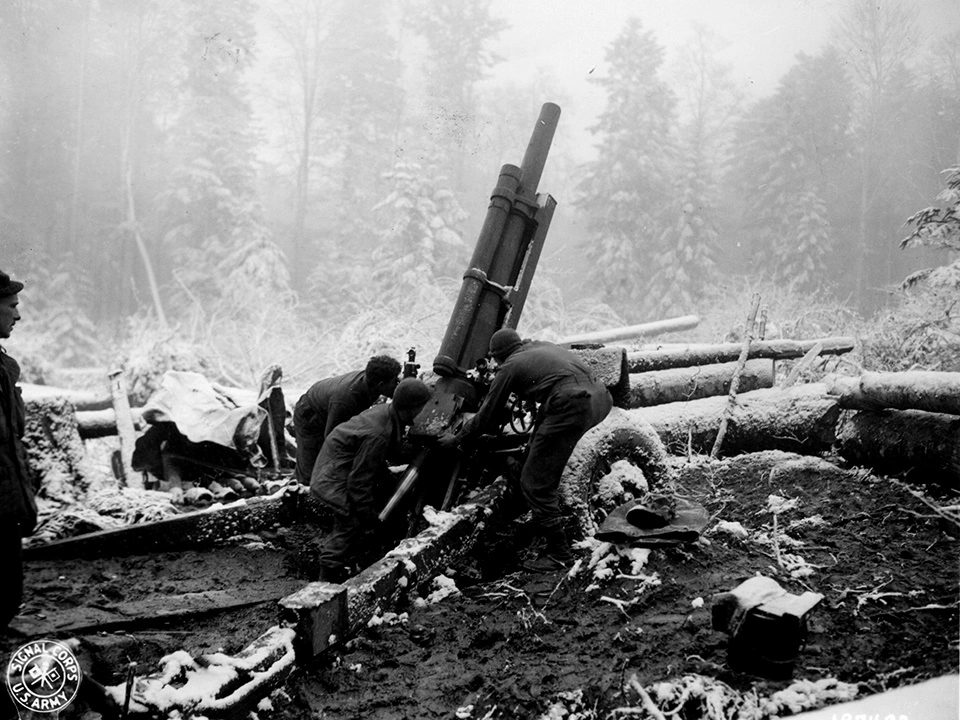
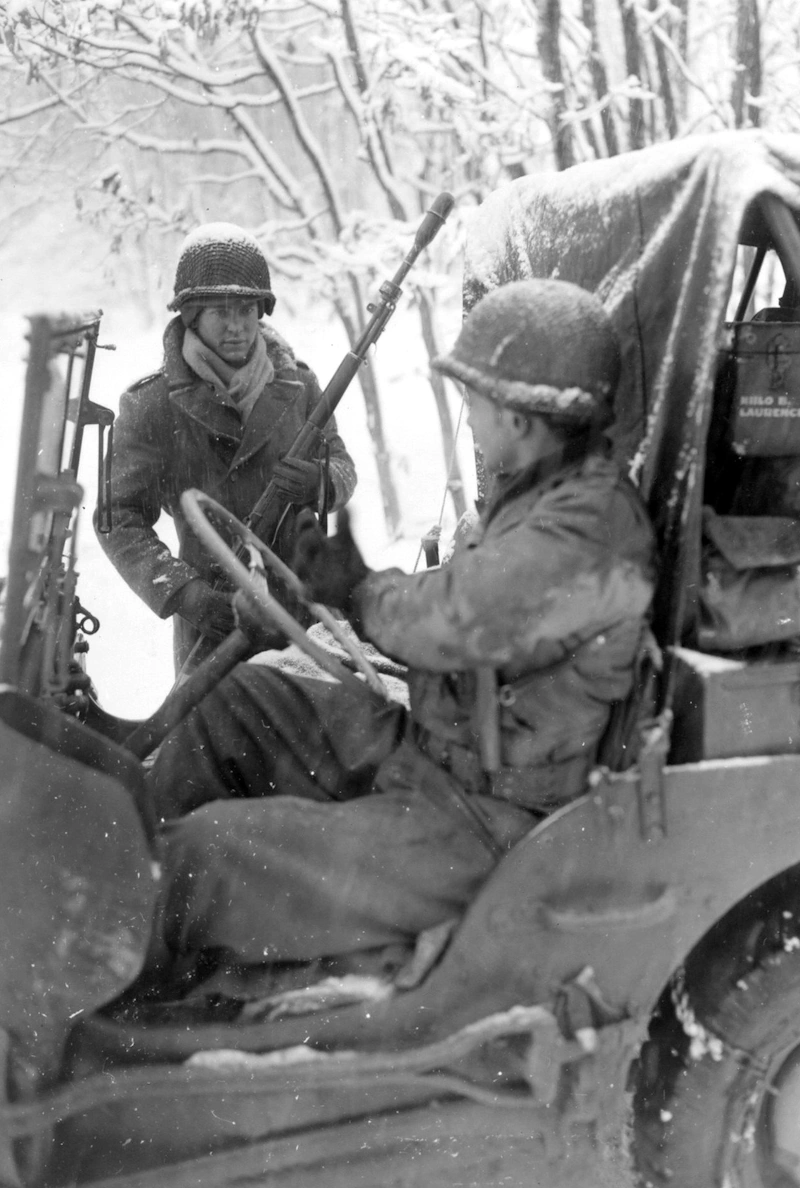
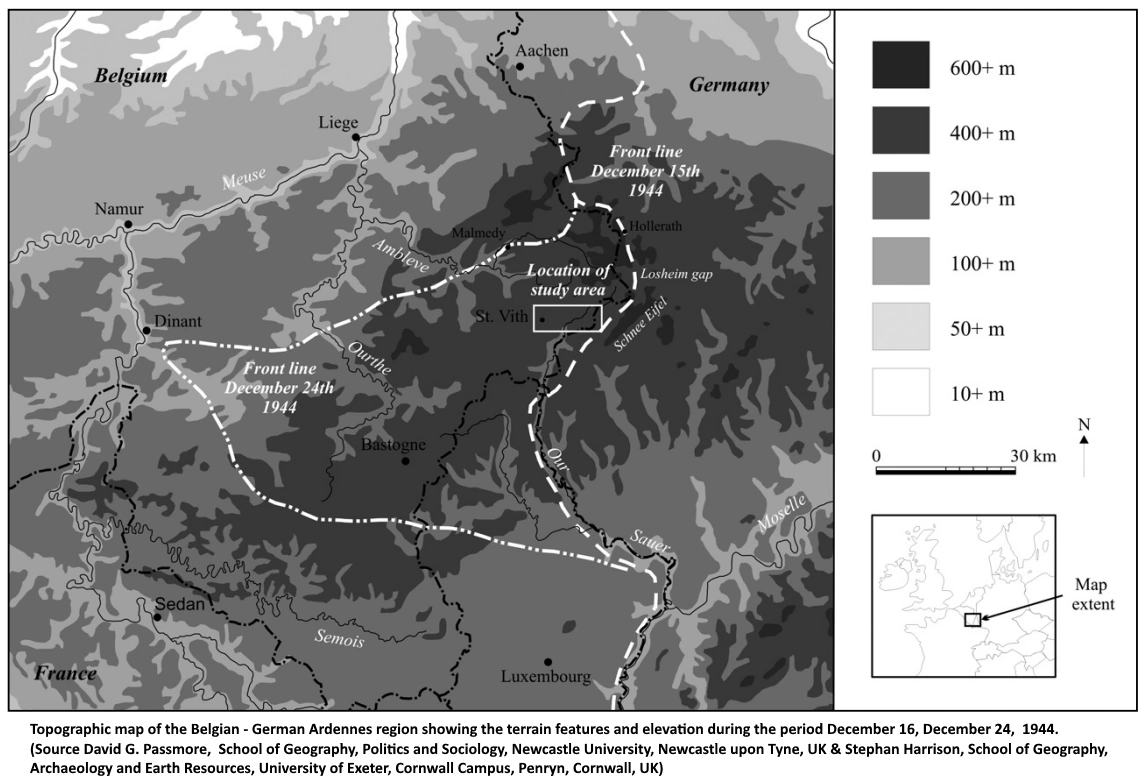
 As the 3/423 cleared Oberlascheid about 1300 the regimental command post was established there. The 1/423, with the head of its column in Halenfeld and halted by the action of the 2/423 near Radscheid, moved off the road. As the covering forces left at the original positions drifted in, a hasty defense was organized by the rear guard to protect the regimental rear. Learning that the enemy facing the 2/423 was being rapidly reinforced by enemy troops from the vicinity of Bleialf, the regimental commander at about 1600 ordered the 1st Battalion to attack toward the southwest on the 2nd Battalion’s left to assist that battalion and cut off the flow of reinforcements from Bleialf. Moving rapidly, the 1st Battalion less one company as rear guard, deployed along Hill 546 just south of Oberlascheid. Supported by its heavy weapons company, the battalion launched its attack at dusk, about 1700, in what amounted to a night attack over unfamiliar territory, down into into the Dürenbach Creek Draw and up the lower slopes of the ridge extending south from Radscheid against a now how heavily reinforced enemy. Against direct fire from German 88s, one of which was taken, and heavy automatic weapons and mortar fire the battalion drove some 1200 yards. Disorganized, nearly out of ammunition, and with about 70 casualties, the battalion pulled back to Hill 546 by 2200.
Shortly after darkness, the regimental command post was moved just north of Hill 575 to a house which had be originally been the command post of the 590-FAB. The regimental executive officer remained in direct command of the 1/423 and the 2/423 then still engaged. The regiment commander sent patrols out to locate the 3/423 and to contact the 422-IR, and a motor patrol along the Skyline Drive to contact any enemy in that direction. The 3/423 was contacted and wire communication established; no contact could be made with the 422-IR; and the motor patrol sent to the north was badly shot up in the darkness by an enemy roadblock some 5000 yards from the command post on the Skyline Drive. Contact was again made with the division shortly after 2100, the first since about 1600, through considerable interference and the regiment was informed that ‘supplies for the 423-IR and the 422-IR to be dropped at bend of road one half mile south of Schoenberg on December 19; advice the 422-IR’.
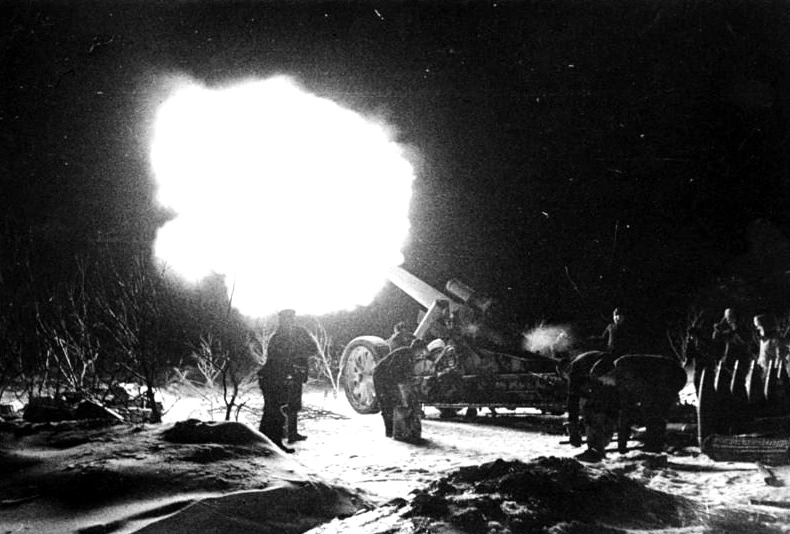
At about 2230, December 18, division was informed of the regimental situation and instructions were received that ‘it was imperative that Schoenberg be taken. This was the last radio contact between the division command post and the 423-IR. Based on this information, the regimental commander decided that the 1/423 and the 2/423 must be disengaged at once and concentrated in the vicinity of the 3/423 in preparation for a daylight attack on Schoenberg on the morning.
The 590-FAB which had displaced to Oberlascheid about 1400 was moved to positions just north of Hill 575 to support the next morning’s attack. The remaining platoon of Cannon Co, which had been with the artillery, moved into position further down the Ihren Valley. The regimental command post with the remnants of the other regimental separate companies displaced to the southeast slope of Ridge 535. Leaving one company as a covering force to the south and east, the 1/423 withdrew along the north fork of Oberlascheid, and crosse the Ihren Valley to an assembly area between the 2/423 and the 3/423 and further down the Ridge 536. At 0300, its heavy weapons company was directed to occupy positions in the area of the 590-FAB to protect this unit and the regimental rear. Seriously wounded had been left with medical personnel in the vicinity of Oberlascheid.
During the day, the 2/423 had lost some 300 casualties, including its officers. Five of eight heavy machine guns (Cal .50) and four of six light machine guns (Cal .30) had been destroyed. All the 81-MM mortar ammunition had been expended and only two rounds for the 60-MM mortar remained. The 1/423 had lost about 70 men including 5 officers. Mortar ammunition was negligible. The 3/423 had only moderate casualties but was also short of mortar ammunition. In all units small arms ammunition was low, rocket launcher (bazooka) ammunition was nearly gone, and machine guns averaged about 400 rounds per weapon.
The Last Day
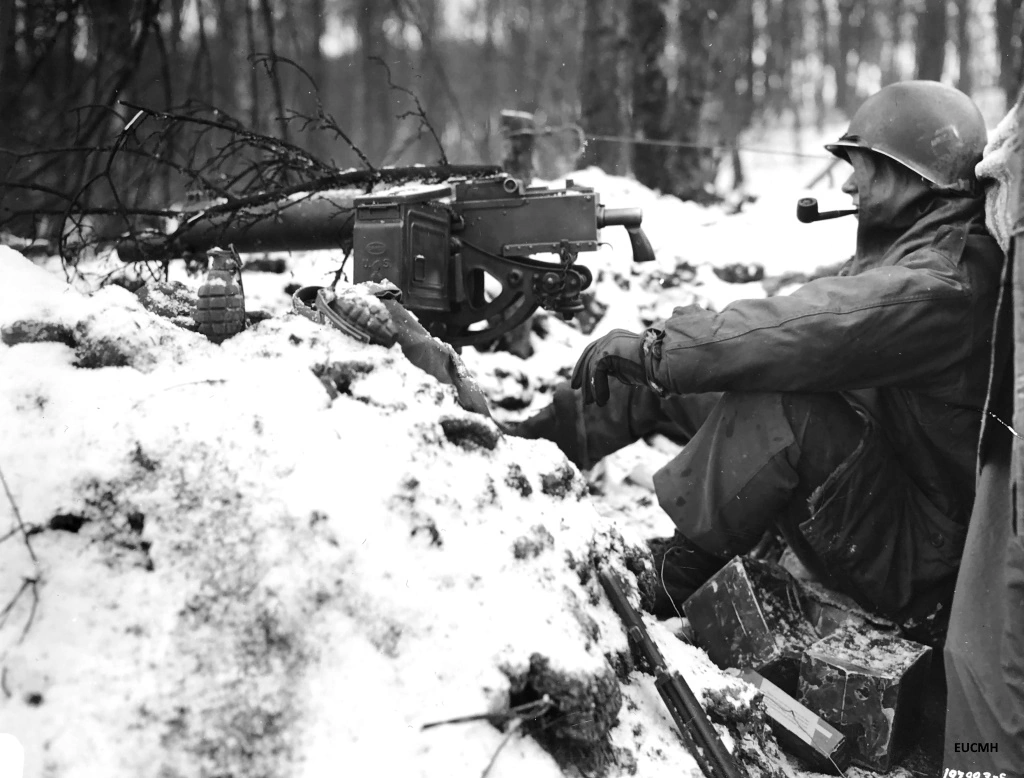 Before dawn on December 19, concentration of the regiment along the Ridge 536 was complete, as complet as is possible at night over strange terrain following a disengagement with the enemy. Such extra ammunition a remained, about 8 rounds per rifleman, was distributed as battalion moved into their assembly areas. Although an effort was made to have men dig in for the remaining hours of darkness and until the attack order was they knew was coming could be issued, little was accomplished. The men were wet, cold, hungry and exhausted. Except as previously mentioned, security consisted of listening posts only to the northeast, northwest and southwest. There were no patrols sent to Schoenberg or to the flanks to maintain contact with the enemy and such security measures as were taken were not coordinated by the regimental staff. The I&R platoon was maintaining a roadblock just south of Radscheid and was therefore of no use to the regiment. Contact had not been gained with the 422-IR on the right.
As dawn broke, the regimental commander made a rapid reconnaissance and completed is plan of attack. At 0030, the battalions commanders were assembled at the regimental command post and orders were issued for the attack on Schoenberg. For this attack the 423-IR could muster about half its rifle strength. The 2/423 on the right was at about half strength in officers and men. The 1/423 in the center had two rifle companies, each at about two thirds strength. The company left near Oberlascheid to cover the regimental rear had not been heard from. The 3/423 was the strongest having suffered only moderate casualties to date. The regimental separate companies were hardly to be considered after their losses at the first two days in Bleialf. Mortar ammunition was clearly non-existant, small arms and machine guns was limited, rocket launchers (bazooka) had little or no ammunition. Medical supplies were critical and evacuation impossible. There had been no aerial resupply.
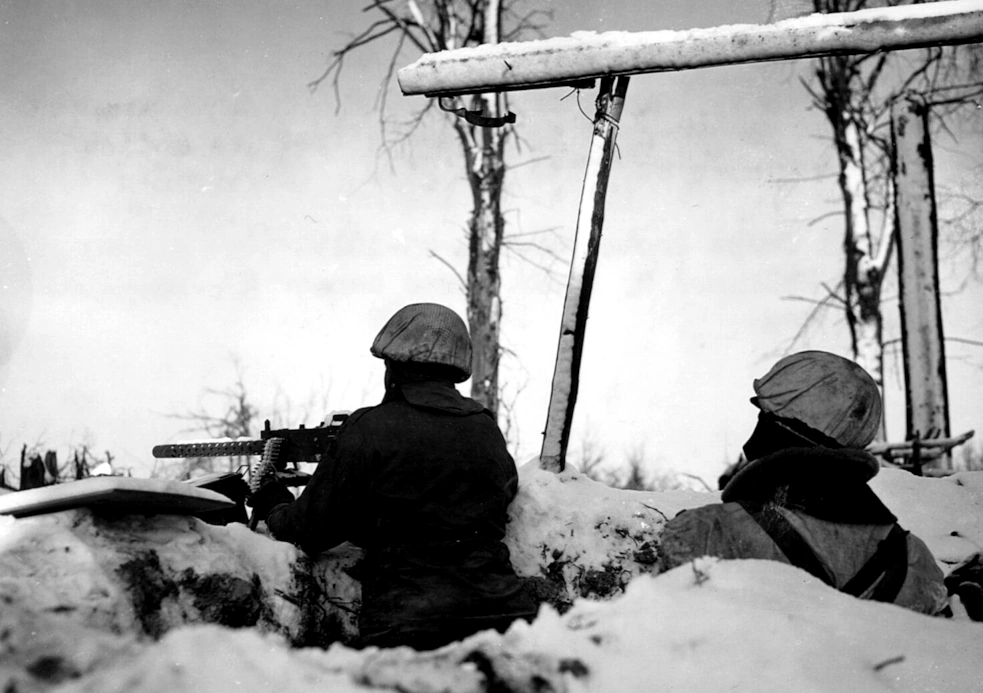
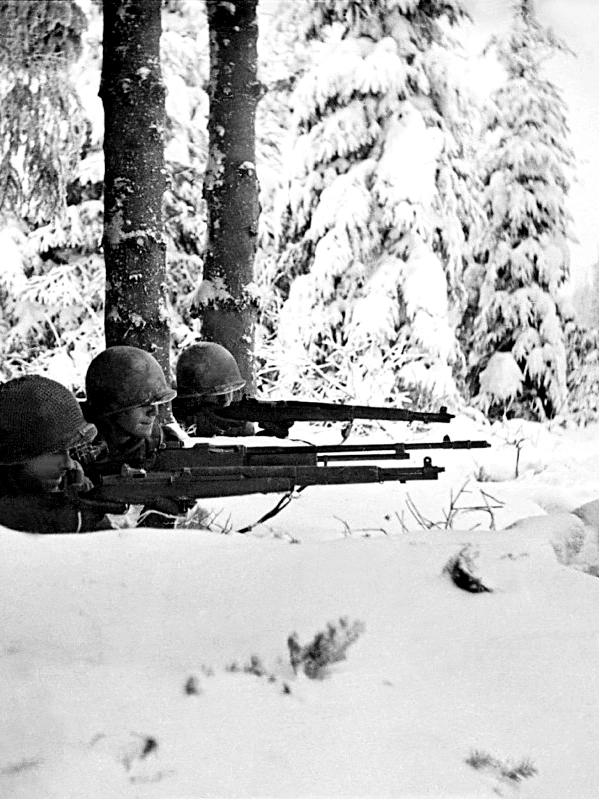 The regimental plan of attack envisaged the battalions echeloned to the right rear, the 3/423 on the left making the main effort with its left generally following the Bleialf-Schoenberg road. The trail running northeast along the crest of the Ridge 536 was to be the line of departure for the 1/423 and the 2/423. Time of attack was set for 1000 December 19. The 590-FAB with one platoon of Cannon Co was to support the attack by fire. All remaining vehicles were to be destroyed. As the regimental completed issuing his order about 0900, heavy artillery fire began to fall within the area of the vicinity of the Skyline Drive. Much of the initial concentration landed near the regimental command post, and in his attempt to return to the 1/423, the battalion commander was mortally wounded. For some thirty minutes heavy fire of various calibers continued to blast the southeastern slope of the Ridge 536 greatly interfering with reconnaissance and preparations for the attack within the assembly area. As the fire lifted, German infantry was seen sweeping over the positions of the 590-FAB. The attack would have to be made without artillery support. Dog Co had been decimated, six of its eight officers killed or wounded, the company commander killed. Mike Co commander was killed. Casualties continued to occur in all units, vehicles in the Ihren Valley were destroyed.
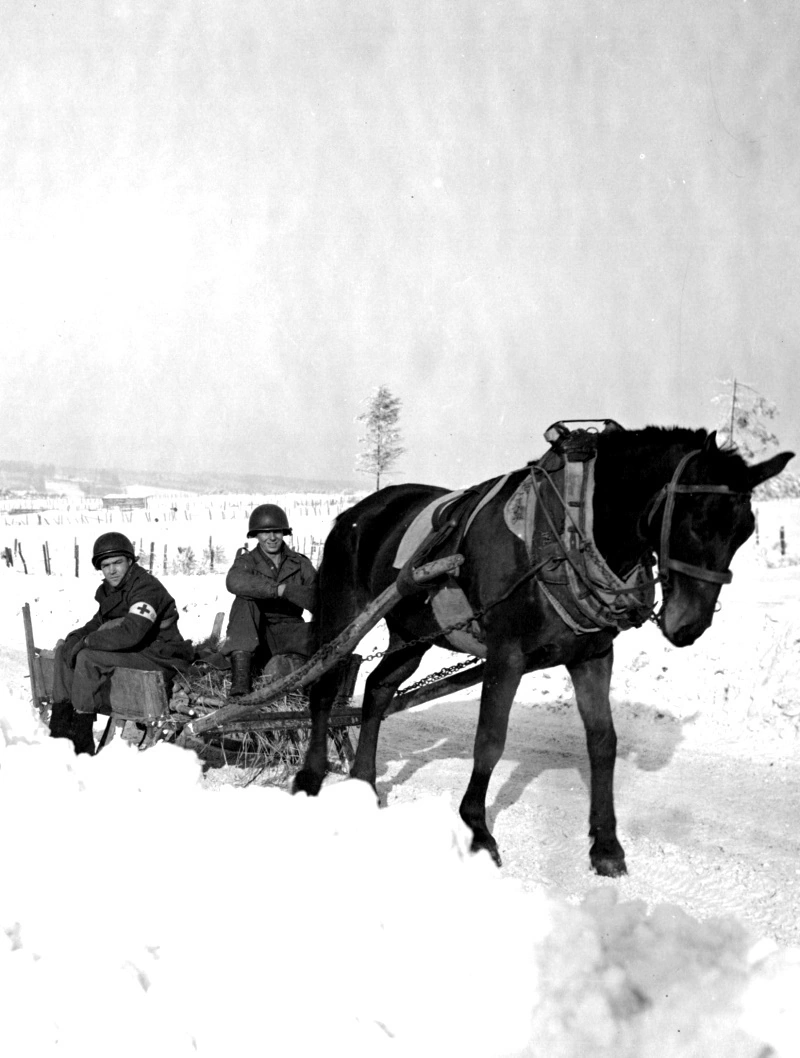 With the enemy rapidly closing in to the rear, the regiment could only drive forward. All remaining vehicles were ordered destroyed. The regimental commander pushed the attack and in spite of the interferences from artillery fire, the 3/423 jumped off in good order at 1000. The battalion left quickly ran into heavy direct fire from enemy 20-MM AA artillery and was stopped. An US tank came up the road from Schoenberg, fired on the attacking platoons and then withdrew. At this time the left company, along the Bleialf-Schoenberg road became further engaged with a concealed German rifle company moving from the south toward Schoenberg. Counterattacking to the south with part of the assault platoons the company commander drove the enemy back but became separated from the battalion when the enemy attacked again by 1330 the platoon was destroyed and the commander was captured. The battalion, meanwhile, continued to push forward. Both remaining rifle companies reached the southern outskirts of Schoenberg where they were stopped by intense direct German 20-MM AA artillery fire. By 1500, the Battalion Commander began pulling the remnants back up the slope of Hill 504.
The 1/423 added little to the attack from the beginning. Because the battalion commander had taken none of his staff with him to receive the regimental order, valuable time was lost while the executive officer leaned of the battalion commander’s wound, took over, and was rapidly given the essentials of the attack order. Properly sending his staff forward for much reconnaissance and coordination as was possible, the new battalion commander was able to lend the battalion across the line of departure only five minutes late. Already less one rifle company lost at Oberlascheid and the heavy weapon company lost
along the Skyline Drive that morning, another rifle company was pulled out of the battalion as it moved toward the line of departure to become the regimental rear guard.
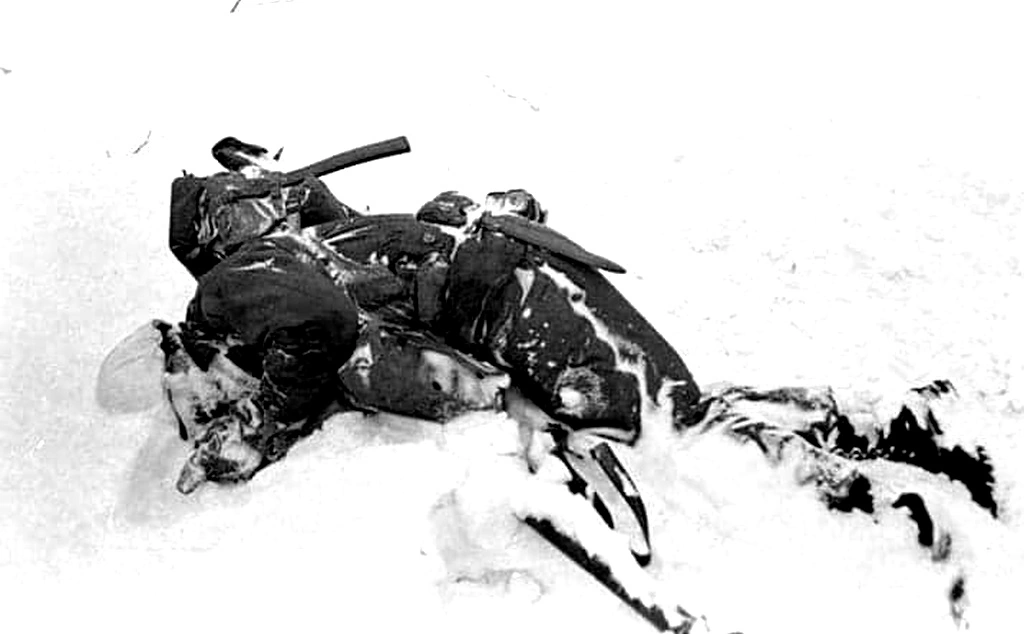
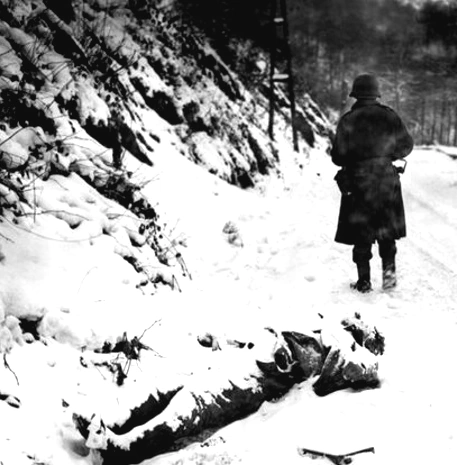 The 1/423, in reality now Baker Co and part of the battalion HQs Co, pushed through the heavy woods along the eastern slope of Hill 504 under constant mortar and artillery fire, finally reaching the road running north from Schoenberg. Here, Bake Co remained under constant fire, until enemy tanks overrun their position. By 1400, the 1/423 had been eliminated.
The 2/423, on the regimental right, crossed the line of departure as ordered; but as its advance progressed it became separated from the 1/423 by a deep, rugged, wooded draw. Unable to contact the regimental commander, the battalion commander decided to attack Schoenberg from the northeast. As the leading elements moved down into the Linke Creek Draw they came under heavy small arms fire from the right. Contact had finally been made with elements of the 422-IR. While While this error was quickly corrected by aggressive action on the part of small unit leaders, both units were temporarily disorganized. Coordinating with the elements of the 422-IR present, one battalion plus miscellaneous elements under the command of the regimental commander, patrols were sent out to the north and the northeast. By mid afternoon it was known that 1500 yards to the northeast 30 enemy tanks were forming apparently preparatory to attacking; that in the Our Valley there was a strong enemy armored force to the front; and that enemy artillery could be going into position west of the Our River.
In the meantime the 423-IR command post, now on Hill 504 with the 3/423, had also made contact with the 422-IR by patrol. With one battalion eliminated and one cut of his control, with heavy enemy armored forces and artillery forming, his remaining elements raked by artillery, mortar and automatic weapons, and with casualties increasing and unaided, no food and only 5 to 10 rounds of M-1 ammunition per riflemen remaining, the regimental commander decided that it was apparent that further resistance was a useless sacrifice of life. Small groups were selected and sent out in several directions to attempt infiltration through to St Vith; few escaped. At this time, with enemy armor moving toward his northern flank the regimental commander of the 422-IR had indenêndently reached a similar conclusion.
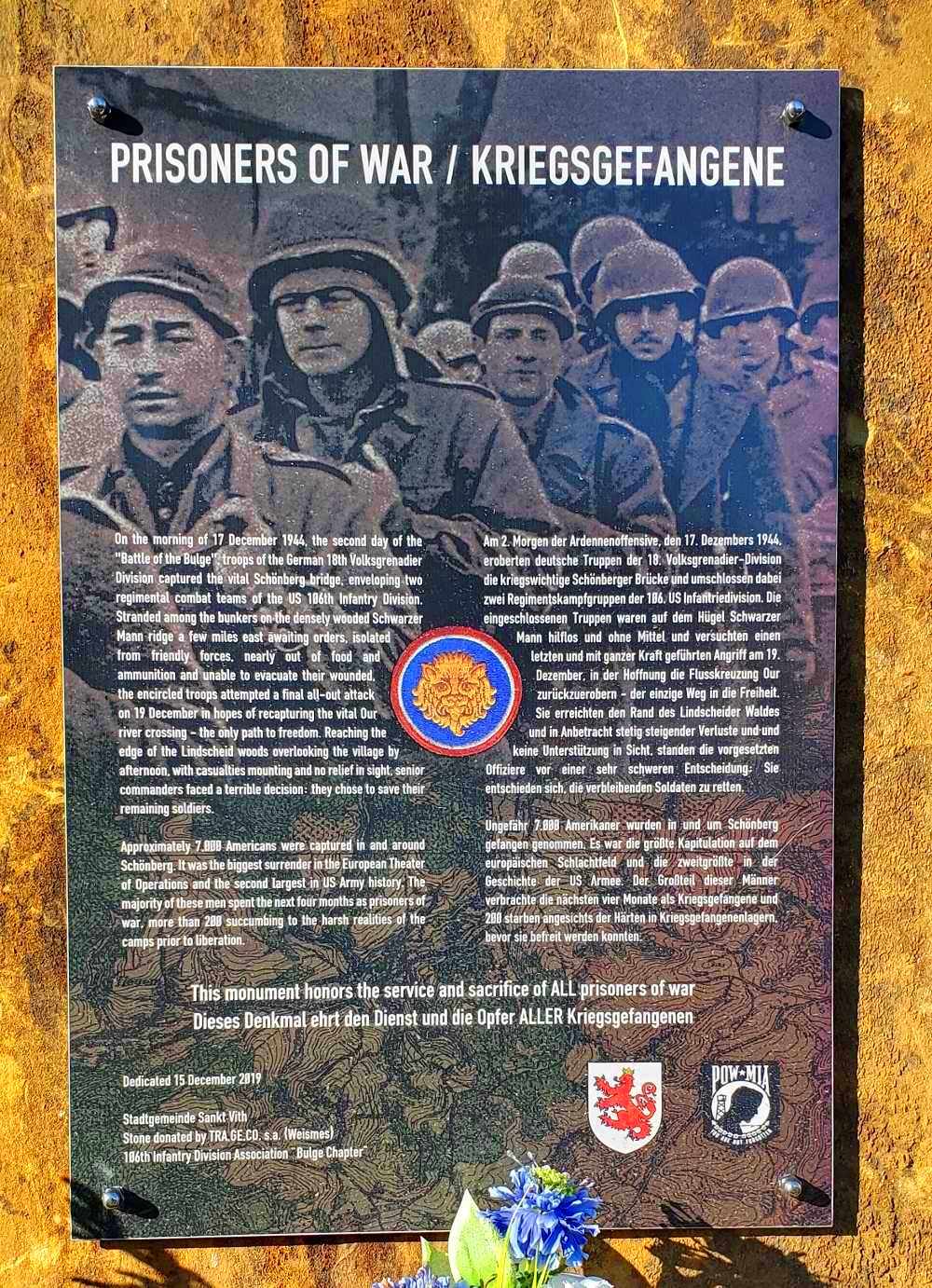
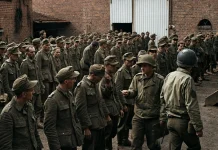
At 1630, December 19, the remaining elements of the 423d Infantry Regiment were surrendered. Within the short period of four days, the 423-IR had been engaged with the enemy in a defense, a counterattack, a withdrawal, a meeting engagement and an attack. While it is not known how many Germans were killed or wounded during this period, large numbers vitally needed in the battle for the critical St Vith road center were defected from the main German objective and delayed as they contained the surrounded regiments at a time when the Germans could ill afford to delay.