





 The German Strike
Heavy artillery fire mixed with mortar and Nebelwerfer fire began to fall along the division front beginning at 0530 on December 16. The 423d Infantry staff immediately alerted all units. By 0600, wire communication with the AT Co, Troop B, 18th Cavalry Squadron and the 590th Field Artillery was out. Radio nets were opened. Particularly heavy fire in the area of Service Co and regimental ammunition supply point in Halenfeld (Belgium) destroyed a large number of vehicles and much of the regiment’s extra ammunition.
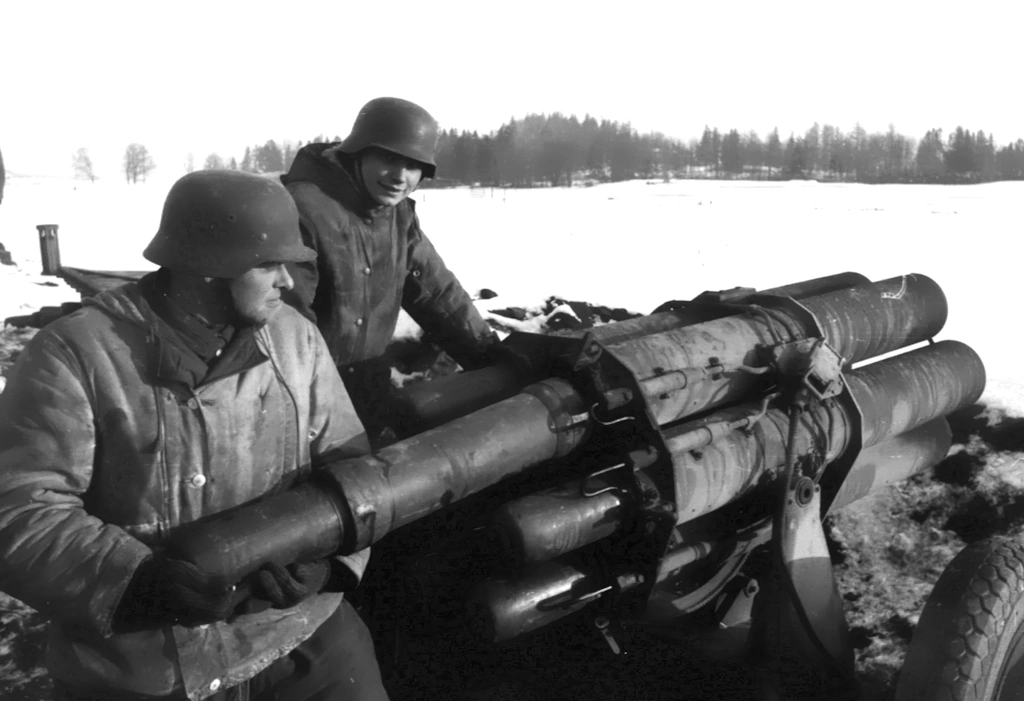
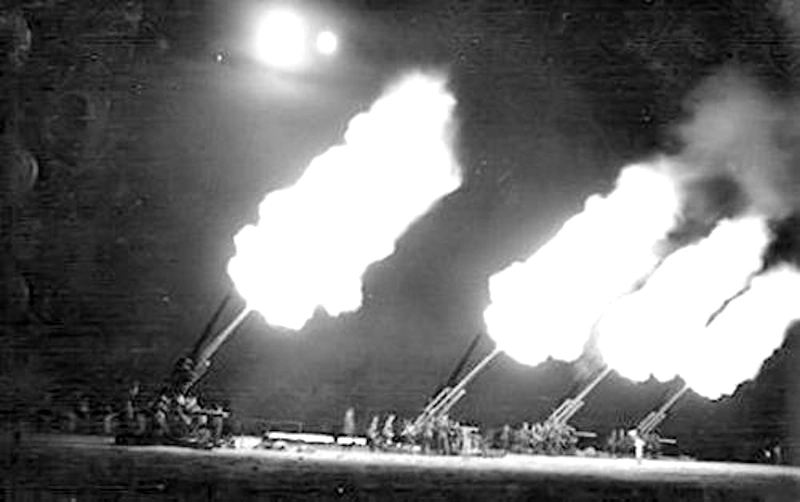 As the German preparatory fires began to lift shortly after 0600, German infantry struck Bleialf in force driving AT Co back through the village house to house. Assisted by reflected light of airplane searchlights playing against the low-hanging clouds, the enemy had moved rapidly through the half light. The stubborn resistance of the somewhat disorganized elements of the AT Co supported by preplanned artillery barrages and the fire of Canon Co, broke up repeated enemy attacks toward and within the town. Simultaneously, another enemy group had moved up the railroad on the regimental right and quickly pushed between the AT Co and Troop B cutting off and destroying the right platoon of AT Co and breaking contact between the two units. By 0800, the enemy hold most of Bleialf; wire lines were still out between the regimental CP and the right flank; and pressure against AT Co seemed unrelenting. Service Co and Canon Co were alerted and by 0930 had moved into Bleialf. Here this force of about 100 men, all that were available, were committed as part of the provisional battalion. Meanwhile authority from the division had been requested by and granted to the regimental commander to use Baker Co, 81st Engineer Combat Battalion as a rifle company. The company was immediately ordered to entruck and move from Schoenberg (Belgium) to Bleialf. Only 70 men were available. Upon arrival, the company launched an independent attack against the west shoulder of the penetration with limited success before it was stopped.
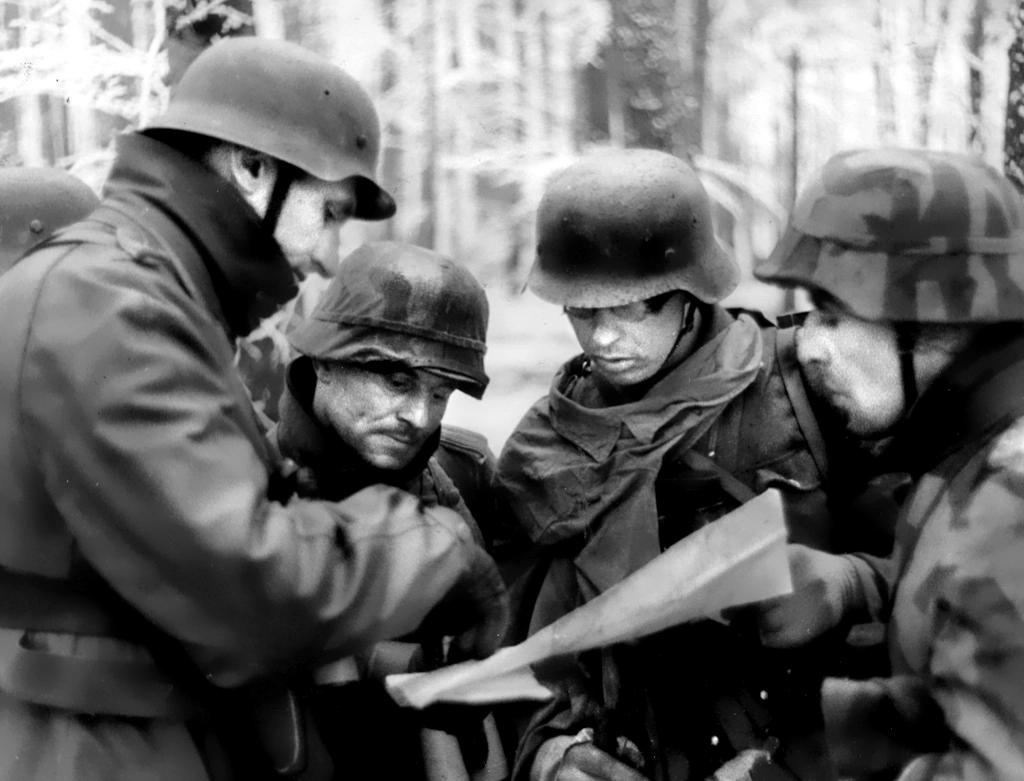 With this additional force at his disposal, the provisional battalion commander was directed to clear Bleialf and to regain contact on the right flank. By noon with the force on hand plus officers and men from the Regimental HQs Co whom this regiment commander had subsequently mover to Bleial, a counterattack was launched with the fire support of Charlie Co, 820-TDB and the 590-FAB which developed into a bitter house-to-house struggle. The enemy was gradually cleared from the village and by 1500 was driven out. Over seventy prisoners were taken, identifying the enemy assault unit as the 293.Regiment, 18.Volksgrenadier-Division.
The regimental commander had placed his executive officer in command of the provisional battalion about 1300; it was he who reorganized the original defenses with the remaining elements of AT Co and Canon Co holding Bleialf and Baker Co, 81-ECB, extending the line toward the railroad on the right. Service Co was held in mobile reserve north of Bleialf. The enemy dug in 300-500 yards to the front. Attempt to regain physical contact with Troop B on the right flank and through it with the 424-IR were unsuccessful. Attacked during the first German rush, Troop B had remained under constant pressure. By noon, finding his unit running dangerously low on ammunition and attacked from the vicinity of Großlangenfeld where the 106th Recon troop had been, the troop commander finally was able to to contact the regimental command post by radio and requested authority to withdraw. Knowing the situation on the right, the regimental commander granted this request. Troop B withdrew to Winterscheid (Germany) and organized a perimeter defense.
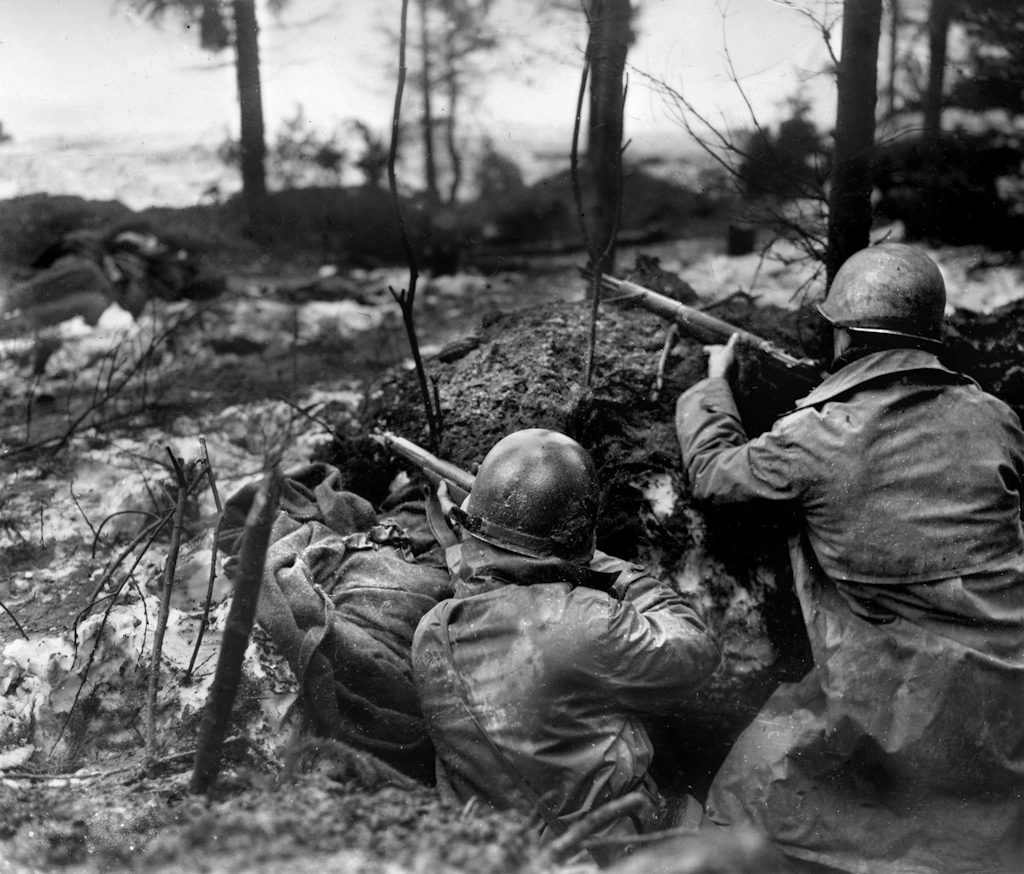
Throughout the day, the 1/423 and the 3/423 had been subjected to sporadic artillery and mortar fire; minor enemy attacks, apparently patrols in force, had hit the 1/423 repeatedly. During the afternoon, two tanks separately nosed toward the 1/423 from the vicinity of Brandscheid (Germany), but withdrew when fired upon at close range. The 590-FAB had rendered unfailing support, particularly in the Bleialf area, despite heavy German counterbattery fire and resulting losses including one battery commander and several howitzers.
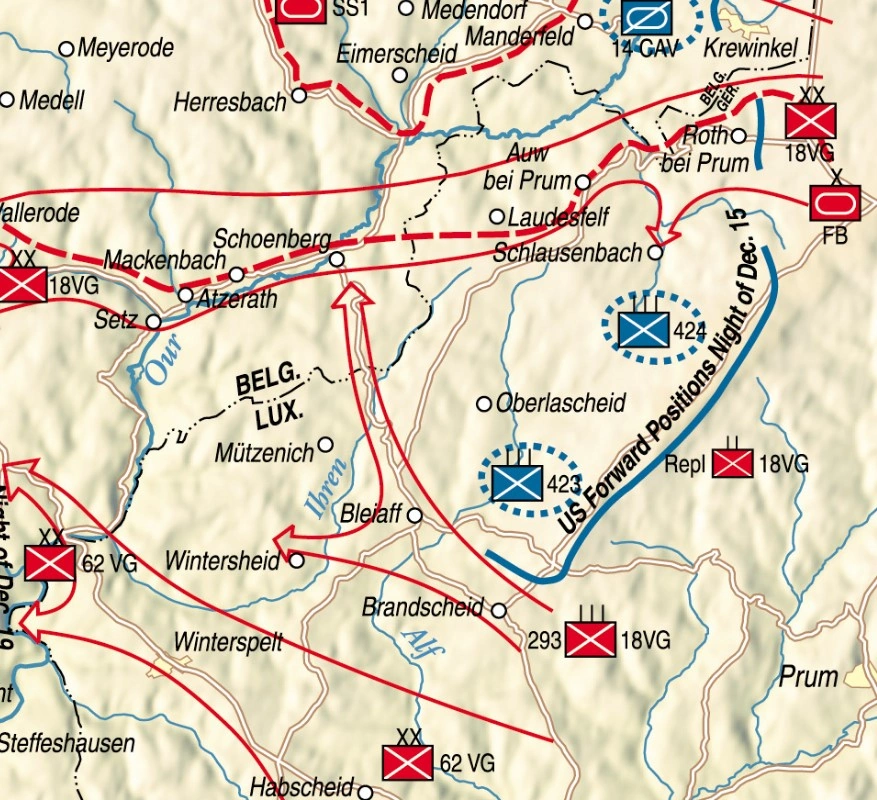 Still under control, the 2/423 had been moved during the afternoon to the vicinity of Schoenberg, there to block the roads running to the northeast and south and to hold this vital road center. By 1730, defenses had been organized. Three hours later, orders from the division were received by the 2/423 to move to the northeast to relieve the left flank of the 422-IR and to protect the displacement of the 589-FAB. Moving by motor under blackout conditions through sleet and mud via the circuitous route from Schoenberg south to Radscheid (Germany) and then north, the 2/423 reached the area of the 589-FAB about 0100, December 17. At the end of the first day of the German counteroffensive, the 423-IR had maintained its original positions despite heavy enemy attacks and numerous communications failures. Wire lines had been interrupted by enemy artillery concentrations and radios had been unsatisfactory at best. Lack of previous calibration and adjustment, unfavorable terrain, weather and enemy jamming, had made radio contact fleeting or non-existant at all echelons.
Some eighteen hours after the German Army had launched its attack, it had failed to reach it’s objective for that day, St Vith (Belgium). The Division was informed by the regimental commander, ‘I will hold present position until ordered differently’.
The Breakthrough
Artillery fire began to fall on Bleialf again beginning at 0300, December 17; the provisional battalion reported armor followed by infantry approaching its positions. Communication with the 590-FAB waas again disrupted as was the communication with the 422-IR to the north. Before dawn, the enemy struck in force all along the front of the provisional battalion overrunning defensive areas and penetrating between AT Co and Baker Co, 81-ECB. By 0630, enemy forces had taken Bleialf and a large force rapidly moved north toward Schoenberg. Within two hours it had joined another enemy infantry-tank column which had driven south to Schoenberg after the breakthrough in the 14th Cavalry Group sector to the north. The 423-IR and the 422-IR were surrounded.
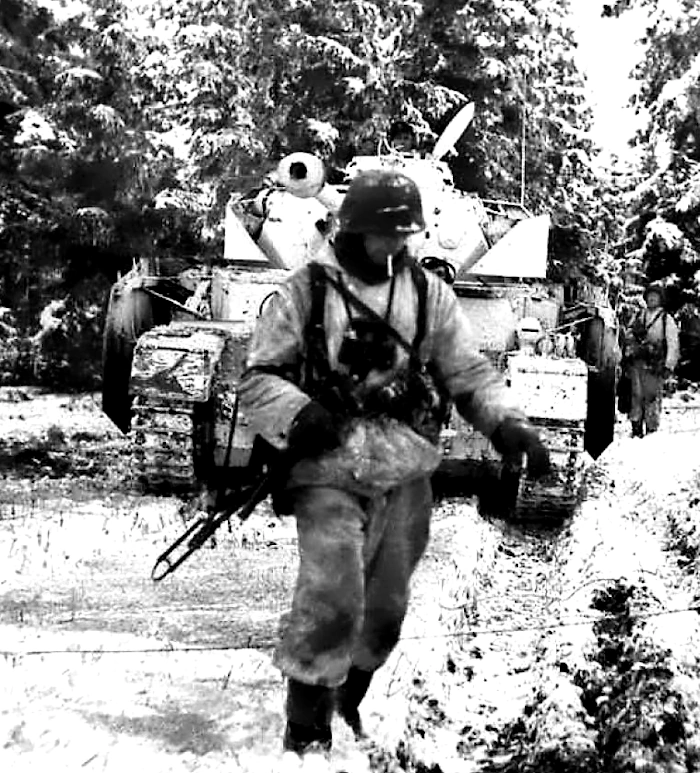 Forced back in disorder but fighting every step of the way with the fire support of one platoon of Cannon Co, the provisional battalion withdrew to the high ground just west of Buchet (Germany). Regimental headquarters and defense platoon personnel joined the fight against scattered enemy groups as the regimental command post fought to disengage itself and displace. This was accomplished and the command post and the regimental collecting station moved to the vicinity of the 3/423 command post.
Troop B, 18th Cavalry Recon Squadron and Baker Co, 81-ECB, were now definitely isolated, having physical contact neither with each other nor to either flank. Troop B, again in radio contact with the regiment, was ordered to fall back to Mützenich (Germany) and to later join the regiment if forced to withdraw again.There, with the remnants of the 106th Recon Troops from the 424-IR’s left flank, Troop B remained until it was realized that the regiment could not be joined. Late in the afternoon, the regimental commander authorized Troop B to withdraw toward St Vith if unable to reach the regiment. Withdrawing via Schoenberg, the leading platoon broke into a column of American 2.5 ton trucks moving toward St Vith only to find out that these trucks were loaded with with armed Germans. Racing down the left side of the road toward the head of the column, firing at point blank range, this platoon was finally destroyed by tanks. Regiment last heard from Troop B as the remaining elements prepared to infiltrate through St Vith. Contact was not to be regained with Baker Co, 81-ECB. One platoon had been overrun and lost in the first German attack but the company continued to hold its position. Another enemy assault in the late afternoon overrun a second platoon and remaining elements withdrew only to be captured west of Schoneberg.
With the regimental right flank driven back toward Buchet and a know
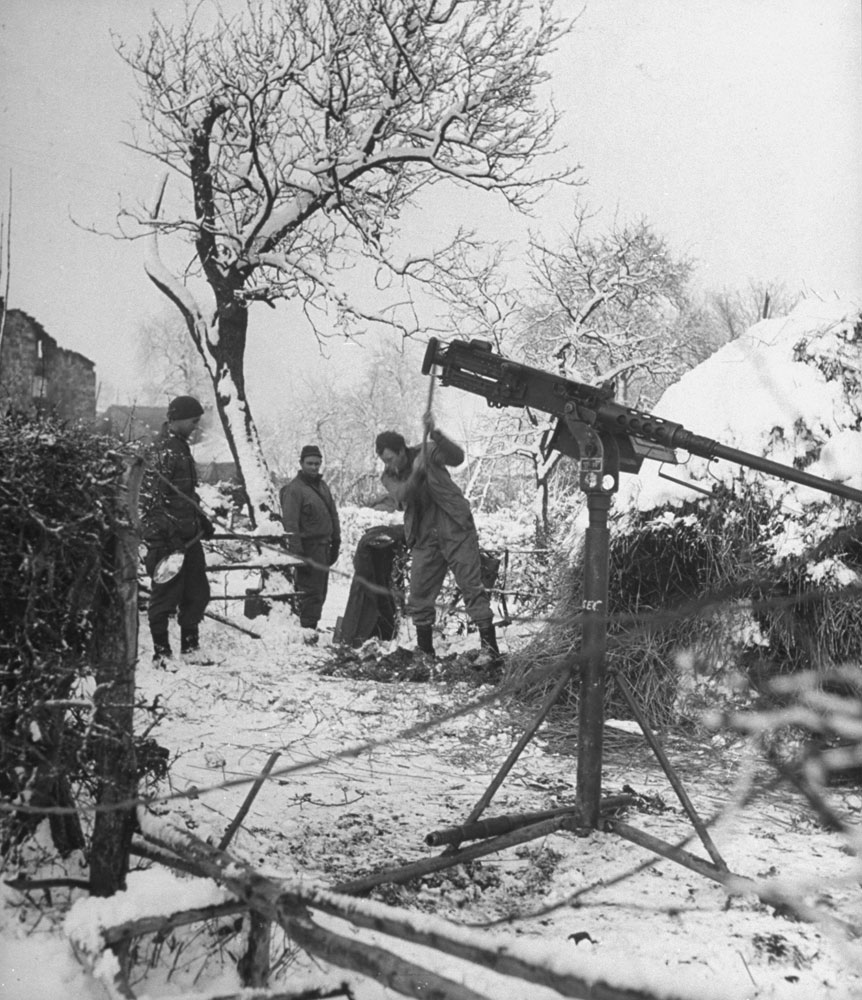 Meanwhile, the 2/423 in the 422-IR rear area to the north had been heavily engaged since dawn protecting the displacement of the 589-FAB from the German drive to Schoenberg from the north. By 0700, its radio in the division command net had been hit. The battalion had destroyed seven enemy tanks but continuing enemy tank-infantry attacks were forcing the battalion back. Supported by the 590-FAB the 2/423 began a daylight withdrawal.
During the morning, the 590-FAB had received orders from the division Artillery Commander to displace to the vicinity of Schoenberg. Upon learning that Schoenberg was filled with German armor, the battalion commander, contacting the 2nd Battalion commander whose withdrawal he was supporting, decided to fall back into the Schnee Eifel positions of the 423-IR with the 2d Battalion.
By 1100, the 2d Battalion and the 590-FAB, with three 105-MM Howitzers entered the area of the 423-IR. The regimental commander placed the 2d Battalion in position at once extending the defense perimeter some 1500 yards further toward the northeast from the vicinity of Buchet. The 590-FAB moved into positions within the perimeter generally west of the 3/423 Command Post. Cannoneers who could be spared were put into the defense perimeter as riflemen. Informing the division of the arrival of these units, the regimental commander also stated ‘Will hold perimeter. Drop ammunition, food and medical supplies until route open’.
Shortly before 1500 a message from division was received, five hours after it had been sent: ‘Expect to clear out area west of you this afternoon with reinforcements. Withdrawn from present position if they become untenable. Save all transportation possible’. All in the command post felt that Combat Commend R (9-AD) was surely on the way.
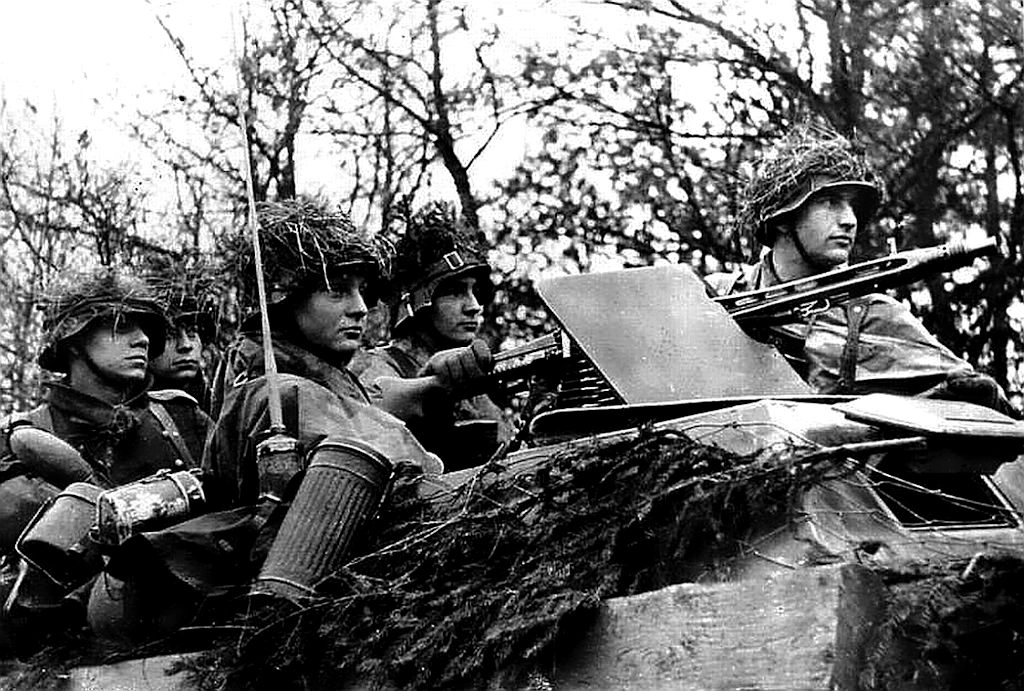
Enemy pressure slackened during the late afternoon and by nightfall the situation of the regiment was not too bad. True, the regiment was cut off, but a defense perimeter had been organized and the regiment had its three battalions again. Artillery support was available although the 590-FAB had only slightly more then 100 rounds. Patrols were still in contact with the 424-IR to the north, still in position although its north flank was bent back to the east. Casualties within the regiment numbered about 250, 150 of which had been in the units that had made up the provisional battalion. Troop B, 18th Cavalry Recon Squadron, Baker Co, 81-ECB and the guns of Charlie Co, 820-TDB had been lost. Mortar ammunition was running low, but small arms ammunition was on hand. About two thirds of K ration remained. Word had been received that the requested air drop would be accomplished within the perimeter the next morning and Combat Command R (9-AD) was thought to be nearing the position. The 423-IR would hold.
The Third Day
 About 2330, December 17, the regimental commander had held a meeting with his battalion commanders during which the situation and conduct of the defense had been discussed including plans for the probable arrival of the 9th Armored Division. Plans were also made to receive the supplies to be dropped next morning. During this meeting radio message initially sent some seven hours earlier was received ordering the 423-IR and the 424-IR to withdraw to the line of the Our River evacuating all vehicles and equipment possible. Relaying the message to the 422-IR, not then in radio communication with division, the two regimental commanders agreed that this message was now obsolete and that they would remain in position since subsequent to its origination both had reported their situation and instructions had been received concerning the air drop to be made within the defense perimeter. However, some initial planning in event of a possible future withdrawal, probably via Schoenberg, was completed although such withdrawal was now considered unlikely in view of the reinforcements and resupply expected shortly.
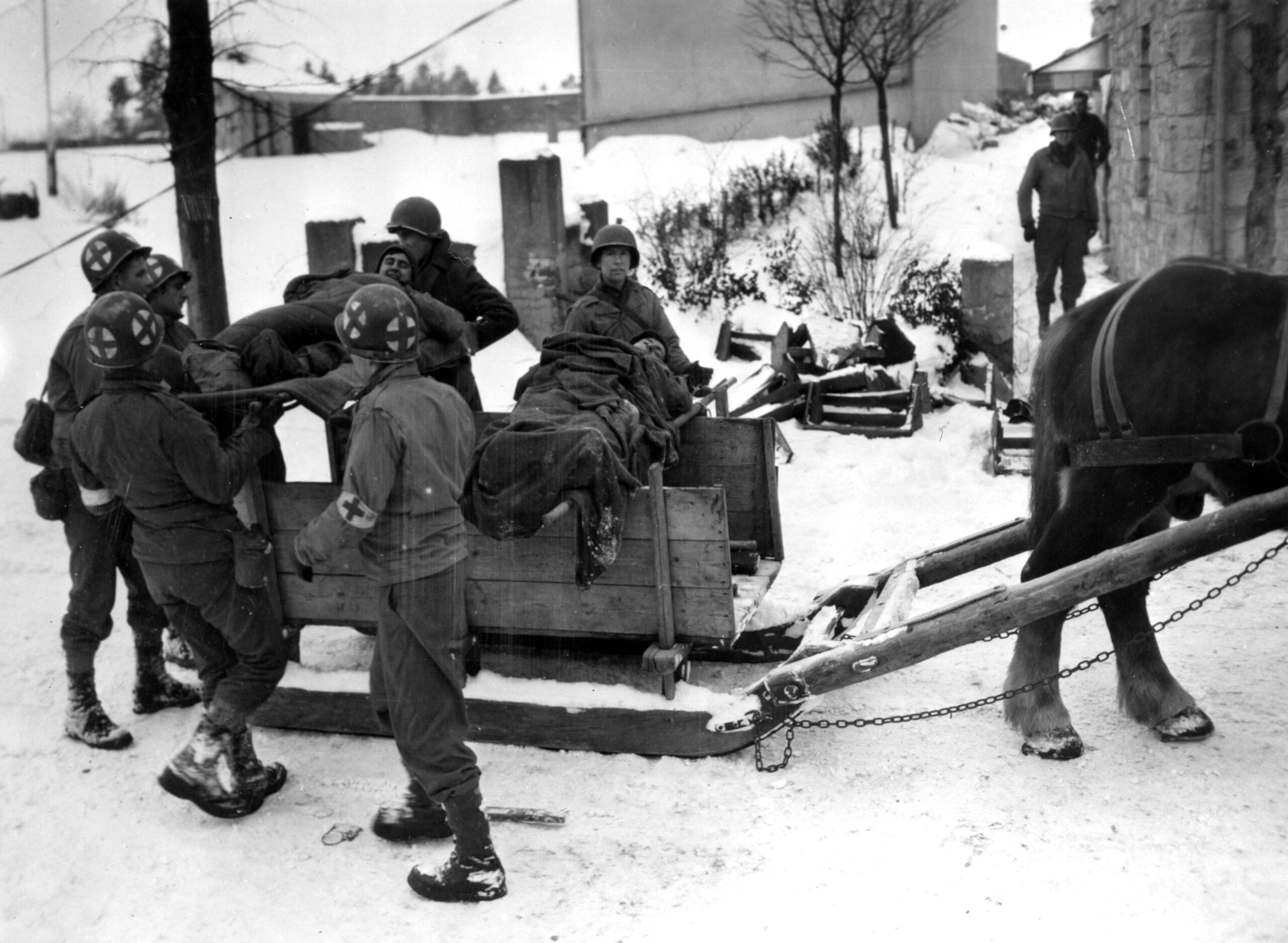 Orders were received by radio about 0730, December 18, dated 0215, December 18, from the division which stated: Panzer Regimental Combat Team on Schoenberg – St Vith road — Mission to destroy by fire from dug in positions south of the Schoenberg – St Vith road. Ammunition, food and water will be dropped. When mission accomplished move to area St Vith‘. The two regimental commanders agreed to move out together toward Schoenberg with regiments abreast, the 423-IR on the left moving along the axis Halenfeld (Belgium) – Oberlascheid (Germany) – Schoenberg. After a map reconnaissance the regimental commander formulated his plan and at about 0800, issued the regimental order to his battalion commanders and staff. The regiment was to move out at 1000 in column of battalions: 2-423, 3/423, regimental separate companies, 1-423 via Halenfeld – Oberlascheid – Radscheid – Schoenberg, 2/423 advance guard, 1/423 rear guard. Both, the 1/423 and the 3/423 were to leave covering forces in their battalion sectors. The 590-FAB was to move by bounds within the column. All kitchens, baggage and supplies which could not be carried were to be destroyed and abandoned; and those command and communication vehicles and weapons carriers on position were to accompany the column. Non-transportable casualties were to be left at the regimental collecting station with some medical personnel.
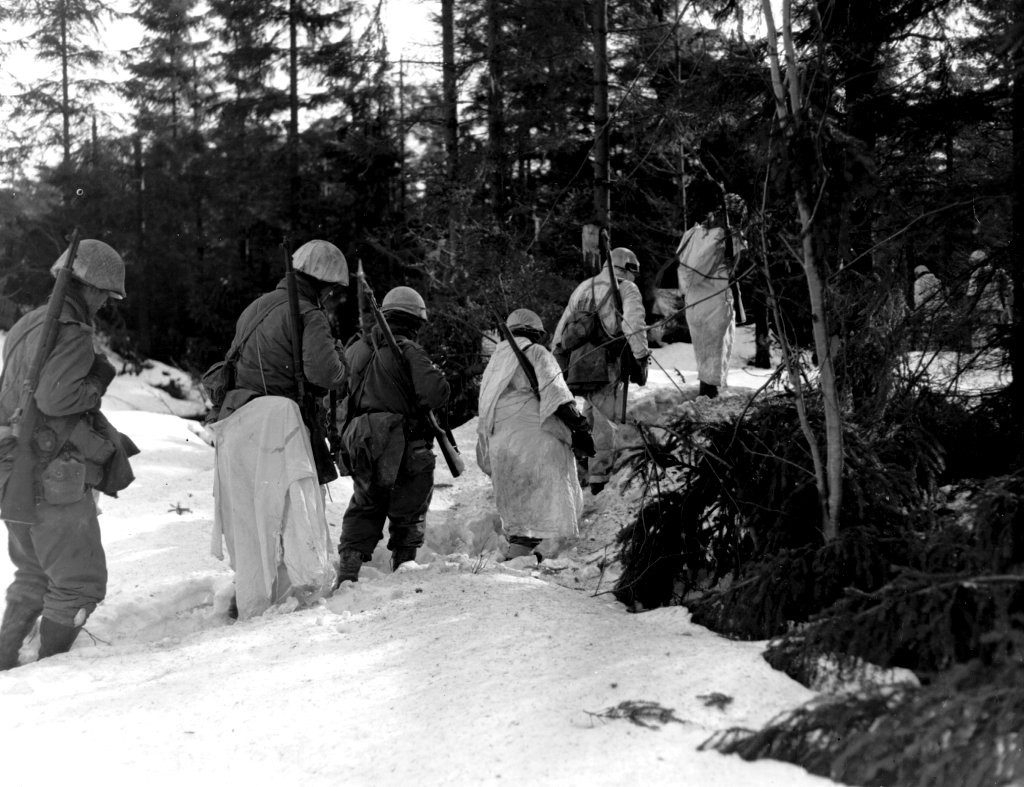
The 2/423 crossed the initial point at 1000, December 18. Elements of the 422-IR could be seen to the north about 1200 moving west as planned. As the 2/423 moved on through Radscheid and approached the Bleialf – Radscheid road, known as the Skyline Drive about 1200, it encountered heavy rifle, mortar and artillery fire from the left front Its leading company was aggressively engaged and attempted to push the enemy toward the south to clear the route of march. Heavy mortar fire pinned this company down and the next company was committed on its right. Supported by the battalion heavy weapons company and the fire from one howitzer of the 590-FAB still in position, the battalion pushed the enemy some 800 yards to the southwest where it was stopped. The almost impossible radio contact and the need to conserve artillery ammunition rendere further artillery support impossible.
 As the 2/423 was approaching the Skyline Drive a radio message from division cancelled the previous instructions and ordered the 423-IR and the 422-IR to seize Schoenberg, then to move west to St Vith. With this in mind, as the 2/423 pushed the enemy south, the regimental commander ordered the 3/423 , then in Oberlascheid (Germany) to move to the right of the 2/423 and to cut the Bleialf – Schoenberg road. Taking the right fork west out Oberlascheid, the 3/423 moved out, quickly crossed the Skyline Drive and pushed across the Ihren River Creek into Belgium. As the battalion crossed the Ridge 536, its leading company was halted by heavy small arms and Antiaircraft Artillery fire from the vicinity of Schoenberg. The battalion commander quickly moved a second company on line and with the supporting fires of its heavy weapons company the battalion attacked, still under heavy direct fire from the German AA guns, and gradually moved forward until the left flank company was astride the Bleialf – Schoenberg road. Here, the battalion dug in 800 yards from the outskirts of Schoenberg. Since noon, the battalion had been cut of radio contact with the regiment and messengers sent to the rear failed to reach the regimental command post. Late in the afternoon, patrols sent on the right to gain contact with the 424-IR were unsuccessful.
![[Illustration] Battle of the Bulge - Belgium](https://eucmh.com/wp-content/uploads/2025/03/Illustration-Battle-of-the-Bulge-Belgium.webp "[Illustration] Battle of the Bulge - Belgium")