



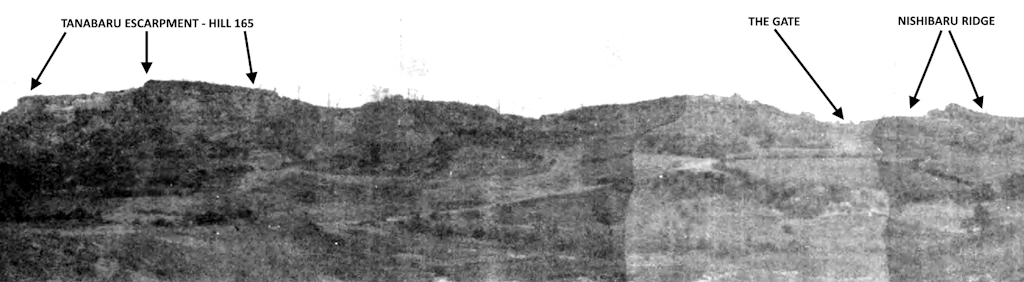
(Above) The Tanabaru Tabletop (Hill 165) – Nishibaru Ridge. This ridge composed the terrain feature on which the enemy based his defense line in the last chapter of the report (P5).
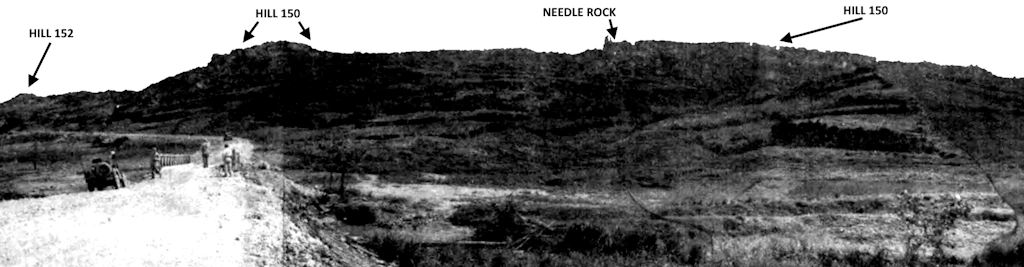
(Below) The Maeda Escarpment. This hill mass was often referred to as Hill 196 Area. The enemy second line of defense encountered during the precedent chapter, was centered on this hill (P5).
Action Against the Maeda Escarpment
With the breaking of the enemy’s defensive lines on the Tombstone Ridge, the Tanabaru Ridge and the Nishibaru Ridge, the division immediately bumped into the second enemy defensive line centered generally on the Hill 196 Area which included the Maeda Escarpment and the Needle Rock, although this hill was referred to in Field Order as Hill 196 and Hill 187, it was actually a ridge composed of three hills, Hill 155 – (8075-L), Hill 150 (8075-S, and Hill 152 (8074-E) running across the division zone, and high ground extending south from the east end of this ridge, merging eventually into the high ground of the Shuri Area. HILL 155 was named Maeda, or the Big Escarpment. Action against this defensive line is described in P5.

 The Enemy Had Withdrawn
On April 24, rapid advances of approximately 1100 yards were made by the division against almost negligible resistance. The 3/381, on the division right, under the command of Gen Bradford, attacked at 0830, and by 0845 had advanced against very light resistance to positions almost abreast of the other two battalions of tho 381-IR, and by 0950 had advanced approximately 500 yards beyond them, reaching the Task Force objective line. As it became evident that the Kakazu pocket would shortly be entirely cleaned up, the 381 and the 383 were ordered to attack at 1030 to seize Hill 143, shown as Hill 137 – (8175-N) on some maps, and the high ground running west from Hill 143 immediately north of the Hill 196 area. The 2/381 and the 1/381 came abreast of the 3/381, and all three battalions advanced rapidly against light or no enemy opposition, and by 1200 had reached the dray’s objective. The regiment consolidated its lines at that position. During the advance of the day patrols operated towards the base of the base of the Maeda Escarpment. The 383-IR resumed its advance at 0800. By 1000, the 2/382 on the regimental left, had secured the Escarpment and the Tanabaru Tabletop – (Hill 165) without opposition. The 3/383, at 0800, advanced unopposed and occupied a small hill just south of the ridge line. At 1030, the regiment began its attack with the 2/383 and 3/383 in the assault. By 1200, 2/383, on the regimental right, had secured Hill 143 without enemy opposition. The battalion continued to advance down the south slopes of the hill and came abreast of 1/381 where they were ordered to consolidate defensive positions for the night.
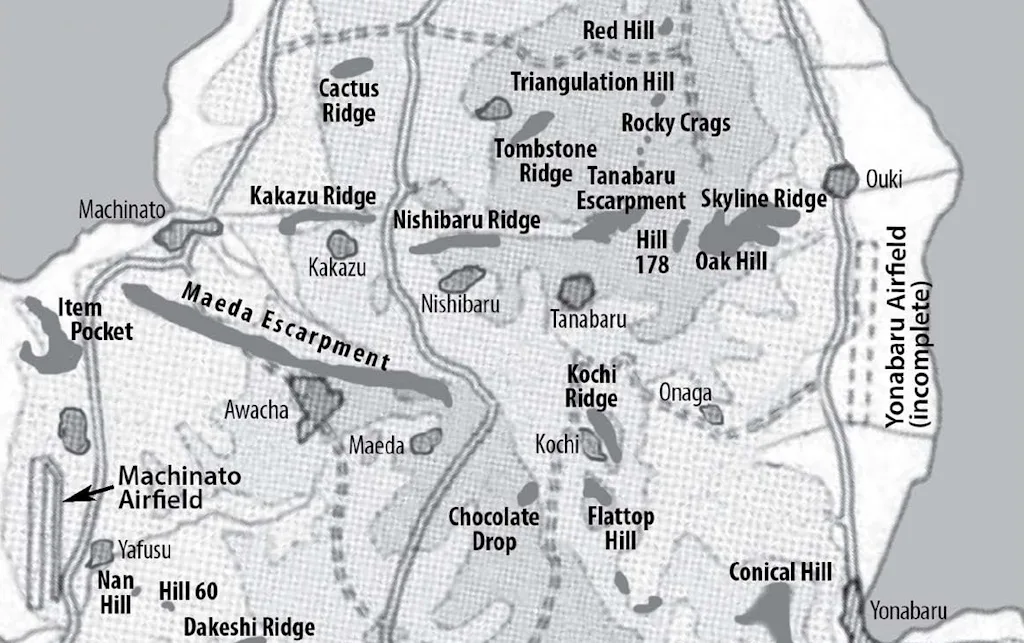 The 3/383, on the regimental left, moved rapidly through Tanabaru, took the Tanabaru Hill – (8275-QV), and had advanced some 400 yards south of the town by 1400. During the remainder of the day, strong combat patrols reconnoitered enemy defensive positions on the high ground to the regimental front. The 1/383 relieved the 2/382 and took up reserve positions in vicinity of the Hill 165. The 2/3B2 moved to assembly areas north of Tanabaru – (8276-Y). The 96th Rcn Tr was released from Corps Reserve and attachment to the 382-IR, and moved to defensive positions just south of Ginowan – (8277-A). As a result of the day’s advances, Hill 143, Hill 162, and the Tanabaru Hill had been taken by the 383-IR, and the 381-IR was within approximately 600 Yards of the base of the Maeda Escarpment. Flank units were in physical contact with front line units of both, the 7-ID and the 27-ID.

Attack Plans Prepared
On April 25, no advances were attempted by the division. Front lines did not change materially although both regiments made minor readjustments. The 381-IR, and the 383-IR perfected plans for a Corps attack ordered for the following day. Direct lire from all supporting weapons, including precision adjustment by artillery, was placed on definitely located enemy positions on the high ground to the division front. In the 381-IR zone, at least 20 occupied enemy emplacements were destroyed. The 383-IR pushed aggressive patrols 400 to 500 yards in front of their positions without encountering any strong enemy opposition or fortified positions. An air strike at 1500 against the hill mass was very successful. 24 GP-500 bombs and 24 GP-100 bombs were dropped. The 2/382 was relieved from attachment to the 383 and placed in Division Reserve in positions (8277-L) just north of Kaniku.
 96th Infantry Division Field Order #18, April 25, 1945, prescribed the details for the attack of April 26. This attack was to be made along the entire Corps front by the 27-ID, the 96-ID and the 7-ID. The 96-ID was to attack the hill mass immediately to its front, with the objective designated as the Shuri Area. Once again extensive artillery preparations were to be fired before the attack. The Division Artillery was ordered to fire a false preparation at maximum rate on the HHill 196 Area from 0535 to 0600. An air strike employing napalm bombs was then to be delivered on the same general area, following which the Division Artillery would fire another 20-minute preparation. The time for the attack was set tentatively at 0700, immediately following the artillery preparation.

The Attack
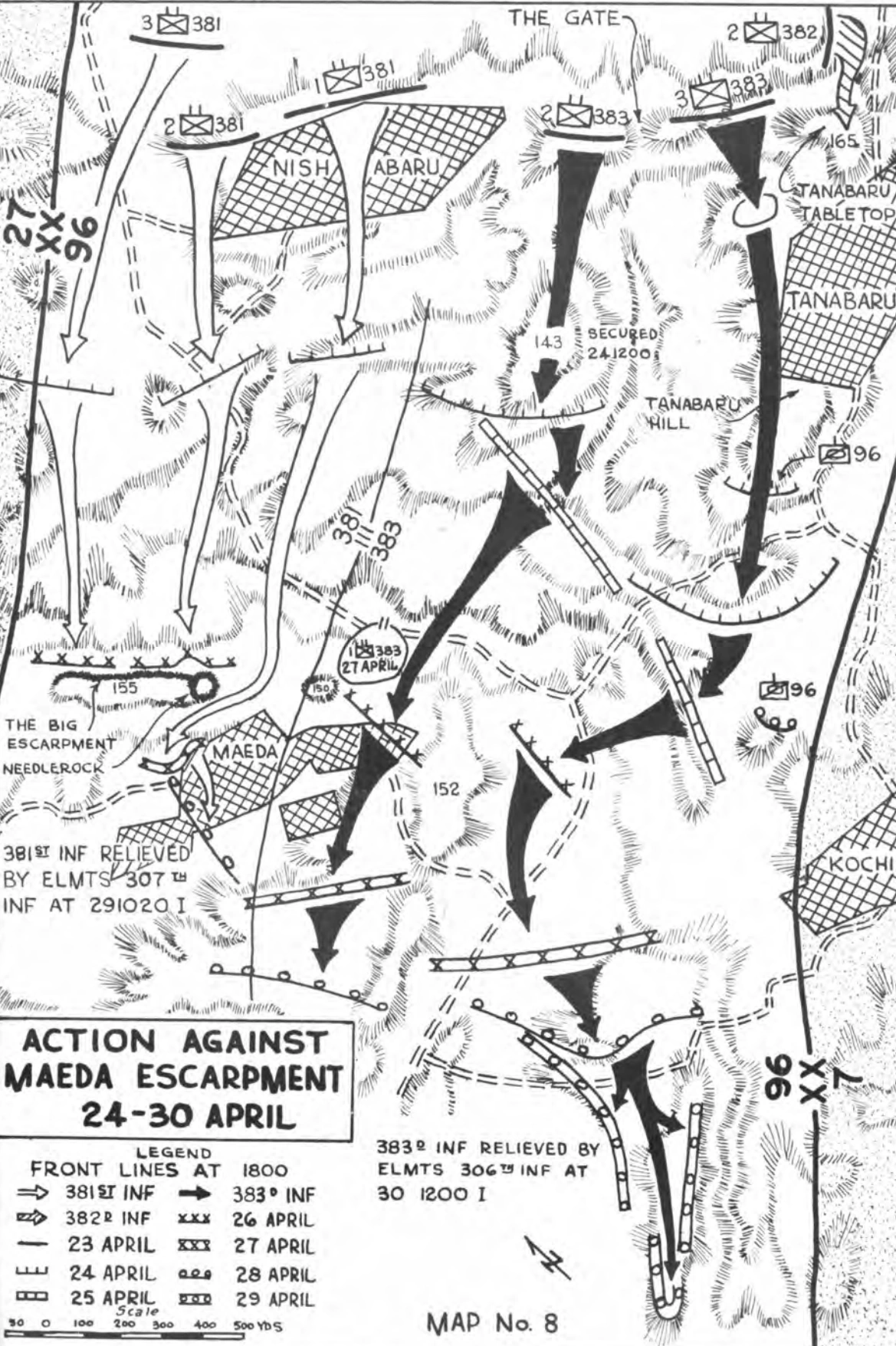 On April 26, the Division Artillery fired the false preparation according to schedule and then the actual preparation from 0650 to 0710. The scheduled napalm strike was cancelled due to poor visibility. The 3/381 and the 2/381, the 2/383 and the 3/383 battalions, from right to left, jumped off in the attack at 0710 supported by two companies of medium tanks.
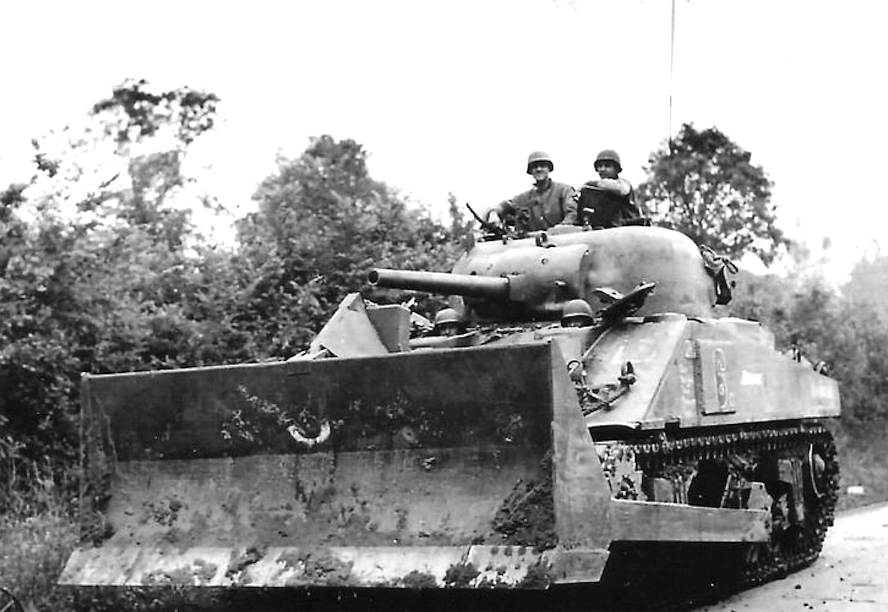
Initially, resistance was light along the entire division front. By 0800, the 3B1-IR had reached the escarpment with front lines generally on the north slopes of the Hill 155 just short of the crest. In the 2/381 sector, one enemy strongpoint continued to hold out. An attempt to flank this position to the left was unsuccessful due to intense fire from the south slopes of the ridge and the left flank. Although the north slopes of the escarpment had been gained against light opposition, except for the one enemy strongpoint in the 2/381 zone, further advances by the regiment were slight due to the intense mortar and machine gun fire sweeping the top and south slopes of the ridge. It should be noted that the terrain in the 381-IR zone was extremely difficult. The Maeda Escarpment to the west of the Needle Rock was a sheer cliff, making the use of tanks impossible. The Needle Rock was an oblong-shaped rock formation jutting into the air at the east tip of the Hill 155. It was eventually necessary to cut roads tank dozers in order to support the advance of the regimental left flank.
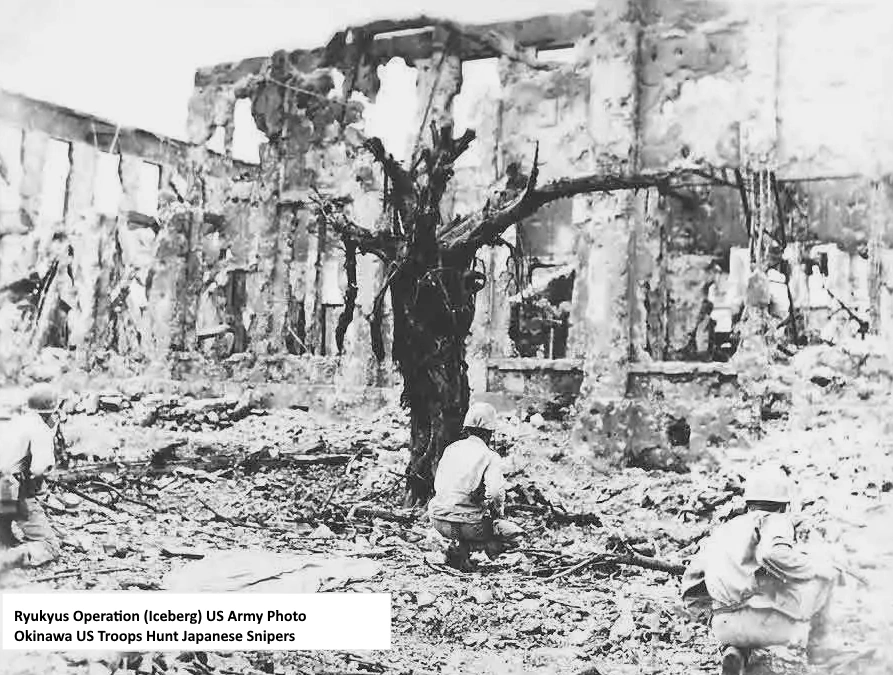
 In the 383-IR zone, initial resistance was also light. By 0845, the regiment had reached the high ground with the 2/383 extending from Hill 150 through the east edge of Maeda – (8075-PQWX) and 3/3B3 on the high ground along the division left boundary. The regiment was unable to advance further during the day due to heavy machine gun and rifle fire sweeping the forward slopes of the hills. The balance of the day was spent in locating and destroying enemy artillery, AT, and machine gun emplacements in the zone of both regiments. The 1/383 closed into an assembly area on Hill 143. The 96th Rcn Tr moved forward and established a defensive position on the Tanabaru Hill to cover the gap which had developed between the 96-ID left flank and the right flank of the 7-ID.
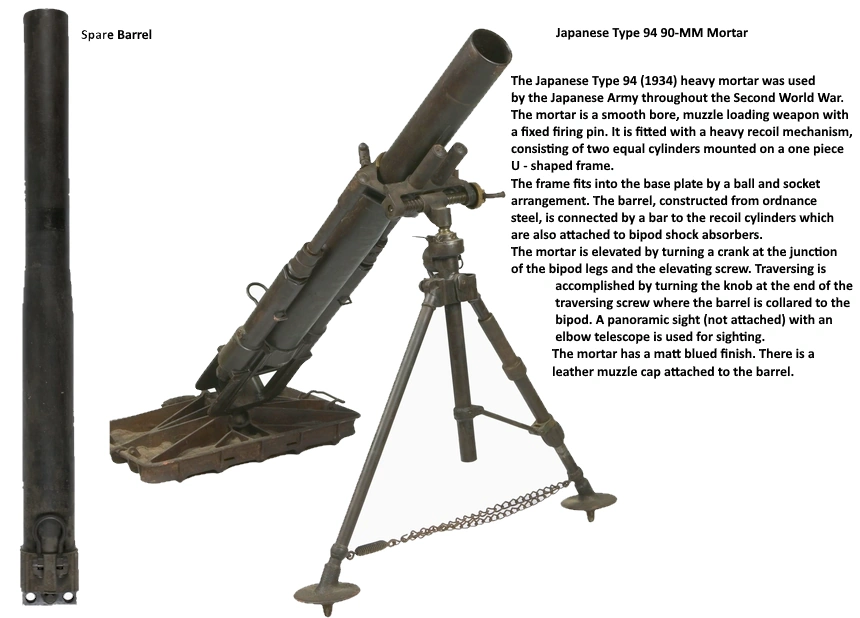
During the night of April 26/27, there was a decided increase in enemy activity along the division front. Heavy concentrations of artillery, scattered 50-MM and 81-MM mortar fire, and harassing machine gun fire covered the entire front. Numerous infiltration attempts were made by the Japs on all front line battalions, with the heaviest attacks in the zone of the 381. This regiment killed 64 Japs during the night.

 Enemy Resistance Stiffens
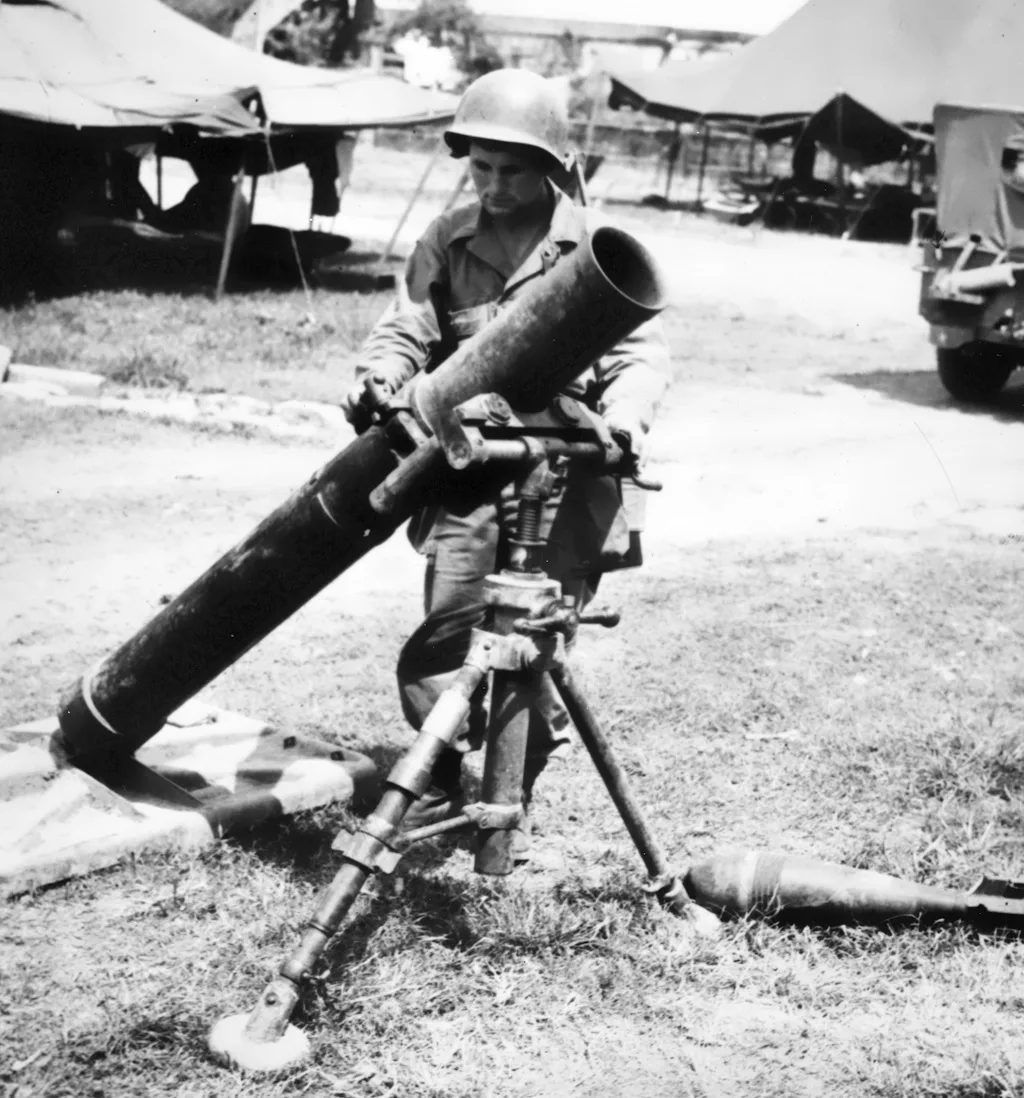
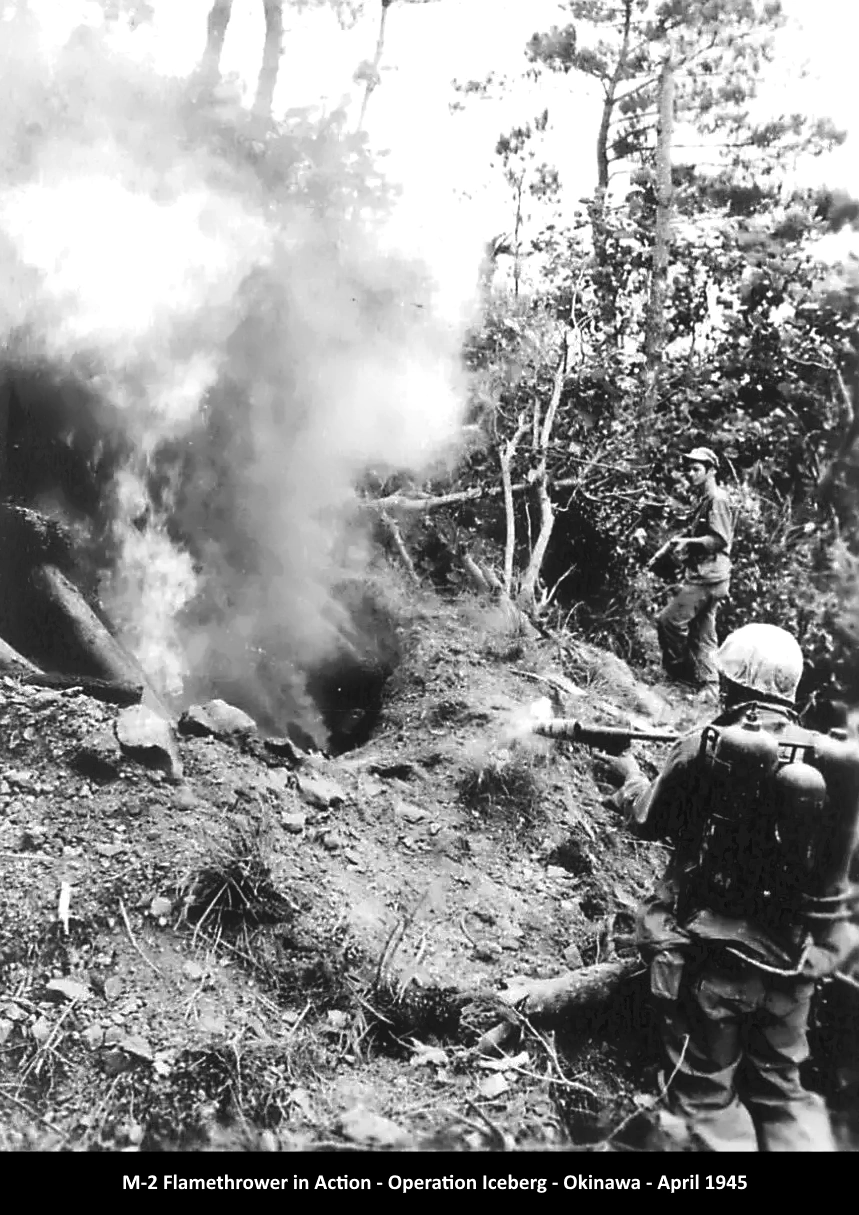
After a 20-minute artillery preparation, the division jumped off at 0730 on April 27, spearheaded by medium and flamethrower tank, and advanced approximately 400 yards during the day except on the extreme right flank. Enemy opposition during the period was strong. In the 381-IR zone, the right-flank of the regiment immediately encountered intense mortar, machine gun, and small arms fire as they attempted to cross the ridge. The top of the escarpment was untenable due to this enemy fire. During the day, the 3/381, on the regimental right, was unable to make any advances in the front lines. However, demolition patrols searched out and destroyed numerous enemy caves, pillboxes and machine gun emplacements along the steep south slopes of Hill 155. The 2/381 continued to mop up caves and pillboxes in the center of their zone, aided by one platoon of flamethrower tanks. The 1/381, committed on the regimental left, advanced its left flank some 200 yards against extremely intense machine gun and small arms fire. Although the regiment made but slight advances during the day, they engaged in the most bitter close-in fighting encountered for some time.
In the 383 zone, the 2/383, on the right, advanced 200 yards during the morning through the east portion of Maeda and over Hill 152. At 1400, this battalion encountered an extremely well-prepared enemy position to their front and right front which limited further advances during the day to a few yards. Throughout the afternoon, the right flank of this battalion on the high ground just south of Maeda, received heavy machine gun and mortar fire coming generally from their right front. The 3/383, on the left, advanced against moderate resistance and gained some 400 yards. The 1/383 moved up to the vicinity of Hill 150 to close the gap between the 1/381 and the 2/383. During the night of April 27/28, heavy enemy artillery continued to fall on all front line battalions, and numerous enemy infiltration attempts by platoon groups were repulsed. It should be noted that the weather from April 24 through April 27, had been rainy, with the resultant road and supply difficulties. For the balance of the period the weather was clear.

 Japs Fight Desperately
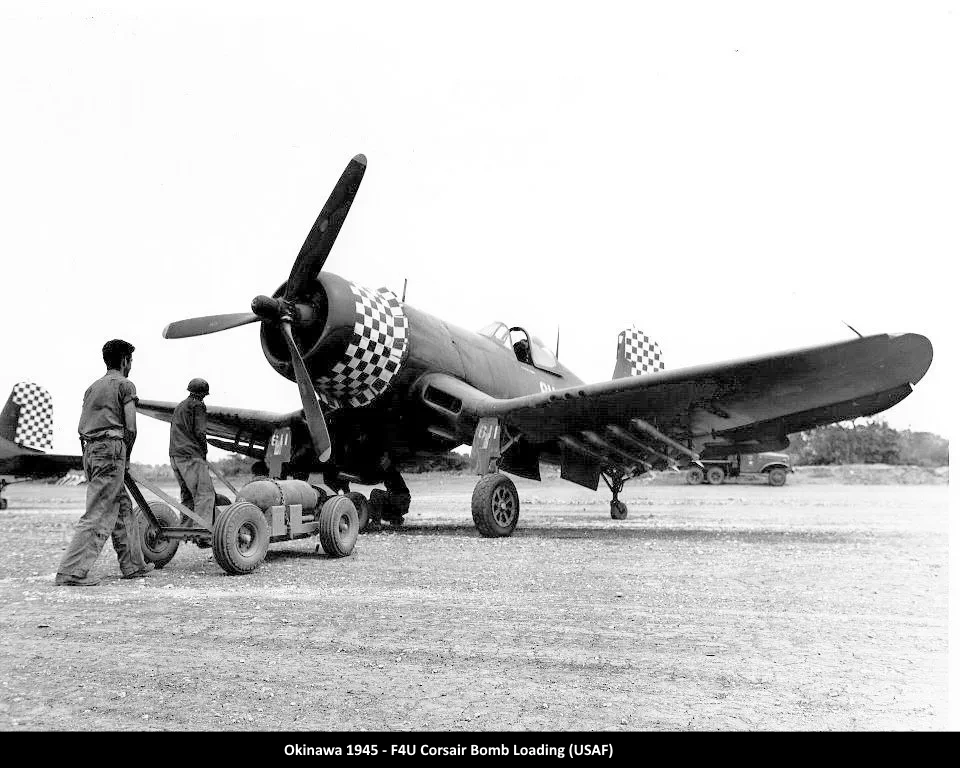
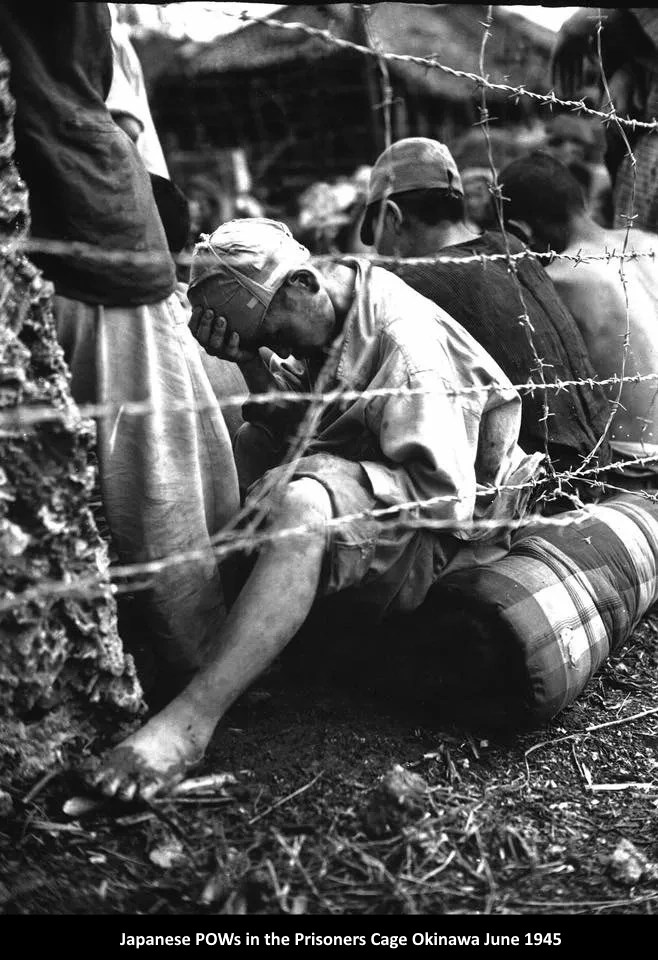
On April 2B, strong enemy resistance again prevented any gains on the division right flank. The 383-IR on the left, however, was able to gain up to 300 yards. Following an intense artillery preparation, mainly in the 381-IR zone, the two regiments resumed the attack. In the 381-IR zone, enemy resistance in front of the 3/381 had become centralized an extremely well-prepared strongpoint to the battalion right flank. This strongpoint was centered on a group of Jap barracks located at (7975-O) just south of the ridge and immediately to the northwest of Maeda.
Fire from this position and from the south slopes of Hill 155 was so intense that no more than minor advances was possible. King Co attempted to make a flanking attack through the town of Awacha – (7975) on the Jap barracks but was driven back after 30 minutes of hand-to-hand fighting. Personnel of King Co and Item Co were eventually combined into one company due to heavy casualties. In the 2/381 zone, enemy resistance had become centered in a concrete pillbox defense just over the crest of the escarpment. The battalion continued the reduction of this strongpoint during the day. Cans of gasoline and napalm were used extensively in the assault. In the 383-IR zone, the 2/383 and the 3/383 continued to push forward slowly along the high ground running generally southwest from the east 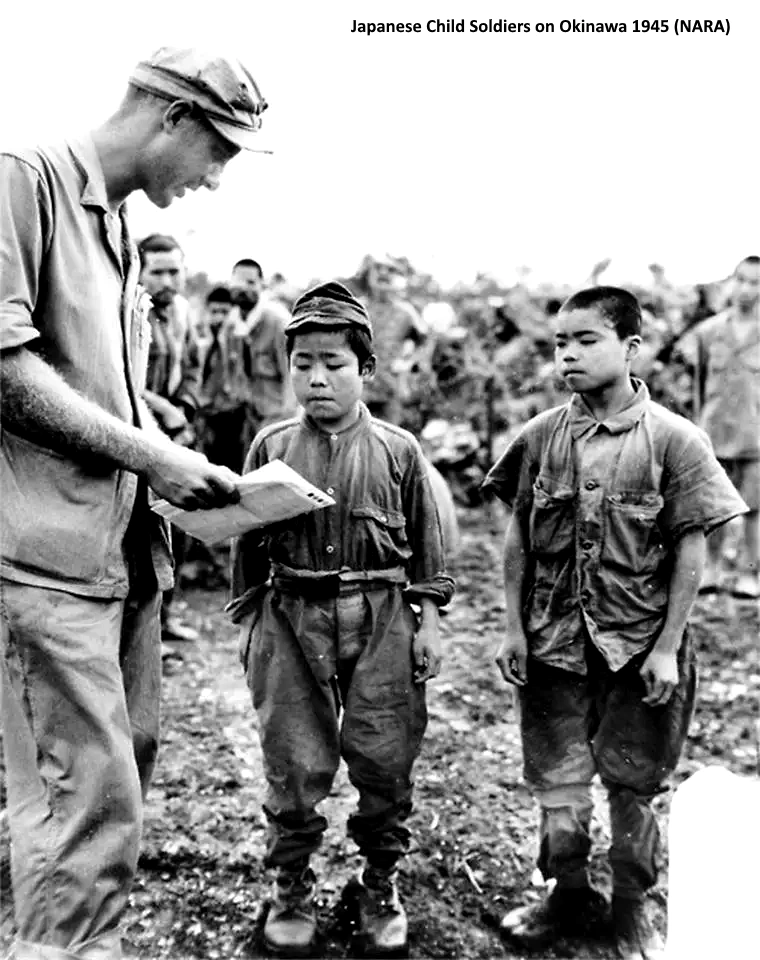 edge of the Maeda Escarpment. These two battalions made advances up to 300 yards during the day in the face of heavy enemy fire from their exposed right flank. They destroyed many enemy positions during this advance, employing direct fire of tanks and close-in support by flamethrower tanks. A very successful air strike on an enemy pocket directly to the front of the 2/383, which had held up the battalion the previous day, materially assisted this advance.
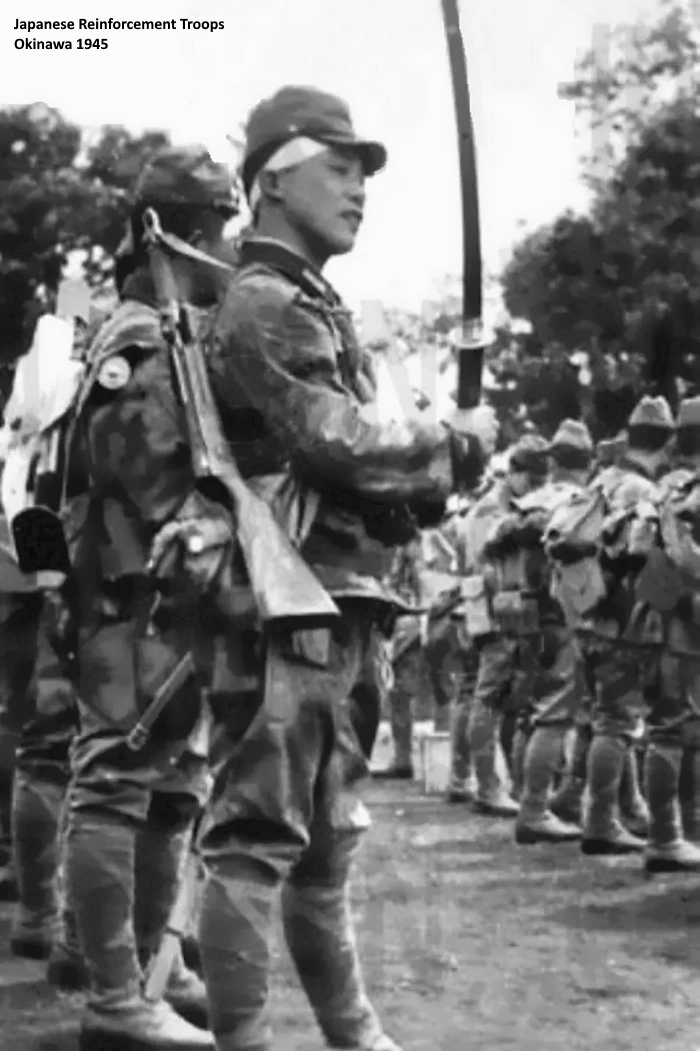
The 96th Rcn Tr moved forward into the valley just north of Kochi – (8174-W) to cover the still existing gap between the 96-ID and the 7-ID. It is interesting to note that any vehicular movement in this valley brought down accurate enemy artillery fire. In accordance with Field Order #19, 96th Infantry Division, which specified details concerning the relief of the 96-ID by the 77-ID, the 307-IR (77-ID) moved to forward assembly areas in the vicinity of Kaniku – (8277) and prepared to relieve the 381-IR on the following day. During the night of April 28/29, enemy artillery was lighter but ground activity was greatly increased. In addition to numerous infiltration attempts, the Japs launched two counterattacks of estimated company size during the early morning, one hitting the 2/383 and the other occurring in the 381-IR zone. The two regiments killed approximately 280 Japs in repulsing those counterattacks and infiltration attempts.

The 307-IR (77-ID) Relieves the 381-IR (96-ID)
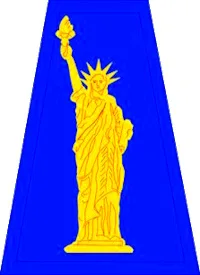
 On April 29, the division gain advanced on the left flank, with gains of some 600 yards by the 3/383-IR. The 381-IR continued mopping-up operations until relieved by 307-IR (77-ID) at 1020. The regiment, after its relief, moved to an assembly area in the vicinity of Yogi – (8983). The 307-IR was unable to make any additional gains during the day. The 2/383, after repulsing the counterattack during the previous night, destroyed by close-in fighting the remainder of the enemy attack force which had dug in on the south slopes of the hill. After 1000, the battalion attempted no further advances due to intense mortar, machine gun and small arms fire from enemy positions on its exposed right flank. During the remainder of the day, this battalion cleaned out large numbers of enemy to their front with flamethrowers and tanks. The 3/383 advanced rapidly forward during the morning against moderate enemy opposition and consolidated their final front lines on the Hill 138 – (8073-I). One plat of Baker Co, 763-TB, supporting the 383-IR, reached positions near the tip of the Hill 138 and delivered direct fire on enemy positions in the town of Shuri – (7971).
Enemy activity during the night of April 29/30 was once again extremely heavy, particularly in the zone of the 383-IR. Two heavy artillery barrages fell in the area of 1/383 during the night, plus intermittent mortar fire throughout the regimental zone. Nine spigot mortar rounds (320-MM) also fell in the vicinity of the 2/383. All front line battalions repulsed numerous Jap infiltration attempts. The 383-IR repulsed two enemy counterattacks of 100-150 men size. Approximately 265 Japs were killed during those counterattacks.

The 77th Infantry Division Takes Over
On April 30, the 383-IR maintained steady pressure against the enemy until relieved by the 306-IR (77-ID). A close-in air strike at 1015 for the 3/383 and against enemy positions to their immediate front produced excellent results. The 383-IR moved to an assembly area in the vicinity of Kishaba – (8682) upon relief. The 96th Rcn Tr withdrew and closed into new area in the vicinity of Futema – (8481). The Command of the 96th Infantry Division zone passed to the Commanding General of the 77th Infantry Division, at 1200.
At the time of the relief, enemy resistance still remained strong enough to prevent any advances on the division right flank in the area of the Maeda Escarpment west of the Needle Rock. On the division left, however, the 383-IR had pushed a considerable distance to the south against less intense enemy opposition. The division had climbed its second escarpment with the following score.
| Okinawa 1945 – 96th Infantry Division | |||
|---|---|---|---|
| Casualties 96th Infantry Division | KIA | WIA | MIA |
| 381st Infantry Regiment | 32 | 194 | 0 |
| 382nd Infantry Regiment | 9 | 21 | 1 |
| 383rd Infantry Regiment | 45 | 231 | 3 |
| Total Casualties 96-ID | – | – | 536 | Japanese Casualties | – | – | 2507 |
On our side, we lost 8 medium tanks to AT gun and land mines. On the Japanese side, they lost 2507 men, 48 machine guns, 20 mortars, 15 field pieces, 1 320-MM Spigot mortar, 5 pillboxes, 75 caves and 11 trucks.

EUCMH Other Archives Related to the 96th Infantry Division and Available
Operations 3/381-IR (96-ID) Okinawa (Ryukyus Operation) April 1/4 1945
382/96-ID Naha-Shuri-Yonabaru Line (Okinawa) May 1945
96-ID (Report – Okinawa – Ryukyus) – April 1945
Addition Images & Info
ebay.com/itm/374825470683
Camp Obispo Cakifornia
hippostcard.com
Battle of Leyte
buckinghamcovers.com/070445-japanese-cabinet
ww2online.org/image/96-ID
nationalww2museum.org
britannica.com/topic/Battle-of-Okinawa
en.wikipedia.org/wiki/USS_Iowa_(BB-61)
Reddit
rememberthedeadeyes.com/Dencker.html
collection.nam.ac.uk
history.navy.mil
warstore14.com
awm.gov.au (1)
awm.gov.au (2)
sarahsundin.com