


Pusuit of Retreating Enemy
After the division had secured all of its objectives and reduced all organized enemy resistance in its assigned zone of action, and with the breaking of the Shuri Line, Field Order #52 (Hq XXIV Corps) dated May 31, was issued giving the division new zone of action, and the mission of pursuing the enemy to uncover his final defensive position.
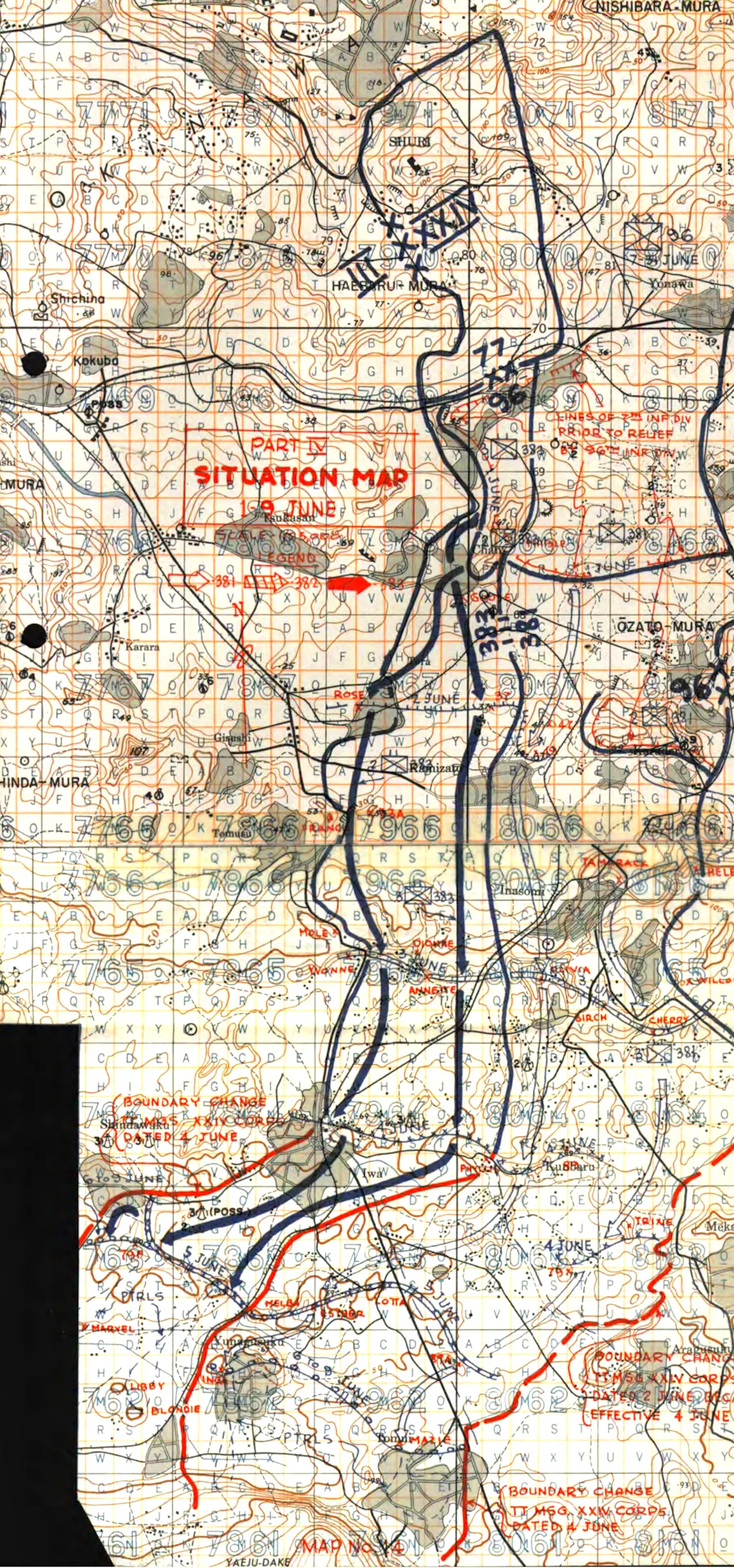
June 1, Division Assigned New Zone
On June 1, the division moved into this new zone of action, relieved all elements of the 32-IR (7-ID), and immediately prepared to continue the attack south. Front lines of the 32-IR, when relieved by the 96-ID, on June 1, are shown in Red on Map #14. The 77-ID relieved elements of the 383-IR and 381-IR in the area along the Corps boundary north of the Yonabaru-Naha Road and assumed responsibilities of that sector. Field Order #25 (Hq 96th Inf Div dated June 1) ordered the 381-IR and the 383-IR to attack to the south in their assigned zones and seize the hill mass in the Tomui-Aragasuku-Mega Area. The 382-IR was to be in reserve until released by the Corps Commander.
June 2, Enemy Resistance Light
Heavy rains fell during the night of June 1/2 and continued the next day. Despite this bad weather the division began the attack south at 0730 with the 383-IR on the right and the 381-IR on the left. By 1000, the 2/383 had completed mopping up all enemy positions in the vicinity of the Mabel Hill – (8068-G3) and had cleaned out the town of Chan – (7968-T) after a stiff fire fight with the enemy which was characterized by much small arms and hand grenade fighting at close range.
At 1120, the 2/383 and the 3/383 advanced abreast moving forward to seize the Goose Hill – (7968-Y5), and by 1400, these two battalions had advanced 500 yards south of the hill against sporadic, yet effective resistance of a delaying nature. By 1800, this regiment had secured the Hill 37 – (8067-P2) and were occupying the east and west slopes of the Rose Hill – (7967-Q1). Numerous delaying groups of enemy were encountered by this regiment during the day’s advances and when these groups were attacked in force they fled to the rear in disorder offering excellent targets for our automatic weapons.
In the 381-IR zone, the 1/381 had ranched the top of the Hill 47 – (8067-R4) by 1000 against machine gun and rifle fire coming from their right flank. The battalion then launched an attack against the Hill 49 – (8067-WJ) but met bitter and stiff resistance. However, after two strong attacks were launched, the 1/381 finally seized the Hill 49 at 1645. Upon receiving information that the 7-ID had secured the Hill 117-A – (8265-B2) with no enemy opposition, the 2/381 immediately moved through the 7-ID zone and attacked the Helen Hill – (3166-X1) from positions in the vicinity of the Hill 75 – (8266-L1), and by 1500 had secured and occupied it. As a result of these activities, the division front lines advanced 800 to 1200 yards securing the Helen Hill, the Hill 47, the Hill 49, and the Hill 37 and the east and west slopes of the Rose Hill. During the day elements of the 2/305 moved forward to protect the division right flank.
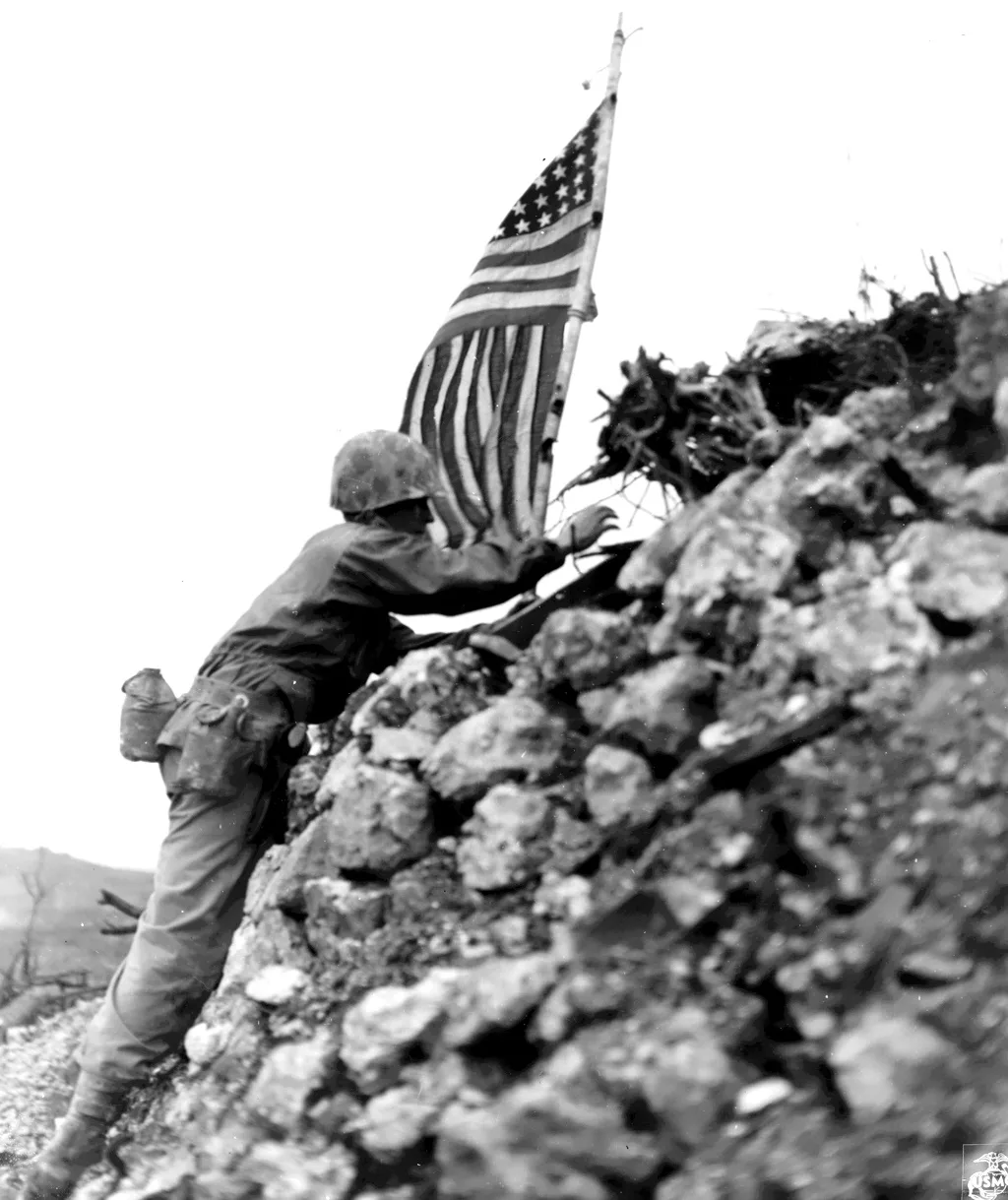
June 3, Doughboys Advance Despite Rains
Rainy weather continued on June 3 as the division resumed the attack to the south. The 383-IR on the division right advanced against light resistance to secure the Hill 37 and the Rose Hill, and the towns of Tera and Kamizato by 1200. During the afternoon, they continued their push south, and by 1400 had secured the Francis Hill – (7966-K1) and the Hill 53-A – (7966-G4) against only light opposition. During the remainder of the day, however, enemy resistance grew steadily stronger. As they moved forward of the north slopes of the Mole Hill – (7965-F2) and the Dionne Hill – (7965-N1) a hastily prepared enemy position was encountered along this high ground. This resistance was broken in an assault at close range by bayonets and hand grenades and at the close of the period, the 383-IR was able to secure their final front lines on the tops of the Yvonne Hill – (7965-L1) and the Annette Hill – (7965-N4).
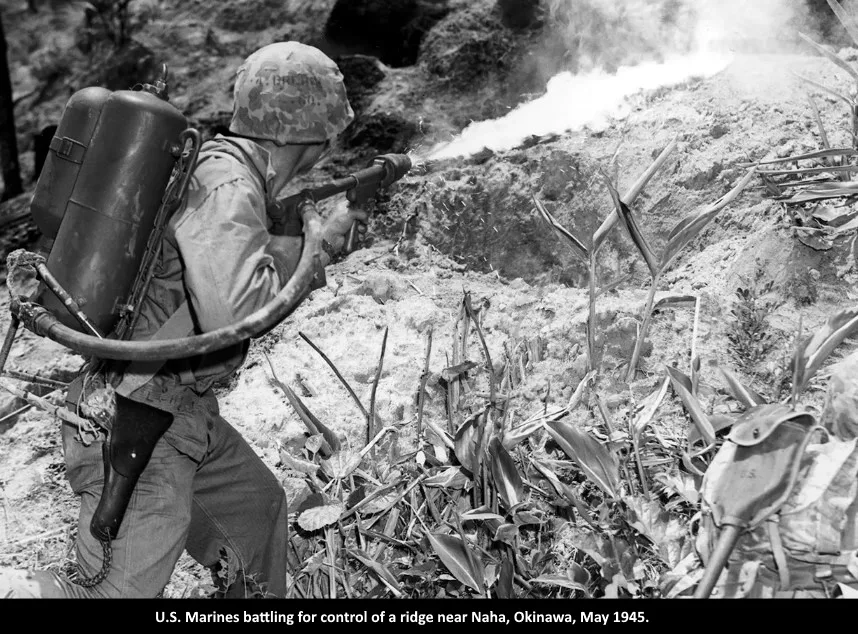 The 381-IR assisted the 383-IR in the capture of the town of Kamizato by 1130. The 2/331 advanced 700 yards against moderate resistance, and by 1100 had secured the Tamarack Hill – (8166-U5) and the Willow Hill – (8165-S1). Pushing on rapidly against light yet delaying opposition and extremely difficult supply conditions, the 1/381 seized the Olivia Hill – (8065-M4) and 2/381 captured the Birch Hill – (8165-P3) and the Cherry Hill – (8165-V4). During the day’s advances the division was opposed by the stiffest enemy opposition yet encountered within the new zone of action. However, advances of 1400 yards were made despite bad weather and extremely difficult supply conditions. The 305-IR (77-ID) continued to cover the division right flank by occupying the Mabel & Suzie Hills – (7962-T2), the Joe Hill – (7971-WX), and the John Hill – (7970-O3) during the day.
June 4, Enemy Resistance Increases

 The boundary change between the 7th Infantry Division and the 96th Infantry Division, previously ordered by TT message from Hq XXIV Corps dated June 2, became effective at 0730 on June 4. Substantial gains were made by all front line units on June 4 despite extreme difficulty encountered with the terrain, weather and transportation of supporting weapons. The 383-IR advance was opposed by isolated, yet strong delaying groups of enemy and by particularly heavy machine gun fire coming from the high ground on the division right flank (78S4). It was not until that the 1/383 with supporting weapons had moved forward to the Yvonne – Dionne Hills and placed neutralizing fire on the enemy along this high ground (7864) that the 2/383 on the regimental right, was able to push on and secure the north edge of the town of Iwa. The 3/383 advanced steadily during the day, but by 1800 were unable to secure the high ground at (8064-U) due to heavy enemy fire from their front and left flank.
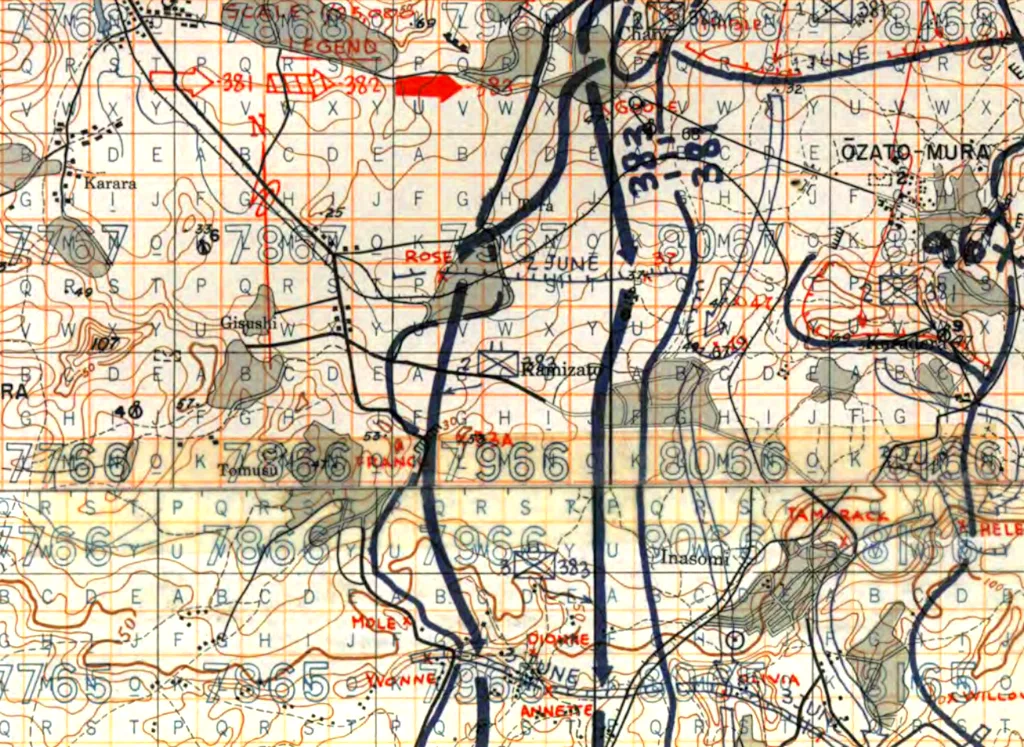 The 381-IR encountered increaseed enemy resistance in its push to the south, particularly on the right flank. The 1/381, encountered consider able machine gun and rifle fire from an enemy position at (3064-U). The Hill 89 – (8064-S4) was secured at 1100. The 3/381, after passing through 2/381 advanced against increasing enemy resistance throughout the day coming from the escarpment at (8062-J), at (8163-N) and also at the Hill 79 – (8063-52). This opposition prevented the battalion from securing the Hill 79, but at the close of the period, front lines were consolidated on the north slopes of the Hill 79 and the Trixie Hill – (8163-F4). As a result of these activities, the division advanced 1400 to 2000 yards to capture certain key terrain features necessary in continuing the attack southwest in the new division zone of action (TT Hq XXIV Corps dated June 4). Durang the day, the 2/305 (77-ID) moved south to occupy the Goose Hill.
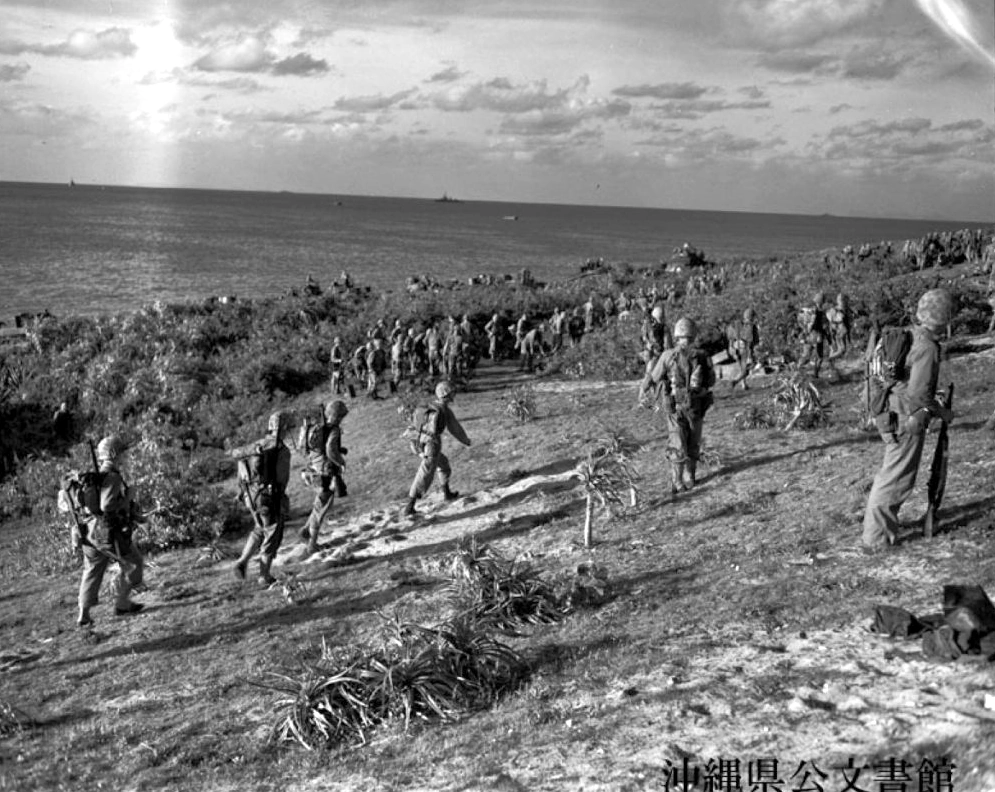
June 5, Japs Final Position Reached
 Rainy weather continued, roads remained impassable, supplies were hand carried, supporting weapons (including AT, weapons), were manhandled forward through the mud, and the enemy resistance steadily increased. However, despite these conditions, the division advanced 1800 yards on the right flank. The 383-IR jumped off at 0700 with the 2d Battalions and the 3d Battalion in the assault, and by 0930 had completely secured the town of Iwa on the right and occupied the Phyllis Hill – (8064-U) on the left.
The 3/383, after taking the Phyllis Hill continued to push rapidly southwest to secure the Hill 59 – (7863-Q) against strong and determined enemy resistance from the high ground near Yunagusuku. In addition to the determined enemy resistance encountered all along the front of the regiment during the advance, constant flanking fire from the high ground west and northwest of Iwa – (7864) rained down on the right flank and rear of the 2/383. At 1700, despite this flanking fire, the battalion advanced up the northwest slopes of the Hill 79-F – (7763-N) against additional enemy fire to the front. Due to the heavy enemy fire falling across the regimental front their was no further advance and at the close of the period front lines were established on the Hill 79-F and Hill 59.
 The 381-IR continued to advance slowly yet steadily throughout the day against isolated pockets of enemy resistance. Considerable enemy machine gun fire was received during the morning from an enemy strongpoint at (8063-F), but by 1220, the 1/381 had overcome this resistance and continued their advance to the southwest.
By 1600, this battalion had moved forward to seize the Lotta Hill – (7963-R), the Esther Hill – (7863-Y) and the Melba Hill – (7863-X). The 3/381, after mopping up the Hill 79, moved forward against moderate resistance and seized the Hill 39-A – (7962-J).
 As a result of these activities, the division advanced front lines 1000 to 1300 yards securing the last dominating terrain feature short of the enemy’s last defense line, the Yuza-Dake Escarpment. The 2/305 (77-ID) continued to protect the right flank and rear of the 96-ID and advanced one company as far south as the Dionne Hill.
Enemy activity was noticeably increased during the night of June 5/6 as all front line battalions received sporadic artillery, mortar, and machine gun fire. Heavy infiltration attempts were repulsed by the 1/381 which killed 50 Japs.
June 7-9, Enemy Positions Pounded
During this period, the division was unable to make any gains due to the stubborn resistance of the enemy to their front and to the continued rainy weather which had damaged roads and prevented the rapid forward movement of supplies and supporting weapons so necessary after the division had advanced about 8000 yards in six days. During this three-day period the division made elaborate preparations for the attack against the escarpment by sending out strong feeler patrols to locate and destroy enemy installations. Tanks and supporting weapons were moved forward and the Division Artillery displaced forward to new positions in order to soften up the enemy. Large quantities of supplies and ammunition were moved to forward areas and intensive work on all roads was continued. With the aid of clear weather and excellent observation on June 9, the division gave a final pounding to the enemy positions along the escarpment with infantry weapons, supporting artillery, air and naval gunfire, and by direct tank fire support in preparation for the final assault on June 10. The 96-ID CP moved from (8577-A) to (8l69-D) at 0830, June 7.
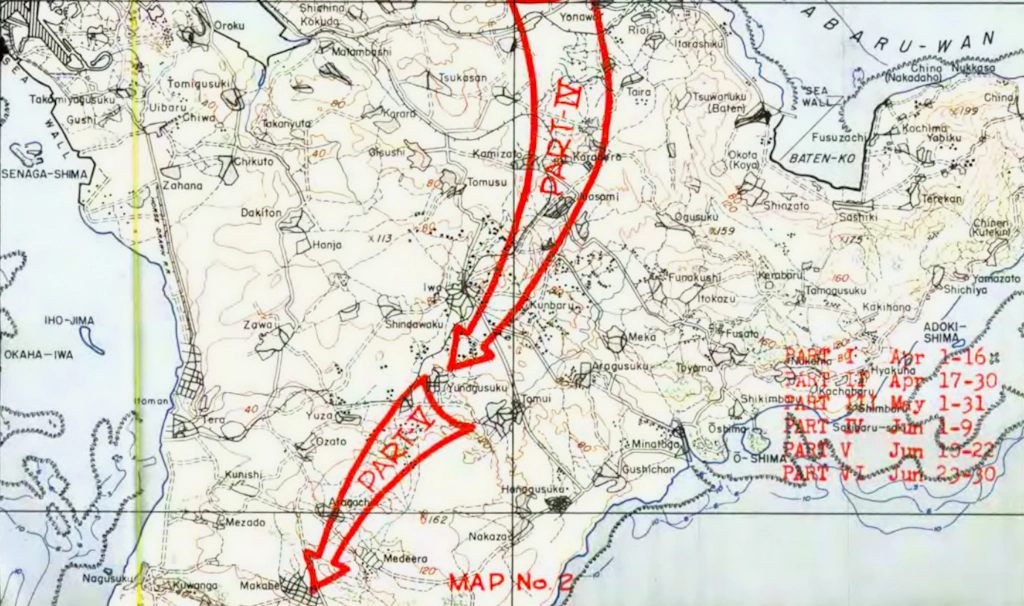
During the period of June 1/9, the division chased a retreating enemy 8000 yards and uncovered the Japs’ final defensive line on Okinawa along the Yuza-Yaezu Escarpment. Rainy weather, mud, impassab1e roads, extremely difficult supply conditions and an effective delaying action by the enemy, characterized the difficulties encountered during this period. Despite these obstacles, assault units advanced an average of 1300 yards a day and killed over 1400 Japs during the brief nine-day period. The following figures are a comparison of our losses to the damage inflicted on the enemy during this period of June 1945.
| Okinawa 1945 – 96th Infantry Division | |||
|---|---|---|---|
| Casualties 96th Infantry Division | KIA | WIA | MIA |
| 381st Infantry Regiment | 17 | 113 | 0 |
| 382nd Infantry Regiment | 1 | 3 | 0 |
| 383rd Infantry Regiment | 21 | 98 | 0 |
| Total Casualties 96-ID | – | – | 253 | Japanese Casualties | – | – | 1417 |
Our tank losses for the period was 0.
Damage to the enemy, 1417 men were killed, 16 PWs were captured, we destroyed 10 Field Pieces, 31 Machine Guns, 3 Tanks, 4 Pillboxes and 226 Caves.

The Division Attacks its Third Escarpment
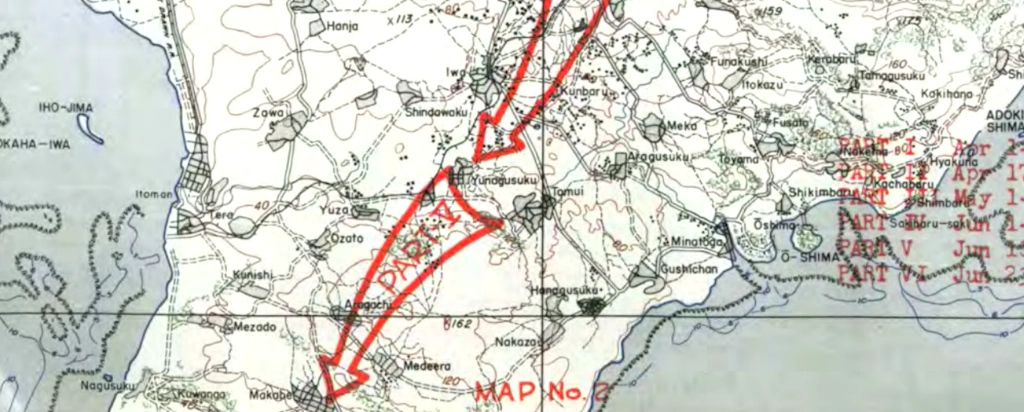
Following a three-day period of intense bombardment of the hill mass, the division attacked at 0700 on June 10 from positions as shown on the map above. Troops locations, not shown on map, at start of period were as follows: 1/383 (less Able Company in Regimental Reserve, vicinity of Iwa – (7964-L). The 1/382 was at (8067-T), the 2/382 at (7966-H) and the 3/382 at (8066-L).
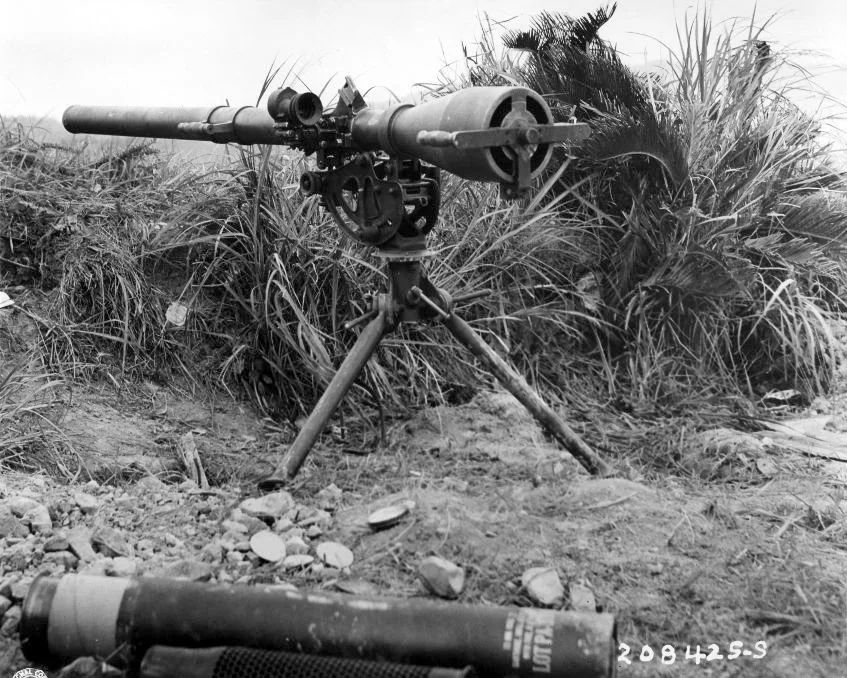
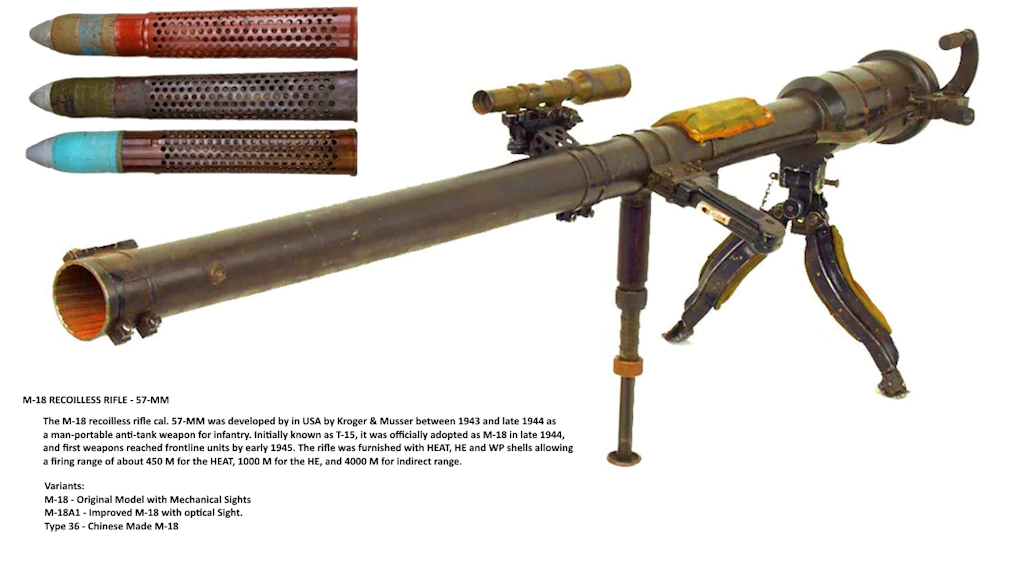
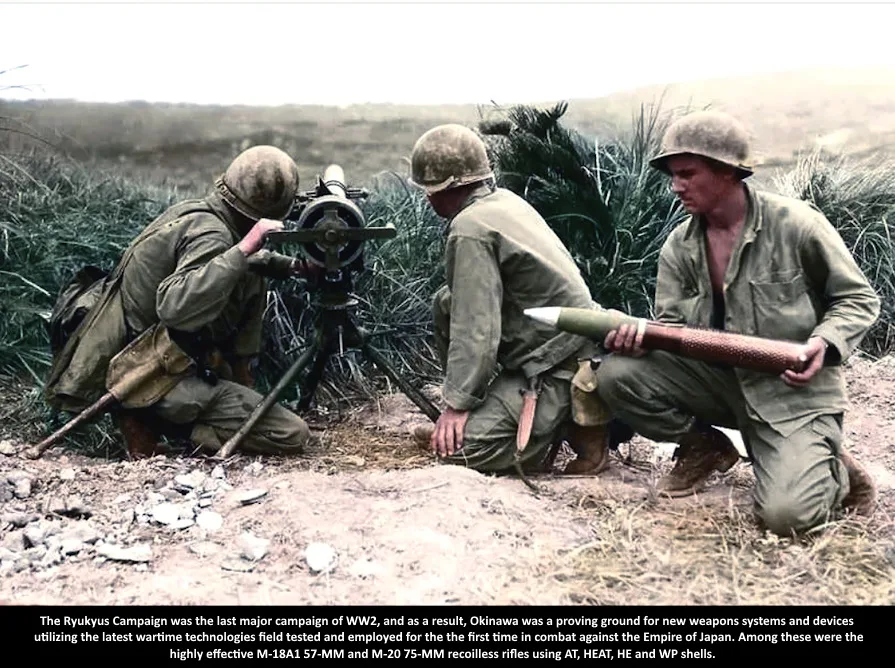
In the 383-IR zone, resistance was light initially. The 2/383 on the right, and the 3/383 on the left, jumped off at 0700. The 2/383 secured the Ora Hill – (7662-S), and the 3/383 advanced approximately 200 yards before being held up by machine gun fire. The battalions continued to advance slowly, however, by 1215 had reached the railroad tracks running east and west through the regimental zone approximately 700 yards north of the escarpment. Here the advance was stopped by heavy machine gun fire coming generally from the Beatrice Hill – (7661-B) on the right flank in the 1-USMC Division zone and the escarpment on the left flank. This machine gun crossfire swept the flat open terrain north and east of Yuza – (7661-DE) and made advances up to the base of the escarpment impossible. Heavy fire fighting continued throughout the afternoon with medium tanks, 57-MM M-18A1 as well as the 75-MM M-20 recoilless rifles, 75-MM AT guns and all the Canon Companies’ weapons firing directly into enemy positions. By the end of the day, however, the machine gun positions were still holding out. Front lines of the regiment were consolidated for the night just south of the Railroad Tracks north and east of Yuza.
 The 381-IR, with two battalions in the assault, also encountered light resistance initially and both battalions advanced rapidly toward the escarpment. The 1/381, on the right, moved across the open terrain to its front and the 3/381, on the left, advanced through the town of Tomui – (7961). As the battalions neared the high ground, however, heavy fire from numerous enemy positions on the escarpment made further advances difficult. Elements of the 1/381, supported by fire from tanks, AT guns and the Canon Company weapons, were finally able to push to the top of the lower escarpment in the center of the regimental zone, and by 1500 had consolidated their positions thereon (7861-DE) with the aid of a heavy smoke screen. The 3/381 attacked with Item Co on the right and Love Co on the left. After passing through Tomui, this battalion employed all supporting weapons to destroy the enemy positions along the escarpment to their front. By the end of the day, however, numerous positions still remained active and the battalion was forced to consolidate its lines for the night with Item Co on the Hill 99 – (7961-B) and Love Co on the south edge of the town some 400 yards from the escarpment. The 382-IR, in Division Reserve, patrolled the Iwa – (7864) – Kamizato – (8066) Area with negative results. The 2/302 closed into a new area at (7965-U).
During the day, the Division Artillery placed time fire on large concentrations of Japs on the hill mass. Throughout the attacks over this Yuza-Dake & Yaezu-Dake Escarpment, the Division Artillery, in addition to firing normal support missions, placed numerous Time on Target fire on the escarpment and the Aragachi – (7659) – Medeera (7759) Areas, killing many enemy groups caught in the open. As a rEsult of the day’s attack, front lines were advanced approximately 800 yards and all assault unites were in contact with the enemy. The 381-IR had managed to push two companies to the top of the lower escarpment within its zone.