

Headquarters XXIV Corps – APO 235
TFGOG 314.7 – July 28, 1945
Subject: After Action Report – 96th Infantry Division

Prelude – Doc Snafu

 The 96th Infantry Division, known as the ‘Deadeye Division’, was activated on August 15, 1942, at Camp Adair (Oregon). It was one of the many infantry divisions formed during World War II in response to the United States’ involvement in the conflict. Initially, it was structured with the 381st Infantry Regiment, the 382nd Infantry Regiment, and the 383rd Infantry Regiment, along with supporting artillery, engineer, medical, and other auxiliary units. The division’s training regimen was rigorous, preparing it for jungle warfare, amphibious landings, and combat operations in the Pacific Theater.
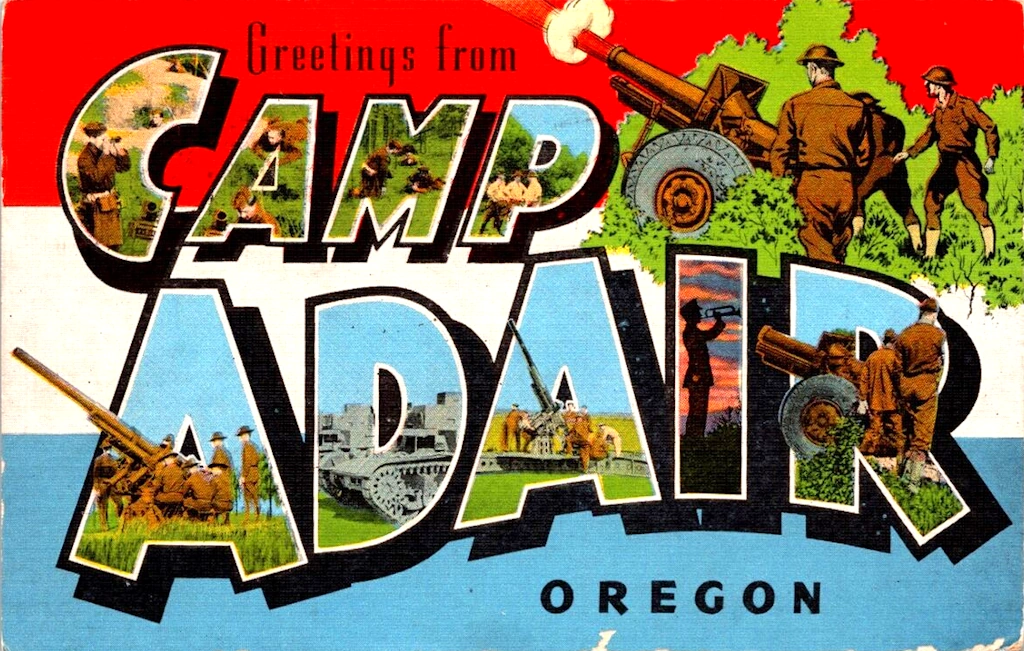 Following its activation, the 96th Infantry Division underwent extensive training at Camp Adair, where soldiers received instruction in infantry tactics, field maneuvers, and marksmanship—earning the nickname ‘Deadeyes’ due to their expert shooting skills. In early 1944, the division moved to Camp San Luis Obispo
 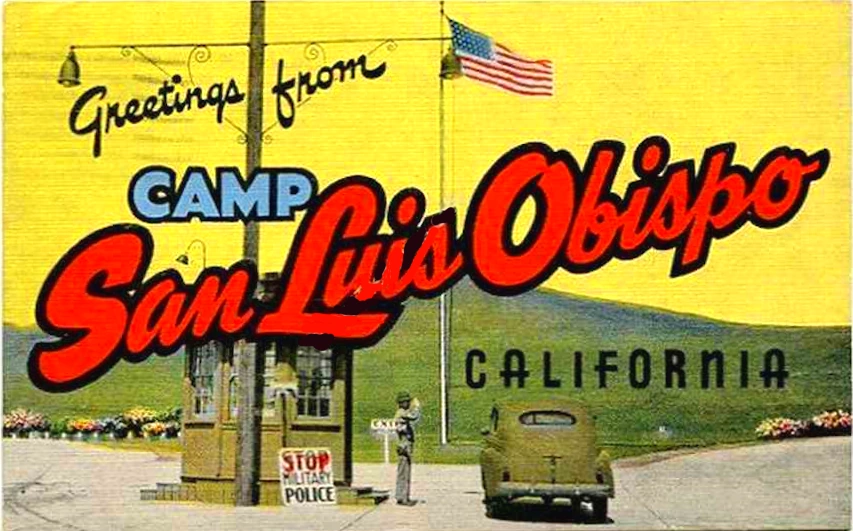 (California), for additional training, particularly in amphibious warfare. The division’s training included simulated landings, defensive tactics, and extensive physical conditioning to prepare for the harsh conditions of combat in the Pacific.
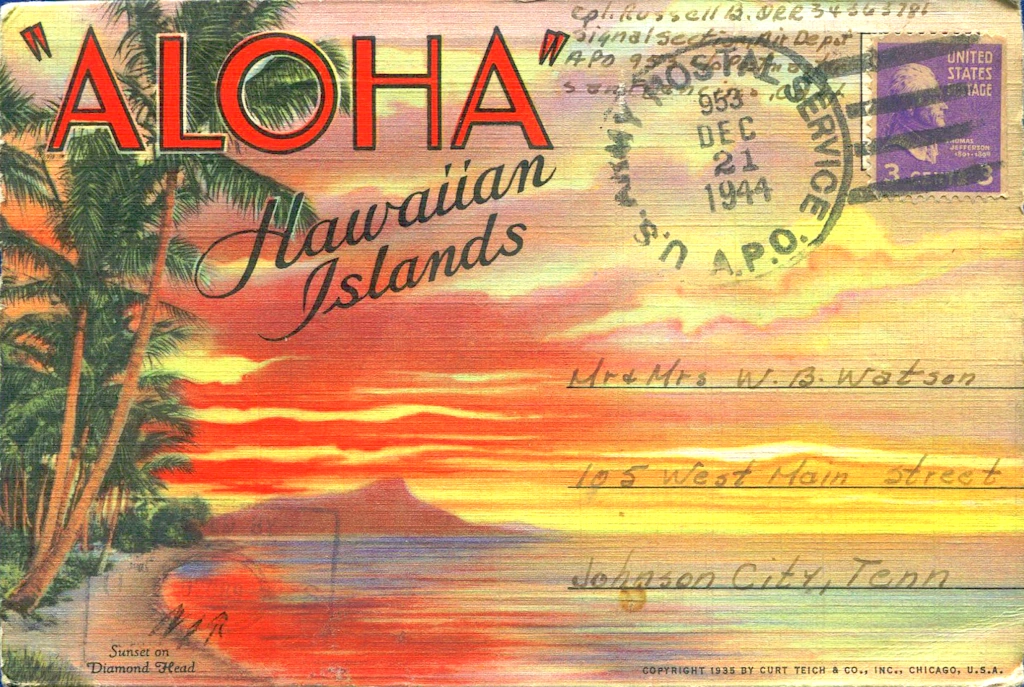 In July 1944, the division was transferred to Hawaii, where it continued its jungle warfare and amphibious training at the Schofield Barracks (Hawaii) and along the coastlines of Oahu. The men practiced ship-to-shore movements and engaged in live-fire exercises, preparing them for future engagements. By September 1944, the 96th Infantry Division was declared combat-ready and was assigned to the US XXIV Corps under the command of Gen John R. Hodge.
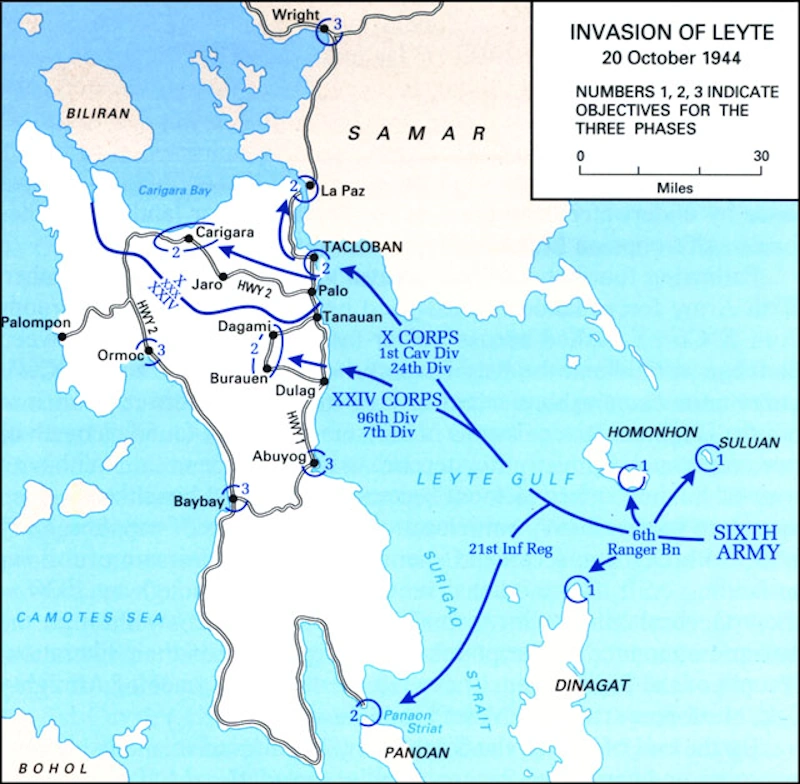
The 96th Infantry Division’s first major combat operation took place during the Battle of Leyte, part of Gen Douglas MacArthur’s campaign to liberate the Philippines from Japanese occupation. The division landed on Leyte Island on October 20, 1944, as part of the US Sixth Army, tasked with securing the eastern beaches before pushing inland. Upon landing, the 96th Infantry Division faced sporadic Japanese resistance. The division rapidly secured its beachhead and began advancing inland. The 381st and 382nd Infantry Regiments moved westward to capture the Catmon Hill Ridge, a key defensive position held by the Japanese. The hill was heavily fortified with machine guns, mortars, and hidden bunkers, requiring coordinated assaults and intense hand-to-hand combat. By early November, the 96th Division had successfully overrun Japanese defensive positions and linked up with other American forces. However, the battle was far from over. The Japanese launched a series of counterattacks, including banzai charges and infiltration tactics during the night. The division, holding its ground, utilized artillery, air support, and coordinated firepower to repel enemy attacks.

As the battle progressed, the 96th Division advanced through Leyte’s mountainous terrain, encountering entrenched Japanese forces in Ormoc Valley. The division faced monsoon rains, dense jungle, and challenging supply routes. By December 1944, the division had secured Ormoc and continued mopping-up operations against isolated Japanese units. The Leyte Campaign officially ended in January 1945, with the 96th Infantry Division playing a crucial role in eliminating Japanese resistance on the island. The price to paid for the Battle of Leyte was heavy: 486 men were Killed in Action plus 28 attached troops, totaling 514. 1289 men were Wounded in Action. Disease and Non-Battle Injuries generated also a lot of casualties as bu Christmas 1944, approximately 2500 soldiers were affected by diseases or non-combat injuries. Additionally, the Army Historical Foundation reports slightly different numbers, stating that the division suffered 376 killed, 1289 wounded, and 4 missing during the Leyte campaign. The discrepancies between these sources may be due to differences in data collection methods or reporting periods.
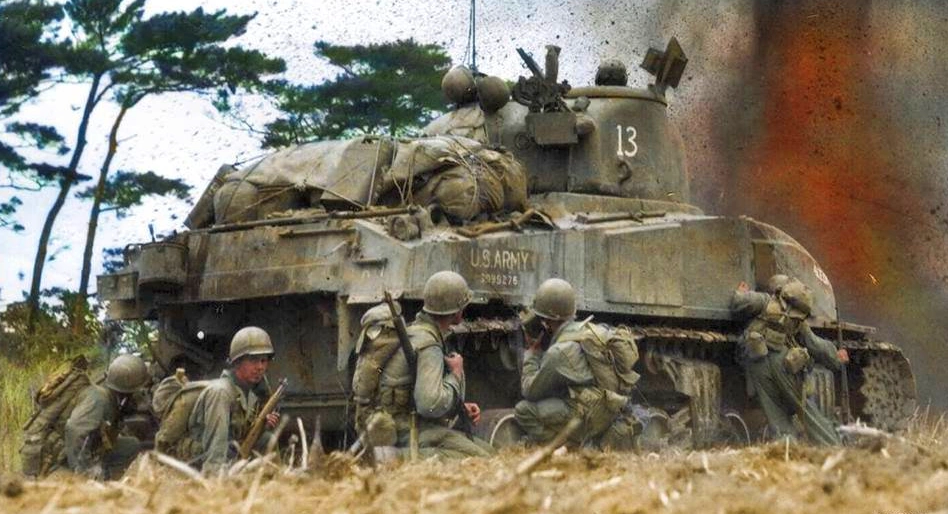
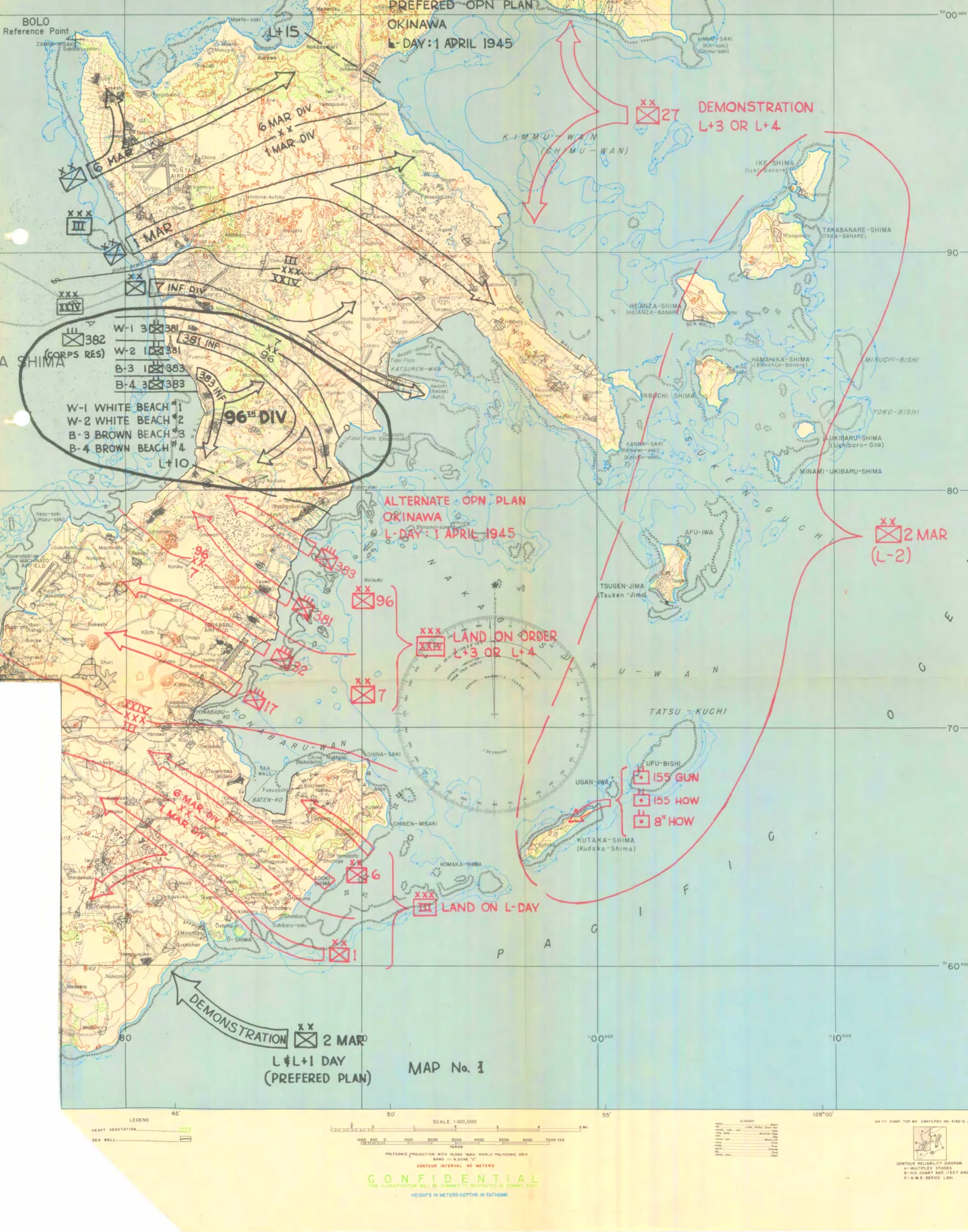
After Leyte, the 96th Infantry Division was withdrawn for rest and refitting in preparation for the next major operation: Operation Iceberg, the invasion of Okinawa. In February 1945, the division moved to Mindoro (Philippines), where it conducted additional training, including practice amphibious landings, urban combat drills, and anti-banzai defense tactics. During this period, the division received replacements to fill gaps left by casualties suffered during the Leyte Campaign. It also underwent intensive intelligence briefings about the Japanese defenses on Okinawa. Reports indicated that the enemy had fortified the island extensively, with complex tunnel networks, reinforced bunkers, and artillery positions hidden in the rugged terrain. By late March 1945, the 96th Infantry Division was aboard transport ships bound for Okinawa. Alongside the 7th, 27th, and 77th Infantry Divisions, it was assigned to the US XXIV Corps as part of Gen Simon Bolivar Buckner’s US Tenth Army. The invasion was scheduled for April 1, 1945, and the 96th Division was tasked with securing key sectors on the southern half of the island.
As of March 31, 1945, the 96th Infantry Division was on the verge of participating in one of the bloodiest battles of the Pacific War. Having proved its effectiveness in combat during the Leyte Campaign, the division was well-prepared but faced a formidable challenge on Okinawa. With thousands of troops trained and ready, the Deadeye Division would soon play a pivotal role in the battle that would last for nearly three months. The division’s history up to this point showcased its discipline, bravery, and effectiveness in jungle and amphibious warfare, setting the stage for its involvement in the final push against Japan.

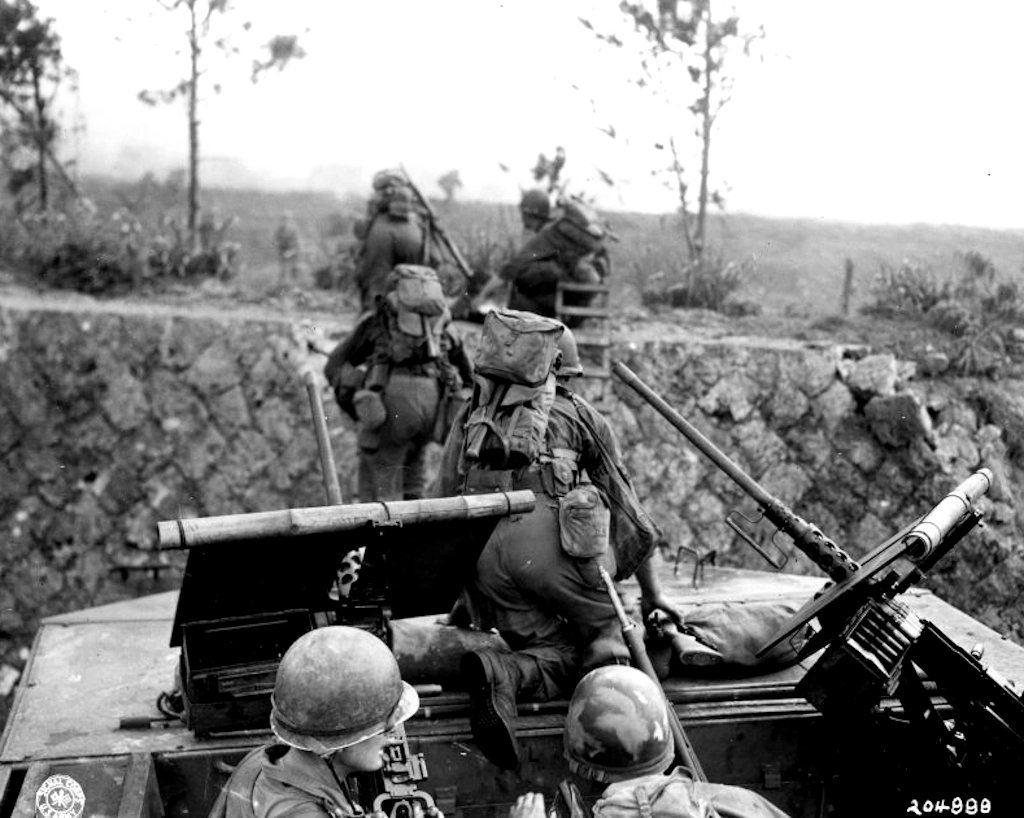
It was on Easter morning, April 1, 1945, that veteran Deadeyes of the 96th Infantry Division entered into their second action against the enemy after an unopposed landing on the western shores of Okinawa. The unopposed advances came to a quick end, however, and for the balance of the 91-day operation doughboys of the 96-ID met some of the strongest enemy opposition and engaged in the heaviest and most prolonged fighting yet encountered in the Pacific Theater. The Division’s first action against the Japanese came on October 20, 1944, when it stormed ashore across the sandy beaches of Leyte near Dulag, as a part of the first attack force to land in the Philippine Islands.
Considerable experience, fortitude, morale and fighting spirit, such as can only come from actual combat, were instilled in the soldiers of the 96-ID during the 115 days of combat on Leyte. They had met the Jap soldier, they had seen how he fought and what he had to fight with, and they had overcome him quite easily in every engagement. While still engaged in cleaning out and mopping up pockets of the enemy on Leyte, orders were received and planning began for the Ryukyus Campaign. Again the 96-ID was assigned a mission involving an assault landing on Japanese-held beaches, and almost before the infantryman had cleaned the Leyte mud from his rifle, he was rushed aboard ship bound for Okinawa.
While still engaged in cleaning out and mopping up pockets of the enemy on Leyte, orders were received and planning began for the Ryukyus Campaign Again the 96th Infantry Division wns assigned a mission involving an assault landing on Japanese-held beaches, and almost before the infantryman had cleaned the Leyte mud from his rifle, he was rushed aboard ship bound for Okinawa.



 All preparations for the Ryukyus Campaign began in earnest on February 8, 1945 when the 96th Infantry Division, as a part of XXIV Corps and Tenth Army, was assigned the mission to:
(a):Beaches White and Beaches Brown, near Sunabe (Okinawa), defeat and destroy all enemy forces encountered in its zone of action.

 (b): Advance rapidly inland, capture the commanding hills along the line Sunabe – Sukugawa – Hill 102 (TA 8486-A, F) and seize the western and northern crests of the hill mass south of the line Sunabe – Fuenza – Koza (TA 8786-T) in its zone of action.
(c): Secure the objective line marked L/10 in its zone of action at the earliest practicable time, and be prepared to continue the attack to the south on Corps order.
(d): Promptly seize the river crossings immediate1y north and south of Chatan (TA 8383-R, X and TA 8381-G) respectively.
(e): Protect the Corps right (south) flank.
(f): Establish and maintain contact with 7th Infantry Division on its left (north) flank, coordinating with 7th Infantry Division along progress lines. (FO 45, Hq XXIV Corps, 8 February 1945).
Plans were completed and the loading of supplies and equipment began on March 3. By March 14, all troops were embarked and assault units, in conjunction with the Navy, conducted two landing rehearsals near Vincay (Leyte) on March 17, and March 19. Last-minute loading was completed on March 24, and on March 25, LST’s sailed for the target. The balance of the task force sailed from Leyte on March 27.
The following report is a story of the events leading to the landings on Okinawa and of the drive inland and south to the end of the island when the enemy was finally defeated and completely wiped out on June 30, 1945. The human elements of the battle and stories of the numerous heroic and courageous actions by small units can only be told in much larger volume than this. It is left to other publications to give those word pictures. The facts from the official records are presented hero net only as an official report, but also as a basis for such works.

LANDING AND ADVANCE TO KAKAZU RIDGE
April 1 – Storm Ashore Without Opposition
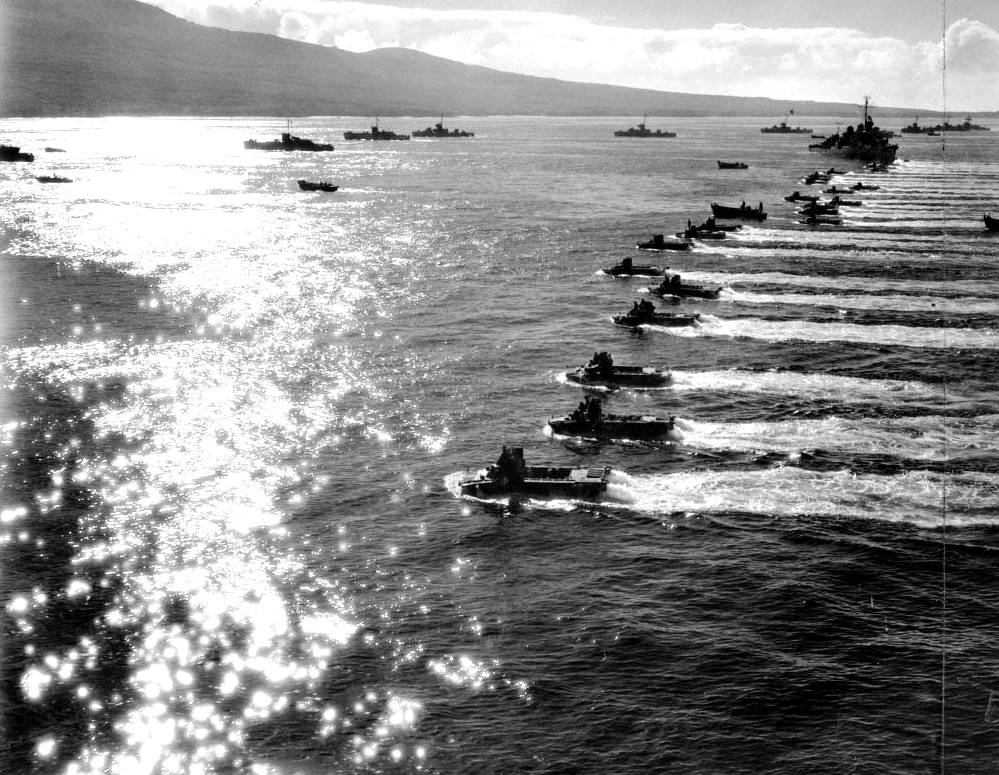
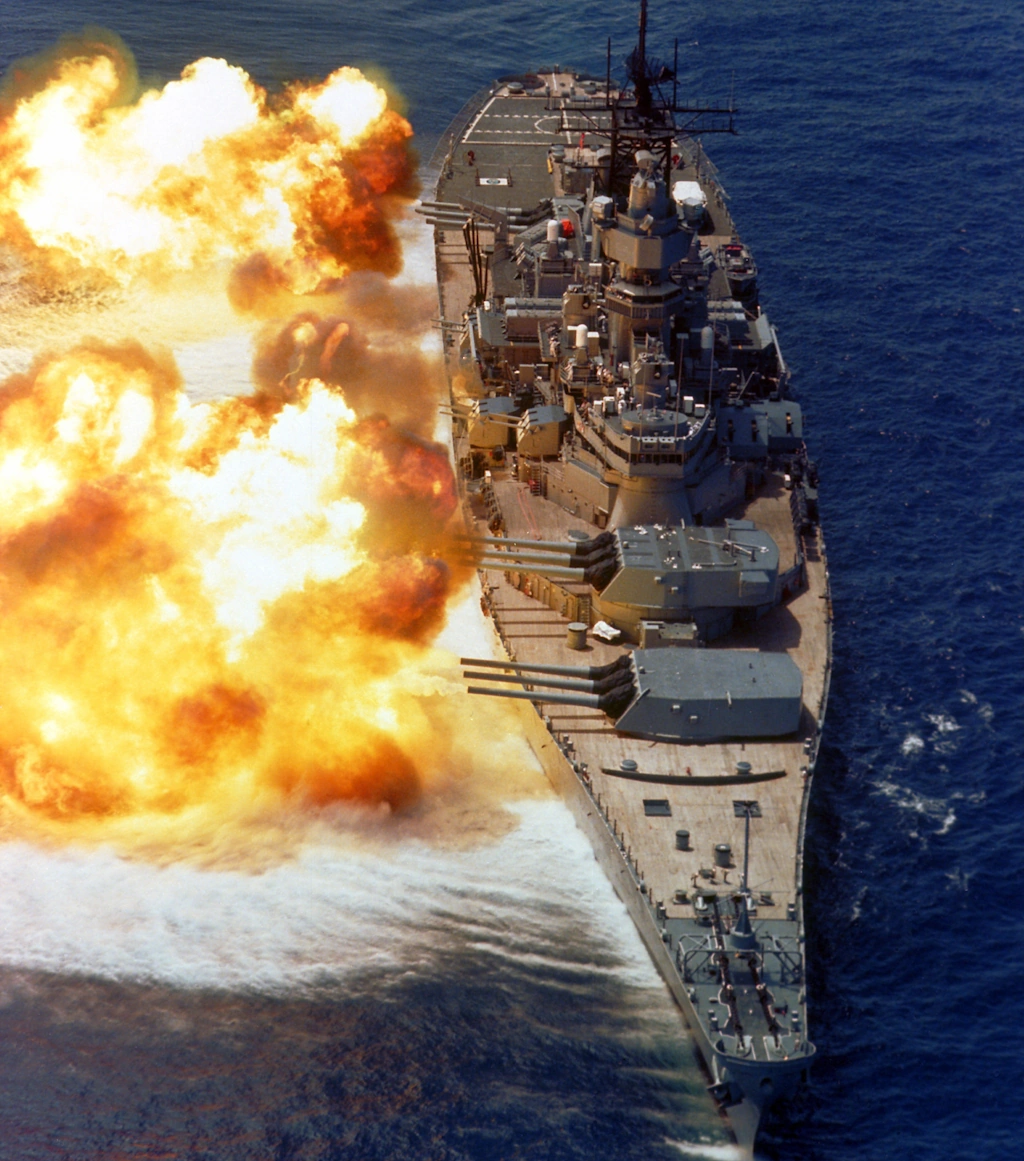
The sun climbed lazily over the rim of the ocean on Easter morning, April 1, 1945, (L-Day) and disclosed the target under a cloudless sky. All plans had been completed to the last detail, all troops had been briefed, and H-Hour was set at 0830 for the second assault landing by veteran ‘Deadeyes’ of the 96th Infantry Division. This time the target was Okinawa, an enemy fortress only 350 miles from the Japanese home island of Kyushu. The rumble of supporting naval gunfire and air bombardment grew more distinct as our Naval Task Group arrived, without incident, in the transport area. All LST’s arrived in their respective areas at 0705 and proceeded to launch LVT’s according to plan. By 0759 the first wave had been discharged at the line of departure for White Beach and Brown Beach followed by succeeding waves on schedule. LCI rocket, 40-MM and 4.2 mortar boats, close-in shore, gave maximum fire support for the assault troops until the first wave was well up on the reef, which extended some 500 yards out from the seawall. Amphibious tanks then opened fire on the landing beaches and proceeded inland providing direct fire support for the infantry.
At 0830, four assault Battalion Landing Teams stormed ashore across the 96th Infantry Division beaches and scaled the ten-foot seawall against no enemy opposition. Amphibious tanks, land tanks and 4.2 chemical mortars preloaded in DUKW’s, rolled inland closely following the assault waves through holes previously blasted in the seawall by naval gunfire. Additional gaps were blasted in the seawall by demolition teams which landed with the first waves, and by 1800 the assault Battalions, 3/383-IR, 1/383-IR, 1/381-IR and 3/381-IR from right to left, had advanced inland some 3000 yards to easily secure the landing beaches.

The rapidity and case with which the beaches were secured was the anti-thesis of what had been expected. Full advantage was taken of the light opposition, however, and by 1400 all three Inf Regts and the bulk of the tanks, artillery (except for 363-FAB 155-MM How) and Engineers were ashore. Practically no difficulty was encountered in landing across the wide reef. Brown beaches, however, proved unsuitable initially for the landing of small boats and tanks due to the depth of tho water over the reef and its high outer rim.
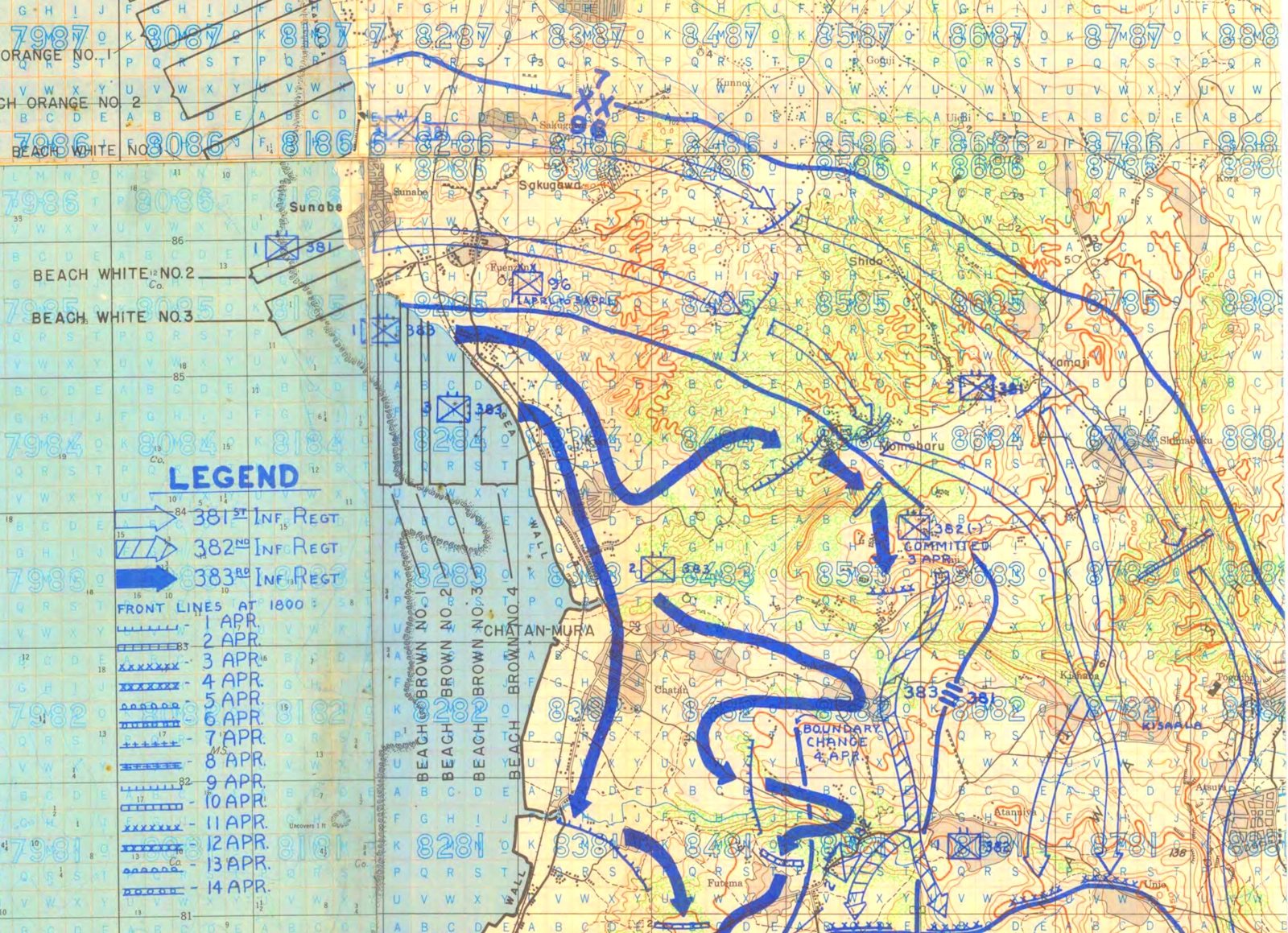
The 381-IR advanced rapidly inland against negligible opposition, and by 0937 the two assault Battalions had contacted each other approximately 300 yards from the beach. Both Battalions then drove rapidly inland against very light enemy resistance. The 3/301, on the left, maintained contact with the 2/32 (7-ID) on its left, and by the end of the day had advanced east approximately 3000 yards. 1/381, on the right, advanced unopposed and at 1700 had seized the high ground at 8485-XSOJ. The 2/381, in Regt reserve, landed on White Beach 3 at 1120 and proceeded to an assembly area at 8385-BC.
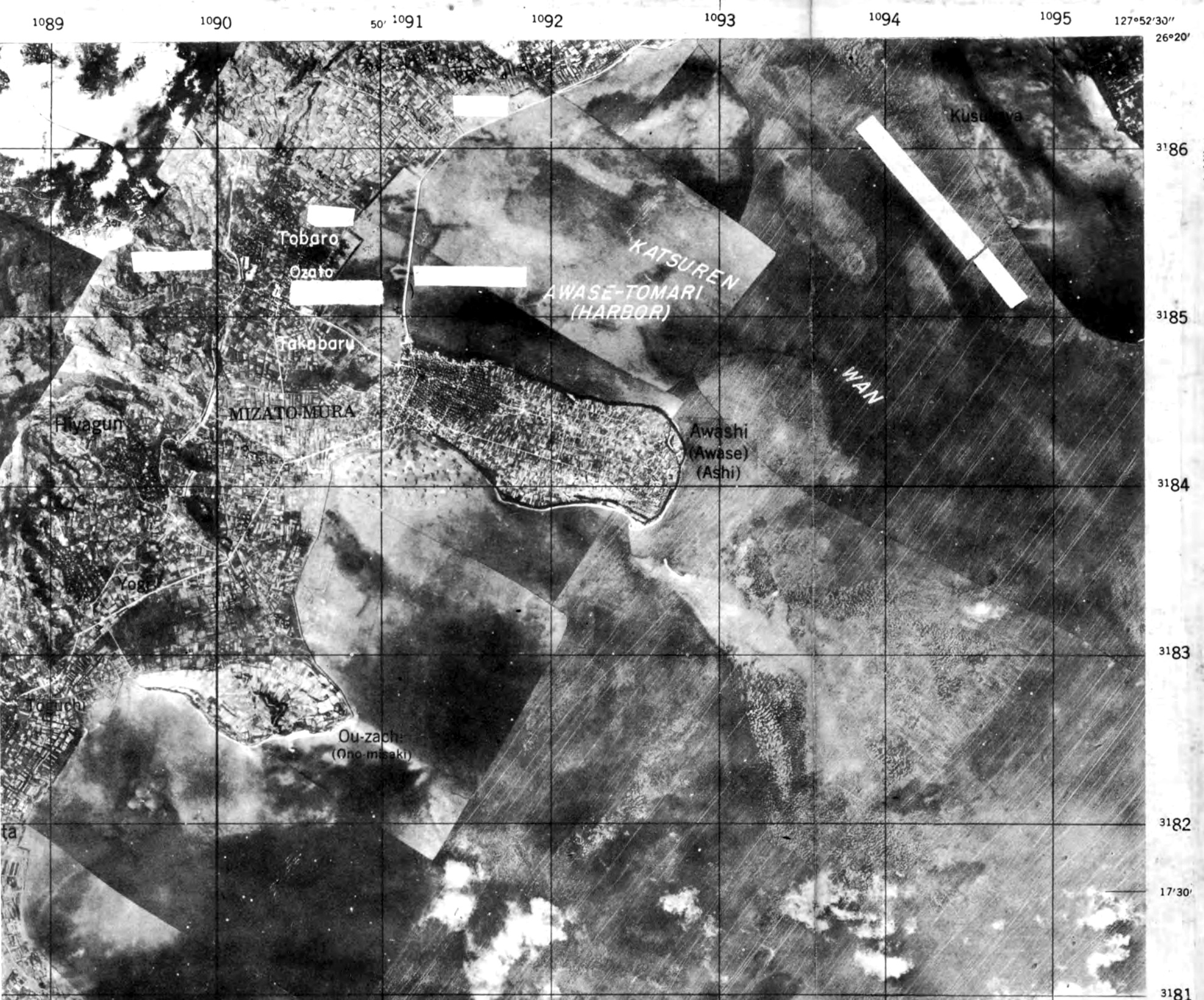
On the division right, the 3/383 pushed rapidly south down the coastal highway meeting very little enemy resistance. The battalion passed through Kue and by 0935 was 200 yards south of this town. At 1220, they crossed the river just north of Chatan securing the bridge 8383-S intact. The battalion dug in for the night when it reached the second bridge 8381-G2 at 1730. This bridge had been destroyed; however, the railroad bridge nearby was passable to foot troops. The 1/383 landed on Brown Beach 3 at 0834 and moved swiftly southeast to tho high ground overlooking the western coastal road. After moving through the eastern edge of Kue, they turned east and by 1745 had advanced to 8484-XY – 8584-PL. The 2/383, initially in Regtl reserve, landed on Brown Beach 4 and was committed to cover the interval between tho 1st and 3d Bns. This battalion seized the town of Sukiran and finally took up a position astride the road at 8482-SX and 8481-DIN by 1730.
The 382-IR (Corps Reserve) landed on Brown Beach 2 and Brown Beach 3 at 1345, except for the 3d Battalion, and moved inland to an assembly area at 8484-NXW, 8483-C, and 8383-E. The 3d Battalion landed on White Beach 2 and proceeded to an assembly area at 8286-Y. At 1800, this battalion was released to division control and designated as division reserve. By 1600, the three light Field Artillery Battalions (361, 362 and 921) were ashore and in position to fire. The 363-FAB (155-MM How) and Division Artillery HQ remained afloat. Division Artillery air observers, in Navy planes based on carriers, flew search missions and supported the advancing infantry, reporting any activity.
The 780th Amphibious Tank Battalion led the assault waves ashore on all beaches. Able and Baker Cos landed on White Beaches at 0830 and Charlie and Dog Cos landed on Brown Beaches at 0834. After securing beach exits for the infantry, they operated as supporting artillery with the normal artillery forward observers adjusting their fire. At 1700, 6 LVT’s and 6 LVTA’s established an offshore patrol on the reef, as directed by Commanding General, XXIV Corps, to warn of and delay any counterlanding the Japs might attempt.

Land tanks of tho 763d Tank Battalion were attached to and landed with the assault waves of the infantry. Dog Co (light) and Baker Co (medium), attached to the 381-IR, landed on White Beach 1 and White Beach 2 at 1010; and Charlie Co (medium), attached to the 383-IR, landed on Brown Beach 3 at 1230. All of these Cos were landed from LCM’s and experienced no difficulty in crossing the wide reef. Because of the light resistance encountered, however, Baker Co was the only company committed to action on L-Day. Able Co did not land until April 3 since it vras embarked on an LST and could not be landed until beaching areas were found and prepared for LST’s.
Préarranged and general support combat air missions were flown throughout the day. At 1430, the 3/383 requested an air strike on entrenched enemy south along the west coast highway. This mission was immediately flown and the enemy was successfully bombed and strafed. The beachhead of an average depth of 3000 yards had been established by 1800 when both assault Regts dug in for the night. The 383-IR had pushed two battalions to the L/3 line and secured two vital river crossings along the west coast highway. The gaps between front line units wore covered by patrols. Despite the difficulties inherent in a reef crossing, the ship-to-shore movement was carried out rapidly in an extremely satisfactory manner. The movement of troops and supplies was materially aided by the fact that not a single casualty had to be evacuated from the beaches. The Assistant Division Commander and advance Div CP was set up on shore at 8285-0 by 1230. Although early indications were that unloading would have to be speeded up considerably due to the threat of bad weather, the beach and shore party units were ordered to secure for the night at 2000. Enemy ground activity during the night was negligible but ships in the Transport Area were attacked by planes of the Jap Kamikaze Special Attack Force at dusk and again at dawn on L/1 Day. No damage was inflicted on any of the Div shipping.