

Assault of Tanabaru and Maeda Escarpments – April 17/30 1945

 The period April 17/30, was a distinct phase of the 96th Infantry Division Campaign on Okinawa. Initially, the division had established its beachhead and then turned south, driving along the west coast of the island with the 7th Infantry Division on its left. Beginning April 15, the XXIV Corps committed the 27th Infantry Division on the Corps right flank and employed a three-division front in an attempt to break the strong enemy defenses which had halted our initial rapid advance to the south. This shifted the 96-ID to a zone running generally north and south through the middle of the island, in the center of the line, with the 27-ID on its right and the 7-ID
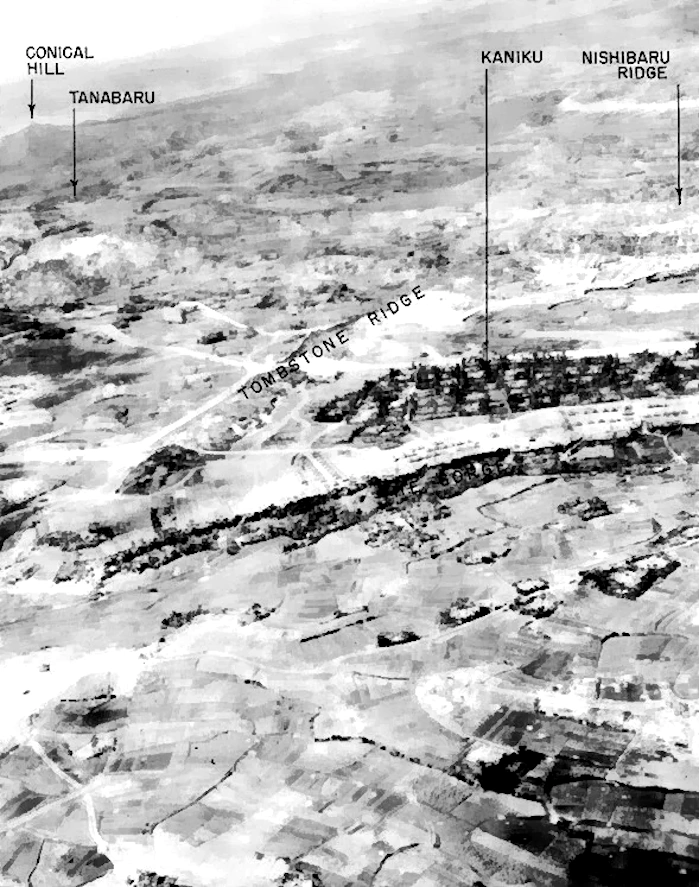
 on its left. Within this new zone the 96-ID continued its drive to tho south until relieved by the 77th Infantry Division on April 30. During this offensive two successive enemy lines of defense were encountered. These lines, composed of intricate cave and pillbox defenses, centered chiefly on two successive hill masses: the Tanabaru Ridge and the Nishibaru Ridge, and the Hill 196 area or the Maeda Escarpment. The 96th Infantry Division’s action during the part II of this report, therefore, can be divided generally into two periods, each involving the attack on one of these defensive positions.
Breaking the Tanabaru-Nishibaru Defenses – April 16/23
From April 16 to April 18, the division concentrated on rearranging front line and reserve units and completing preparations for the Corps attack of April 19. The 381-IR, after being relieved by the 27-ID in the Kakazu Ridge area, shifted to the left and relieved elements of the 382-IR in the Kaniku area. The 382-IR, in turn, with all three battalions in the line prior to this time, also shifted to the left to occupy a narrower zone for the coming attack. The 1/382 moved to the assembly area at (8378-Y) east of Ginowan on April 17. Conferences were held with the adjacent divisions to determine accurately the boundaries between the divisions on the ground; reconnaissance patrols probed the enemy-held territory; combat aviation, artillery, chemical mortars, and Naval gunfire were employed extensively to soften up enemy positions to the division front. Division artillery, in addition to firing normal support missions, ‘shot in’ planned concentrations for the impending attack. Enemy activity during these two days was light, although enemy artillery harassed the front line battalions at night and some small arms and machine gun fire was received during the day.

Attack Plans Completed
The general plan of the 96th Infantry Division for the attack was simple but complete. (Field Order #17, Hq 96th Inf Div). The Division (less the 383-IR minus the 3/383) was to attack with four battalions in the assault at 0640, April 19, except for the right flank battalion whose time of attack was 0730, with the line of departure designated as front line positions as of 0640. The 3/381, the right flank battalion, was to hold for the first 50 minutes of the attack due to its advanced position in comparison with the other assault battalions. The 381-IR zone of attack was on the division right and the 382-IR zone on the left. The 3/383 was in division reserve located at (8478-L). The division intermediate objective was the hill mass centered on the Hill 196 area. The Corps objective was the general area Naha – Shuri – Yonabaru.
 Intensive artillery preparations were carefully coordinated with the infantry attack. The Division Artillery, with the 1/11 Marine Artillery Regiment attached reinforced by XXIV Corps Artillery, Naval gunfire, the 504-AAA (Gun) Bn, and Baker Co, 763-TB, was to fire a preparation beginning at 0600. At 0620, fires were to be lifted 500 yards to the rear and continued at a reduced rate. At this time, front line units were to simulate an attack but not advance. At 0630, time fire was to be brought down in front of our infantry in an attempt to catch the enemy in the open as they returned to their firing positions. The artillery preparation was then to continue till 0640, at which time the attack would begin and artillery fire would be lifted to pré-arranged points. The artillery preparation was to continue at a reduced rate in front of the right flank battalion of the 381-IR, from 0640 to 0730. The 383-IR (minus the 3/383) was placed in Corps Reserve, located generally in the vicinity of Koza – ((8786-T), and was responsible for the defense of the Corps Service area.

 Corps Launches Attack
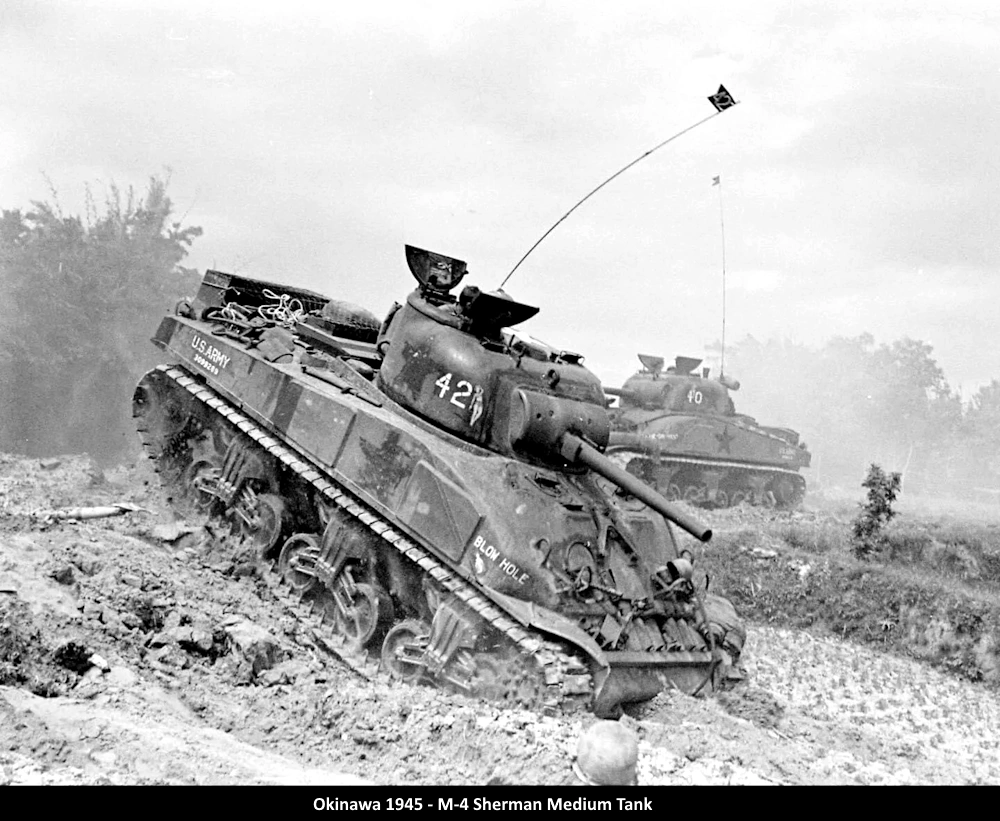
After a comparatively quiet night, and following the intense, previously-planned artillery preparation, the division attacked at 0640 according to schedule. Only slight resistance was encountered initially and all four assault battalions advanced rapidly until approximately 0730. From this time on throughout the day, enemy machine gun and rifle fire coming from the high ground to the division front and flanks slowed down the advance to creeping and crawling action. In the 381-IR zone, the 1/381, on the regimental left, reached Kaniku – (8276-C) by 0700 and passed rapidly through the town. Fifteen minutes later, the 1/381 came abreast of the 3/381 and the latter battalion began their attack, rapidly advancing 300 yards until pinned down by heavy crossfire from enemy machine guns. The 1/381, after an advance of approximately 700 yards during the morning, also encountered the same type of machine gun fire. This enemy fire was of intense grazing nature, sweeping the entire area to the front of the regiment, and came from positions located on the Kakazu Ridge in the 27-ID zone, which dominated the division right flank, and from other positions to the regimental front and left flank on the north slopes of the Tanabaru-Nishibaru Ridge. Medium tanks and the reserve companies of the two battalions were committed in the gap between the battalions, but were also pinned down by machine gun fire and were unable to assist in the advance. Further advances in the face of this withering crossfire were negligible for the rest of the day. Later in the afternoon, the 3/381, after suffering heavy casualties, withdrew its advance elements from their exposed position and consolidated its lines for the night in approximately the same location as on the previous night. The 2/381 moved to assembly positions located north of Kaniku – (8277-IJ).
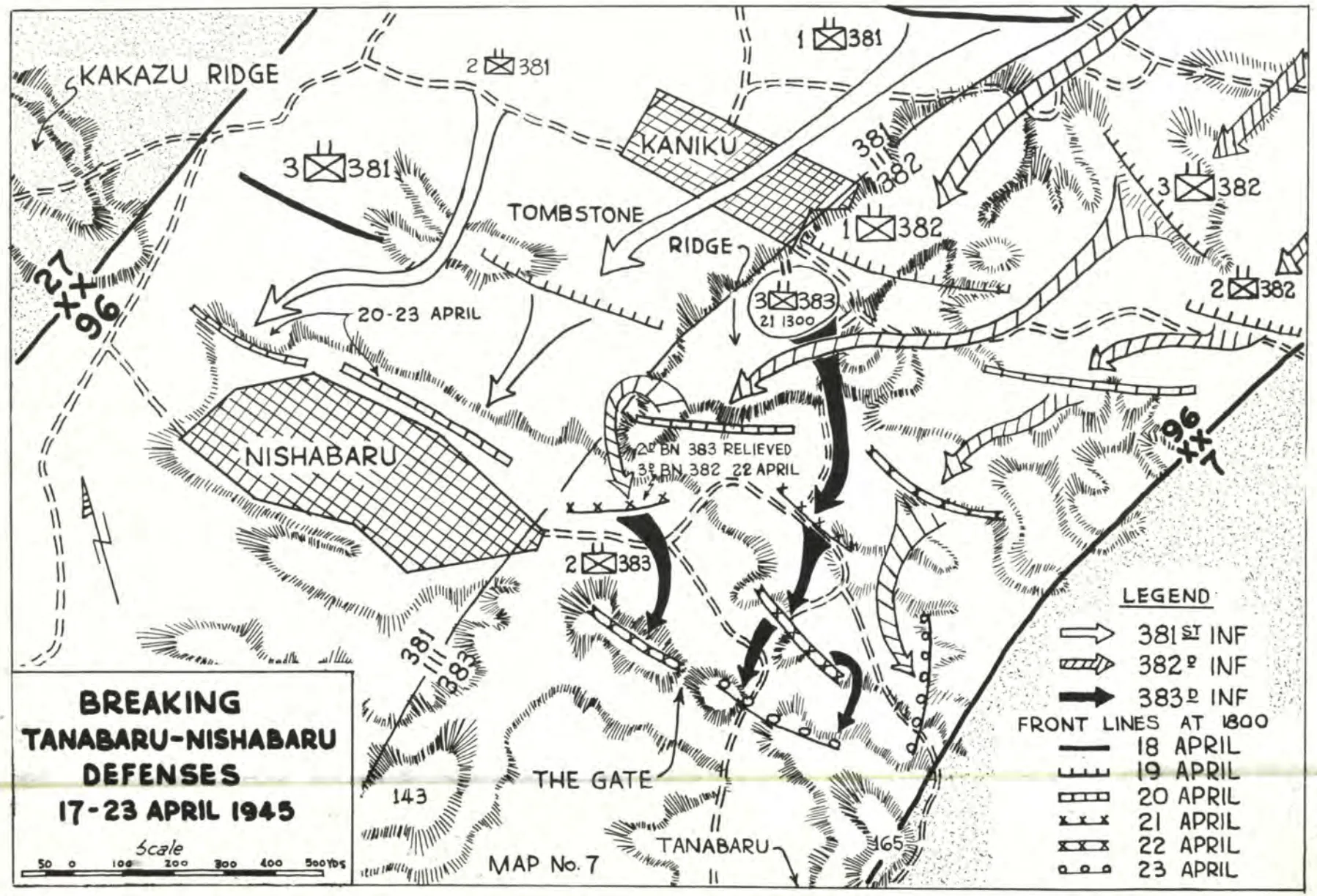
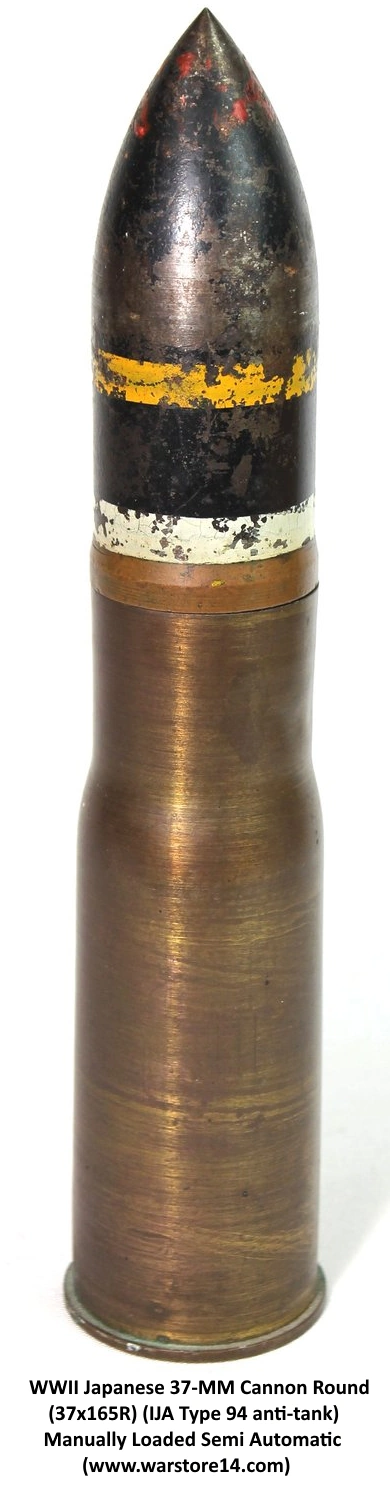
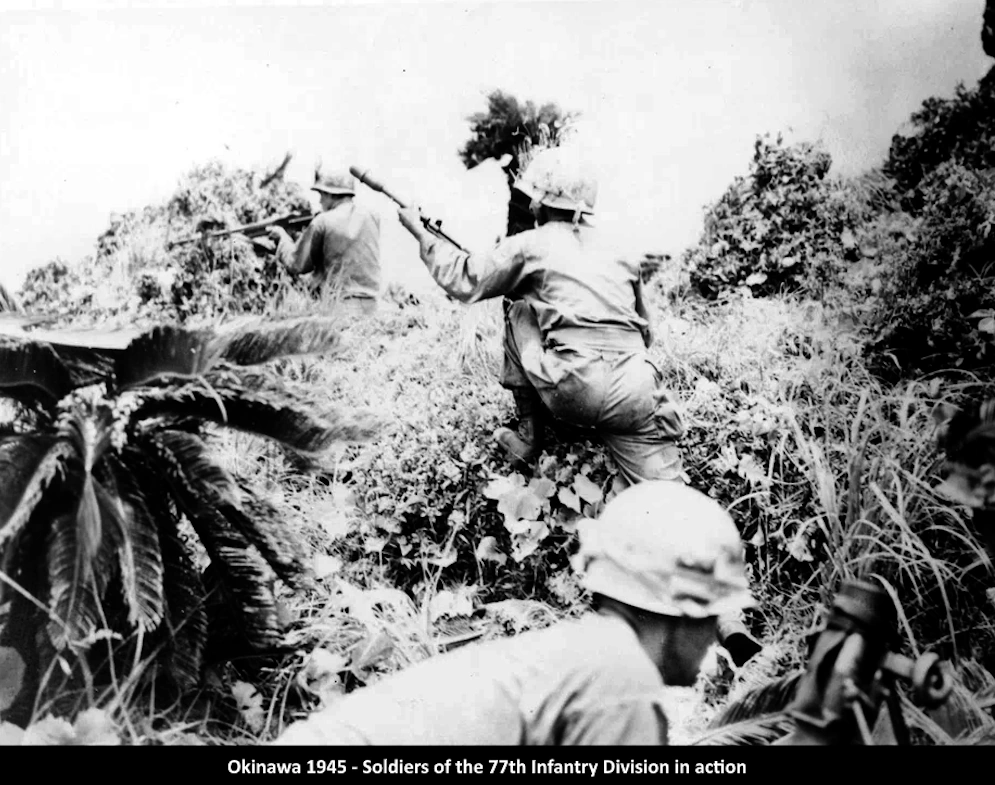
In the 382-IR zone the same determined type of enemy resistance was encountered after rapid initial gains. Following closely behind artillery concentrations, the 1/382 and the 2/382 battalions had both advanced 500 yards by 0730. From this time on and throughout the day, the advance was extremely slow, being restricted mainly to individual rushes and small-unit advances of a few yards at a time. Deadly machine gun and rifle fire coming from the northern tip of the Tombstone Ridge continued to sweep over the lines of both battalions. These enemy positions were expertly camouflaged, mutually supporting, and so well emplaced that they were able to continue firing even during our artillery concentrations. This Tombstone Ridge was so named by the troops which assaulted it because of the large number of native tombs on the ridge. Although inconspicuous from a distance, and not even shown on the official 1/25.000 operations map, this ridge harbored one of the best enemy defensive positions encountered during the campaign. By 1125, the 1/382, on the regimental right, had finally succeeded in gaining a foothold on the northern tip of the ridge, and by the combined use of infantry and direct fire of tanks, M-7’s and 37-MM AT guns, was able to push ahead slowly, destroying the enemy positions encountered, and finally securing the northern tip of the ridge. The 2/382 battalion, continued to advance slowly, keeping generally abreast of the 1/382 battalion on its right and a battalion of the 7-ID on its left. The 3/382 moved up through the center of the regimental zone and covered the gap between the two assault battalions.
As a result of the day’s attack, therefore, the 381-IR advanced some 700 yards on its left and front lines were located just north of the Tanabaru-Nishibaru Ridge. The 382-IR advanced from 800 to 1000 yards and secured the northern tip of the Tombstone Ridge, with final front lines some 400 yards behind the 381-IR.

Japs Defend Bitterly
 On April 20, the attack was renewed at 0730 following a half hour artillery preparation. The same determined enemy resistance was encountered. The 381-IR initially supported by fire the advance of the 3/382 which had passed through the interval between the 1/382 and the 2/382 to attack south astride the Tombstone Ridge. When the right flank of the 3/382 came abreast of the 1/381, this battalion launched its main attack and by 1130 had pushed two companies to the top of the Tanabaru-Nishibaru Ridge. The 3/381 supported this advance by fire but was unable to move forward due to continued heavy enemy fire from the Kakazu Ridge, which had been by-passed by the 27-ID. At 1320, the 2/381 was committed on the right flank of the 1/381, and in spite of heavy enemy machine gun, mortar and rifle fire from their right flank was able to push two companies to the top of the Tanabaru-Nishibaru Ridge abreast of the 1/381. This Tanabaru-Nishibaru Ridge was called Nishibaru Ridge in the 381-IR zone. Hill 165 – (8275-N), a part of the same ridge in the 382-IR zone, was often cal1ed the Tanabaru Tabletop or Escarpment. The Gate, so called because of two rocks jutting upward resembling gateposts, was also located on this ridge.
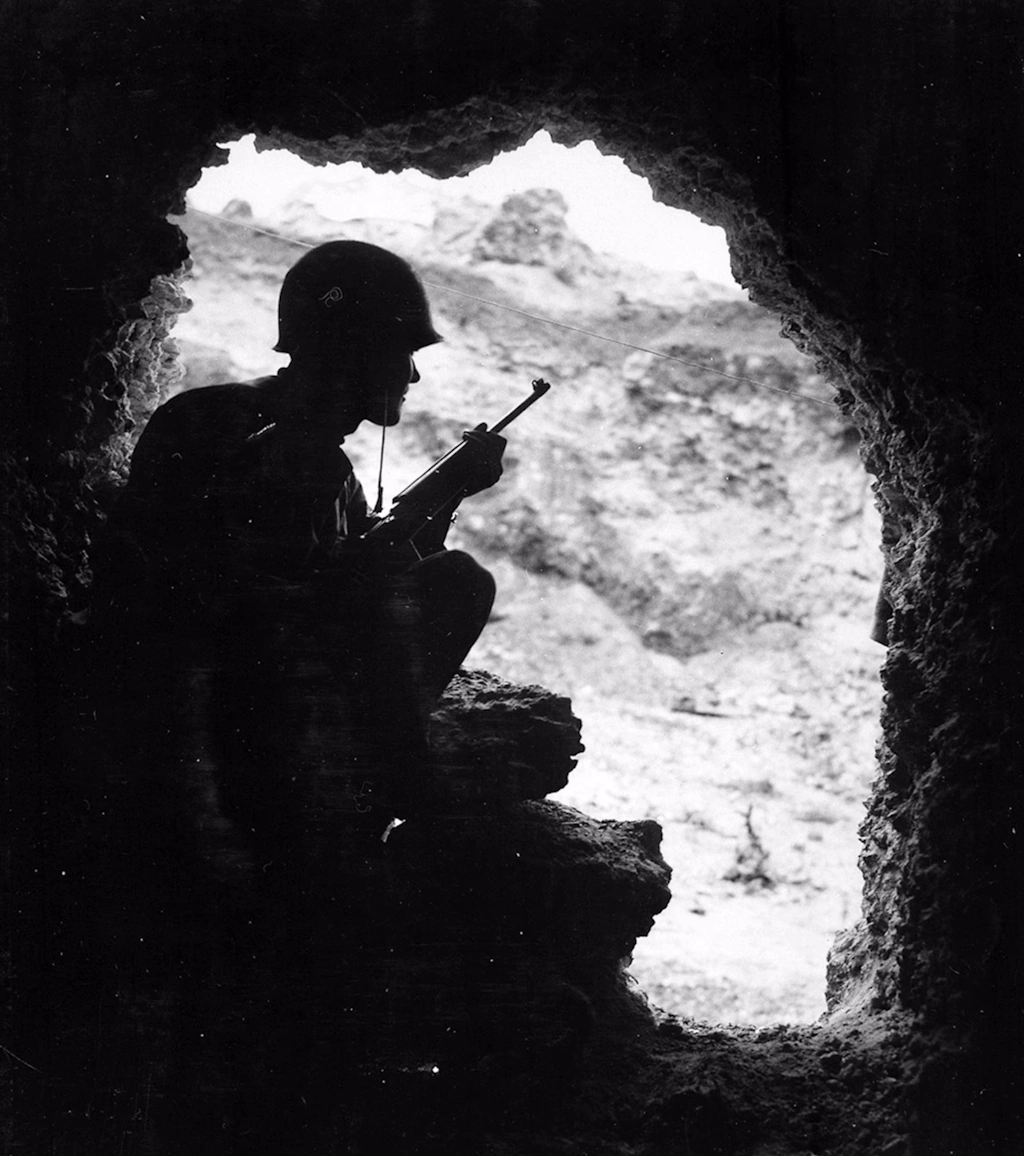
In the 382-IR zone, the 3/3B2 was committed on the regimental right as described above. The 1/382, from its positions on the north tip of Tombstone Ridge, supported the attack of both, the 3/382 and the 2/382. The 3/382, by the end of the day, had succeeded in e1iminating all enemy resistance on the Tombstone Ridge. The left flank of the 2/382 was unable to make any appreciable gains due to intense machine gun and rifle fire coming from a rocky crag on its left flank in the 7-ID zone. However, the right flank of this battalion advanced approximately 300 yards. Although the flanks of the division were unable to make any substantial advances during the day, the 382-IR completed the seizure of the Tombstone Ridge and two battalions of the 381-IR were entrenched on the Tanabaru-Nishibaru Ridge.

Advances Were Slow
On April 21, the division continued its attack to the south. The 381-IR jumped off at 0630 with the 1/381 andthe 2/381 battalions, advancing over the Tanabaru-Nishibaru Ridge. Stiff resistance was immediately encountered, particularly on the left flank from a large number of enemy entrenchments within the town of Nishibaru – (8176-QRST). The two battalions were forced to operate without tanks or other direct fire weapons as the steep slopes of the ridge prevented any tanks or vehicles from reaching its top, and it was impossible to circle around the west edge of the ridge because of heavy fire from the Kakazu Ridge. This enemy pocket on the Kakazu Ridge, by-pased initially by the 27-ID, was still hindering the advances of the 96-ID right flank. Approaches on other parts of the ridge were also covered by fire. The 2/381, on the right flank, managed to advance slowly approximately 200 yards to a small finger of high ground jutting out just southwest of the town. Deadly enemy machine gun crossfire coming from the south slopes of the Tanabaru-Nishibaru Ridge and from the Kakazu Ridge thoroughly covered the 2/381 in its advanced position. The 1/381, also encountered heavy machine gun fire from the same enemy positions and was unable to advance appreciably. At 1300, a heavy mortar barrage, in addition to the above mentioned machine gun fire, forced the 2/381 to withdraw back to the Tanabaru-Nishibaru Ridge abreast of the 1/381, where front lines of both battalions were consolidated for the night.
In the 382-IR zone, the 1/382 moved forward to the position on the south end of the Tombstone Ridge that the 3/382 had occupied the previous day. The 3/382 then withdrew and moved through the 381-IR zone in order to assault from the west, that portion of the

Jap Defenses Weaken
On April 22, action along the division front, except on the right flank of the 383-IR, was less intense than during the previous days, although a total of 200 Japs were killed, and by the end of the period three battalions occupied strong positions on the Tanabaru-Nishibaru Ridge. The 381-IR did not attempt to advance their front lines during the day. The plan for this regiment was to hold up the advance of the two leading battalions until the Kakazu Ridge had been cleaned up and elements of the 27-ID had gained contact with the 3/381 on the division right flank. The 3/381, however, assisted the 27-ID in its attack on the ridge by direct fire from tanks, M-7’s and AT guns into the enemy positions.
On the division left, the 383-IR with the 2/382 attached, relieved the 382-IR in their zone of action beginning at 0600. By 1000, the 2/383 had completed the relief of the 3/382 on the right. The 2/382, during the night, had received continuous mortar and small arms fire and occasional attacks by small groups of Japs. At the completion of the relief, front line battalions in the 383 zone were, from right to left, the 2/383, the 3/383, and the 2/382. The 1/383, in regimental reserve, moved to positions on the north tip of the Tombstone Ridge at (8276-J). At 1100, the regiment jumped off in a coordinated attack on the Tanabaru-Nishibaru Ridge. The advance was extremely slow due to continuous machine gun fire coming from concealed emplacements all along the high ground to the front and left flank.
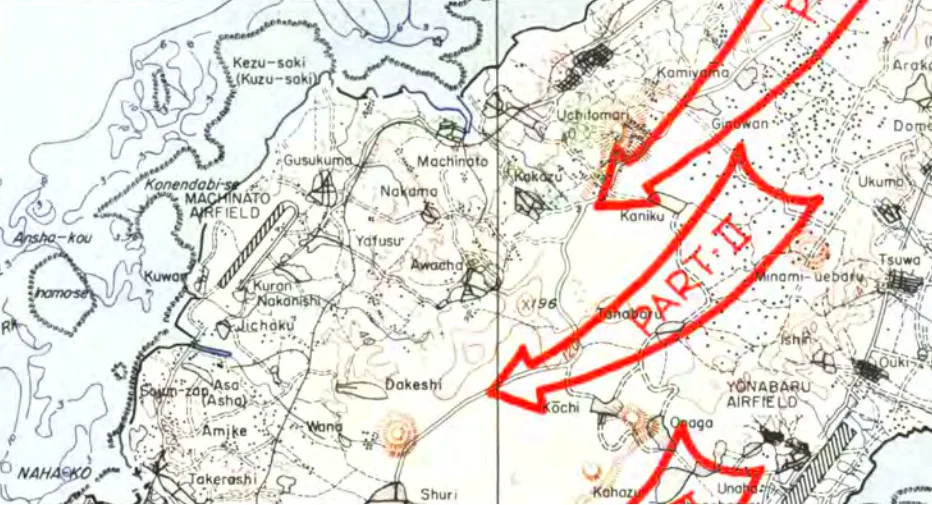
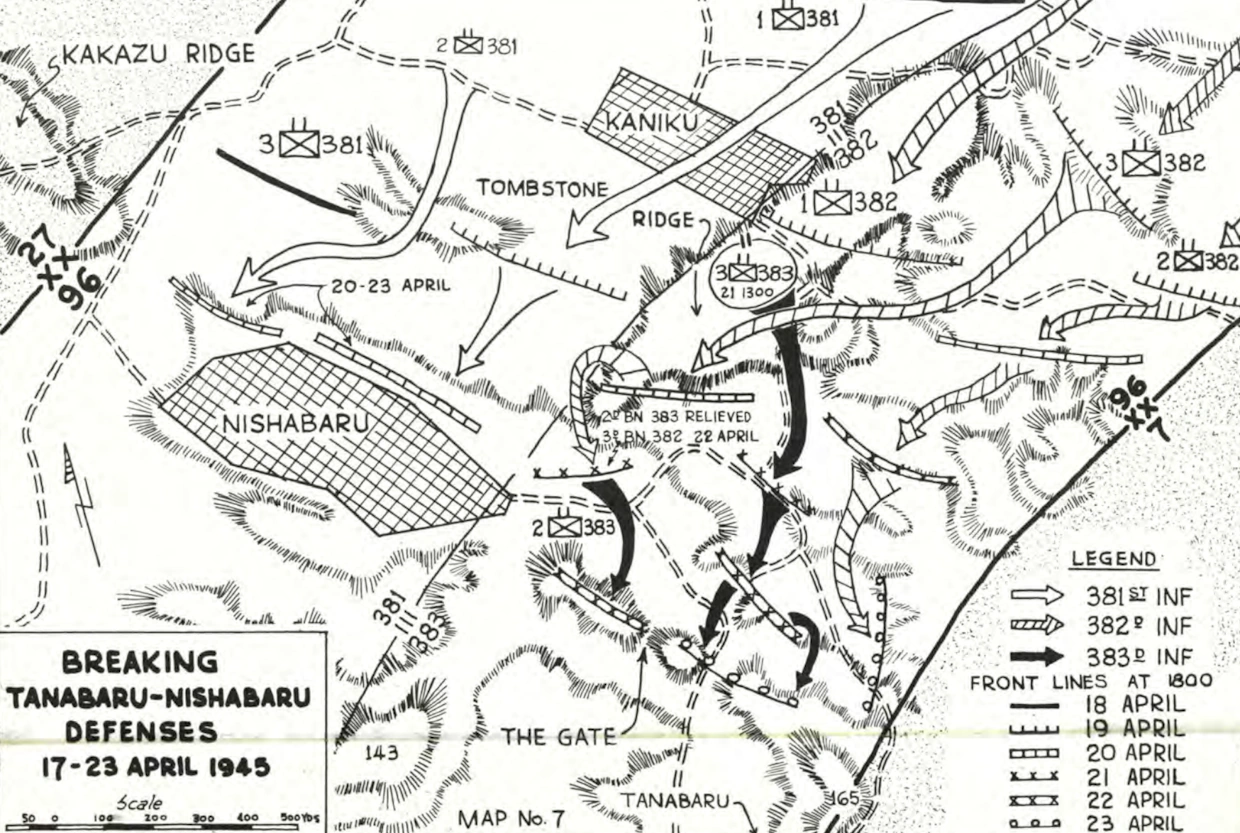
By 1600, after bitter fighting, the 2/383, on the regimental right, had advanced to the southeast approximately 200 yards to secure definitely the portion of the ridge in the battalion zone. The 3/383 advanced approximately 150 yards during the day and consolidated positions with its left flank within 200 yards of the escarpment at the Tanabaru Tabletop – (Hill 165). Final front lines are shown on the map below, with the 2/381, the 1/381 and the 2/383, from right to left, dug in on the Tanabaru-Nishibaru Ridge. The 382-IR (less the 2/382 and with the 96-ID Recon Troop attached), after its relief, moved to new positions in the Corps Service Area, to replace the 383-IR as Corps reserve.

 Defensive Line Broken
Again on April 23, advances in yards in the division zone were slight. By the end of the day, however, four battalions were in position on the Tanabaru-Nishibaru Ridge, occupying the entire ridge except for the extreme eastern tip. The 381-IR continued to strengthen and improve their positions, and placed direct fire of all supporting weapons on The Kakazu Ridge. The 383-IR continued its pressure against the Tanabaru-Nishibaru Ridge. By 1600, the 3/383, excellently supported by medium tanks of Bajer Co, 763-TB, and one platoon of flamethrower tanks, had come up on the left of the 2/383 and captured a saddle in the ridge approximately in the center of the regimental zone. The 2/383, on the regimental right, continued to mop up the high ground secured yesterday and pushed elements to within 400 yards of Hill 143. The 2/382, on the regimental left, advanced up to 200 yards, but failed to take the remaining enemy-hold portion of the ridge just north of Tanabaru on the division left flank. This remaining portion was composed of the Escarpment and the Tanabaru Tabletop (Hill 165).
By the evening of April 23, the strong enemy defensive line in the Tombstone Ridge – Tanabaru-Nishibaru Ridge area had been broken. As a result, the whole enemy defense line across the Corps front centered generally on the Kakazu Ridge in the 27-ID zone, the Tombstone Ridge and the Tanabaru-Nishibary Ridge in the 96-ID zone, and Hill 178 – (8374-B), a dominating hill mass in the 7-ID zone, on line with the Tanabaru-Nishibaru Ridge became untenable for the enemy. During the night of April 23/24, the enemy withdrew from his remaining positions on this ridge line. On April 24, a ‘Task Force’, composed of elements of the 27-ID, 96-ID, and 7-ID, encountered little enemy opposition in mopping up the Kakazu Ridge and the 7-ID secured Hill 178 early in the morning and the remaining portion of the Tanabaru-Nishibaru Ridge in enemy hands was occupied by the 2/382 without opposition.
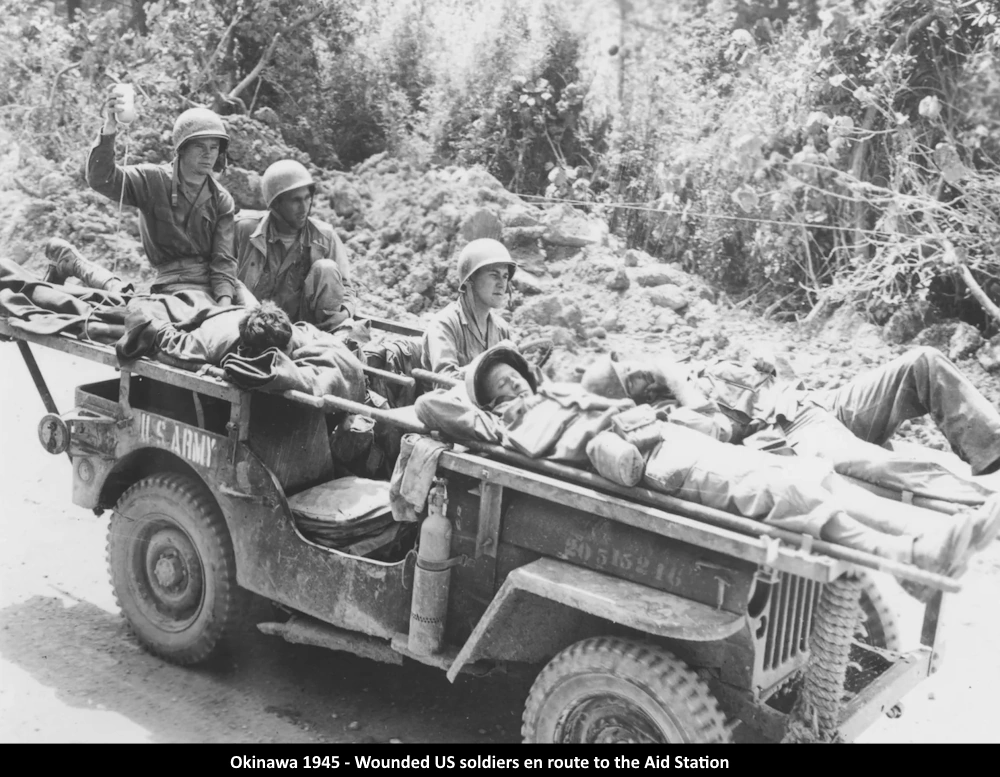
During the period, April 17 to April 23, enemy artillery showed a general decrease in intensity. However, front lines, infantry rear areas, and artillery positions received intermittent artillery fire each night. Enemy mortar fire also also harassed front line positions each night. Infiltration attempts were negligible during the period. The weather was generally clear to cloudy, with light rains on only one day (April 19). Aviation continued to supply deep air support and observation missions. The following figures give an indication of the heavy fighting which took place:
| Okinawa 1945 – 96th Infantry Division | |||
|---|---|---|---|
| Casualties 96th Infantry Division | KIA | WIA | MIA |
| 381st Infantry Regiment | 25 | 284 | 4 |
| 382nd Infantry Regiment | 52 | 245 | 11 |
| 383rd Infantry Regiment | 22 | 130 | 4 |
| Total Casualties 96-ID | – | – | 778 | Japanese Casualties | – | – | 1346 |
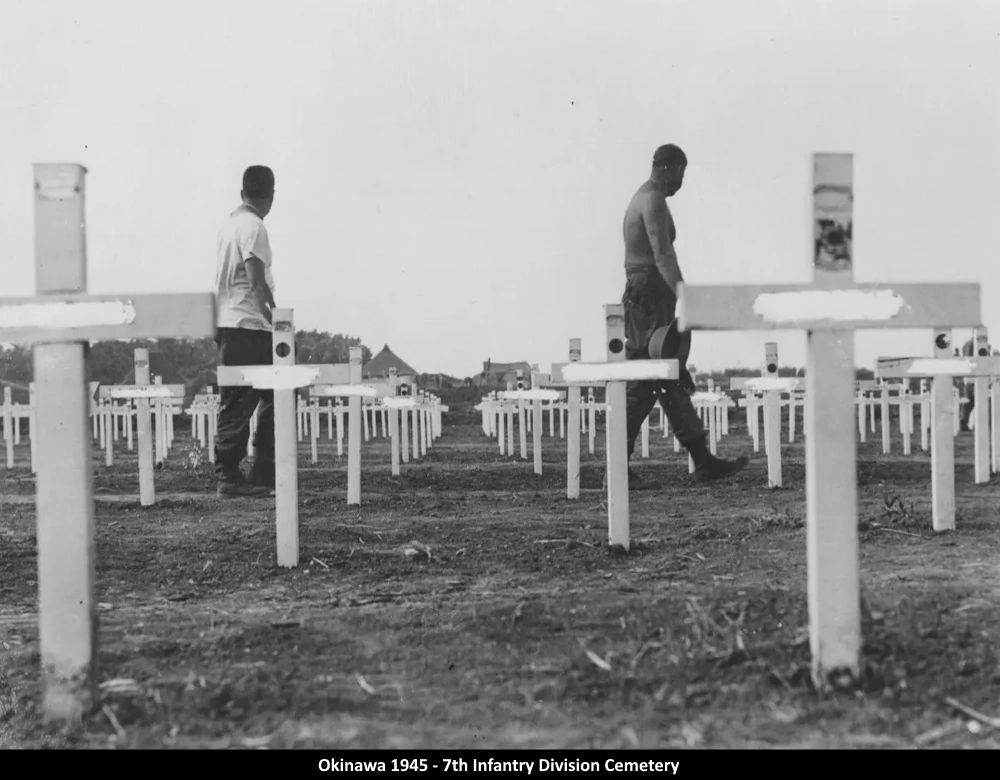
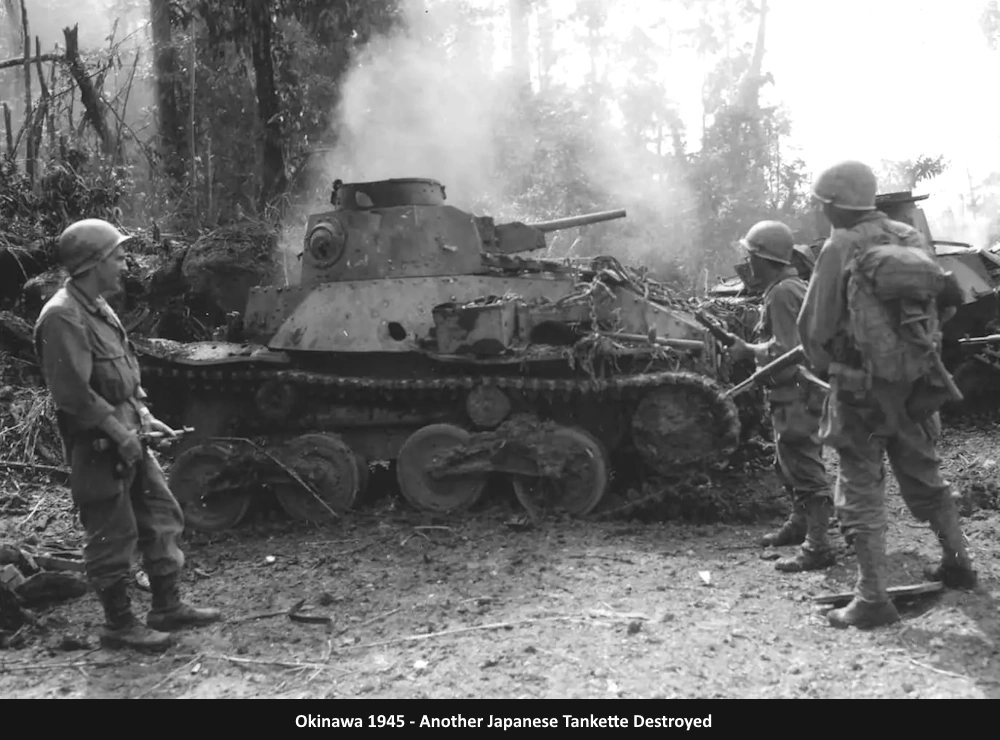
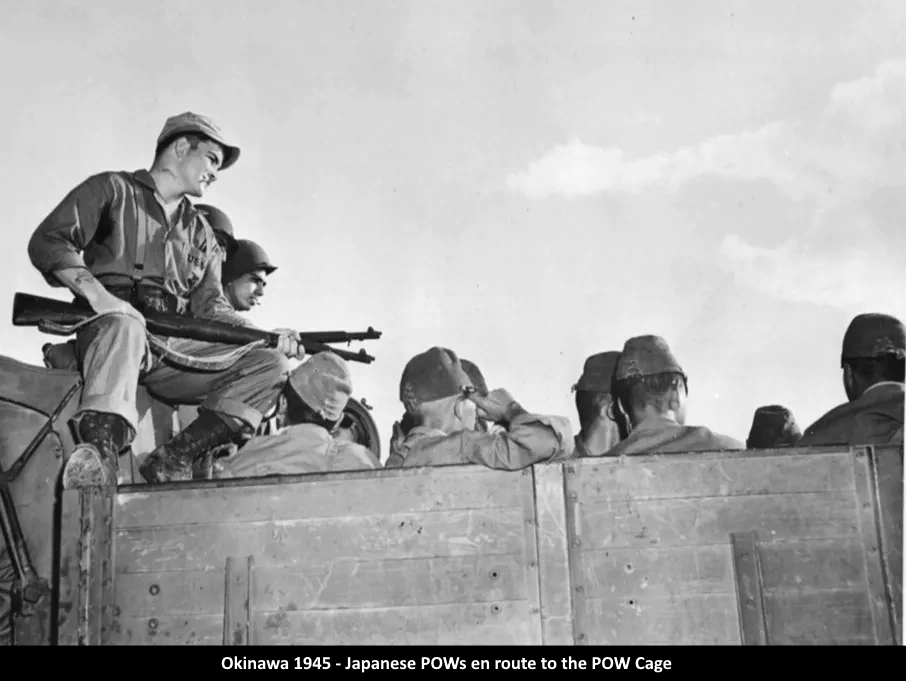
Damages to the enemy were 1346 KIA; 2 PWs; 13 Field Pieces; 68 Machine Guns; 2 320-MM Spîgot Mortars; 30 Mortars; 76 Pillboxes and 87 Caves.