


Shortly after daybreak, Fox Co dispatched two wiremen with assault wires to try and establish communication with the men at Il Poggaille. The men were able to get approximately 200 yards when sniper fire wounded one of them and forced the second one to withdraw. In an attempt to reach the wounded man, the Battalion Medical Administrative Officer with two aid men and two litter teams volunteered to go into the enemy position. With a cessation of our own mortar and artillery fire and protected only by a large white flag with a red cross, prominently displayed, they moved toward the entrapped men. The enemy observed the sign of the Geneva Convention and did not fire on this party. However, as soon as they entered the enemy lines they were taken prisoner and immediately taken to the enemy company headquarters. At once Lt Mazur (the battalion MAC) tried to convince the enemy company commander that they should be released and allowed to care for our wounded. After much discussion, it was agreed that they could return to their own lines with what wounded men they could take with them if the German aid men held by Capt Kelly (George Co Commander) were also released. Lt Mazur, under guard, was taken to Il Poggaille to confer with Capt Kelly on this arrangement.
When first told of this, Capt Kelly, knowing the working of the German mind, was reluctant to agree, but knowing how much our own men needed medical attention and being more anxious to help them than for his own safety, he agreed to the exchange. His hopes had been that he could hold out until darkness fell and then effect a withdrawal. We shall see what the Germans had in mind when they were so anxious to get their own men, and why Capt Kelly hesitated to agree. Through the day the men from George Co had poured fire into the reverse slope of Hill 427 and Furcoli ridge. Vulnerable to fire from their rear many of the Krauts were forced to withdraw and more than twenty of them were killed while frantically seeking new cover. The enemy had poured continuous machine gun and mortar fire into the house at Il Poggaille, but had refrained from mortaring the house because of their own aidmen in the roofless building.
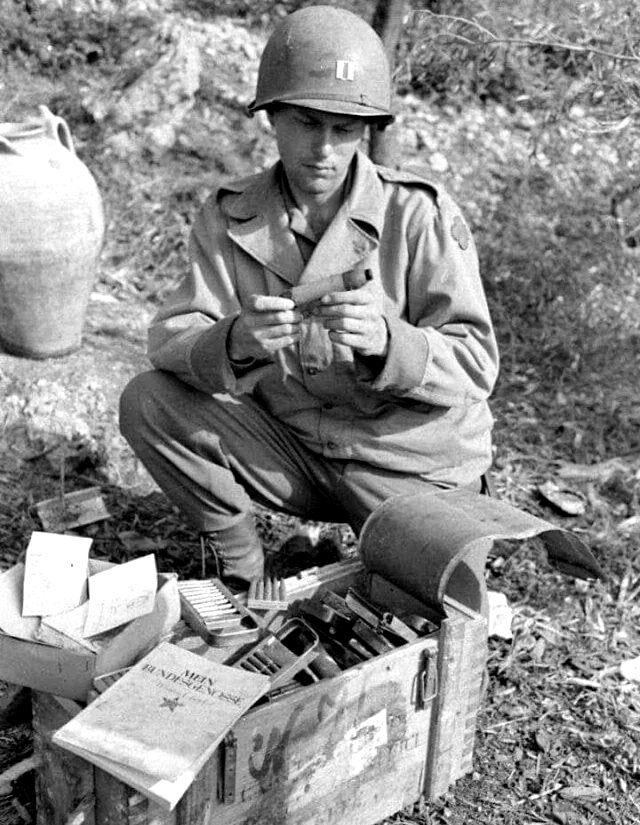
At noon, the enemy counter-attacked, firing into windows and doors. They surrounded the building, calling upon the Americans to surrender. Capt Kelly refused, urging the men to beat the enemy off. Hurling their last grenades, the men forced the enemy to withdraw leaving fifteen dead and many wounded around the house. It was at this point that Capt Kelly made the decision to withdraw under the cover of darkness. It was only a few hours later that the exchange of prisoners was made, and it was a very short time later that the enemy mortared the position. The house was roofless, and from three sides mortar shells were lobbed into the structure. A number of the men were wounded and several were killed, but still, they failed to surrender. Just prior to dark, a shell landed in the room where Capt Kelly was standing, mortally wounding him. Later in the night, out of ammunition and with only a handful of men left, the platoon leader surrendered to the enemy. During the latter part of the night, April 16, Easy Co had launched an attack against Il Poggaille, but the attack was not successful, and by the time the company had reorganized, daylight was at hand and an attack on company strength was out of the question.
During the day, April 17, Fox Co had called for an air strike on the enemy positions directly to their front, but due to the direction that the planes would have had to make their run and the close proximity of the friendly troops to the enemy position, the mission could not be carried out. From positions secured the night before, Fox Co was able to bring automatic rifles to the rear of some of the enemy positions and succeeded in silencing two of them.
Field Order No 3, dated April 17, ordered the 2nd Battalion to continue the attack, secure Hill 375 and Hill 403, while the 3rd Battalion was to clear Vado and the Monzuno ridge. For forty-eight hours the gains had been measured only in yards. The Frucoli Ridge was partially occupied by Fox and Baker Cos. The only real penetration, if it could be called that, had been made by George Co at Il Poggaille. The battalion plan for the attack was for Fox Co to pull out of their positions, swing to the right and traverse an anti-personnel minefield some 400 yards in depth, in an attempt to seize all of the Furcoli Ridge and the nearby town of Le Braine. At the same time George Co, with a platoon of machine guns attached, was to pass through the old Fox Co position and work along the reverse slope toward Monterumici. Easy Co, along with King Co was to sweep the Monzuno Ridge to the high ground beyond.

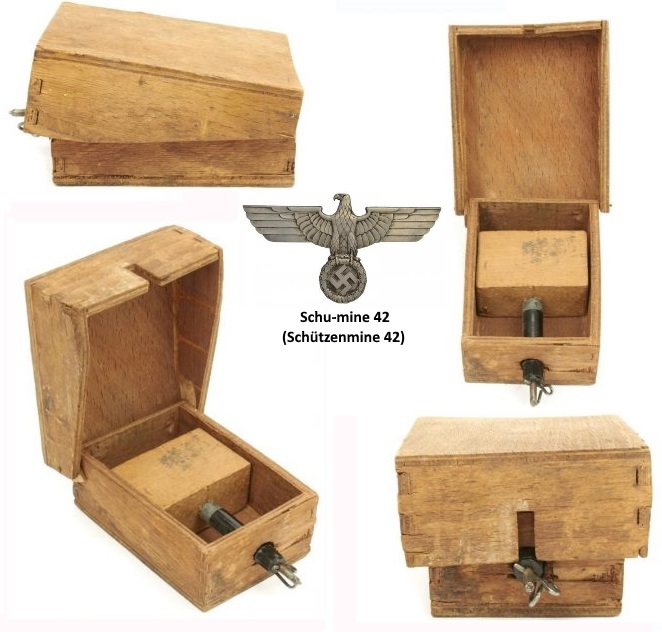
The minefield that Fox Co was to attack through covered the road and the approaches to the Montemurici positions. It consisted chiefly of the German Shu mines, with some Stoltz mines in the grass along the road. A path through the minefield had been cleared and marked with white engineer tape for a distance of about 100 yards by Baker Co before they were forced to withdraw. Fox Co, with a strength of about 75 men, moved out in a single file, with the company commander leading. They progressed rapidly to the end of the tape, but there it became necessary for them to move only a few feet at a time, as each inch of the ground had to be probed before advancing. As day broke, it became apparent that progress in this manner was out of the question, as there were literally hundreds of the Shu mine detonators sticking out of the trail ahead. The decision was made to return to the entrance of the minefield and wing to the right of the trail and see if better progress could be made. This was done, and with all personnel following in the exact footsteps of the leader, a good time was made, but even with this method the company suffered seven casualties due to the carelessness of the men in where they stepped and to leaving the trail when the column halted. Among the injured in this move was the last rifle platoon leader of the company.
All of this movement had been covered by the company mortars, and within thirty minutes the company was through the minefield and deployed along the bluff that faced them. A reinforced squad was sent to the left to wipe out some cave positions that covered the approaches. A few minutes later the rest of the company, well deployed, went over the top of the bluff. The squad that went to the left surprised some Krauts that were not alert and took over forty enemies
from these positions. With the pressure thus relieved, it was only a matter of minutes until the company had overrun the rest of the positions and was at last on top of the hill. George Co succeeded in working along the reverse slope of the ridge and in so doing also captured some forty prisoners.
Shortly after dawn, the 2nd Battalion battle patrol, a group of men trained especially for difficult jobs, particularly patrols, but used in this operation as an assault force, attacked the Eastern slope of Hill 427. A tank that had come up on the night of April 16, and the only one that had been able to get through the minefields until now, was able to give the battle patrol close supporting fire in their attack. The patrol had to work through a minefield to reach their objective, but this was done with no casualties, with the tank fire keeping the enemy in their holes. The men worked to within grenade-throwing distance, signaled the tank to cease fire, rushed the position, and forced the enemy out of their holes, killing eight, wounding twelve, and taking twenty-seven prisoners in the attack. Fox Co, upon their objectives, immediately called their weapons platoon forward. While they were moving up the rest of the company reorganized and the company commander registered some artillery fires to support the attack on the next objective, Le Braine.
For once the battalion held the commanding ground, and at 0900 hours Fox Co jumped off. The objective was taken almost without resistance, with only a few rounds of small arms fire being encountered. The company was quickly pushed on by the objective, and in searching the enemy caves and positions just beyond, captured twenty-six Krauts and recaptured three lightly wounded men from George Co, who were being held prisoner there. After withstanding repeated assaults and mass artillery fires for over forty-eight hours the German lines had split wide open. The battalion commander quick to seize this opportunity ordered Fox Co to move for the regimental objective. Easy Co, who had been sweeping the Monzuno Ridge was to drive forward and get abreast of Fox. George Co, badly depleted in strength, was to follow in reserve. The opposition was now completely gone, and by 1200 hours the battalion had reached and secured the regimental objective. The reorganization was completed, with the battalion emplaced to defend against a counter-attack.

In searching out the enemy rear areas, it was found that the enemy had prepared positions that were bomb-proof. The railroad that ran through the middle of their sector passed through several mountains, resulting in many tunnels, some of which were several miles in length. Their engineers had constructed alternate baffle walls at each end of the tunnel, each wall being several feet thick, which prevented even a direct-fire weapon from penetrating the tunnels. These positions were well-lighted and were used for supply dumps, kitchen areas, aid stations, and small hospitals, in which there were a number of enemies wounded. As called for in the original plans, the regiment was pinched out at this point by the 351st Infantry on the right and the 6th South African Armored Division on the left. At 1600, April 18, the battalion, was ordered to withdraw to the vicinity of Monzuno, near their old assembly area. As the first part of the return march was through the heart of the old German battle position, it was easy to see why it had been such a ‘tough nut’ to crack. Every draw, ridge, and reverse slope had been covered by well-prepared positions, and it was almost impossible for an attacking force to move against it without being exposed to fire from several of the positions.
The battalion had suffered severe casualties in taking these positions. Easy Co had the least with only about fifteen enlisted men being wounded. George and Fox Cos were both hard hit, George Co losing every officer in the company and approximately fifty enlisted men. Fox Co had lost about forty enlisted men and all of the officers except the company commander and the weapons platoon leader. In spite of the high casualties, the battalion had inflicted at least a three-to-one loss on the enemy. Shortly before dark on the evening of April 18, the battalion reached the trucking point and at once fell out to grab the opportunity of a few hours rest, while the trucks which were to take them to their new area were being brought up.
A Break for the Ennemy
I would like to explain here an incident that was a decided break for the enemy. As explained before, the division had been blacked out and moved from sector to sector in an attempt to confuse the enemy intelligence agencies. Some months before when one of the regiments had been in the Furcoli, one of their patrols had engaged an enemy patrol. In the resulting firefight, one of our men had lost a helmet, on which was painted the division insignia. Approximately a week before the division launched the spring attack, an enemy patrol had found the helmet and returned it to their intelligence personnel, who decided they were faced by the 88th Division. Knowing that it was a 5th Army policy to throw this unit into the tougher sectors, they through sheer luck, deduced that this was to be one of the main efforts, and so were able to reinforce their positions at this decisive point.
Several days later two PWs were taken from the G-2 section of the German 65.Infantry-Division Headquarters. When questioned separately they revealed a wide and accurate knowledge of the disposition of the American troops prior to the jump-off. Both agreed that it was the breakthrough scored by the 349th Infantry that made it impossible for them to hold Monte Adone and Monterumici, thus splitting the carefully prepared positions and causing a large scale withdrawal to be started.

The March to the Po Valley
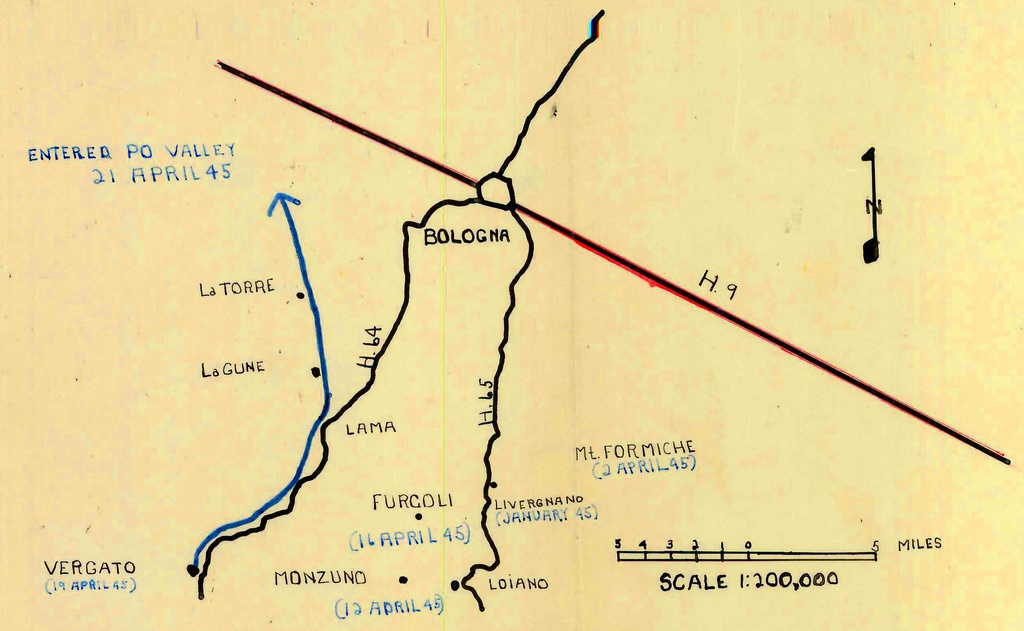
On the night of April 19, the battalion moved by truck to Lama, and on the morning of April 20, started the march into the mountains, following the 351st Infantry at 1000 yards. The column moved rapidly, passing through La Torre and La Gune, and when dawn broke, the regiment was moving down the last foothills leading into the Po Valley and at 0900, April 21, entered the valley proper. Visualize, if you can, what it meant to these battle-weary veterans to see the miles and miles of level terrain stretching in front of them. It was the first time since arriving in combat that they would be engaging the enemy on even terms; it was no wonder that everyone was anxious to again engage the enemy and show them what would happen when the tactical advantage was not theirs.
The 2nd Battalion in the Pursuit through the Po Valley
Shortly after reaching the valley, the regiment was given a sector and committed. Field Order No. 4, dated April 21, gave the direction of attack as due north with the mission of reaching the Po River with all possible speed. The regiment was to attack with two battalions abreast, the 2nd Battalion on the right. The 2nd Battalion was attacking with two companies abreast, George Co being in reserve. In the late afternoon, of April 21, the 2nd Battalion was approximately one mile short of Highway 9. They were to attack at 2000, cut Highway 9, swing west to Castel Franco, and again north along a canal to the town of St Giovanni. When Highway 9 was reached, Fox Co was to send one platoon due north and wipe out an enemy strong point east of St Giovanni.
As the battalion moved off in the attack, Fox Co, on the right of the battalion, was met by German Burp Gun fire from a canal bank to their right front. When met by this fire, the right platoon immediately deployed. With one squad wading and swimming the canal to get on the enemy flank, the platoon closed in, and in a matter of minutes cleaned out the enemy, destroying three gun positions, killing four, and wounding two of the gunners. The company hardly slowed down during the attack. The reserve platoon was brought up and replaced the platoon that had been in action. That platoon was moved into reserve. The battalion quickly cut Highway 9 and swung west toward Castel Franco, which had already fallen to another division. The battalion encountered no resistance along the highway, and soon passed through Castel Franco and swung north along the canal.

