

March 7 (Friday). Found another billet at the 17 Rue Gen Gengouit, a small room, with no running water, but it might be worse. Took the 3-in-1 typhoid shot this morning. Curry is in the civil hospital at Nancy – goes on 3 weeks of sick leave in a few days, of having skin trouble on his forehead as a result of being run down from his ‘flu’ attack. Out to the Toul field this afternoon – it is so wet there has been no flying for a week and 3 ships that landed from Saizerais turned over on the soft ground. Am not sure that life is worth living and know it would not be if I had to take the typhoid dose often.
March 8 (Saturday). Have had the running of the Horse Show, 2nd Army, wished on me. Maj McCoy is the horse representative. Bonnalie in from the hospital today – he is a wreck – wants to go home via England.
March 9 (Sunday). Walked out along the canal with Curry today and stopped at the polo field on the way back to gallop a pony for a few minutes – only the 2nd ride I have had since the smash-up at Omaha in June 1917.
March 11 (Tuesday). Had a wire today from Gen Hay, 28th Division at Colombey-Les-Belles, saying that Gen Pershing directed that all airplanes be brought down out of the air at once. The 28th Division had asked to have some pictures taken of the review and when the Liberty DH 4’s came down to do it they interfered with Gen Pershing’s conversation with the British officials with him. I hurried down to Colombey and found the review out on a plain near Barisey-au-Plain. On the platform were Gen Pershing; the British Secretary of State for War, Mr. Winston Churchill; Gen Maitland, the Britisher who jumped with a parachute from 10.000 feet (it was the first parachute jump from an airship, 1913); Gens Hay, Richardson, etc. The entire Division was drawn up in a line of columns and made a most imposing sight. The march past was very impressive and they looked fine.
March 12 (Wednesday). Went down to Allain with Thompson and assisted as linesmen at the final football game between the 7th & 28th Divisions. Neither side could score, so it was given to the 7th for having gained 34 yards more than the 28th. The 7th Division will now represent the 2nd Amy in Paris.
March 13 (Thursday). To Paris by auto, taking Appleton and Bryan with me. Parts of the road were miserably cut up and made traveling far from comfortable. Appleton, I, and some Mr. Leland Harrison dined together at the Café de la Paix. He is Secretary of the Peace Commission and a former roommate of Appleton’s at Harvard. Appleton goes to England for two weeks’ leave which he will spend in the hunting country riding to the hounds.
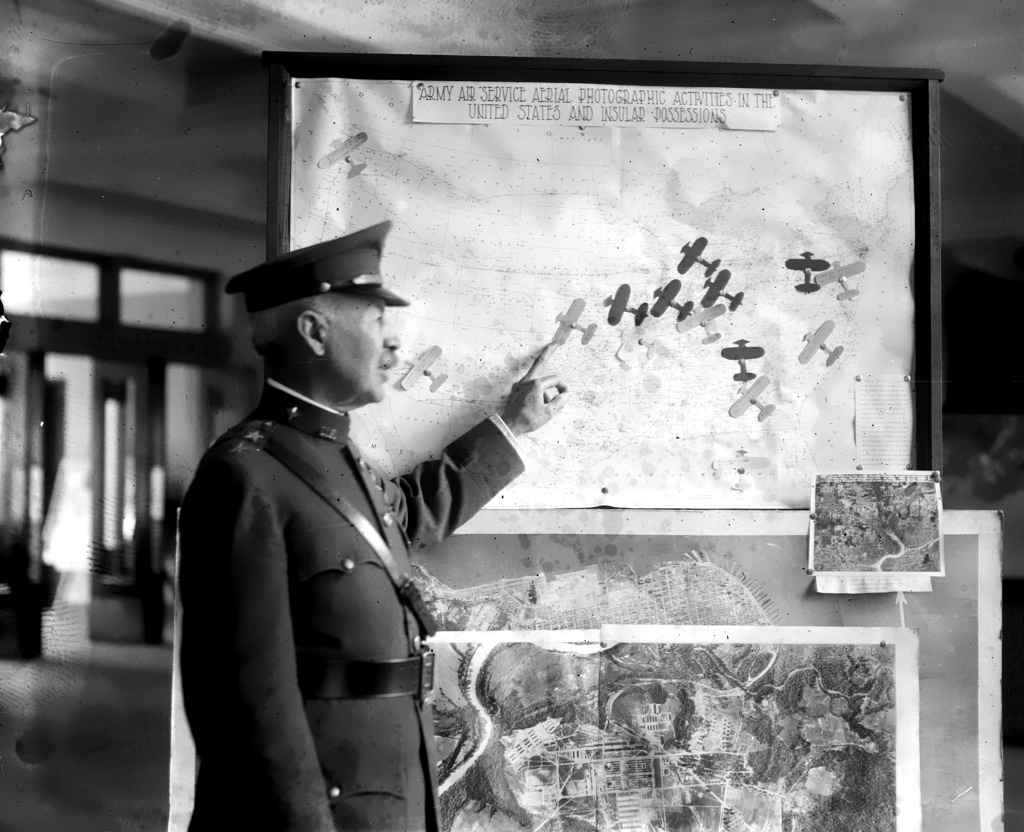
March 14 (Friday). Gen Patrick approved all but three small paragraphs of the 2nd Army Air Service Book and passed on to me the censorship of the balance. After a rapid trip over bad roads, rolled into Toul în Chapin’s closed Cadillac.
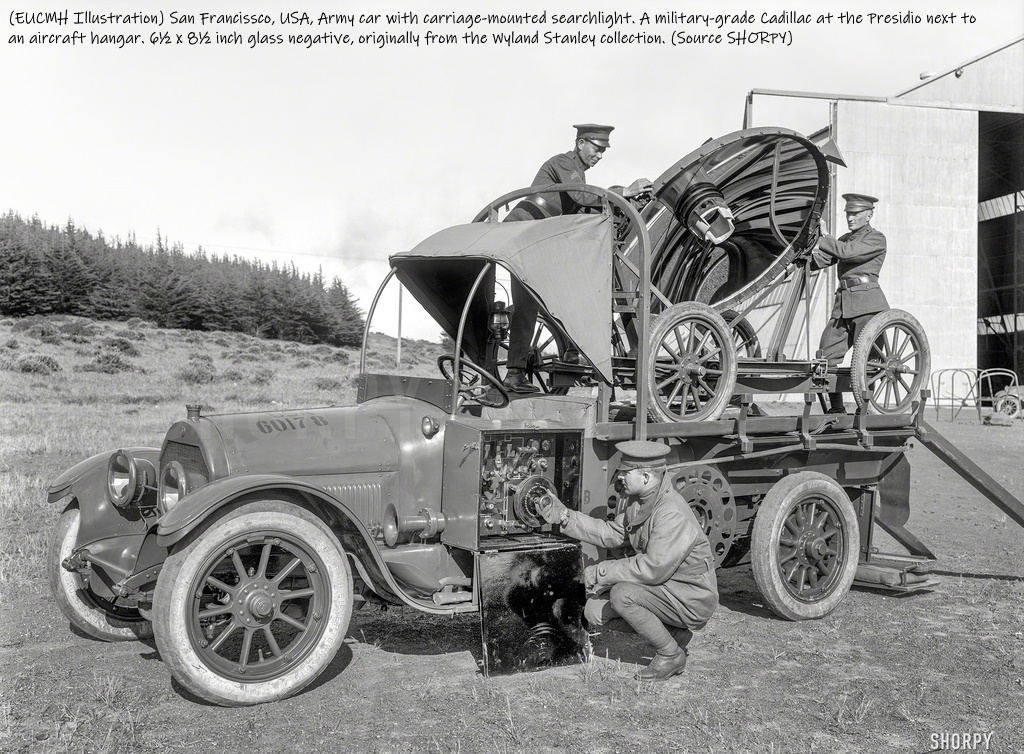
March 15 (Saturday). Inspected the Second Army Observation Group, then had a fifteen minutes flight on the Avro with Schirra. Played a little polo in the afternoon with McCoy – or rather worked out a new pony. Tonight, I took Carr out to the 5th Pursuit Group where Kirby had a large smoker in honor of Capt Bissell who has just been promoted just got the D.F.C. from the British Government for bombing and machine-gunning a train 12 miles behind the Boche lines last summer when he was with the 148th on the British front. Daniels, Bryant, and some of the others furnished excellent entertainment after dinner and we were sorry to leave at 2400. Maj Fauntleroy is out of the hospital minus several teeth and with a dressing on his underlip, the result of his smash in a Breguet-Fiat the other day. He is lucky to be alive.
March 16 (Sunday). Called a meeting of the Horse Show Committee this evening – everything is working well and plans are well started – I believe we will have a great show on April 5. Took my hour’s exercise on a polo pony – (2 of them) this afternoon. Possibly we can work up a team by the 5 to play the 7th Division.
March 17 (Monday). Had 40 min. on my Avro today, the last 15 alone, and it goes fine. Tonight the semi-finals of the 2nd Army boxing and wrestling matches came off at the Toul Theater – some fine bouts.
March 18 (Tuesday). Took Gen Aultman to the Second Army Observation Group yesterday morning where he lectured on artillery and this morning to the 4th Pursuit Group. Seven lecturers of the 2nd Army headquarters are doing the Air Service ‘circuit’ this week, talking to us on machine guns, cavalry, infantry, etc., and incidentally learning something of the Aîr Service. Gen Aultman changed some of his ‘views’ after his first lecture when we talked to him and exchanged views.
March 19 (Wednesday). Took Capt Vickery to the 4th Pursuit Group for his lecture on ‘Tanks’. Col Whitehead dropped in today on his way back from Coblenz. Maj Hoche of Post Office wants to establish an aerial mail service between Chaumont and Coblenz and I believe it can be done, but Col Whitehead does not enthuse – says we will fall down on a ‘regular’ service. It is worth trying anyway. Capt Williamson is in for some time tonight – the Red Cross is going back on contributing to the Horse Show which will materially affect our financial plans.
March 20 (Thursday). Maj Mordecai, Jones, Carter, and I started out in a miserable wet snowstorm for Luxembourg and the 6th Corps Horse Show. Arrived at 1300, still snowing, but the show going merrily on as tho’ it was a bright sunny day. The grounds were in an open park in the middle of the town – the grandstand and 3 band stands were beautifully decorated with green – with the 6th Corps, 2nd Division, 5th Division, and 33rd Division insignia plenty-fully distributed. Three bands played in turn, so there was music all the time, and at the end, they all marched in front of the grandstand and played as a combined band of 150 pieces. All the Commanding Generals were there, from Gen Bullard down – the civilians of Luxembourg, many of whom were fine-looking. The draft animals were magnificent and would have done credit to any Horse Show. The jumping was fairly good. Gordon Johnson won the charger class and the officers’ jumping. Carlisle of the 19th Field Artillery took two ribbons with his little mare.
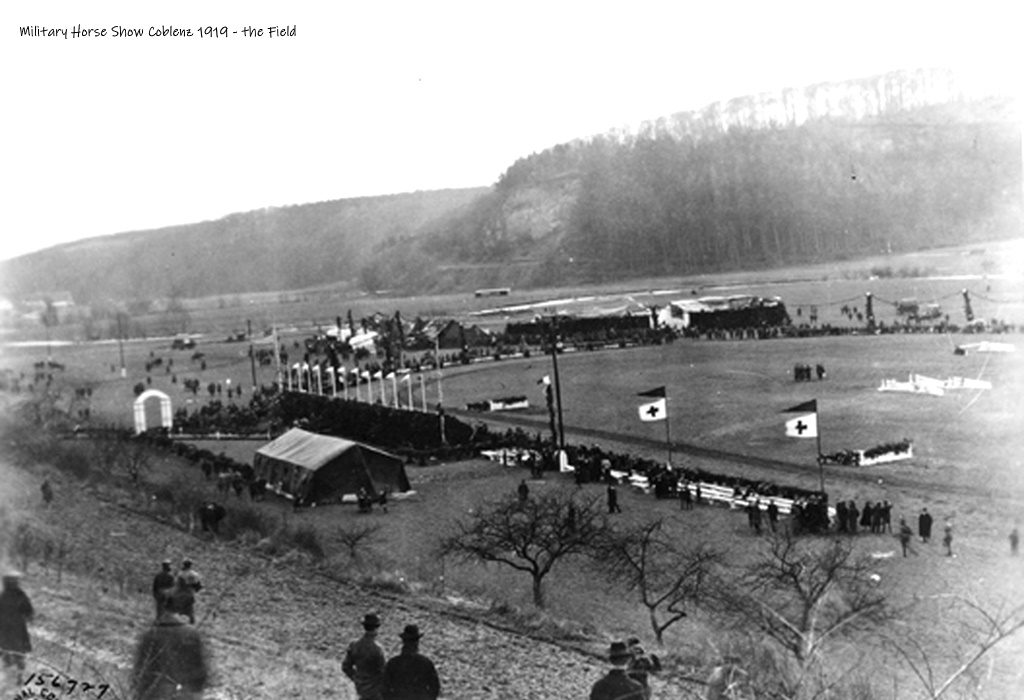
March 21 (Friday). Another Horse Show, this time the 9th Corps at Gironville above Commercy, an hour from here in auto. Genet ran it, and considering he is a doughboy and makes no claim to knowledge of horses or horse shows, it was well handled, tho’ it did not compare with the 6th Corps. The artillery teams were good but our artillery men are ‘field soldiers’ and do not know their drill. They went into ‘action front and left’, the limbers in front of the gun and caîisson, and one team wrapped itself around a tree going back, breaking up the carriage and spilling the men. The prettiest part of the show came at the end when everyone adjourned to a large green meadow in the river valley for the 1/2 mile flat and 1 1/4 mile steeple-chases.
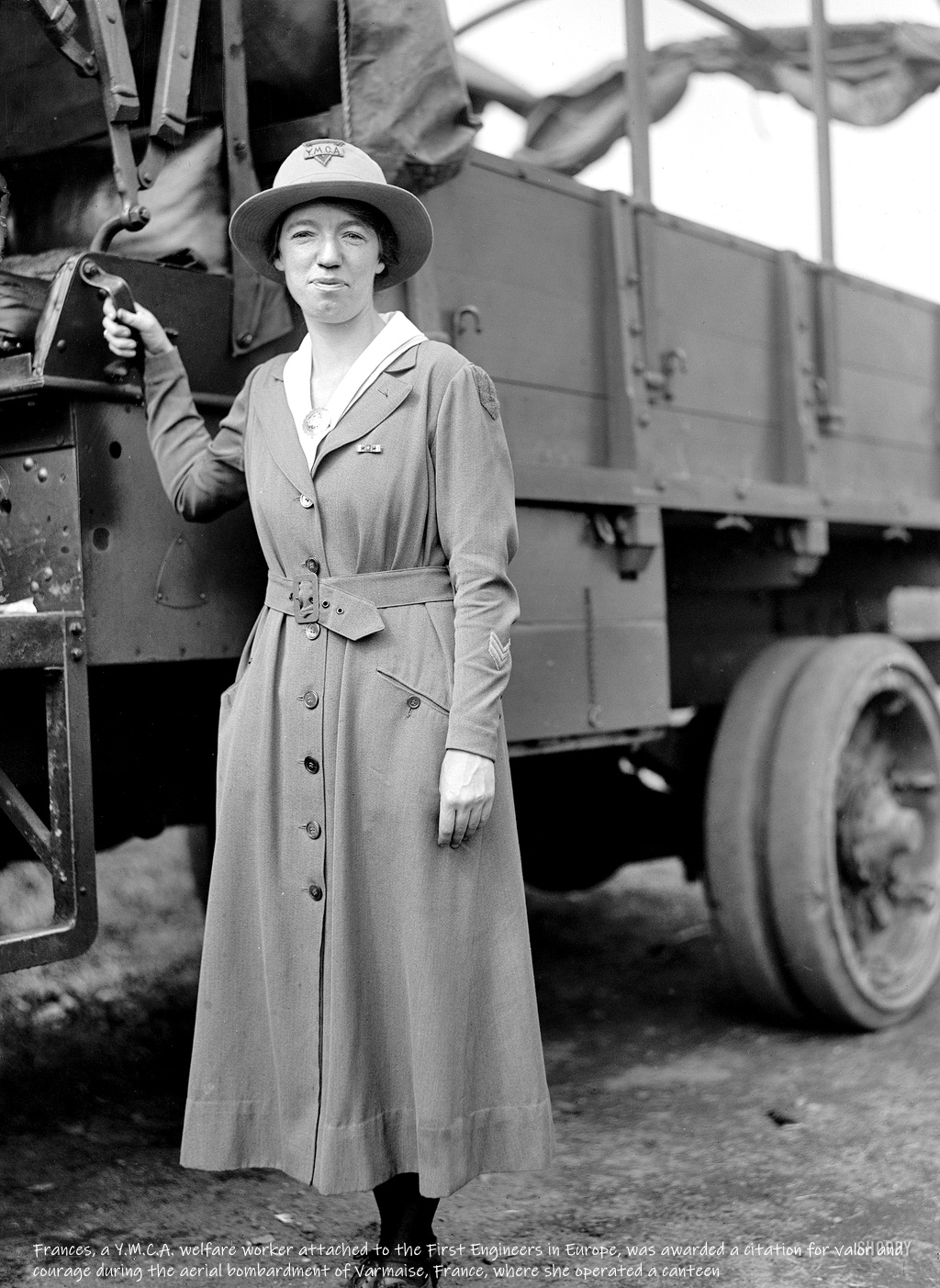
Again, all the commanding generals were there, except Gen Bullard who went to the 7th Division, 1st Army football game at Bar-sur-Aube. Gen Summerall commanding the 9th Corps, Gens Weigel, Johnston, Winn (our Texas City neîghbor), etc. The Y.M.C.A. ladies provided a buffet luncheon of hot coffee, sandwiches, crackers, doughnuts, and sweet chocolate. Mordecai, McCoy, and I stopped at the Commercy School for Care of Animals on our way back, where Maj Grimes showed us some possible polo ponies among the School mounts. This is the model school that has made a great reputation. 100 officers come here for a two weeks course of instruction in grooming, feeding, caring for animals, and transportation and do all the work themselves, including cleaning out the stables.
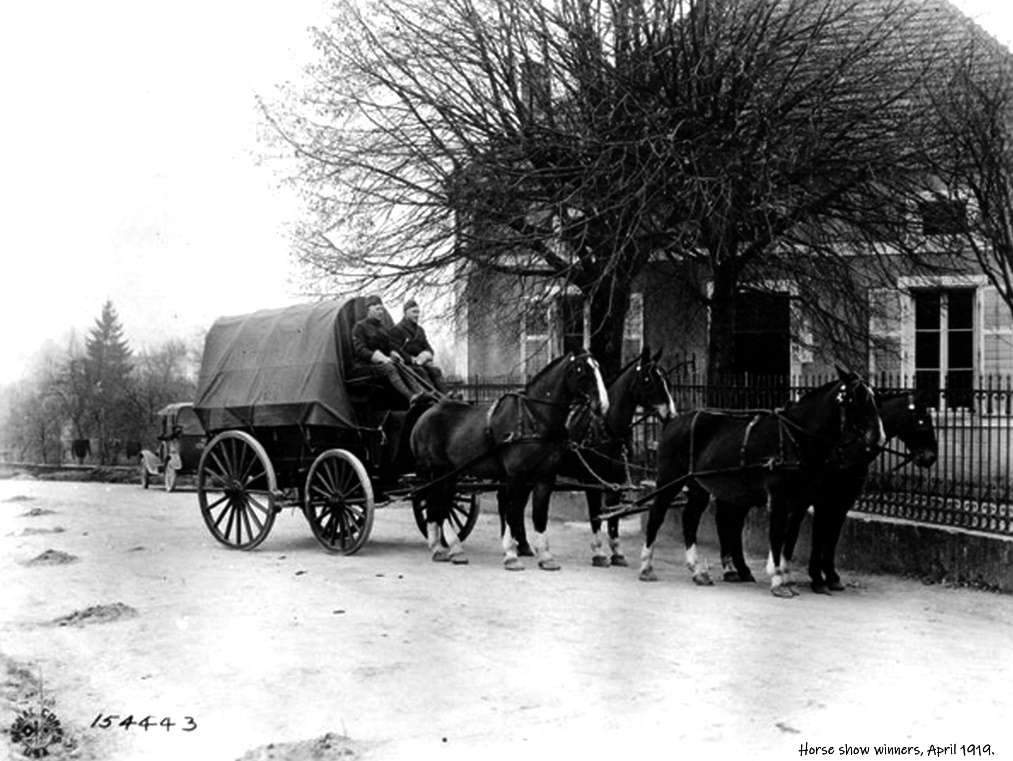
March 22 (Saturday). Spent all morning inspecting the 5th Pursuit Group. Kirby has done remarkably well and has built up an organization of which he may well feel proud. This afternoon the Army Troops had their tryouts to pick the entries for the Army Horse Show on April 5. McCoy, a major, and I acted as judges. With the exception of Maj Mordecai’s steeple-chaser and the charger owned by Maddington of the French Mission, we do have not many creditable animals here among the Army troops.
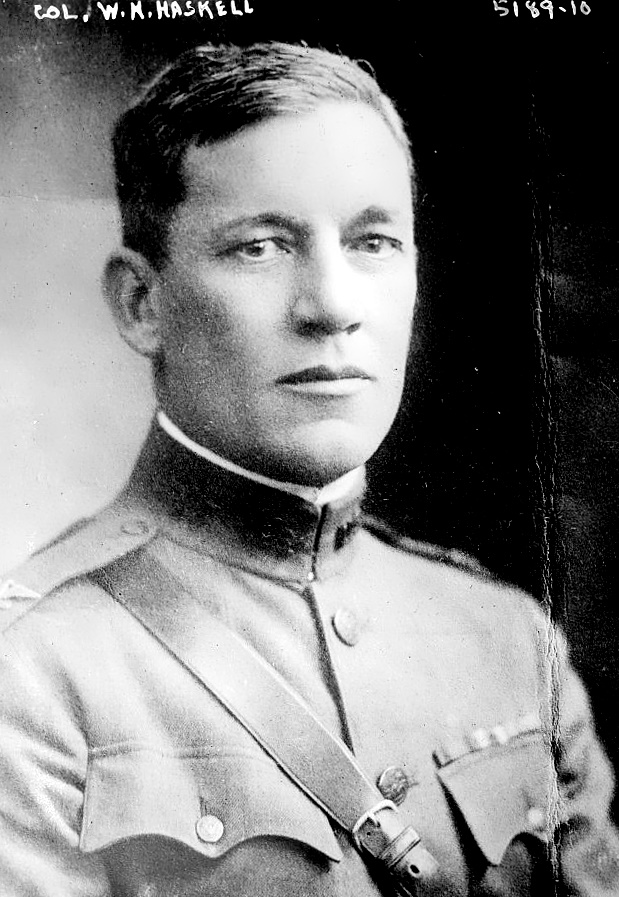 March 23 (Sunday). Billy Haskell came in this morning and drove thru from Nice in a Cadtilac limousine in 24 hours – 550 miles. Notice of the breakup is beginning to come, and orders may be expected at any time. Kirby issued an invitation to an ‘aerial tea’ at Lay-St Rémy this afternoon – roads were all supposed to be closed and the air route was the only one available, so I flew over in my Avro.
Edinburg, Heffernan, and the two squadron commanders from Ourches came in DH 4s, from the Toul Airfield were 2 other Avros – five Sop-Camels came to escort us over. I was called on and made a brief speech of appreciation for their good work. Bryant sang and played some of his original songs and many familiar ones – Daniels played and sang in his usual good form. They have great spirit in the 5th Pursuit, and I hope now that we are breaking up here that it can go to the 3rd Army Air Service as a unit as I have recommended. I left at 1745 and landed on the Toul Airfield in 15 minutes. Tonight, Gen. Bullard had us over at his quarters to tell us of the breakup and to urge everyone to keep going to the last minute and not let down. I had a meeting of the Horse Show Committee afterward and closed up our preparations.
March 25 (Tuesday). The pilots of the 85th objected to spinning their DH 4s which is part of the test Capt Oldys is putting all pilots through. They
seemed to think the ship would not stand it, so I went up with 0ldys today in Curry’s ship – we spun it three times, dropping about 1000 feet each time – landed and found on examining the ship, that all fittings, wires, etc. were intact and undamaged. We then went up in an Avro and spun that – much faster than the DH. Then I had a lesson in side-slipping and found it much easier than I had expected.

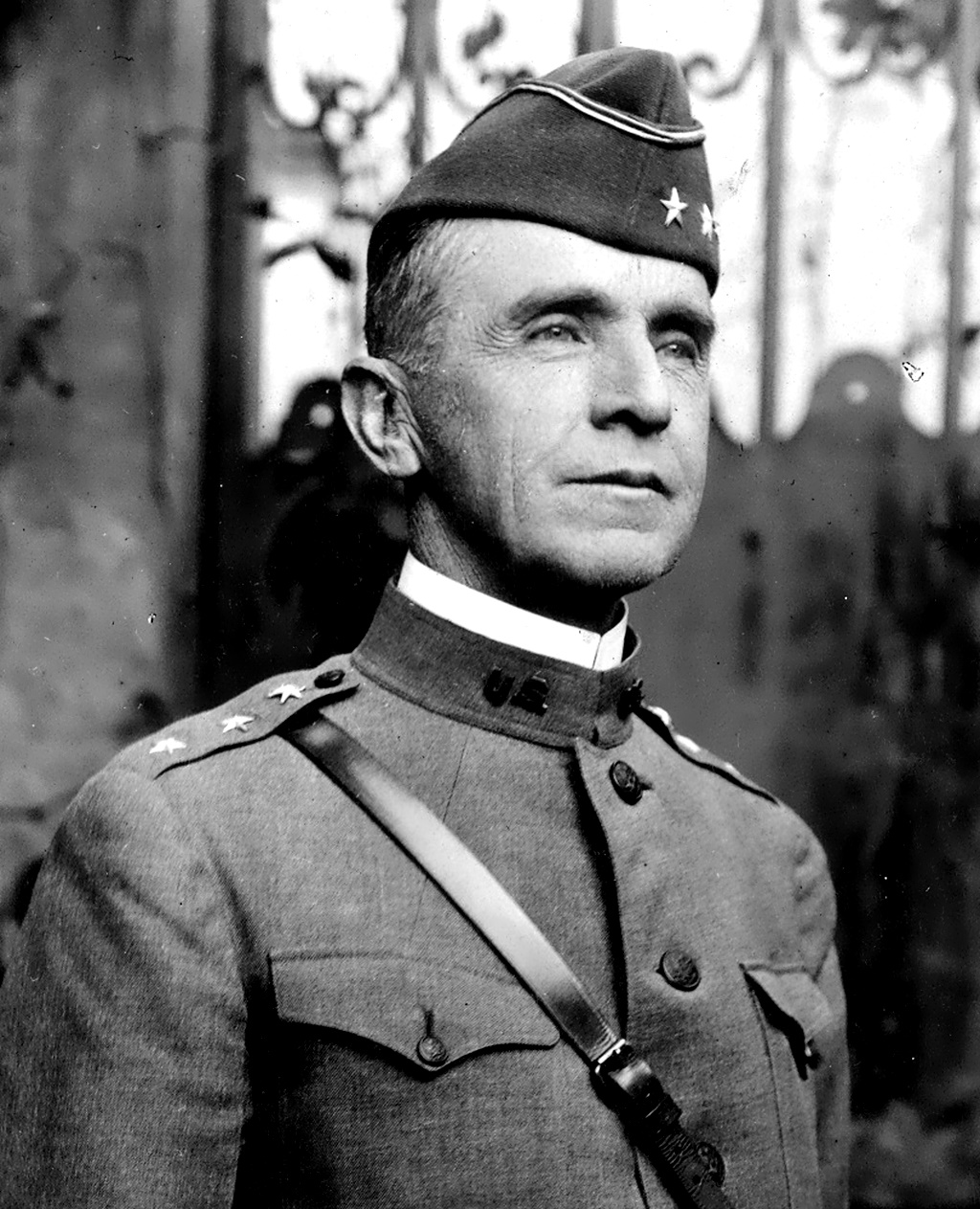
A Well Deserved Citation
Lt Gen Robert Lee Bullard (Jan 5, 1861 – Sept 11, 1947) was a senior officer of the US Army. He was involved in conflicts in the American Western Frontier, the Philippines, and World War I, where he commanded the 1st Infantry Division (Big Red One) during the Battle of Cantigny while serving on the Western Front. He later was an administrator in Cuba.
A native of Alabama, Bullard attended the Agricultural and Mechanical College of Alabama (today Auburn University), and the US Military Academy at West Point. He graduated twenty-seventh in a class of thirty-nine in 1885. Among his classmates included several officers who would become future general officers, such as Beaumont B. Buck, Joseph E. Kuhn, Henry P. McCain, Robert Michie, George W. Burr, John D. Barrette, John M. Carson Jr., Robert A. Brown, Charles H. Muir, William F. Martin, Daniel B. Devore, and Willard A. Holbrook.
He was promoted to first lieutenant in 1892. He served in various capacities in the Spanish–American War, and in the Philippines 1902-1904. He was made a lieutenant colonel in 1906. In 1907, he was a special investigator for the US provisional government in Cuba, and the following year was superintendent of public instruction there. In 1911, he was promoted to colonel. He attended the US Army War College from 1911-1912. The 39th Volunteer Infantry was a unit of United States Volunteers raised to fight in the Philippine–American War. Bullard was promoted to colonel and given command of the unit. It was nicknamed the ‘Bullard’s Indians’ due to the type of tactics the unit employed. After the American entry into WW-1 (April 1917), Bullard was quickly promoted to brigadier general (June 1917) and major general in the National Army (August 1917). He took over command of the 1st Infantry Division (“Big Red One”) from William L. Sibert, holding this post from Dec 1917 to Jul 1918. The division was then serving in France as part of Gen John ‘Black Jack’ J. Pershing. He led his division in the Battle of Cantigny (1918) and captured the village of Cantigny. It had been held by the German Eighteenth Army. It was the site of a German advance observation point and was strongly fortified. This was the first sustained American offensive of the war. It was considered a success in that it expanded the American front by about a mile.
General Pershing said of the attack: The enemy reaction against our troops at Cantigny was extremely violent, and apparently, he was determined at all costs to counteract the most excellent effect the American success had produced. For three days his guns of all calibers were concentrated on our new position and the counterattack succeeded counterattack. The desperate efforts of the Germans gave the fighting at Cantigny seeming tactical importance entirely out of proportion to the numbers involved.
General Pershing created the Second US Army in October 1918 and appointed Bullard as its first commander with the rank of lieutenant general. At the same time, he turned over command of the US First Army to Lieutenant General Hunter Liggett. Pershing retained his position as commander of the AEF with authority over both of the armies. Bullard’s military actions have also been subject to criticism. In the Battle of Montfaucon, Bullard reportedly refused orders to turn the flank of the German troops with his 4th Division as he did not want to help Maj Gen George H. Cameron, commander of V Corps, get credit for taking the German fortress at Montfaucon. Due to his alleged disobedience or deliberate misinterpretation of orders, the 79th Division, part of Cameron’s V Corps, had no support for their right and suffered unnecessarily severe casualties as they performed a frontal attack on the fortress. Additionally, Bullard continued to conduct offensive operations, with full knowledge that the Armistice with Germany was due to take effect in a few hours.
The Second Army was deactivated in April 1919 and Bullard reverted to his permanent rank of major general in June 1920. He was assigned to corps command in the much smaller post-war US Army. He retired from active duty in 1925 to concentrate on writing. He served as past president of the National Security League from 1925 until he disbanded it in 1947. Robert Lee Bulland died on Sept 11, 1947, at the age of 86 and was buried at the US Military Academy Post Cemetery, with his wife Ella (Reiff) Bullard who passed on March 3, 1963.