

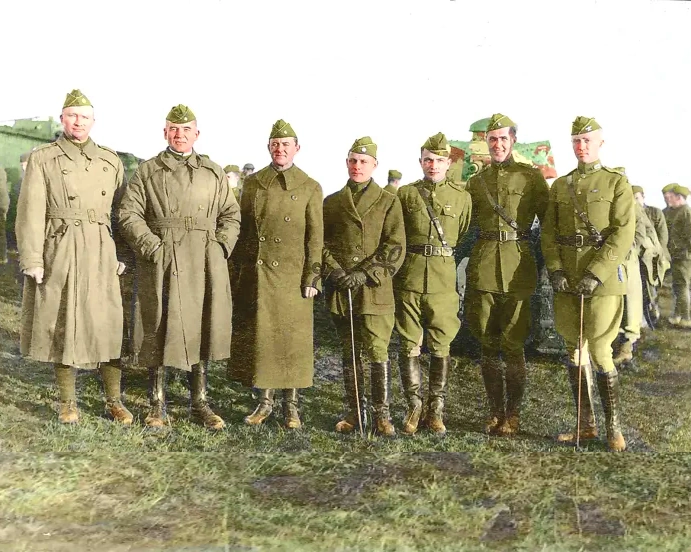



January 25 (Saturday). Spent the morning inspecting the 4th Pursuit Group.
January 26 (Sunday). Left for Metz, taking Dietrich with me. He is on his way to the 3rd Army. Tire trouble held us up for an hour on the road as a result of which he missed his train from Metz by 10 minutes. Had to have the order to go to Metz, issued by the 2nd Army, and the MP in Metz had to give me one pass to leave the Railroads Station, another to enter a restaurant to get something to eat. Most of the signs over the stores are new – French has taken the place of the Boche. A number of stores were marked ‘Off limits to troops’. Evidently, the French intend to run the Boche out as well as they can. At the Railroad Station, I found Boche officers with French and Americans looking on. Some French Army doctors were badgering a Boche raïlroad man – telling him ‘They were chez eux (at home) in Metz’.
A German whom I asked about bombs pointed out where a hole at the end of the station had been filled up with concrete – all the windows were gone out of that end of the station. He counted up 40 on his fingers as the number killed. He said several planes had come over at 1600 on August 22 last. My father finally arrived at 1615. After some soup and beer at the station restaurant, we left for Toul, taking 3 hours for the trip as it was snowing hard and we wandered off the road once. Metz looks pretty well – the restaurant in the station was well provided with food – the signs in the windows indicated the pressure that is being put on the Boche. They will probably find it worthwhile to get out. Found Heinie Mitchell in the billet when we got in so three of us sleep here tonight. The first real snow of the year.
January 27 (Monday). Heïnie Mitchell got away for Villers-en-Haye where he gives a ‘tank’ demonstration to the 7th Division. He has married a British wife – a very attractive-looking girl in war uniform. The Air Service Entertainment Troop show ‘A Happy Landing’ is at the Comédie all this week. Crafton certainly deserves a lot of credit for putting it thru. Everyone agrees that it is the best show that has been in Toul.
January 28 (Tuesday). With Col de Boisanger, Father, and 3 officers of the 35th French Corps Aîr Service, we went to Ourches this morning and presented a Croix de Guerre to Lt Reedy, a bomber of the 163rd Squadron. It was very cold but Reinburg’s command did themselves proud as usual, with a band borrowed From the 35th Division. Curry and Kirby are back from Nice – where they had a very enjoyable week, but the return trip was awful. On the advice of the Rail Transportation Officer, they came via Dijon, and the French Alps, were nearly frozen – Kirby got the grippe so they had to stop off at Lyon overnight, when he was able to come on. One night they stood up in the corridor of the train from 2000 till the middle of the next morning. Both Curry and Kirby have given up and gone to the hospital.
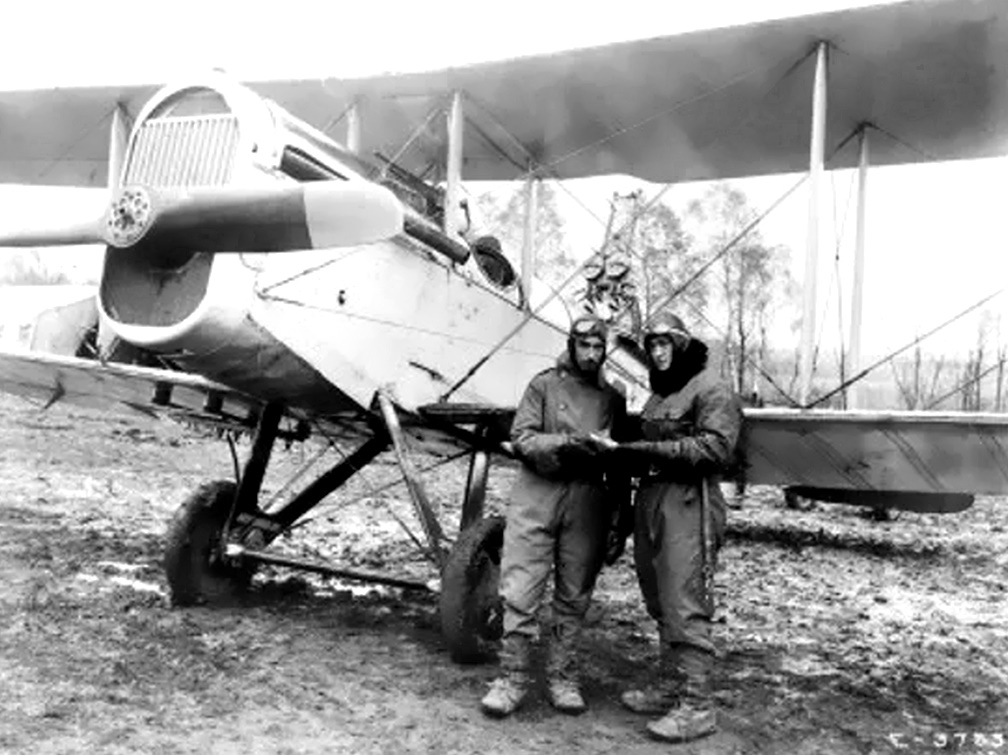
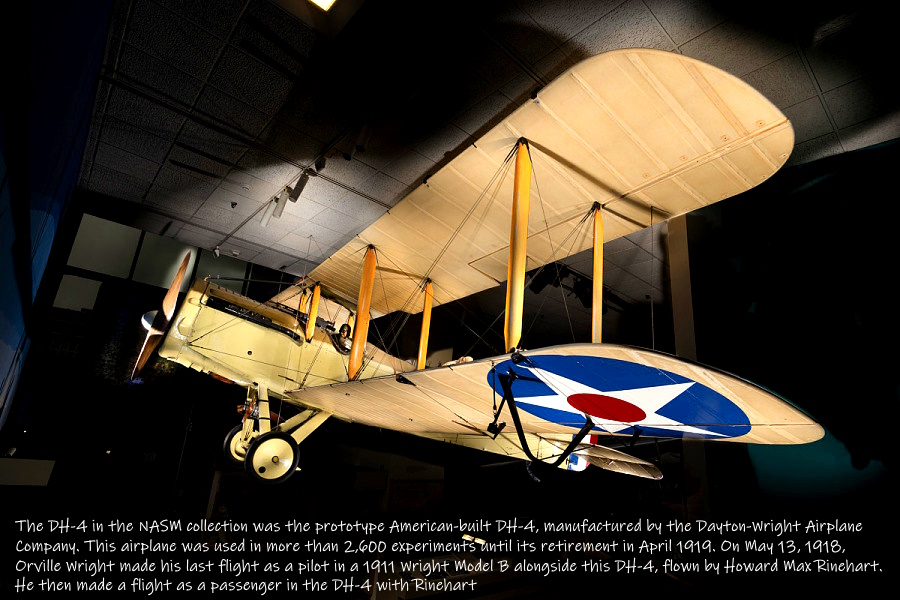
January 30 (Thursday). Father got off to Paris today. Had a 20-minute flight with Krout in a DH 4.
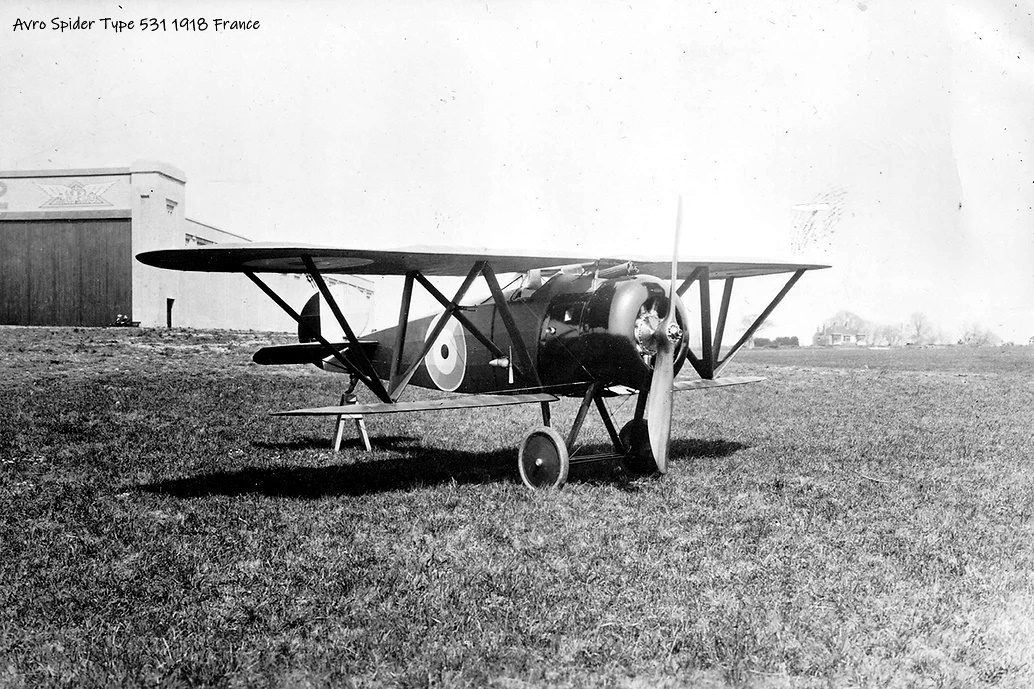
January 31 (Friday). Flew 20 minutes in the Avro. It is a great machine. Curry is still in the hospital with the flu. Crafton in today, the show is pretty well shot up as most of the men have colds and 2 of the principal ones are on a sick report with the flu.
February 1 (Saturday). This is Jouett’s great day. Mrs. Perry, his mother, arrived from Coblenz yesterday, and Miss Kellogg from Paris with an uncle who is in the Red Cross. They had the French civil ceremony at the Town Hall then came up to the Protestant Church where we were all waiting. A Y.M.C.A. minister performed the ceremony and it was really impressive. We all sat in the cold little bare-walled church, with our fur coats on. It was not particularly light at 1630 on a dull gray day and of course no artificial lights, Miss Kellogg looked very attractive in a gray suit and spats – she answered up at the service like a soldier, stronger than Jouett did.
After dinner at the mess, we stopped at the Comédie where the wedding dinner was still on. We joined them for a half hour and toasted the bride, found Gen Kilbourne, Bob Foy, Capt Jones, Dr. Hendricks, Mrs. Perry, Poivillers, the Red Cross uncle, and one or two others, besides the bride and groom. Poivillers insisted on adding a French touch to the party by having everyone drink a glass of absinthe. It is awfu1 Stuff.
February 2 (Sunday). Whitehead got away this morning. Maj Campbell was up from the 1st Air Depot this afternoon to talk over the supply question.
February 3 (Monday). Carter is back from his trip to Nice and reports a happy stay, but the usual discomforts of traveling. 45 minutes in the Avro with Krout; tore off the tail skid on the hard ground on landing the last time.
February 4 (Tuesday). Since January 24, I have been installed in a more comfortable billet at the 60 rue St. Vaast, where I have a larger room, electricity, and running water in an adjoining bathroom. The hot water heater was put out of commission some time ago by a French orderly so the tub cannot be used. The old woman who takes care of my room has her husband, daughter, and soldier son-in-law who works in the military butchery. When the war broke out she and her husband kept an Inn at Montsec. They stayed for 4 days after the Boche came in, during which time the Boche spaded up the ground all around the Inn looking for valuables, but did not find them. She showed me some Russian bonds which, together with 1700 francs in bills, they hid in a cave at their house and which the Boche never found in all four years. When they went out after the Armistice they found the bills and bonds underwater but intact and in good condition.
Flew with Krout for 5 minutes in a DH 4 this morning, but punctured a tire on the frozen ground so had to land. Mrs. Potter and Cooper are back. In Frankfort the Red Cross gave her information that her son was brought down and buried near Barricourt, southwest of Stenay. They went there and found the remains of the plane, it had come down in flames and little was left. Her son and Wilmer his observer were buried in the same grave nearby. She is arranging now to have them buried in Stenay in the regular cemetery.
February 5 (Wednesday). Mitchell (tanks) is in for the night with me. Walked out to see Kirby in the hospital.
February 6 (Thursday). Fkew 25 min. in the Avro with Lt Schirra of the 85th today.
February 7 (Friday). Left in an auto for Villerupt to the 6th Corps HQs. Passed thru Pannes, Chambley, Mars-la-Tour, and Conflans; our troops scattered thru most of the towns – colored prisoners working on the roads. I should think the French would be sorry to have us leave. Briey and its iron mills, Audun-le-Roman, were destroyed by the Boche in 1914 under the pretense of having been fired on from the houses. How much more prosperous it looks when you get into the iron industry section. I crossed the border into Lorraine or Germany (which was and will not be), the first thing that struck me was the numerous children and how well dressed they were – that is, warmly dressed. Crossed back into France again and arrived at Villerupt at 1120. CoS out so lunched with Duke Bridges, Krueger, Jack Dakes, Mackall G-2.
Saw Collins and arranged about taking the 6th Corps Air Service over into Army Reserve, which meets with his approval. Passed thru Esch 5th Division HQs and a substantial-looking town – found Bob Foy commanding the 19th Field Artillery at Hesperange, where he is comfortably billeted in a steam-heated, electric-lighted house. We rode up to Luxembourg City only 5 kilometers away and looked around. A very presentable town – apparently about 100.000 but in reality only 30.000. They explained that every person had a house. We dropped in at the Casino for a glass of ‘Quesh’ or native brandy. The Casino is open to all officers of the Allied Armies but was never open to the Boche officers during the entire war, which is significant. The Grand Duchess Marie opened up the country to the Germans in 1914 and they came thru. She has now been crowned and Charlotte, the 2nd sister, is Grand
Duchess.
Every Saturday night they have a dance at the Casino attended by all the Luxembourg and the American officers. We rode back to Hesperange and called on M. & Mme. Tesch, the two sons, and the twin grandsons. They all live in the next house to Bob’s which belongs to one of the sons. He owns the mills, is the leading man of the town, and is a Belgian originally. It seems that Luxembourg is due for a republic but the time is not quite ripe. The people are largely Catholic and the State is Catholic. Bob had his Lt Col Carlisle in for dinner at the Regimental HQs Mess.
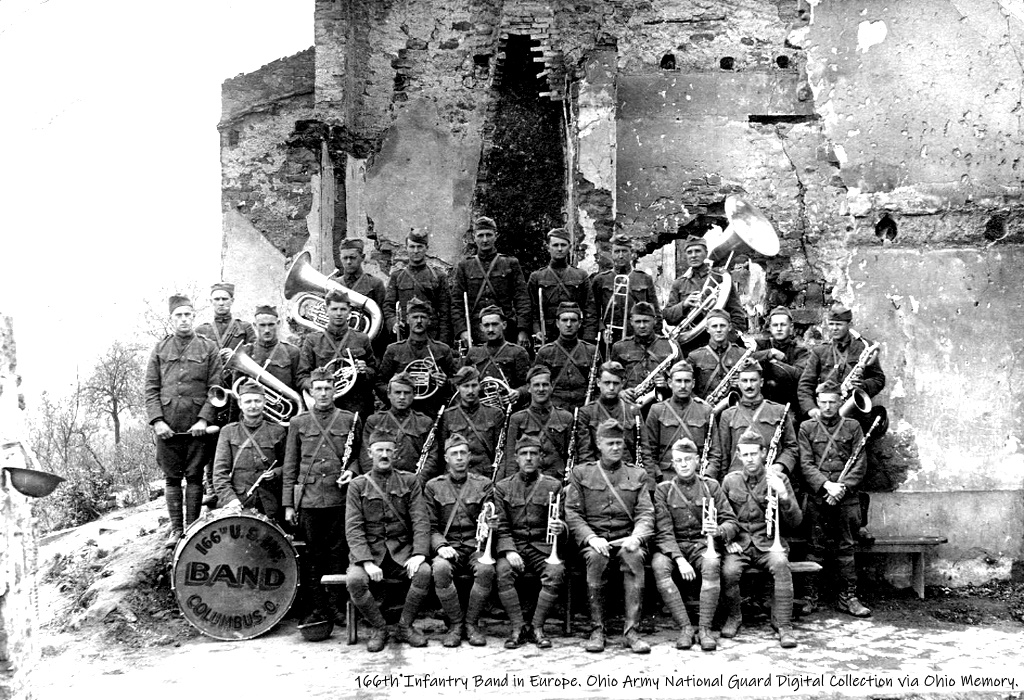
February 8 (Saturday). We had a 2 1/2 hours run down the river thru Thionville, Metz, Dieulouard. Brought Bob’s band leader who is on his way to Gondrecourt to pick out musicians. Went to the hop at the Comédie for a while. Burkhead was there with 9 girls!
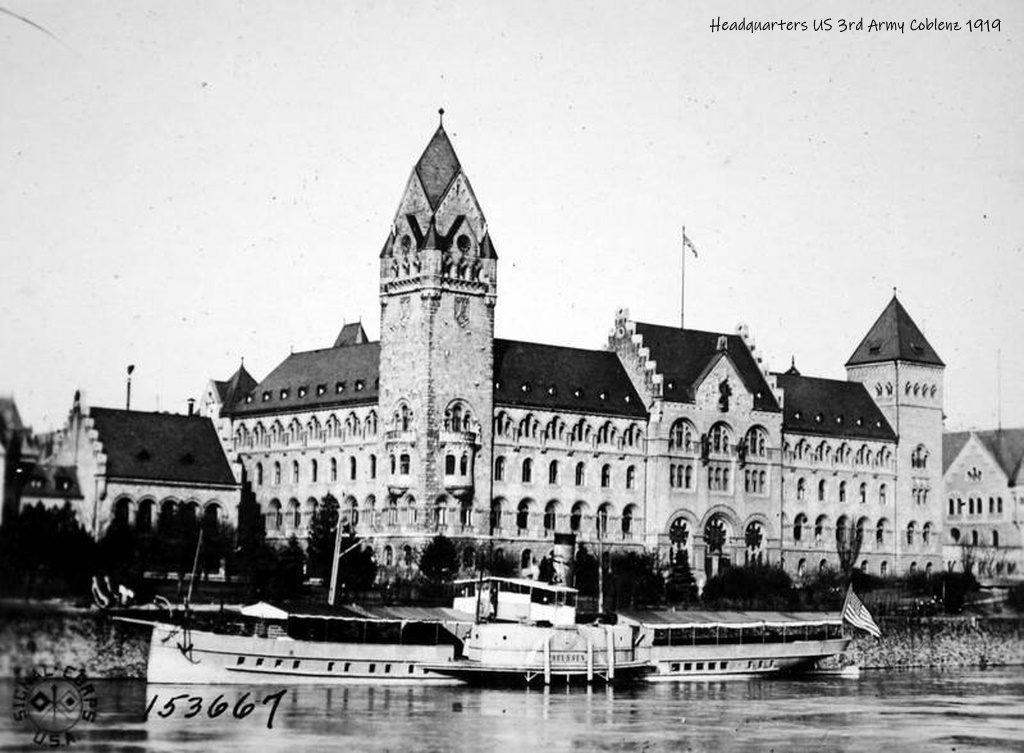
February 9 (Sunday). After considerable difficulty in getting the oil heated up so it would flow, Krout and I got away in Curry’s DH 4, past Metz and followed down the Moselle past Thionville, Trier with its dirigible hangar – very good flying until we came near Coblenz when suddenly a heavy white cloud bank hid the ground. We had to dive thru it, then followed on down to Cobienz where we landed on the aïrdrome. 2 hrs 20 min. en route and on a cold trip – had to beat my fingers and nose to keep them from freezing. Could find neither Fowler the Chief Air Service Third Army, nor Anderson, but the Tatter’s Adjutant, Lt Trunk, sent us down to their mess where we ate a hearty luncheon, then into town. Third Army HQs is in a fine large building on the Rhine with Ehrenbreitstein, the fortress, looming up across the way. Fowler’s offices are palatial.
Coblenz is a beautiful city, with its broad streets, Kaiser’s palace, the river, etc. Ran onto Paegelow, Tyner, Dr. Edwards, and many others in the Coblentzerhof, an excellent hotel next to the HQs which has been taken over as officers’ quarters and in which I am billeted. I for the comfortable steam-heated German buildings. Our people are not allowed to fraternize with the Boche, nor can they even buy food for them as food is short and the people are supposed to be having difficulty subsisting.
February 10 (Monday). Took Krout and car furnished by Fowler and ran out to Montabaur, then to Wirges at the 1st Brigade HQs. Frank came in from a problem and we had lunch with him and his staff including Capt Maréchal the French Liaison Officer. Went with Frank to see some horses tried out over jumps, preparing for the Division horse show, Maj. Stewart an old Master of the Hounds in charge. Ruggles now in command of the 7th Field Artillery came out. Stopped to see Parris and his 3rd Balloon Company. He has his balloon in the Fort of Ehrenbreitstein. He took us over to see Reis who now commands the Balloon Group of the 3rd Corps and lives in an old monastery, now the house of a Boche major – some interesting old paintings on the walls.
Fowler, Paegelow, Krout, and I dined at the Casino, now the 3rd Army Officer’s Club. Afterward, went to a very successful dance given by the 12th Squadron in the fortress of Coblenz where we landed yesterday and where the 12th, 91st, and 94th squadrons are all stationed. There are not many of the original members of these squadrons left with them now.
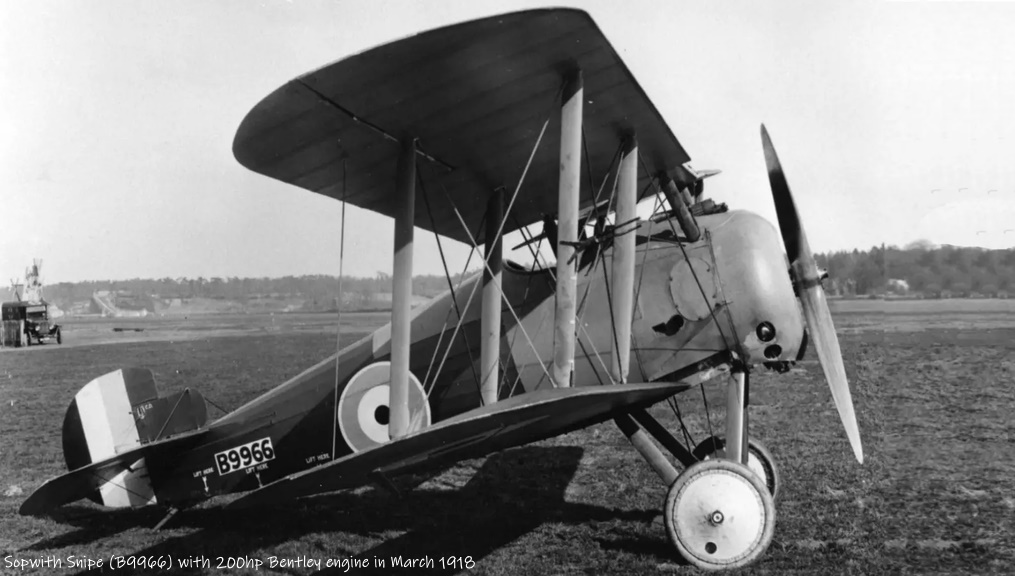
February 11 (Tuesday). Krout and I made a 2 hr. run in a Winton limousine down the river through the 3rd Division, the 42nd Division, then into the British area, thru the fine old city of Bonn to Cologne, now British HQs. Had lunch with Dave Biddle now our liaison officer with the British, then called at British Air HQs, Gen Hogg was away, but Maj Beatson, his asst. took us out to the Cologne Airdrome and showed us the British Snipe with its 200 HP BR motor, the finest fighting ship now made, a wonderful five-engine Boche bomber, a regular leviathan that made even the Handley-Page with its 98 ft span look small. Saw one of the famous Junker armored planes made of corrugated iron and all metal – it looked somewhat like a bunch of junk.
We were told they had had four fatal accidents in 2 days; the Britisher will stunt close to the ground. Had a cold ride home and got in just in time to go to a dinner party at Warner McCabe’s quarters in the Fort of Ehrenbreitstein.
February 12 (Wednesday). Tried to get off but had bad trouble with the motor. Lunched with Anderson in his mess, tried again to get away but the spark plugs fouled up with the light oil they had put in at the airdrome, so had to give it up agaîn. Had Bill Ennis, Callan (both brigadiers) Fowler, Anderson, and Krout with me to dinner at the Club and we all went to see some good boxing bouts afterward.
February 13 (Thursday). Out to the aïrdrome and found them still working on the engîne. We finally got away with a pretty heavy ground haze – climbed to 5000 feet where we could see the snow-covered hills very readily and could pick up the Moselle winding among them. The engine began cutting out on one cylinder about over Wittlich so we landed on the Trier Airdrome by the big Zeppelin Hangar. Found Davidson was in the air giving a Y.M.C.A. entertainer a ride in a Salmson while his wife looked on from the ground with mingled emotions. Davidson took us to see the old Roman Amphitheater, a most interesting old ruin on the edge of the town. The sloping entrances on two sides, the people’s entrance, and the lion’s cages set on the hillside, all show up very plainly.
At 1600, the engine was still missing, and as Davidson could not get a ship ready for us in time, I asked for an auto. It took until 1740 to get it, then a Hudson, kindly lent by Capt Diekema commanding the 9th Night Reconnaissance Squadron, arrived at HQs and I hurried off for Luxembourg. I stopped at Bob Foy’s mess at Hesperange, then pushed on to Ars just below Metz where I found Mulrenan with the Cadillac. After filling both drivers up on hot coffee at a café, I sent the Hudson back to Trier and reached Toul at 2330. It was an unpleasant contrast after living at the clean comfortable Coblenz Hof, to arrive in my cold billet and climb into a colder bed.
February 15 (Saturday). I am getting into a bad state of mind. I can’t help drawing comparisons between the French and the Boche to the detriment of the former. It must be admitted that for efficiency there can be no comparison. Probably I am particularly struck just now because it is cold and the lack of
creature comforts is likely to form a prejudice. The fact remains that things are better regulated in Germany, and everything is cleaner and more orderly. Railroads, roads, hotels, everything is better in Germany. The French are too penurious. Surely Germany must have greater difficulty getting coal and yet you see it everywhere and the houses are heated. This afternoon, Curry and I went out to Tremblecourt to see a football game between the 7th Division and a team representing the 2nd Army troops but made up largely of the Second Army Air Service men and coached by Lt Wallace of the Air Service, formerly a Harvard player. The field was a sea of mud but there were no fumbles. The score ended 6 – 6, and our team lost simply on the eagerness of its men who would not stay on the side. They gained consistently, then were penalized for off-side play.
Spent all morning inspecting the 5th Pursuit Group at Lay-St Rémy. This evening, Eckman, 0lds, 0ldys, Jenkins, Krout, and myself occupied a box at the Comédie for an expurgated production of Faust. The orchestra was good – it was led by the French soldier who sang for us one night last summer up on Mont St Michel. There were five principals, mostly good singers, including one good basso from the Opera in Paris, but there was no chorus, no other performers at all. It was odd to watch some of the people in the audience. Some old women, very plain ones, were all attention and apparently looked on with marveling eyes. Foulois came in last night and had dinner with me, going on this morning to Trier where he is to attend the course in artillery for general officers and selected field officers.
