


March 9. There has been a gap since my last entry on February 15 which was occupied largely and principally by my two weeks’ leave to Nice, the first I have had since my arrival in Europe a year ago last September and a happiest one. I will try and report events chronologically as well as
I can remember them, but reporting them does not half express my pleasure and feelings during the happy holidays.

Doc Snafu’s Note via Google Translate
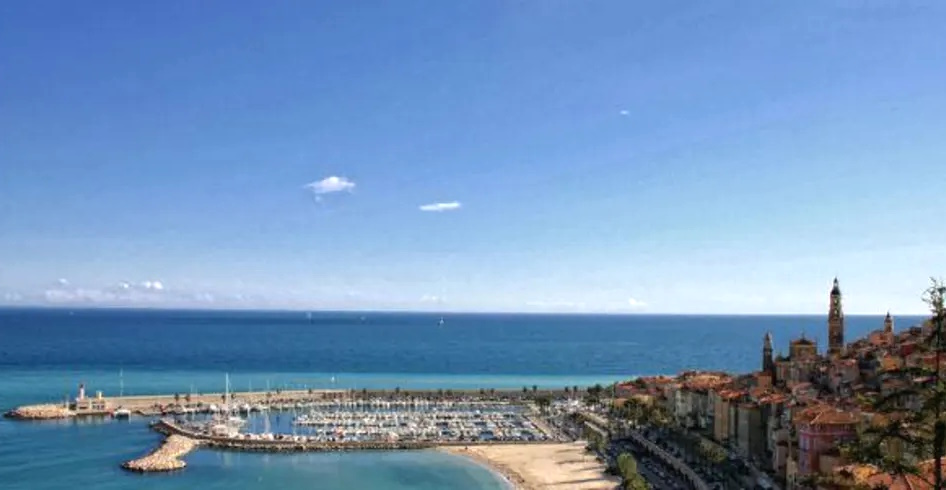
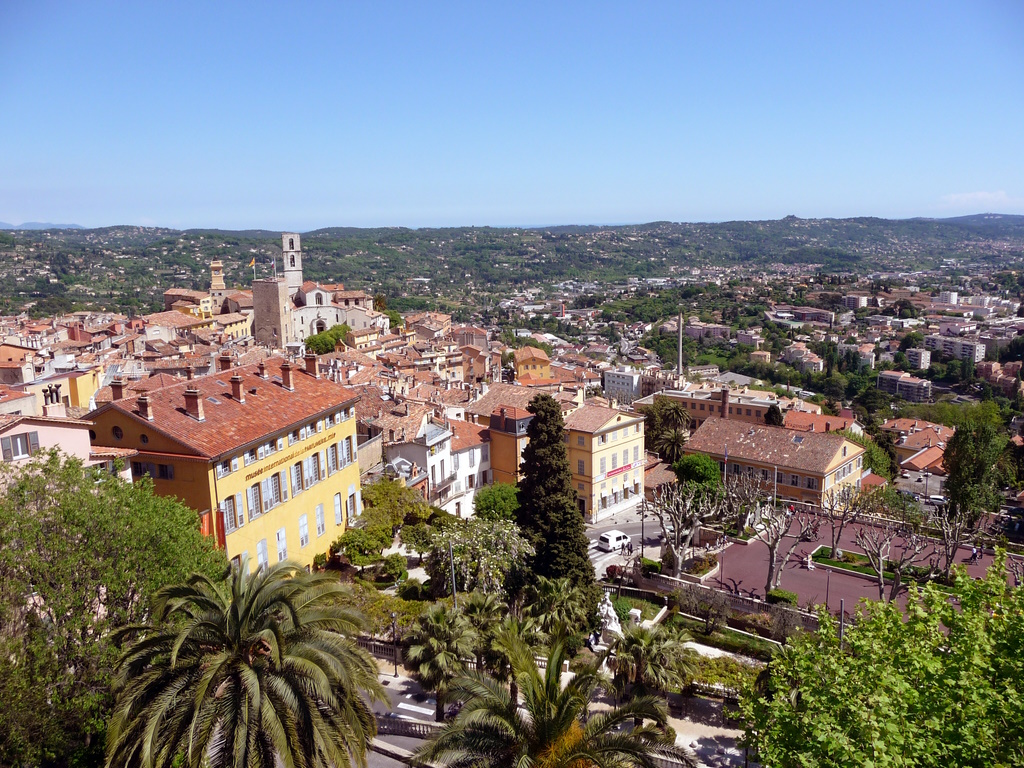
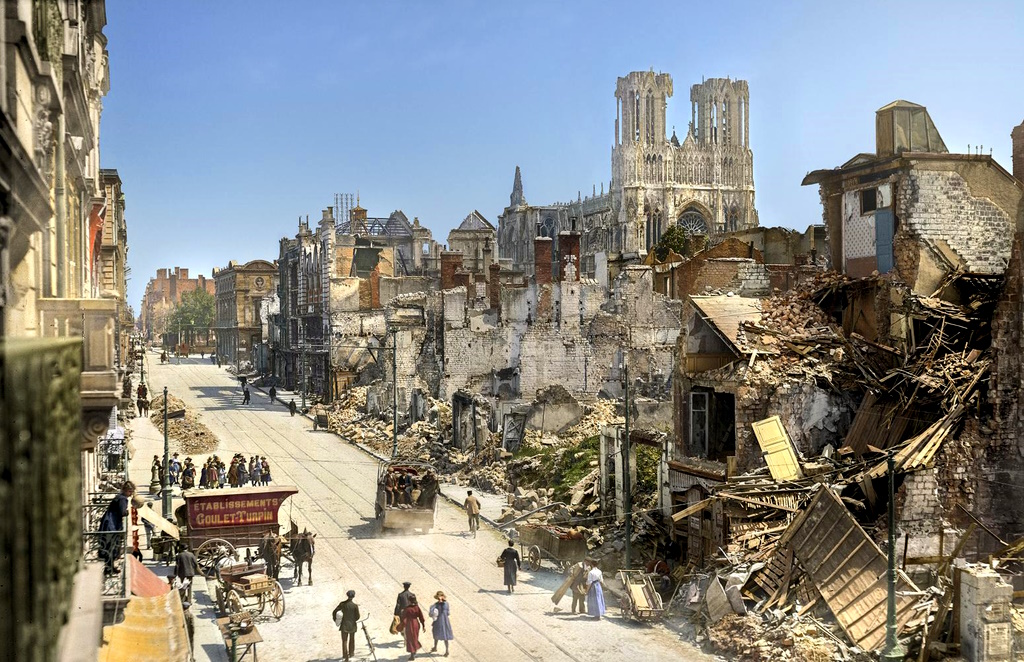
I am faced with a dilemma. As a collector of military photos and archives for more than four decades, I have thousands of photos from the Second World War. This is unfortunately not the case the First World War period. This is the first part of my dilemma. The second part is as follows: how should I act to make the readers react while I claim to tell the military history of their parents and grandparents, what these men felt at the time of the events I am writing? In Europe, through my activities in the field of military history, thousands of people know me and know that I would never publish a text without illustrating it with related top photos. European readers, like collectors, are purists. On the other continents, the US and Australia, readers, and collectors, but above all readers, are faced with a part of their family’s past that has always been kept silent. The men who fought on the old continent in the pacific and other theaters of operations, whether of 14/18 or 40/45, have only very rarely been able to overcome the suffering endured and recount their experiences. Some did, but often in the fall of their lives when most of the memories had been erased by the time that life lasts. Some parts of the archives that I publish, and this is the case of the one you are currently reading, must allow readers to feel what the text says. It is generally easy for the period 39/45 but it is not at all the case for 14/18. Passing from one person to another the feeling of enchantment that the discovery of a place, a village, or whatever can only find an equivalent in today’s documents because those of 1918 are often of dubious quality, or faded over the years. This will explain the reason why in this part of the archive I opt for modern photos.
February 19. Left Toul on the train, reached Paris at about 1600 where Red Cross busses were waiting for officers – this is a great boon in these days when taxis are few and far between. Had to go in it into Red Cross HQs above the Crillon and walk back to rue St Florentin.
February 20. Discovered I had to travel by the American military train and not by the regular train. Had a ‘couchette’ (berth), blanket, and pillow in a compartment otherwise occupied by a Red Cross worker, a nurse, and a Signal Corps telephone operator, all female – but had a most comfortable night’s sleep – stopped 30 minutes for dinner at Dijon.
February 21. Woke up before reaching Marseilles and had to live on sandwiches etc. till we reached Nice at 1300. The nurse had a thermos bottle which I had filled with coffee, so we got along very well. My first glimpse of the Mediterranean was a happy one. The sun was shining, and suddenly as I happened to glance out the window there was a beautiful bay just showing between two nearby hills – a bold rock jutting up at an angle, a little village shining in the sun, and such blue water! Ziem never painted it bluer than it really is. Later we came into full view of it and how good it all looked. The bright warm sun, the sun still can shine I find, when you get out of Lorraine and Northern France, peach trees in full bloom, flowers, beautiful villas, and towns, glistening with their red roofs and white walls. I had already had my money’s worth by this time. Went to the Hotel d’Angleterre where I had a good room and board for 25 fr ($5.00) a day. Surely the cost of high living for officers is not here. I wake up in the morning and look out on the bright mountains, the farthest ones clothed with a white winter coat.

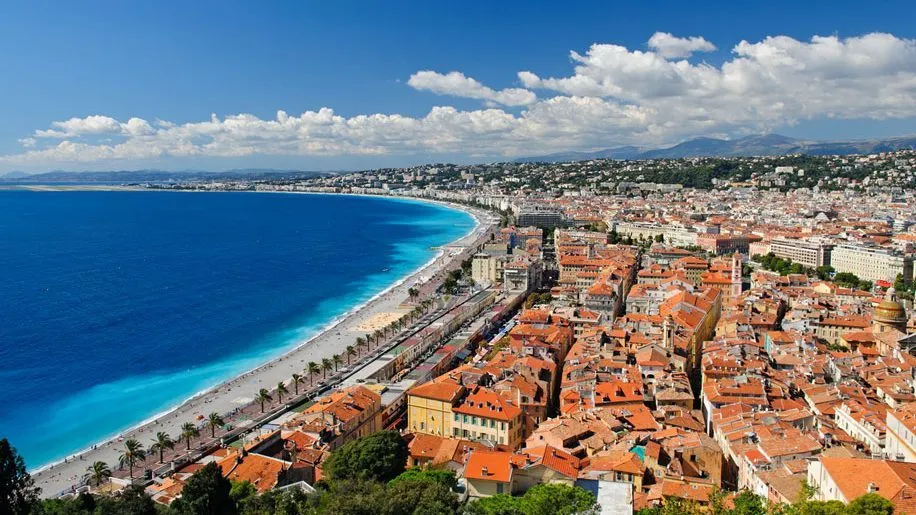
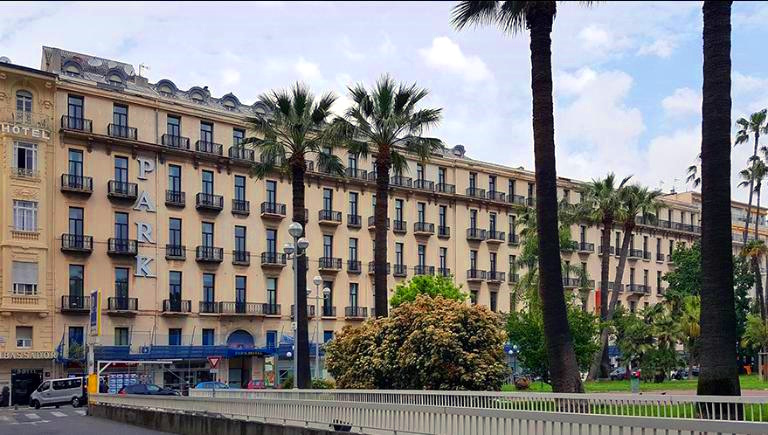
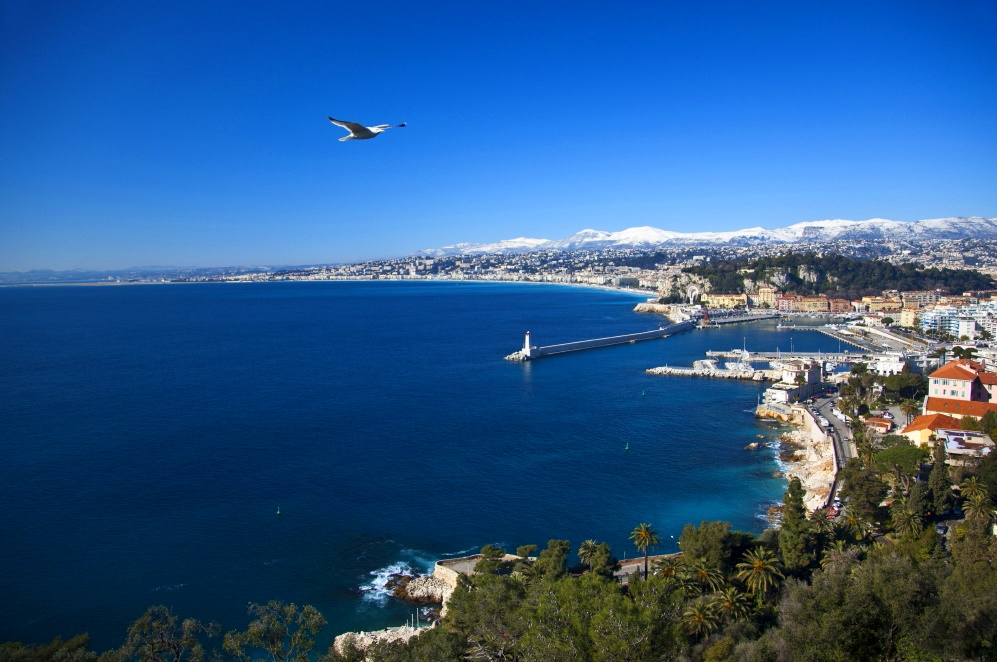
February 24 (Monday). I will not try to chronicle each day here. My father arrived this evening. He had stopped for a couple of days in Lyon to see about some of his Raviers. The week up to Saturday, March 1, was taken up with walks along the waterfront where everyone is out sunning just before noon and agaîn in the afternoon. One of our bands plays in the Parc Albert in front of the hotel every afternoon. We ‘tead’ at the gay Ruhl just across the park, at the Savoy next to it, ‘tead’ or dined at the Negresco, the newest and finest hotel farther up the shore, went to the cabaret afterward at La Belle Meunière Hotel. All these places are filled with people of all kinds, including officers, nurses, etc. all enjoying a little respite from the rigors of war and the military.
 The most attractive place of all perhaps is the brilliantly lighted Casino built out over the water, reserved for our enlisted men where they dance every night, Col Smith, CAC, is the commanding officer of the whole leave area with HQs in the Louvre Hotel. There are hundreds of officers, 7 or 8000 enlisted men in the area which includes Monté Carlo, Menton, and Cannes. Not once did I see a sign of anything that could be taken exception to – no drunkenness, no disorder, tho’ it is a wide open town and area. Our people are surely a well-disciplined and well-behaved lot. Perry Chance has been located here for 3 years, and has a nice large house; we had a most excellent dinner with him one
  night including very good American biscuits.
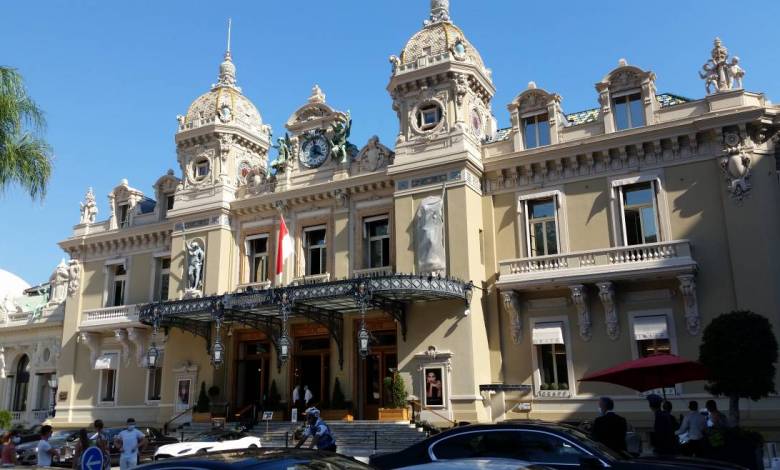
One day, Father and I took the auto trip down the coast, following the shore thru beautiful little towns and past attractive villas to Monte Carlo. This is the most perfect place I have ever seen. Money here seems to have no value – the gambling at the Casino furnishes more than they can use. The town is a model – so clean, so neat. The hotel is immaculate – beautifully furnished and fitted. The Casino is a pleasure to look at. Parties of officers and men are shown thru before it opens for 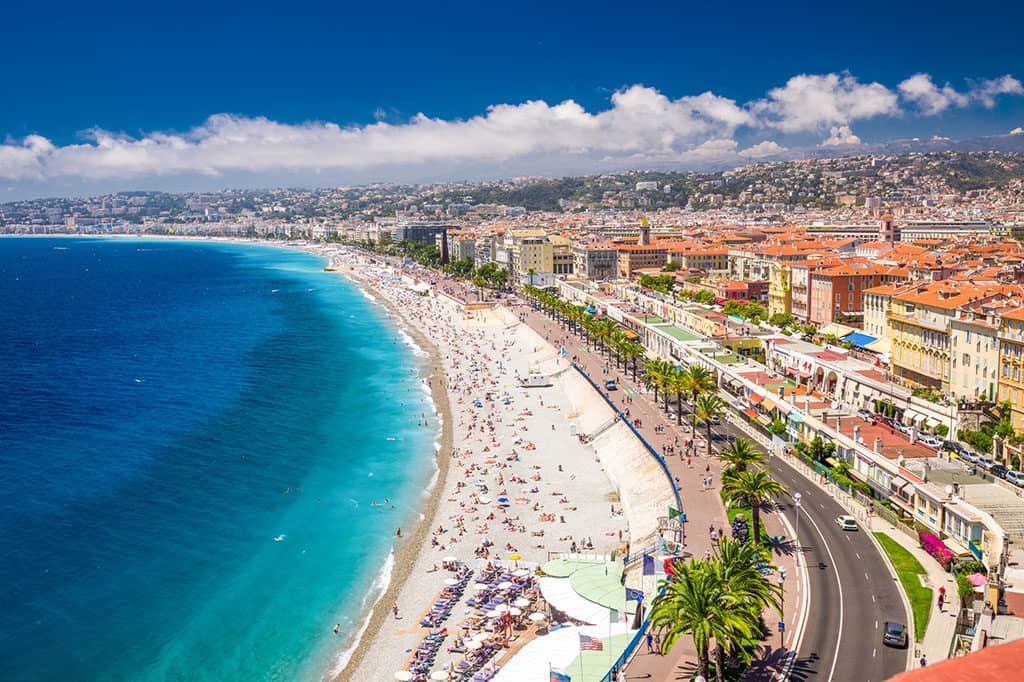 gambling. When that begins, no military man can enter. Some rooms are furnished in walnut, others in mahogany; the music room below is a jewel.
From the balcony or park behind, you look out over the sea. Later I saw nervous-looking women hurrying down to lose their money. We lost the major and lieut. who started out in the machine with us so went back to Monaco to visit the oceanographic where the Prince (Albert of Monaco) has put an exhibition of things scientific, largely the results of his travels to Spitzbergen and the Azores. We saw only the outside of the Palace. Back along the shore to Monte Carlo, on to Menton, then on to the Italian Border where we got 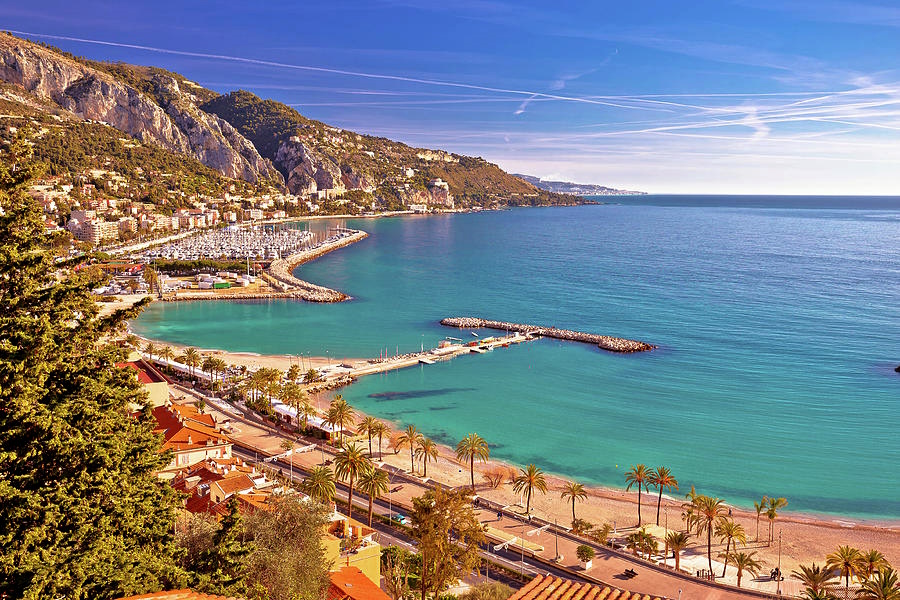 out and walked across the frontier, bought postcards and looked down the coast at Italy. The return trip was not the least interesting. The machine climbed up to La Grande Corniche road which parallels the coast along the hills a few miles back.
What a beautiful blue Mediterranean it is – we almost imagined we could see Corsica – on the clearest days you can, 80 miles away. Inland were mountains and mountains, all beautiful snow-clad peaks – the Alps Maritimes, what a country this would be to fly over. We spent an interesting hour and a half at the quaint little village of La Turbie, where we climbed the narrow little streets, wide enough for 2 donkeys to pass if they were 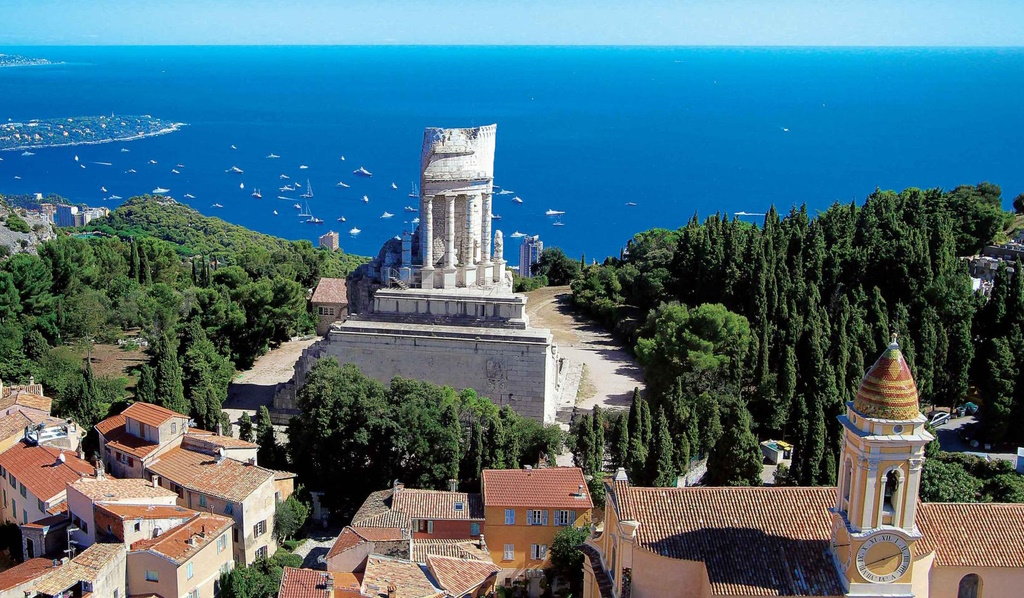 not big ones, to the old Roman tower, or remains of one. Many of the steepest hills or mountains have old Saracen villages on them. That was their protection from the pirates who used to come cruising up this way. The return was all beautiful.
Another day, we took the auto trip up the coast – taking Miss Brown, one of the Toul (telephone operators also here on leave). The road goes inland, then up to the Gorge du Loup with its pretty waterfalls and cascades – we lunched on the veranda of a hotel built right over the gorge – in the bright warm sun – it burns but it feels good. We had trout just fresh-caught out of the stream. After lunch, on to Grasse and thru the perfumery factory where they show you how it is made, squirt it at you from an atomizer, give you a whiff from the corks of the great big bottles, and finally sell you a small bottle for a large part of a month’s pay. It is interesting to watch them stamping out cakes of soap which is another one of their products.
Among the people I ran into in Nice, was Bunker of the Field Artillery, Parker Hitt, CS0 1st Army – he looked like a wreck – had run over and nearly killed a French girl on his way down, and to cap the climax had a Frenchman run him into the gutter in Nice. Julian Lindsey and his aide, Doll, many aviators including a number from the 2nd Army (Air Service), and poor Robertson of the 141st Pursuit Squadron who came here on leave in December, caught pleurisy and other lung troubles, nearly died and îs just a to tearing collection of skin and bones now. The hospital conditions are bad, so it is well he is to go to Hyères for his recuperation. Maj Corby, who was a 1st Lt doctor on the boat coming over is here on leave. We did not get over to Cannes for the tennis tournament for lack of transportation. Saw Maguire, and Petit – both playing in the tournament, tho’ it has narrowed down now to the regular sharks such as Robertson. Norris Williams and others who are over here in the Army.
March 2 (Sunday). Got Robertson off on the 2nd section of the 1300 train for Hyéres, he was too late to go with Father on the 1st Section. For the last couple of days, I have had a room on the seaside of the hotel, with a nice warm little concrete balcony all my own where I can sit in the sunshine and have my chocolate in the morning (often near noon). How I did eat and sleep those 9 days! Oh my! That this is a first-class hotel is shown by the bronze reliefs of the King of Norway, King of Denmark, and King of Sweden, on which you are informed that they stopped here in 1910, etc. With great regret, I took leave of beautiful Nice today. Nine restful, enjoyable days, with enough of the life and gayety (as a spectator) to make it varied and interesting. The return trip to Paris was not uncomfortable – I slept very well on my couchette.
March 4 (Tuesday). Rode out to the Parc des Princes where I found Katherine. Met Mlle Morel, one of the two sisters who run the school. (The school was a girl’s seminary on the edge of Paris. Katherine’s two children, Katherine and Ann, were attempting the school) This is where Katherine herself, Mary Gans, and Julie Fiebeger all went to school. We all tead together in Katherine’s room overlooking the garden, during which the children consumed at least 3 rations each of bread, butter, oranges, and finally gauffres (sic) (waffles) made especially to celebrate the Mardi Gras. Took
Katherine is in with me for a little spree as it does not look very gay, the life she is leading at the Schooï. We dined at the Café de Paris and afterward saw a good review at the Casino de Paris. Managed to subsidize a taxi to get her home.
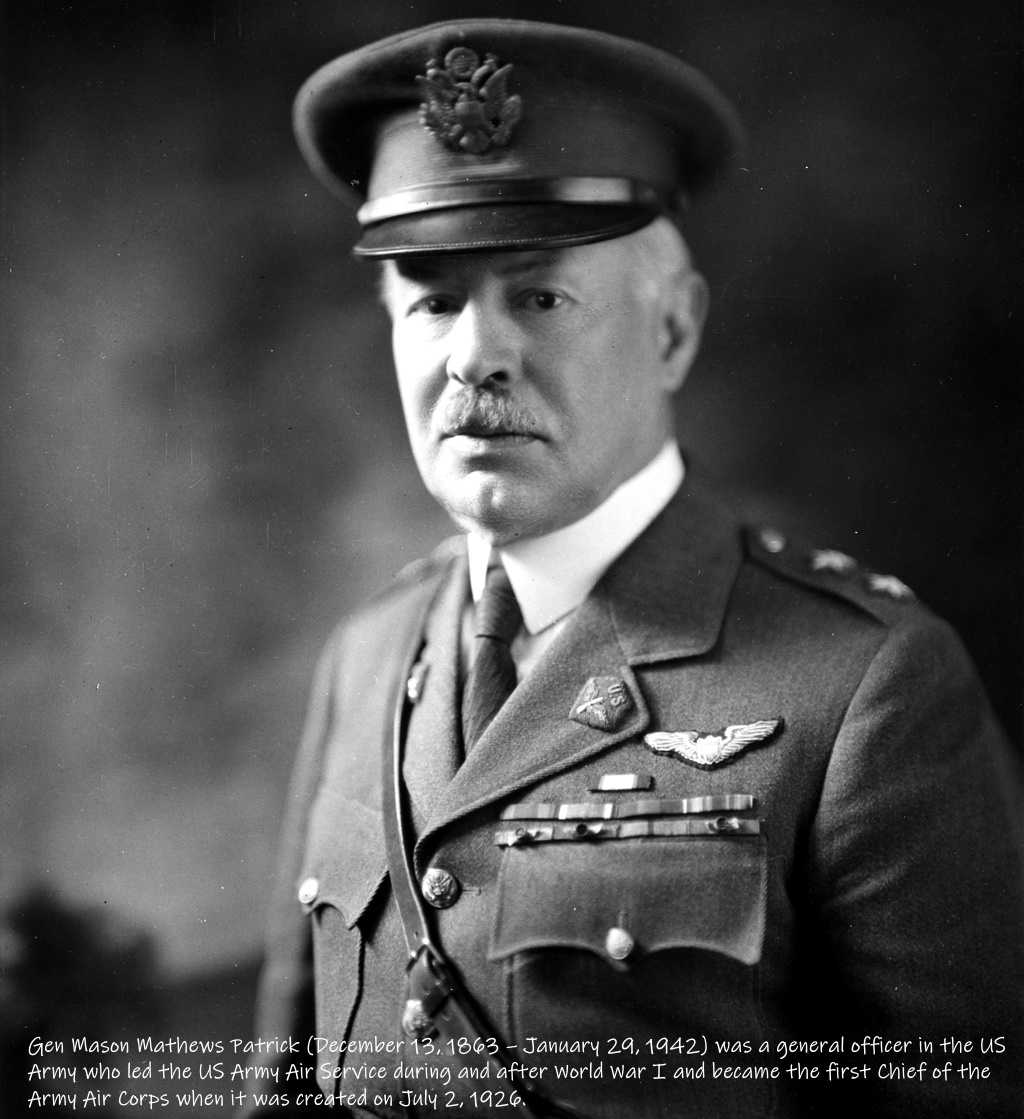
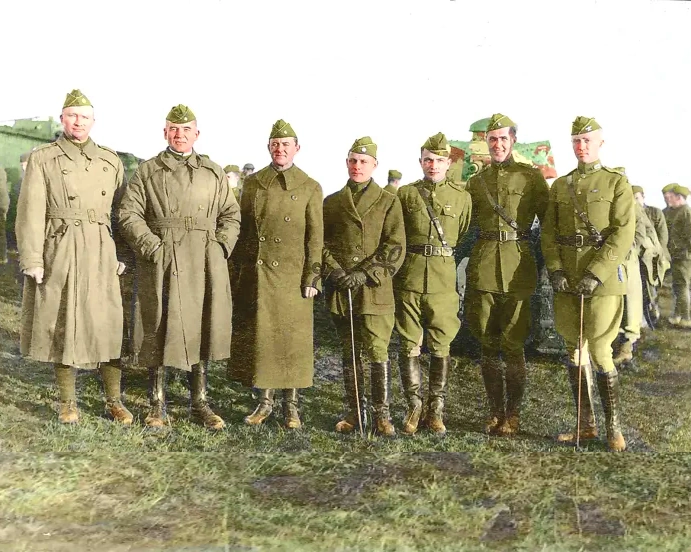
March 5 (Wednesday). Conference at the 45 Avenue de Montaigne, called by Gen Patrick; Fowler of the 3rd Arny Air Service, myself of the 2nd, Fitzgerald of the 1st, Whitehead, Gorrell, Dunwoody, Sumner from Romorantin, Lippincott from Tours, Lanphier from Issoudun, Fravel representing the balloons, Baldwin from Orly, Aleshire from Colombey (all Air Service personnel). It lasted all mornings and covered matters of varied interest – one thing: Issoudun and Orly will only be memories before the end of this month. Fitzgerald and I lunched together, then went back to the conference till 1ate afternoon.
March 6 (Thursday). Gen Patrick had us in for about 15 minutes to see whether everything was closed up. As Fitzgerald offered to take me in his closed Cadillac, I accepted. At Troyes had reached the cold zone again – at least 15 degrees difference from Paris. Bar-sur-Aube where I stopped to speak to Schauffler, missed Lovell – heard about the great Horse Show the day before at which the Air Service had distinguished itself, especially one man who insisted on taking the caps off the spectators’ heads, Fitzgerald sent me on to Chaumont. My car finally arrived in 2030 – had had tire trouble, and after a comfortable ride in the raîn, I was in Toul by 2330. Found a French uniform and some cit. clothes on my bed, my things all gone, and a note saying ‘Monsieur, the owner’s son has been demobilized, has returned and taken his room again. You will find a room at the Hotel de Metz. Recevez etc’.
Nice greeting to be welcomed with at 2330 on a rainy night. The French have a most pleasing and diplomatic way of springing these little surprises on you. Oh, we’re learning to love them a lot. After raising some disturbance, I managed to raise a boy at the Hotel de Metz. They expected me and I was shown to one of that steam heated (between 0900 and 1700) rooms on the ‘4th’ floor.