


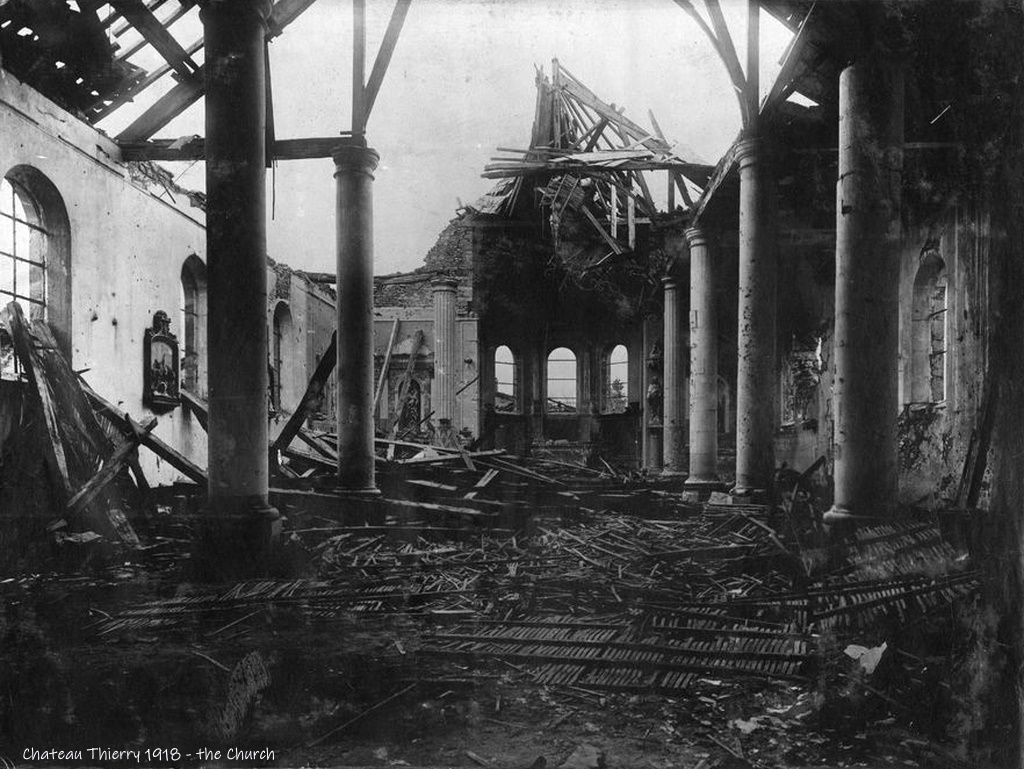
November 20 (Wednesday). Hersey laid up with rheumatism today. Scratched on a ruined inside wall of the de Wangen Chateau at Chambley yesterday, I found this (in Boche, necessarily):
NO WAR WITHOUT SCRIFICE
NO PEACE WITHOUT VICTORY
LUDENDORFF 27-9-18
A short trip out to Lay-St Remy and Ourches this afternoon to see the 5th Pursuit and 2nd Day Bombardment Groups.
November 21 (Thursday). John Biddle lunched with me today. Out to Manonville to see conditions at the new airdrome – then to Saizerais, where my car stuck in the mud, so I dined at the 354th Infantry Regiment Mess, called on Bowley at 6th Corps HQs. The Second Army Air Service HQs gave a dance at the Y.M.C.A. tonight which was a great success, Jouett engineered it.
November 23 (Saturday). Off for Thillombois where I found a Col Mitchell in command of an Ohio artillery Regiment (136-FAR) made up of the old Ohio Cavalry troops from Cincinnati, Columbus and Cleveland. Found Gen Burr, Engineers, now commanding this 62nd Artillery Brigade, located in a beautiful chateau on the edge of the town. Lunched with him and his staff – afterward, two of them showed me the way to a big German Friederickshafen Bomber that artillery salvaging parties had found in the middle of thick woods four or five miles from the town. It had evidently crashed there last summer (this may have been the plane which Maj Harold Hartney, C0, 1st Pursuit Group, shot up in a night mission on October 22, but for which he requested no confirmation). Ran on to Rembercourt and the 1st Pursuit. Found a Mrs. Potter who had lost a son out of the 1st Bombardment Group and was trying to get up to Dun-sur-Meuse where a bomber was reported brought down. With her was a Miss Edwards (both Red Cross workers) whom I had met in the Philippines about 1913 and at West Point when a cadet – she îs a connection of the Thaws. I took them both into Bar-le-Duc.
November 24 (Sunday). Fred Harrington came in this morning. I took him out to the Toul field this afternoon – raining so no flying on. Ran across Gen Patsy Dugan with Gen Bullard. Dugan commands a brigade (70th) in the 35th Division.
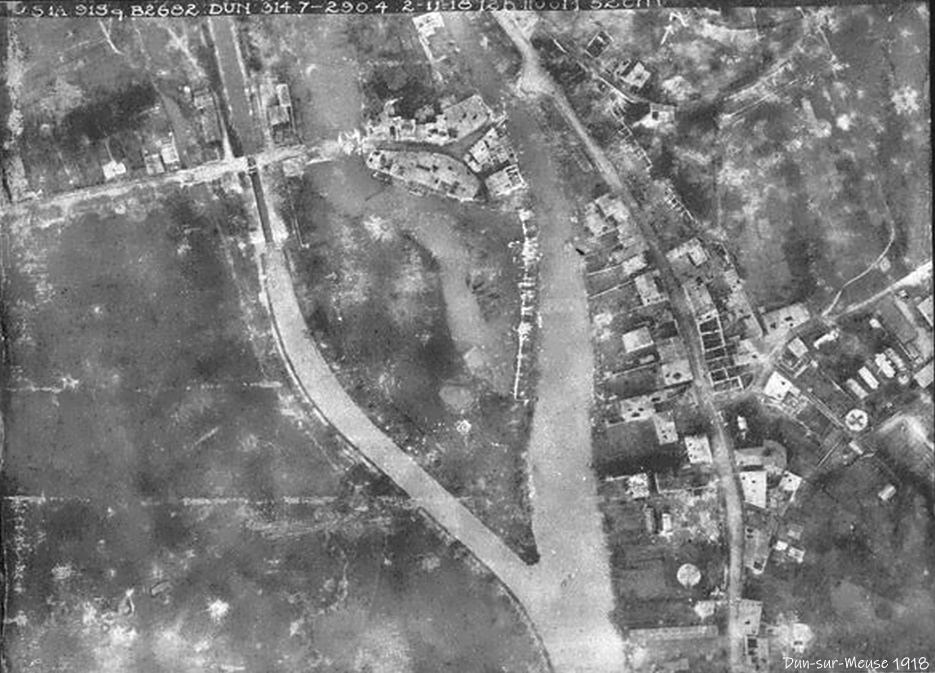
November 28 (Thursday). Thanksgiving. Curry and I dined with Capt Landis’ squadron, the 25th Pursuit, at the Toul Airdrome. A great dinner, with a suckling pig that was tender as chicken and fully as good. A few speeches and some music. They have a piano ‘found’ somewhere around Thiaucourt after the Boche was driven out – and a former vaudeville entertainer, now operations officer; with this combination, they have a happy crowd, but all want to go home now that the war is over. They have a song to that effect. We had a turkey at the mess this evening.
November 29 (Friday). Lt Col de Boisanger, a senior officer of the French mission, presented two Croix de Guerre to bombers at Ourches who were with French bombing squadrons last summer. This afternoon we went to Saizerais and he presented a Croix to a former 91st Squadron man now with the 8th. I took Poivillers my French Liaison Officer in each case and we had a formal ceremony at the presentation. Col de Boisanger accompanied the ceremony with a kiss on each cheek as is the custom in the French service but to the confusion of the recipients.
A report comes in tonight saying there is an anarchistic movement west of Thionville. Heintzelman went up there tonight. The 9th Corps, Gen Cronkhite in command, has now come into existence. The 2nd Army has been reduced to 5 divisions, and some of them are to move forward shortly. Kallock was in this evening – now in G-2 of the Army – and was with the 35th Division, în the Argonne from September 26 to September 30 during the attack. He was at exactly the same place that I was four days later with the 1st Division, near Exermont. He gathered up 150 men from various organizations in the Montrebeaux Woods and led them forward in the face of innumerable machine guns. He actually drove back the Boche but later after losing a lot of his men, and with the Boche machine guns working back on both his flanks, he had to withdraw into the woods. With machine guns simply sweeping the ground, don’t see how he got thru alive.
November 30 (Saturday). Dawley dropped in today, on his way back from the 3rd Arny to GHQ where he goes to G-3. The reported anarchistic movement near Thionville proved to be a myth.
December 1 (Sunday). With Lt Munroe of the 135th, I had an hours flight in a DH 4 as far as Briey this afternoon. The star on the old Boche Aïrdrome at Fuxieux is still visible but has been painted brown or otherwise camouflaged.
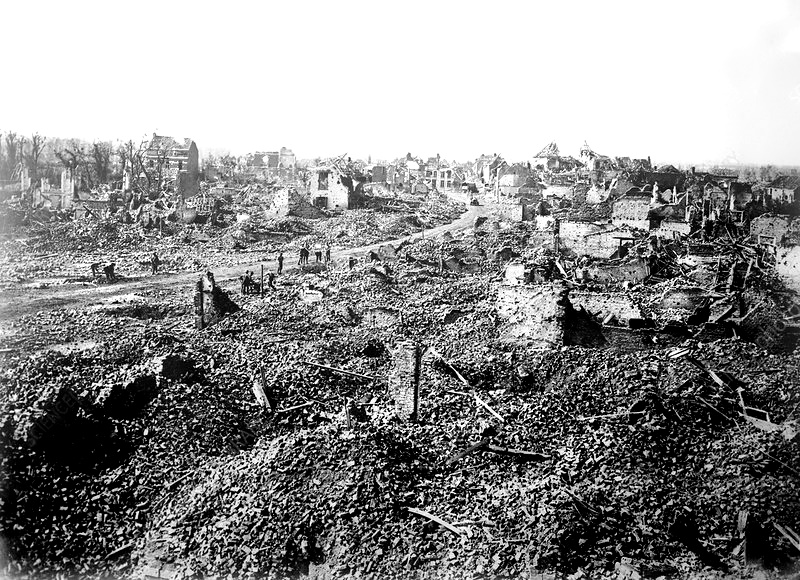
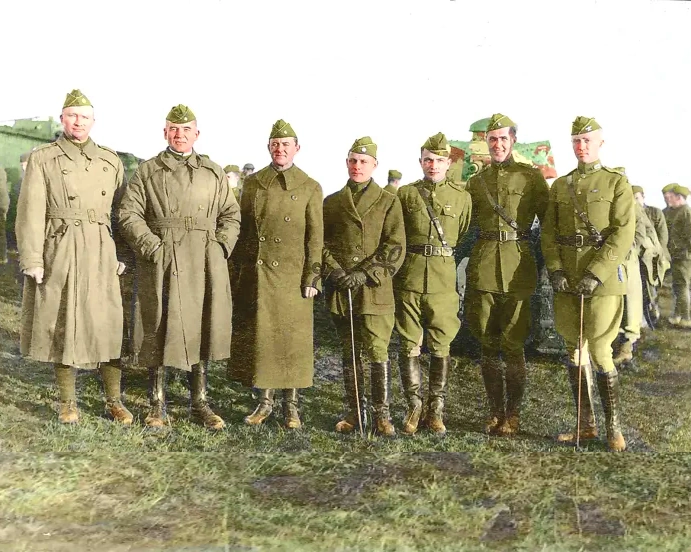
December 3 (Tuesday). This afternoon, the 33rd Division made a tour of inspection of 2nd Army HQs to see how the various offices operate. The party consisted of Gen George Bell, Gen King, and Gen Wolf {brigade commanders), Gen Kilbreth commanding the artillery, all the colonels, and many lesser lights. Last Sunday, Lt Drew, formerly of the 13th Pursuit, came into my office from Evacuation Hospital No. 1. He is a small, nice-looking boy apparently 20. In September in a fight over Metz, he was hit in the right arm near the elbow with an explosive bullet, became unconscious, went into a spin, and came to just in time to see the green grass under him. He reached forward with his left hand pulled back on his stick, and crashed, fortunately, right side up and without doing himself any further damage. The Boche took him in and in the course of a couple of days, after passing thru several hospitals, he landed in one in Metz. There, they had to amputate his arm 3 inches from the shoulder. He was in the hospital for 2 months, treated pretty well, and fed on what they had, which was not exactly a light diet. No milk, no eggs, coarse bread most of the time, soup, vegetables. Three surgeons for 700 patients – nuns for nurses. Finally, after the armistice, some Ÿ.M.C.A. men in a Ford truck got into Metz and brought him to Nancy and Toul to the hospital. I have arranged to get him back to the US with the early ones to go.
Monday, I ran out to the old chateau at St Benoit, then on to the observation station on Hattonchatel Point. To Chaillon and stopped at the Mobile Hospital No. 39 to call on Col Flint, Maj Rowley, Smith, etc. They are packing up to move to the Rhine with the 3rd Amy. Lt Williams, an observer, died in this hospital a few days ago after a crash during an exercise with the 28th Division. The Chaplain gave me a letter he had dictated to his mother, which was rather pitiful. The pilot was killed instantly.
December 5 (Thursday). Pratt came in yesterday – the first time we have met since graduation. The HQs and various officers of the 35th Division came on a sight-seeing tour today headed by Gen Patsy Dugan, temporarily in command during Gen Peter Traub’s absence. They were much interested in the Air Service. Word came today that 19 squadrons are to be demobilized, of which only three came from the 2nd Army Air Service.
Gen Rawolle Lockridge came in today and I took him out to the 4th Pursuit Group where he has a son who is a supply officer of the 148th. Gen Lockridge has been at Versailles for some time with Gen Bliss on the Inter-Allied War Council.
December 7 (Saturday). This morning, Gen Bullard, with Col de Boisanger and one of his aides, Curry, Poiviliers and myself went to the 4th Pursuit Group where Gen Bullard was to present a Distinguished Service Cross, with a bronze oak leaf added, to Lt Kindley of the 17th for some great work he had done on the British front, and a Croix de Guerre to Lt David W. Lewis presented by the French Government for some good work August 1, when he was in a French Squadron. Davis had borrowed a band and had the 4 Squadrons in line with the colors in the middle. The command was presented by Davis, the band playing the Star Spangled Banner. Then I read the citations, we went forward and the General pinned on the decorations. We then withdrew and the command marched in a review in a very creditable manner.
We rode then to Ourches and found Reinburg had his command, the 24-Day Bombardment Group, all lined up with a borrowed band for the same ceremony for Lts of the 163rd Bombers. They both read the D.S.C. for extraordinary valor in leaving their bombing formation to attack a Boche who was attacking one of our planes. They saved our machine and shot down the Boche. This evening I went back to Ourches to dinner in Refnburg’s Group HQs Mess. Afterward a vaudeville show in the Red Cross hut. The command has some professionals among the enlisted men, including a prestidigitator who did some great slight (sic) of hand tricks, singers, dancers, acrobats, impersonators, etc.
Olds and Petrie showed up toward the end and I brought them back with me. Yesterday I flew over to Ourches from the Toul Airdrome in a DH 4 with Lt Chritzman – a beautiful day for a short ride. It took only 10 minutes each way.
December 8 (Sunday). Fred Harrington came in this afternoon and went with me on a trip to 9th Corps Headquarters at St Mihiel. Called on R.P. Davis who now commands a brigade of corps artillery. CoS was not in, but I found Schwartz, Secretary of G.S. 9th Corps whom I had known as a cadet in my sections.
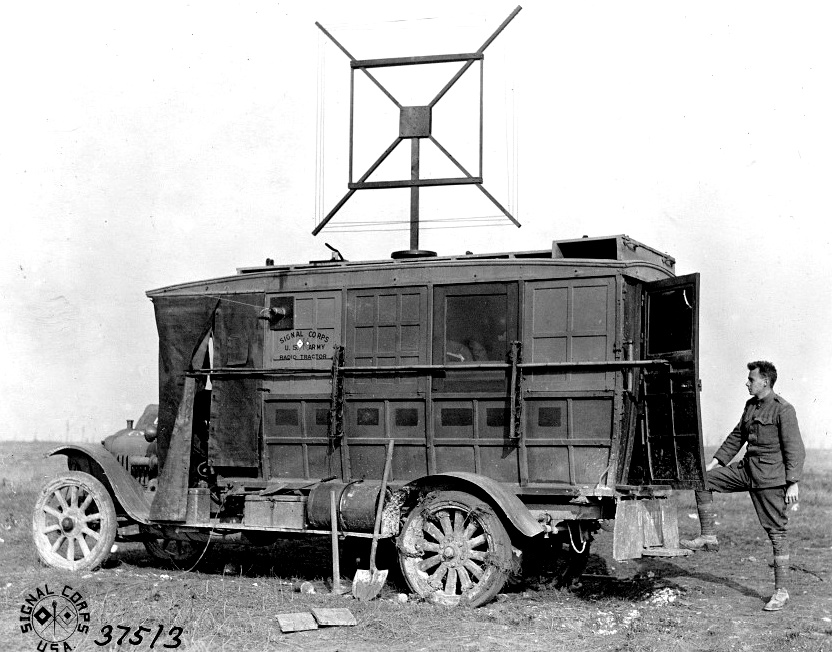
December 9 (Monday). Jouett brought in Lt Hinman this morning, who with Lt Tait was in the balloon that broke its cable near Les Eparges on September 12, 1918, the day of the St Mihiel drive. Their parachutes were both torn loose when the balloon hit the ground before breaking away. As they shot up, Hinman’s opened below and held him tight against the side of the basket with his head pulled over the side. Tait valved hard, the balloon stopped at about 1000 meters (3300 feet) they cut loose Hinman’s parachute and hauled it inside, then found they were in our artillery barrage so threw out some of their equipment and went up to 3000 or 4000 meters (around 10.000 feet). Then dropped and landed at a little town not far from Conflans. A Boche colonel and a lieutenant came up and questioned them after a Boche sergeant had proudly taken them, prisoners. They got to Metz, were in the Railroads Station during a bombing raid, then under the guard of two Boche soïdiers 18 or 20 years old, were sent to Montmedy where a supposed newly-captured French aviator joined them.
But Hinman said he was not at all clever and was easily recognizable as a Boche in disguise trying to get information out of them. From here they were sent east to various places – Munich, Landshut, and finally, Villingen where they found a lot of other Americans; including Brown, the bombing major. Hinman had considerable money with him which they exchanged into Boche money, but did not take away. The American Red Cross was a lifesaver, providing them with clean clothes, toilet articles, etc. After the armistice, the prison commander made a speech in which he said he hoped they would not carry away any ill feelings and that they would remember Germany not as it was but as it now is, a completely changed and revolutionized Germany. They passed thru Switzerland on their way back, where they were showered with chocolate, eatables of all kinds, cigarettes, etc. at every station.
This afternoon, I went to Evacuation No. 1 to see Dodds, one of our men who had a crash; the observer was killed and now Dodds lies there with legs spread apart, each elevated and held out by weights – has been there now six weeks, both legs were broken, head still bandaged, but cheerful. O’Toole, a bomber of the 96th who was lost on September 12, during the St Mihiel drive, is in the hospital with a bullet in his leg. He was in a Boche hospital at Strasbourg for two months, treated miserably, with little or no care, vermin got into the wound and his clothes, and the Boche doctor would pay no attention to it for several days, then finally took off the dressing. Later, he told O’Toole his leg was well and that he ought to get up. After sitting up for two days, his leg swelled up and got much worse so he had to go back to bed, put on a dressing, and weights again. No one was allowed to see them, nor could they communicate with anyone outside. Even the nurses (nuns) were not allowed to come in. Meals were brought to them by Russian prisoners and consisted mainly of thin carrot soup. After November 11, the Mayor of Strasbourg was allowed to come, found the state they were in, and had them transferred to a good clean hospital. After that, they were well taken care of until they were loaded on a Red Cross (American) train and brought to Toul.
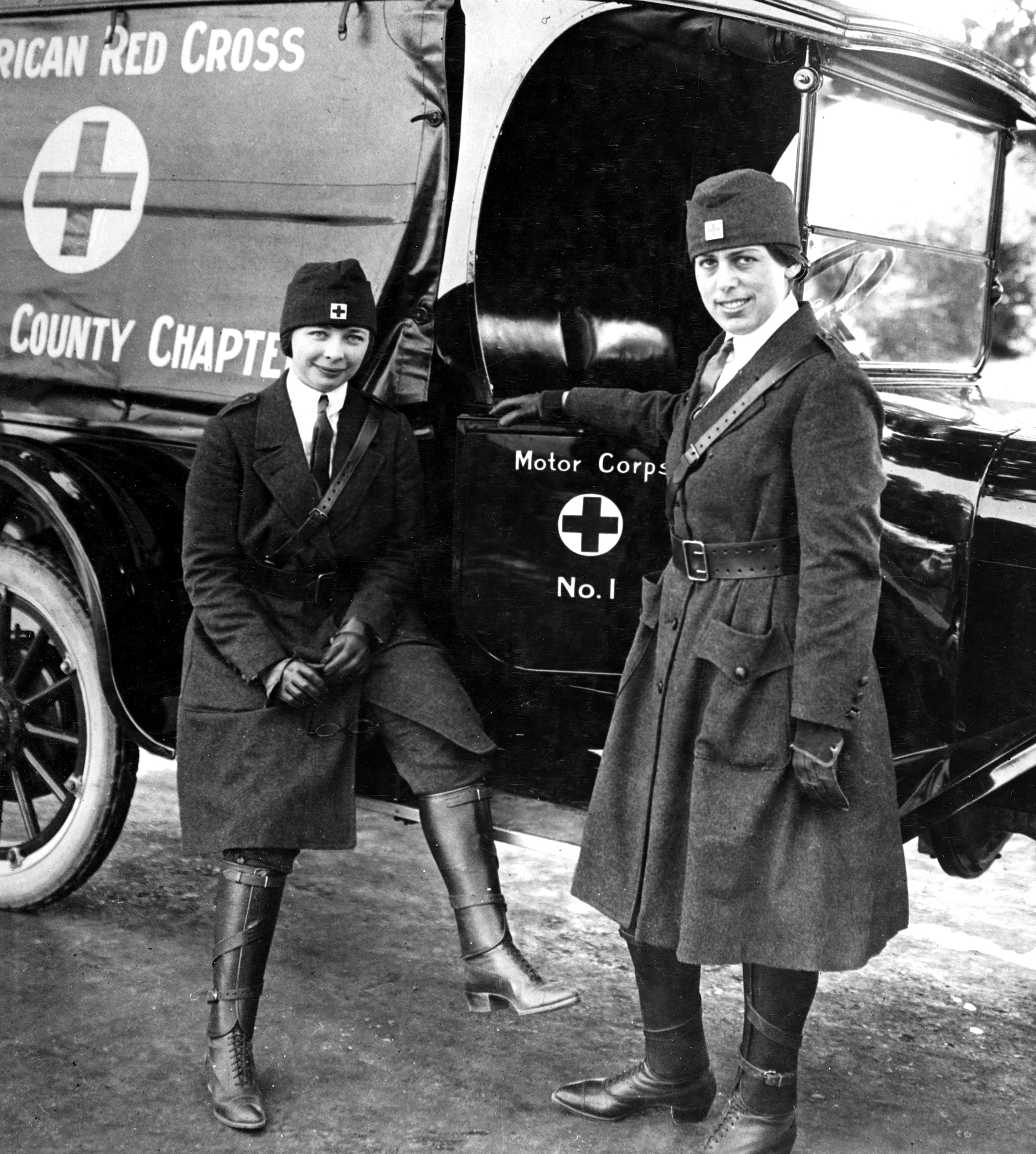
December 10 (Tuesday). I took Gen Bullard to the 5th Pursuit Group at Lay-St Rémy and the 2nd Bombardment Group at Ourches.
December 11 (Wednesday). Today Gen Bullard visited the IV Corps Observation Group and the 4th Pursuit Group on the Toul Airdrome, then the VI Corps Observation Group at Saizerais, and was as much interested or more so than yesterday. Wynn, Davis, and McNarney showed us around their groups and explained everything. Work went on as usual so the General could see just what they habitually did – classes and all were carried on per schedule. A wire from Dunwoody the day before yesterday says my father is in Paris and living at his apartment. Now I hope to get him down here before things break up. Rumors are rife but change every day, so you can take your choice as to what will happen. Rain is the one thing you can bank on. The sun has not shone for days.
December 12 (Thursday). Wittenmyer and officers of his 7th Division were in today for a 15 minutes ‘demonstration’ at the Second Army Air Service Headquarters. Gen Bjornstadt, Gen Jap Johnson, et al in the party.
December 13 (Friday). To Chaumont. Luncheon at the Officers Y.M.C.A, hut set up in the square. What a blessing this would have been last winter when I was here – when there was not a comfortable place to go and sit down and when you almost had to fight for food at the Hotel de France or at the restaurant we used to go to when we could no longer stand the hotel. Confab with Whitehead this afternoon – Royce came in. Ran onto Capt Milis, the ex-Princeton football man, at Y.M.C.A, also Naiden and Kincaid. Hurried back for a conference with CoS Heintzelman, Second Army, at which I succeeded in stopping the removal of the bombardment group and one pursuit squadron that they were going to send to the rear.
December 15 (Sunday). Had several flights today in my Avro. It is a dandy and a tremendous improvement on the old Nieuport I had last summer. Lt Krout is breaking me in on it. He served as an instructor in England on Avros for some time. It has the 120 HP LeRhone, takes off nicely, flies easily, and lands particularly well. Lunched with Wynn and flew agaîn afterward. Yesterday we had a long confab at CoS of the Second Army on the Staff manual, Heintzelman (CoS), Gen Altman (Artillery), Stone, Thompson, Barber and Tyner, the G’s, Black (CS0), Appleton, Secretary of Gen Staff. We are to revise the manual. These are busy days what with endless histories to write up, reports to make, manuals, awards, etc. in addition to carrying on an active training schedule.
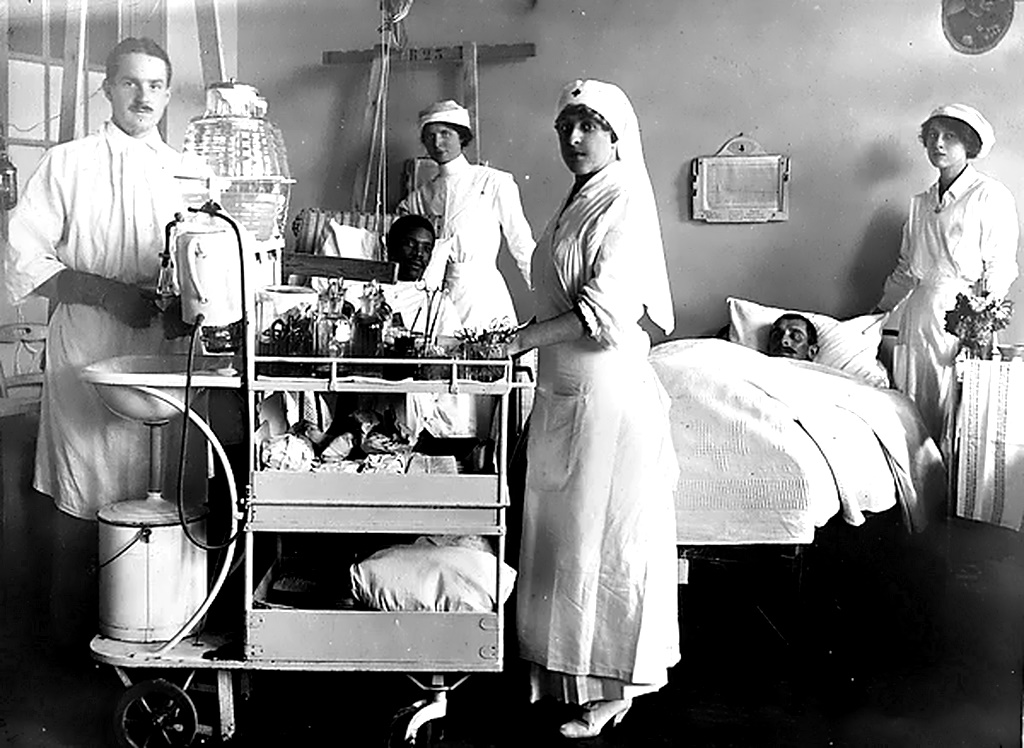
December 18 (Wednesday). Took Gen Bullard to see the 1st Air Depot this afternoon. The 17th and the 14th are moving there today to demobilize and return to the States. Curry and I dropped in tonight at a dance given by the French officers to their ‘American Comrades in Arms’. Bowen came thru today with Haslett; the latter was shot in dom back of the Boche lines in September while on reconnaissance and had some exciting experiences burning his plane, being threatened by a Boche officer with a pistol, etc. He was questioned by the same supposed French aviator at Montmedy but easily recognized him as a Boche.
December 19 (Thursday). Took a walk out along the canal today with Curry, the First real exercise I have taken in a long time. A blinding snow storm struck Toul just before noon, the first snow of the season. Tonight we had a farewell dinner at the mess for Cornelius Wickersham who goes to Chaumont as Asst P.M. and expects to be on his way home shortly.
December 20 (Friday). Took Heintzelman out to Lay-St Rémy and Ourches today to see the Aîr Service.
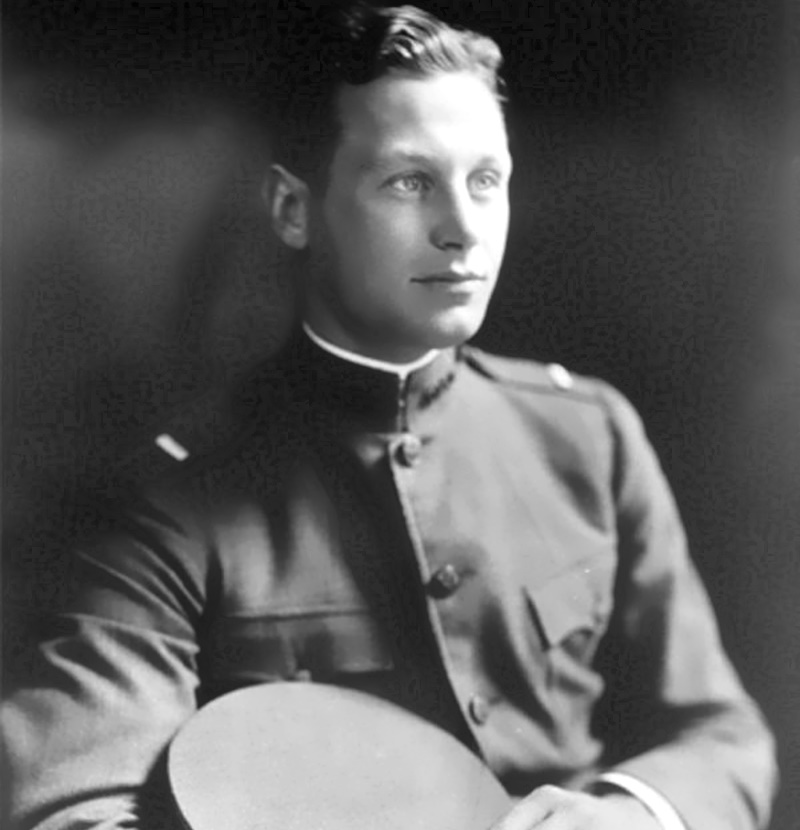
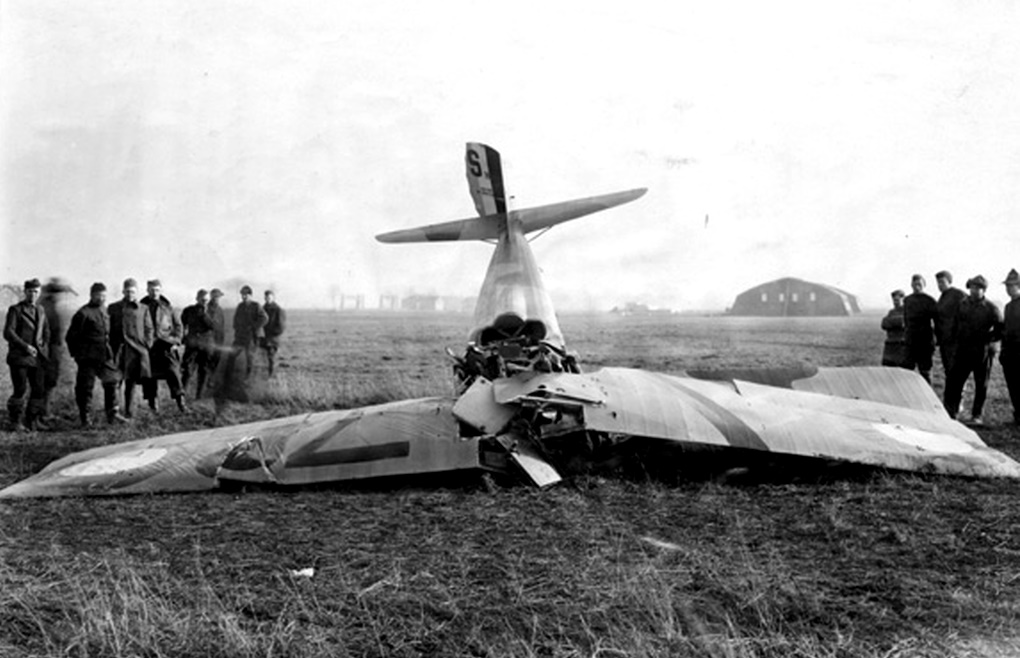
December 21 (Saturday). This has been a sad day, but as in wartime it is a case of ending up with ‘Here’s to the next one that dies’. I was flying the dual control ‘Avro’ at the Toul field this morning with Krout. We were just coming in for a landing when a Spad started out, giving the US a little bump from the wash of its propeller as it left the ground, I landed, stopped, and was about to take off again when Krout said ‘The Spad crashed’. I looked around and there it was, lying on the field, not far from us. We taxied over, and I helped get the pilot out – had to use an axe to get his feet loose. He probably died as he was lying on the stretcher. His face was badly cut up, and it was not until someone said ‘It is Capt Baker’, that I realized it was Hobey Baker, C0 of the 141st Pursuit Squadron.
Baker, the former captain of the Princeton football team, one of the best if not the best hockey player in the US, came to the front with the 94th last February, was transferred to the Lafayette (103rd) where he made a great reputation – then came here as C0 of the 141st, the first Pursuit Squadron to join the 2nd Army Air Service. He was anxious to get home – finally, yesterday, his order came, he was going out for a farewell spin in his Spad, shot up, the motor evidently died and he was too low to recover so crashed on the field. (According to Mr. Royal Frey, a member of the US Air Force Museum Staff and a leading authority on the Air Service in World War I, Baker was Flying to Nancy to pick up a new uniform before leaving for the States).