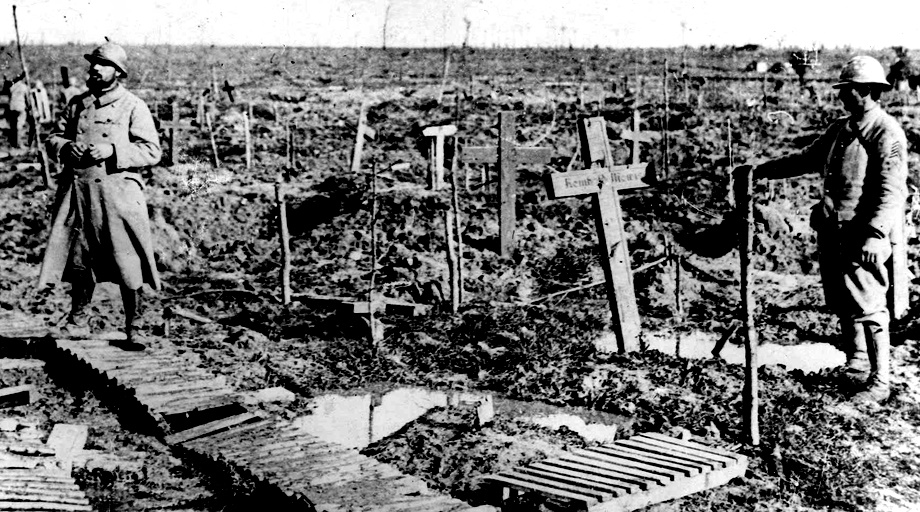

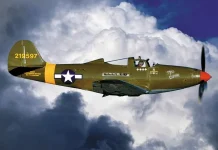



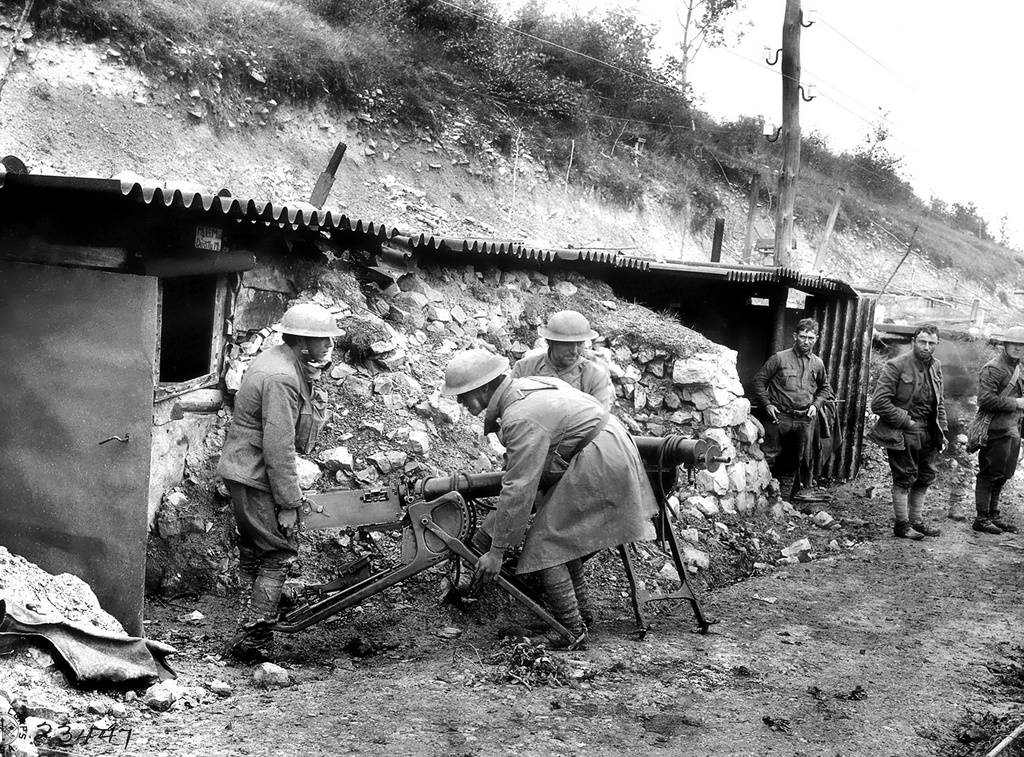
July 16 (Tuesday). Had several landings with Fisher just before noon today. This afternoon, I met Capt Repoux at Griscourt and inspected the French 34th Balloon Company’s installations. From here we went to the Domèvre French Balloon and inspected their installations. Two of our companies are to relieve them. This is a beautiful country and one I hope to see more of. Old 14th-century chateaux, beautiful green hills, and forests with a wonderful view of Bocheland to the north, the hills of the Woevre to the west. As we arrived in Toul late, I took Capt Repoux to the Soleil d’Or for dinner. Bryan dropped in after, and later Col Baldwin. The latter was looking for a confirmation of two Boches which one of his craft bombers thought he brought down today.
The Boche dove on a straggler near Pont-à-Mousson, and the British machine landed with a badly wounded pilot and observer. The latter died later, but before he became unconscious, insisted he saw two Boches fall. As some of our pursuits were in the neighborhood at the time, Baldwin thought they might have seen it.
July 17 (Wednesday). Tobin, who led the patrol that joined the British bombers yesterday, did not even see a Boche at that time. Later, however, his patrol of 3 ran into six Boches and attacked. Finally Tobin and one Boche were off to one side, both had dived, then started to climb side by side. Tobin said he could see the Boche had a big mustache. He began to out-climb the Boche, so the latter withdrew, and just as he left, Tobin realized he would not get him, so expressed his disdain of the Boche by putting out his tongue at him! Dudoré has now joined us from Colombey-les-Belles. Yon was in today. This has been a sweltering, one of two or three – and yet it does not feel like the heat of Omaha or Fort Riley – you do not have here the feeling of being unable to get away From it.

Editor’s Note
From July 18, 1918, to the Armistice on November 11, 1918, the Allies were on the offensive. Their first major operation was the Aisne-Marne Offensive, July 18 – August 6. This was designed to eliminate the huge bulge which ran from the west of Soissons, past Chateau-Thierry, to near Reims. After almost three weeks of hard fighting French and American troops completely wiped out the salient, retaking Soissons and Fismes, and leaving the battle line running straight from Soissons to Reims.
In the initial attack, the US 1st and 2nd Divisions (III Corps) were under the tactical command of the French XX Corps which was on the left (north) end of the battle line. The Americans, although weary from hard marching to reach their departure positions, fought well and contributed heavily to the substantial advance made by the XX Corps. Farther to the south, in the zone of the French Sixth Army, the American I Corps, and the American 4th Division also made good progress in spite of stiff German resistance. Along the entire front, the fighting was heavy; for example, in the first two days, the US 2nd Division suffered some 5000 casualties while advancing six and one-half miles, while in the first four days, the US 1st Division suffered some 7200 casualties.
From July 21 to July 29, the French and Americans drove the enemy back to the Ourcq River, and from July 30 through August 6, to the line of the Aisne-Vesle Rivers. In these operations, the following American divisions participated: 1st, 2nd, 3rd, 4th, 6th, 28th, 32nd, and 42nd. On August 4, the US III Corps took over both the sector and the troops of the French XXXVIII Corps and on August 5, extended its tactical control to include the front of the French III Corps also on August 5. The US I Corps assumed command of the zone of the French II Corps. Thus, on August 5, the entire front of the French Sixth Army was under the control of the American corps commanders.
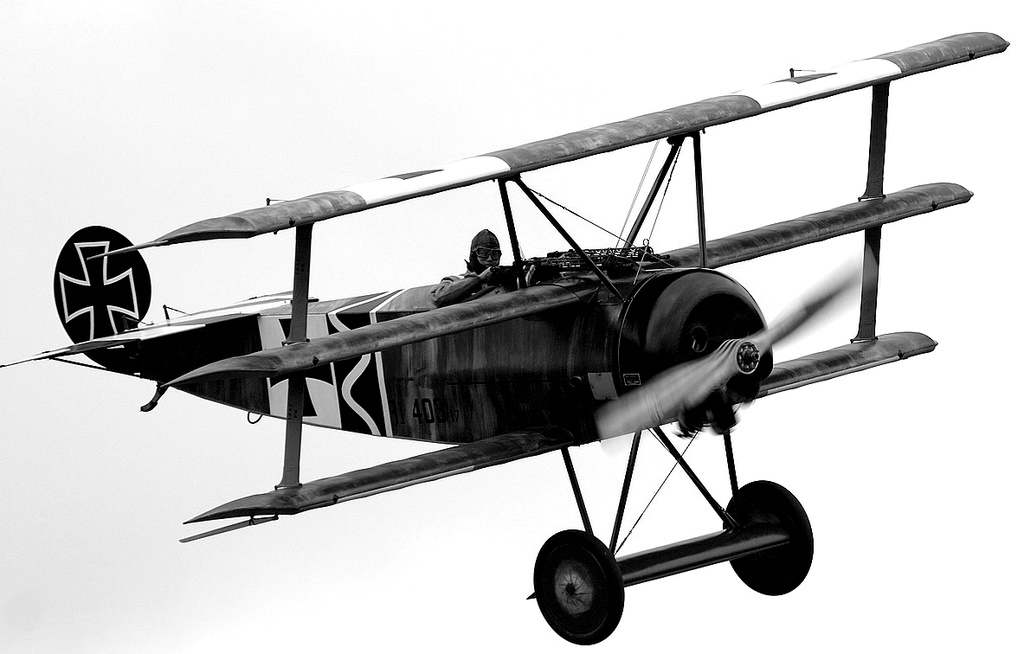
In the Aisne-Marne Offensive, the major part of the Allied air war was handled by the French. However, from the beginning of the attack to the end of July, American air units were moved into the area, especially near Chateau-Thierry, where the 1st Pursuit Group and the I Corps Observation Group, with some French units, were organized under Billy Mitchell and made responsible for a part of the battle area. (For example, the 94th Pursuit Squadron had the sector from Soissons to Reims). There the Americans were outnumbered and outmatched by the German Fokkers, they had to stay on the defensive, and lost heavily in attempting to provide both observation, information, and tactical defense. But the experience toughened the units and gave them the know-how that enabled them to perform magnify-recently for the rest of the war.
The 1st, 2nd, and 4th Balloon Companies (the only American balloon units on the front in July 1918) also were in action around Chateau-Thierry. They registered artillery fire, located targets, and supplied general information about the enemy and his dispositions and about the location of advancing Allied troops.
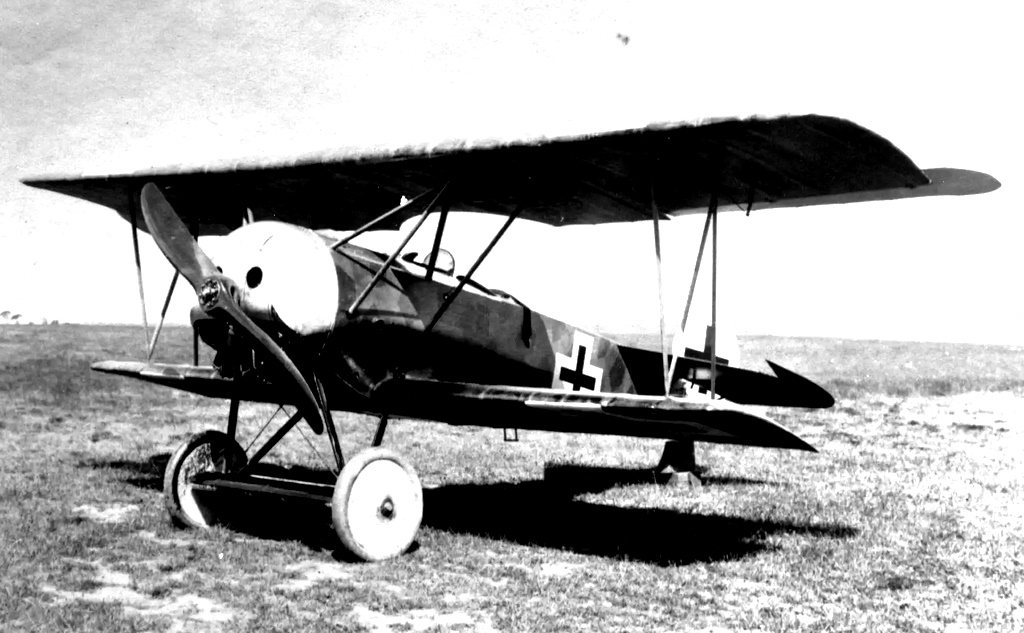 July 18 (Thursday). Had my first solo today on the Nieuport, made two landings, and leveled off a little too high, bending the axle and one landing strut. To Colombey this evening – Cushing was up from there today – is to be tried and wants me for his counsel. Drunk and somewhat disorderly, all of which was probably true. On the way back from Colombey, I stopped at Ochey and saw Richards, the bomber who came down on the other side and got back again about 2 months ago. He now goes back to England to become a pilot. Found a Lt Owen and a number of other Americans now attached to the British for instruction and service. Word today that Rhodes of the 1st Pursuit Group who took me up in my Nieuport just before they left, has been killed. Also, Quentin Roosevelt was brought down in flames (July 14). (Information received later indicated that Quentin Roosevelt did not come down in flames. He died instantly from two bullets in the head and his plane crashed down).
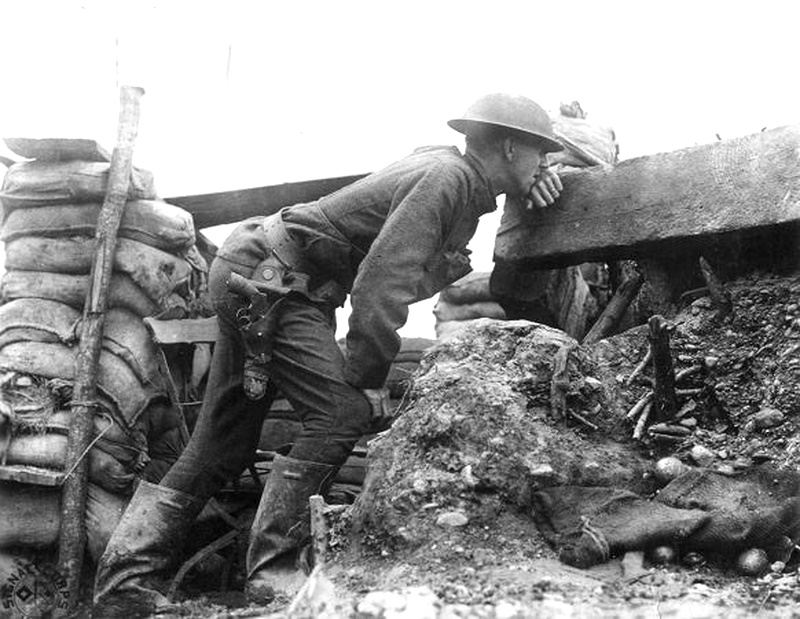
July 18 (Friday). Dined with Gen Julian R. Lindsey at his Brigade HQs. After dinner, Mecavley and Smith of the 4th Balloon Company, Reis, Lt Doll, (J.R’s aide) and I took my car to Raulecourt, where we stopped to Speak to Col Nelson, regtimantal commander then thru Broussay to Bauconville, where we found Maj Buxton and his Battery CP. Left the car and with two runners walked down a sheltered path and thru communicating trenches, till we came to the 1st Platoon sector. The men lying on the parapet with their rifles, automatic rifles and machine guns, and a plentiful supply of hand grenades, looking for possible Boche patrols. We connected with Lt Cox of the 329th Infantry Regiment who took us on into Xivray – the most deserted, desolate, picturesque old ruins—especially in the bright moonlight. A carrying party was just leaving with a lot of machine gun ammunition, left behind when this place was evacuated a short time ago.
In the town were two posts of two men each, with a sergeant in charge of both. The men were lying down in the shadows watching for Boches. A peculiar thing – it seems that an outpost of Boches and one of the Americans, occupied this town jointly for a few days, neither knowing the other was there. It is easily possible. The place is a mass of tumbledown walls, caves, shelters, shell holes, and weeds. They said the rats are so large and noisy that they sometimes think the Boches are stirring. Everyone was going about his business as tho’ he had been playing the war game all his life, All were alert however and ready for anything that come up. I asked Lt Cox what his orders were in case he was attacked. ‘Stick’ was the answer. That means that if the Boche comes over in large numbers he will lose some, and our men will probably all be killed or captured, as there is only a handful of them, after all. Doll started off toward the west side of the village. Cox told him there was a Boche sniper in that direction and he would not go with him. If the Boche wanted, he could look him up. What a life!
For 24 hours at a time, these men lie there watching or sleeping. Carriers get about two meals a day up to them. The Boche sometimes gets ugly and drops shells on the carrying parties, interfering with the arrival of dinner. Everyone is awake at night. In the daytime most of them sleep, except for a few to keep watch, that is they sleep until the sun gets too hot, and there is little shelter. In case of a bombardment, the men are instructed to lie flat in the bottom of the trench, then when it is over, get up and man the parapet again.
July 20 (Saturday). I heard this morning that a Boche bomber came over town last night, dropped a bomb near the arsenal, killed one Frenchman, and wounded two. That is the first time Toul has been bombed in a couple of years. Boche planes and British planes were thick over us last night on the front. Star shells, the Boche 4-star rocket to guide his bombers, and the occasional flash of a gun. Had a good swim in the river this afternoon.
July 21 (Sunday). Gen Patrick came in with Van Horn just as we were finishing lunch. I took him to the office and showed him what is going on, then to the Pursuit Group and to the 91st Observation Squadron. He was very much interested in everything he saw, and wanted to stay and see more of it, but had to hurry back. He seemed to feel that I was the one in the Air Service whom he really knew. Took the Rolls-Royce limousine and ran down to Neufchateau to dinner with Billy Haskell. ‘Frenchy’ Cowan who has just come over, dropped in with Gibbs. Gordon Johnson, Stilwell, in the mess. After dinner, straightened out some of our transportation difficulties.
July 22 (Monday). July 22. The Archies (AAA) woke me up this morning, the boom of the guns and the burst of the shells, later came the sirens sounding the alert, and then between bursts, the hum of the Hun motor. He varies the hour of his visits. I got in some good practice today on my Nieuport – made a couple of landings with Schultz, then a couple alone, lunched with Johnson, and flew again afterward until it grew puffy and rough. While I was f1ying this morning a miserable lone Boche came over and burned the balloon of the 4th Company. The balloon went on and burned also the French Domèvre balloon. Ferrenbach and Rooney jumped and landed safely from ours. It was hauled down from 900 meters to 300 meters before he got it. Dudoré and I went to Flavigny this evening and dined with Commandant Delafond. Afterward, we went to Manoncourt to see night reconnaissance.
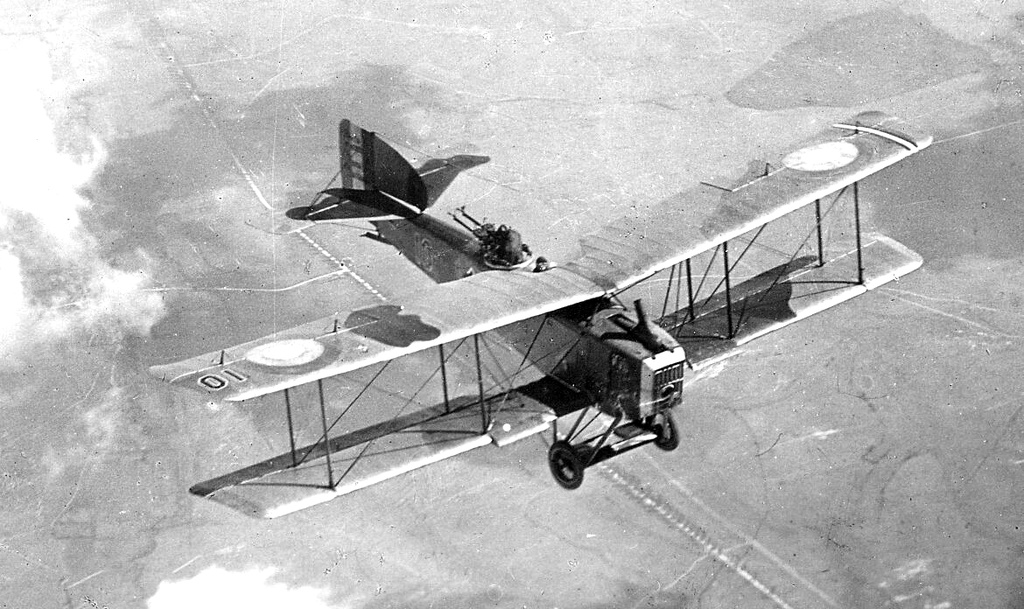
A Breguet had just gone into the air when we got there. A moment afterward one of the British searchlights at Azelot picked it up and held it, a beautiful fleeting white object, in its beams. Unfortunately, the British did not know a Breguet would be in the air, so hearing an unusual noise they turned loose with their machine guns. The Breguet shot his flares and stopped them. Later when he arrived in the vicinity of Nancy, the sky was simply filled with the sparks of anti-aircraft shells. Surely the way of the strange motor at night is hard in this part of the country. In an hour the machine was back, shot its rockets, turned on two searchlights on the ground, and lighted six flares on the ground. The machine glided in and made a perfect landing. They had been to Dieuze and Chateau-Salins but had seen nothing of interest.
July 23 (Tuesday). Lt Moore with the 7th Balloon Company came in this morning. I took him out to Griscourt to look over the installation he is to occupy. Lord Denbigh and a Captain of the British Army stopped in for a few minutes this afternoon. He is a propagandist sent out from the British War Office to teach the people that if stop now, Germany will have won the war and that it must be continued until Germany is completely conquered.
July 24 (Wednesday). Ran out this afternoon to see how well the 7th Balloon Company was installed and stopped at the airdrome to fly for a few minutes.
July 25 (Thursday). Another Lord today – Sir Walter Lawrence this time with one Capt Beval from Gen Trenchard’s HQ. The former is the liaison officer with us, the latter, Beval, a badly wounded infantryman from the Dardanelles who is now on Gen Trenchard’s operations staff. Jouett came in today, to take the 4th Corps balloons. Paegelow back from Chateau-Thierry front brought me a machine gun taken from the Boche in the advance of our troops south of Soissons the last few days. Lord Rockhaven, a British liaison officer from Tours, dropped in. A phone message from Gen Foulois this afternoon said I had been asked for and am to go, to G-3 of the 1st Army and am to report to its headquarters at La Ferté-sous-Jouarre tomorrow.
(Note On July 25, Gen Foulois recommended to Gen Pershing that he turn the Air Service, First Army, over to Mitchell. This was done on July 27, and Lahm then reported to First Army, G-3. Gen Foulois was made Assistant Chief of Air Service, AEF, under Gen Patrick. Mitchell selected Col Milling as his Chief of Staff, Air Service, First Army (for La Ferté)).
July 26 (Friday). Mr. Kerney of the Committee of Public Information reported today with James of the cavalry and a photo and moving picture man. I sent them off with Morrow while I turned my duties as Deputy Air Service Commander to Dodd and the Army balloon Service to Jouett until a new one can be provided. Left in my Cadillac and reached La Ferté-sous-Jouarre in 1915. Found a chateau in town all fitted up as Army HQs, with the sections nicely labeled but not an officer in sight. In the Place de Toul the remains of a Boche night-bomber, a Gotha, were on exhibition this morning. It was brought down at 2300 the night before last by the anti-aircraft guns north of Nancy. To come back to La Ferté: this hotel has few windows left – they were all broken by the bomb that destroyed the station. After dinner, I found the 1st Army G-4 office with Dewitt in charge – ran into Fuqua, Lyster, Jens Bugge, Charley Thompson, Luberoff, and others – all have just arrived like myself and are trying to report for duty.
July 27 (Saturday). Located me in a billet at the 38 Rue de Reuil and ran into Paris after lunch to leave more of my plunder which accumulates rapidly for some reason or other, and too much of which is not compatible with the movements of a soldier in the Zone of Advance. Had Harter to dinner with me at La Bécasse and took him to the Grand Guignol (a full-size Punch and Judy show) which was a little less horrible than the 1ast time I saw it.
July 28 (Sunday). Took Harter and drove out to Dammartin, Rouvres, and St Soupplets, looking for Frank Parker but he had apparently just embarked with his regiment for another sector. Ran out to see the 12th Observation Squadron which has done some good infantry liaison work these days.
July 29 (Monday). Mitchell is in today – moving his HQs (Air Service, First Army) here in a day or two. Our wounded going thru town. I hear the 42nd Division was pretty badly cut up last night – they forged ahead in the advance and were pretty well slaughtered. The accounts of our losses recently are rather remarkable.
July 30 (Tuesday). It is 2300 and too late to spend the whole hour it would take to talk about the interesting things I saw on a trip to the front today. My route took me to Lizy-sur-Ourcq, May-en-Multien, La Ferté-Milon, Neuilly St Front, La Croix where I found a French balloon company instead of one of ours as I expected. At Rocourt the Boche was shelling the road while I talked to the French Company Commander. The Boche was in here a few days ago and signs of him are apparent everywhere – parts of Boche uniform, equipment, rifles, machine guns – incidentally the dead horses have not yet been buried.
Between Coincy and Beuvardes the roads were packed with our troops, and our artillery was in action in the woods along the road. Jaulgonne was the same – the bridge over the Marne here had been destroyed, but I found a newly-built pontoon bridge on which to cross, shell holes battered towns and villages everywhere. On a French airdrome near Blesmes, I found some Voisin aircraft remains – burned by the French to keep them from falling into the Boches hands, tho’ he never quite reached this point. Chateau-Thierry is a sight. I don’t see what they can do with a place like that after the war, except burn it all up and start to build a new one. A phone message came into a French aîrdrome while I was there, saying Chartèves was being shelled and they wanted aviation to locate the gun so they could start their counterbattery work. Last evening Dawley and I rode up to Montreuil-aux-Lions to learn something about our 1st Corps, but it had all pushed on up ahead. Passed a whole line of armored autos on the way. Ambulances bringing back our wounded filled the roads at times – even in town here, we see a lot of them.
July 31 (Wednesday). Ran over to Trilport, found Montcabrier, and went with him to Marigny-en-Urxois where Commandant Gérard has his advanced highs. It has diminished to half a dozen officers now. Discussed With Commandant Gérard, details of moving and assigning our aviation, He brought me into La Ferté this afternoon.
August 1 (Thursday). Mitchell having a hard time with his Air Service plans. Heavy fighting still going on in front of us. Col Baker, Medical Corps, said yesterday that 31800 of our men have been evacuated from hospitals around here since July 15. Dr. Edwards in town. Today ran onto Jim Crow Rhea with Col Bacon, the ex-ambassador – 0n his way thru from the British front to our 2nd Division. Chapman and Harwick Greene landed at Mitchell’s chateau this afternoon as I was leaving.
August 2 (Friday). Gen Patrick came from Paris today – conference with Mitchell, Dunwoody and myself – Gen Patrick, lunched with me and afterward I went to Chaumont with him, a 4-hour run. Dined with Smith, W.D. at his G-1 mess, Pat Newman dropped in and told of his difficulties. Is a major of a Field Artillery Battalion and had to give it up to come to the personnel section under Shannon – his heart went bad. Saw Mrs. Purdon on the street – she is now a clerk at GHQ. Is going back to Ireland in a few days to see her kiddies.
August 3 (Saturday). Spent the morning in G-3 straightening out Aîr Service troubles of the 1st Army, made a visit or two, and left for Colombey, then to Toul where I dropped in on what is left of Air Service HdQs – most of it has now gone to Colombey. Found Frank’s regiment at Maréchal Ney Barracks but he had gone to Chaumont with Gen Pershing. His Adjutant, Frank Parker, said he had been recommended for a B.G. The 1st Division came to Toul to recuperate after nearly 7 months in the line, including the very hard fighting south of Soissons recently, but today had orders to put a battalion in the line near Saizerais. The 18th Infantry Regiment is many men short – has lost over a hundred officers including two lieutenant colonels.
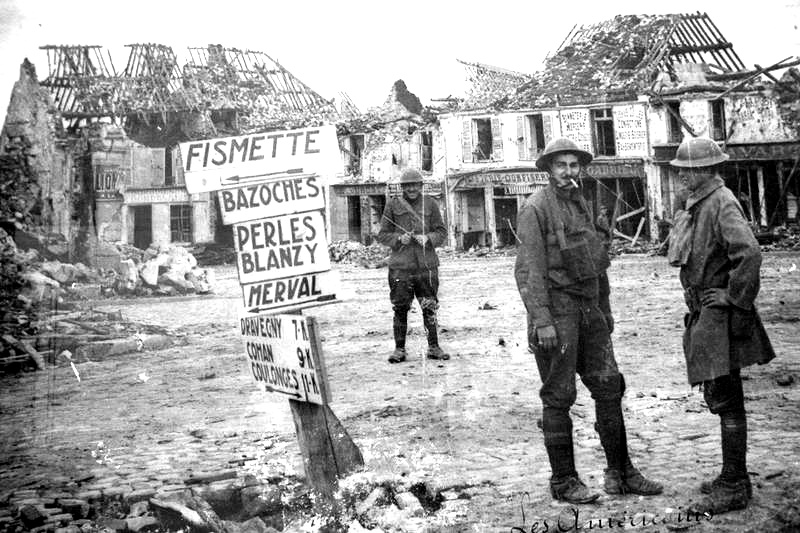
August 4 (Sunday). The Boche has withdrawn and been driven back of the Vesle River. Our troops have hit him hard – the 42nd Division has done particularly good work. The 32nd took Fismes tonight. Now it is a question of what the Boche is going to do. Will he try to hold at the Vesle, make his stand at the Aisne River, or go back to the Chemin des Dames where he was a year ago? It is evidently to be one of the latter two. Soissons fell to the French today. It begins to look worse and worse for the Boche. Lt Col Fort, our Senior liaison officer was in this morning – he is optimistic and thinks the cavalry will have an opportunity to do good work before we are through. Montcabrier spent a couple of hours with me today. 6th Army Aéronautique expects to go into ‘repos’ after the 10th when we relieve them.