


April 27 (Saturday). Cit. rode with me as far as Troyon, then I came on and stopped at D/2 to arrange about the infantrymen. Toul at 1200, where I had a hot bath, made some purchases, lunched at the Café de la Comédie and was in Colombey by 1430. Foulois and party were gone, left on summons from Gen Pershing to meet him in Paris. Day came up from Chaumont this afternoon.
April 28 (Sunday). Left with Day in his Cadillac 8, dined in Chaumont with Charley Thompson at a new Intelligence Mess.
April 29 (Monday). Day lent me his Cadillac to run over to Bar-sur-Aube where I congratulate Tex Westervelt on his Star – I am mighty glad to see him get it. Saw Gen Hines about our balloon observers – then back to Chaumont for a confab with Milling – left at 1330 in an air service Fiat. Stopped in Langres and arranged with Perkins about orders for our men at Valdahon – just as I started away, I ran into Billy Haskell in the street – he had been offered the Lt Colc’y of his old 69th N.Y. which became the 165th Infantry Regiment and is now under Barker in the 42nd Division and says he expected to take it (in the event, Haskell was not given the position), he îs tired of the Staff and the AEF Staff Schoo1 which he is attending at Langres together with Pope Gregory, Henry Meyer, Burnett, Pillow and more of our West Point class of 1901.
Some trees are entirely out, apple blossoms are at their best, and people are all out ploughing – now just a ray of sunshine would make it look like real spring. Many of the fields are white or purple with spring flowers. A pleasant surprise at Valdahon was to find Col Thayer in command, expecting me because Westervelt had wired from Bar-sur-Aube. Col Thayer has come over in command of the 2nd Cavalry. Met Miss Cunningham, a Y.M.C.A. worker whom Westervelt told me to look up.
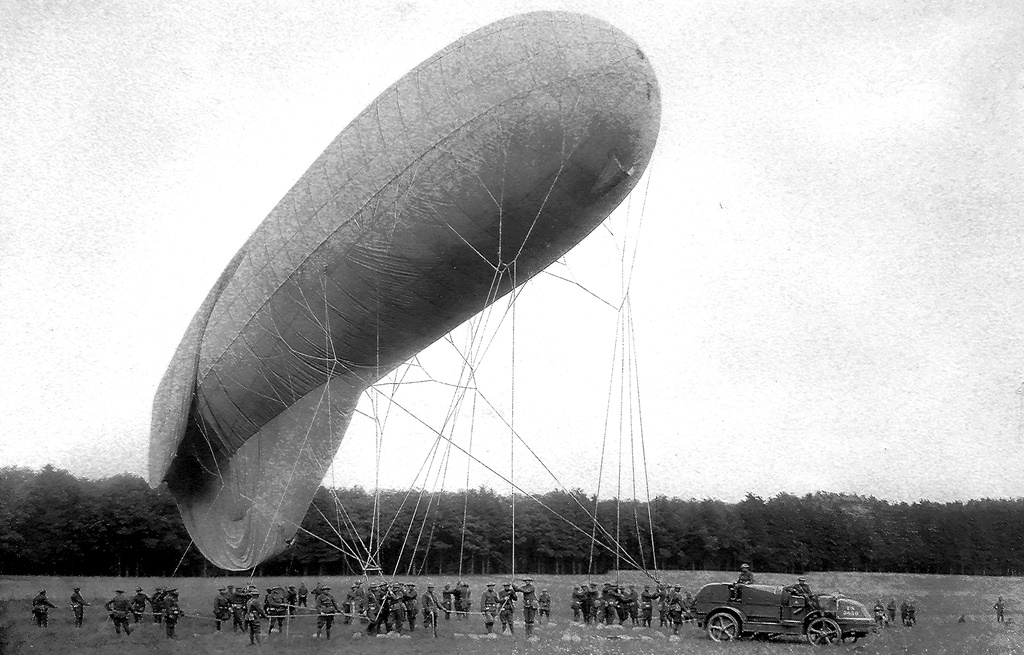
April 30 (Tuesday). Had Lt Chapman, Lt Stunkard, and Lt Montfollet (French) up for a conference on the aviation detachment. With Col Thayer and Col Wheeler (of Texas City and Harlingen polo days), went over to the balloon camp. Gave our 24 extra officers a brief talk, and went to C/2’s orderly room but missed the officers. Lunched with Babcock, Crivelly, and 2 French Adjutants and arranged about C to take over the 84th Company installation. Left in my Fiat and no windshield with rain pouring. A little patch of snow recalls the fact that Valdahon is nearly 2000 feet high – they had a snowstorm last week. A peculiar fact, is that while this place is perhaps 100 kilometers from the lines, a Boche plane has flown over twice recently, and on the days that the Artillery Brigade marched out. The Boche has good spies.
I missed Clark and one of his Lts who were supposed to be arriving in Besançon, but ran into Lt Reis, an American balloon officer, my new assistant who is just starting for Colombey. To Gray, then cut over to Is-sur-Tille, took a look at the new repair shop, a 200-foot building. This is a big place – numerous sidings and thousands of sq. ft. of storehouses of all services. (Is-sur-Tille, besides being a major storage area for AEF and Air Service supplies, was a training center for balloon observers and the site of an ordnance school). I had a talk with Lt Warren our Balloon man, dined with Charley Farmer the CO in his mess at Camp Williams on the hill overlooking the Receiving Station, and rolled on in the dark with no lights, to Chaumont.
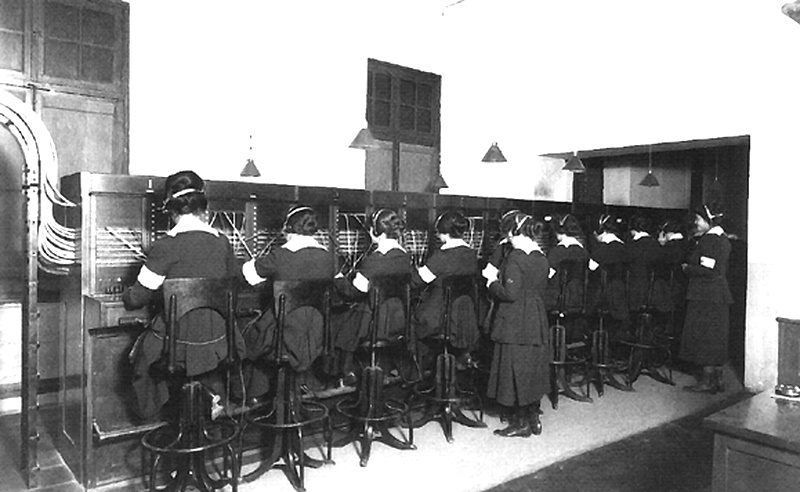 May 1 (Wednesday). A real May day, sunshine, and a soft feel in the air of real spring – the first this year. After a visit to the dentist, to see Day, Milling, Gorrell, and W. D. Smith. Gibbs showed me the Signal Corps’ new equipment, a real up-to-date central, with American telephone girls, cable connections over our own lines to London, a new Thomas machine in which the operator typewrites the message onto a tape that feeds into a transmitter that sends the message. Similarly, it is received on a tape – no personal equation in the operations at all. In Neufchateau, stopped to see Grunert the Ass’t CoS and was back in Colombey at 1530.
May 2 (Thursday). Out all days on an airdrome hunting expedition with Monell and half a dozen others. We lunched at Gondrecourt, and on return, I dined with Van Horn, Monell, and Harmon, the latter just back from a trip to Paris, and leaving tomorrow for London and the US on liaison expedition, particularly to take back information about types of planes. We hear it was announced in the Senate that we would have 31 planes over here by July 1, from the US!!! Well, we will get but few more over here from the French and British.
May 3 (Friday). To Toul – arrived just in time to hear the sirens announcing a Boche plane over the town and to see the anti-aircraft puffs in the sky, but the Boche was too high to make him out. I felt just a little delicacy about loitering around the station, as it seemed reasonable to suppose he had come over to bomb the 1510 traîn that I was to take. However, our own 94th Squadron Nieuports buzzed up and the Boche left. Finally, my train got away at 1600 with no untoward incidents. At Gondrecourt, Lts McCreery, and Lt Ponder, ferry pilots who had just taken Nieuports to Epiez, got on the train. Nice youngsters and all eager to get into a chasse pursuit squadron. Paris at 2310, where I, fortunately, found the car I had wired for Emma was waiting up for me at the 13 rue St Florentin, also the good wife of the concierge.
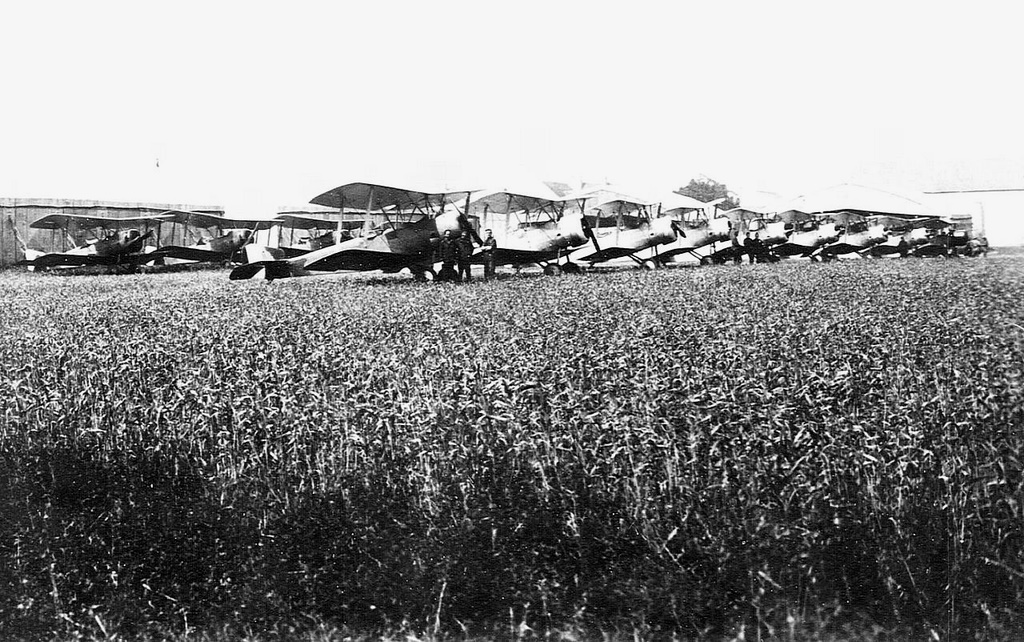
May 4 (Saturday). Emma took her bread ticket out this morning and bought a good loaf of brown bread – this with honey and coffee which Katherine had left provided a good breakfast, which I could enjoy after Father’s comfortable bed. Shopped, then confabbed with Chandler at the Avenue de Montaigne till noon. When we went to lunch at a restaurant they asked me for bread tickets and I gave them some I had issued at the Provost Marshal’s office on reporting my arrival in Paris. In the afternoon, talked to Satterfield about the plane situation, then went out with Foulois to Orly (An airfield a few miles south of Paris. It was the main ferry point for US Air Service planes, all of which (except for some DH-4s) -now and later – were obtained from the French and British. It was the Air Service Acceptance Park No. 1 for aircraft. It also contained an air depot for spare parts, supplies, and equipment). This is quite an installation and has grown up practically in a night. Hangars, assembling shops, HQs, etc. all lined up around a perfectly flat and level field – a perfect lawn. We have a lot of planes of various kinds in the hangars waiting for transfer pilots to deliver them to their destination or for their equipment to be completed, Maj Bonnell of the (Canadian traîned) 147th Pursuit Squadron was there and wanted to take his planes out with is own pilots – but that is now tabooed. All deliveries are to be made by transfer pilots.
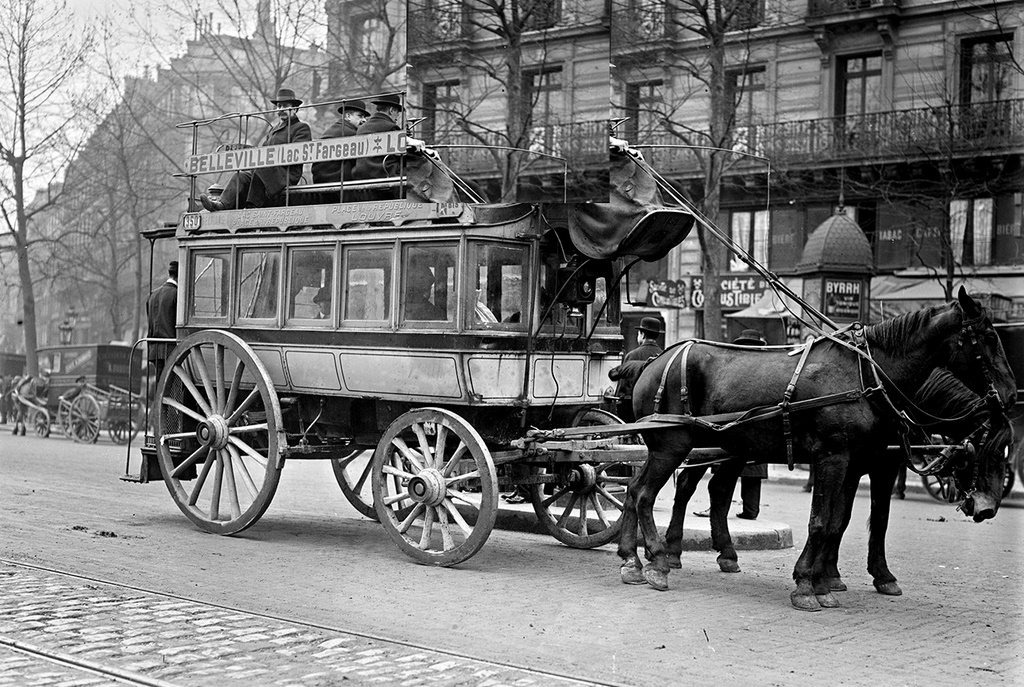
May 5 (Sunday). To avenue de Montaigne, then to the garage where I found the Isotta Fraschini I was to take to Colombey was not ready. Very good sermon at the Church rue Berri by Dr. Goodrich. At two the Renault came, but instead of starting back called at Huntington’s new HQs in a branch of the Embassy – the Ambassador, Sharp, chanced to come in; he is from Lorraine, Ohio and was interested în hearing of Mr. Kerr’s death. We rode out to Armenonville for a little fresh air. Paris is just now at its best – the horse chestnuts on the Champs-Elysées and the avenue du Bois are perfect. It did not look like a wartime Paris – everyone, large and small, was out, the Bois was full, the avenue du Bois crowded, and everyone appeared happy.
 At the Hotel Ritz I ran across Bricker, Cresson who is now with the Belgian HQs, and Phil Corbusier, and on the rue Royale who should loom up but Mathy Johnston – no shorter and much heavier. We dined together at the Hotel Edouard VII then came back to the apartment for a good chat. He is here in command of a regiment of some 3600 men or more including a bridge building, road building outfit, transportation battalion and I don’t know what else.
May 6 (Monday). Huntington and I started out in the Renault. Lunch at Haussimont with D/3* where I found Boettcher – Saw Christie and the 99th Observation Squadron. Took Boettcher with us and stopped at Vitry-le-François to drop Huntington so he could take the train back to Paris. To our great relief, the man at the window sold him a ticket without a word, even wanting to sell him a 1/4 fare ‘Militaire’. Bonnell and a carload of his pilots overtook us beyond St Dizier. Found Aleshire and Jones both of the Cavalry but detailed to the Air Service as lt cols. *(Balloon Companies A, B, C, and D of the 3rd Balloon Squadron had arrived in February 1918. In June, these became the 5th, 6th, 7th, and 8th Companies).
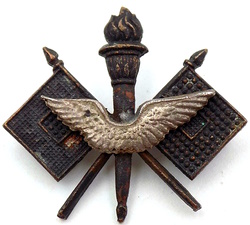 May 7 (Tuesday). A wreck, the result of filling up on some macaroons and chocolate that Bonnell threw over from his car as we came along the road yesterday afternoon, then drinking some poisonous beer at Toul on top of the other mixture. Johnson and Noel, a newspaper reporter, the latter of Fort Myer days 1908 when the Wrights were there, dropped in today. It appears that James Norman Hall, the Lafayette man transferred to the 94th, is gone. Three of the 94th, Hall, Eddie Rickenbacker, and Edwin Green, were on patrol, over the Boche lines north of Pont-à-Mousson and attacked 4 Boche planes, at the end of which a Boche got Hall who went down in a grille (spin). They thought he appeared to level up as he got toward the ground, but no one saw him land. (Hall was shot down and captured. He had a broken ankle and broken nose but otherwise was not injured). Two transfer pilots coming from Paris to Tour with planes for the 94th have not arrived and must have wandered over the Boche lines near St Mihiel. Hereafter they will not be sent to a point as close to the lines as Toul.
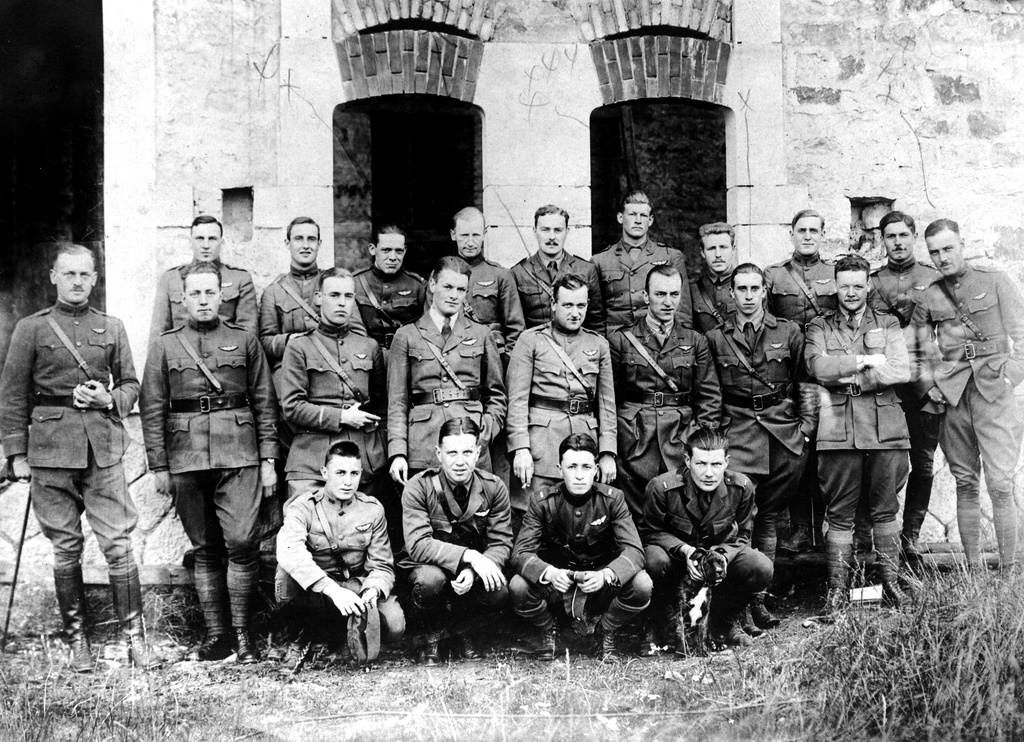
May 8 (Wednesday). Aleshire takes the place of Leasure who goes back to Tours. Monell and Lovell left for Paris today, on a joy-ride.
May 15 (Wednesday). This is getting to be the active and open season for aviators. McCreery and Ponder, two of the transfer pilots who were on the train with me going to Paris about ten days ago, were bringing out Nieuports last Saturday. Near Fère-Champenoise, McCreery suddenly shot up from below, cut a strut cleanly out of Ponder’s machine, cut the tail off of his own, and both came down from 700 meters. Ponder landed safely, McCreery smashed up completely and was buried at Mailly on Monday. Yesterday afternoon, Melvin Hall phoned from Toul that an AR in flames dived straight to the ground northwest of Boucq. It was one of our 12th Squadron machines, Angel, pilot, Emerson, observer. They think something went wrong with the motor, and it caught fire. Cresson came along the day before yesterday with Maj Tinant of the Belgian Army. I sent them up to Mitchell.
This morning, I took Maj Finney and Lt Cleveland, over from the States on a dirigible balloon commission, up to B/2. Butler put the balloon up with Taylor as an observer, but the clouds were very low, so he could not go very high. Tomorrow there is to be a ceremony at the Toul Airdrome when the French are going to decorate half a dozen 94th Squadron men. (Rickenbacker, Hall, Chapman, Peterson, and Meissner. With the exception of Rickenbacker, these men had been members of the Lafayette Escadrille before transferring to the US Air Service).
Hall and Chapman’s names both appear on the list, tho’ they are both in Bocheland and probably both dead. (James N. Hall was POW; Charles W. Chapman, Jr, had been killed in combat on May 3, 1918.) Lt McLachlin and Lt Forman, Equipment Manual Board (the Board was over from the States, studying equipment being used by the AEF in order to prepare up-to-date manuals) came along the other day. I took them to Toul, we lunched with Atkinson at the 94th and 95th airdrome, then on to Ourches, which we had to approach from three different directions before finding a road that was not hub deep underwater. Royce commands the 1st Observation Group (the group was under the tactical control of the French XXXVIII Army Corps and under the administrative control of the US I Corps) 1st and 12th Squadrons, and they are doing excellent work. His photographic establishment under Capt Griffin is a wonder. They have taken some excellent pictures on the Boche side opposite our division, and have a beautiful installation at the airdrome. They have homing pigeon equipment, are doing all the regulating for the artillery in the 26th Division, except that done by the balloon, and have done some general reconnaîssance.
Royce and a couple of others have been decorated for continuing a photographic mission after being attacked by Boche planes. Gen Shipton, anti-aircraft, came in yesterday afternoon and was with Van Horn last night. Joralemon and I dined at the 1st Air Depot with Page last night and afterward played bridge with him and Mahoney. Lt Col F. M. Jones is there now to relieve Page of command. Aleshire has relieved Leasure here as head of Administration. Gen Shipton with his aide Lt Gordon, came into the office this morning, to talk about protective balloons, anti-aircraft, etc, and invited me to go with him on a tour. We first struck for Froville where British Air HQs are installed. This is Gen Newall’s HQs. He has a beautiful chateau which he rents for 250 Fr. a month! Small wooden huts have been put up in the park for the use of his staff, Lt Col H. G. Worsley in charge of A-Aircraft defense showed us all his preparations for defending British aîrdromes with 3″ guns, machine guns, and searchlights. They are using no balloons.
At Luncheon, I sat on Gen Newall’s left. He is an active, live wire about 37 years old, very keen on bombing, and anxious to go after the Boche. Lt Col Ellington – on his staff. Gen Newall showed us some interesting photos taken by his bombers just as they were dropping the bombs on Mainz, Stuttgart, and other places. He is anxious to get started on a big bombing program. From Froville we went to Flavigny and called the Anti-Aircraft HQs. A capt showed us their plans and then phoned up to Pont-Saint-Vincent, where we found Lt H. waiting for us. He explained just how the protection balloons are placed, and how they man them and sent one up to 1200 meters (3900 feet), showing us his shock absorber for adjusting the bridle. They have been loading the tail with 10 kilos (22 pounds) of sand, to give the balloon the proper angle. Since February 19, one Boche has come to Pont-Saint-Vincent, he must have had wind of the balloons or seen them, as he turned round and went back to Nancy to drop his bombs. The barrage is evidently efficient.
We had a beautiful ride down the valley of the Moselle to Toul, where I left Gen Shipton and Lt Gordon at Col Mitchell’s office and came on home. This has been another banner day for the 94th, three Boche planes, and two Boche balloons. Marr got one of the planes – glad to see it.
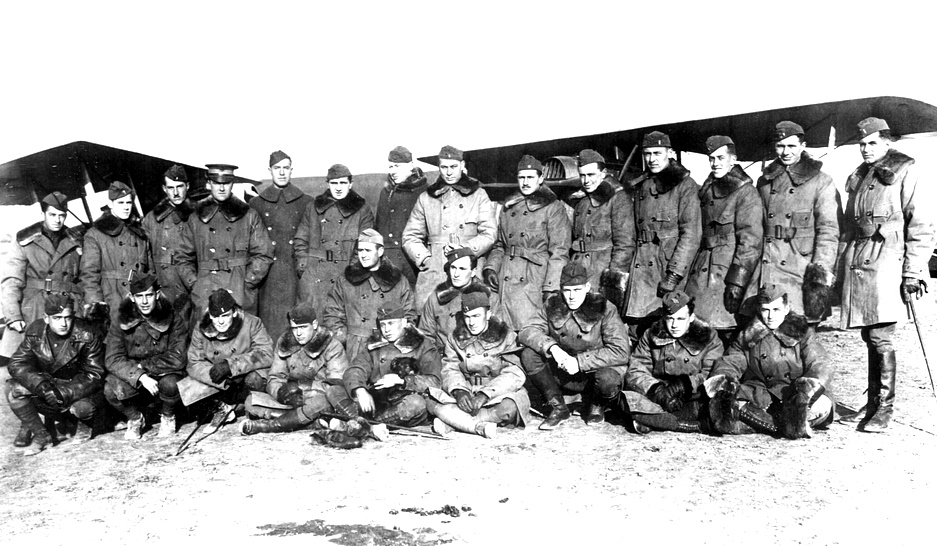
May 16 (Thursday). Col Monell is back today – has been up on the British front. Mitchell was in and Maj Armengaud dropped down from GHQ. I resumed flying today on the new 23-meter Nieuport sent from Paris for my use. It is a dual control, similar to the one I flew in with Fumat at Hill 402 last winter – 80 HP, Rhone motor. I first went up with Lt Morlan to get my hand in. He is an old hand at the game, was an exhibition flyer in the States before the war, and was recommended by Page as being a first-class aviator. The motor hummed as nicely as could be desired, and all conditions were good – we took the air – I flew the machine around for 15 or 20 minutes over Colombey and the neighborhood, brought it down fairly close to the ground to land, then turned it over to Morlan. He took it, then seemed to be uncertain what he would do, let it come down on a bad part of the field, rolled along a short distance, hit the ‘tableaux de chocolat’ (French slang for uneven ground) and gracefully the machine turned over on its back, fortunately doing very little damage to it. In the front seat, the windshield is right up against the pilot’s face, consequently, I bumped my left eye on it, broke my goggle, and came out with a fairly good cut over the eye – fortunately not in it.
May 17 (Friday). Lt Col Baldwin (personnel) and Lt Col Hutton (material) came in this evening by air on machines being delivered to the 1st Air Depot.
May 18 (Saturday). Took a Board to Amanty to inspect the 88th Observation Squadron (Anderson) and the 915t Observation Squadron (Reynolds) which are preparing to go to the line. The squadrons are in pretty good shape, but short on equipment. Gen Castelnau, commanding the group of Armies of the East, was in. We were all introduced to him and he made a little speech in which he said he hoped American aviation would continue to progress. I wonder what he meant as there are several ways of taking it. One thing we know for certain, the French are disgusted with the slowness of our aviation, as well as the Americans. Gen Castelnau is a small man, with a little of the eagle look of Napoleon, well over 60 years. He was the commander of the French 1st Army which defended Nancy soon after the Battle of the Marne (1914). The German Emperor was present with his White Hussars at the Battle of the Grand-Couronné in the vicinity of Nancy and announced that he would ride into the city at the head of his White Hussars. Had he succeeded in doing so, he might well have rolled up the French Army and won the war.
Lunched at Amanty with Anderson. After lunch to Epiez, at the invitation of Maj Bonnell, commanding the 27th Pursuit Squadron and the 147th Pursuit Squadron (Actually, Bonnell had the 147th, Harold Hartney, the 27th. Later, Bonnell commanded the 1st Pursuit Group, to which the two squadrons belonged). He has a good organization, all Canadian traîned. At 1600, I umpired a ball game between the officers of the two squadrons – It was some game, with some kicking – not too much – and enough scoring to make it interesting. The 27th won 9-7 in 7 innings. I ran onto McKillip with whom I went to School at Orchard Lake, in 1896-1897. He is a major and veterinary at Neufchateau. During the game, Van Horn, Monell, Capt Lamb (RAF) of Ochey and some other Royal Air Service people from east of here came in. After the game, two of Bonnell’s pilots gave an exhibition on their Nieuports. They are good pilots and handle their machines well.
None attempted the loop, but they did some pretty renversements (half roll followed by half loop), spins, and banks. After the fighting, we all adjourned to a little clearing down in the woods where a fire was burning and the barbecue was on. For tables, they had set up some pieces of corrugated galvanized iron on sticks set on the ground – benches made of the same. Next to me was a Royal Air Service man who proved to be an American named Waterous from N.Ÿ., who had trained in Canada with Robert Lahm and spoke very well of him. We had roast pork, baked potatoes, pickles, bread, butter, cheese, and beer for supper, interspersed with songs, cheers, a string orchestra from Neufchateau, and some very good dancing by a young pilot named Prinz of the 147th. Truly this does not seem like war. it is a good thing to forget it occasionally.
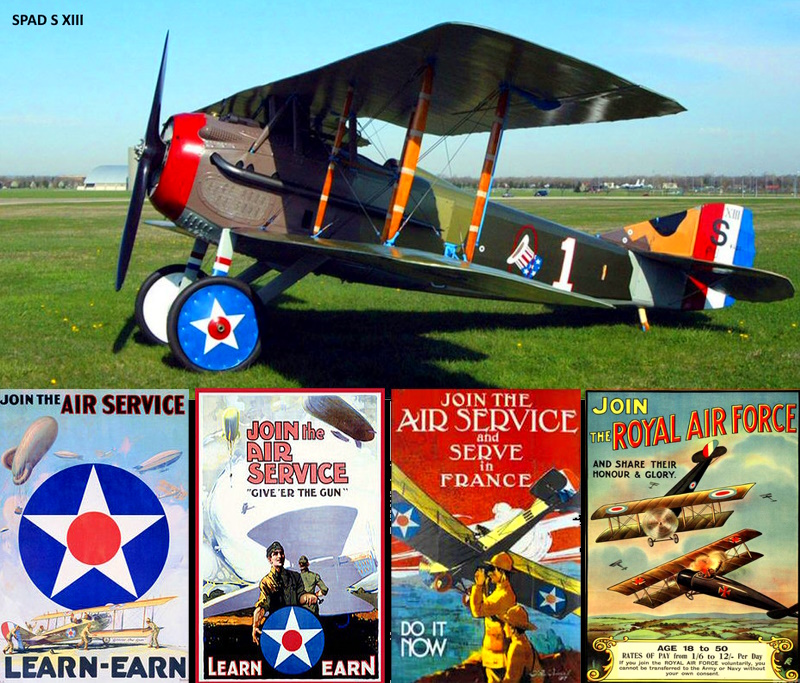
May 19 (Sunday). I forgot to record that we have a bridge game very often these evenings in the mess. There are no real experts, and it is just good enough to be interesting. I am on both the winning and losing sides – as much on one as the other. The 147th and 27th came over today – I was roped in to umpire a game between their officers and those of the 1st Aîr Depot. The latter won 3-2. Word came in about 1300 that Lufbery had been brought down. It seems a two Seater Boche came down over Toul, then on to Ochey. Our people got the alert (sic) and went up – Lufbery had been up, came down and heard the report, jumped into another machine, found the Boche near Pont-St Vincent and attacked, but was set on fire and jumped out of his machine to keep from beîng burned up. (It îs equally possible that Lufbery was thrown from his plane, but whether he was thrown out or jumped can never be proved. For further details of Lufbery’s interesting career in aviation and of his death see Hail and Nordhoff, The Lafayette Flying Corps, and also Mitchell, Memoirs of World War I; and Rickenbacker, Fighting the Flying Circus). Too bad. The new Chief of Air Service, Gen Patrick was thru today with Rusty Burtt. This appointment comes somewhat like a thunderbolt. While a change might have been predicted, no one would have looked for Gen Patrick,* an engineer, to step into the position. Foulois comes up from Tours to take command of the Air Service of the 1st Army which is a good thing. Someone should have been appointed to that position long ago.
*(Patrick would replace Foulois on May 29, and continue as Chief of Air Service, AEF, until after the Armistice. From 1921 to 1926 Patrick was Chief of Aîr Service and from 1926 to 1927, Chief of the Army Air Corps).
The ‘popote’ (mess) took its supper and went a couple of miles into the woods this evening. It was beautiful, fresh, and green. Joralemon fried bacon and scrambled eggs – we stayed till nearly nine, still daylight, to play with Louise’s children whom she had brought along for the party. Found Cushing when we came in. He îs just back from the Lafayette Squadron where he has been making sketches of the members of the squadron and what they do from day to day.