


June 1 (Saturday). A hurry call from Haussimont, today, saying they might have to evacuate at once – so, with Schultz as the pilot, and a fine new Salmson as a bus, I left at 1510, arriving at 1605 after a pleasant cross country ride via Amanty, Gondrecourt, St Dizier, Vitry-le-François. I found Murphy and learned the truth – that this was just another effort on the part of the French to get us out, using the German drive as an excuse – so I adjusted the necessary difficulties – dined with Murphy, and came home in the evening, landing on the 1st Air Depot field.
June 2 (Sunday) Foulois and Burtt came în today, said they were going to Toul tomorrow and would probably want me to go with them – also said a cable had gone to the States recommending me for full colonelcy. Lovell and I took a walk over the field and thru the hangars at the Depot today. Ships are beginning to accumulate now. Just at dark, the Ochey bombers tuned up and started to take the air. One big Handley-Page came directly over us – they are monsters.
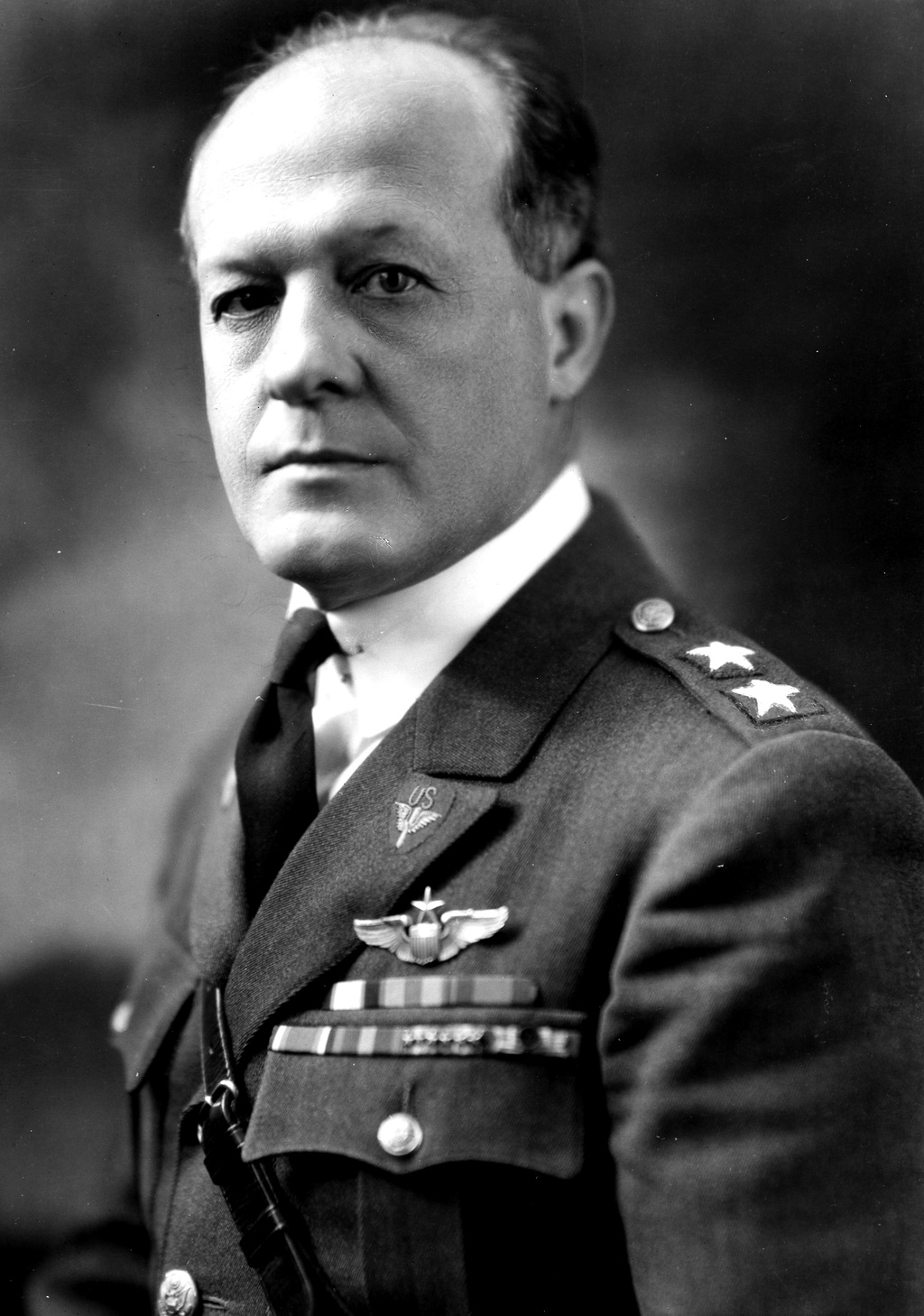 June 3 (Monday). Was out at the field before 0900 for a flight when a phone message came that I was wanted at the office. Foulois wanted me to go to Toul with him as a member of Foulois’ staff – He is here to take over as C.A.S. 1st Army, Gen Patrick, the new Chief of Air Service, AEF (Order N° 81 GHQ AEF May 29, 1918) comes to Chaumont, Burtt will be there with him, Whitehead stays at the HQ Service of Supply, Tours. We went to Billy Mitchell’s office – he was pretty sick over the proposition but said he would move out any time.* We talked over the situation from all sides – lunched with Mitchell, Hall, Royce, Atkinson, and Huffer. Continued the plans for taking over – Mitchell exposed his latest plan for the organization of the air service and gave me large blueprint diagrams of it. Later we all adjourned to the Toul airdrome to meet all the aviators and squadron commanders. I dined at Van Horn’s – Rubottom and Creighton are there – after dinner, Foulois and I worked on plans for the organization of the First Army Aîr Service HQs.
*(Mitchell, having been replaced by Foulois as Chief of Air Service, First Army, would soon become Chief of Air Service, First Brigade. See below, entry of July 25, 1918, for a subsequent development in the Foulois-Mitchell drama).
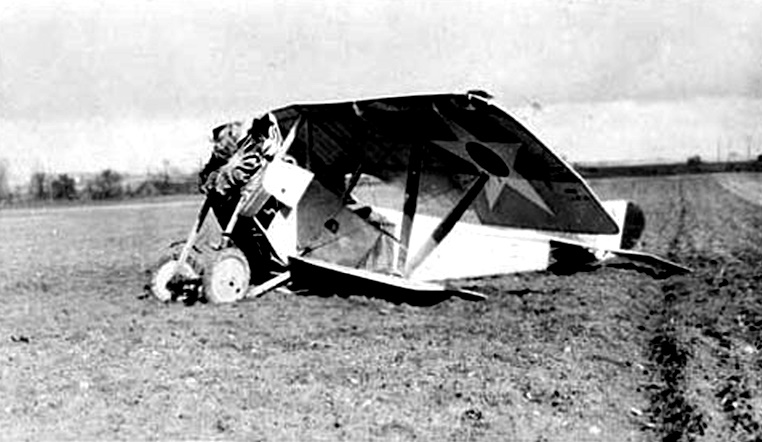
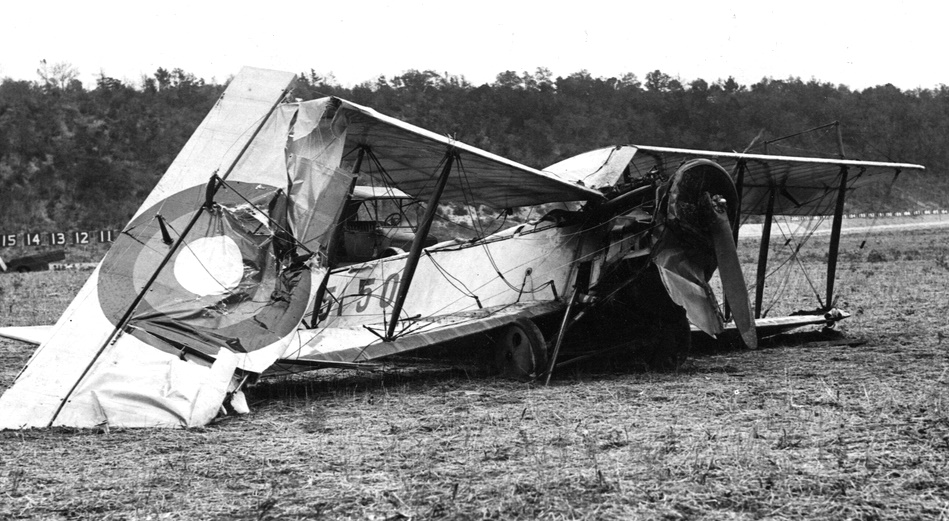
June 4 (Tuesday). Foulois and I went to Neufchateau this morning and found Heintzelman had already gone to Toul to supervise the transfer of the office. Craig explained what Gen Liggett’s, CG First Army, instructions were, and they were very definite. Mitchell was to turn over everything în his office, personnel, records, everything – and get out. We went up to Gen Liggett’s quarters and he confirmed this. It was noon but we came right thru to Toul. (A curious thing happened in the 147th today. As we were on our way to Neufchateau between 1100 and 1200, we saw two airplanes to the east and fairly high, acting very peculiarly. At first, it looked like a fight, but soon we could tell that was not the case. One plane seemed to wander around, turning right, then left, the other following at a distance, and finally, they disappeared to the southeast). As we were leaving Neufchateau, Ord, Gen Liggett’s aide, ran up and said an airplane had crashed in a little town out from the north and the pilot was badly hurt.
In Toul, we learned that a patrol of the 147th was out, one of the patrol, Lawrence wandered away, headed south, the patrol leader Lt R. A. O’Neill followed and tried to guide him back but without success, finally near Neufchateau, he went into a vrille to the right, came out, went into another to the left, and crashed. He was killed. The patrol leader landed immediately, but could do nothing for him).
Mitchell and Heintzelman came in from lunch and the transfer took place – it was almost tragic. Gen Liggett’s instructions were definite. Everything was to be turned over that was needed. Foulois interpreted it to mean practically everything. Mitchell first named one thing, then another – then the personnel, he wanted to keep different ones – in every case, Heintzelman stepped in and repeated the General’s instructions. Finally, it came down to his own desk which he said he had had for some time – he was told to keep it, but the men broke it up in trying to move it, so Mitchell finally said he did not want it. Al correspondence is to be left and I am to check it up, separating what is strictly Corps, from Army. Mitchell takes Miller, Boyrévin, Adjutant Fumat, a civilian clerk, and a couple of chauffeurs. He leaves Maj Melvin Hall, Maj Pulsifer, Capt Kelleher, Lt Rhoads, and practically all the office force, most of the transportation, maps, charts, etc. Heintzelman insisted on Mitchell’s goïng back to Neufchateau with him. I got rooms at the Hotel de la Comédie for Foulois and myself, sent up to Colombey for my pajamas and toothbrush, and stayed right there. The Air Service HQs 1st Army is now suddenly and unexpectedly established in Toul and we are on the job.
June 5 (Wednesday). Mitchell came back this morning, and with Maj Marques, French Corps Aîr Service Commander, we called on Gen Passaga. He was very cordial – and is a fine-looking old soldier. Foulois went on to Colombey and then on to Chaumont, leaving me to hold down the lid. Ran onto Cubbison who is Gen Lassiter’s forerunner, with the Corps artillery. Now I am writing in bed at the hotel, to the accompaniment of the British Handley-Pages and Farman Experimentals’ going out on their bombing missions across the line.
June 8 (Saturday). Thursday, I was occupied getting into operation – Miss Richards, who knew in Coronado California, and Miss McCormick, of the reaper and binder fame, arrived Thursday evening as part of the office force. They have already lived in Toul, as a part of the force at a refugee asylum at Dammartin. Yesterday, I tried to get a new and larger building as we are beginning to outgrow this one already. Maj Magruder and Capt Hubbard came up yesterday with a Commander of the British Navy, attached to the Admiralty in London, here accumulating information for propaganda work at home. With him was Commander Williams, now at our GHQ, who played tackle in the fatal game of November 1900. Commander McClintock, and another one, who is on the priority shipping board. With Huffer, I took them out to the Toul airdrome where Atkinson did the honors, showing us, among other things, Campbell’s plane on which the mechanics had painted six little Maltese crosses to indicate the six Boches he has brought down. The party had to leave at 1500 as the Britisher was to speak to the officers of the School at Langres at 1700. I ran down to Colombey for dinner and to pick up my belongings and bring up some much-needed clean clothes. Gen Foulois away all day at Chaumont seeing Gen Patrick, returned last evening.
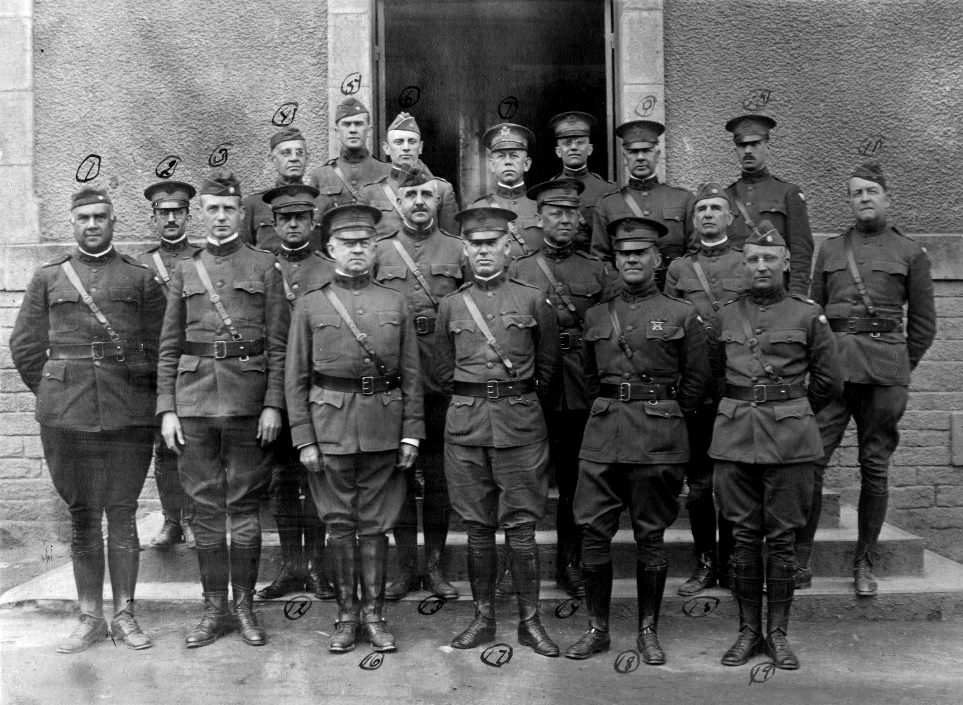
Staff of the AEF Headquarters in Chaumont, France
( (1) Col Mendel L. Smith, Camden, South Carolina. (2) Maj Daniel D. Morgan, Duluth, Minn. (3) Lt Col N.W. MacChesney, Chicago, Ill. (4) Maj C.T. Hendler, Washington, D.C. (5) Capt Paul M. Herbert, Columbus, Ohio. (6) Maj Peyton Cochran, Staunton, VA. (7) Maj Daniel Taylor, Pine Bluff, Ark. (8) Maj Richard H. Hill, Newcastle, Ky. (9) Maj Peyton Gordon, Washington, D.C. (10) Capt Robert Adams, Indianapolis, Ind. (11) Maj Murray Shoemaker, Cincinnati, Ohio. (12) Lt Col Aubery E. Strode, Amherst, Va. (13) Maj Durand Whipple, Little Rock, Ark. (14) Maj Malcolm A. Coles, San Francisco, Calif. (15) Maj C.B. Parkhill, Tampa, Fla. (16) Col Guy D. Goff, Milwaukee, Wis. (17) Col H.A. White, Washington, D.C. (Regular), (18) Lt Col Robert K. Spiller, Roanoke, Va. (19) Lt Col A.R. Brindley, Gadsden, Alabama. (Date April 1919 – Source West Virginia & Regional History Center)

Editor Note
The fourth German offensive of 1918 was the Montdidier-Noyon Offensive, June 9, 1918 – June 13, 1918. The operation, striking toward Compiègne, was on a smaller scale than its predecessors, gained only about seven miles, and on June 11, was stopped by a French counterattack which quickly stabilized the line. American participation was limited to elements of the 1st Division near Cantigny which repulsed enemy raids simulating a general attack. During this period, but not in connection with the Montdidier-Noyon affair, the US Air Service flew its first daylight bombing mission when eight planes of the 96th Bombardment Squadron hit the rail yards at Dommary-Baroncourt.
(Note) While Frank Lahm was with Gen Foulois at Headquarters, First Army Air Service, he acted as Foulois’ Deputy Commander. Lahm continued with Fouloïs until July 26, when he was transferred to G-3, First Army. Another note: The fatal game of November 1900 was the Army-Navy football game of that year, won by Navy 11-7. Lahm was the Army quarterback.
June 9 (Sunday). Went with Foulois and Fleury to call on Gen Gerard at Flavigny, and to see Maj Delafond relative to the operation of the Air Service. Gen Gerard was cordial, as most all French generals are, said he would do anything he could for us, and started off by saying we could have his former headquarters in Toul for the Air Service HQS. It is a beautiful large building and will be fine. Stopped at Gondreville on the way back and saw Reynolds and the 91st, showing them the instructions for them from Delafond. This afternoon we went to Vaucouleurs, taking Miss Richards and Miss McCormick to a party given by Capt Eckman on the new airdrome. Baseball games, boxing, wrestling, songs, a band, and refreshments. Besides all the Aîr Service representatives, the people of Vaucouleurs were there, including the mayor, the commandant of the town, and many French officials from surrounding towns. Among them was an old friend of Father’s and mine, M. René Grosdidier, mayor of Commercy – I thought he would fall on my neck he was so pleased. One of the 139th did some stunt flying on a Spad – they have had these machines only a few days, but handle them remarkably well.
June 11 (Tuesday). Henry Meyer, Pope Gregory, and Peck, all dropped in together this afternoon – it was a happy 1901 reunion. The first two have been at the Langres School and now go back to the States to join their respective divisions and return here with them. Peck is in this neighborhood in charge of light railways. Gen Foulois and I lunched today with Lt Col Sayer whom I knew în the 21st Infantry at San Diego. Capt Kelly is up on a joy ride from Tours, looking around. Pleiss has been here for several days, introducing respirators and oxygen for use at high altitudes. The flyers do not take particularly kindly to the added equipment to wear in the machine. Many visitors in during the day.
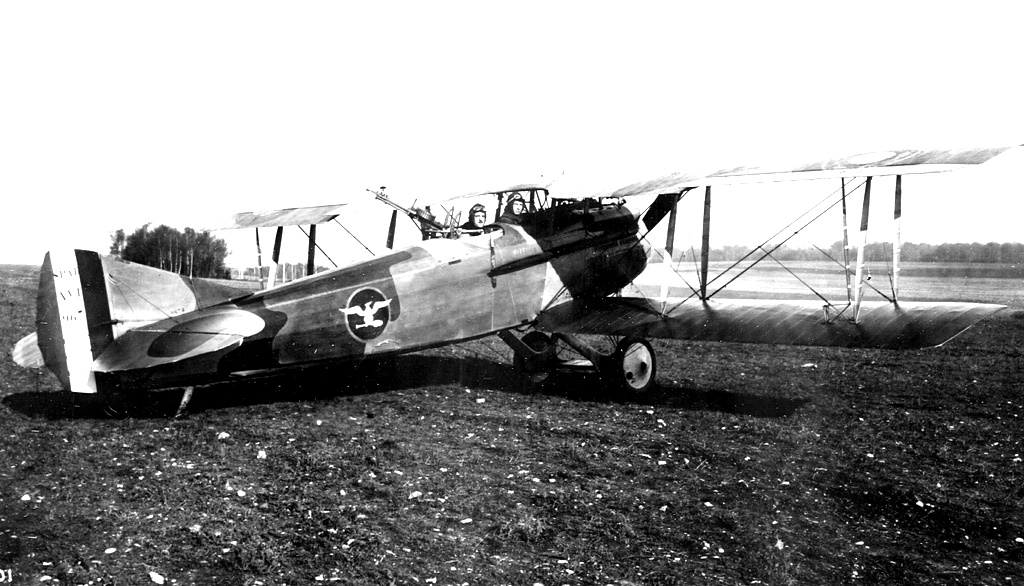
June 12 (Wednesday). Just about one year ago today that Joe came down on my leg. It is a question of whether it will ever be normal again. This has been a busy day in American aviation. The 96th Day Bombardment Squadron made the first bombing raid by an Air Service, AEF, unit this afternoon, 8 Breguets oled by Maj Harry M. Brown, the CO of the 96th, dropping 80 kilos each northeast of Verdun and all returning. The 91st Observation Squadron they tried their first photo mission, but due to the clouds, missed the zone and got a zone too far north. Two Salmons from the 91st made a reconnaissance this afternoon – with a Nieuport to protect them – they finished and both returned safely to this side of the line. Henry Meyer came in and I took him to both the 1-PS and 91-PS airdromes. He and Peck dined with Gen Foulois and me tonight at the Metz. The restaurant in this hotel is closed – can’t get the bread they tell me.
June 13 (Thursday). The military authorities sent around tickets to a play given at the Comédie this afternoon by a company sent from the 8th Army HQs. Gen Foulois Misses Richards and McCormick and I used four of them. The play was something wonderful – Greek but at the same time a farce. We are still wondering what the idea was. The 1st Pursuit Group got 2 Boche planes this morning – one în flame, both on the other side of the line. Armengaud was here today with Dudoré – he wants our pursuit to go up to the big fight as a group – It took as tho’ the 1st Corps would be united up there. Van Horn came up this afternoon.
June 16 (Sunday). Gen Foulois has been away for two days at Chaumont on a reorganization of a project that Mitchell proposed. Yesterday evening Royce and I ran over to Nancy. I woke up this morning to the sound of guns. It turned out later to be an attack by 1000 to 1500 Boches who got as far as Xivray but were afterward driven back again. The Boche has been doing long-range shelling all day and is still keeping it up. Beaumont is reported completely torn down. Lahaymeix was badly shelled, soldiers and civilians killed – the people were caught as they were coming out of the church. Boucq has had it frequently and everyone at HQs is taking it to cover. Dog Company, 2d Balloon Squadron, was shelled in the aîr, they hauled the balloon down unfortunately, and then the Boches went after it hard – when they got ît back to its bed, he dropped a half dozen shells, one of which hit the barracks, but fortunately the men were all out.
Another, six inches, hit the balloon on the nose and destroyed it. Paegelow, McCawley came in – said it was suicide to put another balloon up, etc., and wanted to move to a point farther back. I told them to start a new balloon bed, but inflate their new balloon where they now are. Maj Perrin and Capt Repoux went out this afternoon and eased the minds of Paegelow and McCormick and told them to go ahead and inflate. Yon came up this afternoon, bringing Bérard, who is here for two or three days. Strange to say, the Boche has neglected one town Ménil-ta-Tour today.
June 17 (Monday). Dodd arrived today to take over the engineering and supply end of the 1st Army Air Service. Foulois back this evening. Says the reorganization is to go right ahead. I had Capt Yon and Lt Bérard from Colombey to dinner with me tonight. We thrashed out the balloon situation pretty thoroughly.
June 18 (Tuesday). Van Horn up today – we went out to see formation flying by the 27-PS. Three flights of 5 machines each started out, the three meeting over Ménil-la-Tour, then traveling along the line to exhibit for the Boche and then returning in very good formation to the field. I followed Foulois, Misses Richards, and McCormick out to Sorey, at Peck’s engineer mess. After dinner, he took us out on a little one-cylinder motor car on his railroad to see his work. He is building and at the same time operating 80 Km of this road, running from his railhead at Sorey and from Pagny, well up to the front where they deliver ammunition and all kinds of supplies. In addition, he has two other regiments under him building roads, quarrying stones, etc. He has a fine job and has handled ît most efficiently.
June 19 (Wednesday). Gen Foulois went to Chaumont this afternoon. Chandler and Kilner came in about 1600. I took them out to Toul field and over to the 91st Observation Squadron, then Kilner went back to Colombey. Mitchell, Chandler, and I discussed balloon organization all evening.
 June 22 (Saturday). These few days have been a rapid whirl – things moving at Lightning Speed. Smith W.D. and Uhl up from Chaumont on a trip. Thompson was in yesterday, looking after the work of his intelligence section, which seems to be doing all sorts of things not contemplated in his plans. Raîn these last few days has kept our machines on the ground most of the time. I took Chandler to Paegelow’s place on Thursday, then we went on to
visit D/2 which has just been installed in a new location farther to the rear.
We visited the ascension point where it was shelled the other day. Five large holes all around the winch position showed where five six-inch shells had landed. At the balloon bed, a couple of holes showed when the ones landed that tore up the balloon. B/2 we found had changed its balloon bed to a point farther south. We went out to Sorey to a dance given by Peck’s Ohio engîneers tonight. Dr. and Mrs. Rowley were there – also several of the nurses of the Yale unit – Dr. Flint’s hospital is just beyond Sorey. This is one of the units on the Baltic last fall. A beautiful full moon tonight, and as we sat in Peck’s hut after the hop, the guns boomed away in front of us, also the occasional burst of a Boche shell warned us that he was awake. Strange how we mix war and the pleasures and diversions of peaceful times, all on the same day and hour.
June 23 (Sunday). Gen Foulois left today to attend the Inter-Allied Air meeting in Paris tomorrow. I dropped down to Colombey for lunch with Van Horn and to discuss matters – took Parris with me, then on to Neufchateau where he went to see a doctor about his wrenched leg. Had a visit with Billy Haskell in his chateau – he is now G-3 in the 4th Corps of which Tommy Heïntzelman is CoS. Ulio came in while I was there – he is to be G-1 in the same Corps. Milling came in today for duty – Louise got our mess – started today – there were 17 at the table tonight, in the dining room of our chateau on the rue Général Foy. The house belongs to M. Lionville a noted Paris attorney. We have a billiard room attached and a beautiful garden out behind, which is at its best. One room contained paintings and mural decorations which have been removed and shipped to Paris for safekeeping. I am glad of it, for leaving out of the question what the Boche might do in the near future, I do not want to be a party to a suit for damages such as the owner of the Chateau in Chaumont brought against the aviation HQs people. Boche plane over town this morning. British bombers buzzed busily over the town this beautiful moonlight night.
June 24 (Monday). The 26th Division turned in a photo of one of our aviators today, which they had taken off a Boche prisoner. I took ît out to the 1st Pursuit Group where they recognized it at once as Casgraîn of the 95-PS who was in a fight with a Boche over Montsec on May 30, lost part of his wing, glided in and landed in No Man’s Land very close to the Boche side and was captured. I lunched with Davenport Johnson in the 95-PS mess where all were interested in the picture. On the back in German was written ‘Landed Safely, May 30, Harry”. I left the picture to be sent to his family.
(Notes) The IV Corps was being established at this time. The word ‘Harry’ has not been explained (Casgrain’s given name was Wilfred V.) Perhaps the German who shot Casgraîn down was named Harry, or perhaps Casgrain was nicknamed ‘Harry’.