




The Schnee Eifel is a heavily wooded upland region in the Central Uplands of Germany, rising to approximately 699 meters above sea level. It forms part of the Western Eifel along the German–Belgian border. The name, likely derived in the 19th century, does not refer to snow (Schnee), but rather to a forest clearing or swathe (Schneise).
Geographically, the Schnee Eifel constitutes the southern extension of the Belgian Hohes Venn within the Eifel Nature Park. To the north, it is bounded by the Kyll River, which separates it from the North Eifel beginning near Hallschlag and Kronenburg, including the Zitter Forest. To the east, the Kyll again forms the boundary with the High Eifel. To the south, the terrain gradually merges into the South Eifel as far as Pronsfeld in the Prüm region.
The highest elevation of the Schnee Eifel is found along its central ridge at the Schwarzer Mann, reaching 697.3 meters (2,288 feet). Although the term Schnee Eifel is often used loosely to describe the broader surrounding region, it more properly refers to the largely uninhabited central ridge itself. This core area extends beyond the narrow geomorphological definition to include the southern headwaters of the Kyll and its upper course, as well as parts of the adjoining Prüm Forest to the southeast of the main crest.
The largest town associated with the Schnee Eifel is Prüm, situated on the Prüm River. The high areas of the Schwarzer Mann and the Wolfsschlucht lie approximately 15 km (9.3 miles) northwest and 5 km (3.1 miles) north of Prüm, respectively. Much of the Eifel forms part of the Rhine Massif. The Schnee Eifel, particularly its central ridge, is a truncated upland representing the eroded remnants of once extensive mountain systems formed during the Hercynian orogeny in the Devonian period. Following prolonged erosion, the region experienced renewed uplift during the Quaternary. Remnants of older rock formations with relatively smooth relief persist, though they are sometimes difficult to distinguish. More rugged uplands, especially in the northern sector around the Prüm area, stand out due to the resistance of harder rock formations, notably the quartzite ridge of the Schnee Eifel. This elongated ridge rises approximately 100 meters above the surrounding plateau and illustrates the durability of local quartzite against long-term weathering. Extending over roughly 15 km (9.3 miles) with an average width of about 2 km (1.2 miles), the ridge maintains a relatively uniform elevation. It runs from Brandscheid to Ormont, near Stadtkyll, where it terminates at the Steinberg (654 meters).
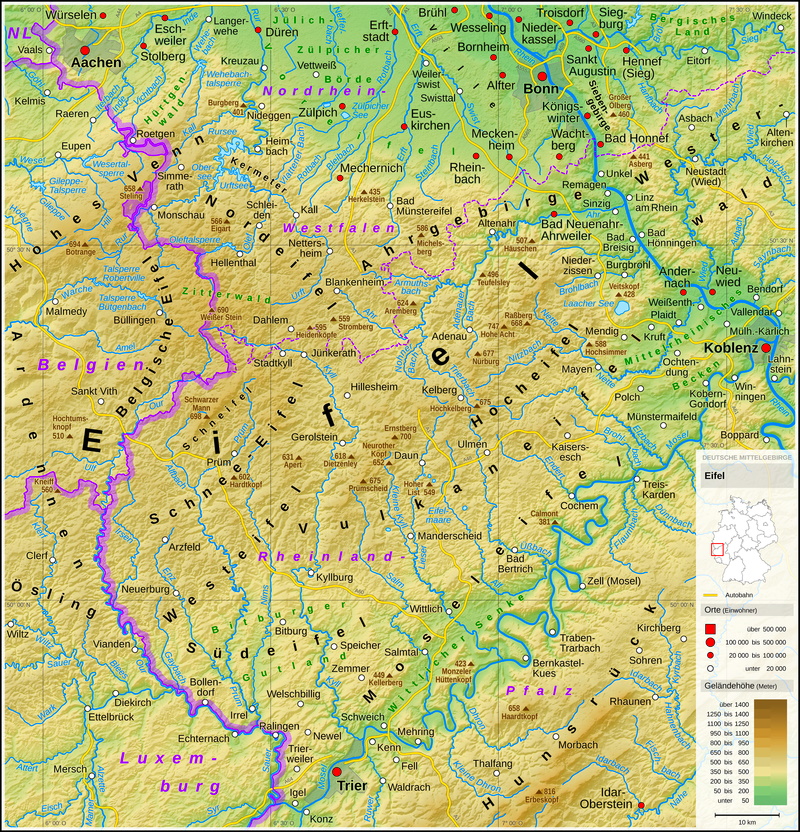

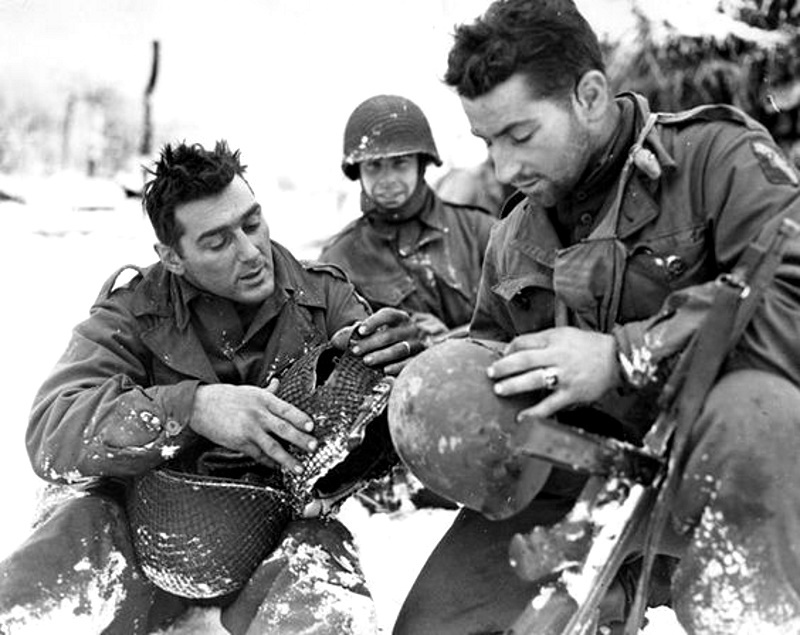
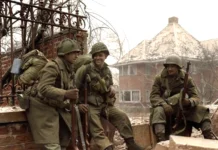
 On this part of Schnee Eifel is a high, rugged and wooded ridge extending in a northeasterly direction from the vicinity Bleialf to Ormont, a distance of roughly ten miles. On the ridge lay two regiments of the 106th Infantry Division, the 422-IR and the 423-IR. The remaining regiment, the 424-IR lay just to the south, while in the north the 14th Cavalry Group held the line northward to maintain contact with the 99-ID. Either end of the Schnee Eifel offers routes of approach to the important rail and highway center of St Vith. The north end offers an approach to the Elsenborn Ridge, vital to the attacking Germans, to provide roads and maneuver space and as an anchor point upon which to build the defense against interference from the north. At 0530 on December 16, the Germans opened with a heavy artillery barrage all along the Ardennes from the vicinity of Mützenich, north of Monschau in the US V Corps sector, to Echternach near the south flank of the VIII Corps. Directed at first on the front line elements after two hours it was shifted to rear area installations.
 At 0700, Manteuffel’s LXVI Corps, with two infantry divisions, one on each end of the Schnee Eifel started moving up through the American lines. At 0730, the attack further north by Dietrich’s I SS-Panzer-Corps composed of the 1.SS-Panzer-Division (LSSAH) and 12.SS-Panzer-Division (Hitlerjugend) began the attack, the 1.SS-PD toward Büllingen, the 12.SS-PD toward Monschau. North of Monschau, the LXVII Corps executed a frontal attack against the 2nd Infantry Division and the 99th Infantry Division in an attempt to gain the northern slopes of the ridge in Elsenborn. The 2-ID and the 99-ID, attacking toward the Roer River were not prepared for defense. Badly shaken they continued to hold through December 16, and on the afternoon of December 17, permitted their lines to be sent back to the southern slopes of the ridge in Elsenborn. Here they were to hold until the threat was eliminated, and their line provided the base upon which the US 1-A was to build its defense to contain the Germans and later to counterattack.
 The 14th Cavalry Group had given way under the pressure of the I SS-Panzer-Corps and the area extending from the Schnee Eifel to Elsenborn was lost. By the evening of December 17, a gap of 9 miles existed. Through this gap the 1.SS-Panzer-Division poured en route to Stavelot. The divisions encircling the Schnee Eifel joined at Schoenberg by mid-morning of December 17 and were advancing on St Vith. Gen Troy Middleton, realizing the threat to St Vith on December 16, had obtained the release of
 CCB of the 9-AD from the US VII Corps and assigned it to the defense of that vital rail and highway center. Farther to the south, in the 28-ID sector, Manteuffel’s two Panzer Corps, the LVIII and the XLVII, using both infantry and tanks in the initial assault had driven the division back three miles. On December 17, the attack arrived at the ridge west of the Our River and cut the main north and south highway west of Marburg. In the sector of the 4-ID on the US VIII Corps’ south flank the German
  7.A struck early on December 16. Looking at the mobility of the armies in the north, Brandenberger could not move so fast. The 4-ID with CCA of the 7-AD succeeded in falling back across the Sauer River, facing north. Though subjected to heavy attacks the line was maintained and was to later form the anchor upon which the US 3-A was to group its forces for the counterattack.
 When word of the attack reached Gen Eisenhower and Bradley, they wore in conference seeking a solution to the reinforcement problem. While not yet cognizant of the strength of the attack both were fully aware of the weakness of the defense in that area. Gen Eisenhower suggested to Gen Bradley that available armor be dispatched to the scene. Consequently, the 10-AD, waiting to
 participate in the offensive across the Saar River scheduled to open on December 19, was moved northward to reinforce the 4-ID. The 7-AD in the US 9-A reserve was released to the VIII Corp and dispatched to St Vith, where the first Combat Command was to arrive on the afternoon of December 17.
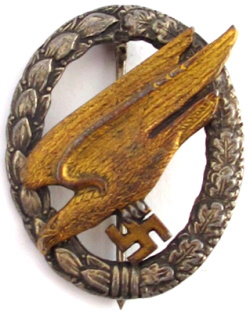
 The German Fallschirmjäger drop in the vicinity of Eupen resulted in total tactical failure. Scheduled for the early hours of December 16, bad weather forced postponement until 2400 hours that day. Inexperienced in the night drop the air force scattered the parachutists over a large area; some were dropped as far as Bonn, Düren, Aachen, Verviers and even almost in Liège. Only a few hundred met at the rendezvous (Crossroads Belle Croix) and they were ineffectual. The promised support failed to arrive, the men were almost rounded up by units of the US 1-A and the US 9-A and they had to rejoin friendly lines in Germany by foot. The psychological effect was great, however. Allied troops in large numbers were diverted to hunting reported parachutists, while one combat command of the 3-AD was held in the vicinity of Eupen in
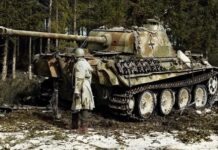
  anti-airborne defense when it was urgently needed in the fight against the armored elements used in the attack. By the evening of December 17, two gaps had been made through the American lines. The approach over the ridge north of the Schnee Eifel, nine miles in width was open and the 1.SS-PD (LSSAH) was moving through. The southern gap, in the 28-ID sector, was 10 to 12 miles wide and moved through it was moving three armored and two infantry divisions.
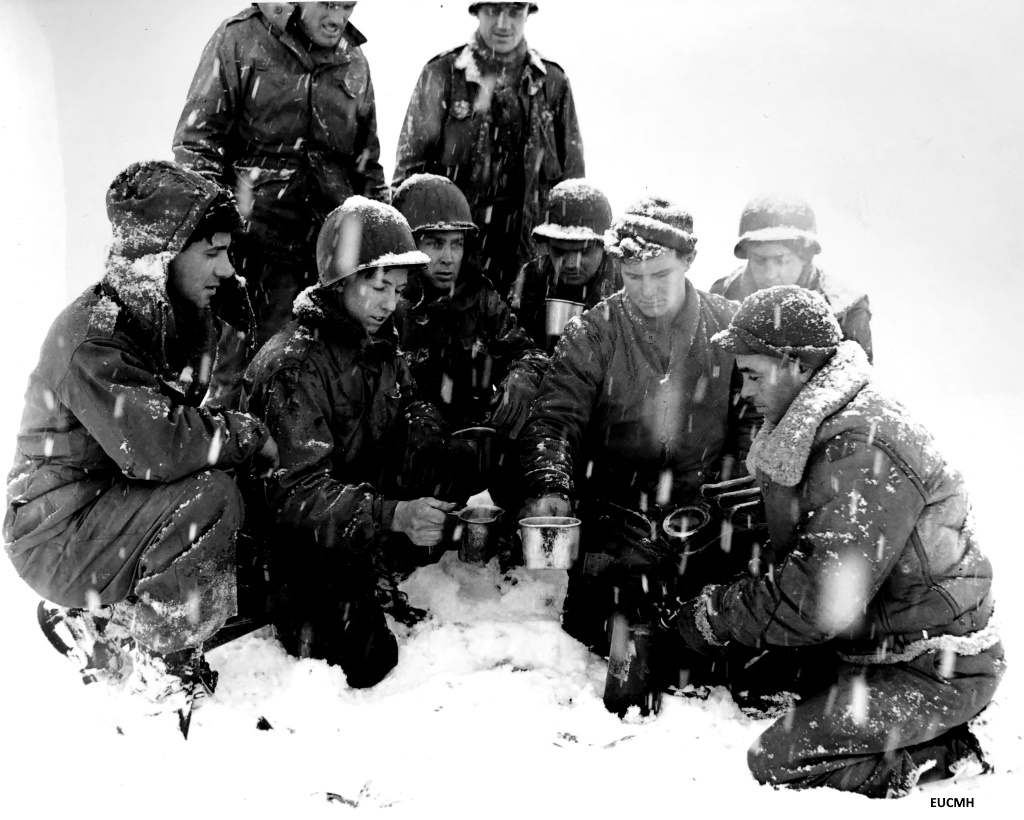

 The strength of the attack had become more apparent by midday on December 17. It was evident that a major problem in containment faced the Allied forces. The only theater reserve available to SHAEF were the two airborne divisions, the 82nd, and the 101st. In training areas near Reims, France, recuperating from Operation Market Garden in Holland in September, they were being prepared for a mission, Operation Varsity, in the projected Rhine crossing. Refitting was incomplete. Many of the officers and men were absent on leave or other duties. It was decided to commit them, however, and they were ordered to close into assembly areas in the vicinity of Bastogne, Belgium, where a good road net provided routes for movement to threatened spots as the necessity arose. The 82-A/B was dispatched first. En route to Bastogne its destination was changed to Werbomont since leading elements of the 1.SS-PD were moving westward along the Amblève River toward that town. The 101-A/B, dispatched in the late afternoon of December 18, proceeded to Bastogne.
 On December 18, the penetrations were extended. In the zone of the 28-ID, the Reserve Command of the 7-AD which had been committed in an attempt to stem the tide continued withdrawing toward Bastogne. The 110-IR, in the zone of the 28-ID, had been overrun. The 112-IR was withdrawing toward St Vith, as was the 424-IR (106-ID). The gap now extended from the vicinity of Monschau on the north to Echternach on the south with the exception of the 422-IR and the 423-IR (106-ID) which
  continued to hold out in their respective areas of the Schnee Eifel. The 1-ID, which began moving in to extend the 2-ID and the 99-ID line on the Elsenborn Ridge, on December 17, was in position and repulsed a heavy attack on December 18.
The 12.SS-PD continued its attack to open the gap into the ridge and clear the way for the II.SS-Panzer-Corps which was waiting in  an assembly area in the vicinity of Schleiden. The 1.SS-PD continued westward. Bypassing Malmedy the column continued on to Stavelot by way of Ligneuville. There, it forced a crossing over the Amblève River and continued westward to Trois Ponts.

Attempting to cross the Salm River there, the leading elements were stopped by a company of the 51st Engineers Combat Battalion, who blew the bridge. Lacking bridging equipment, the column then turned north and headed up the valley on the north side of the river. Finding another bridge to the west across the Amblève River, the column headed west again toward Werbomont. Here again, a company of engineers from the 291st Engineers Combat Battalion delayed his leading tanks and blew another bridge. Turning north again, the column was heavily bombed by a flight of P-47s and it halted south of Stoumont for the night.

 The 30th Infantry Division was assigned to the US 1-A on December 17. It began moving into position to extend the line west from Malmedy. The flight of P-47s had reported the location of the 1.SS-PD leading elements and in order to block their westward movement the 119-IR was dispatched in a circling movement to Werbomont and Stoumont. The line on the north now extended from Butgenbach through Malmedy to Stavelot. A reorganization of the US 1-A now
 placed the VII Corps facing south and southeast. The VII Corps’ boundary was shifted south to include Konzen and to exclude Eupen. The V Corps east boundary ran generally on a line from Malmedy to Verviers.
 Attacks continued on the north flank on December 19. The 12.SS-PD moved westward and attacked to the north toward Malmedy. This attack also failed. The Germans now began reinforcing the assaulting corps on the north flank. The 2.SS-PD Panzer Division was ordered south around St Vith which was still held by elements of the 9-AD, 7-AD, 106-ID and attached

 troops. The 9.SS-PD and 16.PDG was dispatched westward to join the 12.SS-PD on the assault on the north shoulder. The 3.PD reinforced the frontal attack units facing the Ridge in Elsenborn. The pattern of the attack now became clear. The commander of the German paratroop unit, Oberst von der Heydte, upon surrender had disclosed the plans and confirmed the fact that Antwerp was the objective. The continuing assaults on the north shoulder and flanks were further evidence that the impetus of the attack was to the north.

 Accordingly, SHAEF now acted. The US 3-A postponed its scheduled offensive and prepared to attack to the north in a general direction Bastogne – Cologne. The 11-AD newly arrived on the continent was ordered to the vicinity of Reims as a Theater reserve.
The 17th Airborne Division with several infantry divisions then in England was ordered immediately to the 
 continent. The US 6-AG was to halt its offensives and extend to the left to hold the southern half of US 3-A sector. The British 21-AG was to place its reserve corps, the British XXX Corps in the Brussels area to meet any thrust across the Meuse River.
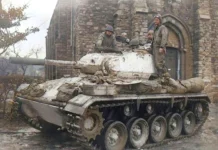
Meanwhile, the two German Infantry divisions the 18. and the 62., plus the Fuehrer Escort Brigade were dosing in on St Vith. The US 7-AD had gone into position north and east of the town to a point in the St Vith – Vielsalm highway near Petit Thier. An attack to relieve the two surrounded regiments of the 106-ID in the Schnee Eifel was halted by the westward pressure of the Germane. CCB 9-AD extended the line south. The 424-IR (106-ID-) and the 112-IR (28-ID) were being forced back toward St Vith. These two regiments, by December 19, extended the line south and west to form the U-shaped defense around the city.
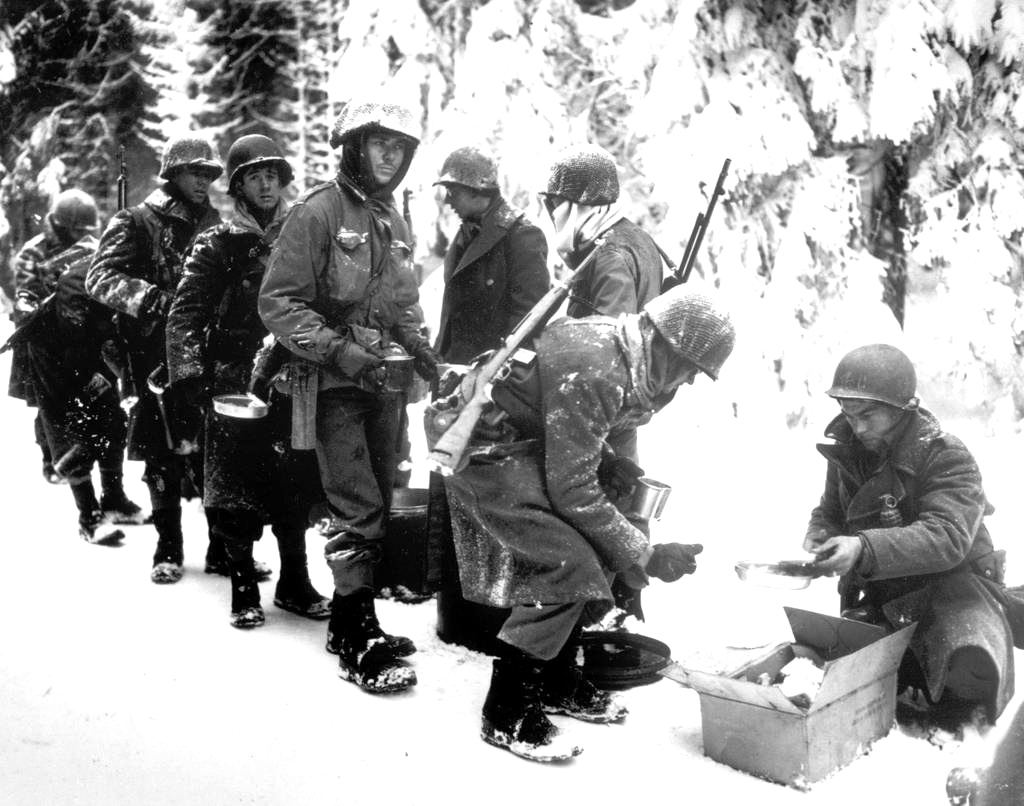
By December 19, CCR 9-AD had been forced back to Longvilly seven miles east of Bastogne. CCB 10-AD dispatched to Bastogne on December 17 had established roadblocks around the town. These two armored units blocked the German attacks giving the 101-A/B time to consolidate its positions. It had closed in to xb>Bastogne during December 18-19. Originally sent there to attack it was soon to be engulfed in the defense of the city. Farther south, a small detachment of engineers and other troops were still holding out in Wiltz. Elements of the 110-IR (28-ID) was still holding out in isolated areas, positions unknown. The south shoulder continued to hold. CCA 10-AD was counterattacking in conjunction with elements of the 4-ID.

The 82-A/B had closed into an assembly area in the vicinity of Werbomont during the night of 18-18 December. Going into positions in line due south of Werbomont it had moved forward to the Amblève – Salm Rivers, extending south to Vielsalm. In so doing their left flank along the Amblève, together with two battalions of 119-IR (30-ID) on the east and south, completed a ring around the leading elements of the 1.SS-PD. In the battle that followed the German tankers abandoned their vehicles and filtered back to the east and rejoined the assault units.
The attack to gain St Vith, the key to the routes leading west still continued. Manteuffel had hoped to occupy it on December 17. He had kept his panzer divisions moving west through the existing gap and kept his infantry assaulting the town. Other than forcing slight withdrawals in the U-shaped defense the attack had failed. He now reinforced his assault units. Previously, the Fuehrer Escort Brigade had been sent around to the north flank and arrived in position on December 20, facing the 7-AD on the north flank. On December 21, a coordinated attack was made on the town and the defenders were driven back a short distance west of St Vith. Losses were heavy and in the forced withdrawal many of the units had lost cohesion. A defense line was hastily established, however, and the Germans, while gaining lateral roads were still denied access to the routes to the west.
 Meanwhile, around 1330 on December 19, the VIII Corps passed to the control of the US 3-A, the boundary re-established on a line St Vith – Givet. Further changes were forthcoming. At 13S0, December 20, the entire US 1-A and US 9-A passed to the control of British 21-AG. The group boundary as laid down by SHAEF ran eastward from Givet to Prüm then bent northward to Cologne. The action was prompted by several influencing factors, the chief being that the US 1-A and the US 3-A were cut in two, a sixty-mile gap existing between them at the base of the penetration. Radio communications were uncertain due to the weather and battle conditions. The Germans were certain to cut the telephone cables. Further, the impetus of the attack was to the north. The US 9-A and the US 1-A as well as the British 2-A were all needed to provide adequate security for the vital objectives north of the Meuse River.

 A commander was needed to coordinate the three armies, and under the circumstances, Montgomery was the logical choice. This action, which caused a storm of protest is still being criticized today. However, the criticism seems in most instances rather be a defense of Gen Omar N. Bradley (US 12-AG). Bradley was in need of attacking forces and no defense. Bastogne was now surrounded and the Germans were assaulting the defenses of the 101-A/B. The city, an important rail, and highway center, was becoming more vital to the success of the attack. Though the city could be bypassed, and German Armor was moving around it to the west it was a considerable handicap.

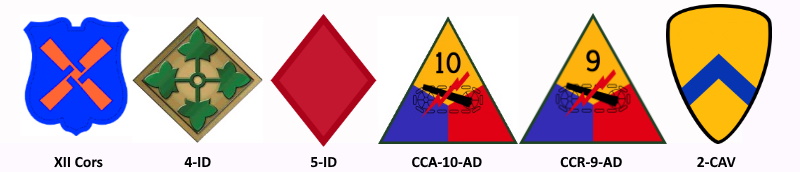
The US 3-A was now preparing to attack to the north from the vicinity of Luxembourg. The US III Corps, with the 80-ID, the 26-ID and the 4-AD were to attack northward astride the Arlon – Liège highway and relieve the 101-A/B and attached troops in Bastogne. The US XII Corps, with the 4-ID, the 5-ID plus CCA 10-AD and the Reserve Command 9-AD reinforced with the 2-CAV Group were to continue to hold the west bank of the Moselle River in its zone and be prepared to attaok to the north on army order.
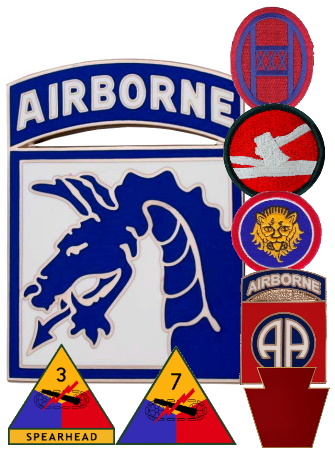
 Originally scheduled for December 21, it opened on December 22. The VIII Corps, now badly disorganized, with 101-A/B, remnants of the 28-ID, plus CCR-9-AD and CCB-10-AD was to oontinue the defense of the sector east of the Meuse River. 0n the northern shoulder of the Ardennes, the XVIII Airborne Corps had become operative on December 19, assuming control of the 30-ID, the 84-ID, the 106-ID, the 82-A/B, the 3-AD (less CCA), the 7-AD and the 112/28-ID. The Corps Zone now extended west from Malmedy through Stavelot, Stoumont thence south to the vicinity of Vielsalm, then west to the vicinity of Marche.
  The VII Corps was relieved of its zone north of the V Corps and on December 22, was assembling north of Marche, with the 2-AD and the 75-ID. Its mission was to counterattack and screen right to the Meuse River.
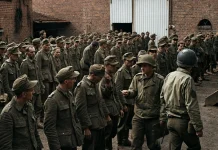
The 422/106-ID and 423/106-ID, without resupply in food and ammunition, unable to evacuate their casualties, their part of the ‘quiet front’ being located exactly between two of the main axes of the Germans penetration (Manderfeld – St Vith 6.Panzer-Army) and (Bliealf – Schoenberg – St Vith 5.Panzer-Army), consequently surrounded somewhere in the Schnee Eifel between Bliealf in Germany and Schoenberg in Belgium delivered a bloody but exceptional resistance causing tremendous casualties on the opposite side of their front. Finally, abandoned to their fate since the early stage of the counteroffensive on December 17, the men destroyed every combat means remaining and had no other choice than to surrender on December 20 after a half-hearted attempt to fight their way west to St Vith.