



The German Plans and Preparations
Behind the West Wall during the critical fall months of 1944, the German High Command also had its problems. Severely defeated in France during the preceding summer months they had, however, salvaged more than was then realized by the Allied High Command. Fighting cores of divisions and armies were in most instances retained. The fact that the German Command avoided a major battle after the Falaise Gap indicates a planned withdrawal. The 7.Panzer-Army, the 15.Panzer-Army and the 5.Panzer-Army by a series of covering actions succeeded in reaching the shelter of the West Wall, the 15.PA in the north facing the British, the 7.PA barring the approach to Cologne, and the 5.PA further south joining with the 1.Army and the 19.Army. True, the Allied pursuit had moved too fast to permit the German Armies to form on one of the many possible defense lines short of the West Wall. But the Allied supply lines, stretched almost to the breaking point slowed the pace of the advancing armies and provided the Germans much-needed time.
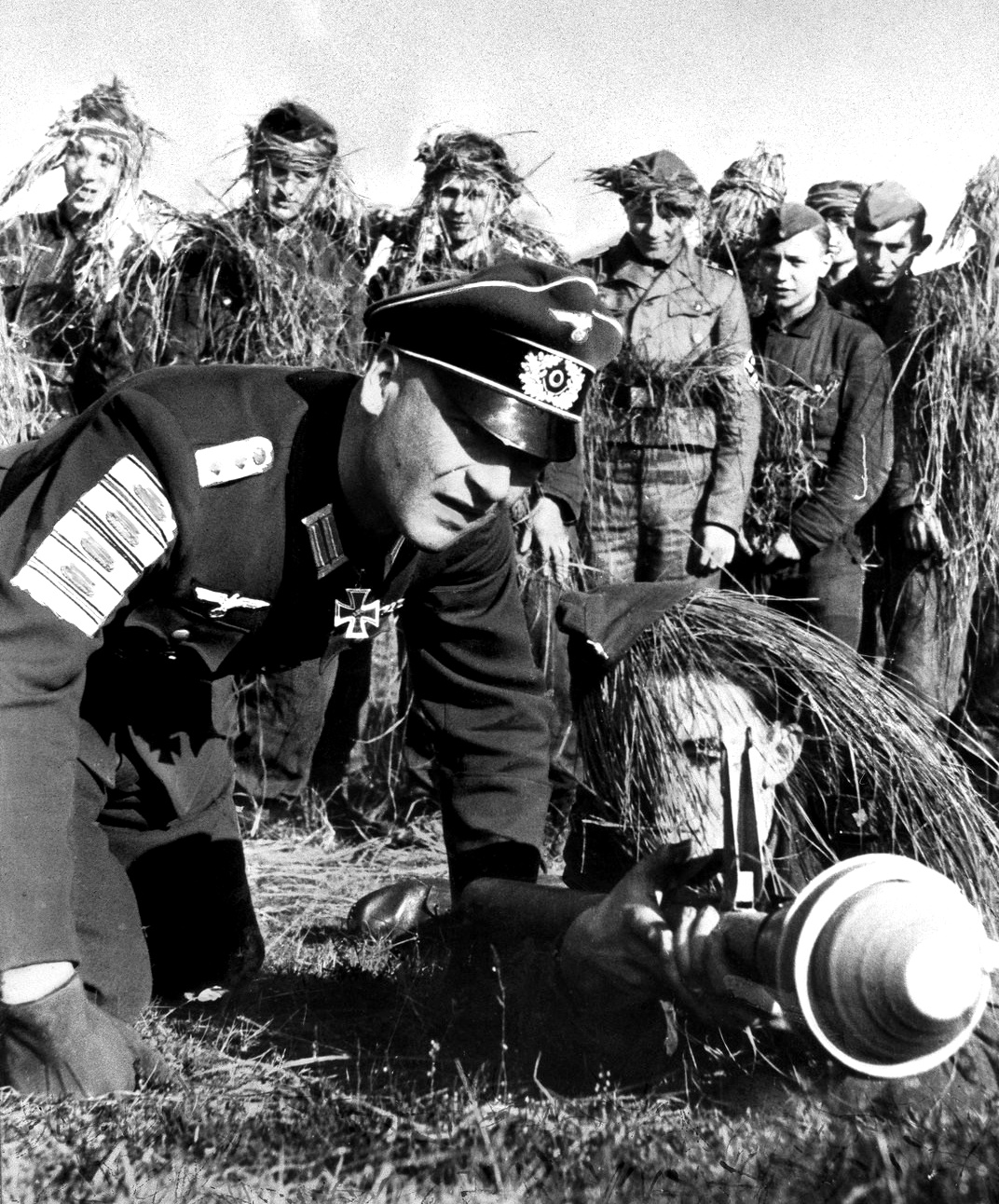
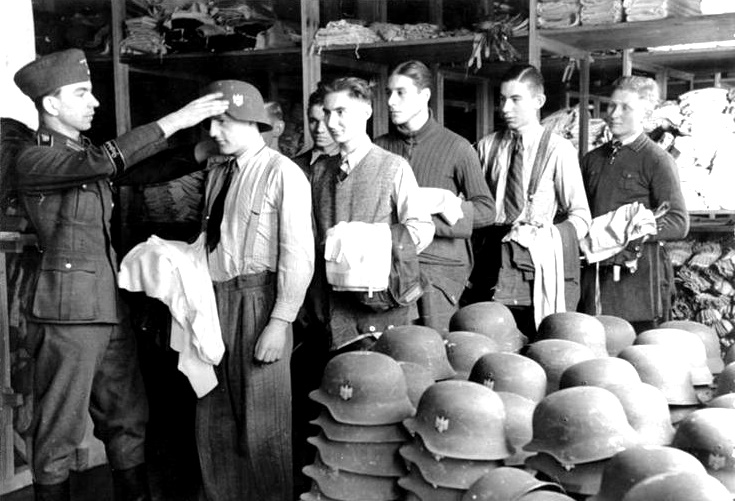
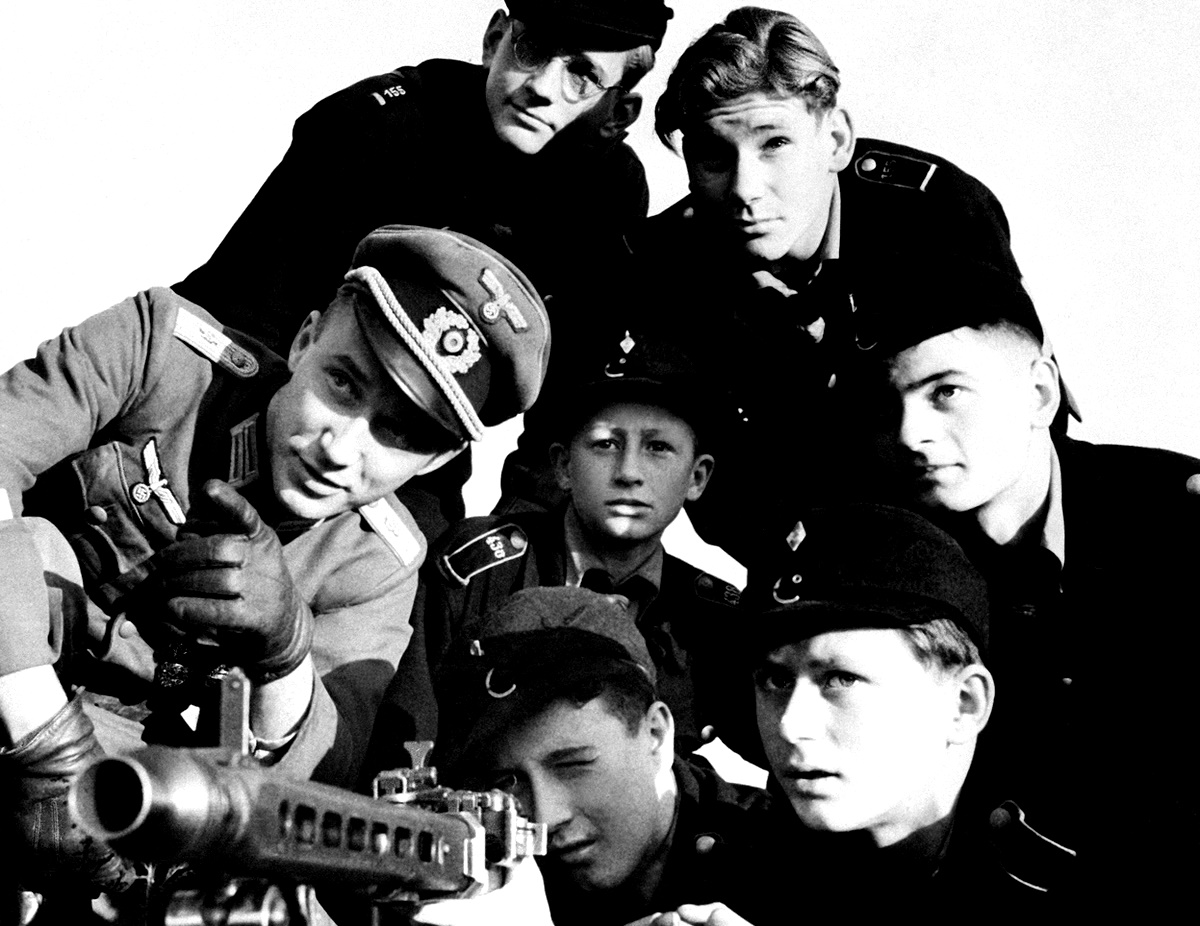
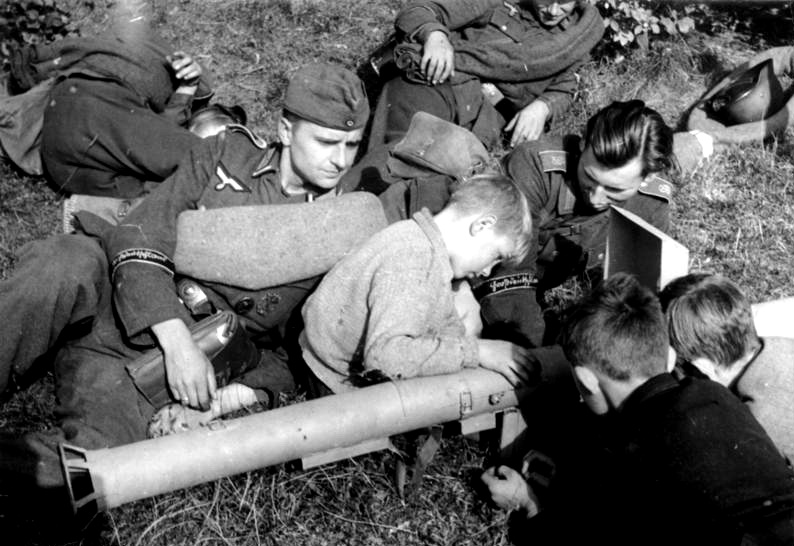
September and October were months of extreme activity in reorganization. Drastic measures were needed and drastic measures were taken. An intensive comb-out of German manpower produced an estimated 230.000 men for the defense of the West Wall. Of these 100.000 were used to form fresh divisions, the Volks Grenadiers, 50.000 were used as replacements in battle-depleted divisions, 20.000 were formed into GHQ Troops and 50.000 were members of fortress battalions with some previous training. Many were ‘ersatz’ infantrymen as Luftwaffe and Kriegsmarine personnel were given a few days of infantry training and assigned to combat units.
The fortress battalions, 70 in all, proved a valuable asset. Taken over by the Headquarters of divisions badly mauled in the fighting in France they formed the core of the West Wall defense during the critical period. Remnants of the divisions were then sent to the rear for reorganization and resupply. Fighting from the well-prepared positions they were able to ward off the Allied attacks, thus enabling the Germans to take their depleted Panzer Divisions from the line for reorganization and refitting.
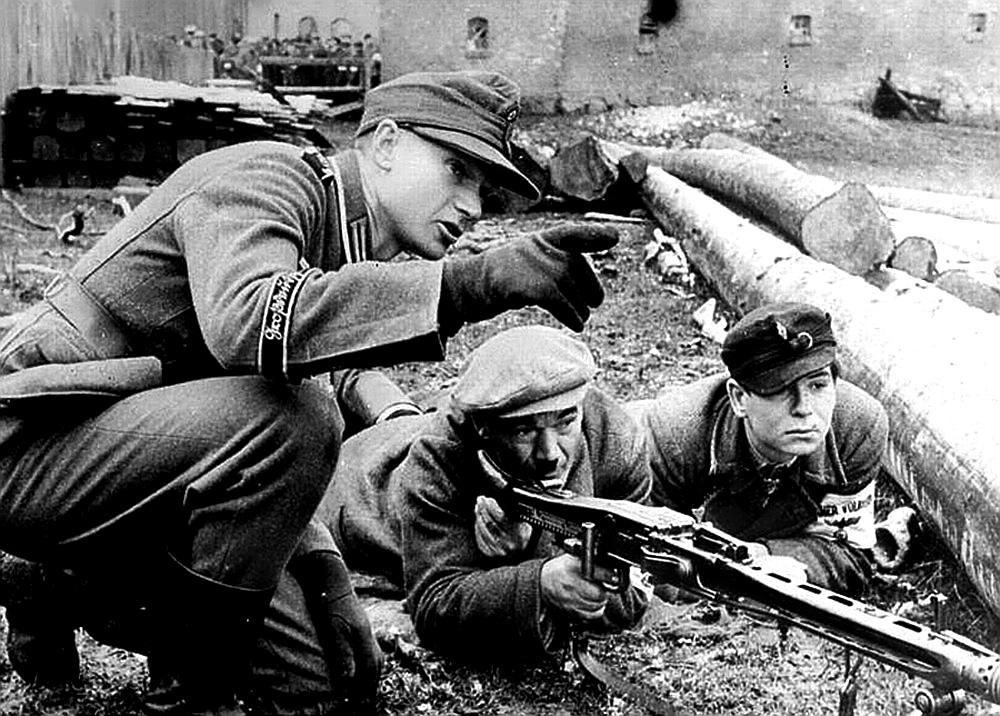
By proclamation, all able-bodied males from 15-60 years of age, in the area between the West Wall and the Rhine, were made available to the army to work on the fortifications. By the opening days of October, the order had been brought out of the chaos in the Rhineland. Faced at last with the defense of the sacred soil of their Homeland the German people had responded to Herr Hitler’s cry ‘Defend to the last man and the last round’. The problem of regaining the initiative lost with the Allied landings in Normandy was Herr Hitler’s greatest concern. Severely injured by the bomb in the attempt on his life on July 20, 1944, and confined to his bed he devoted his time primarily to the military situation. Obsessed with the idea of attack, Hitler in early September, informed FM Wilhelm Keitel, Chief of Wehrmacht High Command, and Gen Alfred Jodl, Chief of the Armed Forces Operation Staff that the initiative was to be regained.
Since the decision had been made to counterattack, the problem remained to select the area. Analyzing the situation on the various fronts on which they were engaged, they arrived at the conclusion that the Western Front offered the best opportunity for decisive results. The Allied supply problem had yet to be solved. Moreover, the Allies were still weak in manpower. Re-disposed along the West Wall after the narrow confines of the Normandy perimeter, the lines were thinly held. The Germans were well aware of this situation. Also, Hitler’s contempt for democracies led him to believe that their will to win was weak and that a severe defeat on the Western Front might possibly force them out of the war. It remained for Hitler himself to select the Ardennes Sector for the attack. Learning that only four US divisions defended the area he directed Jodl to submit a detailed plan at the earliest possible date. It was to be a thrust through the Ardennes across the Meuse thence to Antwerp. The port with its communication lines to the southeast toward Liège was to be seized, thereby throttling the British and the US divisions in the north.

In spite of the heavy Allied bombing raids, the Germans had miraculously been able to increase their production in tanks, artillery, and ammunition, chiefly by the expedient of moving their vital plants underground. Their greatest problem was fuel, but by reducing the allowances to other fronts a sufficient quantity was accumulated for the attack. They were weak in the air, and though the Luftwaffe was to concentrate all its available planes to support the attack it must be so timed that the massing of the troops immediately prior to the attack could be done in weather unfavorable to air reconnaissance. Also, the first few days of the attack should have the benefit of weather unfavorable to the Allied Air Force, thus denying them the advantage of their air superiority. The wettest fall and winter in years proved of immeasurable assistance to the Germans particularly in the north where the flooded valleys of the Roer, Waal, and Rhine rivers enabled them to defend with fewer men than would have otherwise been possible. This enabled them to withdraw divisions for reorganization and refitting, and also to give their Volksgrenadier Divisions battle indoctrination under favorable conditions.
The 6.Panzer-Army (SS-Oberstgruppenführer und Generaloberst der Waffen-SS Josef “Sepp” Dietrich) was organized with remnants of panzer divisions withdrawn from the line. In mid-November, it moved from its position deep in Germany to the plains in front of Cologne. There, it served a dual purpose, to counterattack should the Allies succeed in crossing the Roer River and further, to confuse Allied Intelligence as to the role for which it was primarily intended, commitment in the coming attack. The 6.Panzer-Army was composed of two Corps, the I.SS-Panzer-Korps (SS-Gruppenführer und Generalleutnant der Waffen-SS Hermann Priess) and the II.SS-Panzer-Korps (SS-Obergruppenführer und General der Waffen-SS Wilhelm Bittrich), with a total of 4 panzer divisions plus the 180 panzer brigade and elements of the 3.Panzer-Grenadier Division and 2 infantry divisions. Commanded by Sepp Dietrich, a fanatic loyal Nazi, a fact to which he owed his assignment, he lacked the training and experience to command an army.
The preparation of the 5.Panzer-Army (General der Panzertruppe Hasso von Manteuffel) for its part in the attack was more of a problem. Moved northward in mid-September from positions facing the US 3-A to the Aachen Area it participated in the defense of that city. Withdrawing prior to its surrender, it became a screening force covering the entire area in front of the Ruhr Industrial District. Here began the refitting process, but many of the divisions which were intended for inclusion in the force were committed elsewhere, first east of Aachen, then in Holland, and again in the south, west of the Saar Industrial Area. During the latter part of November, the 15.Army (General der Infanterie Gustav-Adolf von Zangen) moved south to relieve the 5.Panzer-Army which moved further south to Koblenz. Both armies now entered the final weeks of preparation.
Surprise is an essential element in a successful attack. The Germans took elaborate precautions to preserve secrecy. Originally given the code name of ‘Wacht Am Rhein’ in order to deceive Allied Intelligence into believing the projected attack was defensive in character should it become known, it was later changed to a code name more in character ‘Herbstnebel’ (Autumn Fog). During the early stages of planning only Headquarters Staff officers were aware of its true nature, Hitler’s long-standing mistrust of the high-ranking Army officers was increased by the attempt on his life by a clique that included members of the General Staff. Even Field Marshals Gerd von Rundstedt (Commander-in-Chief West) and Generalfeldmarschall Walter Model (Commander, Army Group B), respectively, were unaware of the projected plans until the latter part of October. As it became necessary that subordinate officers be informed they were forced to sign a pledge of secrecy under the penalty of being shot. Mention of the plans by normal means of communication was forbidden. Only officer couriers were to be trusted with necessary messages and plans. Even they could not fly west of the Rhine. Troop movements west of the Rhine in the build-up were forbidden except at night. During daylight hours all tanks, artillery, and bridging equipment were carefully hidden. The tentative date for the attack was set as November 25. Late in October, Rundstedt and Model were informed, given the plans of the operation, and ordered to study them thoroughly and submit their views and comments.
Though worked out in minute detail the plan was essentially simple. The 5.Panzer-Army and the 6.Panzer-Army were to make the thrust, the 6.Panzer-Army on the north advancing with its right flank generally following the line Elsenborn and Spa and to cross the Meuse River at Huy and other points between Huy and Liège, thence to Antwerp. The 5.Panzer-Army on the south was to advance with its left flank generally on the line Wiltz, Bastogne, St Hubert, Celles and Dinant, force crossings of the Meuse at Dinant and Namur and thence to Brussels and Louvain. On the north flank, General der Infanterie Otto Hitzfeld’s LXVII Corps (General der Panzertruppe Gustav-Adolf von Zangen – 15.Army) was to enter the area of penetration on the right flank of the 6.Panzer-Army then swings north to the northern slopes of the Elsenborn Ridge generally on the line Mützenich, Verviers, Spa and Liège and block off the area of the heavy concentration of the US 1-Army’s divisions. On the south, the 7.Army (Brandenberger) was to perform the same function for the 5.Panzer-Army, forming on a line extending generally from Echternach, to Neufchâteau to Givet on the Meuse, guarding against Patton’s divisions further south. Infiltration parties were to seize Meuse River bridges in the vicinity of Huy.
A parachute battalion was scheduled to be dropped near Eupen, within the Jalhay–Sourdrodt–Solwaster sector to block the Eupen Verviers Malmedy main highway south to Monschau to assist the blocking force. Once the Meuse is crossed the 15.Army was to launch an attack toward Maastricht from the northeast. Diversionary attacks were planned toward Antwerp from the north and against the US 7-Army and French 1-Army in the south.
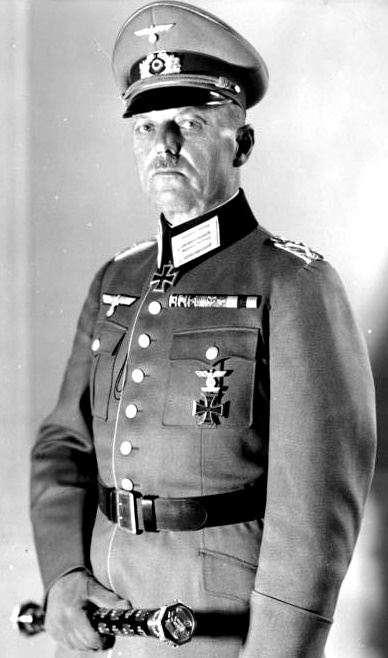
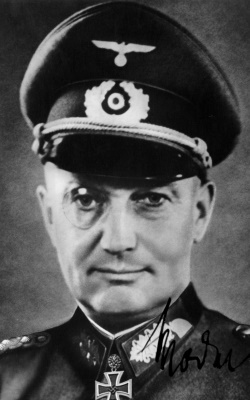 After a study of the plans Rundstedt and Model suggested that the attack be a double envelopment, the southern thrust to strike in the vicinity of Monschau and swing northward east of Liège. The northern pincer would attack north and east of Maastricht and drive up the Meuse River. The two pincers would join and destroy the US 1-Army troops concentrated in the area for the drive on Cologne. Should this not be approved, they then recommended that the attack be planned for the 15.Army toward Maastricht be canceled and the troops to be committed there diverted to strengthen the Ardennes thrust.
Adolf Hitler, Führer and Supreme Commander of the German Armed Forces, supported by Generalfeldmarschall Wilhelm Keitel, Chief of the OKW, and Generaloberst Alfred Jodl, Chief of Operations at OKW, refused to consider the changes recommended. The possible reward was much less than in the original proposal. That the objectives of the Ardennes thrust might be beyond the capabilities of the resources available did not occur to Adolf Hitler, a former Gefreiter (corporal) of the 16th Bavarian Reserve Infantry Regiment, who had served as a dispatch runner on the Western Front during the First World War. The Ardennes attack would be carried out as planned, with Antwerp as the objective. Nothing short of that would satisfy Herr Hitler. Rundstedt, apparently feeling that the plan could never succeed, divorced himself from further efforts other than supply administration relating to the attack. Model, however, whose command, Army Group B would bear the responsibility entered enthusiastically into the planning. A well-trained and competent field commander, he was also a loyal Hitler supporter. General der Panzertruppe von Manteuffel, whose 5.PA was to make the southern thrust not so eager. Realizing that unless extreme good fortune was to favor the attack Antwerp was hopelessly out of reach, he accordingly made plans which were to take him only to the Meuse River. He would make further plans if the necessity arose. A competent field commander and a master of armored tactics his advance elements were to reach a point four miles from the Meuse where the river was visible in the distance. One can but speculate on what success might have been achieved with the resources provided for the northern thrust had Manteuffel’s competence been present.
Accordingly, 28 divisions were tentatively allotted as follows:
– 1. SS-Panzer-Division ‘Leibstandarte SS Adolf Hitler’, SS-Brigadeführer & Gen-major der Waffen-SS Wilhelm Mohnke
– 12. SS-Panzer-Division ‘Hitlerjugend’ SS-Standartenführer Hugo Kraas
– 3. Fallschirmjäger-Division, Generalmajor Walter Wadehn
– 5. Fallschirmjäger-Division, Generalleutnant Ludwig Heilmann
– 12. Volksgrenadier-Division, Generalmajor Gerhard Engel
– 277. Volksgrenadier-Division, Generalmajor Volkmar Hopf
– 326. Volksgrenadier-Division, Oberst Erich Diestel
– 2. Panzer-Division, Oberst Meinrad von Lauchert
– 9. SS-Panzer-Division, ‘Hohenstaufen’ SS-Obersturmbannführer Sylvester Stadler
– 116. Panzer-Division ‘Windhund’, Generalmajor Siegfried von Waldenburg
– 560. Volksgrenadier-Division, Generalmajor Rudolf Bader
– 18. Volksgrenadier-Division, Generalmajor Günther Hoffmann-Schönborn
– 62. Volksgrenadier-Division, Generalmajor Friedrich Kittel
– 3. Panzergrenadier-Division, Generalmajor Walter Denkert
– 15. Panzergrenadier-Division, Generalmajor Eberhard Rodt
– 352. Volksgrenadier-Division, Generalmajor Erich Schmidt
– 9. Volksgrenadier-Division, Oberst Werner Kolb
– 79. Volksgrenadier-Division, Generalmajor Walter Puchtler
– 212. Volksgrenadier-Division, Generalmajor Franz Sensfuß
– 276. Volksgrenadier-Division, Generalmajor Kurt Möhring
– 340. Volksgrenadier-Division, Generalmajor Werner Troschke
– 167. Volksgrenadier-Division, Oberst Gerhard Lindner
– 246. Volksgrenadier-Division, Generalmajor Walter Melzer
– 272. Volksgrenadier-Division, Generalmajor Eugen König
– 344. Volksgrenadier-Division, Generalmajor Erwin Jolasse
– 353. Volksgrenadier-Division, Generalmajor Erich Müller
– 9. Panzer-Division, Generalmajor Harald von Elverfeldt
– Panzer-Lehr-Division, Generalmajor Fritz Bayerlein
The 6. Panzer-Armee, tasked with the main effort, was to receive the most substantial allocation. Four SS Panzer divisions, additional armored elements equivalent to a fifth division, and two infantry divisions were subordinated to the 6. Panzer-Armee for the opening attack, as follows:
– 1. SS-Panzer-Division ‘Leibstandarte SS Adolf Hitler’, SS-Brigadeführer & Gen-major der Waffen-SS Wilhelm Mohnke
– 12. SS-Panzer-Division ‘Hitlerjugend’, SS-Standartenführer Hugo Kraas
– 2. SS-Panzer-Division ‘Das Reich’, SS-Obersturmbannführer Christian Tychsen
– 9. SS-Panzer-Division ‘Hohenstaufen’, SS-Obersturmbannführer Sylvester Stadler
– Schwere SS-Panzer-Abteilung 501, SS-Sturmbannführer Otto Skorzeny
– 12. Volksgrenadier-Division, Generalmajor Gerhard Engel
– 277. Volksgrenadier-Division, Generalmajor Volkmar Hopf
Manteuffel’s 5. Panzer-Armee did not fare as well. Equipped at only 60 to 80 percent and generally understrength, his army initially comprised three Panzer divisions and three Volksgrenadier divisions, as follows:
– 2. Panzer-Division, Oberst Meinrad von Lauchert
– 116. Panzer-Division ‘Windhund’, Generalmajor Siegfried von Waldenburg
– Panzer-Lehr-Division, Generalmajor Fritz Bayerlein
– 18. Volksgrenadier-Division, Generalmajor Günther Hoffmann-Schönborn
– 62. Volksgrenadier-Division, Generalmajor Friedrich Kittel
– 560. Volksgrenadier-Division, Generalmajor Rudolf Bader
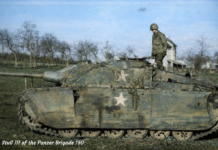
About 60 to 80% equipped, his divisions were also understrength. Initially, his army was composed of three panzer divisions and three Volks Grenadier Divisions. Attached to the 6. Panzer-Armee under SS-Oberstgruppenführer Josef Dietrich was Panzer-Brigade 150, a special formation commanded by SS-Obersturmbannführer Otto Skorzeny. Equipped with captured American uniforms, weapons, and vehicles, its mission was to infiltrate Allied lines after the capture of St Vith and advance rapidly toward the Meuse River, disrupting communications, seizing supply installations, and ultimately capturing key bridges. Operating under the codename Operation Greif, the unit failed to achieve any significant tactical objective, but its activities generated considerable confusion and psychological disruption among Allied forces.
Hitler’s Generals were not yet ready on the tentative date of November 25. Fighting in the Roer River area had made it impossible to withdraw some of the earmarked divisions in time for refitting. Hitler reluctantly consented to postponement to December 10. When that date arrived he again agreed to another postponement to December 16, since weather forecasts predicted that the weather conditions would be more favorable on that date. Branderberger’s 7.Army was already in position holding that part of the line but Manteuffel’s 5.Panzer-Army and Dietrich 6.Panzer-Army began closing into their assembly areas in the wooded terrain behind the West Wall. Extreme precautions were taken to preserve secrecy and, finally, on the evening of December 15, they moved to their final assembly areas from which they would jump off the next morning.
Facing the West Wall the American troops were blissfully unaware of the impending blow. The Army Intelligence had succeeded in gathering sufficient evidence to support the assumption of an impending attack. The buildup of the 6.Panzer-Army had been reported and the movement of the 5.Panzer-Army to Koblenz opposite the Ardennes was known as the southward shift of the 15.Army. Captured Germans reported that an attack was planned. Allied air reconnaissance reported a troop buildup in the Koblenz area in November. A German woman reported to US VIII Corps on December 14, the presence of large quantities of bridging equipment in the same area, a sure indication of offensive plans. While possessing sufficient information, the interpretation of its true meaning was in error. The use of the code name ‘Wacht Am Rhein’ led the German Army personnel to believe that the plans were defensive in character and this belief was transmitted to the Allied Intelligence officers by the captured German soldiers. In any event, while they realized the possibility of an attack they believed it would come in the Aachen Sector, seeking at most to recapture the city as a Christmas gift to ‘Der Fuehrer’. The area in which the attack was made, and its enormity came as a complete surprise to the Allied High Command.