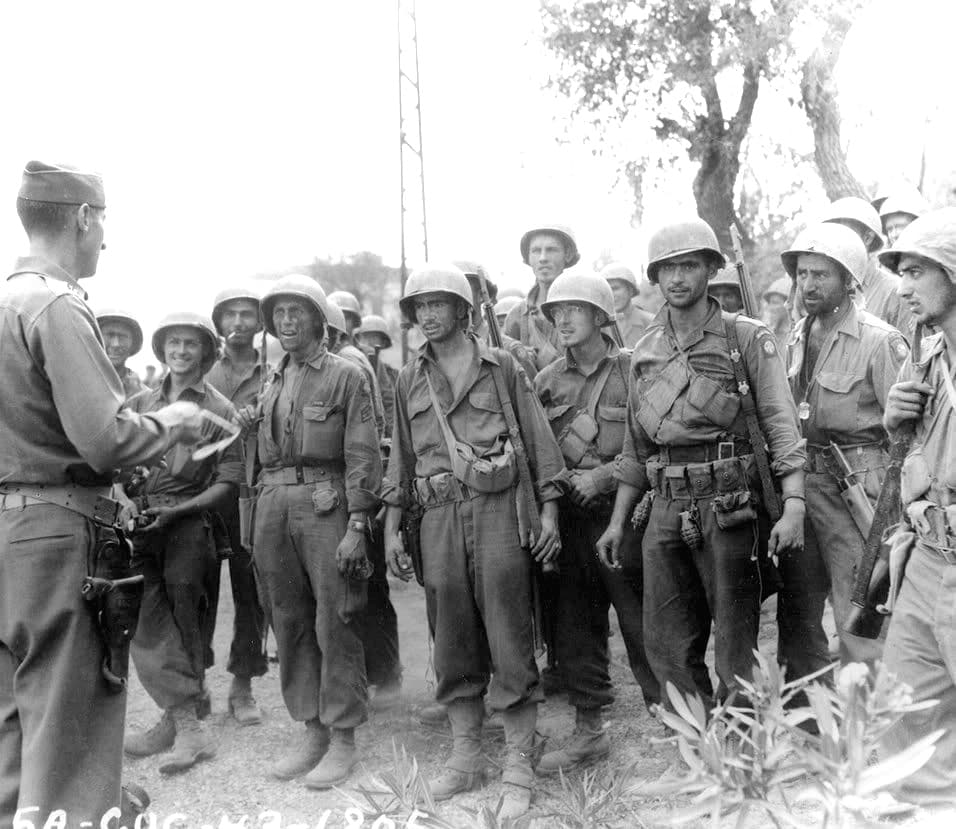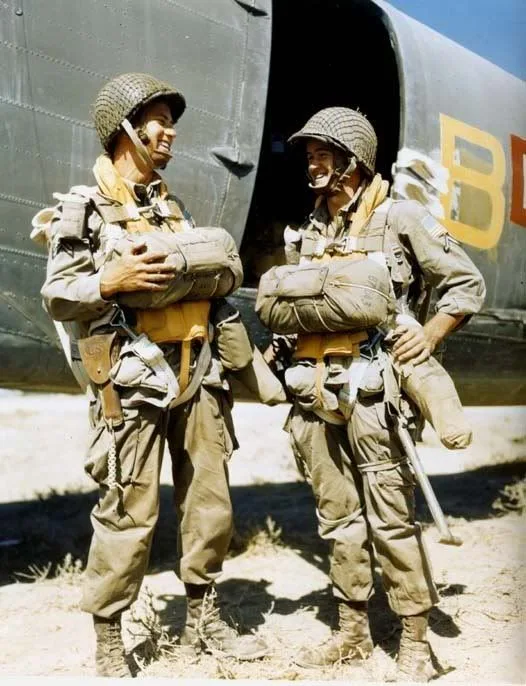


 Lt M.C. Shelly, HQs Co 2/504, was standing in the door of his plane when it crashed. He was thrown off the plane and all other occupants were killed. One of the planes got lost on its return flight. The plane, of which no remains have been found, carried as an official observer Gen Charles L. Keerans, ADC 82nd A/B. In the returning planes were four dead and six wounded parachutists, and eight full loads who had not been given the opportunity to jump. These included 10 officers, 2 warrant officers, and 95 EM.
 The troopers were scattered from Noto to Livata, a distance of over 60 miles. After landing the paratroops that landed in the 45-ID Area were fired upon by ground troops of that unit. Upon making an unpleasant landing against a stone trail in a vineyard. Chaplain Delbert A. Kuehl was immediately fired upon by members of the 45-ID. The Chaplain still stunned from the landing, gave the countersign, and attempted to identify himself as an American. But, the soldier would not cease firing. The Chaplain, still stunned and not too happy about the existing situation, for the first time in his life uttered a curse word. While several of the men with Chaplain Kuehl established a base of fire by shooting into the air, he maneuvered around the left, through a vineyard, then closed in from the rear, tapped one of the frightened soldiers on the back, had the others cease-fire and directed one of them to guide him to the Company CP, where the Company Commander of that unit was immediately oriented.
 Capt Charles M. Conover (1-ID), had this statement to make, on the night of July 11/12 1943, while on duty at the 1-ID HQs located approximately 600 yards inland from the beach and two miles east of the city of Gela, the Division CoS, Col Stan B. Macon, informed me that a friendly airborne drop will take place in approximately 30 minutes. Col Macon instructed me to personally tell all installations in the immediate area of that fact and to hold fire on any ships which may come over. In an approximately one-half hour, I watched the Naval Units fire on aircraft coming in low cover over the sea. A great many planes flew directly overhead, and I noticed that they had their wing lights on as well as an amber light near the nose of the ship. For the most part, installations in my immediate area held their fire, however, to the east of our position along the beach, ground elements took up the fire from the Naval Units. I should add that approximately 30 minutes before these airborne troops landed, the enemy had been over the beach installations dropping flares and a few AP and heavier type bombs. The men were, therefore, all alerted and manning their weapons. The next day found many paratroopers all over the area – reorganizing – some of them fighting with our own infantrymen. Had the Naval and ground elements been informed of this Airborne operation beforehand, many lives and planes would have been saved.

Capt Edward H. Solomon, 18/1-ID, gave the following account of how it looked from the Gela beach, during the afternoon of July 11, 1943, the 18-IR, a part of the force that landed on the Gela beach, was notified that American paratroopers of the 82-A/B, would be landed within our lines at 2300 this evening. At approximately 2250 the same day, the Gela Beach was bombed by 3 or 4 enemy bombers. The enemy’s effort was met by a fairly intense display of AAA fire, by the planes were gone within a minute or two. A few minutes later, at about 2300, we could hear the roar of planes coming toward us from the direction of the sea. The navigation lights could be seen shortly thereafter. We knew they were troop carrier planes with their loads of American paratroopers. At this time our CP was in an olive grove approximately 1000 yards from the beach. As the planes arrived over the scores of ships anchored offshore, they were met by a steady stream of fire from the ships’ AAA guns. Some of the beach Ack-Ack guns soon joined in adding to the hail of fire. The low-flying transports had to plow through to reach their drop zone. Needless to say, most of them never made it. We viewed this weird fratricidal disaster with a feeling of helpless frustration. The heart-rendering scene which was being unfolded before our eyes were over in a matter of minutes. But the damage had been done. It was irrevocable. A paratrooper, one of the more fortunate ones, landed in our immediate area. We reached him just as he was rolling up his chute. His chagrin at the latest turn of events was aptly expressed with liberal usage of expletives that have no place in this monograph. His opinion of his Brothers-in-arms was not complimentary, to say the least. His point was well taken. Fired upon by our own Navy and shore troops, in one of the greatest tragedies of World War II, the men of the 504-PIR were scattered like chaff in the wind over the length of breadth of Sicily. By morning only 400 of the regiment’s 1600 men (excluding the 3/504) had reached the regimental area.
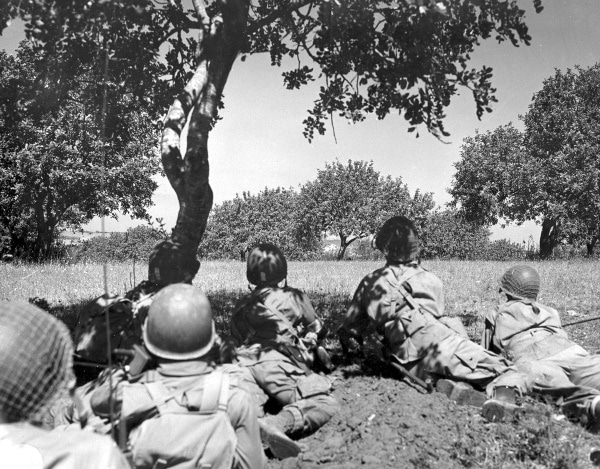 Guerrilla Warfare
Other planeloads of the 504-PIR men dropped in isolated groups on all parts of the island, and although unable to join the regiment, carried out demolitions, outlines of communication, established inland roadblocks, ambushed German and Italian motorized columns, and caused confusion over the such extensive area behind the enemy lines that initial German radio reports estimated the number of American paratroopers dropped to be over ten times the number actually participating. Roadblocks were alerted to watch for German Fallschirmjäger (Paratroopers) and brisk fights started between US Airborne and ground troops. Even the 1-ID in whose area the drop was supposed to take place, carried the 504-PIR as an identified German Parachute Regiment in its G-2 Report.
3 miles southeast of Niscemi, a group of between 95 and 100 troopers, under Lt George J. Watts, and Lt Willie J. Ferril, Item-504, ambushed a force of 350 Germans, from the Herman Goering Division, retreating up the road. These paratroopers organized a strong point on a hill around a large Château, later identified as Castle Nocera. They had already shot up a German patrol, and one small group had demolished an Italian patrol, killing 14. Eleven of these Italians were killed by two privates, Shelby R. Hord, and Thomas E. Lane. The Germans made repeated attempts to dislodge them, and failing to do so, tried to ignore them and bypass Castle Nocera, which overlooked the main Niscemi-Gela Road. The troopers made several sorties on the German troops moving south toward Gela. Finally, the German movement changed and started back northward.
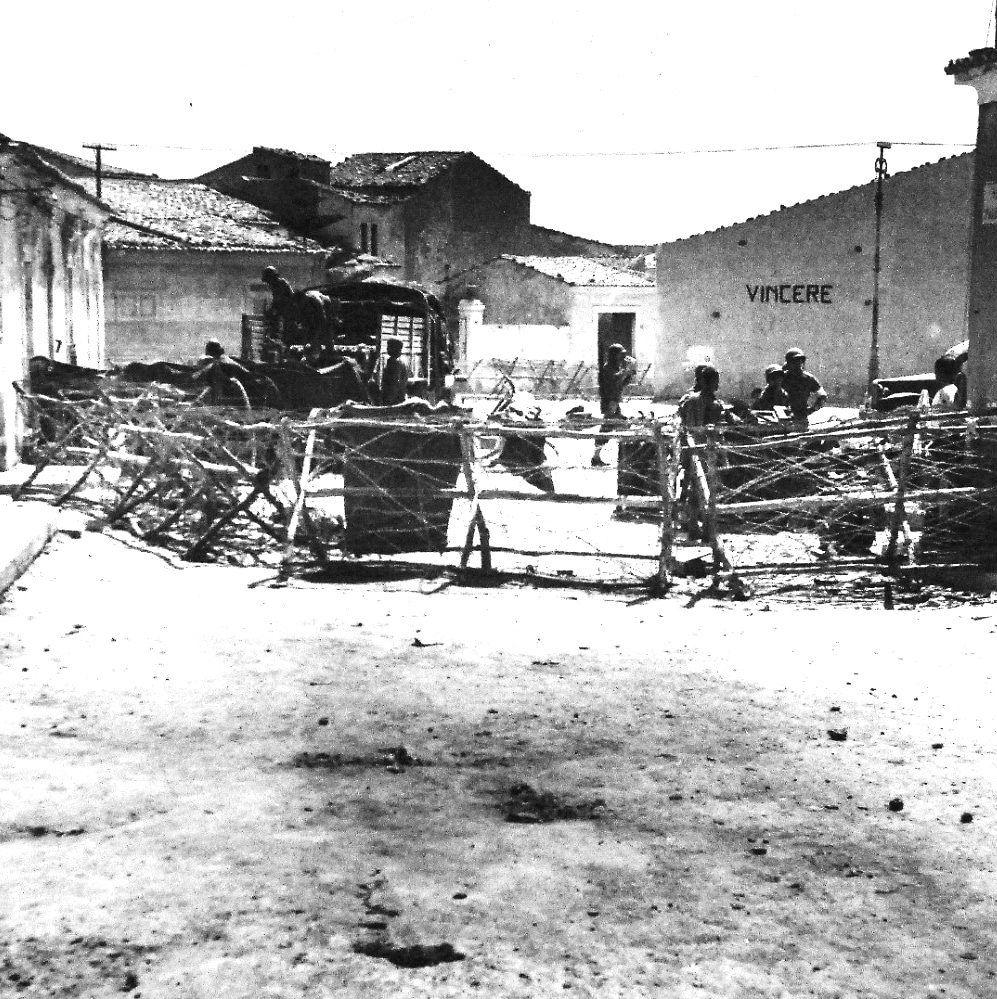
On the following day, this force began to increase. At noon an enemy column was observed coming up the road from the south, with the Germans were several American prisoners. Lt Ferril withheld fire until the Germans were almost opposite his position. Then the Germans suddenly halted for a ten-minute break. The Troopers waited until the Germans started to get up and put on their packs and then fired on them with devastating effect. The battle lasted all afternoon. It was joined by two enemy tanks that shelled the Americans from the far-off Mils. Late in the afternoon, a German lieutenant came up the hill with a white flag to arrange a surrender, but when he saw the Americans were parachutists he refused to surrender and went down the hill again. Then the battle was resumed and lasted until dusk, when the Germans withdrew, leaving 50 dead. The cost to the Americans was 5 killed and 15 wounded. These troopers held their position continuously, inflicting heavy losses on the enemy until contacted and relieved by elements of the 16/1-ID. Lts Watts and Ferrell, both gallant young paratroopers were later killed. Watts was killed on Hill 1205, near Venafro, Italy, south of Cassino, and Ferrel was killed near the Mussolini Canal, at the Anzio Beachhead.
Approximately 2 miles northwest of Biscani, Lt Peter J. Baton, HQs 3/504 and Mortar Platoon Leader, took charge of 3 planeloads that landed intact. He rounded up all the equipment and men he could find and proceeded west toward Niscemi. At 1200, July 10, scouts encountered 2 Italian cars towing 47-MM AT guns. They killed the occupants and took the guns. With this added equipment, positions were prepared and manned, and the roads to Biscari were covered and mined. At about 1230, a column of Italian motorized Infantry estimated to be a battalion was moving in from the direction of Niscemi with an 11-ton tankette in the lead. Sgt Suggs, HQs 3/504, and his men destroyed the tank with the captured 47-MM AT guns and so disorganized the column with this fire, supported by his own 81-MM mortars, that the enemy retreated in confusion. The following day, Lt Eaton’s group contacted a battalion of 180-IR and continued to fight with this force till the following day when he learned the location of the Battalion CP and joined it in the vicinity of Gela.

At about 0200, July 10, Maj William H. Beal, 3/504 Executive Officer, and Capt William W. Kitchen landed beside an Italian garrison. The enemy having knowledge of the presence of paratroopers was combing the area in the dark. About 200 yards away, Maj Beal heard machine gun and intermittent carbine fire, he knew then other paratroopers were in the area. At about 0730, an advance patrol of Canadian troopers came up and gave their positions to Maj Beal. He asked them to assist him in attacking the Italian garrison but was unable to secure it since they had another mission of establishing and protecting beachheads in another zone. He then worked his way back to the beach; where he got assistance; returned, captured the garrison, and released six paratroopers which were imprisoned by the Italians. Maj Beal continued his search for sore men, and with what he rounded up, went back to the beach, where they remained all night.
On the morning of July 11, Maj Beal went out to the 1-ID HQs afoot to arrange for transportation in order to enable him to rejoin his unit. The next day, July 12, Maj Beal, Capt Kitchen, and 13 enlisted men left by RAP crash boat to rejoin their unit and stopped en route at the coast towns to pick up any paratroopers that still may be there. Landed at Scoglitti on July 13, and reported to the 505-PIR CP, with Capt Kitchen, one other officer, and 48 enlisted men from various organizations. At Vittoria, Maj Beal was told that the Battalion CO had been captured and he was in command. He proceeded to organize the remainder of the battalion preparatory to continuing operations. When the reorganization was effected, the total strength of the battalion was 4 officers and 90 enlisted men. The battalion then moved out to join the 504-PIR. Maj Beal was later killed at Chiunzi Pass, between Maiori and the Valley of Naples, Italy.
Reorganization
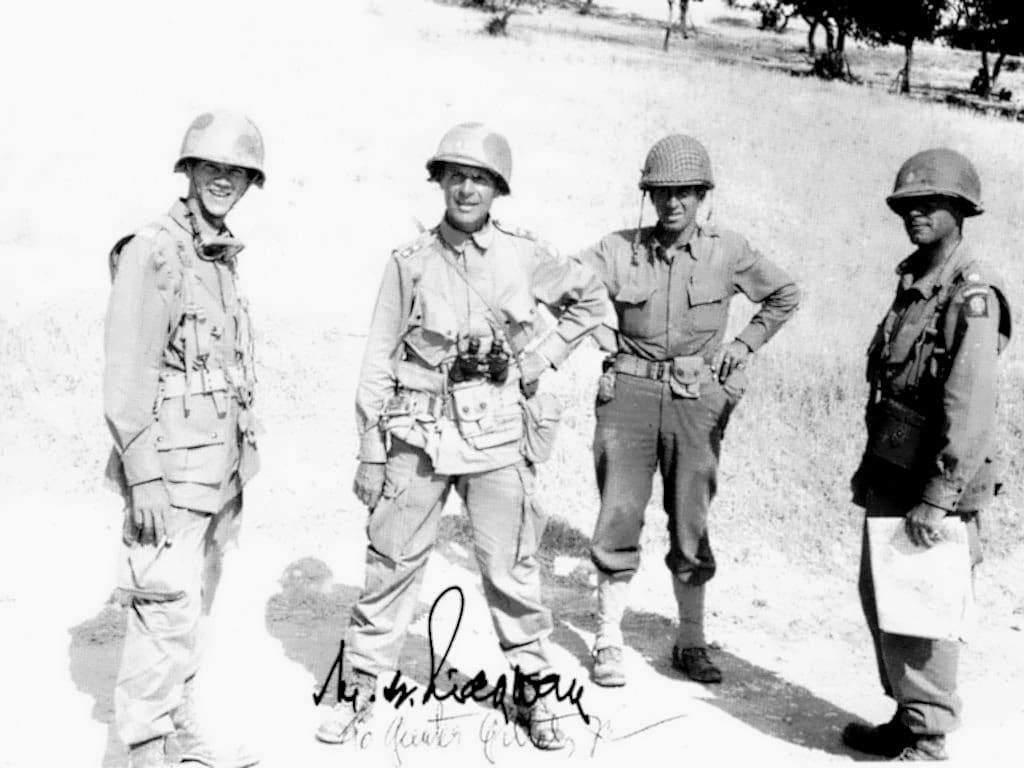
The CG of the 82-A/B, Gen Matthew B. Ridgway, and his special command party disembarked from Monrovia and set up a Division CP about 3 miles southeast of Gela and one mile from the coast. As the reassembly progressed, preparations for action were being made. On July 15, the 3/504 rejoined the 504-PRCT. The 505-PRCT assembled in this area also, thus forming the 82-A/B. Upon completion of the assembly, the 504-PRCT had one manual drama 75-MM Pack Howitzer for artillery support. At noon on July 15, a directive was received from the 7-A, ordering the 82-A/B to assemble in the Palma di Montechiaro area, to relieve elements of the 3-ID in that area by dark, July 19 and to be prepared to advance west. The projected zone of action of the division was a coastal strip including Highway #115 and extending 5-10 miles inland, until, in the vicinity of the Verdura River, west of Ribera, the right boundary, shared with the 3-ID, turned north to Palermo. The left boundary was the sea. The movement west from the assembly area near Gela began at 0600 on July 17, to the new area west of Palma. On July 17, at 1100, Provisional Corps directed immediate relief of the 3-ID in the 82 A/B zone. On the afternoon of July 18, the 504-PRCT moved to an area near Realmonte, from which it could undertake an advance the next day.
The Campaign
The Provisional Corps Field Order #1, issued at 1500, July 13, directed the Division to advance by 0800 on July 19, from the Realmonte Line, and the Division Field Order #2 of the same day, directed the 504-PRCT to relieve Combat Team #59, by 0800 on July 19, secure crossings over the Canne River by daylight and continue westward. Battery A and B of the 83rd Chemical Battalion and Battery A of the 82nd Armored Field Artillery Battalion were attached to the 504-PRCT for this mission. By noon, July 18, some elements of the Combat Team made an envelopment to the far side of Realmonte even before formal orders were issued. The Combat Team moved out into the attack, spearheading the coastal drive of the 82-A/B. With Italian light tanks, motorcycles, donkeys, bicycles, trucks, and even wheelbarrows for transportation the regiment pressed forward; a cooky, spirited bunch of mechanized paratroopers heading into battle. Before dark, the CT secured the Canne Rive bridges and the high ground to the west. At 0300, troops of the 2/504 were in Montallegro at 0900, at the Platani River; at 1015, at the Maggazolo River and at 1200, had occupied Ribera. Upon continuing the attack, the point of the 2/504, came under small arms fire a few minutes west of Ribera, but without being caused any delay by casualties, except on three different occasions from strafing by M-109s. Resistance, for the most part, was light, the Germans had withdrawn to the north and east, leaving behind garrisons of Italian soldiers who would fire a few shots, and having saved face (and other portions of their respective anatomies) would raise the white flag of surrender. Before 2100, they had reached and were stopped by the Corps phase line halfway between Ribera and Sciacca.
At 0430, July 20, the Combat Team was directed to proceed with the attack by 0600. The attack began on schedule, and leading elements entered Sciacca at 0925, but the preparation of a difficult bypass around a demolished bridge on the western outskirts of Sciacca and the removal of mines in that vicinity so delayed the main body that it did not pass through the city until about noon. There were many formidable pillboxes, the same of which, were three stories high with basements. There were one or two on every hill and in places where they could command the roads, all of them were expertly camouflaged and surrounded by double apron wire. Tank traps approximately 15′ x 8′ x 10′ with 12″ spikes in the bottom were dug across the road. They were camouflaged with cross pieces placed over the tops of the pits, Callahan matting or burlap placed on the crosspieces and strewn with dirt. The Italians apparently learned this trick from the Natives in the Ethiopian Campaign. No vehicles to my knowledge have been caught by these ingenious traps. The 2/504, then leading, was turned north on the San Margherita Road with Tumminnello as the night’s objective, and Combat Team 2/504 continued west on Highway #15 toward Menfi, which was entered by 1800. By nightfall the 2/504 reached a point about 8 miles north of , Sciacca, , both sides were somewhat delayed during the afternoon by minefields, and the 1/504, leading from Sciacca to Menfi, was fired on briefly by a battery of 75-MM guns, which were quickly captured.
The advance during the day was about 20 miles. The number of prisoners taken was approximately 1000 and our own casualties, 2. North of Sciacca an abandoned German bivouac area and AAA position was discovered as well as a large Italian QM dump. The 2/504 which had stopped about 5 miles short of Tumminnello the night before, resumed its advance the morning of July 21 and reached the town at 0800. The enemy, prepared at this point in a pass, a strong natural position, fired point-blank at the column, killing 6 and wounding 8 of Fox-504. The column immediately deployed. Col William P. Yarborough, the Battalion Commander ordered Fix Bayonets and made a long bayonet attack, capturing the position with all its personnel, an Italian Colonel, a battery of 75-MM guns and 2 90-MM guns. At the end of the day the 2/504 was occupying Sambuca and the remainder of the Regiment was moving from Menfi to San Margherita.