Complications, Mar 13, 1945, Memorandum for the President
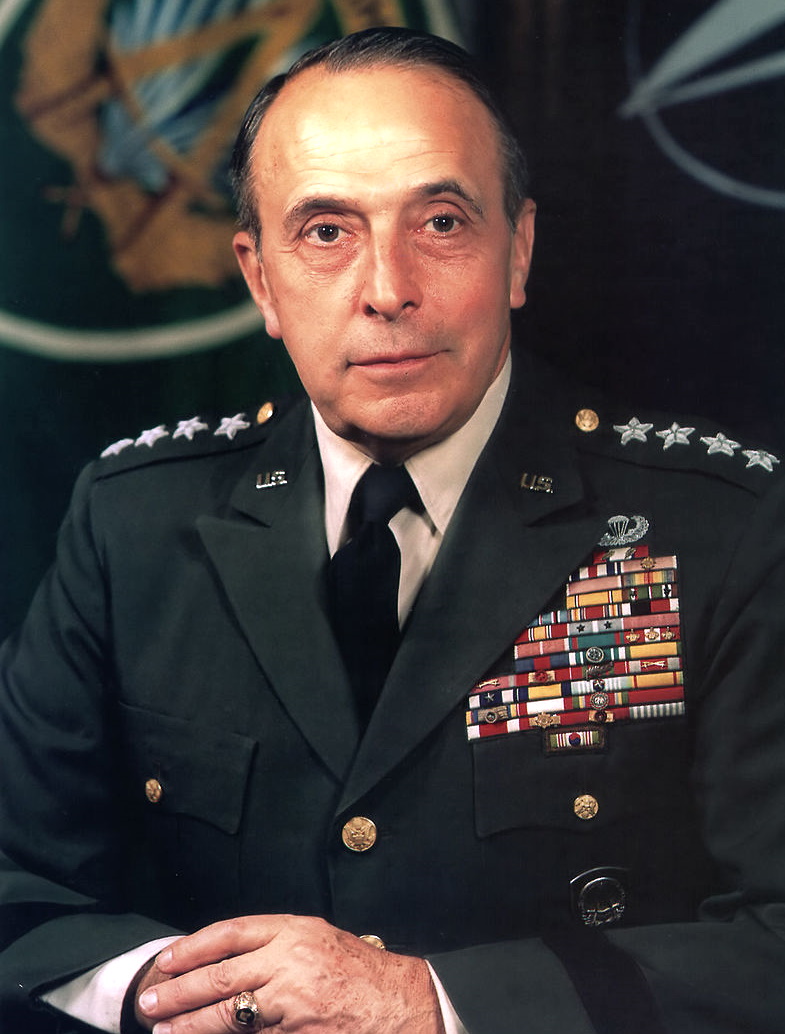 The OSS representative in Bern has transmitted the following information, a sequel to my memoranda of March 10 and 12. The Italian intermediary, Baron Luigi Parelli, has just returned with word from Gen Karl Wolff, that FM Kesselring has just gone to Hitler’s headquarters. Wolff expects Kesselring back in three days, but there is a chance that he may never come back. The OSS representative surmises that, unless FM Kesselring convinces Hitler and Himmler that he will cooperate in their plans for North Italy, Kesselring will be given a new command or will be imprisoned. Therefore, the meeting with Allied representatives has been postponed pending information from Kesselring, although AFHQ had decided to move at once and at noon on 13 March dispatched two representatives (Gen Lyman L. Lemnitzer and British Gen Terence Airey) (accompanied by an OSS representative) for Lyon. The OSS representative in Bern suggested to Baron Parelli that Wolff indicates: (1) what he proposes to do if FM Kesselring does not return; (2) what he will do if he is ordered to report to Hitler; (3) if he should refuse an order to report to Hitler, what are his plans and the forces with which to carry them out and (4) what areas he could temporarily control for possible contact with Allied forces even if the principal German Army commanders did not cooperate.
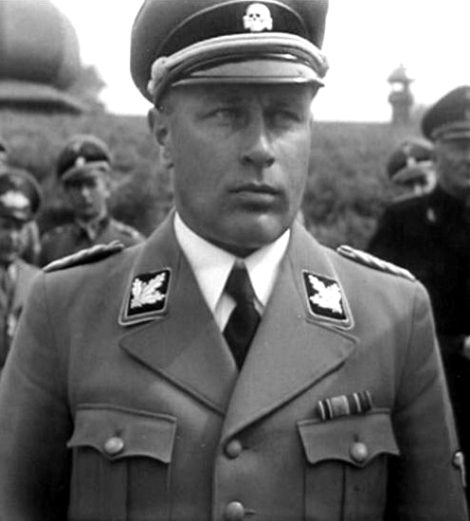 Upon his return to Italy, Wolff received a telegram from Ernst Kaltenbrunner, Chief of Security Police and Security Service, advising him to avoid establishing contact with the Allies in Switzerland since it would hinder, perhaps catastrophically, Kaltenbrunner’s plans. Wolff discovered upon investigation that Generalleutnant der Polizei Wilhelm Harster, commander of the Security Police in Italy and Wolff’s subordinate, had telegraphed Kaltenbrunner that an attempt to make contact with the Allies in Switzerland was probable. According to Parelli, Wolff believes Harster is dependable and was merely trying to cover the tracks of Wolff’s intermediary, Standartenfuehrer Dollman. In November 1944 Alexander Constantin von Neurath, the German Consul at Lugano, declared that he was acting as an intermediary for Harster, who had been given a special assignment by Himmler to contact the Allies. It appeared significant at that time that such a mission should have been given to Harster rather than to his superior in the SS hierarchy, Karl Wolff. At the end of February 1945, an Austrian industrialist in contact with Austrian SS leaders asserted that Kaltenbrunner had asked him to make contact with the Allies in Switzerland. According to this source, Kaltenbrunner claimed that he and Himmler were extremely anxious to end the war and were contemplating the liquidation of ardent Nazi warmongers.
 Mar 16, 1945, Memorandum for the President
The OSS representative in Bern understands that the plans, underway for some time, for Carl Burckhardt, retiring president of the International Red Cross and Swiss Minister-designate to France, to discuss with Himmler internee and possibly prisoner-of-war questions, may very shortly result in a meeting between the two men in the vicinity of Feldkirch, on the northeastern Swiss frontier with Germany. The OSS representative comments that Himmler may seek to use this occasion for peace feelers. The representative has learned that Fusto Pancini, an old friend of Mussolini, recently arrived in Switzerland with letters from Mussolini to his daughter, Edda Ciano, and to Papal Nuncio.
Pancini indicated to Edda that Himmler wishes the Nuncio to advise the Vatican that Germany desires peace and is disposed to facilitate the entrance of Anglo-American but not Soviet troops. The representative states that while he has no definite proof, he believes that Kaltenbrunner’s telegram to Wolff, advising the latter not to establish contact with the Allies in Switzerland, was prompted by the prospect of a meeting between Burckhardt and Himmler.
Mar 21, 1945, Memorandum for the President
The following information is a summary of statements made by Gen Wolff to the OSS representatives and representatives of FM Harold Alexander at a place near Locarno on March 19. FM Alexander’s representatives gave no name or rank but represented themselves to Gen Wolff as advisors of the OSS representative. The OSS representative does not attempt to predict whether Wolff’s plan can be realized but reports that Wolff, himself, appeared determined and that those who have had close contact with Wolff since he made his first approach ten days ago are inclined to believe that he is sincere in his expressed desire to effect an immediate German surrender. Gen Wolff has stressed particularly that it would be a crime against the German people if the ‘reduit plan’: for continued resistance from a fortified redoubt in the Bavarian Alps were realized since it would merely cause untold further useless destruction and slaughter. This information has been transmitted by the representatives in Switzerland of FM Alexander by direct radio to AFHQ. Wolff stated that as a clear duty to his country, he had been prepared to proceed with his plans to effect the surrender of the German Armies in Italy. The absence of FM Kesselring, however, compelled him to change his course of action. Wolff said that his next step now depends upon the time at his disposal for action. If he had virtually no time at all, he would be forced to see what he could do alone.
 If he had less than a week, he would deal directly with Gen Heinrich von Vietinghoff, who was returning to Italy to take over Kesselring’s command and probably reached his Italian headquarters on 19 March. If he had seven days or more, Wolff said he would go at once to Kesselring, whom he more than ever considered the key to the situation both in Italy and on the Western Front. Kesselring, Wolff reported, has been assigned to Marshal von Rundstedt’s command in the West, and had not even been allowed by Hitler’s headquarters to return to Italy to pack up his effects. Thus, Wolff had not been able to see Kesselring since Wolff’s first meeting with the OSS representative ten days ago. Vietinghoff, who acted as deputy commander in Italy for Kesselring while the latter was recovering from his injuries, had gone to Germany on leave in mid-January and subsequently had held a brief command in Kurland on the Eastern Front. After a brief conference at Hitler’s headquarters, he was ordered to return to Italy to assume command. Wolff said that if he were compelled to act alone he had only the following heterogeneous forces, equipped only with light arms and a few old tanks, at his disposal. In his capacity as Higher SS and Police Leader, a post which he has held since 1943, he commands some 15.000 Germans; 20.000 Soviet troops, mostly Don Cossacks, Kuban Cossacks, and Turkomans; 10.000 Serbs; 10.000 Slovenes; 5000 Czechs an Indian Legion and about 100.000 Italians. As Bevollmaechtigter General der Deutschen Wehrmacht (plenipotentiary for the German Wehrmacht), a post which he had held since the 20 July putsch, he is in direct command of 10.000 Germans and has under his tactical command some 55.000 German services of supply and similar troops, all north of the Po River.
 Wolff admitted frankly that the non-German forces under his command are not very dependable, and that were he to take action alone, without prior coordination with the OKW (Oberkommando der Wehrmacht – GHQ), he would probably be caught between German armies to the north and south of his forces. Asked whether a direct approach to von Vietinghoff might meet with success, Wolff said that von Vietinghoff is a nonpolitical soldier who would not take political action without support from others in the Wehrmacht. Wolff declared his relations with von Vietinghoff to be excellent but said he had not prepared the ground with Gen von Vietinghoff as he had with FM Kesselring. Hence, Wolff proposed that he proceed at once by car to FM Kesselring’s headquarters, since he could not fly there for technical reasons, and seek to persuade FM Kesselring and Gen Siegfried Westphal to join him in common action. If they agreed to do so, Wolff said he felt sure that von Vietinghoff would cooperate. If he were successful, Wolff said that he hoped to bring back with him within a week qualified military representatives of both Kesselring’s and von Vietinghoff’s headquarters to discuss the details of a military surrender. Wolff declared that he realized that the rapidly developing military situation left him little time for action. He added that German Headquarters in Italy expected an Allied offensive there before the end of the month (to one person he said the attack was expected by March 25). Wolff crossed back into Italy on the evening of March 25.
Mar 29, 1945, Memorandum for the President
No further word had been received from Wolff by the night of March 26 Wolff’s aide, Zimmern, however, reports that both Rudolph Rahn and Generalleutnant der Polizei Wilhelm Harster have been recalled to Germany for conferences at Hitler’s headquarters. Harster probably has some knowledge of Wolff’s activities. The OSS representative comments that it is becoming increasingly apparent that Hitler intends to use the bulk of the German forces in Italy for the defense of the German redoubt.
Apr 1, 1945, Memorandum for the President
The following triple-priority dispatch has just been received from the OSS representative in Bern relating to the most recent developments in connection with the possible surrender of German Forces in Northern Italy.

(1) Wolff arrived in Fasano at 1100 Friday morning and immediately summoned Parrilli and Zimmer to Fasano where they spent Friday afternoon together. Zimmer was then sent here by Wolff, Parrilli remaining Fasano. (2) Wolff endeavored to contact Gen von Vietinghoff before he went to see FM Kesselring but was unable to reach him. (3) The trip to FM Kesselring was most difficult and when he reached Kesselring’s headquarters, hell had already broken loose. The first conversation took place only 15 km from our advancing forces. Wolff presented his plan for Italian surrender and Kesselring advised him to go through with it. He, Kesselring, regretted he was not also in Italy. (4). In a second conversation with Kesselring, later again expressed his agreement with Wolff’s plan and that he should so advise von Vietinghoff, but said that on his front he could not go along (mitmachen). Kesselring found himself largely surrounded by strangers whom he did not trust. Zimmern gained the impression from Wolff Kesselring was half a prisoner (Our representative in Bern comments that no mention was made of Westphal). (5). Immediately on his return, Wolff had tried to reach Glazier but he was on an inspection trip at the front and was returning to his headquarters only night of 31. Wolff proposed to see him immediately and would spend Sunday with him. Wolff gave this message to Zimmern for our representative in Bern ‘I am ready to come to a final conversation in order to arrange matters. I hope to come with Rahn, Dollmann, and either von Vietinghoff or a staff officer’.